Is Marrakech Safe? What Every Traveler Needs to Know
Marrakech is generally safe for tourists, but the city has its share of scams, pushy touts, and transport traps that catch unprepared visitors off guard. This guide cuts through the noise with a practical breakdown of real risks, neighborhood-by-neighborhood advice, and exactly what to watch out for on the ground.
Tickets & tours
Live prices and dates from our booking partner. If you book, we may earn a commission at no extra cost to you.
TL;DR
- Marrakech is classified as **Level 2: Exercise Increased Caution** by major travel advisories. Violent crime against tourists is uncommon.
- The real threats are petty theft, fake guides, and taxi overcharging, especially around Jemaa el-Fna and the medina souks.
- Solo travelers, couples, and families all visit successfully. Check our solo travel guide and guide for families with kids for targeted advice.
- Knowing the standard taxi rates by day and night from the airport eliminates one of the most common tourist frustrations.
- Spring and autumn bring bigger crowds and more scam activity. Peak summer heat above 40°C is itself a practical safety concern.
The Practical Verdict: How Safe Is Marrakech?
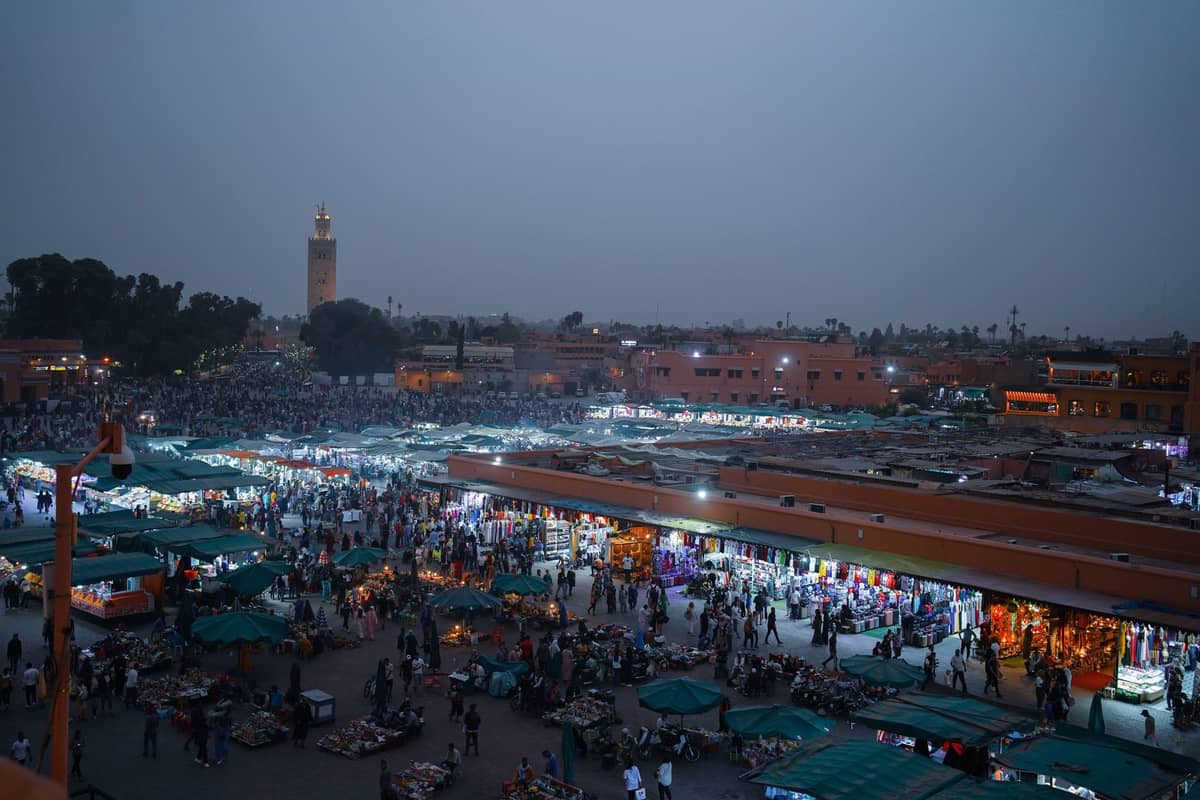
Marrakech is safe enough that millions of tourists visit without incident every year, but that answer needs context. Major government travel advisories, including those from the UK Foreign Office and comparable agencies, classify Morocco broadly as **Level 2: Exercise Increased Caution**. The guidance consistently centers on petty crime, road safety, and a terrorism risk, not the kind of serious violent threat that would warrant avoiding the city.
The terrorism risk is real but often overstated. The last major tourist-targeted attack in Marrakech was the 2011 Café Argana bombing on Jemaa el-Fna. Since then, the city has seen sustained security investment and no comparable incidents. Intelligence assessments describe the environment as safe for most visitors, with the terrorism threat categorized as moderate rather than elevated. That is not the same as zero risk, but it is comparable to many major European cities.
What actually affects tourists day-to-day is a different set of problems: pickpocketing in crowded souks, persistent touts steering you toward shops for commission, unofficial guides demanding payment, and taxi drivers running inflated fares. None of these are violent, but they are exhausting if you are not prepared. The UK Foreign Office does note that occasional incidents of violent crime, including knife use in street attacks and thefts, have been reported, and advises extra care in crowded urban areas. That caveat is worth taking seriously without letting it dominate your trip planning.
ℹ️ Good to know
Always check your government's current travel advisory before departure. Marrakech's status can shift with regional events. The UK Foreign Office (gov.uk/foreign-travel-advice/morocco), the US State Department, and equivalents publish real-time updates.
The Scams That Actually Catch Tourists Out
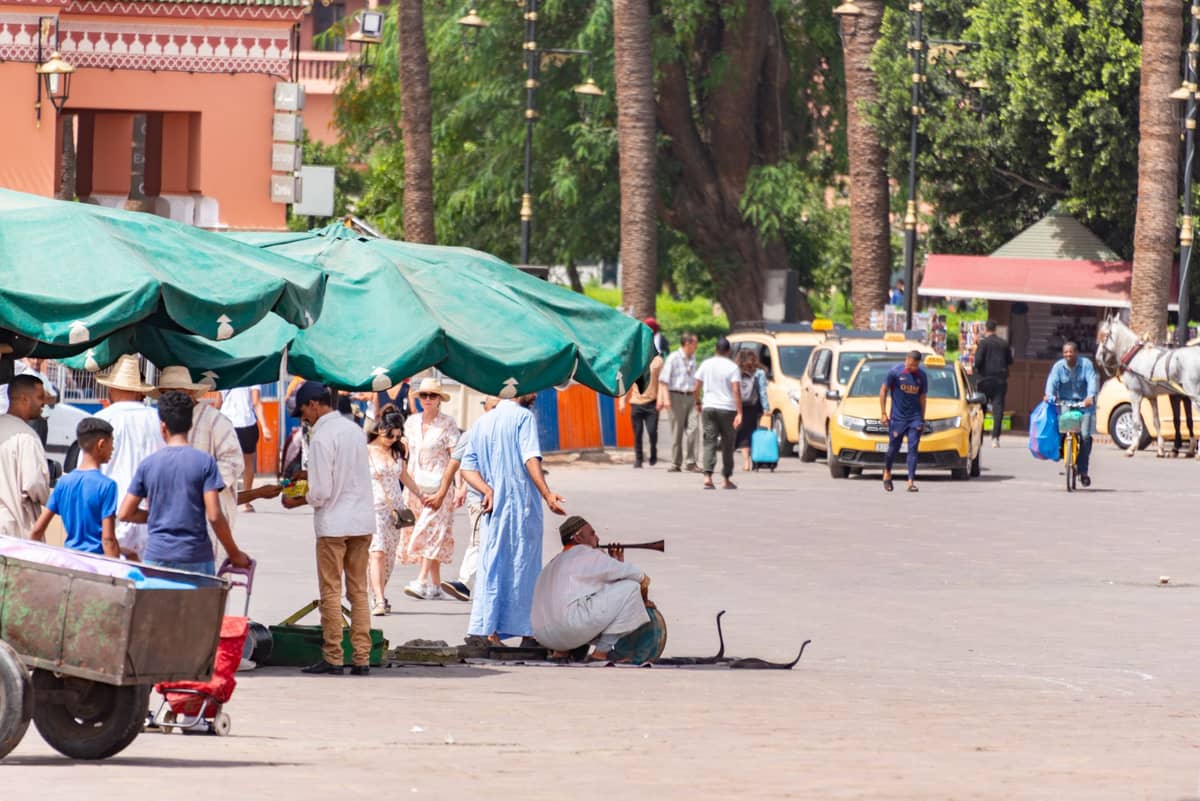
The medina souks and the area around Jemaa el-Fna are where the vast majority of tourist frustrations happen. These are densely crowded, disorienting spaces, and they attract people specifically looking to exploit that confusion. Knowing the playbook in advance removes most of the risk.
- The Fake Guide Trap Someone approaches you near the entrance to the medina, warns you that your intended destination is closed, and offers to show you a better route. The destination is not closed. At the end of a 20-minute walk through souk alleys, they expect 200-400 MAD for an unsolicited tour. Decline help from anyone who approaches you first. If you want a guide, book one officially through your riad or a licensed tour operator.
- The Henna 'Gift' A woman near Jemaa el-Fna offers to apply henna as a gift or for a small amount. Once applied, the price becomes 200-500 MAD and refusal leads to a scene. If you want henna, agree on the total price before she touches your hand.
- Snake and Monkey Photos Handlers in the square will place a snake or monkey on you or nearby, then demand payment for the photo. Keep moving if you do not want this experience. Prices are arbitrary and negotiation is aggressive.
- The Carpet Shop Diversion A friendly local offers to show you a shortcut or the real local market. This usually ends in a carpet or souvenir shop where the guide earns commission on anything you buy. The soft-sell pressure can be intense. There is nothing wrong with buying a carpet in Marrakech, but do it on your own terms, not via an unsolicited detour.
- Overpriced Restaurant Menus Some cafés around Jemaa el-Fna have two prices: one for Moroccans, one for tourists, sometimes not clearly marked. Check prices before sitting down, and always confirm the total before ordering. Roof terraces with square views charge a significant premium for the location.
⚠️ What to skip
If someone aggressively demands money or follows you, walk directly into any hotel lobby or shop and ask staff for help. Tourist Brigade police (Brigade Touristique) patrol the medina specifically to handle these situations. You can also report incidents via contacts published by regulated taxi and transport services.
Taxis and Transport: Where Tourists Lose the Most Money
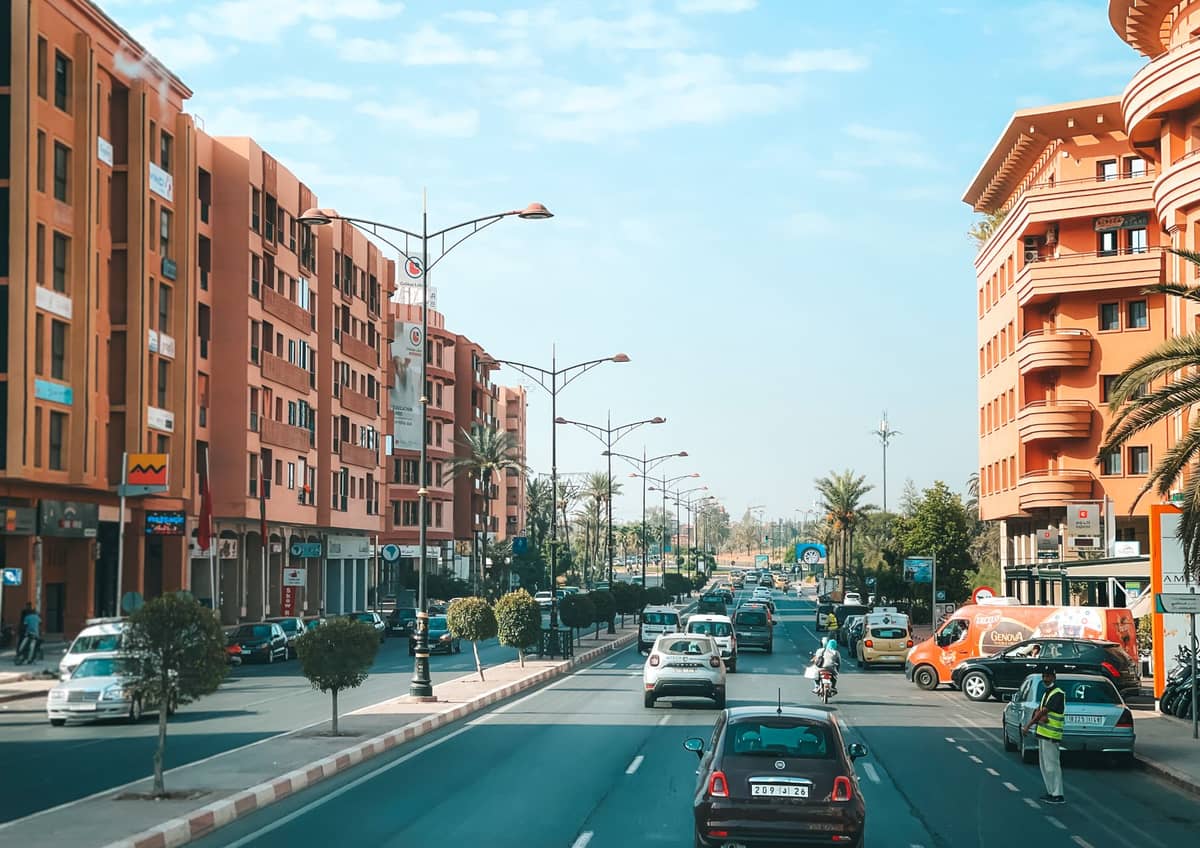
Taxi overcharging is the single most consistent complaint from first-time visitors to Marrakech. It is not dangerous, but it is irritating and avoidable. Knowing the actual rates before you get in removes all the leverage a dishonest driver has.
- Petit taxi meter rates (within the city) The minimum fare is 7 MAD. Daytime rates (approximately 05:00-21:00) run around 2 MAD per km. Night rates (21:00-05:00) are around 3 MAD per km. Always ask the driver to use the meter (compteur). If they refuse, agree a price before entering or find another taxi.
- Airport to city centre (Medina or Gueliz) The posted fixed rate from Marrakech Menara Airport is around 150 MAD by day and 200 MAD at night. Some guides report negotiated meter fares landing between 70-120 MAD during the day, but at the airport a fixed-rate ticket from the official taxi desk is the simplest approach. Do not accept prices well above 200 MAD at any time.
- Airport bus (Line 19, ALSA) The cheapest option. Bus 19 runs every 20-30 minutes between the airport and Jemaa el-Fna, taking around 30-40 minutes. Recent guides report fares of around 30 MAD one-way. Fares and schedules are time-sensitive, so verify on arrival.
- Ride-hailing apps Careem and inDrive operate in Marrakech and offer app-fixed prices that typically fall in the 70-100 MAD range for airport-to-city journeys. The app price removes negotiation entirely, which is their main advantage. Confirm current availability before relying on this option.
For more detail on all transport options, including pre-booked private transfers from around €15, see the dedicated Marrakech airport transfer guide. For navigating the city once you have arrived, the getting around Marrakech guide covers buses, taxis, and walking routes in detail.
Neighborhood Safety: Where to Be Careful and Where to Relax
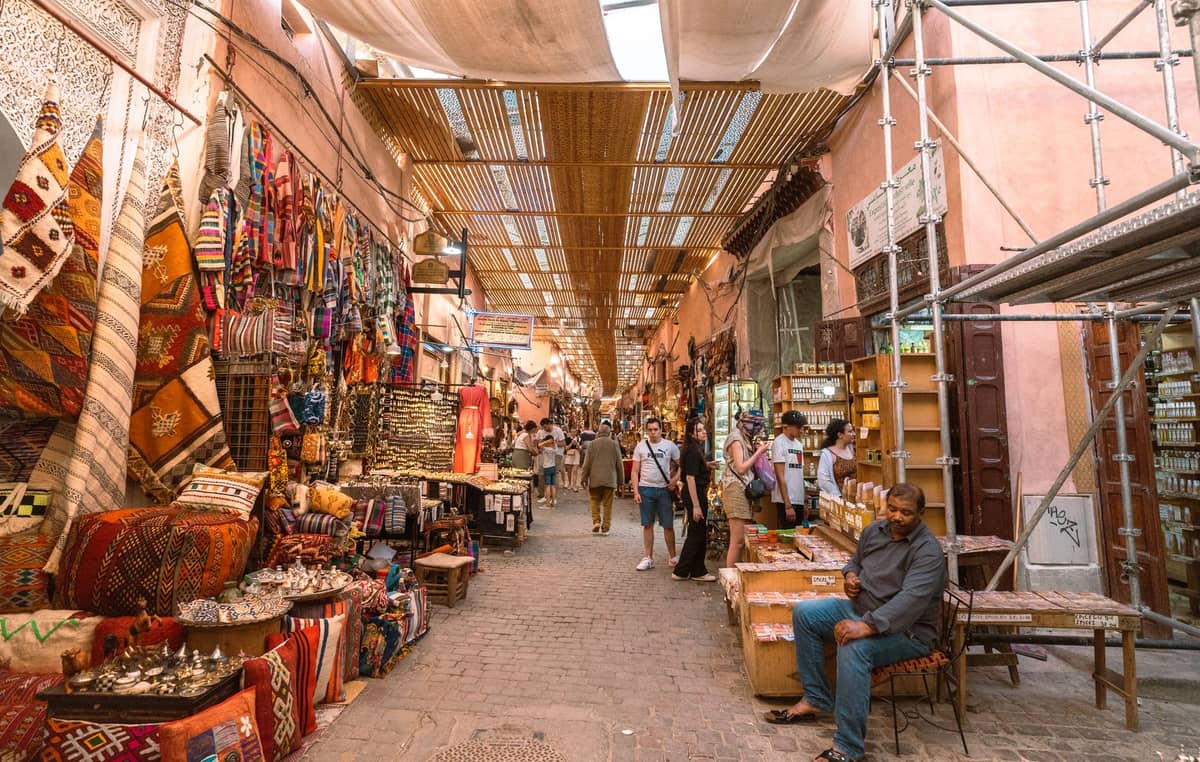
Marrakech breaks into distinct zones with genuinely different atmospheres. The walled medina is where the majority of tourist activity, and tourist-targeted scams, concentrates. The modern district of Gueliz to the northwest is noticeably calmer, with wide streets, recognizable cafés, and fewer touts. Hivernage is largely a hotel district and feels low-pressure. The Palmeraie on the outskirts is resort territory.
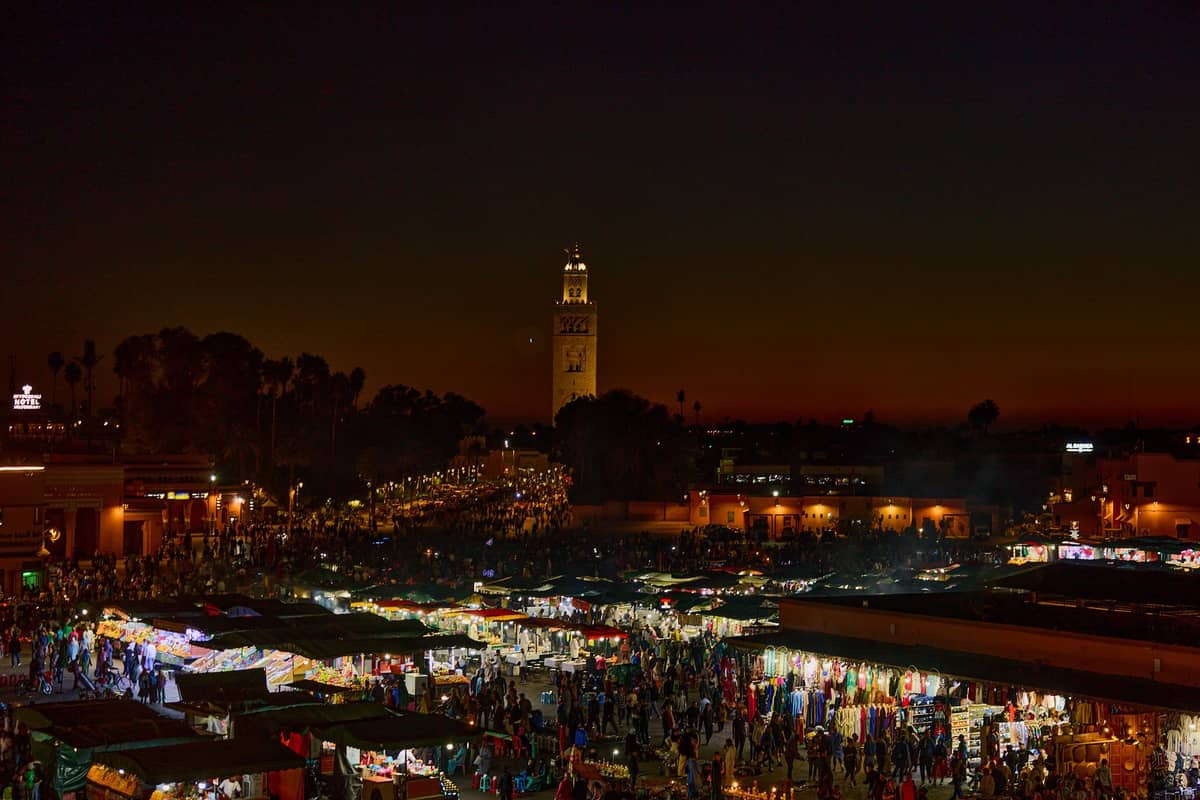
Inside the medina, the area immediately around Jemaa el-Fna is the most intense. The square itself is managed and patrolled, but the lanes feeding into the souks north of it are where the fake guide and carpet diversion tactics concentrate. The Kasbah and Mellah areas to the south of the square are somewhat quieter and attract fewer touts, partly because they are less on the main tourist circuit. Late evenings on Jemaa el-Fna are generally fine and worth experiencing, but keep bags secured and avoid isolated lanes after midnight.
💡 Local tip
Download an offline map (Google Maps or Maps.me) for the medina before you arrive. The lanes are genuinely confusing and looking lost is what triggers approaches from fake guides. Being able to glance at your phone and walk with purpose makes a real difference.
Safety for Specific Traveler Groups
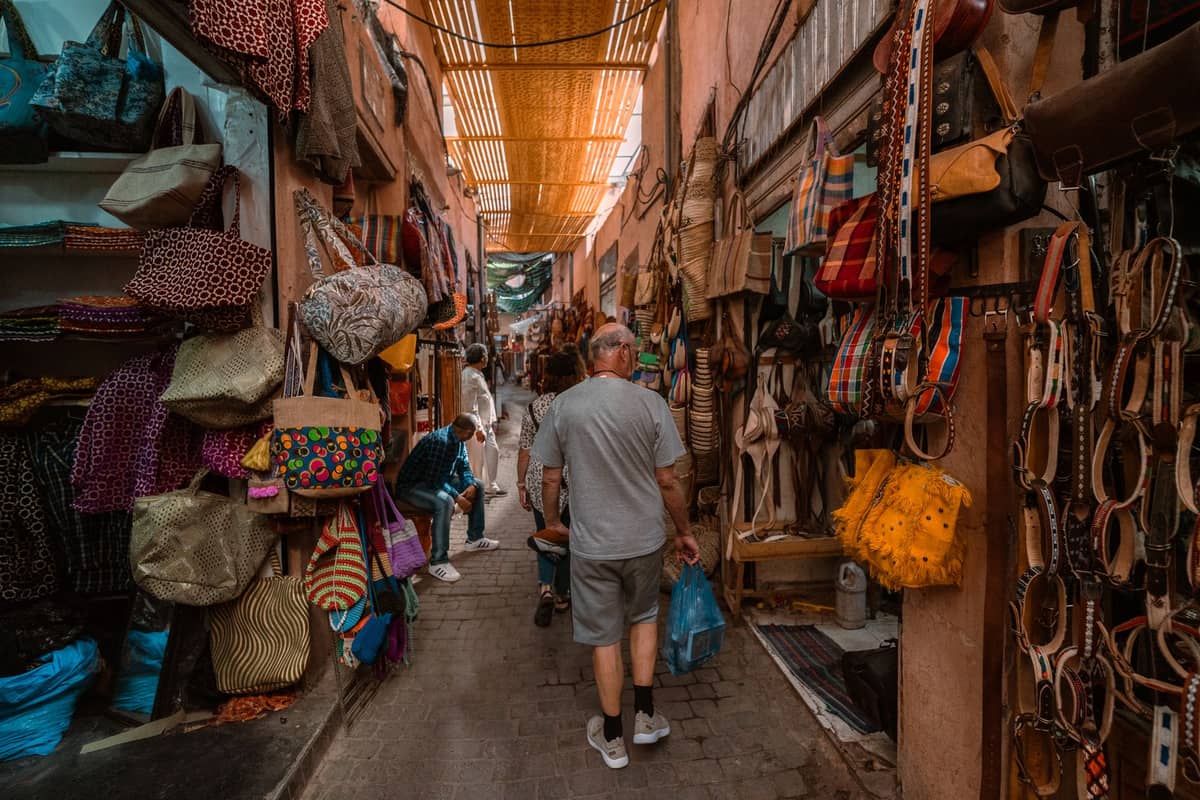
The question of whether Marrakech is safe for Americans specifically comes up frequently, and the straightforward answer is that American tourists face the same conditions as any Western visitor. There is no particular hostility toward Americans. The main vulnerabilities are shared: looking uncertain in the medina, flashing expensive equipment, and not knowing standard prices for taxis or food. Knowing those things largely neutralizes the risk.
Solo women travelers do face more persistent attention in the medina, ranging from comments to extended following. This is not physical danger in the typical experience, but it can be draining. Modest dress helps significantly. A headscarf is not required but covering shoulders and knees in the medina reduces unwanted attention. For a full breakdown, see the Marrakech solo travel guide and the guide on what to wear in Marrakech.
LGBTQ+ travelers should be aware that same-sex relationships are criminalized under Moroccan law. Public displays of affection between any couple draw attention in conservative areas. The risk of targeted harassment exists, and many LGBTQ+ travelers visit without incident by exercising discretion, but the legal context is worth understanding clearly before deciding to go.
Families with children generally find Marrakech manageable with some planning. The main challenge is navigating the medina with pushchairs or young children in tow, as the lanes are narrow and uneven. The guide to Marrakech with kids has specific logistics advice. Peak summer heat above 40°C is a genuine health concern for children and elderly travelers; midday outdoor activity in July and August is genuinely not advisable.
Practical Safety Essentials
A few concrete habits remove the majority of risk. Keep your passport in your riad or hotel safe, not on your person. Use a crossbody bag worn in front in crowded areas. Carry only the cash you need for the day: ATMs are available in Gueliz and near Jemaa el-Fna, and Moroccan dirhams (MAD) are the practical currency for most transactions in the medina.
- Emergency police: 19 (verify this is current before travel)
- Emergency medical/ambulance: 15 (verify this is current before travel)
- Morocco country dialling code: +212
- Electricity: 220V, 50Hz, plug types C and E (European two-pin)
- Tap water: treated but many visitors prefer bottled water to avoid stomach issues
- Currency: Moroccan dirham (MAD). Dirhams cannot be exported in general, so exchange or withdraw only what you need
- Tipping: expected in restaurants (around 10%), for riad staff, guides, and porters. Small amounts in MAD are appropriate
If you are visiting during Ramadan, note that public eating, drinking, and smoking during daylight hours in traditional areas draws disapproval and can attract confrontation in some contexts. The guide to visiting Marrakech during Ramadan explains the logistics and cultural context in full. For planning around seasons and crowds generally, the best time to visit Marrakech breaks down each month.
✨ Pro tip
Book your first night's accommodation in a riad with clear pickup instructions before you arrive. Navigating the narrow medina lanes with luggage while being approached by touts is the most stressful part of any Marrakech trip. Your riad can usually arrange a trusted driver to meet you at a landmark near the medina gate.
FAQ
Is Marrakech safe for solo female travelers?
Marrakech is visited solo by women regularly and most trips are trouble-free, but solo women do face more persistent attention from touts and some harassment in the medina. Practical measures help: dress modestly (covering shoulders and knees), walk with purpose using an offline map, avoid narrow lanes after dark, and ignore rather than engage with unsolicited approaches. Staying in a riad with a good host network also adds a useful support layer.
Is Marrakech safe for Americans?
Yes. American tourists face the same conditions as other Western visitors. There is no specific anti-American sentiment in tourist interactions. The main risks are shared across nationalities: scams around the medina, taxi overcharging, and petty theft in crowded areas. Check the current US State Department advisory for Morocco before travel, as regional events can affect the classification.
What are the most common scams in Marrakech?
The most frequent scams are: unsolicited guides who demand payment at the end of a route you did not ask for; fake directions claiming your destination is closed; henna application where the price is revealed only afterward; snake and monkey photo handlers; and carpet shop diversions via 'friendly local' encounters. All of these are avoidable by declining unsolicited help and agreeing on prices before any service begins.
How much should a taxi from Marrakech airport to the city centre cost?
The standard fixed rate from Marrakech Menara Airport is around 150 MAD during the day and 200 MAD at night. Metered or negotiated petit taxis can sometimes come in lower, around 70-120 MAD by day, but using the official taxi desk at the airport removes most of the negotiation risk. The ALSA Bus 19 is the budget option at around 30 MAD, running regularly to Jemaa el-Fna.
Is the terrorism risk in Marrakech high?
Major travel advisories classify the terrorism threat in Morocco as moderate, not high. The last major tourist-targeted attack in Marrakech was the 2011 Café Argana bombing on Jemaa el-Fna. Since then, the city has had no comparable incidents. That moderate classification should be understood in proportion rather than treated as a reason to avoid the city.
Tickets & tours
Live prices and dates from our booking partner. If you book, we may earn a commission at no extra cost to you.
Planning a trip? Discover personalized activities with the Nomado app.