Solo Travel in Marrakech: Tips, Safety & Practical Advice
Marrakech is one of the most rewarding solo destinations in Africa, but it rewards preparation. This guide covers everything from airport transfers and neighborhood choices to safety realities, cultural customs, and the best ways to structure your time alone in Morocco's most iconic city.
Tickets & tours
Live prices and dates from our booking partner. If you book, we may earn a commission at no extra cost to you.
TL;DR
- Marrakech is generally safe for solo travelers, including women, though harassment in the medina is a real and common nuisance rather than a violent threat.
- Spring (March-May) and autumn (September-November) are the most comfortable seasons; summer heat regularly exceeds 35°C. See our best time to visit Marrakech guide for a full seasonal breakdown.
- ALSA Bus Line 19 connects the airport to Jemaa el-Fna for around 30 MAD, making it the cheapest arrival option for solo travelers.
- Staying inside or near the medina puts you close to nearly everything; Gueliz is quieter and easier to navigate but less atmospheric.
- Modest dress, a few words of Darija, and a general awareness of your surroundings go a long way. Check our Marrakech safety guide for deeper detail on specific risks.
Is Marrakech Actually Safe for Solo Travelers?
The short answer is: yes, with caveats. Violent crime targeting tourists is rare in Marrakech. What solo travelers, particularly women, are more likely to encounter is persistent verbal attention, unsolicited 'guides,' and pressure from touts in the souks and around Jemaa el-Fna. This is a nuisance, sometimes an exhausting one, but it is categorically different from physical danger.
The medina is densest with this kind of attention, especially in the main souk arteries around Souk Semmarine and the immediate surroundings of the main square. Early mornings (before 9am) and late evenings (after 9pm) are noticeably calmer. Gueliz, the modern district west of the medina, operates much more like a regular city neighborhood, with minimal hassle and wider streets.
💡 Local tip
If someone starts 'guiding' you through the medina without being asked, establish immediately that you do not want a guide. A firm, calm 'la shukran' (no thank you in Darija) repeated once or twice is usually enough. Avoid engaging in long conversations or accepting directions from strangers near the main attractions, as these often lead to a shop where a commission is expected.
The dynamics shift depending on the time of year. During Ramadan, the city is more subdued during the day and the evening atmosphere around Jemaa el-Fna becomes genuinely communal and easier to navigate solo. Peak tourist months like March-April and October bring more crowds, which both dilutes individual attention from touts and makes the city more energetic.
Getting to the City: Airport Transfers for Solo Travelers
Marrakech Menara Airport (IATA: RAK) sits about 6 km southwest of the city center, roughly 15-20 minutes by road in normal traffic. For solo travelers on a budget, ALSA Bus Line 19 is the standard option: it runs between the airport and Jemaa el-Fna for around 30 MAD one-way (approximately €3), with departures roughly every 20-30 minutes. The journey takes around 30-40 minutes depending on traffic.
- ALSA Bus Line 19 Around 30 MAD one-way to Jemaa el-Fna. Runs roughly 06:00-23:30 depending on source, with departures every 20-30 minutes. Best for budget travelers comfortable with luggage on public transit.
- Petit Taxi Available at the rank outside arrivals. Expect 70-100 MAD for the medina, metered or negotiated upfront. Faster and direct, but agree the fare before getting in.
- Ride-hailing (Careem / inDrive) App-fixed prices around 70-100 MAD with 12-20 minute journey times. Good for avoiding fare disputes, but check the app works in your region before relying on it.
- Pre-booked private transfer From around €15 per vehicle, door-to-door to your riad. Worth considering if your accommodation is deep in the medina and requires luggage navigation through narrow alleys.
⚠️ What to skip
All transport fares and bus schedules are subject to change. Verify current prices through the ALSA website or airport information before travel. The figures above reflect recent reporting but cannot be guaranteed at time of reading.
If you are arriving late at night for the first time, a pre-booked transfer or petit taxi is worth the extra cost. The medina has no street-name logic that GPS handles reliably, and navigating to a riad with luggage in the dark is genuinely disorienting. Read more about arrival logistics in our Marrakech airport transfer guide.
Where to Stay as a Solo Traveler
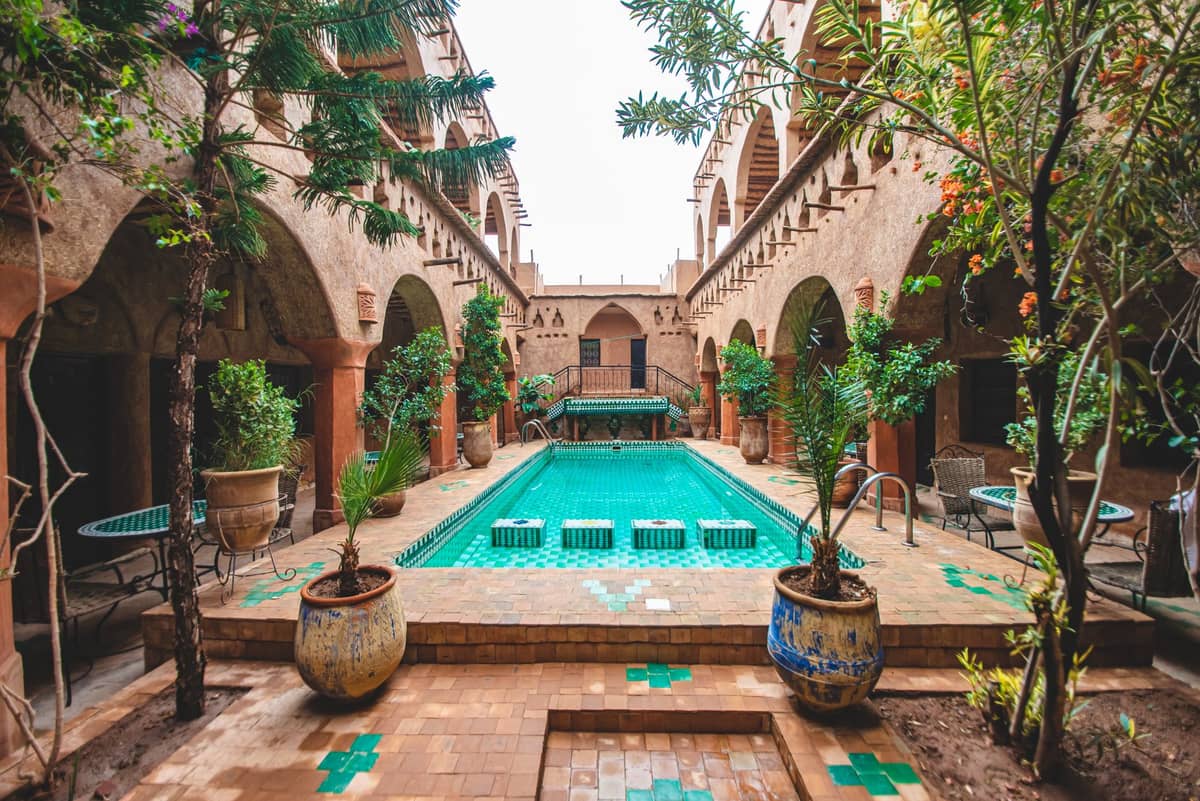
The decision between staying in the medina and in Gueliz is more significant than it sounds. The medina puts you inside Marrakech's historic core, within walking distance of the souks, palaces, and Jemaa el-Fna. The trade-off is navigational complexity, narrow lanes that cars cannot enter, and a higher density of tourist-facing pressure.
A riad in the medina is the classic Marrakech experience and, for many solo travelers, the right choice. Riads are typically small, intimate guesthouses built around a central courtyard. They range from basic backpacker-friendly options to genuinely luxurious boutique properties. For a full breakdown of what to expect, including pricing tiers and how to choose, see our guide to staying in a riad in Marrakech.
Gueliz, the modern district, suits solo travelers who want a quieter base with easier street navigation, more international cafes, and closer proximity to the train station. It is less atmospheric but significantly less disorienting for a first visit. Hivernage is hotel-heavy and more suited to those visiting on package deals; it lacks the character of the medina and is not particularly convenient for solo exploration on foot.
✨ Pro tip
When booking a medina riad, ask the property for a WhatsApp contact. Most riads will send someone to meet you at a nearby landmark (Bab Doukkala, Café Arabe, or Mouassine Fountain) to walk you to the door for the first time. This is standard practice and saves significant frustration.
Getting Around Marrakech Alone
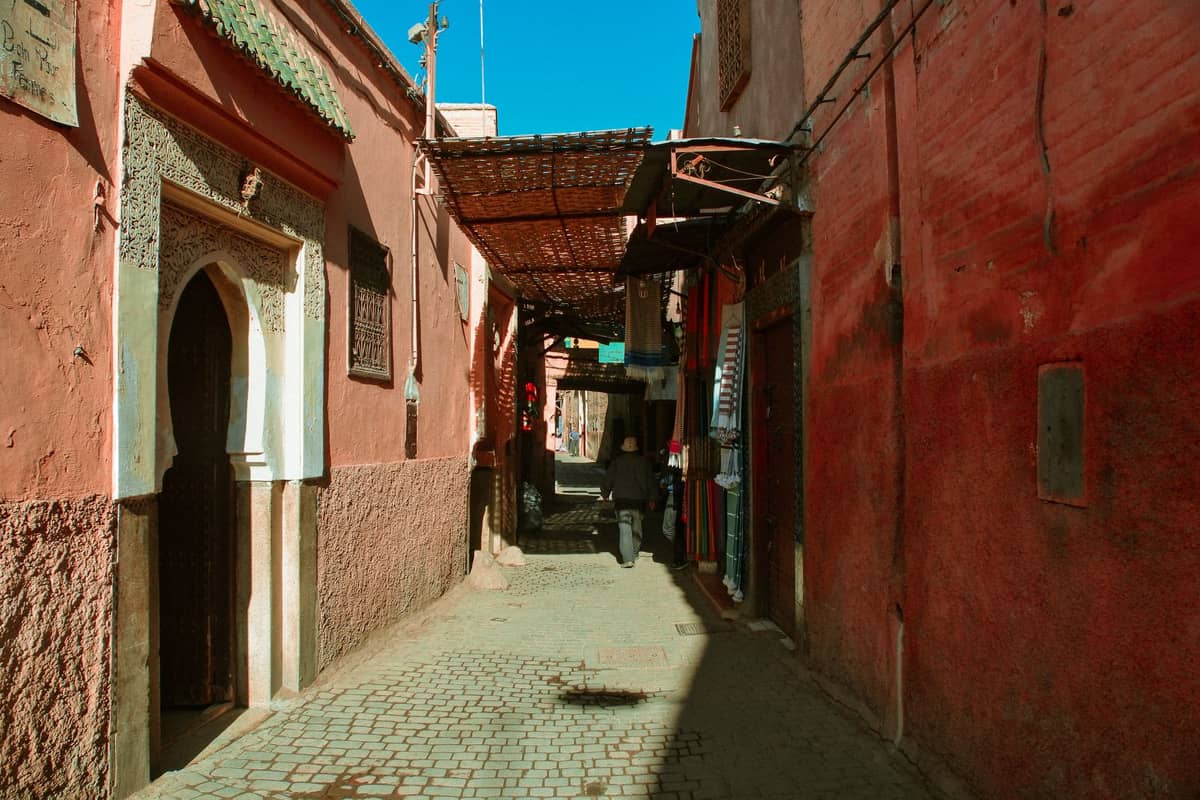
Marrakech does not have a metro. The main options for getting around solo are walking, petit taxis, city buses, and occasional ride-hailing apps. Within the medina, nearly everything is walkable, though the alleys require patience and a downloaded offline map (Maps.me or Google Maps with offline data both work reasonably well, though not perfectly in the tightest lanes).
Petit taxis are small, metered beige cabs licensed for up to three passengers. Always ask for the meter ('il compto, s'il vous plait') or agree a fare upfront. Between the medina and Gueliz expect around 15-25 MAD. For day trips outside the city, grand taxis (shared long-distance cabs) and intercity buses such as CTM are the main budget options. If you are planning excursions, our guide to getting around Marrakech covers all transport modes in detail.
- Download an offline map before arriving; Google Maps works better than Apple Maps in the medina.
- Save your riad's coordinates as a pin, not just the address. Street names in the medina are inconsistently signed.
- Petit taxis cannot enter most of the medina's interior lanes. Agree a drop-off at a nearby gate (bab) and walk from there.
- The calèches (horse-drawn carriages) near Jemaa el-Fna are primarily a tourist attraction, not practical solo transport.
- Careem and inDrive are available but not universally reliable; always have cash as a backup.
Cultural Customs and Practical Etiquette
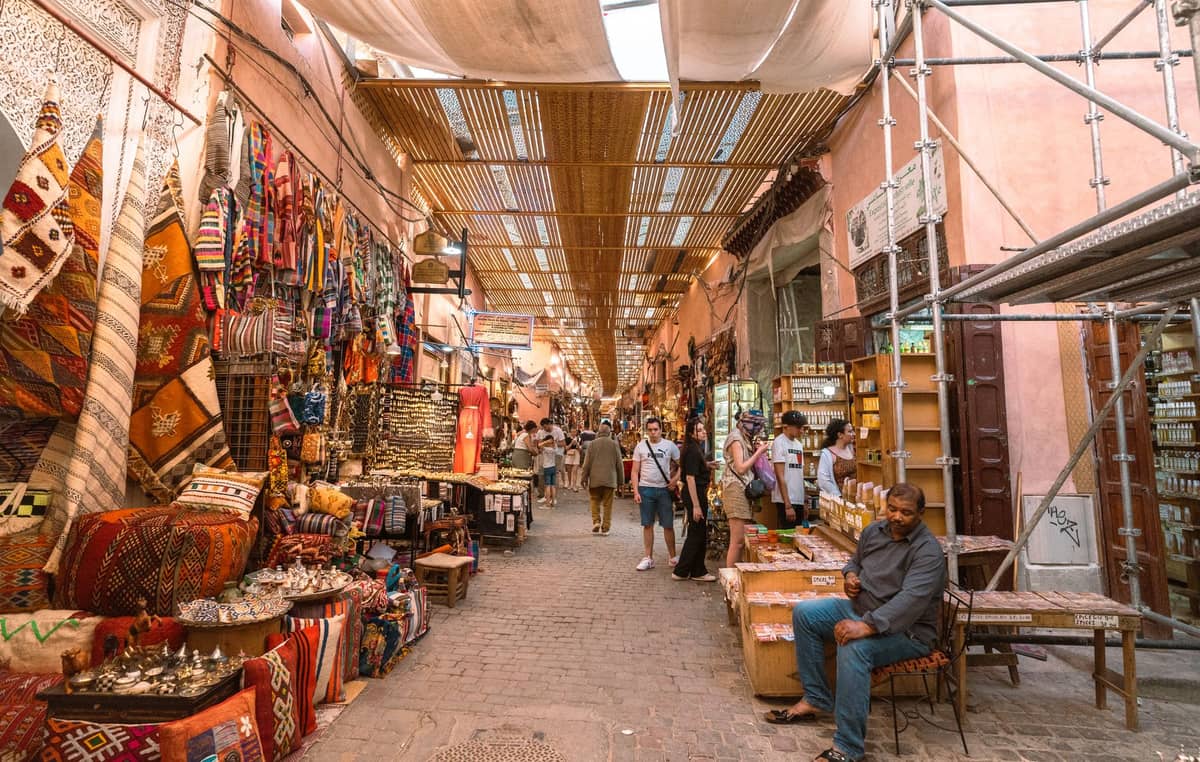
Morocco is a predominantly Muslim country and Marrakech, while highly accustomed to tourism, still operates within a cultural framework that rewards basic awareness from visitors. This is not about following a rigid rulebook but about showing ordinary respect for the place you are in.
Dress is the most practically relevant issue for solo travelers. In the medina, covering shoulders and knees is both respectful and pragmatic: it significantly reduces the volume of unwanted attention. In Gueliz and tourist restaurant areas, norms are more relaxed. For a detailed breakdown by situation and gender, see our guide on what to wear in Marrakech.
Bargaining is expected in the souks and considered normal; fixed-price shops exist but are less common in the traditional market areas. Starting at roughly 40-50% of the first quoted price and working from there is a standard approach. Accepting mint tea in a shop creates a mild social obligation but does not legally bind you to buy anything. You can drink the tea and leave politely.
Tipping is practiced widely. In restaurants, 10% is common. For petit taxi drivers, rounding up is appreciated. Guides, hammam attendants, and riad staff who provide notable service typically expect a small tip in cash (local currency preferred). Carry small denomination dirhams specifically for this purpose.
ℹ️ Good to know
Morocco uses 220V electricity at 50Hz with Type C and E plugs (the two-pin European round style). UK and US visitors will need adapters. Tap water in Marrakech is municipally treated but not recommended for visitors; most travelers and locals use bottled water to avoid stomach issues, especially in the first few days of a visit.
Planning Your Time: Key Sights and Practical Logistics
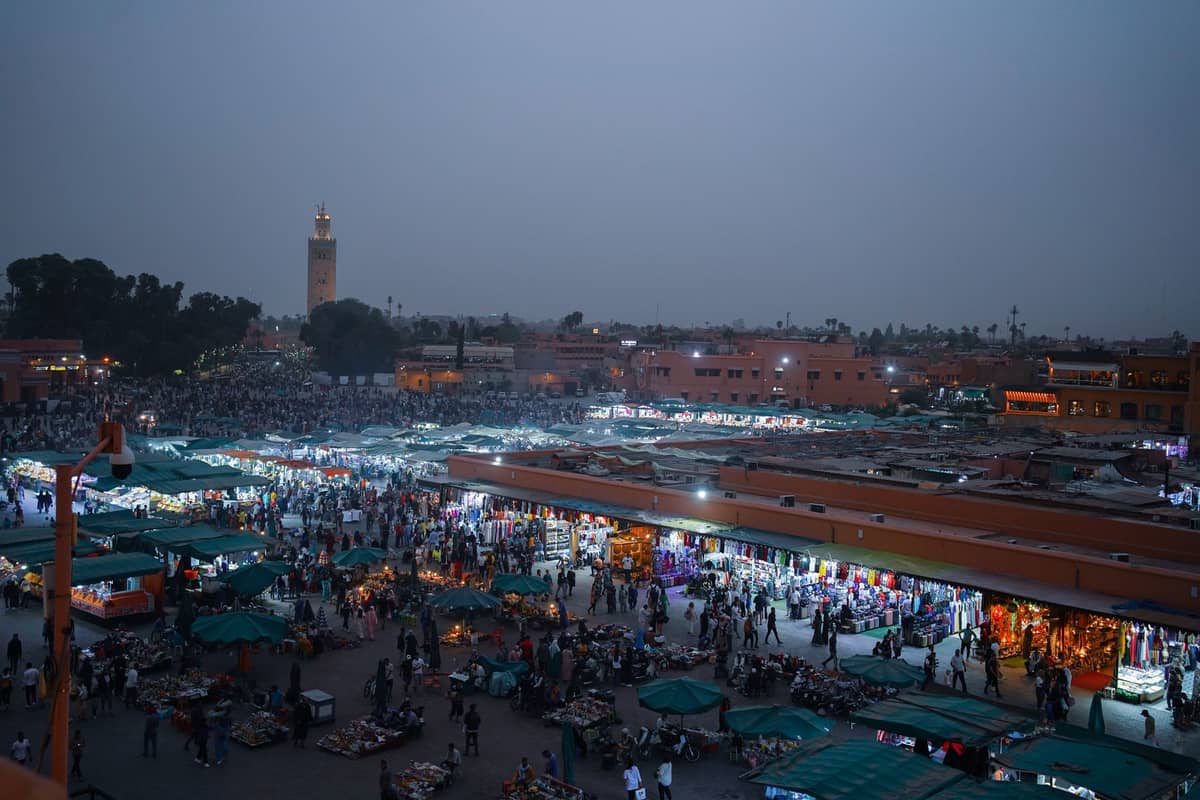
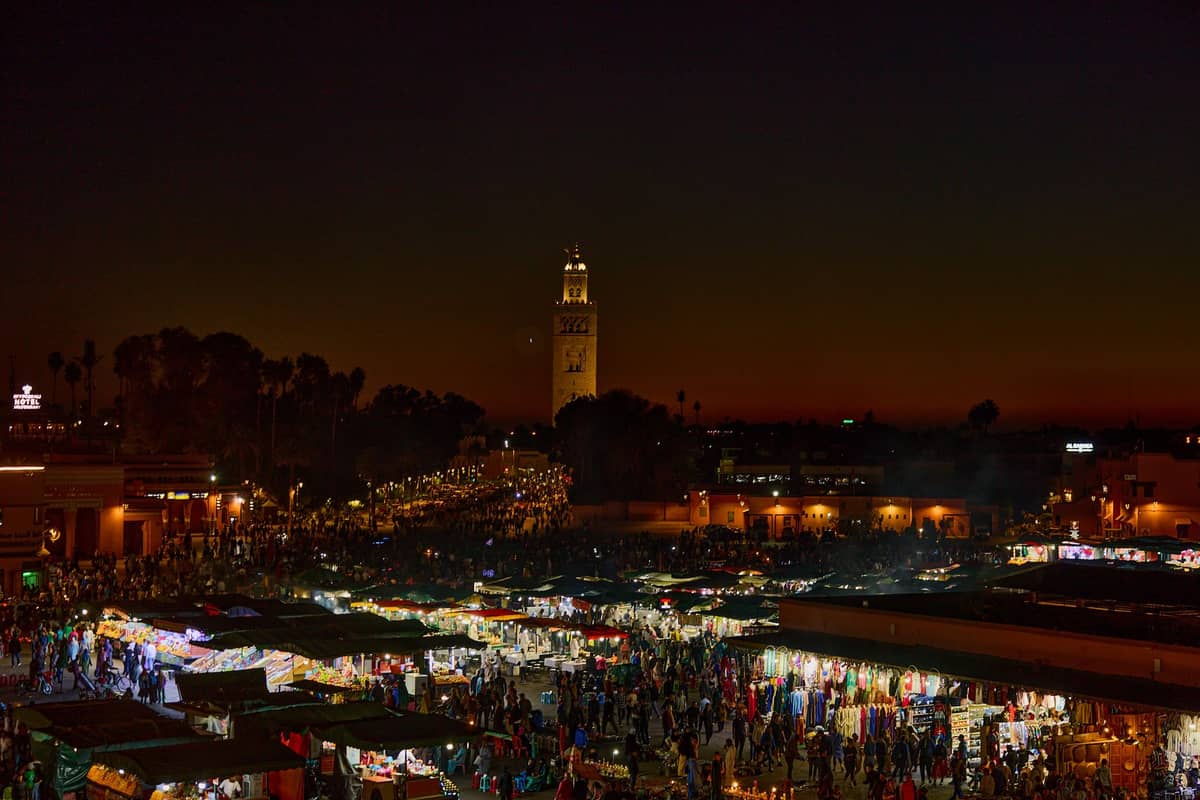
For solo travel in Marrakech, three to four days gives you enough time to cover the major sites without rushing. The classic orientation is to spend the first day in the medina: Jemaa el-Fna at sunset, dinner nearby, and an early-morning souk walk the following day before crowds arrive. The square at dusk is one of the most consistently impressive public spaces in North Africa, with food stalls, musicians, and storytellers converging from around 6pm.
The Jardin Majorelle and the associated Yves Saint Laurent Museum are best visited in the first hour after opening (currently 8am) to avoid the worst of the crowds. The Ben Youssef Madrasa and the Bahia Palace are the two historic sites that reward the most time. Both are manageable solo and neither requires a guide.
If you have more than three days, Marrakech is a strong base for day trips. The Ourika Valley is the easiest half-day excursion, about 60 km south. The Ouzoud Waterfalls require a full day but are straightforward to reach by shared transport or booked minivan. Our guide to day trips from Marrakech covers options, logistics, and which excursions work well for solo travelers.
FAQ
Is Marrakech safe for solo female travelers?
Generally yes, but with realistic expectations. Violent crime against tourists is rare. The more common experience is verbal harassment, particularly in the medina and around Jemaa el-Fna. Dressing modestly, avoiding eye contact with persistent touts, and using the firm 'la shukran' approach reduces this significantly. Many solo female travelers visit Marrakech without serious incident; others find the attention genuinely exhausting. It depends partly on temperament and partly on where and when you spend your time.
What is the best area to stay in Marrakech for a solo traveler?
For atmosphere and proximity to sights, a riad in the medina is the classic choice. For easier navigation and a calmer base, Gueliz works well. First-time solo visitors who are nervous about the medina's maze-like layout may prefer to start in Gueliz and venture into the old city during the day. Experienced travelers tend to prefer the medina despite its complexity.
How do I get from Marrakech airport to the city center alone?
ALSA Bus Line 19 runs from the airport to Jemaa el-Fna for around 30 MAD (about €3). It runs approximately every 20-30 minutes between about 06:00 and 23:30 and takes 30-40 minutes. Petit taxis to the medina cost 70-100 MAD. For a first arrival at night or with heavy luggage, a pre-booked private transfer (from around €15) is worth considering, as medina navigation with bags after dark is genuinely difficult.
What should solo travelers know about bargaining in the souks?
Bargaining is standard practice in the traditional souks. A reasonable starting point is 40-50% of the first quoted price, though this varies by item. Shopkeepers will not be offended by negotiation; it is expected. You are not obligated to buy if you cannot agree on a price. Accepting tea in a shop is a social nicety, not a binding commitment. Fixed-price shops do exist and are often marked as such.
When is the best time to visit Marrakech as a solo traveler?
Spring (March-May) and autumn (September-November) offer the most comfortable temperatures for exploring on foot, with daytime highs typically in the mid-20s to low 30s Celsius. Summer heat regularly exceeds 35°C, which makes long walks through the medina genuinely demanding. December and January are mild but can be cool at night and see occasional rain. Easter and school holidays bring heavier crowds.
Tickets & tours
Live prices and dates from our booking partner. If you book, we may earn a commission at no extra cost to you.
Planning a trip? Discover personalized activities with the Nomado app.