Palmeraie
Palmeraie is Marrakech's ancient palm grove district, stretching across the city's north-northeast edge in a landscape of date palms, resort hotels, and private villas. Once a natural buffer between the city and the desert, it is now the address of choice for travelers seeking space, quiet, and luxury at a remove from the medina's intensity.
Located in Marrakech
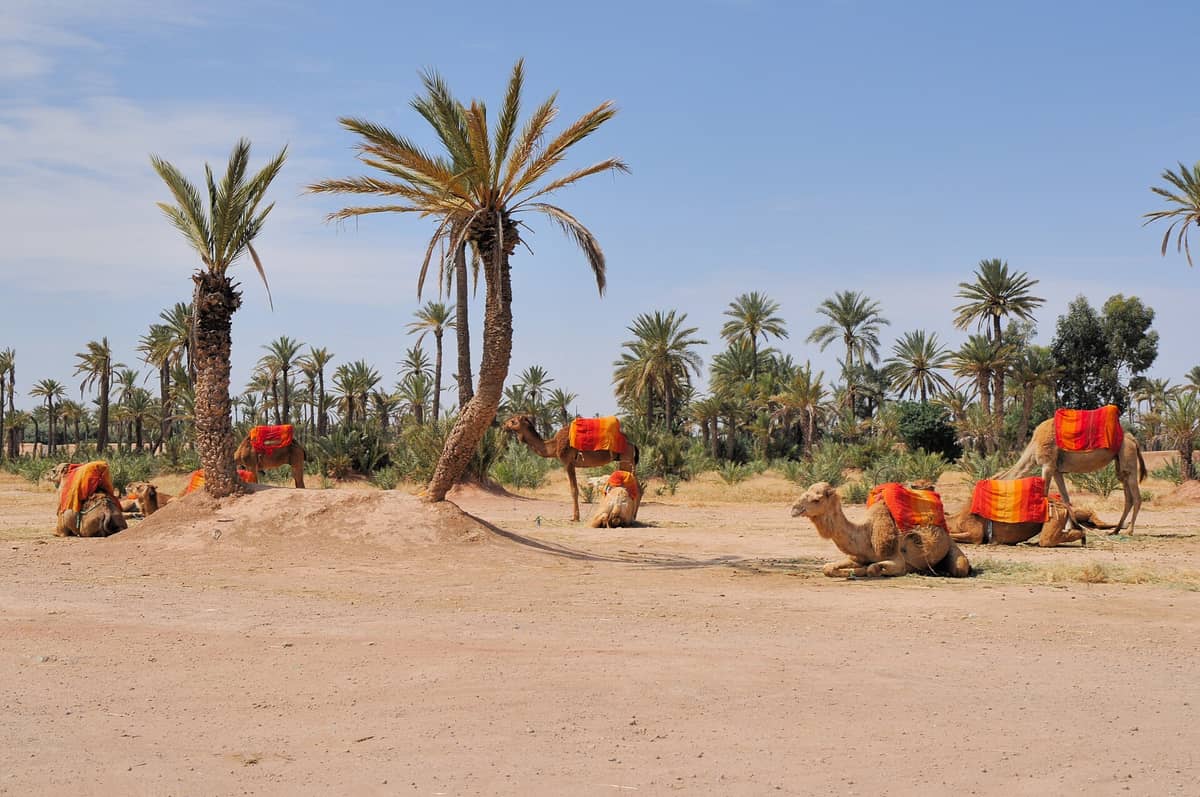
Overview
North of the medina walls, Palmeraie trades the city's density for date palms, villa compounds, and resort grounds. Spread across roughly 10,000 to 13,000 hectares of groves on the city's northern fringe, this historic oasis district offers wide tracks, resort pools, and a landscape that has barely changed in outline since the 11th century. It is not a neighborhood for restless explorers, but for those who want a quieter, greener base while staying within reach of everything the city offers.
Orientation
Palmeraie sits roughly 6 to 7 kilometers north-northeast of Jemaa el-Fna, outside the walled medina and beyond the northern edge of Marrakech's dense urban fabric. It is reached by following Route de Fes or Circuit de la Palmeraie, a loop road that winds through the grove and connects back to the city. Most visitors arrive through the Annakhil sector, the administrative zone that encompasses much of the palm grove.
The boundaries of Palmeraie are not walls or fences but a gradual thinning of the city. Heading north from central Marrakech past the residential zones near Bab Doukkala and the northern medina gates, the apartment blocks give way to walled villa compounds, then open land, then the towering crowns of date palms. The grove covers an area estimated at 10,000 to 13,000 hectares, making it one of the largest urban palm groves in the world, with approximately 100,000 palm trees spread across a landscape that also includes vegetable gardens, rose fields, and irrigated plots.
Palmeraie is flanked to the west by the Route de Casablanca and the district of Gueliz, and to the south by the medina and the district of Hivernage. To the north and east, the grove merges into open agricultural land before the Atlas foothills rise on the horizon. The Circuit de la Palmeraie, the main loop road, runs for about 10 kilometers through the grove and is the primary navigation axis.
Character & Atmosphere
The dominant impression in Palmeraie is one of space and silence, two things in short supply in Marrakech's medina. Early morning here means birdsong, the soft rustle of palm fronds in the pre-heat breeze, and the occasional sound of a gardener at work behind a high ochre wall. The light at that hour is low and golden, striping the grove in long shadows. This is when the area is at its most atmospheric, before the midday heat consolidates and resort guests retreat to their pools.
By mid-afternoon in summer, Palmeraie absorbs heat with an intensity that makes outdoor activity difficult. The groves provide genuine shade, but the tracks between properties can be exposed. The afternoon is better spent at a pool or inside one of the properties. In spring and autumn, when temperatures are in the mid-twenties, the grove is pleasant to walk or cycle through, and the late afternoon light turns the palms an extraordinary amber-red.
After dark, Palmeraie is quiet in a way that surprises visitors expecting a lively nightlife strip. There are no street cafes, no open markets, no groups wandering between restaurants. The social life here is internal: resort restaurants, private villas, the occasional pool party at high-end properties like Nikki Beach. If you need energy and noise after sunset, you will need to take a taxi into the medina or Gueliz.
The area's population is a mix of Moroccan families in long-established villa compounds, expatriates who have settled permanently in the grove, short-stay resort guests, and a small number of agricultural workers who maintain the irrigated plots and palm groves. The tourist-to-local ratio skews heavily toward tourists in the resort zone along the Circuit de la Palmeraie, but venture even slightly off the main road and the character becomes more residential and local.
ℹ️ Good to know
Palmeraie is classified as a protected natural and heritage zone in Marrakech. Unauthorized construction has historically been a problem here, and the Moroccan government has periodically ordered demolitions of illegally built villas. The legal status of individual properties should not concern visitors, but it explains why the grove can appear simultaneously lush and patchy in places.
History & Significance
The palm grove dates to the 11th century, when Marrakech was founded by the Almoravid dynasty. The most persistent legend links its origin to the date pits discarded by Almoravid soldiers who camped on the plain. Whether or not that story is accurate, the grove grew over centuries into a remarkable agricultural and ecological system, irrigated by an ancient network of underground channels known as khettara. These channels tapped groundwater from the Atlas Mountains and distributed it across the grove without pumps or machinery, an engineering achievement that still functions in parts today.
For most of its history, Palmeraie served as a productive agricultural zone: dates, vegetables, grain, and livestock all found space within the grove. It also acted as a windbreak and climate buffer for the city, reducing the impact of sand-bearing desert winds from the north and east. That ecological function remains, though the proportion of productive farmland has declined significantly as luxury development has expanded since the 1990s and 2000s.
The transition from agricultural landscape to luxury resort district accelerated sharply in the early 2000s. International hotel groups, Moroccan developers, and foreign buyers moved into the grove, constructing large-scale resorts, golf courses, and walled villa estates. The result is a landscape that holds two identities simultaneously: ancient oasis and modern playground for wealthy visitors.
What to See & Do
Palmeraie is not a neighborhood of museums or historic monuments. Its appeal is experiential: the landscape itself, the activities it supports, and the access it provides to a quieter version of Marrakech. The main draw for most visitors is simply being in the grove, whether on foot, on horseback, or on a camel for the quintessential tourist experience.
Camel treks and horse rides through the palm groves are widely available and organized by a range of operators along the Circuit de la Palmeraie. These range from 30-minute tourist circuits to half-day rides that take you deeper into the quieter parts of the grove. Quality varies significantly between operators. The more reputable ones are usually attached to established resorts or quad-bike companies with fixed addresses.
- Camel and horse treks through the date palm groves
- Quad biking on designated desert and grove tracks
- Golf at courses set within and adjacent to the palm grove
- Hot air ballooning departures from the Palmeraie area at dawn
- Cycling the Circuit de la Palmeraie (approximately 10km loop)
- Day passes to resort pools and spa facilities
- Photography walks in the agricultural sections of the grove
Hot air ballooning is one of the most popular activities launched from the Palmeraie zone at dawn. The flights typically carry passengers over the grove and then out toward the Haouz plain with the Atlas Mountains on the horizon. For full detail on operators and what to expect, see the Marrakech hot air balloon guide.
Palmeraie also sits within easy range of day trips into the Atlas Mountains. The Ourika Valley is roughly 30 kilometers south of Marrakech, and Imlil, the base village for Mount Toubkal, is about 60 kilometers. Both are commonly organized as day trips from Palmeraie hotels.
💡 Local tip
If you want to experience the grove without committing to a full camel trek, the Circuit de la Palmeraie is perfectly bikeable in cooler weather. Several guesthouses in the grove rent bicycles, and the loop road is quiet enough in the mornings to ride comfortably. Allow two to three hours for the full circuit with stops.
Eating & Drinking
The food scene in Palmeraie is almost entirely organized around resort and villa restaurants. There are no medina-style street food stalls, no rows of cheap tagine joints, and no rooftop cafes with views of a minaret. What you get instead are well-staffed hotel restaurants, poolside grill menus, and the occasional standalone restaurant attached to a luxury property.
Price levels are high relative to the rest of Marrakech. A meal at a resort restaurant will cost several times what the same quality of food costs in the medina or Gueliz. For travelers staying in Palmeraie on a budget-conscious basis, the practical solution is to take a taxi into Gueliz or the medina for evening meals and rely on the resort breakfast included in most rates.
For a comprehensive overview of Marrakech's food landscape across all neighborhoods, including the medina spots that pair well with a Palmeraie base, the where to eat in Marrakech guide covers the full range of options from street-food-level dirhams to formal restaurant experiences.
Nikki Beach Marrakech, set within the grove, operates as a resort club with a restaurant and bar scene that has a consistent reputation among the luxury day-use crowd. It is one of the few places in Palmeraie that generates genuine nighttime energy, with pool parties and music events on specific nights. It caters to an international clientele and the pricing reflects that.
⚠️ What to skip
Alcohol is available at resort bars and licensed restaurants in Palmeraie, but it is not sold at local shops or neighborhood cafes. If you are staying in a private riad or villa rental within the grove rather than a hotel, you will need to stock up in Gueliz before returning. Most supermarkets in Gueliz carry wine and beer.
Getting There & Around
Getting to Palmeraie from central Marrakech takes roughly 15 to 25 minutes by taxi, depending on traffic and exactly where in the grove your destination is. From Jemaa el-Fna, petit taxis will make the trip without difficulty. The main road access points are the Route de Fes heading northeast and the Circuit de la Palmeraie loop road. Make sure your driver knows the specific hotel or address within the grove, as the Circuit is long and properties can be widely separated.
Public buses do reach the Palmeraie area from central Marrakech, with routes serving stops in and around the Annakhil sector at points including Village Touristique, Bab Kechich, and Ecole Américaine.
Within Palmeraie itself, the distances between properties are too large for comfortable walking in the heat. Cycling works well in cooler months on the Circuit de la Palmeraie. For everything else, the practical options are the private resort shuttles that many hotels operate to the medina, or taking a petit taxi. Ride-hailing apps including Careem and InDrive operate in Marrakech and can be useful for return trips from the grove late at night when street taxis are less available.
Marrakech Menara Airport (IATA: RAK) is located about 6 kilometers southwest of the city center, making it roughly 20 to 30 minutes from most Palmeraie addresses by private transfer. For full guidance on airport connections and onward transport, see the Marrakech airport transfer guide.
💡 Local tip
Many Palmeraie resorts offer shuttle services to Jemaa el-Fna once or twice daily, often included in the room rate or at low cost. Check at check-in, as this can save you significant money on taxis over a multi-night stay.
Where to Stay
Palmeraie is primarily an accommodation destination rather than a neighborhood you pass through. The majority of visitors here are staying in one of the large resort hotels, a private villa rental, or a smaller guesthouse set within the grove. The character of what you experience depends almost entirely on where you stay, because the grove is too spread out to explore comprehensively on foot.
The main concentration of resort properties runs along and near the Circuit de la Palmeraie. Large-format hotels and resort complexes dominate this zone, with extensive pools, spa facilities, and multiple restaurants. These properties are well-suited to travelers who want a self-contained luxury experience or families who need structured amenities. The Palmeraie Rotana Resort is among the most frequently cited properties in this category.
Smaller maisons d'hote and boutique guesthouses exist deeper within the grove, often inside walled gardens with pools, olive trees, and a more intimate scale. These appeal to couples or independent travelers who want the atmosphere of the grove without the full resort format. The tradeoff is that you will need a taxi for almost every excursion, since these properties are typically too far from any walkable amenity.
For travelers comparing Palmeraie with other accommodation zones across the city, the full where to stay in Marrakech guide sets out the tradeoffs between the medina, Gueliz, Hivernage, and the palm grove in practical terms. For those drawn to the riad experience specifically, the guide to staying in a riad in Marrakech explains what that category of accommodation involves.
Palmeraie is also a natural fit for the itineraries covered in the Marrakech for couples guide and the luxury Marrakech guide, both of which include resort and villa options within the grove.
Is Palmeraie Right for You?
Palmeraie is a genuine alternative to staying in the medina, but it is not simply a quieter version of the same experience. It is a different experience entirely. You trade proximity, spontaneity, and the city's energy for space, calm, and greenery. The medina is never more than 20 minutes away by taxi, but you will need that taxi every single time you want to engage with the real city.
The main drawback for most travelers is cost. Accommodation in Palmeraie runs significantly higher than equivalent quality in the medina or Gueliz, and then you add taxi costs on top. On a tight budget, the palm grove is impractical as a base. It also lacks the kind of organic neighborhood life that makes places worth wandering through without a plan.
Travelers who are visiting Marrakech primarily to see the city's historic core, including the Jemaa el-Fna square, the souks, and monuments like the Bahia Palace, will probably find Palmeraie inconvenient as a base unless they have a specific reason to be there. First-time visitors to Marrakech who want to be immersed in the city's character are better placed in a medina riad or a Gueliz hotel with easy medina access.
Where Palmeraie excels is for repeat visitors who have already done the medina intensively, families who need pool access and space, travelers combining Marrakech with activity-based day trips into the Atlas Mountains, and anyone whose primary reason for coming to Marrakech is rest rather than exploration.
TL;DR
- Palmeraie is Marrakech's ancient palm grove district, about 6 to 7 kilometers north-northeast of Jemaa el-Fna, covering roughly 10,000 to 13,000 hectares with around 100,000 date palms dating to the 11th century.
- The neighborhood is dominated by luxury resort hotels, golf courses, private villas, and activity operators: camel treks, quad biking, horse riding, and hot air balloon departures are the main draws.
- Getting around requires taxis or resort shuttles; public buses reach the area but with limited convenience. Walking between properties within the grove is impractical for most trips.
- Food and drink options are almost entirely resort-based and expensive. Budget-conscious travelers should plan to eat in Gueliz or the medina.
- Best suited to: couples seeking a luxury retreat, families needing space and pool facilities, repeat Marrakech visitors, and anyone prioritizing calm over proximity to the city's historic core. Not ideal for first-time visitors who want to be immersed in medina life.
Related Travel Guides
- 3 Days in Marrakech: The Perfect Itinerary
Three days is enough time to cover Marrakech's essential medina landmarks, the Jardin Majorelle complex, the souks, and at least one excellent meal in Gueliz. This itinerary is built around realistic walking distances, opening hours, and the things most guides get wrong — like Majorelle's timed-entry system and Bahia Palace's tiered ticket pricing.
- Best Time to Visit Marrakech: A Season-by-Season Guide
Marrakech rewards visitors year-round, but the experience changes dramatically by season. This guide breaks down temperatures, crowd patterns, pricing shifts, and cultural events so you can choose the timing that fits your travel style.
- Best Day Trips from Marrakech: Mountains, Coast, Desert & More
Marrakech sits at the center of an extraordinary region. Within a few hours, you can be on an Atlantic beach, hiking in North Africa's highest mountains, exploring a UNESCO-listed ksar, or watching 110-meter waterfalls. This guide covers the best day trips from Marrakech, organized by theme, with practical notes on logistics.
- Getting Around Marrakech: The Complete Transport Guide
From the airport shuttle to navigating the medina on foot, this guide covers every realistic way to get around Marrakech — with current prices, clear trade-offs, and the practical details most guides leave out.
- Is Marrakech Worth Visiting? A Candid Assessment
Marrakech divides opinion more than almost any city in North Africa. This guide cuts through the hype and the horror stories to give you a clear, practical picture of what visiting Morocco's most famous city actually involves, from the medina's sensory overload to the Atlas Mountains on your doorstep.
- Luxury Marrakech: The Ultimate Indulgence Guide
Marrakech delivers a rare kind of luxury: palace hotels enclosed by ancient medina walls, Agafay desert camps under open skies, and hammam rituals refined over centuries. This guide covers the best high-end stays, spas, experiences, and practical logistics — with a clear look at what is worth the price and what is not.
- One Week in Marrakech: The Complete 7-Day Itinerary
Seven days in Marrakech gives you enough time to go deep into the medina, escape to the Atlas Mountains, and decompress in a hammam without rushing. This itinerary is structured by district and theme, with frank notes on what to skip, what to book in advance, and how to move around without getting fleeced.
- Agafay Desert from Marrakech: Day Trips & Overnight Camps
The Agafay Desert sits less than an hour from Marrakech and offers a genuine desert experience without a two-day drive to the Sahara. This guide covers exactly what Agafay is, how to get there, what activities are worth paying for, how overnight camps differ by season, and the practical trade-offs you should know before booking.
- Marrakech Airport to City: The Complete Transfer Guide
Marrakech Menara Airport (RAK) sits just 6 km from the city centre, but knowing which transfer option to choose can save you time, money, and hassle. This guide covers every realistic option, from the 30 MAD public bus to pre-booked private transfers, with a realistic look at what to expect at each price point.
- Marrakech's Contemporary Art Scene: Galleries, Museums & the 1-54 Fair
Marrakech is far more than medinas and souks. The city hosts one of Africa's most serious contemporary art ecosystems, anchored by MACAAL, the annual 1-54 Contemporary African Art Fair, and a growing network of galleries in Gueliz and the Medina. This guide covers every layer of that scene with practical details, seasonal timing, and a clear look at what's worth your time.
- The Best Museums in Marrakech: Art, History & Architecture
Marrakech has a stronger museum scene than many visitors expect. From fashion collections in Gueliz to centuries-old palace interiors in the Medina, these are the museums that reward a dedicated visit.
- Marrakech to the Sahara: The Complete Desert Tour Guide
The Sahara is not a day trip from Marrakech. This guide covers the real routes, realistic prices, best seasons, and what to expect on a multi-day desert tour from Morocco's most visited city — so you can plan without surprises.
- Visiting Marrakech During Ramadan: What Really Changes (and What Doesn't)
Ramadan transforms Marrakech in ways most travel guides get wrong. This guide covers the real daily rhythm, where to eat, how to behave respectfully, and why the evenings are worth staying for.
- What to Eat in Marrakech: The Definitive Moroccan Food Guide
Marrakech is one of North Africa's great eating cities, where tagine-fuelled lunches, slow-cooked tanjia, and 5-dirham snail soup sit alongside rooftop restaurants charging ten times as much. This guide covers every dish worth trying, what it should cost, and exactly where in the medina to find the real thing.
- Romantic Marrakech: The Complete Couples & Honeymoon Guide
Marrakech delivers a rare kind of romance: ancient medina alleys lit by lanterns, private riad courtyards with plunge pools, and hot air balloons drifting over desert plains at sunrise. This guide covers everything couples and honeymooners need to know, from choosing the right riad to booking a private hammam ritual, with current pricing and practical notes on timing.
- Hammam Marrakech: The Definitive Guide to Best Hammams & What to Expect
From 10–40 MAD neighborhood hammams to 800–1,500 MAD palace rituals, Marrakech offers every tier of the traditional Moroccan bath experience. This guide covers real prices, practical etiquette, what actually happens inside, and how to choose the right hammam for your trip.
- Hot Air Balloon Rides in Marrakech: The Complete Guide
Hot air balloon rides over Marrakech offer some of the most dramatic morning views in North Africa, from the Atlas Mountains to the ochre plains of the Palmeraie. This guide covers prices, operators, seasonal timing, what the experience actually involves, and how to avoid common booking mistakes.
- Marrakech in December: What to Expect (Weather, Events & Practical Tips)
December is one of the most underrated months to visit Marrakech. Mild sunny days, manageable crowds, festive hotel programming, and lower prices outside the Christmas peak make it a smart choice for winter travel. Here is everything you need to plan it well.
- Marrakech in Spring: Why March–May Is the Best Time to Visit
Spring unlocks Marrakech at its most rewarding: temperatures sit between 22°C and 30°C, the souks and gardens are at their most photogenic, and the brutal summer heat hasn't arrived yet. This guide covers the month-by-month weather reality, what to do, what to watch out for, and how to plan a spring trip that actually delivers.
- Marrakech's Islamic Architecture: A Traveler's Guide
Marrakech holds some of the finest examples of Islamic architecture in North Africa. This guide covers the key monuments, what you can actually enter as a non-Muslim, current entry fees, the best times to visit, and how to get the most from each site.
- Les hôtels les plus luxueux de Marrakech : La Mamounia, Royal Mansour et au-delà
Marrakech has two hotels that genuinely deserve the word 'legendary': La Mamounia and Royal Mansour. This guide breaks down what each actually costs by season, what you get for the money, and which alternatives are worth considering if your budget or travel style calls for something different.
- Marrakech Nightlife: The Complete Guide to Bars, Clubs & Rooftops
Marrakech nightlife is more layered than most visitors expect. From atmospheric medina rooftops overlooking Jemaa el-Fna to sleek cocktail lounges in Gueliz and proper clubs in Hivernage, this guide covers where to go, what to spend, and how to navigate the scene without the usual tourist pitfalls.
- Marrakech on a Budget: The Complete Practical Guide
Marrakech is one of Africa's most affordable city-break destinations, but it rewards those who know where to spend and where to save. This guide covers every budget category: transport, accommodation, food, attractions, and shopping, with clear cost breakdowns and the traps that drain wallets faster than they should.
- Marrakech's Historic Palaces: Bahia, El Badi & Beyond
Marrakech preserves some of the Islamic world's most extraordinary palatial architecture. This guide covers the Bahia Palace, El Badi Palace, the Saadian Tombs, and other historic monuments — with current ticket prices, opening hours, seasonal advice, and a clear take on what each site delivers.
- Is Marrakech Safe? What Every Traveler Needs to Know
Marrakech is generally safe for tourists, but the city has its share of scams, pushy touts, and transport traps that catch unprepared visitors off guard. This guide cuts through the noise with a practical breakdown of real risks, neighborhood-by-neighborhood advice, and exactly what to watch out for on the ground.
- Solo Travel in Marrakech: Tips, Safety & Practical Advice
Marrakech is one of the most rewarding solo destinations in Africa, but it rewards preparation. This guide covers everything from airport transfers and neighborhood choices to safety realities, cultural customs, and the best ways to structure your time alone in Morocco's most iconic city.
- Marrakech Souks & Shopping Guide: How to Navigate the Medina Markets
The medina's souks are the commercial heart of Marrakech, a labyrinth of specialized markets selling everything from hand-tooled leather to raw saffron. This guide breaks down which souks to visit, when to go, how to haggle, and what to watch out for so you spend your time and money well.
- Marrakech to Casablanca: How to Get There & What to Expect
The route from Marrakech to Casablanca is one of Morocco's most-traveled corridors, with frequent trains completing the journey in under three hours. This guide breaks down every transport option, compares fares, and tells you exactly what to expect before you board.
- Marrakech to Essaouira: How to Get There (Every Option Compared)
The coastal city of Essaouira sits about 175–190 km from Marrakech and is one of the most rewarding day trips or overnight escapes you can make from the city. This guide breaks down every transport option, with real prices, clear trade-offs, and practical tips for planning the journey.
- Marrakech to Fes: How to Get There & What to Expect
The journey from Marrakech to Fes is one of Morocco's classic inter-city routes, connecting the country's two most celebrated imperial cities. This guide breaks down every transport option, with current prices, realistic journey times, and practical tips for making the trip smoothly.
- Trekking in the High Atlas from Marrakech: Routes, Costs & Everything You Need to Know
The High Atlas Mountains sit less than 90 minutes from Marrakech, making them one of the most accessible mountain ranges for city-based trekkers anywhere in the world. This guide covers every level of trek, from easy valley walks to the summit of Mount Toubkal, with practical notes on costs, seasons, and how to avoid common mistakes.
- Self-Guided Walking Tour of the Marrakech Medina: The Complete Route Guide
The Marrakech medina is one of the most walkable historic city centers in North Africa, with landmark palaces, royal tombs, souks, and mosques all within 20 minutes of Jemaa el-Fna. This guide maps out a practical self-guided route with real entry prices, opening hours, timing advice, and warnings about common tourist mistakes.
- What to Wear in Marrakech: The Complete Dress Code & Packing Guide
Marrakech has a reputation for strict dress rules that is, frankly, exaggerated. This guide cuts through the confusion with season-by-season packing lists, candid notes on cultural norms, and specific guidance for mosques, hammams, and the souks. Know exactly what to bring before you pack.
- Marrakech with Kids: The Complete Family Travel Guide
Marrakech rewards curious families with sensory-rich souks, open-air squares, and day trips that children actually remember. This guide covers the best kid-friendly attractions, how to get around with young travellers, when to visit, and what to realistically expect from a medina with a stroller.
- Staying in a Riad in Marrakech: Everything You Need to Know
A riad is the definitive Marrakech accommodation experience: courtyard architecture, rooftop terraces, and medina immersion that no hotel chain can replicate. This guide covers how riads work, what they cost, where to find the best ones, and what first-timers consistently get wrong.
- Things to Do in Marrakech: The Complete Guide
Marrakech rewards visitors with centuries of Islamic architecture, world-class gardens, hammams, mountain day trips, and one of the most theatrical main squares on the planet. This guide covers the best things to do in Marrakech, with real prices, seasonal advice, and a clear take on what is worth your time.
- Where to Eat in Marrakech: The Complete Food Guide
Marrakech serves one of the most distinctive food cultures in North Africa, from smoky food stalls on its famous main square to candlelit riad dining rooms. This guide covers every budget tier, the best neighborhoods for eating, what to order, and which tourist traps to skip.
- Where to Stay in Marrakech: The Complete Neighborhood Guide
Choosing where to stay in Marrakech shapes your entire trip. This guide breaks down every major area, from the labyrinthine medina to the palm-lined Palmeraie, with straightforward notes on who each neighborhood suits and what to expect at every price point.
- Yves Saint Laurent's Marrakech: Jardin Majorelle, the YSL Museum & His Legacy
Yves Saint Laurent first visited Marrakech in 1966 and the city never let him go. This guide covers everything you need to know about his legacy in the city: the cobalt-blue Jardin Majorelle, the Musée Yves Saint Laurent Marrakech, the Berber Museum, ticket prices, booking strategy, and how to visit without wasting a morning in the wrong queue.