Is Marrakech Worth Visiting? A Candid Assessment
Marrakech divides opinion more than almost any city in North Africa. This guide cuts through the hype and the horror stories to give you a clear, practical picture of what visiting Morocco's most famous city actually involves, from the medina's sensory overload to the Atlas Mountains on your doorstep.
Tickets & tours
Live prices and dates from our booking partner. If you book, we may earn a commission at no extra cost to you.
TL;DR
- Marrakech rewards visitors who do their homework: the medina, historic palaces, and souks are genuinely world-class, but the experience requires patience with persistent touts and navigational chaos.
- Spring (March to May) and autumn (September to November) are the best windows for comfortable sightseeing; July and August regularly exceed 36°C. See our best time to visit Marrakech guide for a full seasonal breakdown.
- Budget travellers can eat and sleep well for under 500 MAD per day; the city is not inherently expensive, but tourist-facing prices in the medina are negotiable.
- Marrakech is far more than a desert gateway: the Ben Youssef Madrasa, Jardin Majorelle, and the food scene alone justify the trip.
- Not for everyone: solo women, travellers seeking quiet rural escapes, and those who dislike bargaining-heavy environments should read the drawbacks section carefully before booking.
What Makes Marrakech Worth the Journey
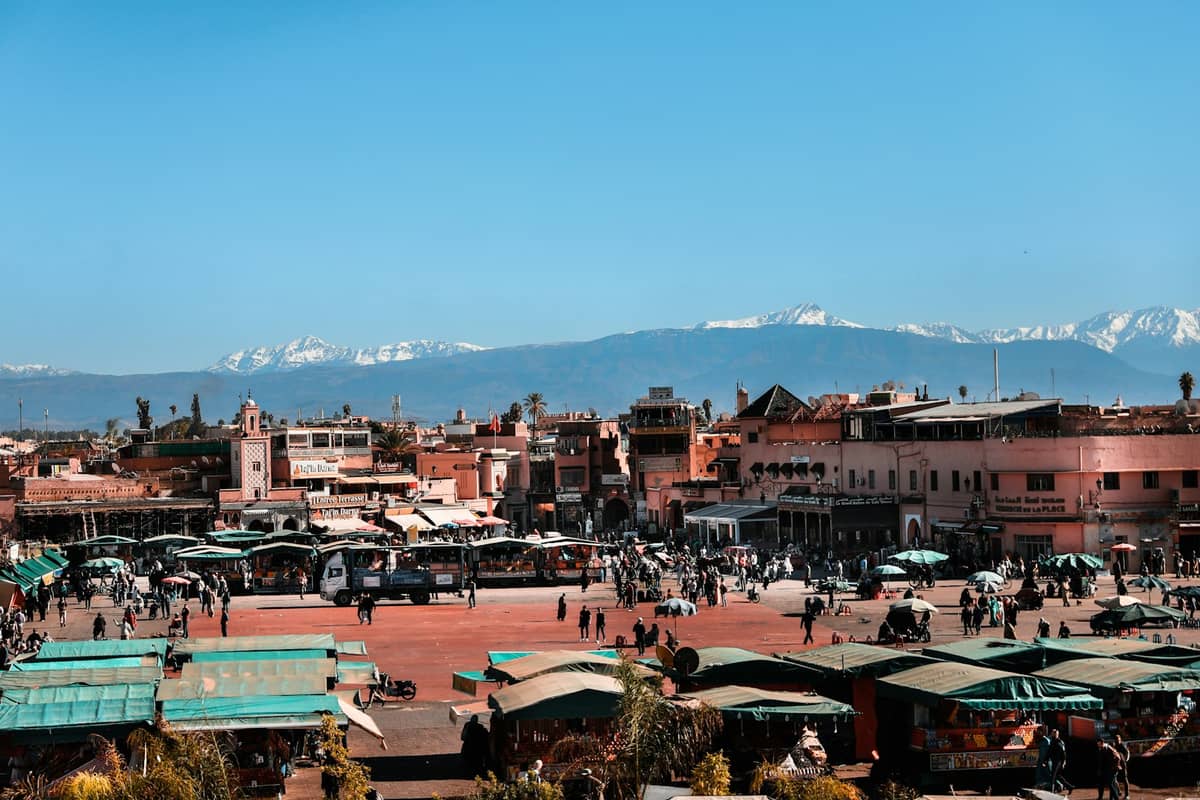
Visiting Morocco and skipping Marrakech would be like visiting Japan and skipping Kyoto. The city is the capital of the Marrakech-Safi region, home to roughly one million people, and anchored by one of the best-preserved historic medinas in the Arab world. It earned UNESCO World Heritage status in 1985, and the designation is well-earned. The walled old city contains a concentration of architectural and cultural landmarks that few places outside the Middle East can match, all within walking distance of each other.
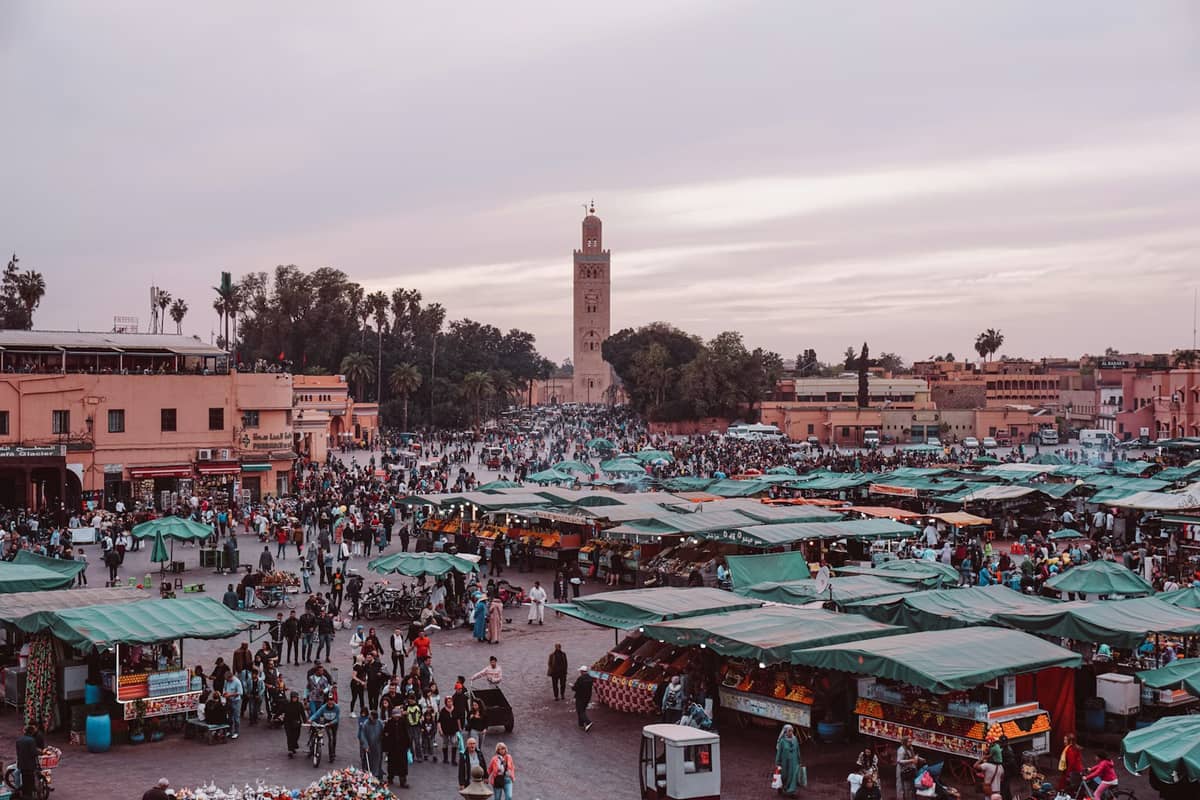
The gravitational centre of any visit is Jemaa el-Fna square, which transforms completely from morning to night. At 8am, orange juice vendors and a handful of snake charmers. By dusk, the entire square becomes a sprawling open-air kitchen with dozens of food stalls, acrobats, storytellers, and musicians. It is genuinely unlike anywhere else in the world, and that alone justifies the airfare for many visitors.
Beyond the square, the medina contains the 14th-century Ben Youssef Madrasa, one of the finest examples of Moroccan Islamic architecture anywhere, the Bahia Palace with its extraordinary courtyard gardens, the haunting ruins of El Badi Palace, and the Saadian Tombs, only rediscovered in 1917 and still startling in their decorative richness. Layered on top of all this is a food culture that has quietly become one of the most respected in North Africa, a design and craft tradition embedded in the souks, and the High Atlas mountains visible from rooftops across the city on clear days.
ℹ️ Good to know
Marrakech sits at roughly 460 metres above sea level on a plain at the foot of the High Atlas Mountains. The airport (IATA code: RAK) is around 6 km from the medina, with a taxi taking 15–20 minutes. Bus Line 19 runs between the airport and Jemaa el-Fna for around 30 MAD and takes 30-40 minutes depending on traffic.
The Real Drawbacks: What Travel Blogs Don't Tell You
Marrakech has a tout problem. Inside the medina, particularly near Jemaa el-Fna and the main souk entrances, some individuals will offer to guide you to a tannery, a spice market, or a carpet shop, and then expect commission from whatever you buy. This is not illegal, but it catches many first-time visitors off guard. The solution is straightforward: learn the rough geography of the medina before you arrive, decline offers of help politely but firmly, and use a downloaded offline map. The hassle reduces sharply once you're deeper into the residential quarters.
Navigation in the medina is genuinely difficult. The lanes are unlabelled, they fork unexpectedly, and addresses reference landmarks rather than street numbers. This is not a flaw to be fixed; it is part of how the medina has functioned for centuries. But it means your first half-day will likely involve getting lost. Budget for this. Getting around Marrakech has practical detail on transport options between the medina and the Ville Nouvelle.
Summer heat is not a misconception inflated by timid travellers. July and August see average daytime highs of around 36-37°C, and temperatures above 40°C are not unusual during heatwaves. Sightseeing between 11am and 4pm in high summer is genuinely punishing, and several major attractions have limited shade. If your travel dates are fixed in July or August, plan accordingly: start early, rest midday, and concentrate outdoor activity in the evenings.
⚠️ What to skip
Solo women travellers may face persistent unsolicited attention in the medina, particularly after dark and near Jemaa el-Fna. This does not make Marrakech unsafe, but it requires a different approach to navigation and planning. Our Marrakech solo travel guide covers strategies that significantly reduce friction.
The Best Experiences: What to Prioritise
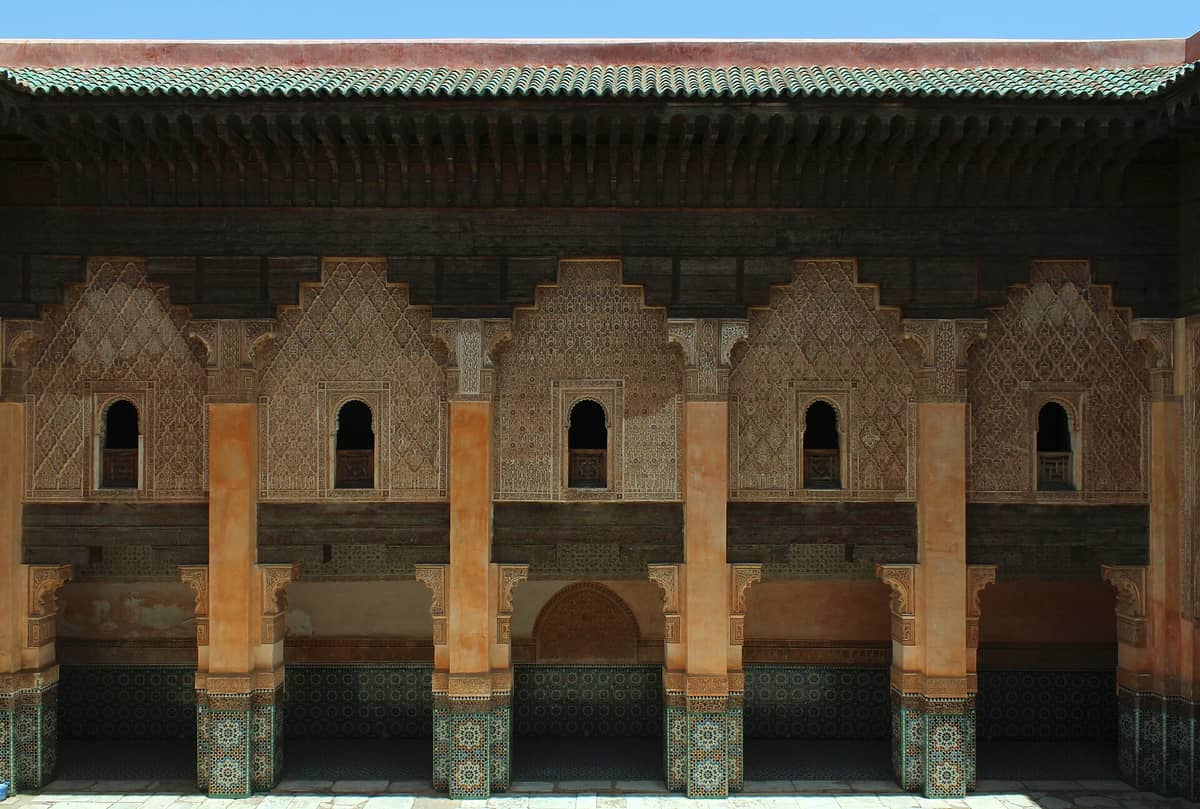
The Bahia Palace and the Saadian Tombs are located within ten minutes of each other in the southern medina. Both charge modest entry fees (verify current prices on-site, as they change periodically) and represent some of the finest surviving examples of Saadian and Alaouite craftsmanship in Morocco. The Ben Youssef Madrasa, in the northern medina near the souks, is the third essential architectural stop: the central courtyard, with its carved stucco, cedar woodwork, and marble pool, is one of the most photographed interiors in the country for good reason.
- Jardin Majorelle and YSL Museum The Majorelle Garden was designed by French painter Jacques Majorelle, rescued from development by Yves Saint Laurent in 1980, and now houses the Berber Museum alongside the YSL Museum next door. Morning entry (opening time, typically 8am) is significantly quieter than afternoons. Budget around 2-3 hours combined.
- The Souks, approached from the north Enter the souk network from the north end near the Ben Youssef Madrasa rather than from Jemaa el-Fna. You get the same craftwork sections (leatherwork, brass, textiles, spices) with considerably less tourist pressure and more room to browse without obligation.
- A traditional hammam session A proper hammam is not a luxury hotel spa add-on; the traditional neighbourhood hammams in the medina cost 50-150 MAD and involve a real scrub-down exfoliation. It is one of the most culturally authentic experiences available to visitors and takes around 90 minutes.
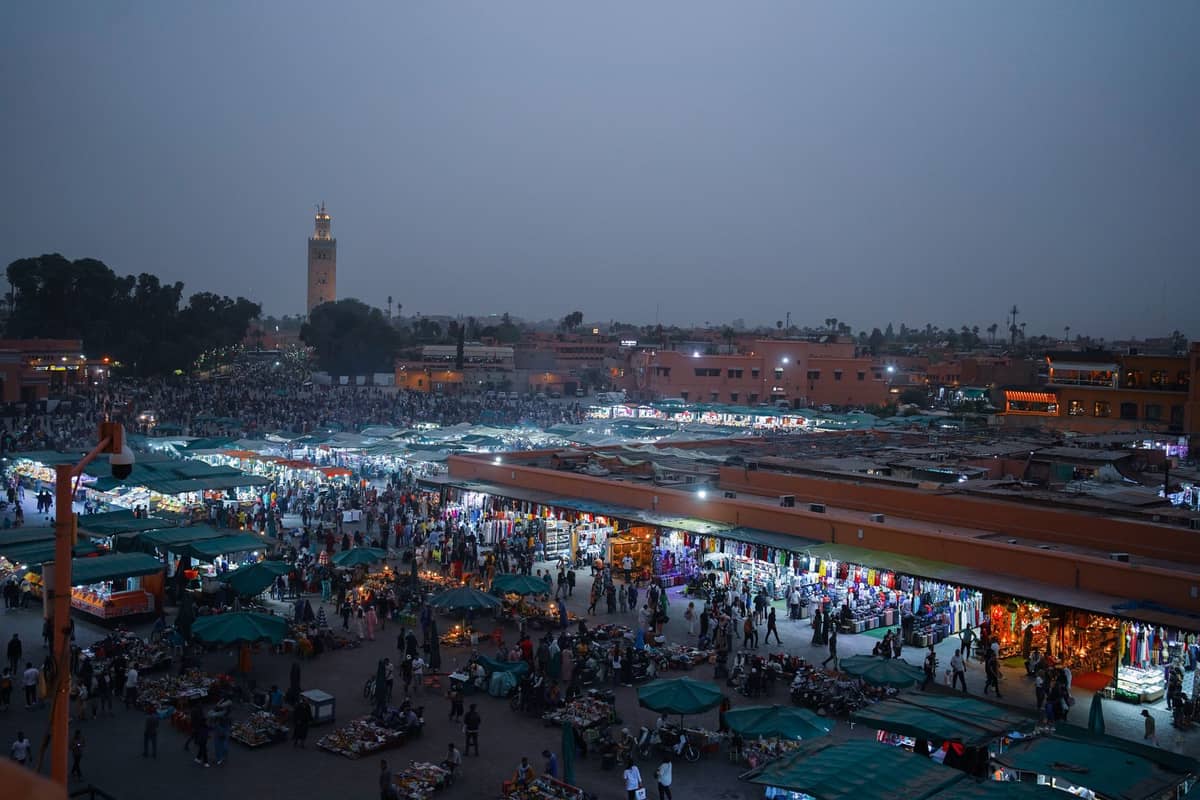
- Rooftop dinner overlooking Jemaa el-Fna Several restaurants on the rooftops surrounding the square offer dinner with a direct view of the nightly spectacle below. The food is secondary; the view of 10,000 people under floodlights at dusk is the point.
- Day trip to the Ourika Valley or Agafay Desert The Ourika Valley is about 35–40 km south and takes around an hour by car (Setti Fatma at the far end is closer to 90 minutes); the Agafay rocky desert is about 30–40 km southwest and takes under an hour. Both are viable full-day excursions from the city without needing a multi-day trip.
For a structured approach to the city's highlights, our 3 days in Marrakech itinerary covers the medina, Gueliz, and a day trip in a logical sequence that avoids doubling back through the narrow streets. If you have a week, the one-week Marrakech itinerary adds the Atlas Mountains, the Essaouira coastal road trip, and deeper dives into the city's art and design districts.
Climate, Crowds, and When to Go
Marrakech has a semi-arid climate with clearly defined seasons. Winter (December to February) brings daytime temperatures of 18-20°C, cool nights around 6-8°C, and occasional rain. It is comfortable for walking, largely crowd-free compared with spring, and hotel prices are lower. The tradeoff is short daylight hours and the possibility of cold evenings without central heating in older riads.
Spring, specifically March through May, is widely considered the optimal window. Daytime temperatures climb from the low 20s in March to around 28-30°C by May. The Atlas Mountains retain snow cover through March and April, creating a striking backdrop when visible from the city. Crowds increase from Easter onwards, and accommodation prices rise accordingly, but the overall conditions are genuinely excellent for outdoor sightseeing.
Autumn (September to November) is the second recommended window. September remains hot at around 32°C, but the brutal summer peak has passed. October is arguably the single best month: temperatures drop to a comfortable 25-27°C, light is golden and clear, and the post-summer crowds have thinned. November brings increasing rain risk, particularly in the second half of the month. December in Marrakech, covered in our December Marrakech guide, is underrated and often overlooked by travellers who assume winter means cold.
✨ Pro tip
If your trip coincides with Ramadan, the city experience changes substantially: many restaurants close during daylight hours, the pace of life shifts, and the nightly Iftar meal transforms Jemaa el-Fna into something extraordinary. It is not a reason to avoid Marrakech, but it requires different planning. Check our Marrakech during Ramadan guide for specifics.
Practical Realities: Costs, Language, and Logistics
Morocco uses the dirham (MAD), which is a largely closed currency and generally not convertible outside the country. Bring euros or dollars to exchange on arrival at the airport or at city exchange bureaus; avoid exchanging at hotels, where rates are typically worse. ATMs are widely available in Gueliz and at major medina entry points. Budget travellers can manage on 300-500 MAD per day covering a basic riad, street food, and entry fees; mid-range travel with sit-down restaurants and comfortable accommodation typically runs 800-1,500 MAD per day per person.
French is genuinely useful in Marrakech, far more so than in northern Moroccan cities. Most hotel staff, restaurant workers, and shop owners in tourist areas speak French as a working language. English is spoken at higher-end riads and in Gueliz, but it becomes less reliable deeper in the medina. A handful of Darija phrases (the Moroccan Arabic dialect) go a long way: shukran (thank you), la shukran (no thank you), and bshal (how much?) signal respect and often defuse pressure selling immediately.
- Dress modestly in the medina: covered shoulders and knees for both men and women are appropriate and reduce unwanted attention.
- Tap water is treated but many visitors stick to bottled water to avoid stomach adjustment issues, particularly in the first few days.
- Plug type C and E (European two-pin), 220V at 50Hz. UK visitors need a plug adapter; US visitors need both a plug adapter and a voltage converter for non-dual-voltage devices.
- Morocco's international dialling code is +212. Morocco Standard Time is currently UTC+1, with clock adjustments around Ramadan that should be verified before travel.
- A per-night tourist tax is charged by most hotels and riads at check-in; the amount varies by property category. Confirm the total cost including tax when booking.
Where you stay shapes the experience significantly. Sleeping inside the medina in a traditional riad puts you at the centre of everything, but means navigating narrow alleys with luggage and accepting that scooters share your pedestrian space. Staying in Gueliz, the modern Ville Nouvelle district, gives you wide streets, cafés, and easy taxi access, but distances you from the historic core. Our guide to staying in a riad in Marrakech covers the tradeoffs in detail, including what riad quality varies more than almost any other accommodation category in the city.
Marrakech Beyond the Medina: Day Trips and Surroundings
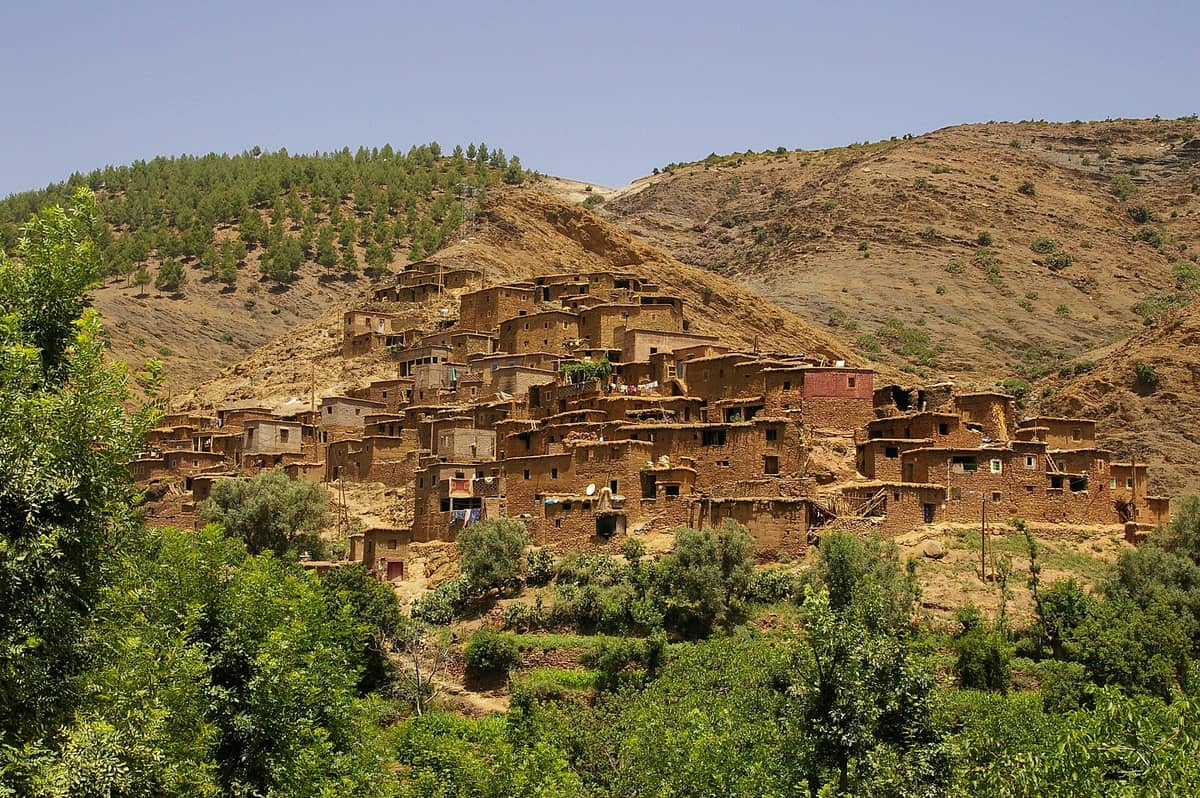
One of the strongest arguments for visiting Marrakech is its location as a base for some of North Africa's best day trips. The Ourika Valley offers Berber villages and waterfalls within 90 minutes. The Agafay Desert provides a genuine rocky desert landscape without a full overnight camel trip. The coastal town of Essaouira is a 2.5-hour drive and one of Morocco's most rewarding day trips for its ramparts, seafood, and completely different atmosphere.
For serious trekkers, the High Atlas is on the doorstep: Imlil village and the trails toward Mount Toubkal, the highest peak in North Africa at 4,167 metres, are accessible within two hours by road. The full range of excursions is covered in our day trips from Marrakech guide, including logistics, costs, and what to skip.
FAQ
Is Marrakech safe for tourists?
Marrakech is generally safe for tourists in terms of violent crime, which is rare. The most common issues are petty theft in crowded areas, persistent touts near Jemaa el-Fna, and scams involving fake guides. Standard urban precautions apply: keep valuables concealed, avoid displaying expensive cameras or jewellery in crowded souks, and be firm but polite when declining unsolicited help. Solo women should be aware of street harassment, which is common in the medina at night. Check current government travel advisories for your nationality before booking.
How many days do you need in Marrakech?
Three full days covers the essential medina sights, the Jardin Majorelle, the Bahia Palace, and enough time in the souks and at Jemaa el-Fna to get a real feel for the city. Add one or two days if you plan a day trip to the Ourika Valley, Agafay Desert, or Essaouira. A week allows you to slow down, do a proper hammam, eat your way through the food scene, and take an overnight trip toward the Atlas or the Sahara.
Is Marrakech worth visiting in summer?
It depends on your heat tolerance. July and August regularly reach 36-38°C, sometimes higher, and outdoor sightseeing in the middle of the day is genuinely uncomfortable. The city does not empty out in summer, particularly in late August when European school holidays peak. If July or August are your only options, focus on early morning activity (before 10am), long midday breaks in your riad, and evening exploration. The upside: accommodation prices are lower outside of August peak, and the evening atmosphere at Jemaa el-Fna remains spectacular regardless of season.
Do I need to speak Arabic or French to visit Marrakech?
No, but French is genuinely useful and worth practising a few basics. Most tourist-facing businesses in the medina and Gueliz operate in French and increasingly in English. Darija (Moroccan Arabic) is the everyday language; learning a few courtesy phrases is appreciated and reduces friction in markets. Spanish is understood in some quarters due to historical ties with northern Morocco. German and Italian are less reliable outside luxury hotels.
What is the biggest mistake first-time visitors make in Marrakech?
Trying to navigate the medina without a downloaded offline map and getting drawn into unofficial guide schemes in the first hour. The second most common mistake is booking accommodation without reading recent reviews: riad quality varies enormously between properties that look identical in photos, and the difference between a well-run riad with genuine hospitality and a poorly maintained one can define the entire trip. Check reviews from the last six months, as management changes in riads are common.
Tickets & tours
Live prices and dates from our booking partner. If you book, we may earn a commission at no extra cost to you.
Planning a trip? Discover personalized activities with the Nomado app.