Agafay Desert from Marrakech: Day Trips & Overnight Camps
The Agafay Desert sits less than an hour from Marrakech and offers a genuine desert experience without a two-day drive to the Sahara. This guide covers exactly what Agafay is, how to get there, what activities are worth paying for, how overnight camps differ by season, and the practical trade-offs you should know before booking.
Tickets & tours
Live prices and dates from our booking partner. If you book, we may earn a commission at no extra cost to you.
TL;DR
- The Agafay Desert is a rocky, arid plateau about 30-35 km southwest of Marrakech, not a sand-dune Sahara landscape.
- Day trips take 40-60 minutes each way via Route d'Amizmiz and typically cost 400-700 MAD per person for budget options, or €60-130 for combined activity packages. See our Marrakech desert tour guide for full operator comparisons.
- Spring (March-May) and autumn (September-November) offer the most comfortable conditions; summer visits should be planned around sunset and evening hours.
- Overnight camps range from basic Berber-style tents to luxury glamping setups with private pools; the experience and price vary enormously.
- If you want actual sand dunes and the full Sahara experience, Agafay is not that place. For that, read our Agafay Desert attraction page alongside planning a longer trip east.
What the Agafay Desert Actually Is (and Is Not)
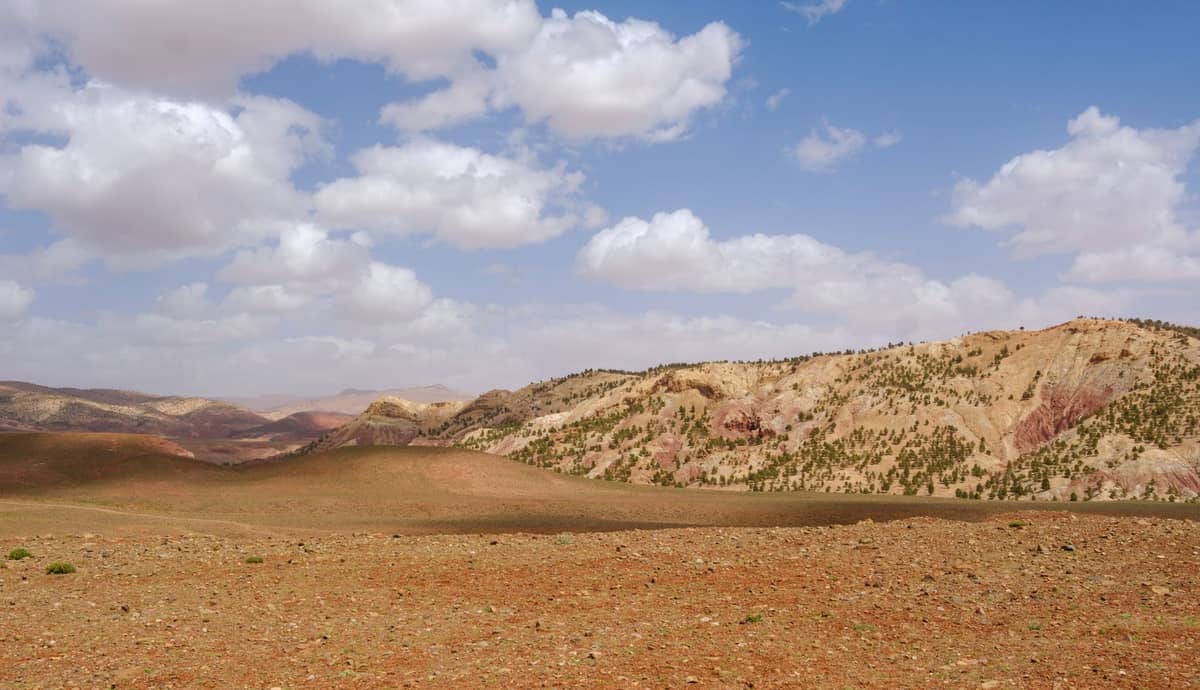
Agafay is a stone desert, sometimes described as a lunar landscape: flat and rolling rocky terrain dotted with sparse scrub, broken by the occasional dried riverbed. It sits on a plateau southwest of Marrakech near the Atlas foothills, which means on clear days you get a dramatic mountain backdrop. The contrast of bare rock, faint Atlas snow caps in winter, and total silence is genuinely striking.
What Agafay is not: it has no significant sand dunes. If your mental image of a Moroccan desert involves sweeping golden dunes like Erg Chebbi near Merzouga, you will be disappointed. Agafay is marketed as a desert experience precisely because of its proximity to Marrakech (around 30-35 km southwest, a 40-60 minute drive via Route d'Amizmiz), not because it replicates the Sahara. Once visitors understand this distinction, most find the place impressive on its own terms. Those who arrive expecting Lawrence of Arabia-style dunes leave underwhelmed.
ℹ️ Good to know
If you have four or more days in Morocco and the Sahara is a priority, a proper dune experience at Merzouga or Zagora is worth the longer journey. Agafay is the right choice when you have one or two days from Marrakech and want a desert atmosphere without an overnight bus.
Getting to Agafay from Marrakech
The main road is Route d'Amizmiz, heading southwest out of Marrakech past the Menara Gardens. In normal traffic, you will reach the first desert camps in around 40 minutes; the furthest properties sit closer to 60 minutes from the medina. The road is paved and straightforward, which makes Agafay accessible by rental car if you are comfortable driving in Morocco.
- Organised day-trip transfer The most common option. Most operators include return transport from your riad or hotel, with a pickup point at Jemaa el-Fna for budget tours. No navigation required.
- Private hire taxi or grand taxi You can negotiate a half-day or full-day rate with a local driver. Agree the total price in advance, including waiting time. Expect to pay more than a standard trip fare.
- Rental car Practical if you want flexibility on timing and are visiting multiple points. Parking at camps is easy. Driving in Marrakech itself takes adjustment, but the route to Agafay is relatively calm once past the city's ring road.
- Ride-hailing apps (Careem, inDrive) Available in Marrakech and worth checking for one-way journeys to the desert, though drivers may not always accept a trip this far out. Confirm availability in-app before relying on this option.
There is no public bus to Agafay's camp areas. For a broader look at transport options within the region, the getting around Marrakech guide covers taxis, buses, and rental logistics in detail.
Day Trip Options: What to Expect and What to Pay
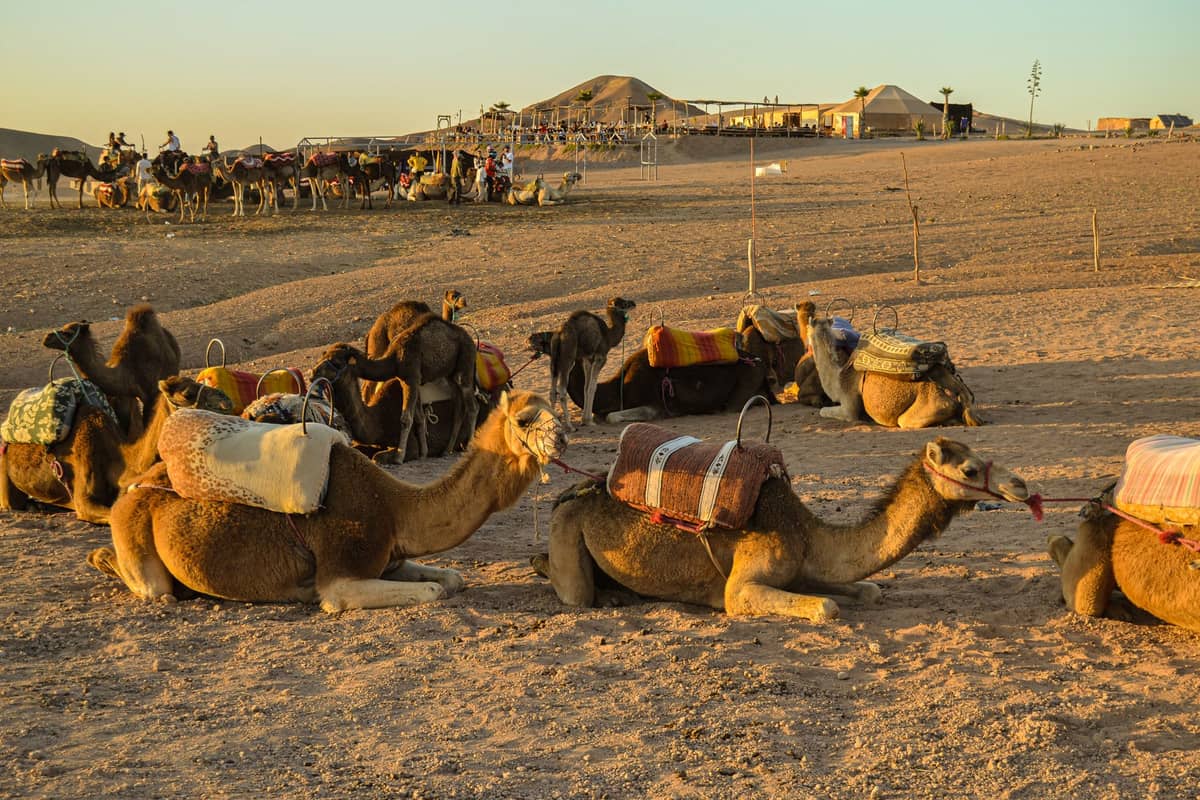
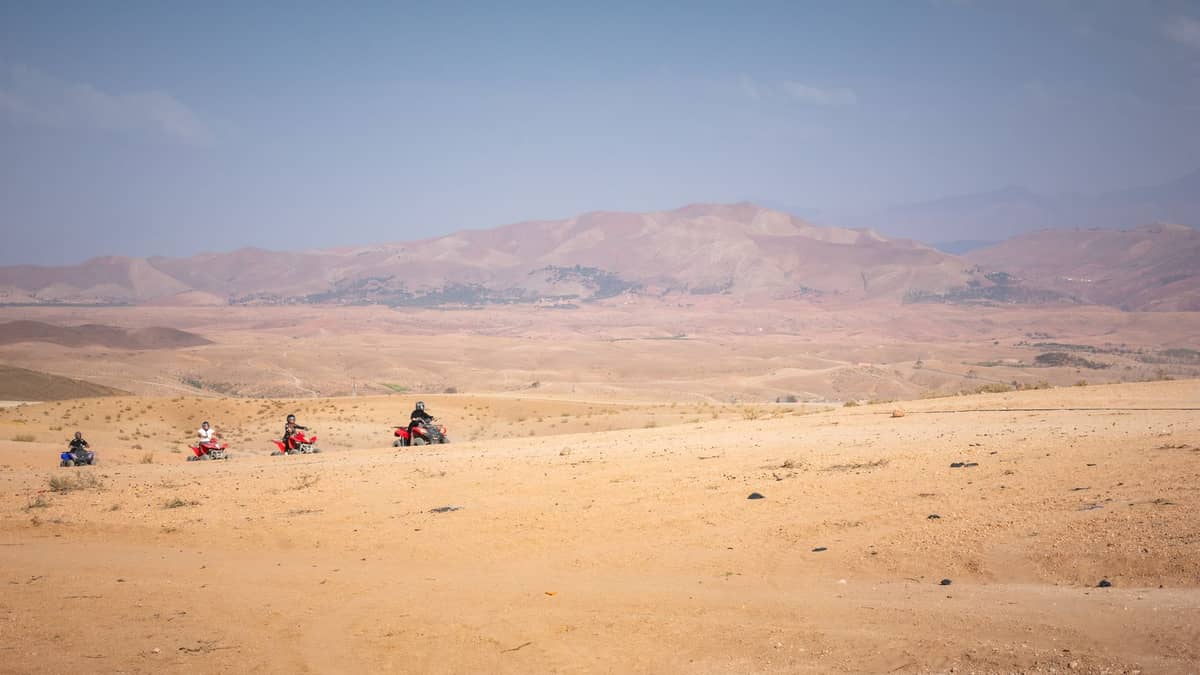
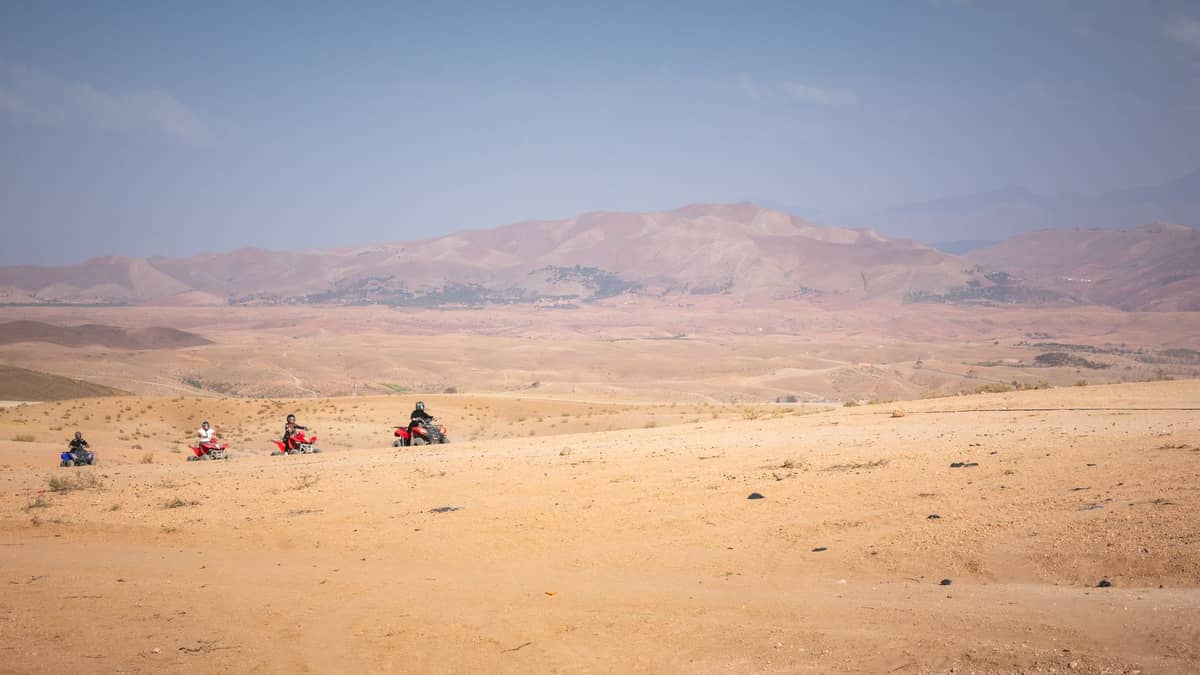
Agafay day trips from Marrakech typically run as either half-day (afternoon departure, sunset return) or full-day packages. Most include return transport plus two or three activities bundled together. The most common combinations are: camel ride plus lunch or dinner, quad biking plus sunset viewing, or a pool-access day at a luxury camp with lunch included.
Pricing is tiered. Budget group tours with camel ride and Moroccan lunch sit around 400-700 MAD per person (roughly €37-65). Combined activity packages with transfers, multiple activities, and dinner typically range from €60-130 per person (around 660-1,430 MAD). On booking platforms, prices can be higher once commissions and optional extras are included. Private custom tours cost more but give you control over timing and group size, which matters in summer when you want to arrive at dusk rather than midday.
⚠️ What to skip
Quad biking in Agafay varies significantly in quality. Some operators use well-maintained machines with safety briefings; others provide old equipment with no helmets. Check reviews specifically for the activity provider, not just the overall tour company. If quad biking is the main reason you are going, book with a specialist operator rather than a bundled 'everything included' package.
- Camel rides at Agafay are typically 20-30 minutes and designed for tourists, not a working ride across the landscape. Temper expectations accordingly.
- Sunset is the defining spectacle in Agafay. Any day trip that leaves you there between 5pm and 7pm (seasonal variation) is worth the ticket price for that moment alone.
- Lunch and dinner at camp is usually a set Moroccan menu: tagine, couscous, bread, mint tea. Quality varies by camp but is generally reliable.
- Pool-day access at luxury camps is increasingly popular, especially April-October. Some properties charge €50-80 for day access including lunch.
- Hot air balloon flights can be combined with an Agafay sunset. This costs significantly more but the views of the Atlas and the desert plateau at dusk are exceptional.
For balloon flights specifically, the Marrakech hot air balloon guide has pricing, operator notes, and what to check before booking.
Overnight Camping in Agafay: Luxury Glamping vs Basic Tents
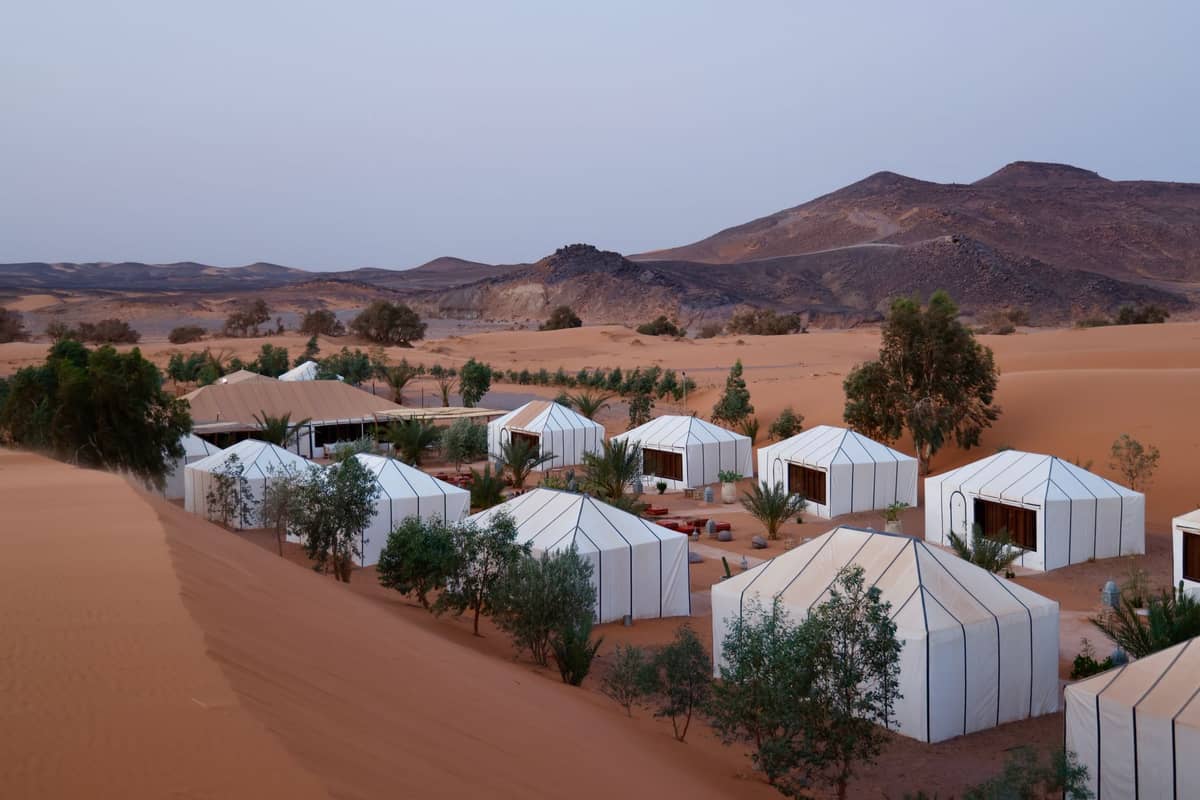
Agafay has two distinct overnight experiences, and conflating them leads to a lot of disappointed or surprised visitors. The first is basic Berber-style camp accommodation: canvas tents or simple fixed structures with shared facilities, Moroccan meals cooked over fire, and an atmosphere that prioritises the night sky over comfort. These cost roughly 300-700 MAD per person including dinner and breakfast, and they genuinely deliver on atmosphere.
The second tier is luxury glamping. Several high-end properties have opened in the Agafay area over the past decade, offering private pool villas, air-conditioned tents, spa services, and curated Moroccan dining. These properties can charge €200-600 per night per tent or villa, and they bear more resemblance to a boutique resort than a desert camp. Both are legitimate options depending on what you are after, but they are very different products.
✨ Pro tip
Winter overnight stays (December-February) require proper warm layers. Night temperatures in Agafay regularly drop to 3-10°C, and most basic tents are not well-insulated. Luxury camps with heating are a worthwhile upgrade in this season. If you book a budget camp in January, pack as if you are going hiking in the mountains.
The overnight experience in Agafay shares some DNA with staying in a traditional riad in Marrakech: both involve trading modern convenience for atmosphere and character. If you are new to this style of travel, the guide to staying in a riad in Marrakech gives useful context on what 'atmospheric accommodation' means in a Moroccan context.
Best Time to Visit: Seasonal Breakdown
Agafay sits at the junction of the Atlas foothills and the Haouz plain, which gives it more temperature variation than central Marrakech. Summer daytime temperatures regularly exceed 35-40°C on the plateau, and during peak July-August heat, midday visits are genuinely unpleasant. This is not a safety issue for healthy adults but it significantly reduces what you can do. Afternoon sunset visits (arriving around 4-5pm) make summer workable.
- Spring (March-May) Daytime 20-30°C, nights 10-18°C. The most comfortable season for full-day trips and overnight camping. Wildflowers appear on the plateau in March. Atlas snow is still visible. Book in advance for Easter and school-holiday weeks.
- Summer (June-August) Daytime 32-42°C, nights 20-25°C. Full-day visits are hard work in the heat. Sunset and evening trips are enjoyable. Luxury camps with pools are at their most appealing. Overnight stays are warm but comfortable.
- Autumn (September-November) Daytime 22-32°C, nights 12-20°C. Almost as good as spring. September retains summer warmth; October and November are ideal for both day trips and camping. Atlas peaks begin to attract snow in November.
- Winter (December-February) Daytime 15-22°C, nights 5-10°C or lower. Clear skies and no crowds. Excellent for photography and day trips. Cold nights require proper layering for overnight stays. Some basic camps close in the coldest weeks.
For a fuller picture of how Marrakech's seasons affect travel planning across all activities, the best time to visit Marrakech guide covers crowd patterns, festival dates, and weather trade-offs in detail.
Agafay vs the Sahara: Choosing the Right Desert for Your Trip
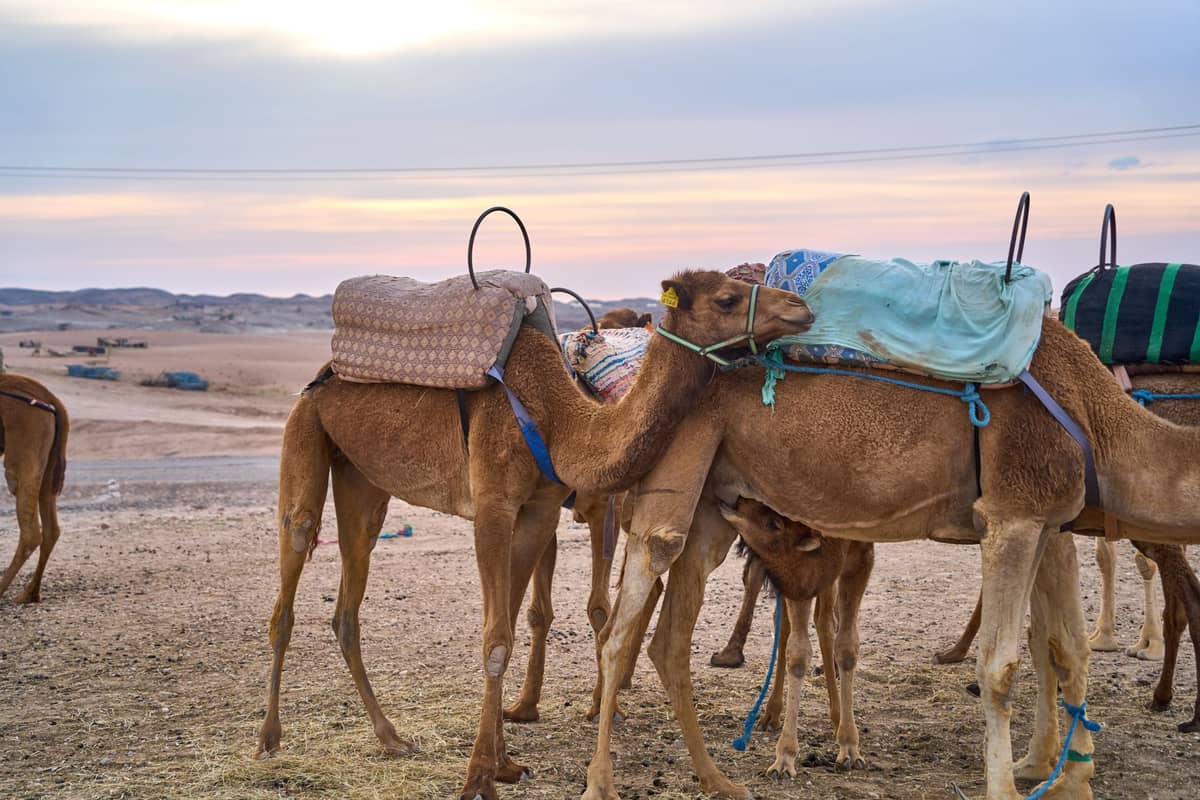
This is the most important decision point for desert-focused visitors to Morocco. Agafay wins on accessibility: under an hour from Marrakech, no overnight bus, no extra hotel nights. It works for anyone with a single free day who wants a break from the medina's intensity and a sunset worth remembering. The Atlas mountain backdrop is a significant visual bonus that the Sahara's eastern dune fields cannot match.
The Sahara, specifically the Erg Chebbi dunes near Merzouga (around 560 km east of Marrakech), wins on spectacle and the full desert immersion. The dunes are real, the scale is enormous, and a camel trek at sunrise in Erg Chebbi is a different category of experience compared to a 20-minute camel loop in Agafay. Getting there typically takes a full day of driving each way, so most itineraries split it over at least two days.
There is also a middle-ground option worth considering: combining Agafay with an Ourika Valley day trip on consecutive days, giving you both mountain and desert scenery without leaving the greater Marrakech region. The Ourika Valley is roughly 30 km southeast of the city and pairs naturally with an Agafay sunset evening.
💡 Local tip
If you are on a 3-day itinerary in Marrakech, dedicate one afternoon-into-evening to Agafay for the sunset and a dinner under stars. Save the full Sahara experience for a separate Morocco trip focused on the south. Trying to rush Merzouga into a short Marrakech itinerary almost always feels disappointing.
For travellers planning a week or more, the Marrakech one-week itinerary shows how to sequence Agafay alongside other day trips like the Ouzoud Waterfalls and the Atlas Mountains.
FAQ
Is Agafay Desert worth visiting from Marrakech?
Yes, with the right expectations. Agafay is a rocky stone desert, not a sand-dune landscape. For a sunset, a camel ride, and an evening meal under a massive sky within an hour of the city, it genuinely delivers. If you expect Sahara-style dunes, you will be disappointed. For anyone short on time or not wanting a multi-day desert trip, Agafay is the most practical desert experience available from Marrakech.
How far is Agafay Desert from Marrakech and how long does it take to get there?
Agafay is approximately 30-35 km southwest of Marrakech, reached via Route d'Amizmiz. In normal traffic the drive takes 40-60 minutes from the city centre or Jemaa el-Fna. Some closer camps are reachable in under 45 minutes; properties further into the plateau take closer to an hour.
What is the difference between Agafay Desert and the Sahara Desert in Morocco?
Agafay is a stone and rocky plateau desert at the foot of the Atlas Mountains, about 40-60 minutes from Marrakech. The Sahara dune regions (like Erg Chebbi near Merzouga) are about 560 km east, require at least two days of travel, and feature the large golden sand dunes most people picture when they think of the Sahara. Agafay offers convenience and an Atlas mountain backdrop; the Sahara offers scale, real dunes, and full immersion.
What should I wear for an overnight camp in Agafay in winter?
Winter nights in Agafay (December-February) regularly fall to 3-10°C and sometimes colder. Pack thermal base layers, a fleece or warm jacket, a hat, and socks you can sleep in. Basic camp tents are not well-insulated. Luxury glamping properties with heating are a better choice if you prioritise comfort, but even there, having warm layers for sitting outside at night is sensible.
Can I visit Agafay Desert without a guided tour?
Yes. If you rent a car or hire a private taxi for the day, you can drive to Agafay independently. The P2009 road is straightforward. Most camps and activity centres welcome walk-in visitors for activities like quad biking or camel rides, though calling ahead to reserve is advisable, especially in high season. Independent visits give you more flexibility on timing, particularly useful for catching the best sunset light.
Tickets & tours
Live prices and dates from our booking partner. If you book, we may earn a commission at no extra cost to you.
Planning a trip? Discover personalized activities with the Nomado app.