Marrakech to the Sahara: The Complete Desert Tour Guide
The Sahara is not a day trip from Marrakech. This guide covers the real routes, realistic prices, best seasons, and what to expect on a multi-day desert tour from Morocco's most visited city — so you can plan without surprises.
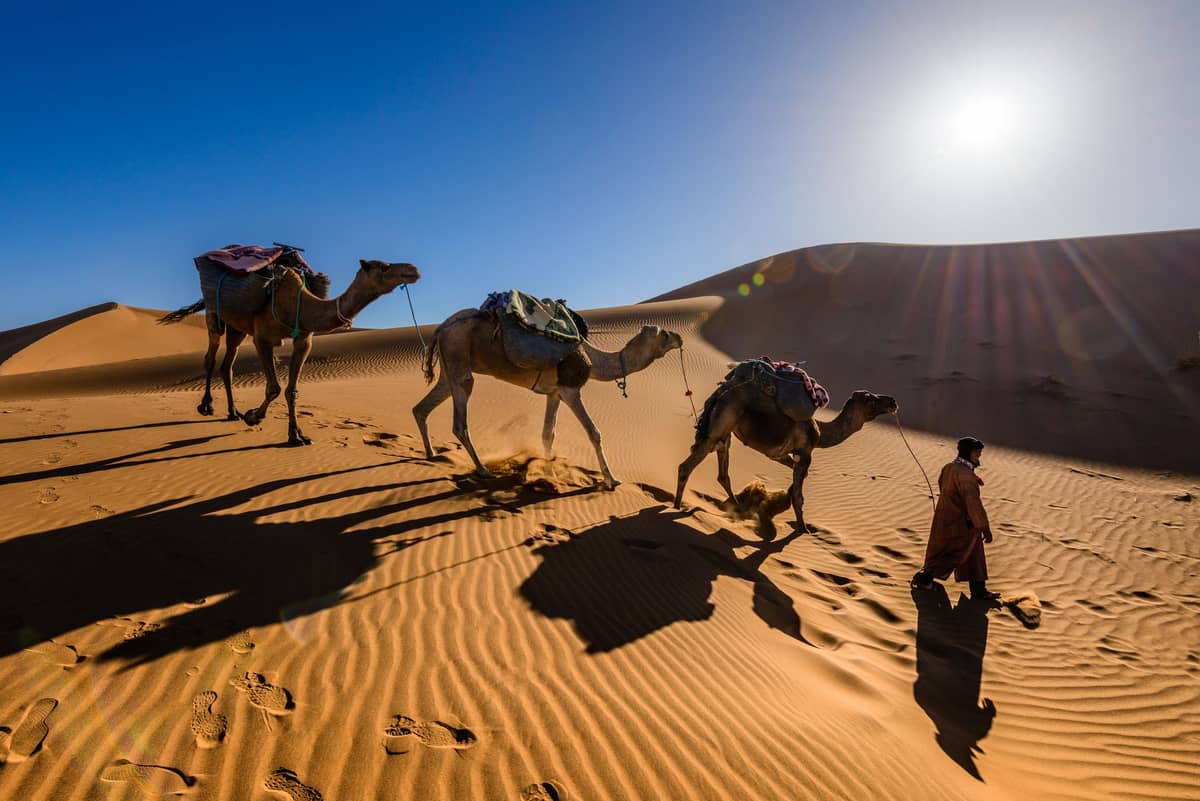
Tickets & tours
Live prices and dates from our booking partner. If you book, we may earn a commission at no extra cost to you.
TL;DR
- The classic Sahara dunes (Erg Chebbi near Merzouga) are roughly 560 km from Marrakech — a serious journey requiring 3 to 4 days minimum.
- Shared tours start around €85–120 per person; private tours range from €195 to €550+ depending on group size and camp quality.
- Spring (March–May) and autumn (September–November) are the most comfortable seasons — avoid July and August when desert temperatures exceed 40°C. See our best time to visit Marrakech guide for the full seasonal breakdown.
- The Agafay Desert, about 30–40 km from Marrakech, is a credible alternative if you only have one night — but it is rocky plateau, not sand dunes.
- Tours run year-round. The idea that desert trips only happen in winter is a myth.
The Sahara from Marrakech: What You're Actually Signing Up For
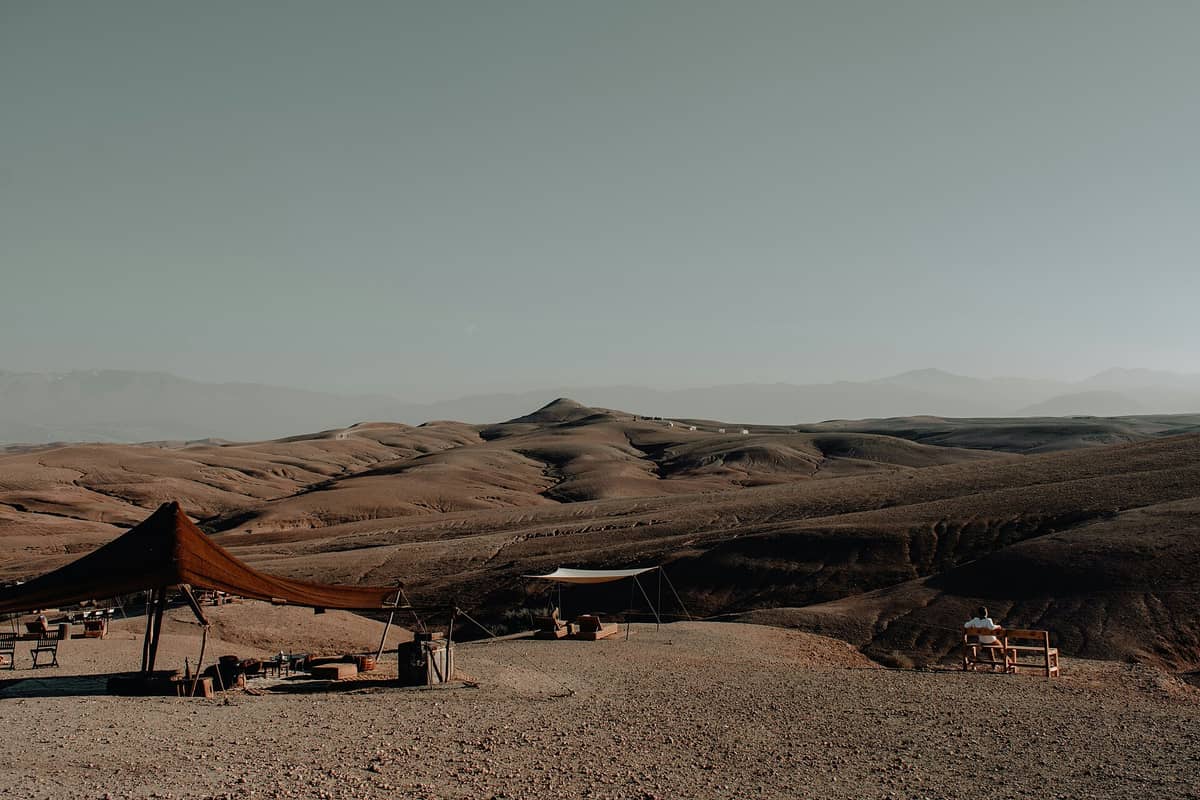
The Agafay desert sits about 30–40 km from Marrakech and looks dramatic in photos, but it is a rocky limestone plateau rather than classic sand dunes. If you want the towering orange dunes most people picture when they hear 'Sahara', you are heading to Erg Chebbi near the town of Merzouga, and that is roughly 560 km from Marrakech by road. Getting there and back, with at least one night in a desert camp, takes a minimum of three days. Any operator advertising a Sahara day trip from Marrakech is selling you something quite different.
The standard route crosses the High Atlas Mountains via the Tizi n'Tichka pass (around 2,210 m elevation), drops into the Draa Valley, passes through Ouarzazate — sometimes called the 'Gateway to the Sahara' — and continues east through the Dades Gorge and Todra Gorge before reaching Merzouga. The landscape changes dramatically every hour of driving. For travelers who have more time, this journey is genuinely the point, not just the means of getting there. If you are planning a fuller trip, our one-week Marrakech itinerary shows how to fold a desert loop into a wider Morocco trip.
⚠️ What to skip
Do not book a 'Sahara day trip' expecting Erg Chebbi dunes. A day trip from Marrakech can only reach the edge of the pre-Saharan landscape or the Agafay plateau. The iconic sand dunes at Merzouga require 3 to 4 days round-trip.
Routes and Durations: Your Main Options
Most desert tours from Marrakech follow one of two formats: a 3-day/2-night loop or a 4-day/3-night trip with more time at the dunes or extra stops along the way. Both typically travel one route in each direction, meaning you see different scenery going and coming back.
- 3-Day Marrakech to Merzouga (most popular) Day 1: Marrakech to Ouarzazate and onward to the Dades Gorge (overnight). Day 2: Todra Gorge to Merzouga, camel trek at sunset, overnight in desert camp. Day 3: Sunrise in the dunes, return to Marrakech via a southern route through Draa Valley. Roughly 10–12 hours of driving per day on the longer legs.
- 4-Day Extended Loop Adds a proper overnight in Ouarzazate or a visit to Ait Benhaddou (a UNESCO-listed ksar), more time in Merzouga, and sometimes a stop at Telouet Kasbah. Better pacing, less exhaustion. The extra day costs more but the trip quality improves noticeably.
- Agafay Desert Overnight (budget/time-limited option) About 30–40 km southwest of Marrakech, the Agafay plateau offers luxury and mid-range desert camps with a similar 'sleeping under stars' atmosphere. No dunes, but far more accessible — a half-day excursion or one-night stay is feasible. Good for short stays or families with young children.
- One-Way Drop-Off Tours Some operators offer drop-off in Merzouga or Fes, allowing you to continue north rather than return to Marrakech. Requires coordinating onward travel but works well for travelers on a longer Morocco circuit.
Ait Benhaddou deserves special mention as a stop on most 3- and 4-day tours. This fortified village (ksar) near Ouarzazate is a UNESCO World Heritage Site and has appeared in numerous film productions. It adds context to the journey without much detour. See the dedicated Ait Benhaddou guide for what to expect on a stop there.
Prices: Shared Tours vs Private, Budget vs Luxury
Pricing for Marrakech desert tours varies considerably based on group size, vehicle type, camp quality, and whether meals are included. The numbers below reflect typical 2025–2026 market rates — always confirm directly with operators before booking, as prices shift seasonally.
- Shared group tours (3 days) Starting around €85–120 per person. You travel in a minibus with other tourists, typically 6–16 people. Basic desert camp with shared facilities. Includes transport, camp stay, most meals, and camel trek. Found on platforms like GetYourGuide from around US$125–140 per person.
- Private tours (3 days) From around €195 per person for small groups (4+), rising to €350–500 per person for couples or solo travelers. Includes private 4x4 or minivan, personal driver-guide, and often a better-quality camp. More flexible schedule, able to stop when you want.
- Private luxury tours (4 days) From roughly €275 per person for groups of 14+, up to €550–915 per person for solo travelers, with high-end fixed camps, private tents with proper beds, en-suite facilities, and sunrise/sunset camel treks. Some luxury camps also include a small swimming pool.
- Agafay overnight excursion Mid-range camps in the Agafay typically cost €80–150 per person for a one-night stay with dinner and breakfast. Luxury Agafay camps run significantly higher. Some options include transport from Marrakech, quad bikes, and live music.
💡 Local tip
Solo traveler pricing for private tours can be steep. If you want a private vehicle but are traveling alone, check whether your operator can match you with another solo traveler or small group heading on the same dates. You keep the flexibility of a private schedule while splitting the vehicle cost.
For context on how the Agafay fits into a Marrakech trip, the dedicated Marrakech Agafay Desert guide covers the plateau in detail, including which camps offer the best value and how to reach it independently.
Best Time to Go: Seasons, Heat, and Cold Nights
The Sahara desert has a far more extreme climate than Marrakech. Daytime temperatures at Erg Chebbi can hit 45°C in July and August, making a camel trek genuinely dangerous rather than romantic. Conversely, winter nights in the desert can drop close to 0°C — tent camps feel very different at 3am in January than the brochure suggests.
The sweet spot is October to April, with daytime temperatures roughly between 18°C and 30°C and manageable nights. Within that window, March to May and September to November are particularly good: warm enough to be comfortable during the day, cool but not cold at night, and the light for photography at sunrise and sunset is exceptional. October is consistently recommended by operators as the single best month.
- March–May: Warm days (20–30°C), occasional wind and sand haze in April. Wildflowers visible in the Atlas on the drive out.
- October–November: Clear skies, stable temperatures, low wind. Peak season for desert tours — book early.
- December–February: Chilly nights (0–5°C in the desert). Bring a proper sleeping bag even for mid-range camps. Daytime is pleasant and crowds are thinner.
- July–August: Avoid for the desert. Temperatures exceed 40°C by mid-morning. Even experienced desert travelers find this season punishing.
- Ramadan: Tours still run, but meal timings and camp atmosphere shift. Read our guide on traveling during Ramadan for cultural context.
✨ Pro tip
In winter (December–February), the drive over the High Atlas via Tizi n'Tichka can be affected by snow and occasional road closures. Check conditions before departure and confirm your operator has a contingency route via Tizi n'Test or the Demnat road if needed.
What to Expect on the Tour: Logistics and Realities
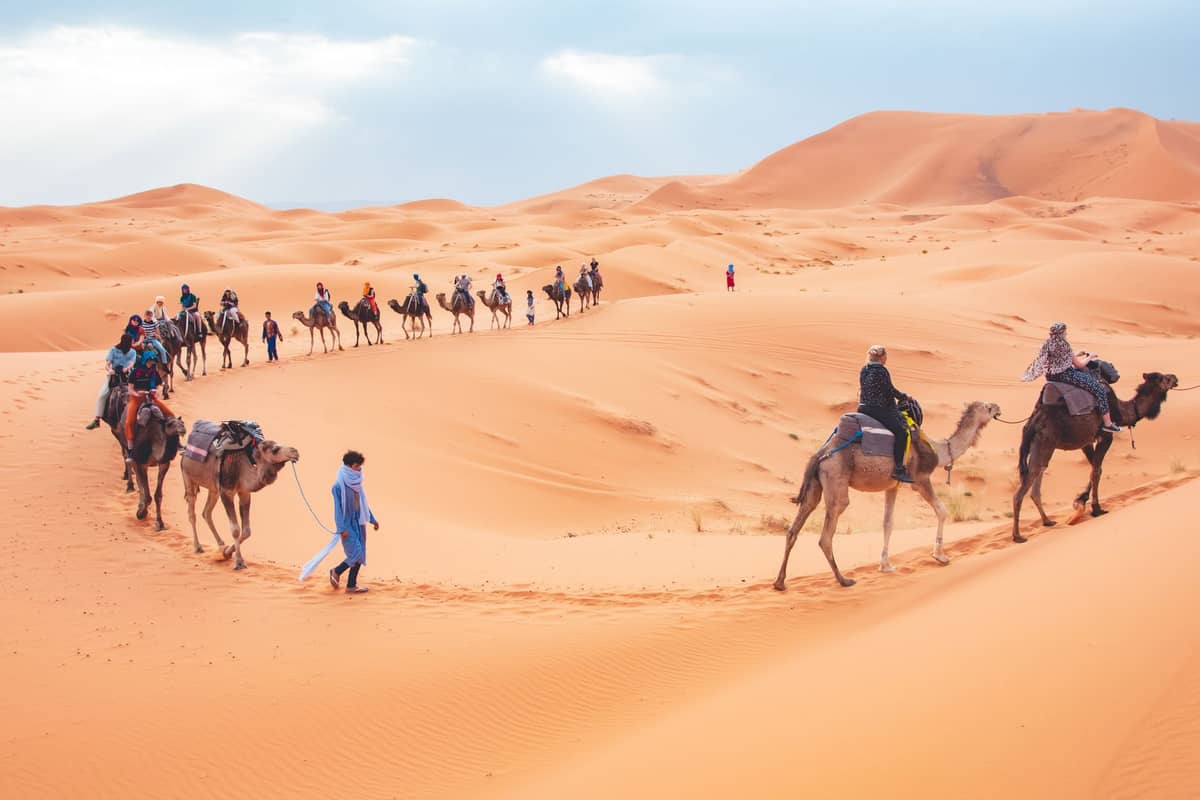
Most tours depart Marrakech early in the morning, around 7–8am, from your riad or a central meeting point near Jemaa el-Fna. On a 3-day shared tour, the first day involves a long drive of roughly 8–10 hours with stops, arriving at a guesthouse or camp in the Dades area. Day two is shorter and ends at the desert camp near Merzouga with the camel trek at sunset. Day three starts at sunrise in the dunes before the long return drive.
Camp quality varies enormously. Budget camps use basic Berber-style tents with shared squat toilets and simple meals. Mid-range camps offer proper beds inside traditional tents, flush toilets, and a three-course dinner with live music. Luxury fixed camps have en-suite bathrooms, proper mattresses, heating or air conditioning, and can cost several hundred dollars per night. Read operator descriptions carefully: 'standard camp' means something very different depending on who is selling it.
The camel trek itself typically lasts 45 minutes to 1.5 hours each way. It is not uncomfortable for most people, but camels walk at their own pace and the saddles are basic. Riders with back problems may prefer to walk alongside. Sandboarding is usually available at the dunes as an add-on. For more on desert activities beyond the tour itself, the Agafay Desert activities guide outlines what the closer alternative offers for comparison.
ℹ️ Good to know
Most shared tours include hotel pickups from the medina, but getting a vehicle into narrow riad alleys is often impossible. Be prepared to walk 5–10 minutes to a nearby street for pickup. Confirm the exact meeting point with your operator the evening before.
Booking: How and Where to Find a Reputable Tour
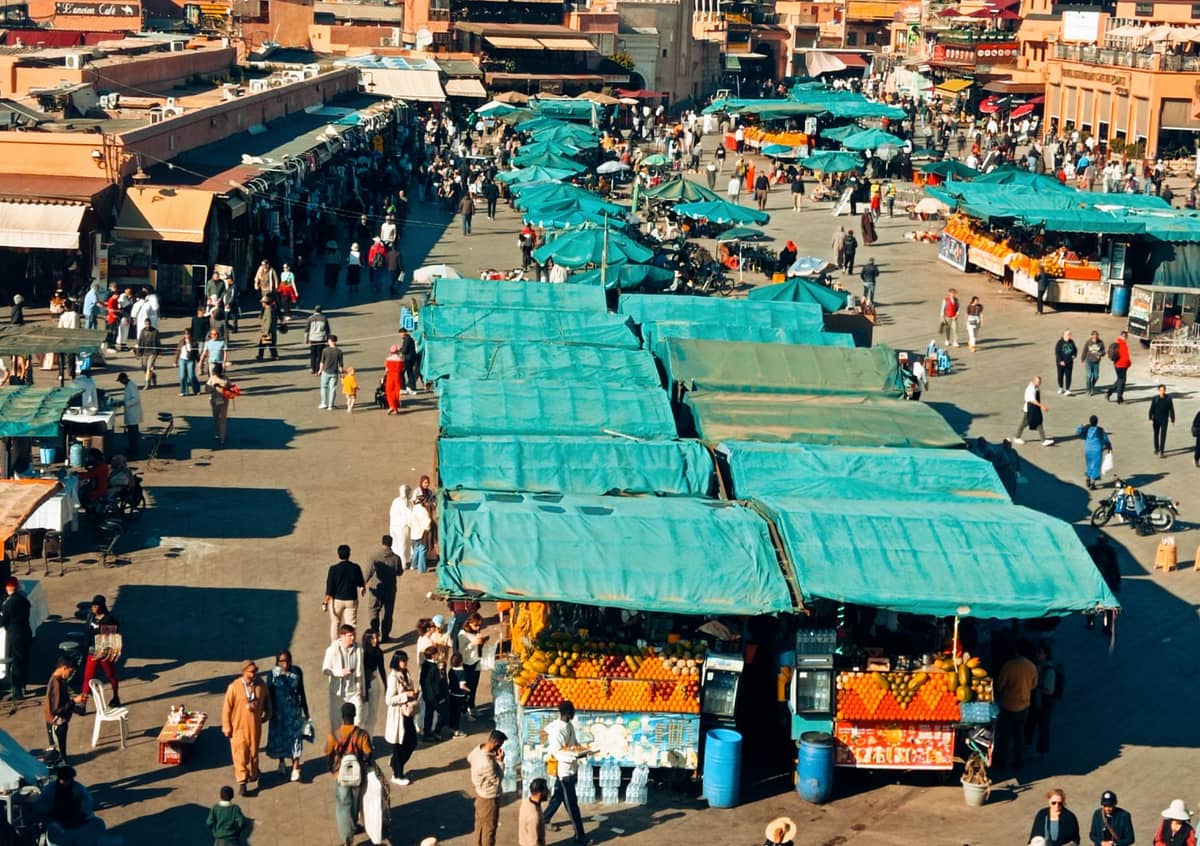
Desert tours from Marrakech are available through international booking platforms like GetYourGuide and Viator, Marrakech-based specialist operators, and directly through riad staff who have established relationships with local guides. Each channel has trade-offs. Booking platforms offer buyer protection and easy cancellation but sometimes add fees on top of the base price. Specialist operators often provide better customization, more knowledgeable driver-guides, and the ability to adjust itineraries. Riad recommendations can be excellent but also involve commission arrangements that are not always disclosed.
When comparing tours, look specifically at: whether the driver also acts as a guide or simply drives; camp category (standard, comfort, or luxury); whether all meals are included or just some; and the cancellation and refund policy. A suspiciously cheap 3-day tour — under €70 per person — often means a very basic camp, older vehicle, and a driver with limited English.
If you are planning a fuller itinerary that connects Marrakech to other Moroccan cities, the journey to the Sahara overlaps with routes toward Fes. Our guide on traveling from Marrakech to Fes covers that overland route in detail, including which segments work best as part of a desert loop.
- Check that your tour includes at least two different routes (outbound and return) — driving the same road twice is a waste of Morocco's landscape.
- Confirm your driver speaks enough of your language for real conversation, not just navigation.
- Ask what happens if the Atlas road is closed by snow — reputable operators have alternative routes planned.
- Read recent reviews specifically for the camp, not just the tour operator. Camp quality at the same price point varies significantly.
- For winter trips, ask whether the camp provides blankets and what the heating situation is in the desert tents.
Travelers combining a desert tour with broader sightseeing in Marrakech should plan at least two to three days in the city before or after. The 3 days in Marrakech guide outlines how to use limited city time efficiently before a desert departure.
FAQ
How many days do you need for a Sahara desert tour from Marrakech?
A minimum of 3 days and 2 nights to reach Erg Chebbi (Merzouga) and return to Marrakech. A 4-day tour allows for better pacing, more stops, and less time on the road each day. Day trips from Marrakech cannot reach the classic Sahara dunes.
What is the difference between the Agafay Desert and the Sahara?
The Agafay is a rocky, semi-arid plateau about 30–35 km from Marrakech. It has desert scenery and atmosphere but no sand dunes. The Sahara's famous dunes — Erg Chebbi — are about 560 km away. The Agafay works for one-night escapes; the Sahara requires a multi-day trip.
What is the best time of year for a Marrakech desert tour?
October to April offers the most comfortable temperatures, with October and March being particularly good. July and August should be avoided: daytime heat in the desert regularly exceeds 40°C. Winter nights (December–February) can drop near freezing, so pack accordingly.
How much does a Marrakech to Sahara tour cost?
Shared 3-day tours typically start at €95–140 per person (around US$110–140 on major platforms). Private 3-day tours begin around €195 per person for larger groups, rising to €400–500 for couples. Luxury 4-day private tours can reach €650–900+ per person for solo travelers with high-end camps.
Can you do a Marrakech desert tour alone as a solo traveler?
Yes. Solo travelers most commonly join shared group tours to keep costs manageable. If you want a private vehicle, many operators will match you with other solo travelers on the same dates. Traveling solo on a desert tour is common and generally safe.
Tickets & tours
Live prices and dates from our booking partner. If you book, we may earn a commission at no extra cost to you.
Planning a trip? Discover personalized activities with the Nomado app.