Les hôtels les plus luxueux de Marrakech : La Mamounia, Royal Mansour et au-delà
Marrakech has two hotels that genuinely deserve the word 'legendary': La Mamounia and Royal Mansour. This guide breaks down what each actually costs by season, what you get for the money, and which alternatives are worth considering if your budget or travel style calls for something different.
Tickets & tours
Live prices and dates from our booking partner. If you book, we may earn a commission at no extra cost to you.
TL;DR
- La Mamounia and Royal Mansour are Marrakech's two flagship palace hotels, with entry-level rates starting around US$500–700/night and peak prices exceeding US$2,000+.
- Spring (March–May) and autumn (September–November) are peak seasons — prices can be 40–60% higher than winter or summer. Book 4–6 months ahead for these windows.
- Both properties sit near or within the medina walls — ideal for exploring Jemaa el-Fna and the historic souks on foot.
- Winter (January–February) offers 20–30% lower rates at both properties, with genuinely pleasant daytime temperatures — the smartest window for value-conscious luxury travellers.
- If palace-hotel prices are out of range, Marrakech has a strong tier of boutique luxury riads. See our full guide to staying in a riad in Marrakech for alternatives.
Why Marrakech Has Such a Strong Luxury Hotel Scene
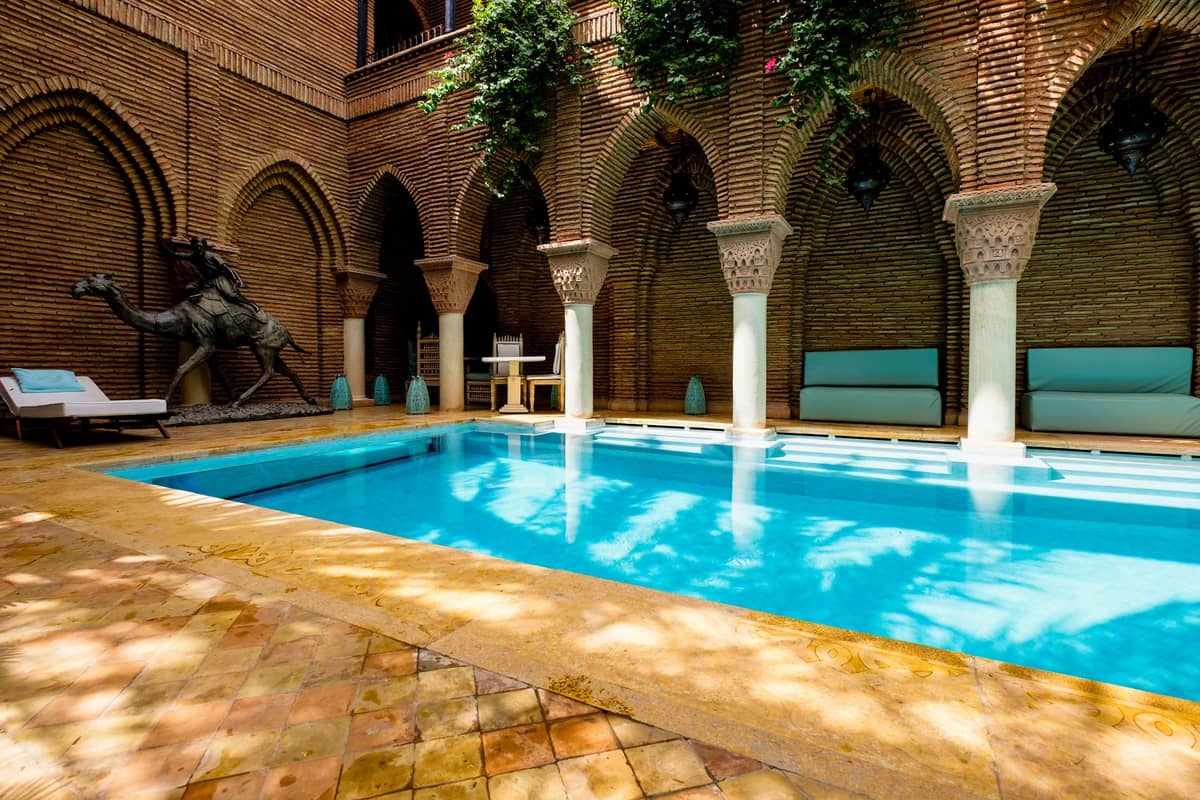
Marrakech has attracted wealthy travellers since the early 20th century, when French colonial planners and European aristocrats began building winter retreats in the Palmeraie and along the medina walls. That long history of catering to high-end visitors has produced something rare: a city where genuine palace hotels exist alongside a deep market of boutique riads, meaning luxury here spans multiple price points and travel styles.
The city's luxury hotel scene is concentrated in four distinct zones: the historic medina, where the most atmospheric properties sit inside or just outside the ancient walls; Hivernage, a quieter district of wide avenues popular with larger resort-style hotels; Gueliz, the modern new town with contemporary boutique options; and the Palmeraie, a palm grove on the city's outskirts that hosts sprawling resort complexes with pools and golf courses.
ℹ️ Good to know
Marrakech operates on Moroccan dirham (MAD). Most luxury hotels price rooms and quote rates in euros or US dollars for international guests, but local taxes — including a sojourn tax of around 49.50 MAD per person per night at La Mamounia — are often added on top. Always check the final price before confirming.
La Mamounia: The Grand Dame of Marrakech Hotels
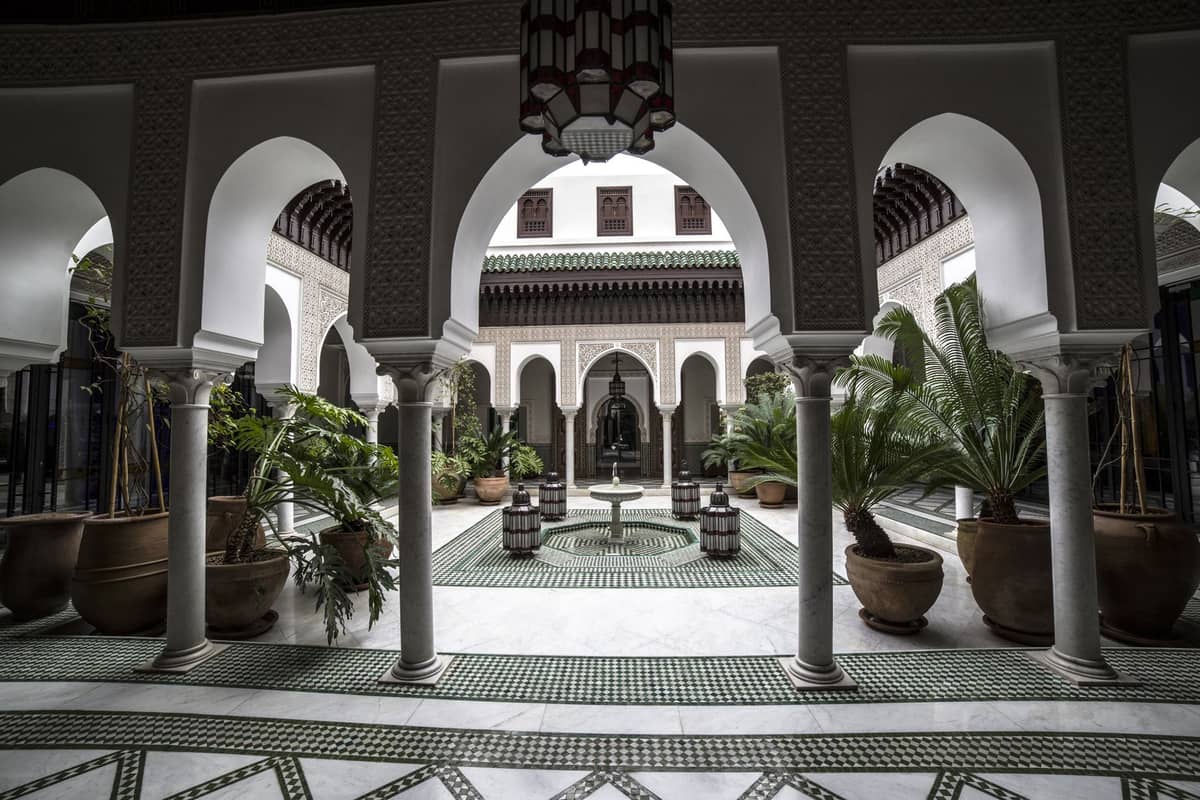
La Mamounia opened in 1923 on the site of an 18th-century royal garden gifted by Sultan Mohammed ben Abdallah to his son. That garden — eight hectares of olive trees, rose beds, and citrus orchards inside the medina walls — remains the hotel's most distinctive feature. Winston Churchill famously painted here. Alfred Hitchcock set scenes nearby. The guest book is its own kind of history.
The property carries 135 rooms, 71 suites, and 3 private riads. The architecture is a serious blend of Art Deco and traditional Moroccan craftsmanship, restored to its current form during a major renovation completed in 2009. The result is one of the few hotels in Africa that functions as both a working luxury property and an architectural landmark worth visiting in its own right.
- Entry rooms From around US$500–830/night in shoulder season, rising to US$1,400+ in peak autumn and spring periods.
- Suites Typically €900–1,500/night. The Churchill Suite is the headline option, priced significantly above standard suites.
- Private riads From around €2,500/night — standalone properties within the hotel grounds with private pools and dedicated staff.
- Cheapest month August averages around US$579/night. October is the priciest, averaging around US$1,415.
- Sojourn tax 49.50 MAD per person per night, added to room rates. Breakfast for resident guests is typically listed around 490 MAD (confirm when booking).
✨ Pro tip
La Mamounia's lowest-rate windows are mid-January to mid-February and mid-July to mid-August. January is particularly underrated: daytime temperatures average around 18–20°C, the gardens are in winter bloom, and the medina is noticeably quieter than during the autumn rush. You get the full hotel experience at roughly 25–30% below peak pricing.
Royal Mansour: The Most Expensive Address in Marrakech
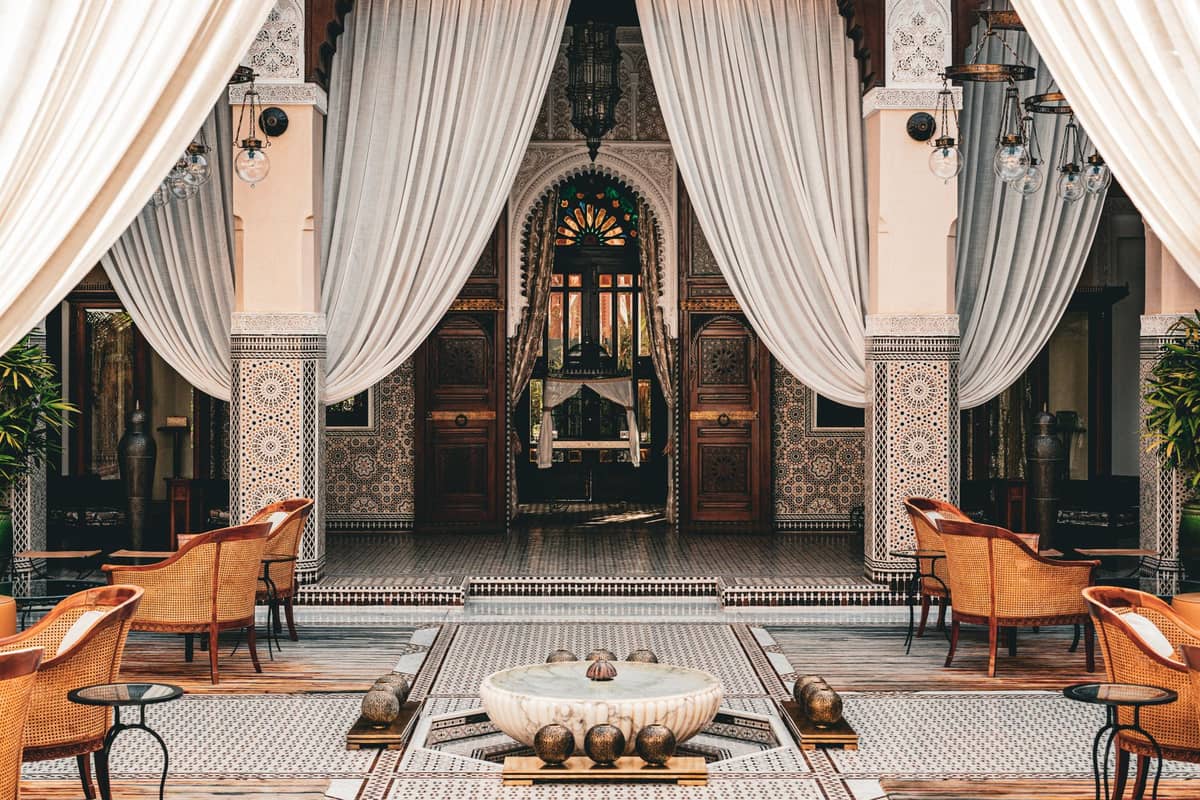
Royal Mansour opened in 2010, commissioned by King Mohammed VI. The concept was radical: instead of standard rooms or suites, the entire hotel is composed of individual three-storey riads — each a private house with its own entrance, rooftop terrace, and dedicated staff. There are no corridors connecting them. Guests and their meals travel through underground tunnels invisible from the garden.
The craftsmanship throughout is exceptional in the literal sense: 1,500 master artisans worked on the construction, producing zellige tilework, carved plaster, and cedar woodwork at a standard that even older Moroccan palaces rarely match. The 53-riad property sits at the top of Marrakech's luxury market by almost every pricing metric.
- Standard riads Around €700–1,100/night. Two-floor with a private salon, bedroom, and rooftop terrace.
- Prestige riads €1,500–2,500/night. Three floors, larger living spaces, plunge pool.
- Grand Riads €3,000–6,000/night. For groups or extended families — some accommodate up to 8 guests.
- Peak months October and April. Typical rates during these windows average near US$2,300/night across riad categories.
- Dining Set gourmet menus in the main restaurant run from 950 MAD (2 courses) to 1,550 MAD (4 courses) per person.
⚠️ What to skip
Royal Mansour requires advance booking of 4–6 months for October, April, and Christmas/New Year. Attempting to book within 6 weeks of these peak dates is usually futile. For January and February visits, a 4–8 week lead time is often sufficient, though specific riad categories can still sell out early.
Seasonal Pricing: When to Book and When to Wait
Both hotels follow the same broad seasonal pattern as the wider Marrakech luxury market, but with amplified swings. The city's semi-arid climate creates two genuinely comfortable windows for outdoor exploration — spring and autumn — and those windows drive the highest hotel demand. Summer heat regularly exceeds 35°C in July and August, suppressing demand and pushing rates down 40–60% from spring peaks. Winter is mild and underappreciated.
- Spring (March–May): peak rates, ideal temperatures (low 20s to 30°C), book 4–6 months ahead
- Summer (June–August): cheapest rates, very hot days (35°C+), manageable with pool access — both hotels are well-equipped
- Autumn (September–November): second peak, October is the single most expensive month at both properties
- Winter (December–February): 20–30% below peak rates, daytime temperatures around 15–20°C, occasional rain, rarely crowded
Timing your visit well is one of the highest-leverage decisions you can make. Combining a winter stay with a day trip — to the Ourika Valley or the Agafay Desert — gives you cool mornings, clear Atlas Mountain views, and hotel rates that are genuinely more accessible.
Beyond La Mamounia and Royal Mansour: Other High-End Options
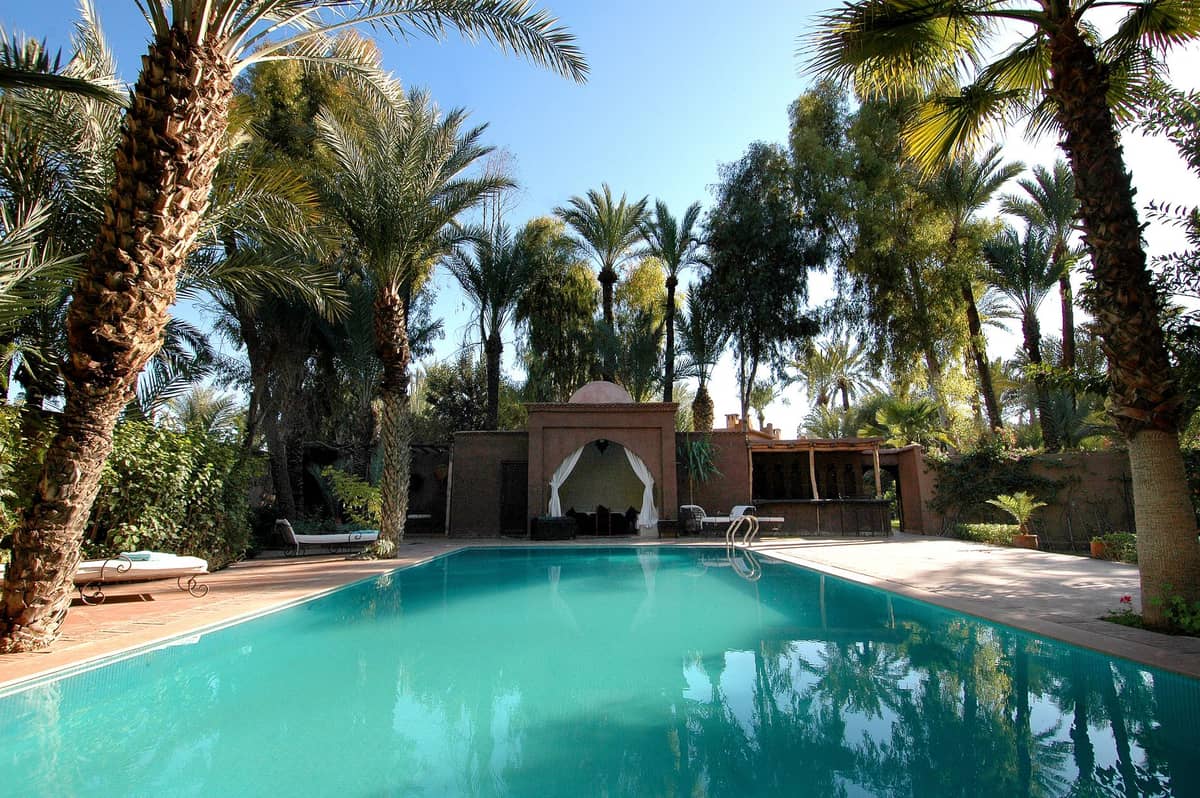
Marrakech's luxury tier extends well beyond two flagship names. Several properties operate at 5-star level with distinct identities, lower price points, and in some cases better positioning for specific travel styles.
For couples prioritising design and intimacy over scale, Marrakech's boutique riad scene offers genuine alternatives. Properties in the Mouassine and Bab Doukkala areas of the medina typically offer 6–12 rooms with rooftop pools, personalised service, and direct access to the souks and Ben Youssef Madrasa. Rates at the top end of this segment run €250–600/night — substantially below the palace hotels.
- Hivernage district hotels Large 5-star properties with pools, spas, and conference facilities. More resort-like than the medina palace hotels. Good for families or groups needing space.
- Palmeraie resorts Golf courses, large pool complexes, and more seclusion — but 20–30 minutes from the medina by car. Better suited to guests prioritising leisure over sightseeing.
- Boutique medina riads The sweet spot for many travellers: boutique luxury, atmospheric location, rates 50–70% below La Mamounia. Quality varies significantly — research individual properties carefully.
- Sidi Ghanem design hotels A newer option in the creative district north of Gueliz, appealing to design-focused travellers who prefer contemporary aesthetics over traditional architecture.
For a full breakdown of where each neighbourhood fits different travel priorities, the complete Marrakech accommodation guide covers medina riads, Hivernage hotels, and the Palmeraie in detail. Couples specifically should also look at Marrakech for couples for property recommendations matched to romantic itineraries.
Practical Considerations Before You Book
Luxury hotels in Marrakech come with a few practical nuances that travellers unfamiliar with the city sometimes miss. The medina's narrow streets mean that even La Mamounia — which sits just inside the city walls — requires navigating a short stretch of pedestrianised lanes with luggage. Most properties organise meet-and-greet transfers from the main road, but it's worth confirming this before arrival.
Getting to and from Marrakech Menara Airport (IATA: RAK) is straightforward. The airport sits around 6 km southwest of the city centre, with a typical road journey of 15–20 minutes in normal traffic. Both La Mamounia and Royal Mansour offer private airport transfers at premium rates. The budget alternative — Bus Line 19 (ALSA) — runs every 20–30 minutes to Jemaa el-Fna for around 30 MAD, though it's not suited for guests arriving with significant luggage. See our Marrakech airport transfer guide for a full comparison of options.
Dress code expectations at both palace hotels are relaxed within the properties themselves, but the surrounding medina calls for modest dress — especially near mosques and in the souks. For practical guidance on what to pack, the Marrakech dress code guide covers seasonal wardrobe decisions in detail. Visiting during Ramadan also significantly changes the rhythm of the city and some hotel services — worth reading about if your dates fall in that window.
💡 Local tip
Both La Mamounia and Royal Mansour have dedicated concierge teams who can arrange hammam sessions, desert excursions, and private dining with very short notice — but only if capacity exists. For hammam bookings at the hotel spa during peak season, request your preferred slot at check-in rather than the night before.
Morocco uses Type C and E plugs at 220V/50Hz — standard European-style. Travellers from North America will need voltage converters for any device not rated for dual voltage. The currency is the Moroccan dirham (MAD), though both palace hotels accept major international payment cards. Tipping is customary: small amounts in cash for porters, housekeeping, and restaurant staff are standard practice. For broader practical planning, the best time to visit Marrakech guide offers a month-by-month breakdown of crowds, climate, and pricing patterns across all accommodation categories.
FAQ
What is the cheapest month to stay at La Mamounia or Royal Mansour?
August is typically the cheapest month at La Mamounia, with average rates around US$579/night compared to US$1,415 in October. Royal Mansour also sees its lowest rates in January and February. Both hotels apply significant seasonal discounts in summer and mid-winter, though rates remain in the upper luxury bracket even at their lowest points.
How far in advance should I book a Marrakech luxury hotel?
For spring (March–May), autumn (September–November), and the Christmas/New Year period, book 4–6 months in advance. For summer and January–February visits, 4–8 weeks is usually sufficient, though specific suite or riad categories can sell out earlier. Direct booking through the hotel's official website sometimes offers better rates or complimentary inclusions compared to third-party platforms.
Is Royal Mansour worth the premium over La Mamounia?
It depends on what you value. Royal Mansour's private riad concept — your own three-storey house with a plunge pool and no shared spaces — is genuinely unmatched in Marrakech. La Mamounia offers more variety (standard rooms are available at lower entry prices), a larger garden, and stronger historical character. For complete privacy and maximum exclusivity, Royal Mansour wins. For atmosphere, history, and a wider range of room options, La Mamounia is the stronger choice.
Are there good luxury hotels in Marrakech outside the medina?
Yes. The Hivernage district has several large 5-star hotels with pools and spas, better suited to guests prioritising resort amenities over proximity to the souks. The Palmeraie offers golf resort-style properties with more space and seclusion. Both options involve a 15–30 minute drive to the medina, which may suit some travellers and frustrate others.
What extra costs should I budget for beyond the room rate at Marrakech luxury hotels?
Factor in the sojourn tax (around 49.50 MAD per person per night at La Mamounia), airport transfers (which both hotels charge at premium rates), breakfast (typically around 490 MAD per person at La Mamounia when not included; confirm when booking), spa treatments, and restaurant meals. Royal Mansour's set menus run from 950 MAD for 2 courses to 1,550 MAD for 4 courses per person. A realistic all-in daily budget for two guests at either property during peak season is typically 1.5–2x the room rate.
Tickets & tours
Live prices and dates from our booking partner. If you book, we may earn a commission at no extra cost to you.
Planning a trip? Discover personalized activities with the Nomado app.