Luxury Marrakech: The Ultimate Indulgence Guide
Marrakech delivers a rare kind of luxury: palace hotels enclosed by ancient medina walls, Agafay desert camps under open skies, and hammam rituals refined over centuries. This guide covers the best high-end stays, spas, experiences, and practical logistics — with a clear look at what is worth the price and what is not.
Tickets & tours
Live prices and dates from our booking partner. If you book, we may earn a commission at no extra cost to you.
TL;DR
- Top luxury hotels include Royal Mansour, La Mamounia, and Four Seasons — each in a distinct location with a different character. See our Marrakech luxury hotels guide for full comparisons.
- Agafay Desert camps, only 30–45 minutes from the medina, offer authentic desert luxury without a two-day Sahara journey — prices run €100–400 per night for two.
- The Royal Mansour Spa accepts external (non-hotel) guests by reservation; a Water Spa Suite for two runs 14,000 MAD for five hours.
- Spring (March–May) and autumn (September–November) are the most comfortable seasons for outdoor luxury experiences. Check the best time to visit Marrakech before booking.
- Demand for top properties spikes hard in April and October — book at least 2–3 months ahead for the best suites and villas.
Where Luxury Marrakech Actually Lives
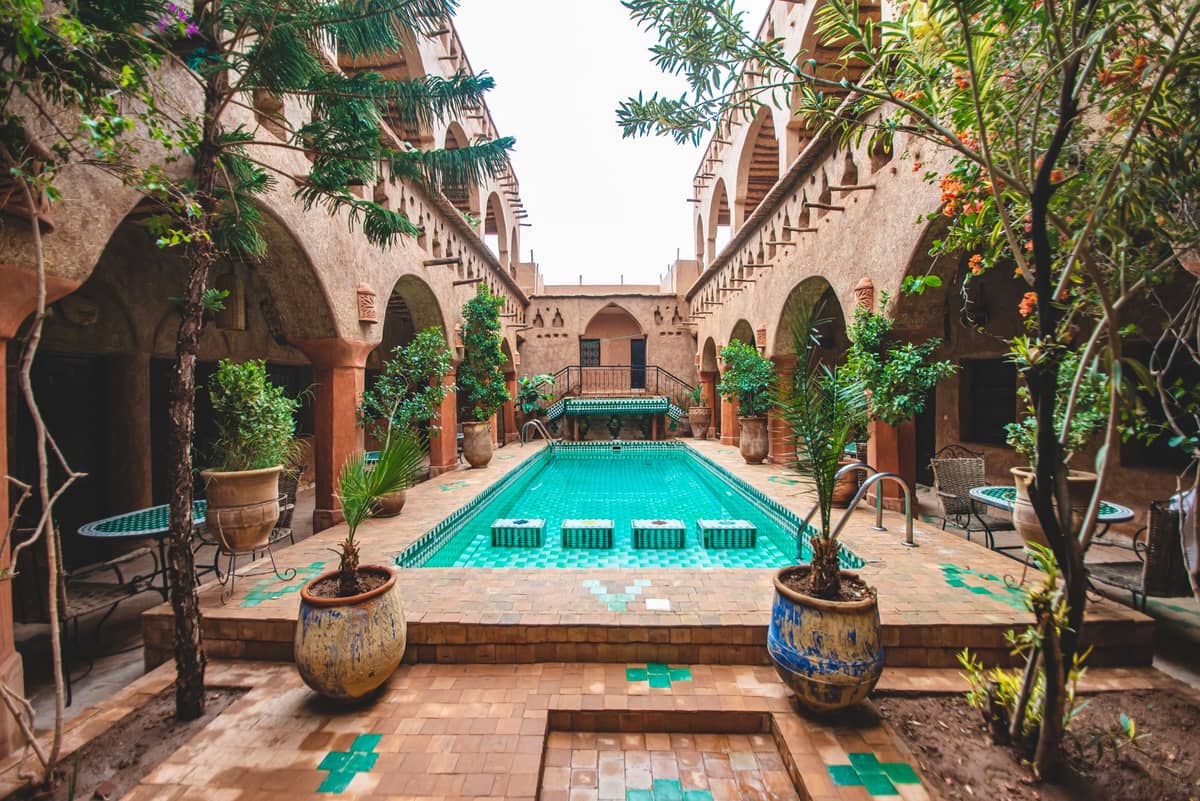
Luxury in Marrakech is not concentrated in one district. It is scattered across four distinct zones, each with a different atmosphere. The medina holds the most historically immersive properties — palace hotels built inside the old walls where narrow alleys give way to internal courtyards of extraordinary scale. Hivernage, just southwest of the medina walls, is the city's traditional five-star hotel corridor: wide boulevards, manicured gardens, and large resort pools. The Palmeraie offers seclusion — low-rise villas and resorts spread across a palm grove on the city's northern edge. And the Agafay Desert to the southwest delivers a completely different proposition: raw landscape, starlit skies, and luxury tented camps within an hour of the medina.
Each zone suits a different travel style. If you want to fall asleep hearing the medina and wake up to call to prayer echoing off rose-tinted walls, book inside the old city. If you want a pool, a bar, and a spa without navigating narrow alleys with luggage, Hivernage or the Palmeraie will suit you better. The Agafay is best as a one- or two-night extension to a longer Marrakech trip, not a base.
The Benchmark Hotels: What Sets Them Apart
Marrakech has a handful of properties that define the ceiling of luxury in North Africa. They are not interchangeable. Understanding the difference saves you from booking the wrong one.
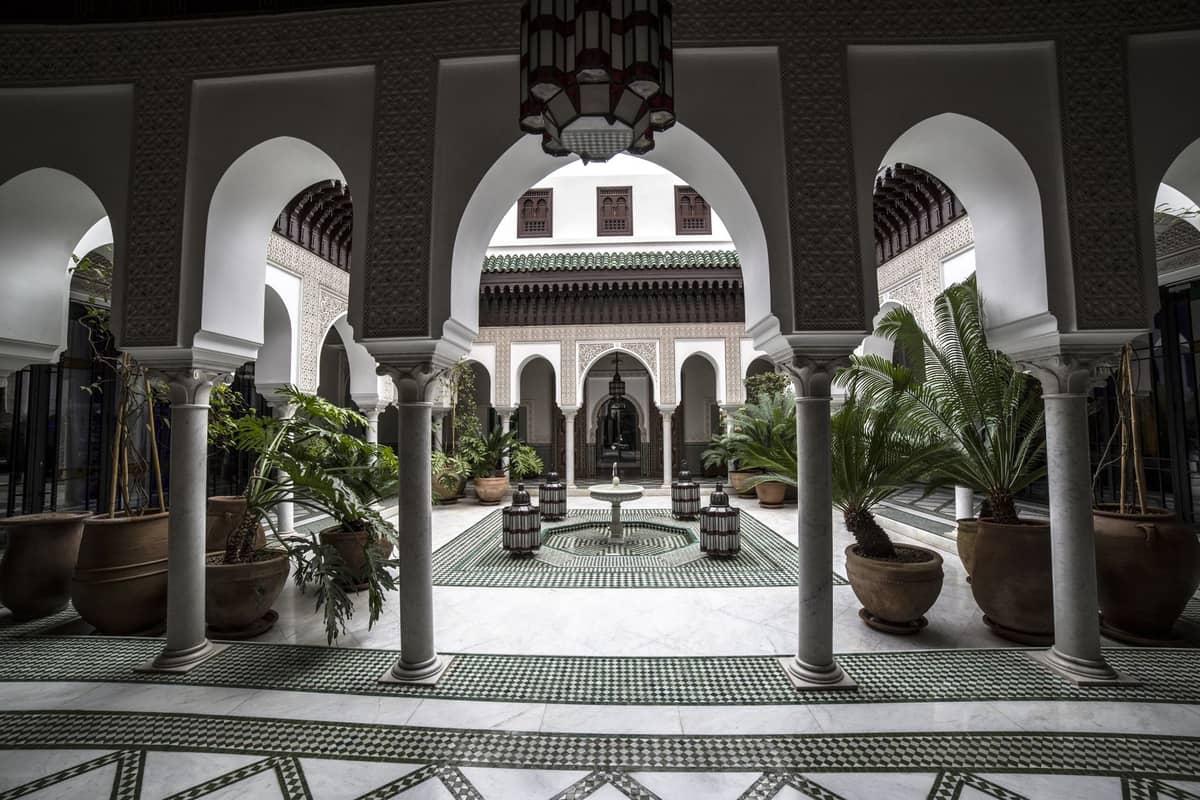
- Royal Mansour Marrakech The most architecturally audacious luxury hotel in Morocco. Commissioned by King Mohammed VI, it consists entirely of private riads — each a standalone one-to-four bedroom residence with a rooftop terrace and personal butler. There are no corridors shared with other guests. Staff move through underground tunnels. The experience is genuinely unlike any other hotel in the world, and the price reflects it. Atlas Mountain views, a Joëlle Ciocco spa, and Yannick Alléno's restaurant add layers of substance. Book directly via royalmansour.com.
- La Mamounia The city's grand dame, open since 1923, with formal Andalusian gardens, three pools, and a spa complex that is one of the largest in Africa. Churchill painted here. Hitchcock shot scenes here. The property trades on history and scale rather than the ultra-private intimacy of Royal Mansour. Its multiple restaurants, casino, and central location just inside Bab Jdid make it a full destination in itself. Book at mamounia.com.
- Four Seasons Resort Marrakech The most approachable of the three landmark properties — easier to book, more consistently staffed, and with the reliable service standards the brand is known for globally. Two pools, an excellent spa, and a location in the Hivernage district that puts you roughly equidistant from the medina and the modern Gueliz neighbourhood. A strong choice for families or first-time luxury visitors to Morocco.
- Es Saadi Marrakech Resort A sprawling resort with hotel rooms, private villas, and one of the city's main casinos on site. Es Saadi occupies a significant footprint in Hivernage and has been refurbished in recent years. Less internationally famous than La Mamounia but competitive on villa pricing and facilities. Book at essaadi.com.
- L'Hôtel Marrakech A small, privately owned riad in the medina that offers design-focused intimacy at luxury price points. The antithesis of the palace hotel — carefully curated, with only a handful of rooms, and no casino or multiple restaurants. For travellers who find large properties soulless, this is worth knowing about.
⚠️ What to skip
Many 'luxury riads' listed on booking platforms are boutique properties charging premium prices for basic comfort. Before booking a medina riad, verify it has genuine air conditioning (not a fan), reliable hot water, and street-by-street navigation support for your arrival — getting luggage to a riad 200 metres deep inside the souks is a real logistical challenge.
Agafay Desert Luxury: The Shortcut to Sahara-Style Glamour
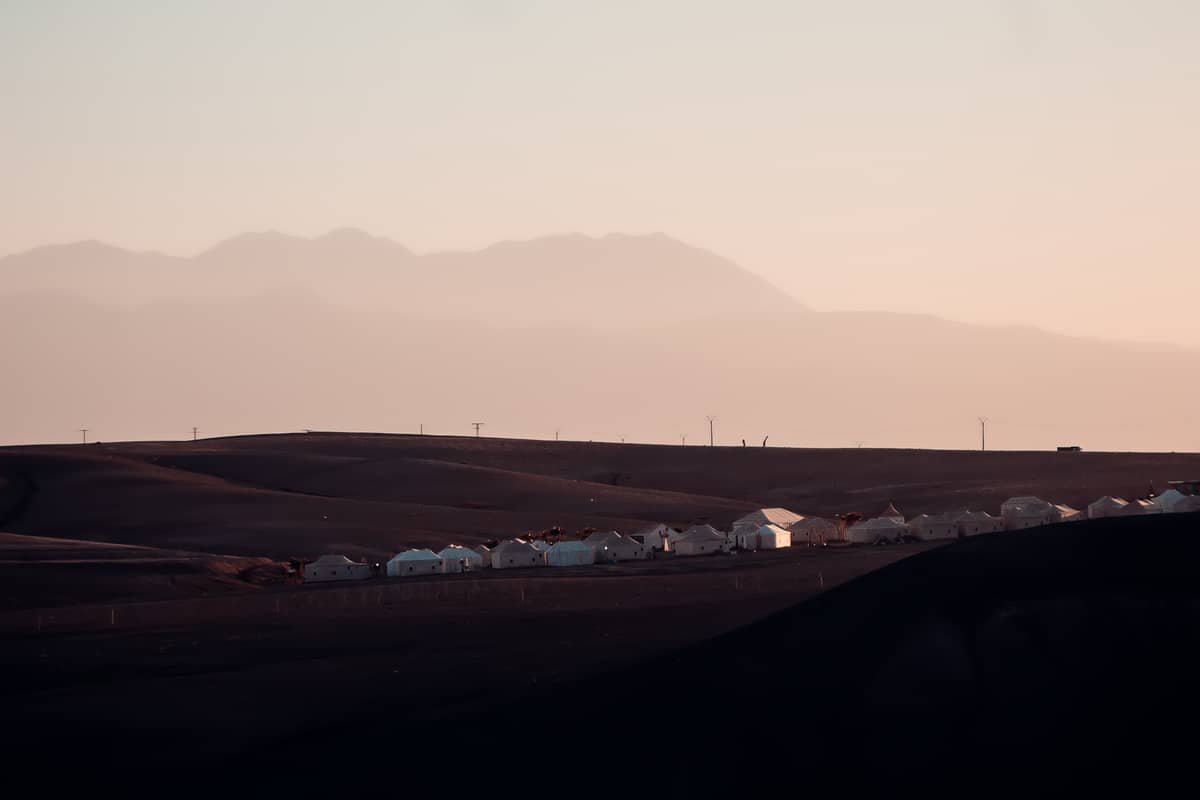
One of the most common misconceptions about luxury desert experiences in Marrakech is that they require a two-day journey to the Sahara. The Agafay Desert sits only 30–45 minutes southwest of the medina, and the landscape — a rocky, arid plateau without sand dunes but with Atlas Mountain backdrops — supports some genuinely impressive luxury camps.
Pricing for Agafay camps falls into three tiers. Budget camps start from around €60 per night for two and offer basic tent structures with shared facilities. Mid-range camps sit at €100–200 per night and typically include private bathroom tents, communal pools, and evening entertainment. True luxury camps — Inara Camp and similar properties — run €200–400 per night and deliver private pool suites, gourmet dinners, and curated activity programmes. Peak-season rates (April, October, and major holidays) push toward the top of these ranges.
If you only have one night to spare, an evening-to-morning Agafay experience beats a rushed Sahara day trip by most measures. Sunsets over the plateau are exceptional, the star visibility is good away from city light pollution, and you are back in Marrakech in time for a late lunch the following day.
✨ Pro tip
For Agafay, avoid booking through aggregator platforms that take significant commissions and sometimes oversell capacity. Contact camps directly for private-villa configurations, honeymoon add-ons, or multi-night rates — you will almost always negotiate a better deal and get more detailed information about what is actually included.
Luxury Hammams and Spa Culture
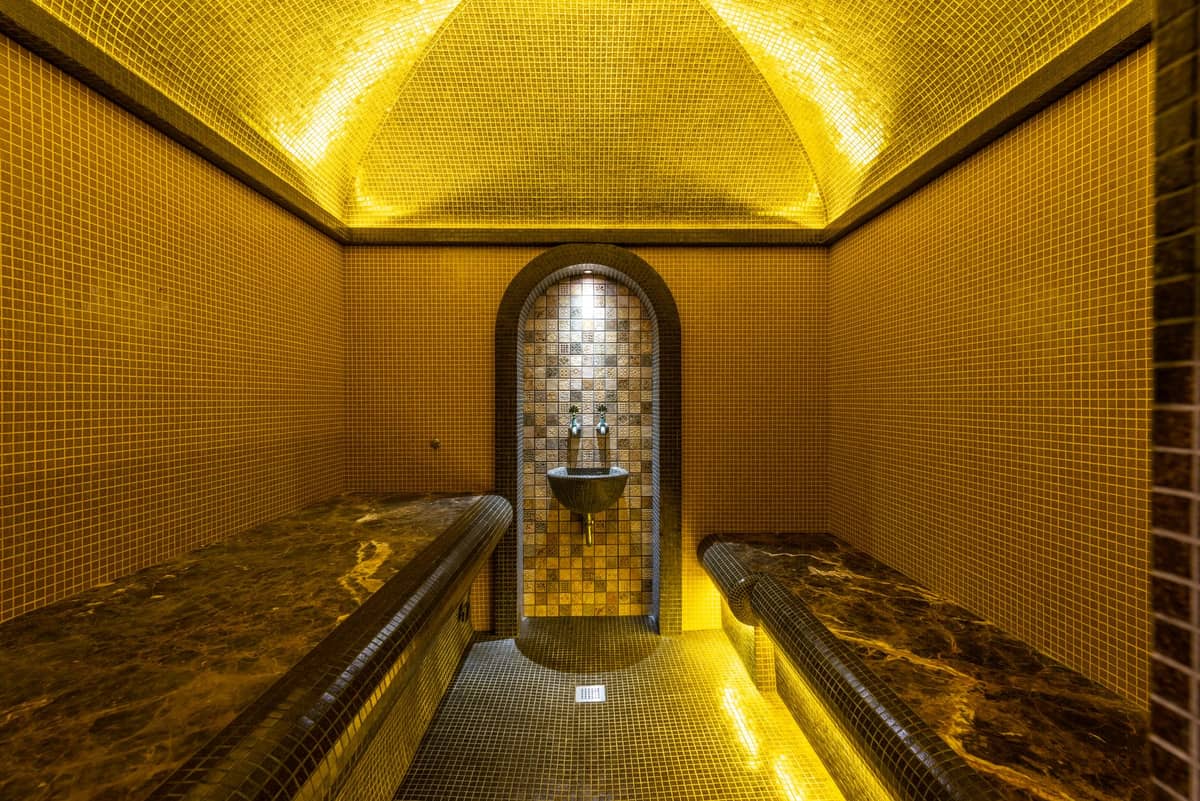
The hammam is not just a tourist attraction in Marrakech — it is a centuries-old social and wellness ritual. The luxury end of this spectrum is sophisticated. The Spa Royal Mansour is the most decorated wellness destination in the city, drawing clients who fly in from Europe specifically for treatments. Crucially, it accepts external guests (not just hotel residents) by advance reservation, so you do not need to book a riad at Royal Mansour to access its facilities. The Spa is open daily 09:00–21:00. For context on pricing: a Water Spa Suite for two costs 14,000 MAD for five hours, and full-day Wellness Spa Suites run 9,700–19,400 MAD depending on configuration. These are among the highest spa prices in Africa, and they are justified by the physical space and treatment quality. For a broader overview of hammam options at every price point, the Marrakech hammam guide covers the full spectrum.
La Mamounia's spa is the main competition — larger in terms of total facility footprint, with a circuit that includes an indoor pool, sauna, steam room, and rasul mud treatment rooms. The atmosphere leans more resort-spa than intimate wellness retreat. Both properties require advance booking for treatments, especially during spring and autumn peak periods.
- Book Royal Mansour Spa treatments at least one week ahead during spring and autumn; popular time slots fill within days of opening.
- Hammam etiquette in luxury settings is the same as traditional hammams — arrive without jewellery, avoid eating heavily beforehand, and budget 90 minutes minimum for a full circuit.
- Tipping your therapist 50–100 MAD after a treatment is standard practice and genuinely appreciated.
- Some luxury hotels (including Four Seasons) offer complimentary hammam access to guests on certain room categories — worth confirming at booking.
Luxury Dining and Rooftop Experiences
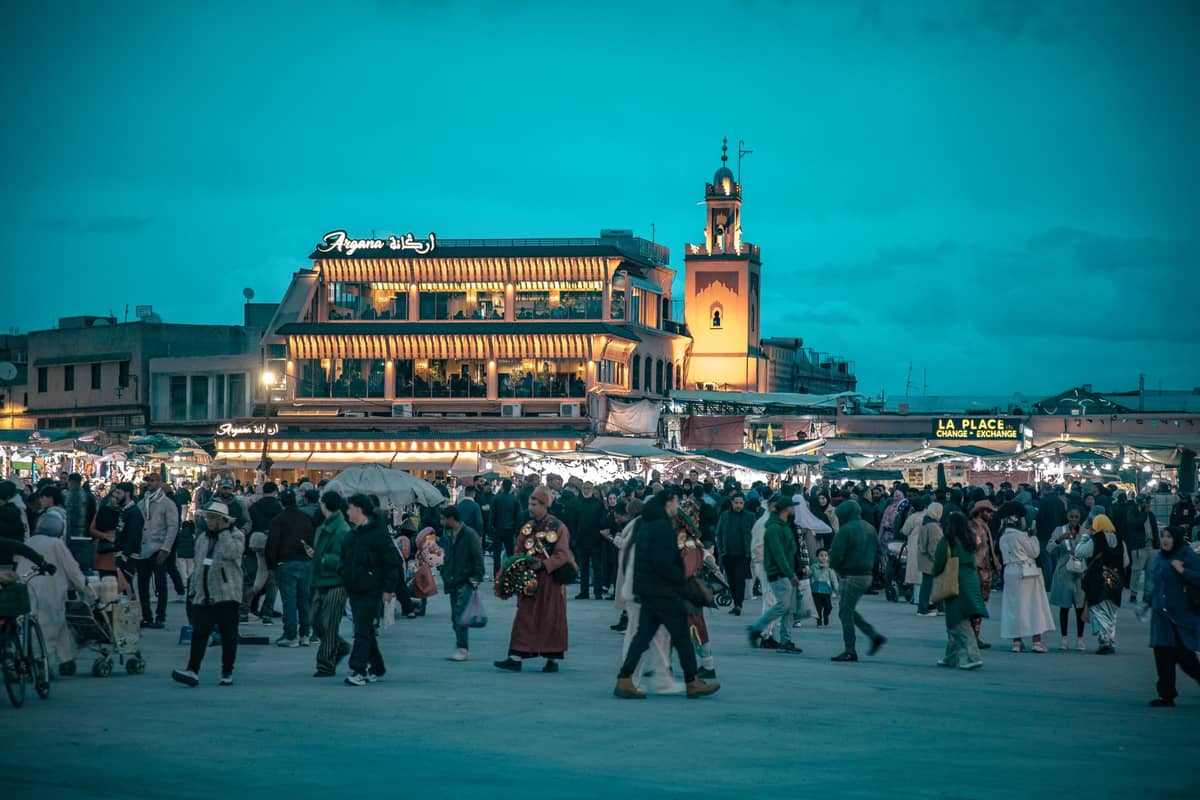
Fine dining in Marrakech has matured significantly in the past decade. The Jardin Secret neighbourhood near Le Jardin Secret and the Gueliz district both host internationally recognised restaurants. Inside the medina, the best restaurants tend to be riad-based, where the courtyard setting is half the experience. Expect to pay 400–800 MAD per person for a serious dinner with wine at a top-tier restaurant. Alcohol is available in licensed restaurants and all major luxury hotels, even in the medina.
Rooftop dining across Jemaa el-Fna is simultaneously iconic and overrated. The views of the square at dusk are genuinely spectacular, but the food quality at most rooftop restaurants targeting tourists is mediocre and the service is often pressured. If you want the view, go for mint tea at dusk rather than a full meal. Save the serious dinner for a ground-level riad restaurant or a Gueliz kitchen where the chef's focus is on the plate, not the panorama.
💡 Local tip
For a luxury evening in the medina without tourist-trap dining, book a private dinner at a riad that offers this service to non-guests. Several high-end riads serve set menus in their courtyard by reservation — this gives you the atmosphere of the medina with kitchen quality closer to the palace hotels.
Practical Logistics for Luxury Travellers
Marrakech Menara Airport (IATA: RAK) sits roughly 6 km southwest of the city centre, with road transfer times of 15–20 minutes to Hivernage and 15–20 minutes to the medina in normal traffic. All major luxury hotels provide private airport transfers — request these at booking, as they are typically priced at €25–50 per vehicle rather than the €100+ that independent transfer companies charge for the same journey. The Marrakech airport transfer guide breaks down every option including pre-booked private cars, petit taxis, and ride-hailing apps like Careem and inDrive.
Currency is the Moroccan dirham (MAD). Credit cards are accepted at all five-star hotels and most upscale restaurants, but cash is essential for souks, tipping, and smaller medina purchases. ATMs are reliable in Gueliz and Hivernage; less so inside the medina. Morocco operates on UTC+1 (Morocco Standard Time), with a temporary reversion to UTC+0 during Ramadan — check the current calendar before travelling. For dress code considerations, particularly relevant when visiting religious sites or the medina's narrower quarters, the guide to what to wear in Marrakech is worth reading even for guests staying primarily in luxury hotels.
Luxury travellers spending 4–7 days in Marrakech will find the city genuinely full at this level. Between palace hotels, cultural sites like the Yves Saint Laurent Museum and Jardin Majorelle, day trips to the Agafay or Ourika Valley, and serious hammam and dining time, a week moves quickly. The one-week Marrakech itinerary structures this into a coherent sequence.
- Spring peak (April especially) and autumn peak (October) see hotels at near-capacity — book top properties 2–3 months ahead minimum.
- Summer (June–August) daytime temperatures regularly approach or exceed 35°C. Outdoor activities should be scheduled before 10:00 or after 17:00.
- Electricity: 220V, 50Hz, plug types C and E (European two-pin). UK and US travellers need adapters.
- Tap water is treated but most luxury travellers and hotels use bottled water as standard.
- Morocco's international dialling code is +212.
FAQ
What is the best luxury hotel in Marrakech?
Royal Mansour Marrakech is the most architecturally unique and exclusive option — a compound of private riads where guests never share space with strangers. La Mamounia is the historic grand dame with more amenities, multiple restaurants, and a casino. Four Seasons suits travellers who want reliable international standards with strong service. The right choice depends on whether you prioritise intimacy, history, or consistency.
How far is the Agafay Desert from Marrakech and is it worth it?
The Agafay Desert is 30–45 minutes southwest of the medina by road. It is worth it as a one- or two-night extension — the landscape is dramatic, the luxury camps are genuinely impressive, and the logistical simplicity versus a Sahara trip is significant. It does not have sand dunes, so if classic Saharan dune scenery is the goal, a longer journey south to Merzouga or Zagora is necessary.
Can non-hotel guests use the Royal Mansour Spa?
Yes. The Spa Royal Mansour is open to external guests by advance reservation, daily from 09:00–21:00. A Water Spa Suite for two is listed at 14,000 MAD for five hours. Book directly via the Royal Mansour website. During peak season (April, October), availability fills quickly — reserve at least a week ahead.
What is the best time of year for luxury travel to Marrakech?
March–May and September–November offer the best combination of comfortable temperatures and full availability of outdoor experiences. April is the peak of peak season — beautiful weather, but hotels at maximum prices and minimum availability. Late September and October often represent the best value in the luxury tier: good weather, fewer crowds than spring, and some properties offering post-summer rates.
Is Marrakech suitable for luxury travellers visiting for the first time?
Absolutely, with the right preparation. The city rewards travellers who book logistics in advance (airport transfer, hammam, dinner reservations) and who understand that the medina requires patience and a sense of direction. First-timers staying in palace hotels will have concierge support for all of this. For a candid look at whether Marrakech is right for your travel style, see our overview of whether Marrakech is worth visiting.
Tickets & tours
Live prices and dates from our booking partner. If you book, we may earn a commission at no extra cost to you.
Planning a trip? Discover personalized activities with the Nomado app.