MACMA – Musée d'Art et de Culture de Marrakech: A Serious Art Museum in Gueliz
Founded in 2016 by private collector Nabil El Mallouki, MACMA is one of Marrakech's most coherent art museums, presenting orientalist works, early photography and contemporary Moroccan painting in a quiet courtyard setting in Gueliz. It offers a genuine counterpoint to the city's more touristic attractions.
Quick Facts
- Location
- 61 Rue de la Yougoslavie, Passage Ghandouri, Gueliz, Marrakech
- Getting There
- 10-min taxi from Jemaa el-Fna or a short walk from central Gueliz; street parking nearby at 10–20 MAD/hr
- Time Needed
- 1 to 1.5 hours
- Cost
- 150 MAD visitors; 100 MAD Moroccan nationals; 50 MAD students and teachers; under-12s free
- Best for
- Art lovers, photography enthusiasts, cultural context-seekers
- Official website
- museemacma.com
What MACMA Actually Is
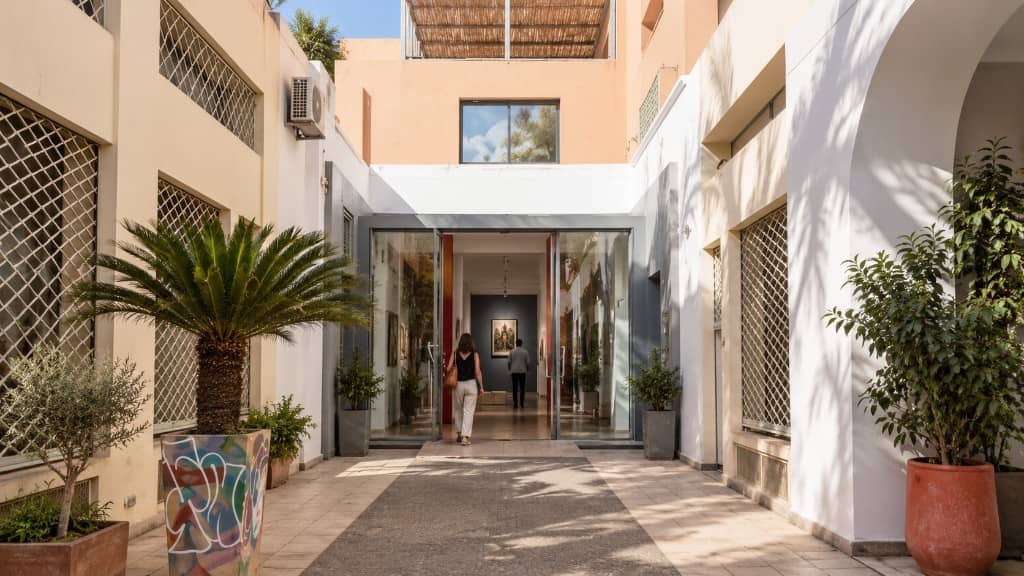
The MACMA – Musée d'Art et de Culture de Marrakech is a private museum opened in 2016 by Moroccan collector Nabil El Mallouki. The MACMA – Musée d'Art et de Culture de Marrakech is a private museum founded by Moroccan collector Nabil El Mallouki. It occupies a low-key but attractive space entered through Passage Ghandouri, a covered arcade just off Rue de la Yougoslavie in Gueliz. From the street, there is almost no signage visible beyond a small plaque. First-time visitors often walk past it.
Inside, the atmosphere shifts. The collection spans three distinct areas: 19th and early 20th-century orientalist paintings by European artists who traveled to Morocco and North Africa, early photographic prints documenting Moroccan life and landscapes, and a selection of modern and contemporary Moroccan art. The curation connects these strands in a way that is thought-provoking, asking you to consider how Morocco has been seen by outsiders versus how it has represented itself.
💡 Local tip
The entrance is not on the main street. Walk into Passage Ghandouri from Rue de la Yougoslavie and look for the museum door on your left inside the arcade. A nearby landmark is Pâtisserie Mon Quotidien on the same block.
The Collection: Orientalism, Photography and Modern Moroccan Art
The orientalist works form the largest section. These are oil paintings, watercolors and gouaches produced mostly by French, Spanish and other European painters from the late 1800s through the mid-1900s. They depict Moroccan street scenes, souks, women in domestic settings, musicians, desert caravans, and architectural details. The quality varies, as it always does in private collections, but the strongest pieces are impressive in scale and technique. For visitors already familiar with European academic painting, seeing it applied to Moroccan subjects creates a productive tension.
The photography section is where the museum earns particular respect among those who know it. Vintage prints, including albumen and silver gelatin photographs, document Marrakech, the Atlas Mountains and rural Morocco from roughly the 1880s onward. Many of these images have rarely been publicly exhibited elsewhere. They are framed well, lit carefully, and accompanied by brief contextual notes. You see a Marrakech that is recognizable in its bones but unrecognizable in its pace and density.
The contemporary Moroccan art component is smaller but worth attention. It includes paintings and works on paper by Moroccan artists working in a range of styles, from figurative work rooted in traditional forms to more abstract and conceptual approaches. This section provides a counterweight to the orientalist gaze in the first rooms and is where the museum's curatorial argument becomes clearest. If you want broader context on the city's living art scene, the Marrakech art scene guide covers galleries, events and studios across the city.
Tickets & tours
Live prices and dates from our booking partner. If you book, we may earn a commission at no extra cost to you.
Full day tour of Ouarzazate from Marrakech
From 51 €Instant confirmationFree cancellationEvening Quad Bike at Palmeraie Area with Tea Tasting from Marrakech
From 49 €Instant confirmationFree cancellationFull Day Economic Tour in Essaouira from Marrakech
From 29 €Instant confirmationFree cancellationFull Day Economic Tour of Ourika Valley from Marrakech
From 25 €Instant confirmationFree cancellation
The Building and Setting
The museum itself is housed in a mid-century Gueliz building that has been sensitively renovated. The rooms are cool, well-lit with a combination of natural and artificial lighting, and acoustically quiet. Unlike some of Marrakech's palace museums, where the architecture competes with the exhibits, MACMA keeps the focus on the works themselves. The walls are painted in neutral tones. The floors are polished stone. It is a clean, serious space.
Gueliz, the modern district where MACMA sits, is a different Marrakech to the medina. Wide boulevards, French-influenced architecture, café terraces and gallery spaces characterize the neighborhood. MACMA fits naturally into this environment. The Gueliz district has accumulated a cluster of contemporary galleries and design spaces over the past decade, and MACMA is among the most substantial of these. Nearby you will find cafés, bookshops and the kind of unhurried streets that are a relief after time in the medina.
When to Visit and What to Expect by Time of Day
MACMA is open daily, including Sundays, typically 10:00 to 19:00. During Ramadan hours shorten to 10:00–17:00. Confirm opening hours around Moroccan public holidays, when schedules can still shift.
Mornings, particularly between 10:00 and 12:00, are the quietest window. You will likely have the rooms largely to yourself, which matters in a museum where close looking at small photographic prints is part of the experience. Afternoons from around 14:00 onward see more visitors, including tour groups that occasionally arrive in small clusters. Late afternoon, in the hour before closing, is pleasant if you want to linger: the light in the courtyard passage softens, and the staff are less occupied with new arrivals.
ℹ️ Good to know
During Ramadan, hours are typically 10:00–17:00. The museum atmosphere is particularly calm then.
The museum is air-conditioned, which makes it a practical refuge during the high-heat months of July and August when outdoor sightseeing becomes punishing by midday. A visit here pairs naturally with the nearby Jardin Majorelle or a walk through Gueliz, with MACMA serving as the cooler, indoor component of a morning out.
Practical Information for Your Visit
Admission is 150 MAD for visitors, 100 MAD for Moroccan nationals, and 50 MAD for students and teachers; children under 12 enter free. Confirm current prices at the desk. Carry dirhams as a backup even if cards are accepted.
Photography policy inside the museum should be confirmed with staff at the entrance, as policies for private collections vary and may differ between permanent and temporary exhibition areas.
Getting there is straightforward. From central Marrakech or the medina, a petit taxi takes roughly 10 minutes and costs 20–30 MAD. On foot from the northern edge of Gueliz it is a 5 to 10 minute walk. There is no dedicated parking, but paid street parking is available on Rue de la Yougoslavie and surrounding streets at approximately 10–20 MAD per hour. If you are combining this with other Gueliz stops, the Yves Saint Laurent Museum is about 15 minutes on foot through the Gueliz streets.
⚠️ What to skip
Accessibility: The museum is entered via Passage Ghandouri, an indoor arcade. Ground-level access from the passage appears likely, but formal wheelchair accessibility has not been confirmed in public listings. Visitors with specific mobility requirements are advised to contact the museum directly at museemacma@gmail.com before visiting.
Who Will Get the Most From This Museum
MACMA rewards visitors who come with some frame of reference for what they are seeing. If you have an interest in the history of European painting and its relationship to colonialism and the 'exotic', the orientalist section provides plenty to think about. If photography history is your focus, the archive-quality prints are rare. And if you want to understand how Moroccan artists have engaged with their own cultural inheritance, the contemporary section rounds out the picture.
Travelers who have already visited Marrakech's other major art institutions, including the Maison de la Photographie in the medina, will find that MACMA covers overlapping but distinct ground. Where the Maison de la Photographie focuses specifically on historical photography of Morocco, MACMA places that photography in dialogue with painting and contemporary work. They are complementary visits, not redundant ones.
That said, if you are looking for a broad or encyclopedic overview of Moroccan history and craft, MACMA is not that. It is a focused, privately curated collection with a specific argument. Visitors expecting something like a national museum may find the scope narrower than anticipated. The building is also modest in size; this is a one-to-two-hour visit, not a half-day.
Insider Tips
- The entrance through Passage Ghandouri is easy to miss. Look for a small MACMA sign inside the arcade rather than on the main street facade.
- The photography section in the middle of the museum is the strongest part of the collection. Allow more time here than you think you will need; the prints reward close looking.
- Mornings from 10:00 to 12:00 are consistently the quietest period. Tour groups, when they visit, tend to arrive in the early afternoon.
- Combine MACMA with a coffee at one of the café terraces on Avenue Mohammed V, a five-minute walk away. The combination of quiet museum time followed by watching Gueliz street life is a good half-morning.
- If you are visiting during summer, plan MACMA as your midday activity. The air-conditioned rooms are a genuine relief between 12:00 and 15:00 when outdoor heat peaks.
Who Is MACMA – Musée d'Art et de Culture de Marrakech For?
- Art and photography enthusiasts wanting depth beyond the medina's craft-focused museums
- Travelers interested in the history of how Morocco has been represented in European art
- Anyone looking for a quiet, cool, intellectually engaging hour during a Marrakech visit
- Repeat visitors to Marrakech who have already seen the major medina sites
- Visitors combining a Gueliz morning with the Jardin Majorelle or the YSL Museum
Nearby Attractions
Other things to see while in Gueliz (Ville Nouvelle):
- Jardin Majorelle
Once a painter's private sanctuary, Jardin Majorelle is now one of Marrakech's most photographed gardens. Set on Rue Yves Saint Laurent in Marrakech's modern Gueliz area, it pairs electric-blue architecture with an extraordinary collection of cacti and subtropical plants — and a world-class museum of Berber culture at its centre.
- Berber Museum (Musée Berbère)
Housed in the iconic Blue Villa inside Jardin Majorelle, the Pierre Bergé Museum of Berber Arts presents one of Morocco's most carefully curated collections of Amazigh jewelry, textiles, and ceremonial objects. Small in scale but dense in meaning, it rewards visitors who take time to look closely.
- Marrakech Railway Station
Marrakech Railway Station (Gare de Marrakech) is the southern terminus of Morocco's national rail network, sitting in the modern Gueliz district about 3.5 km from the medina. This guide covers everything travelers need: how to reach it, what to expect inside, which trains run where, and the practical details that make the difference between a smooth departure and a stressful one.
- Église des Saints-Martyrs
Catholic worship in Marrakech centres on a quiet parish in Gueliz, the city’s modern French-influenced district. The church most visitors actually find is Église des Saints-Martyrs; Notre-Dame de Lourdes is a separate landmark in Casablanca. The Gueliz parish offers a calm, architecturally modest space and a window into Morocco’s layered religious history.
Planning a trip? Discover personalized activities with the Nomado app.