Yanaka is one of Tokyo's most historically intact neighborhoods, a low-rise district of narrow lanes, wooden shopfronts, and over 70 Buddhist temples that survived the 1923 earthquake, wartime bombing, and the bubble-era wrecking ball. Wedged between Ueno, Nippori, and Nezu, it offers a rare window into how shitamachi — old downtown Tokyo — once looked and felt.
Yanaka sits in northeastern Tokyo like a neighborhood that missed several decades of history, and that is precisely its appeal. The wooden houses, temple walls, and shotengai shopping street here feel less like a preservation project and more like a place that was simply never torn down.
Orientation
Yanaka occupies the northwestern corner of Taitō ward, one of Tokyo's 23 special wards and the same ward that contains Ueno and Asakusa. The neighborhood forms a rough triangle anchored by three transit points: JR Nippori Station to the northeast, Tokyo Metro Sendagi Station to the south, and Tokyo Metro Nezu Station at the southwestern edge. Yanaka Cemetery sits at the heart of the area, its main avenue running roughly east to west, with the residential streets of Yanaka spreading outward from its perimeter.
The area is often discussed alongside its two neighbors as 'Yanesen,' a contraction of Yanaka, Nezu, and Sendagi. These three districts share a similar low-rise, pre-war character and blend into one another without hard boundaries. Walking south from Yanaka's temple lanes, you gradually enter Nezu's quiet backstreets and eventually reach Nezu Shrine. Walking east from Sendagi Station, you arrive at the same streets from another angle. The combined area rewards a slow, winding approach rather than a point-to-point itinerary.
Yanaka's proximity to Ueno makes it easy to combine with a visit to Ueno's museums and park, which sit about 20 minutes on foot to the south. Nippori Station also connects directly via the JR Yamanote Line, placing Yanaka within 10 minutes of Akihabara, Shinjuku, and Shibuya without any transfers.
Character & Atmosphere
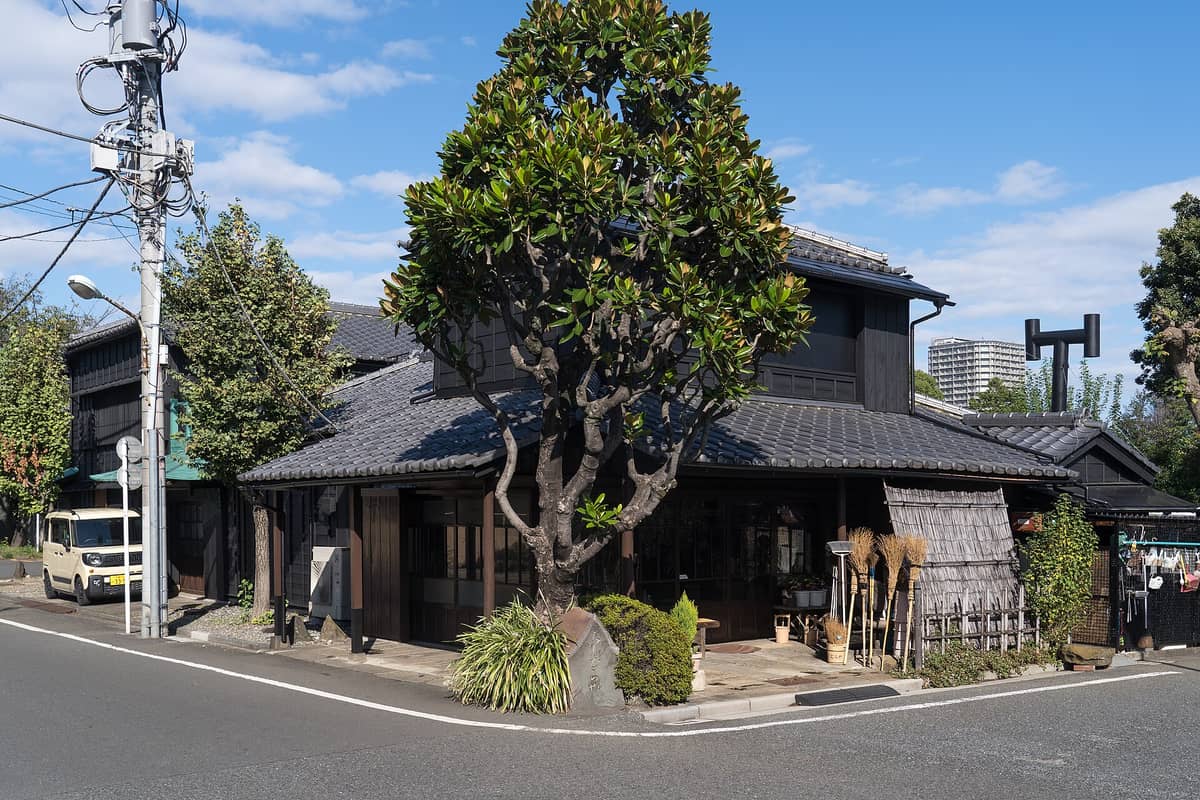
What sets Yanaka apart is structural: most of Tokyo has been rebuilt two or three times over in the last century. Yanaka largely wasn't. The 1923 Great Kanto Earthquake, which leveled much of low-lying Tokyo, caused less damage here because of the area's slightly elevated ground. The wartime firebombing of 1945 largely spared it. And when the 1980s land speculation boom consumed whole neighborhoods across the city, Yanaka's community organizations and long-term residents resisted large-scale redevelopment. The result is a neighborhood where wooden machiya townhouses still stand alongside postwar shotengai storefronts, and where a functional temple might occupy a plot barely larger than a parking space.
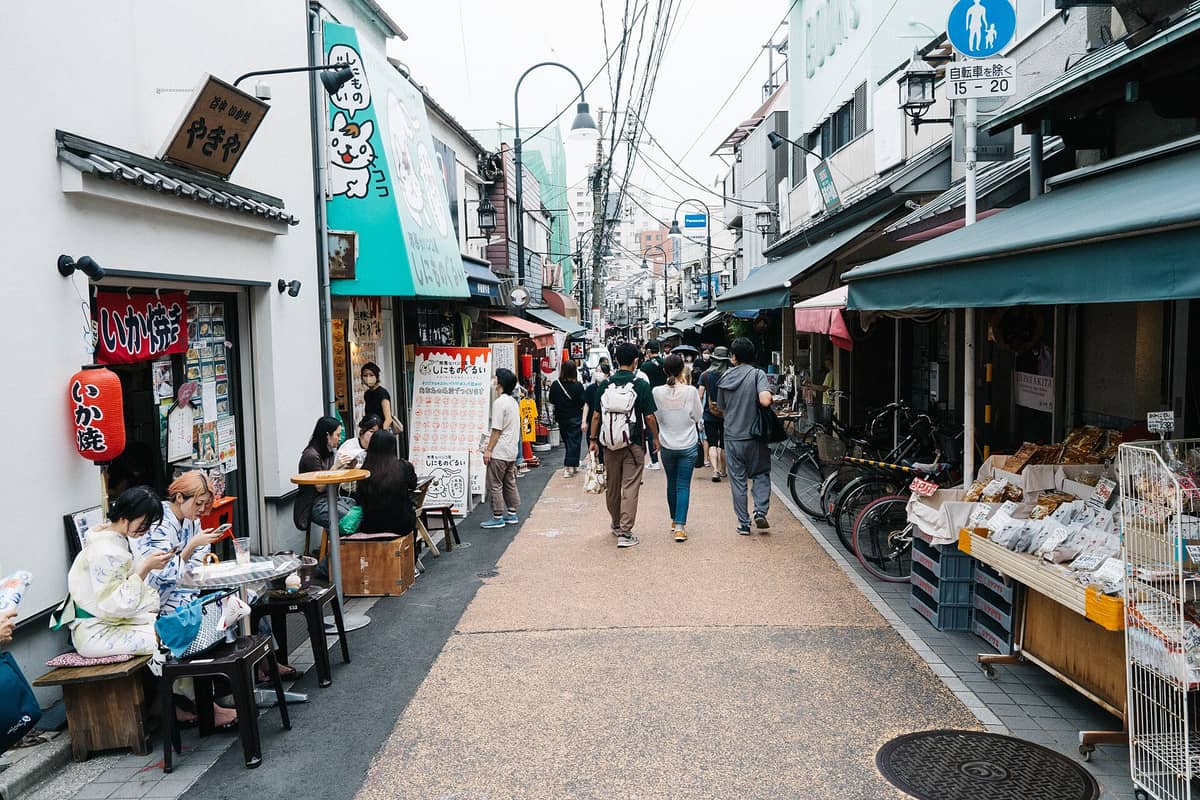
On a weekday morning, Yanaka feels more residential than touristic. Locals collect groceries along Yanaka Ginza, elderly residents move slowly between temple grounds, and cats — the neighborhood has a longstanding reputation for its cat population — occupy patches of sunlight on low walls. The streets are narrow enough that you can hear conversations in adjacent houses. The smell of incense drifts from temple courtyards. By late morning on weekends, the tone shifts: Yanaka Ginza fills with visitors, street food appears at vendor windows, and the Yuyake Dandan staircase at the street's northern end becomes a popular vantage point.
Afternoons bring a particular quality of light to the area. Because there are almost no buildings above four or five stories, sunlight reaches the street level in a way it rarely does in central Tokyo. The stone walls of Yanaka Cemetery filter golden afternoon light through old cherry and zelkova trees, creating an atmosphere that draws photographers and anyone who wants a slower hour away from the city's standard tempo. After dark, Yanaka quiets considerably. A handful of bars and small restaurants stay open, but this is not a nightlife destination. By 9pm, most of the commercial strips have closed.
ℹ️ Good to know
Yanaka is genuinely residential. Noise and crowds are concentrated on Yanaka Ginza and around the cemetery entrance on weekends. The lanes one or two blocks off the main street return quickly to quiet neighborhood life.
What to See & Do
The most direct entry into Yanaka's atmosphere is Yanaka Ginza, a roughly 170-meter shopping street that has operated continuously since the postwar period. The street runs north to south, with small shops selling sembei rice crackers, handmade accessories, tofu, pickles, and cat-themed goods crowded along both sides. At the northern end, the Yuyake Dandan — meaning 'sunset stairs' — descends from street level down into the shopping street below, and at dusk the view back up the staircase toward the western sky is one of the neighborhood's most photographed scenes.
Yanaka Cemetery, entered from the road just west of Nippori Station's west exit, is one of Tokyo's most distinctive public spaces. Unlike the manicured garden cemeteries found in some cities, this one feels genuinely urban and lived-in: its avenues are used as cut-throughs by cyclists and pedestrians, vendors sometimes set up near the entrance, and in spring the main cherry-lined avenue becomes one of the city's less-crowded hanami spots. Several notable historical figures are buried here, including the last Tokugawa shogun, Yoshinobu. Tennō-ji Temple, located within the cemetery grounds, has older Buddhist roots but the current institution and buildings are from much later periods.
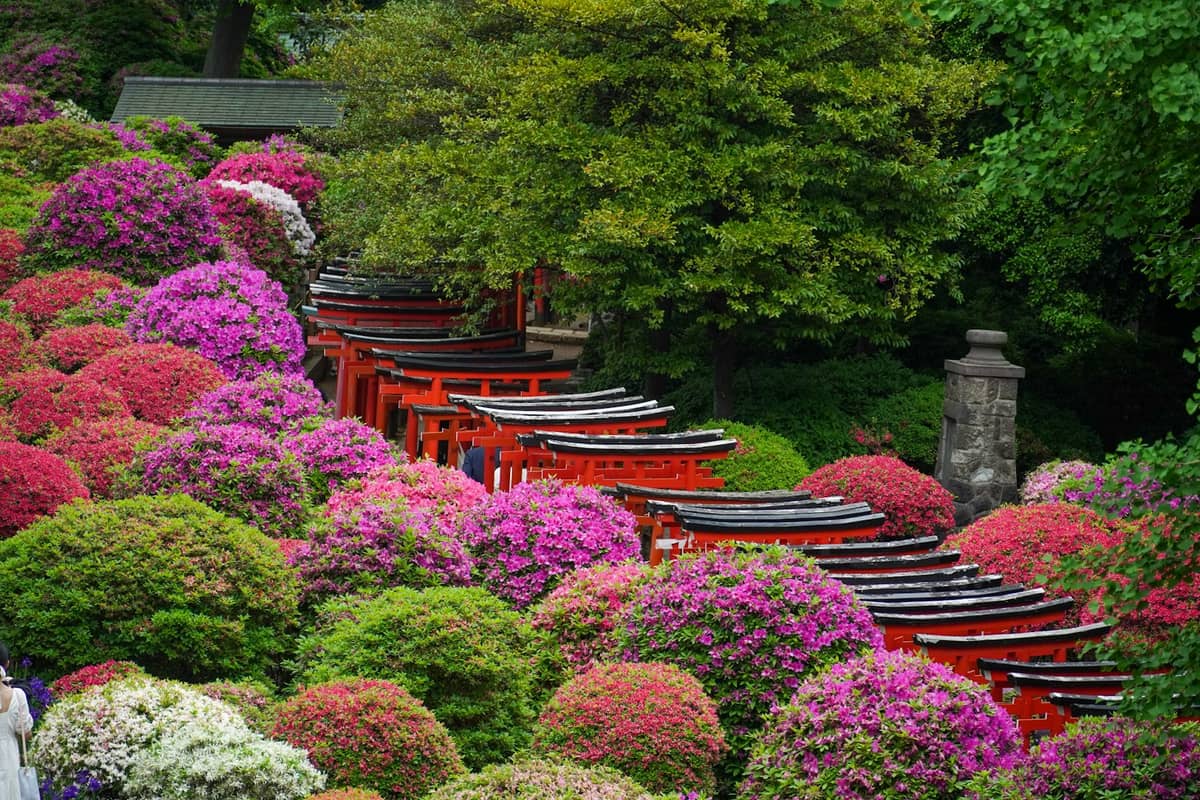
South of Yanaka, a 15-minute walk through the Nezu backstreets brings you to Nezu Shrine, one of Tokyo's oldest shrines. Its tunnel of red torii gates through an azalea-covered hillside is far less crowded than Kyoto's famous Fushimi Inari, particularly on weekday mornings. The shrine's grounds feel genuinely ancient, with large camphor trees and moss-covered stone lanterns lining the approach.
Beyond the main landmarks, Yanaka rewards slow exploration. The neighborhood contains over 70 Buddhist temples, most of them small, gated, and not specifically set up for visitors, but interesting as evidence of the area's historical density of religious institutions. Streets like Sansakizaka and the lanes around the Suwa Shrine offer views of wooden houses, old stone walls, and occasional craft workshops. The Asakura Museum of Sculpture, housed in the former studio and residence of sculptor Fumio Asakura, is one of the neighborhood's less-visited cultural sites and worth the modest entry fee.
Yanaka Ginza shotengai and the Yuyake Dandan staircase
Yanaka Cemetery, especially the cherry avenue in late March and early April
Tennō-ji Temple within the cemetery grounds
Nezu Shrine and its hillside torii corridor
Asakura Museum of Sculpture (Taitō ward)
Street-level exploration of the lanes between Sendagi and Nippori stations
💡 Local tip
The classic Yanaka walking route runs from Nippori Station west exit, through Yanaka Cemetery, south along the lanes to Yanaka Ginza, then continues through Nezu backstreets to Nezu Shrine and finishes at either Nezu or Sendagi Station on the Chiyoda Line. Allow two to three hours at a relaxed pace.
Eating & Drinking
Yanaka Ginza is the food center of the neighborhood. The street and its immediate side streets concentrate most of the eating options: grilled chicken skewers, menchi-katsu (deep-fried minced meat croquettes), freshly made senbei, and taiyaki fish-shaped cakes filled with red bean paste are all available as walk-and-eat street food. Vendors typically operate from the late morning through the afternoon, and several shops have been at the same spot for decades. Prices are low by Tokyo standards.
For sit-down meals, Yanaka has a collection of small, independent cafés and older-style restaurants. Kayaba Coffee, occupying a renovated 1938 building near the cemetery, is one of the neighborhood's most recognized spots: it serves a morning egg sandwich that has become something of a Yanaka institution. The space itself, with its original wooden counter and low ceilings, is as much the reason to visit as the menu. Several other cafés have opened in renovated machiya townhouses throughout the area, catering to a mix of local residents and weekend visitors.
The Yanesen area as a whole leans toward Japanese comfort food, traditional sweets, and café culture rather than izakayas or ramen. There are a few small izakayas and sake bars in the backstreets near Sendagi Station, but the bar scene is minimal compared to Ueno or Shinjuku. If an evening of drinking and late-night eating is part of the plan, Ueno's Ameyoko market area or central Ueno is a short train or taxi ride away. Yanaka itself suits a lunch or late-morning visit better than an evening one.
Yanaka Ginza street food: menchi-katsu, skewers, taiyaki, senbei crackers
Various machiya café conversions in the lanes between Yanaka Ginza and Sendagi
Traditional wagashi (Japanese sweet) shops near the cemetery approach
Small izakayas near Sendagi Station for evening drinks
⚠️ What to skip
Many of Yanaka's small cafés and independent shops operate on limited hours and close on weekdays, or observe irregular closing days. Checking opening hours before visiting specific spots is advisable, particularly if visiting on a Tuesday or Wednesday.
Getting There & Around
JR Nippori Station is the primary entry point. The Yamanote Line stops here, connecting Yanaka directly to Shinjuku (about 20 minutes), Shibuya (about 25 minutes), Akihabara (about 5 minutes), and Ueno (2 minutes). The Keisei Line also stops at Nippori, making it a convenient connection for travelers arriving from Narita Airport via the Keisei Skyliner, which terminates at nearby Ueno Station. From Nippori's west exit, Yanaka Cemetery begins almost immediately across the road.
Sendagi Station on the Tokyo Metro Chiyoda Line provides southern access to the Yanesen area. From here, the backstreets toward Yanaka Ginza are about a 10-minute walk. The Chiyoda Line connects Sendagi to Meiji-Jingumae (Harajuku), Otemachi, and ultimately Yoyogi-Uehara, making it easy to combine Yanaka with a visit to the opposite side of the city without returning to the Yamanote loop first. Nezu Station, one stop from Sendagi on the Chiyoda Line, sits just south of Nezu Shrine.
Yanaka itself is best explored entirely on foot. The lanes are too narrow and irregular for cycling to be efficient, and the distances between the main points of interest are short enough that walking is always the right choice. For a broader understanding of how Yanaka connects to the rest of the city, the guide to getting around Tokyo covers IC card setup, train line logic, and day-trip connections in detail.
Where to Stay
Yanaka is not a major hotel district, and that is part of its character. Accommodation options lean toward small guesthouses, traditional ryokan-style inns, and an increasing number of renovated machiya that operate as short-stay rental properties. The area suits travelers who prioritize atmosphere and quiet over centrality and amenity variety. Staying in Yanaka means waking up to the sound of temple bells rather than traffic, and walking to a local sento (public bathhouse) in the evening.
For travelers who want the Yanaka atmosphere but prefer a larger selection of hotels and restaurants, Ueno is the obvious base. Ueno's hotel density is high, prices are moderate compared to Shinjuku or Ginza, and the walk to Yanaka takes under 20 minutes or two stops on the Yamanote Line. The full Tokyo accommodation guide breaks down neighborhood options by budget and traveler type.
If staying in Yanaka is appealing, look for guesthouses near the Yanaka Ginza end of the neighborhood rather than the Nippori Station end. The Nippori side is slightly more transit-convenient but less atmospheric. The lanes between Yanaka Ginza and Sendagi Station sit in the heart of the preserved area and give the most direct access to the neighborhood's character at all hours.
Practical Notes for Visitors
Yanaka is appropriate for almost any type of traveler, including families with children, older visitors, and solo walkers. The terrain is flat to gently sloping, with the main exception being the Yuyake Dandan staircase and a few narrow stone paths near older temple walls. Families visiting Tokyo with children will find the open cemetery grounds, street food, and cat-spotting genuinely engaging for younger visitors.
Yanaka sees noticeably more visitors during cherry blossom season, roughly late March to early April, when the cemetery's main avenue draws crowds. The neighborhood also sees higher footfall during autumn foliage season in November. For a quieter experience, weekday mornings outside of these peak periods are ideal. The area fits naturally into a broader exploration of Tokyo's northern historic districts alongside Asakusa to the east, which is about 20 minutes by train via the Yamanote and Asakusa lines.
Visitors with an interest in Tokyo's older architectural fabric can extend a Yanaka visit into a broader itinerary using the Tokyo walking tour routes that cover the Yanesen area, or reference the Tokyo architecture guide for context on what distinguishes machiya construction from postwar concrete buildings. The contrast is visible on almost every block in Yanaka.
💡 Local tip
Yanaka Cemetery is a public thoroughfare used by local residents daily, not just a tourist site. Treat it accordingly: keep voices low, stay on the paved paths, and avoid large groups spreading across the main avenue during quiet hours.
TL;DR
Yanaka is Tokyo's most intact pre-war neighborhood, built on a combination of historical luck and community-led resistance to redevelopment.
Best visited on foot over two to three hours, ideally on a weekday morning outside peak cherry blossom and autumn foliage seasons.
The classic route runs from Nippori Station through Yanaka Cemetery, down to Yanaka Ginza, through Nezu backstreets to Nezu Shrine, and out at Nezu or Sendagi Station.
Not a nightlife or fine-dining destination: Yanaka suits daytime exploration, street food, café stops, and slow walking.
Ideal for travelers who want a counterpoint to central Tokyo's scale and pace, and for anyone curious about what shitamachi life looked and felt like before the city rebuilt itself.
Three days in Tokyo is enough to cover the city's iconic districts, sample its legendary food scene, and get a genuine feel for how the place works. This itinerary is structured by neighborhood logic, not just a checklist of sights, so you spend less time on trains and more time actually exploring.
Tokyo's museum scene spans 1,400 years of Japanese art history, Le Corbusier architecture, midnight-open contemporary galleries, and fully immersive digital worlds. This guide covers the best museums in Tokyo across every category, with practical tips on tickets, timing, and what to prioritize.
Tokyo has hundreds of shrines and temples, from grand imperial foundations to quiet neighborhood sanctuaries. This guide cuts through the noise to highlight the most rewarding sacred sites, whether you have one afternoon or a full week to explore.
Tokyo rewards visitors in every season, but the experience varies dramatically depending on when you go. This guide breaks down the weather, crowd levels, hotel prices, and standout events for each time of year, so you can choose the visit that actually suits you.
Tokyo rewards those who look up. Whether you want a free 202-meter perch over Shinjuku, a paid rooftop with Shibuya Crossing directly below, or a romantic tower glowing orange at night, this guide covers every major viewpoint in the city, ranked by what makes each one worth the trip.
Tokyo rewards those who venture beyond the city limits. Within two hours by train or bus, you can reach a UNESCO shrine town, a volcanic mountain resort, a coastal city of Zen temples, and Japan's most iconic mountain view. This guide covers the best day trips from Tokyo, with practical transport details for each.
Tokyo is one of the world's great cities for budget travelers. From free observation decks and ancient temple grounds to world-class parks and atmospheric street walks, you can fill days of exploration without paying a single admission fee. This guide covers the best genuinely free experiences across the city.
Tokyo's transport network is one of the most efficient in the world, but its sheer scale can overwhelm first-time visitors. This guide covers everything: IC cards, subway passes, airport transfers from Haneda and Narita, buses, taxis, and the key mistakes to avoid.
Tokyo rewards the curious traveler who ventures beyond the obvious landmarks. From a temple blanketed in lucky cat figurines to a natural valley cutting through residential Setagaya, these are the places locals love and guidebooks overlook.
Tokyo sets the global standard for luxury travel. With more Michelin-starred restaurants than any city on earth, world-class hotels, and bespoke private experiences, it rewards travelers who plan carefully. This guide covers everything from three-star dining reservations to high-end seasonal timing.
Everything you need to plan a Mount Fuji day trip from Tokyo, from train and bus options to climbing season restrictions, entrance fees, and the best spots to actually see the mountain. Practical, specific, and honest about what to expect.
Seven days is enough to cover Tokyo's essential neighborhoods, iconic landmarks, and a few surprises — if you plan smart. This day-by-day itinerary covers where to go, how to get there, what things actually cost, and what most visitors get wrong about spending a week in one of the world's most complex cities.
Tokyo rewards couples who plan ahead. This guide covers the city's best romantic experiences, from immersive art installations and panoramic night views to riverside strolls and intimate izakayas, with clear advice on what to book early and what to skip.
Tokyo now has two large-scale teamLab museums, and they are nothing alike. This guide covers the real differences between teamLab Planets in Toyosu and teamLab Borderless at Azabudai Hills, with practical advice on tickets, timing, and which experience is worth your time.
Tokyo is one of the most rewarding cities on earth, but its sheer scale can be overwhelming. This guide cuts through the noise with practical, specific advice on the top things to do in Tokyo — from iconic landmarks and seasonal festivals to quieter experiences most visitors miss entirely.
Tokyo has two main international airports: Haneda, close to the city center, and Narita, located in Chiba Prefecture about 60 km out. This guide breaks down the key differences, every transport option available, realistic travel times, and how to avoid the common mistakes that cost travelers time and money.
Tokyo is the global capital of anime and manga culture, with dedicated museums, iconic shopping districts, seasonal conventions, and pilgrimage sites spread across the city. This guide breaks down exactly where to go, how to book, what to budget, and how to avoid the most common planning mistakes.
Tokyo's architecture spans over a thousand years in the space of a single subway ride. This guide covers the city's most significant modern and traditional structures, with practical details on opening hours, ticket prices, access routes, and what to know before you go.
Tokyo's café culture spans three distinct worlds: atmospheric kissaten frozen in the 1960s, precision-driven specialty coffee shops, and themed cafés where you sip coffee alongside cats, owls, or hedgehogs. This guide breaks down pricing, etiquette, booking requirements, and the best neighbourhoods for each type.
Tokyo has become one of the world's leading destinations for digital and immersive art, and teamLab is just the beginning. From yokai-themed projection installations to grand European masterworks reimagined in light, this guide covers every major venue, ticket prices, seasonal timing, and practical logistics for experiencing Tokyo's full digital art landscape.
Tokyo is one of the most rewarding cities in the world to visit, and also one of the easiest to navigate once you know the basics. This guide covers everything a first-time visitor needs: how to get in, how to move around, when to go, what to expect, and how to avoid the most common mistakes.
Tokyo's fish market scene split in 2018 when wholesale operations moved from Tsukiji to the new Toyosu Market. This guide cuts through the confusion: where the tuna auctions actually happen, how to get a coveted auction viewing spot, and why Tsukiji's outer market is still worth your morning.
Tokyo is one of the world's great garden cities, with Edo-period strolling gardens, forested shrine grounds, and expansive modern parks distributed across the metropolis. This guide covers the finest green spaces in Tokyo, from the iconic to the quietly spectacular.
Tokyo's autumn foliage season runs from mid-November into early December, transforming gardens, parks, and temple grounds across the city. This guide covers the best spots, exact peak timing, admission costs, and practical advice for planning your visit.
December in Tokyo is one of the city's most visually spectacular months, with thousands of lights transforming major boulevards and neighborhoods. But it also comes with genuine planning challenges: year-end closures, holiday crowds on trains, and illumination events that end before Christmas. This guide covers everything you need to know.
Spring in Tokyo runs from mid-March through May, with cherry blossom season as the centerpiece. This guide covers bloom forecasts, the best hanami spots, crowd strategy, spring weather, and practical planning advice for one of Japan's most spectacular seasonal events.
Izakaya are the beating heart of Tokyo's after-work food and drink culture. This guide covers what to expect, how much to budget, where to go, and the customs that separate confident regulars from confused first-timers.
Tokyo's 23 special wards contain dozens of distinct neighborhoods, each with its own personality, price point, and crowd. This guide breaks down the key areas to help you decide where to spend your time — and what to skip.
Tokyo's after-dark scene runs from intimate jazz bars and golden-era izakayas to multi-floor clubs that peak at 2am. This guide covers the best neighborhoods, realistic costs, how cover charges actually work, and everything you need to plan a great night out.
Tokyo has a reputation for being expensive, but the reality is more nuanced. With smart transport choices, free-entry attractions, and a food culture built around affordable meals, a trip to Japan's capital can cost far less than most visitors expect. This guide breaks down exactly where to spend, where to save, and what to skip.
Tokyo has a surprisingly rich bathing culture, from genuine hot spring onsen drawing geothermal water to affordable neighborhood sento charging just ¥550. This guide breaks down the difference, explains the etiquette, and points you to the best options across the city.
Tokyo takes ramen seriously. This guide covers every major broth style found in the city, which neighborhoods to target for each, exactly how to order at a ticket-machine shop, and what to budget per bowl in 2026. Whether you want a classic shoyu at a stand-up counter in Shinjuku or a next-level tori paitan in Shibuya, this is your starting point.
Tokyo consistently ranks among the safest major cities on earth, but that reputation can breed overconfidence. This guide covers the real crime picture, common scams targeting tourists, night safety, seasonal hazards, and exactly what to do if something goes wrong.
Tokyo is one of the world's great shopping cities, with entire neighborhoods built around specific categories of retail. This guide breaks down the best areas by what you actually want to buy, explains Japan's tax-free system, and tells you what to skip.
Tokyo's street food scene runs through markets, covered shotengai, and narrow yokocho alleys rather than roaming carts. This guide covers the best locations by neighborhood, what each area does best, realistic prices for 2026, and the seasonal quirks that determine what's worth eating when.
Tokyo's summer festival season runs from late June through mid-August, packed with massive fireworks displays, Bon Odori dancing, and lantern festivals. This guide covers the major events, ticket options, crowd logistics, and practical advice for making the most of hanabi season without the rookie mistakes.
Tokyo hosts three Grand Sumo tournaments every year at Ryogoku Kokugikan in Sumida Ward. This guide covers 2026 tournament dates, how to buy tickets before they sell out, seat types, what to expect inside the arena, and everything else you need to plan a visit.
Tokyo has more sushi restaurants than any city on earth, spanning ¥150 conveyor belt plates to ¥88,000 trophy omakase. This guide breaks down every tier, explains what you actually get at each price point, and tells you how to book, what to avoid, and when to go.
The Tokaido Shinkansen is one of the world's great train journeys, covering roughly 450 km between Tokyo and Kyoto in just over two hours. This guide breaks down every train type, fare tier, JR Pass rule, and booking option so you can plan the trip without second-guessing yourself.
Three options connect Tokyo and Osaka: the Tokaido Shinkansen, overnight highway buses, and short-haul flights. This guide breaks down real costs, door-to-door times, and the clear pros and cons of each so you can book the right one for your trip.
Tokyo rewards walkers like few cities do. This guide covers the best self-guided walking tours across Tokyo's most interesting neighborhoods, with free official maps, transport pass options, seasonal advice, and honest assessments of each route's strengths and trade-offs.
Tokyo is one of the world's most rewarding cities to explore with children. From immersive digital art to classic theme parks, this guide covers the best family activities, practical logistics, seasonal timing, and money-saving tips to make your trip run smoothly.
Tokyo Japanese cuisine spans everything from ¥800 ramen bowls to reservation-only omakase counters. This guide covers the city's defining dishes, where to find them by neighborhood, what things actually cost, and how to eat well on any budget.
Tokyo has no single best neighborhood for every traveler. This guide breaks down the top areas to stay, from the transit powerhouse of Shinjuku to the traditional lanes of Asakusa, with clear advice on who each area suits, what to expect from hotels at every price point, and when to book.