Tokyo Fish Markets: Tsukiji vs Toyosu Explained
Tokyo's fish market scene split in 2018 when wholesale operations moved from Tsukiji to the new Toyosu Market. This guide cuts through the confusion: where the tuna auctions actually happen, how to get a coveted auction viewing spot, and why Tsukiji's outer market is still worth your morning.
Plan and book this trip
Tools from our partner Travelpayouts help you compare flights and hotels. If you book through them, we may earn a commission at no extra cost to you.
Flights
Hotels map
TL;DR
- Tuna auctions moved from Tsukiji to Toyosu Market in 2018 — all wholesale seafood trading now happens at Toyosu.
- Toyosu offers two ways to watch the auction: free second-floor windows (no booking) or a dedicated observation deck requiring a monthly online lottery capped at 100 people per day.
- Tsukiji's outer market is still open, with dozens of seafood stalls and street food vendors operating roughly 5:00–14:00.
- Both markets close on Sundays, most public holidays, and some Wednesdays — always check the calendar before visiting. See the Ginza & Tsukiji area guide for what else is nearby.
- If you only have one morning, combine an early Toyosu visit with a post-auction breakfast at Tsukiji's outer market.
The Big Shift: What Happened in 2018
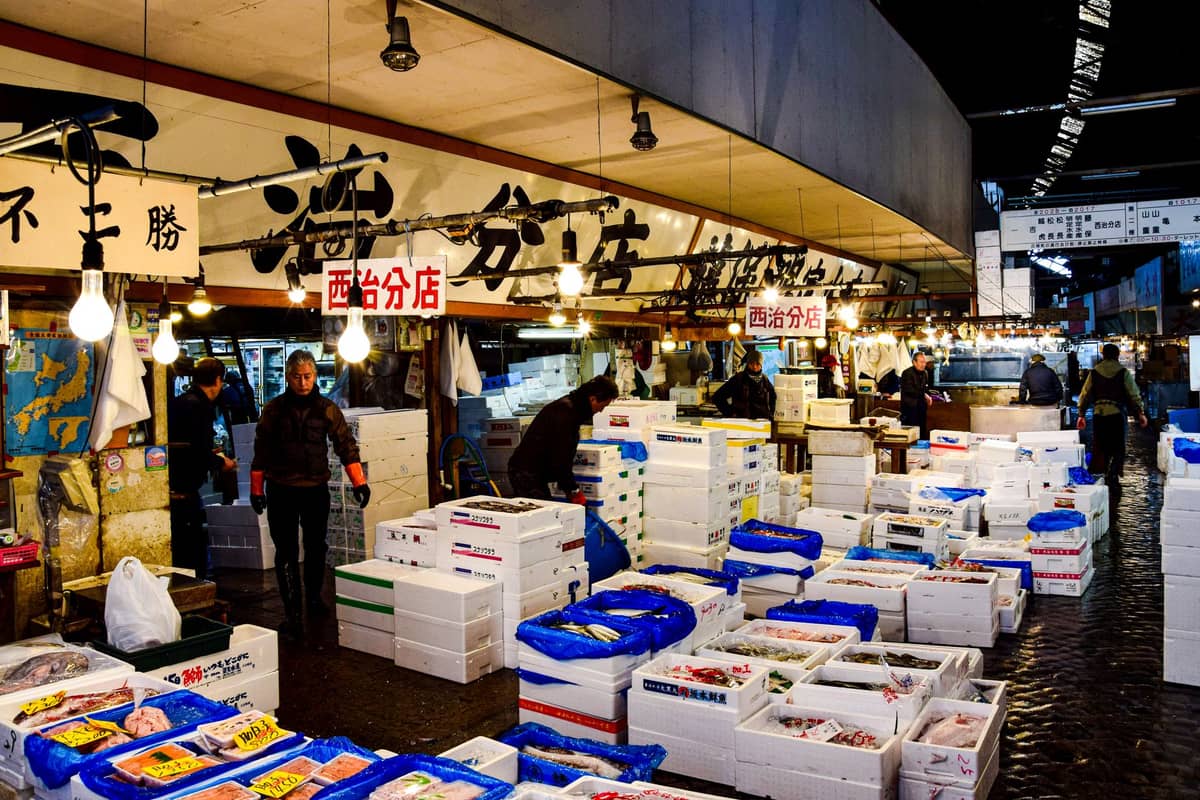
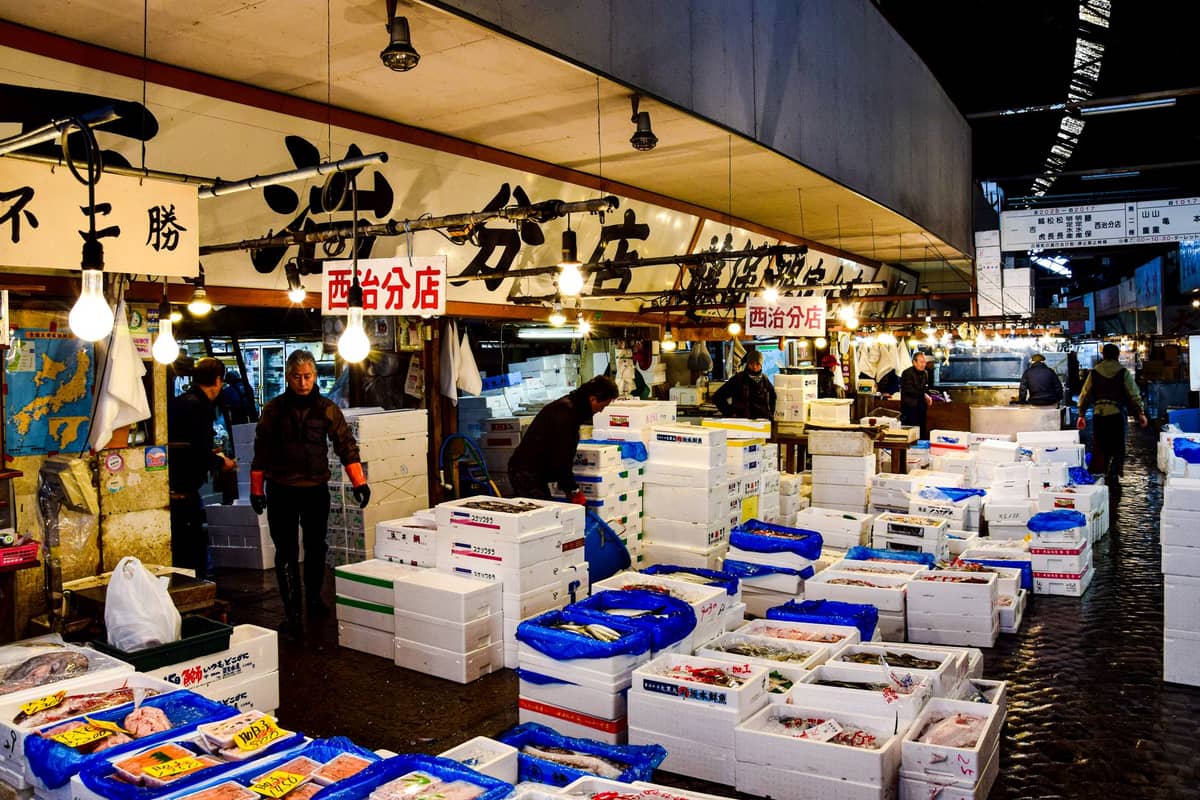
For decades, the Tokyo fish market at Tsukiji in Chuo Ward was the world's largest wholesale seafood market, handling over 400 species and drawing professional buyers, curious tourists, and sushi chefs from across Japan. In October 2018, the wholesale inner market operations, including the famous tuna auctions, relocated to a purpose-built facility at Toyosu, roughly 4 km east in Koto Ward. The move was years in the making, driven by infrastructure concerns and the need for temperature-controlled facilities meeting modern food safety standards.
What stayed at Tsukiji was the outer market: the retail stalls, small restaurants, and street food vendors that had always operated alongside the wholesale activity. The outer market has no official connection to wholesale trading, but it's independently thriving. What moved to Toyosu was everything that matters to the seafood industry: the Fisheries Wholesale building, the Intermediate Wholesale building, and the tuna auctions that built Tsukiji's global reputation in the first place.
⚠️ What to skip
A persistent piece of misinformation online claims tuna auctions still happen at Tsukiji. They do not. Tsukiji has no auction activity whatsoever. If you want to watch a tuna auction, you must go to Toyosu Market.
Toyosu Market: The New Home of Tokyo's Tuna Auctions
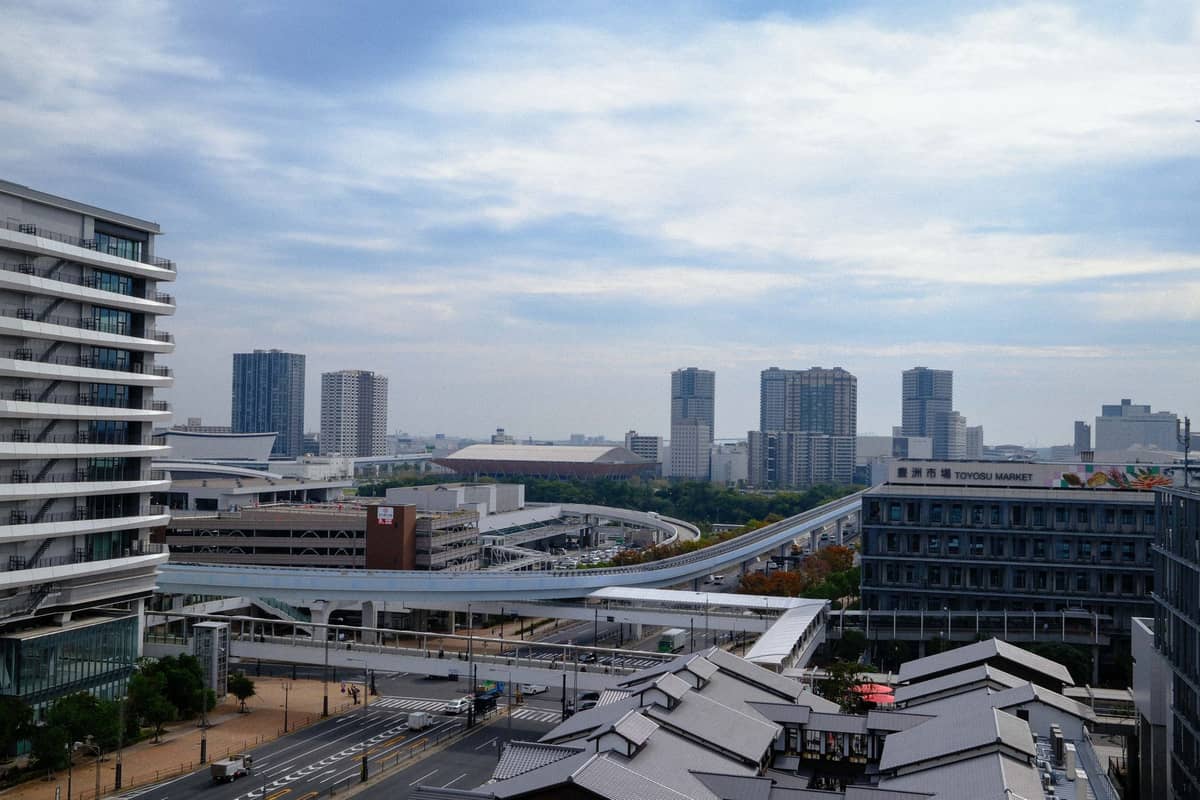
Toyosu Market (豊洲市場) sits in Toyosu 6-chome, Koto-ku, on a man-made island in Tokyo Bay. The complex is vast and purpose-built, with climate-controlled buildings connected by elevated walkways. Visitor areas are open from about 5:00 to 17:00 on operating days, with typical closures on Wednesdays, Sundays, and national holidays. Specific holiday closures also apply around the New Year period. Before visiting, check the official Toyosu Market calendar at toyosu-market.or.jp, as a wasted trip at 5:00 in the morning is particularly brutal.
Tuna auctions take place in the Fisheries Wholesale and Intermediate Wholesale buildings, beginning around 5:30 and typically wrapping up by 6:30. The spectacle is genuinely impressive: rows of enormous frozen bluefin tuna lined up on the floor, inspected by buyers with flashlights and metal hooks before bidding begins at speed. Visitors have two ways to observe the auction, and they are not equal experiences.
- Second-floor observation windows (free, no reservation) Viewing is through glass from above. The perspective is overhead rather than floor-level, which limits the atmosphere, but it's free and requires no advance booking. Visitor entry opens around 5:00.
- Tuna Auction Observation Deck (free, lottery required) This lower-floor viewing area puts you much closer to the action. It's capped at 100 visitors per day. Applications open online during a specific window in the previous month via the lottery site at toyosu.jcdlotterysite.jp. Successful applicants are notified by email.
✨ Pro tip
The observation deck lottery is competitive and fills quickly. Apply as soon as the application window opens in the month before your trip. The second-floor windows are a reliable fallback, but don't expect to feel the energy of the auction floor from up there.
Getting to Toyosu Market by public transit is straightforward. The Yurikamome Line (a driverless monorail) stops at Shijo-mae Station, which connects directly to the market complex. Toyosu Station on the Tokyo Metro Yurakucho Line is also nearby, roughly a 10-minute walk. For more detail on navigating Tokyo's transit network, see the guide on getting around Tokyo.
Tsukiji Outer Market: Still Worth Your Morning
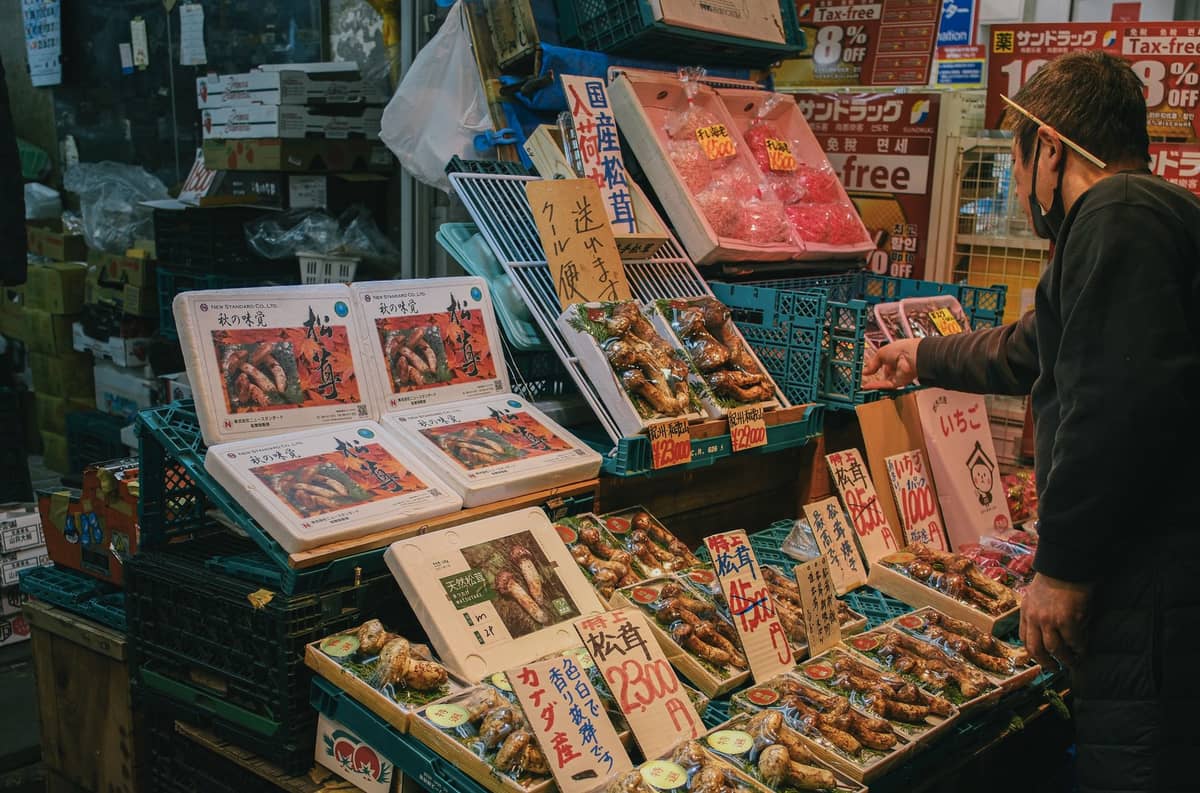
The Tsukiji outer market stretches across a grid of narrow lanes in Chuo Ward, and it remains one of Tokyo's most rewarding early-morning destinations. Around 400 shops and stalls operate here, selling fresh seafood, dried goods, pickles, knives, cooking equipment, and street food. It's a genuine retail market, not a tourist simulation, though it certainly attracts plenty of visitors.
Individual shop hours vary considerably. Many fishmongers and sushi counters open as early as 5:00, targeting professional buyers and early risers. The outer market officially designates 6:00–9:00 as professional buyers' hours and 9:00–14:00 as general public hours, and most stalls are active through the morning. By early afternoon, stalls start closing and the energy dissipates. Arriving between 7:00 and 9:00 hits the sweet spot: the crowds are manageable, the stalls are fully stocked, and you can get a proper breakfast.
- Tamagoyaki (Japanese rolled omelette): many stalls grill these to order and hand them on skewers
- Fresh uni (sea urchin) over rice: available at several counters along the main lanes
- Grilled scallops and oysters: quick, affordable, eaten standing at the stall
- Tuna sashimi sets at small restaurant counters tucked into the arcade
- Dashi-pickled vegetables and specialty condiments to take home
Tsukiji Outer Market is about a 5-minute walk from Tsukiji Station on the Tokyo Metro Hibiya Line, or from Tsukijishijo Station on the Toei Oedo Line. The surrounding Ginza and Tsukiji neighborhood also contains Hamarikyu Gardens, a short walk south and worth combining with a market visit.
💡 Local tip
Tsukiji's outer market closes on Sundays and most public holidays, plus some Wednesdays. The official calendar at tsukiji.or.jp/english/calendar is the definitive source. Don't rely on older blog posts for closure dates — they change annually.
Tsukiji vs Toyosu: Which One Should You Visit?
The short answer: they serve completely different purposes, and the choice depends on what you're after. Toyosu is for people who want to witness the actual tuna auction, the core spectacle of Tokyo's wholesale seafood trade. It's industrial, logistically demanding (5:00 start times, lottery applications), and the surrounding area offers little else beyond the market itself. Tsukiji's outer market is for people who want to eat well, browse food culture, and absorb a lively street scene at a more civilized hour.
The two markets are about 4 km apart, which makes a combined morning feasible but tiring. A practical approach: arrive at Toyosu for the 5:30 auction viewing, leave by 7:00, and take the Yurikamome Line or a taxi across to Tsukiji for breakfast. You'll be eating fresh tuna at a counter by 8:00, which is a very good morning by any standard.
- Go to Toyosu if: You want to see the tuna auction, are willing to apply for the observation deck lottery, and can manage a 4:30–5:00 wake-up call on a weekday.
- Go to Tsukiji if: You want to eat fresh seafood, buy high-quality ingredients or kitchen equipment, and experience a real working market without the early-morning logistics.
- Do both if: You're a dedicated food traveler with a flexible schedule — the combined visit is one of the most memorable mornings Tokyo offers.
Practical Planning: Hours, Closures, and Getting There
Both Toyosu and Tsukiji observe regular market holidays, but their patterns are slightly different: Toyosu is generally closed on Wednesdays, Sundays, and Japanese national public holidays, while Tsukiji's outer market is closed on Sundays, most public holidays, and some Wednesdays. Year-end and New Year closures typically run from around late December through early January. Because the closure calendar shifts each year, always verify on the official sites before building your itinerary around a market visit.
Tokyo has excellent public transit connections to both markets, and neither requires a taxi. For visitors new to the city's train and subway network, the Tokyo transit guide covers IC card setup, line transfers, and the quickest routes between major areas. For wider trip planning, including how to structure a multi-day Tokyo itinerary, the 3-day Tokyo itinerary places a market morning in context with the city's other priorities.
If your interest in Tokyo food goes beyond fish markets, the city's broader food scene deserves serious attention. The guide to what to eat in Tokyo covers everything from ramen to kaiseki, and the dedicated Tokyo sushi guide explains the difference between counter omakase, conveyor belt, and standing sushi bars.
ℹ️ Good to know
Toyosu Market is located in Koto Ward, near the Odaiba waterfront area. If you're visiting Toyosu early in the morning, note that most nearby attractions don't open until 10:00 or later. Plan to either head to Tsukiji for breakfast or return to your hotel before the rest of your day begins.
Beyond the Markets: Eating Your Way Through the Neighborhood
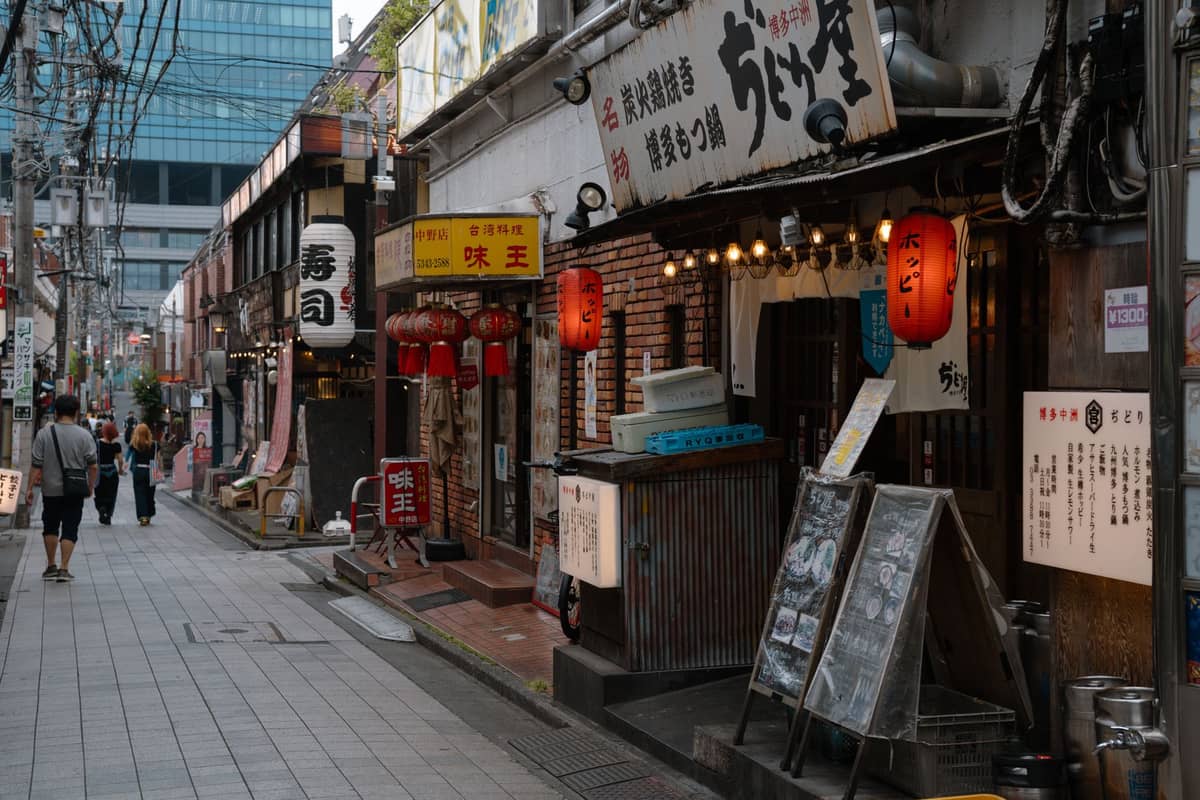
Tsukiji's outer market sits within easy reach of some of Tokyo's most historically significant dining streets. The area around Tsukiji Outer Market has sushi counters and seafood rice bowl shops that have operated for decades. Nearby Ginza, a short walk north, offers a completely different register: department store food halls, high-end restaurants, and some of the city's best patisseries. The Ginza shopping and dining district is worth exploring in the afternoon after a morning market visit.
For context on Tokyo's food culture more broadly, the fish market experience reflects something important about how the city relates to ingredients. Tokyo chefs and home cooks take sourcing seriously, and the professional buyers you'll see at Toyosu before sunrise are part of a supply chain that feeds thousands of restaurants across the city. Visiting either market, even briefly, gives you a different frame for understanding the food you'll eat throughout your trip.
FAQ
Can you still see the tuna auction at Tsukiji?
No. All tuna auctions moved to Toyosu Market in October 2018. Tsukiji no longer has any wholesale or auction activity. If you want to watch a tuna auction, you need to go to Toyosu Market and either view from the second-floor windows (free, no booking) or enter the observation deck lottery.
How do I book the Toyosu tuna auction observation deck?
The observation deck is allocated through an online lottery system at toyosu.jcdlotterysite.jp. Applications open during a specific window in the month before your visit, with 100 spots available per day. Successful applicants are notified by email. There is no fee for the viewing itself. The second-floor viewing windows are always available without booking, but the perspective is less immersive.
Is Tsukiji Market still open?
Yes. Tsukiji's outer market — the retail stalls, street food vendors, and small restaurants — remains fully operational. It typically runs from around 5:00, with most stalls active until 13:00–14:00. The outer market closes on Sundays, most public holidays, and certain Wednesdays. Check the official calendar at tsukiji.or.jp/english/calendar before visiting.
What time should I arrive at Toyosu Market for the auction?
The tuna auction begins around 5:30. General visitor entry to the second-floor observation windows opens around 5:00. If you have an observation deck lottery ticket, follow the specific instructions in your confirmation. To get to Toyosu from central Tokyo by public transit takes around 20–40 minutes depending on your starting point, so a 4:00–4:30 wake-up is realistic.
What days are Tsukiji and Toyosu markets closed?
Both markets are typically closed on Sundays, Japanese national public holidays, certain Wednesdays throughout the year, and during the year-end and New Year period, although the exact pattern differs slightly between them. Closure dates vary each year. Always verify on the official websites before your visit: tsukiji.or.jp/english/calendar for Tsukiji and toyosu-market.or.jp for Toyosu.