Sushi in Tokyo: From Conveyor Belt to Omakase
Tokyo has more sushi restaurants than any city on earth, spanning ¥150 conveyor belt plates to ¥88,000 trophy omakase. This guide breaks down every tier, explains what you actually get at each price point, and tells you how to book, what to avoid, and when to go.
Plan and book this trip
Tools from our partner Travelpayouts help you compare flights and hotels. If you book through them, we may earn a commission at no extra cost to you.
Flights
Hotels map
TL;DR
- Conveyor belt (kaiten) chains like Sushiro, Kura Sushi and Hama-sushi start at around ¥110–¥150 per plate; a full meal runs ¥1,500–¥3,000 per person.
- Entry-level omakase lunches can be had for ¥5,000–¥15,000 at serious counters — not everything requires a second mortgage.
- Mid-range and high-end omakase dinners typically fall in the ¥25,000–¥40,000 band; Sukiyabashi Jiro now charges ¥88,000. See our Tokyo food guide for the broader dining picture.
- Reservations at serious counters are essential and often require booking weeks or months ahead, sometimes through a Japanese-speaking intermediary.
- Seasonal ingredients affect both quality and price — winter is peak season for fatty tuna and crab, and omakase menus reflect that.
Why Tokyo Is the World's Sushi Capital
Tokyo holds more Michelin-starred restaurants than any other city, and a disproportionate number of those stars go to sushi counters. This isn't accident or marketing. The city sits within reach of multiple fishing ports — Choshi, Misaki, Kesennuma — and its wholesale seafood trade at Toyosu Market supplies chefs with ingredients flown or trucked in within hours of being landed. The standards expected by local customers are genuinely high. A counter charging ¥30,000 per person in Tokyo is competing against dozens of direct rivals within walking distance, which keeps quality honest in a way that doesn't always happen elsewhere.
There is also real stylistic diversity. Edomae sushi, the Tokyo tradition of curing, aging and seasoning fish before serving it over hand-pressed vinegared rice, is distinct from Osaka's oshi-zushi (pressed sushi) or the creative rolls common in Western countries. If you want to understand what sushi actually is at its technical peak, Tokyo is where to start. For context on the broader food landscape, the complete guide to eating in Tokyo covers ramen, izakayas, street food and more.
Conveyor Belt Sushi (Kaiten): The Everyday Option
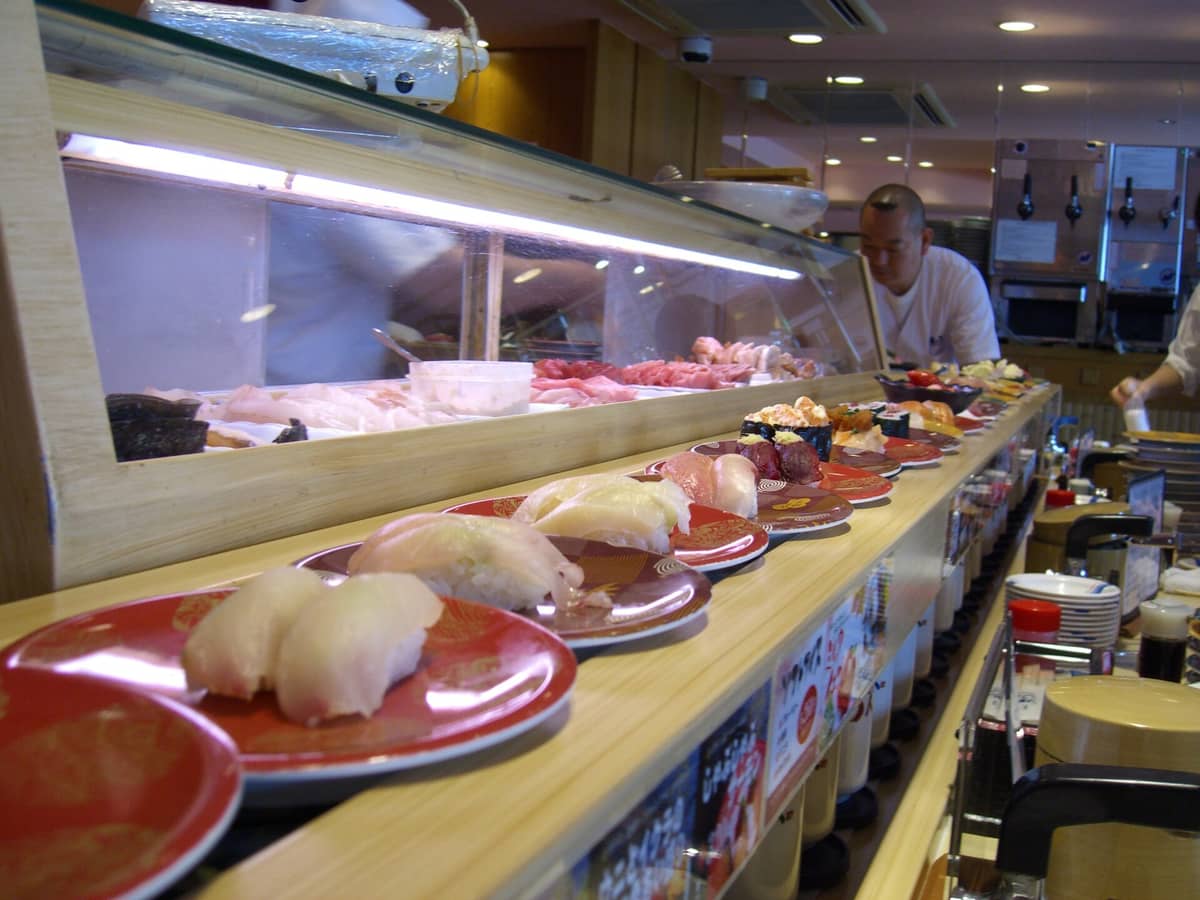
Kaiten-zushi — the conveyor belt format invented in Osaka in the 1950s — has been transformed in Tokyo into something remarkably good value. The four dominant chains are Sushiro, Kura Sushi, Hama-sushi and Uobei. Plates start at ¥110–¥150 at suburban branches and typically begin around ¥120–¥150 in central Tokyo locations. A normal meal of 8–12 plates, including a bowl of miso soup, lands around ¥1,500–¥3,000 per person. These are not tourist traps: they are where Tokyo families eat on a Tuesday night.
The fish quality at the major chains follows national food-safety standards and sourcing at scale. You won't get the dry-aged kinmedai or hand-selected bluefin from Oma that a counter chef obsesses over, but the salmon, squid, prawn and yellowtail are fresh and properly handled. The honest caveat is that rice temperature and seasoning — the things a skilled itamae (sushi chef) controls obsessively — are less precise on a conveyor. That gap matters more as you develop a palate for it.
- Sushiro The highest-volume chain in Japan. Queue tickets via app or in-store kiosks. Seasonal limited plates are genuinely worth trying.
- Kura Sushi App-based table booking available; popular with families. The ¥110 entry plates are among the cheapest in central Tokyo.
- Hama-sushi Books via Hama-Navi app. Reliable across branches; good for groups with mixed appetites.
- Uobei (Genki Sushi group) Plates delivered by Shinkansen-style rail directly to your seat rather than on a belt. Novelty value aside, prices and quality are comparable to the other chains.
- Midori Sushi / Nemuro Hanamaru Premium kaiten positioned above the big chains. Expect ¥2,500–¥4,000 per person and noticeably better fish. Nemuro Hanamaru's Shibuya Hikarie branch frequently has queues by 11:30am.
💡 Local tip
At Sushiro and Kura Sushi, downloading the app before you arrive lets you join the virtual queue remotely and check wait times. On weekend lunchtimes in Shibuya or Shinjuku, walk-in waits at popular branches can reach 60–90 minutes by noon.
Mid-Range Sushi: Sit-Down Counters Without the Ceremony
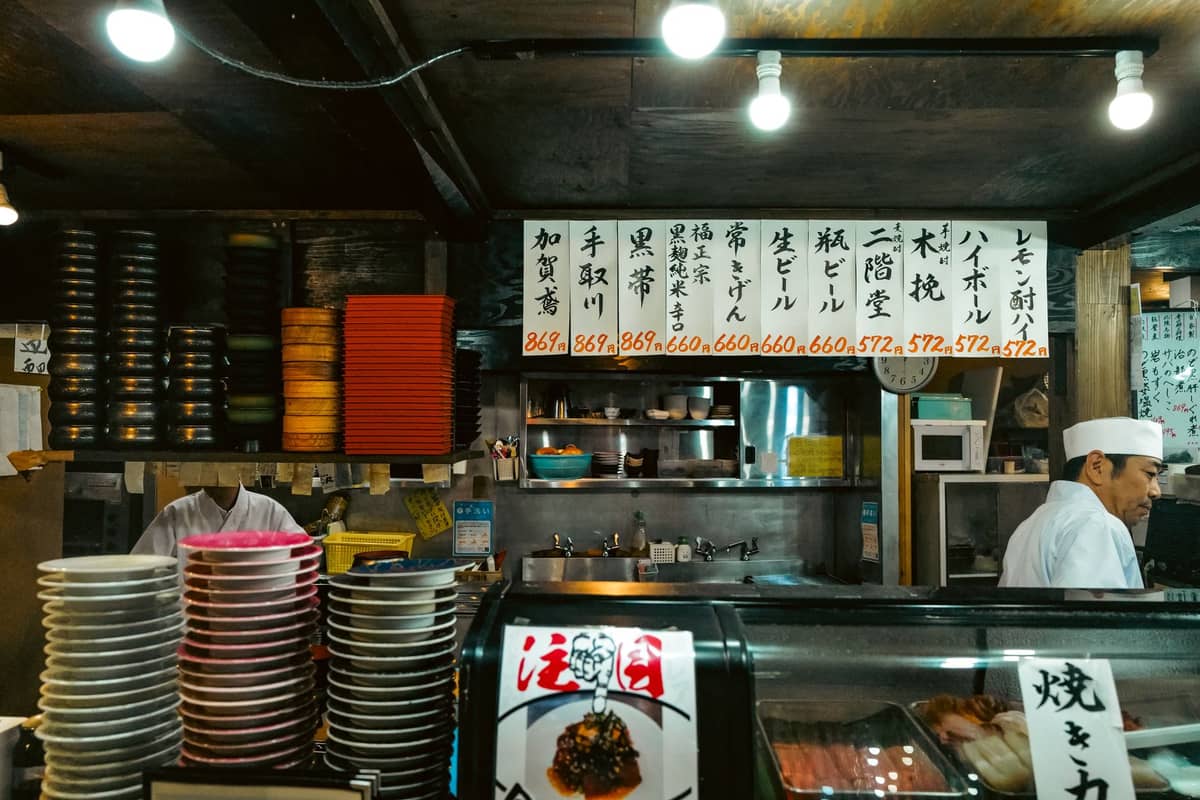
Between the chains and full omakase sits a substantial middle tier: sit-down sushi restaurants where you order à la carte nigiri, sets or rolls. Budget ¥2,000–¥5,000 per person for a satisfying meal at this level. These are often neighbourhood counters run by a single chef or small team, sometimes displaying the day's fish on a small chalkboard. The interaction is more personal than kaiten but less structured than omakase — you can ask what's good today and order two pieces of whatever interests you.
Neighbourhoods worth exploring for mid-range sushi include Ginza and Tsukiji, where the concentration of seafood professionals is highest, and Shinjuku, where lunch specials around the station offer solid nigiri sets from ¥1,200–¥2,500. The lunch sets at mid-range counters are the best value in this category: many chefs serve the same fish as at dinner but in a tighter, lower-margin format.
ℹ️ Good to know
Tsukiji Outer Market still operates as a retail and restaurant district despite the wholesale fish market moving to Toyosu in 2018. Several sushi stalls and small restaurants there serve fresh nigiri from early morning — expect to spend around ¥1,000–¥2,000 for a small plate or set at a standing counter.
Omakase Sushi: What It Actually Costs and What You Get
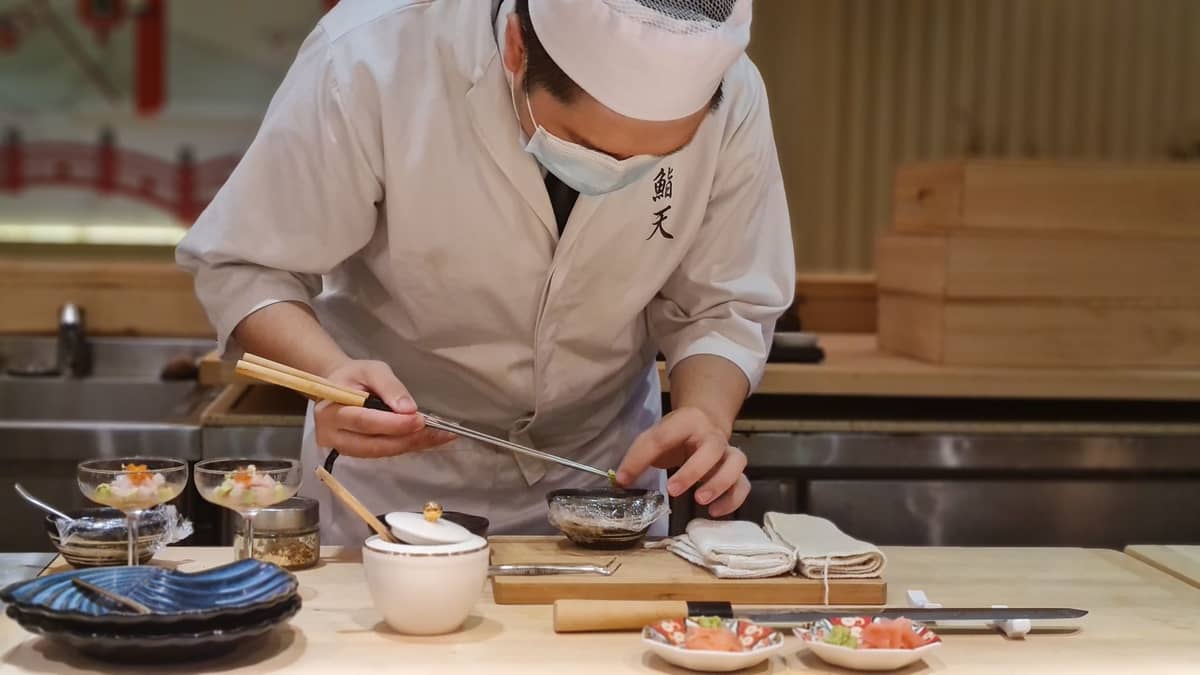
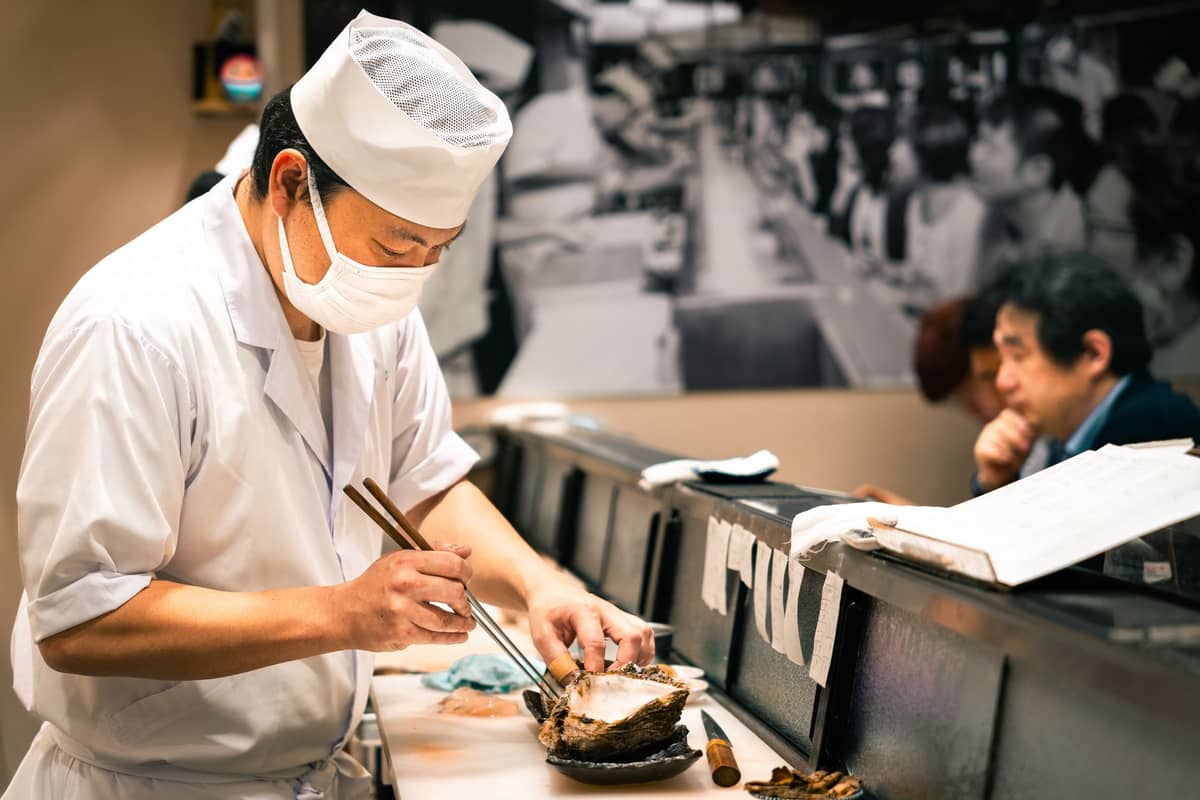
Omakase means 'I leave it up to you' — a chef-directed tasting format where you eat what's served, in the order it's served, with no menu choices. At a sushi counter this typically means 15–20 pieces of nigiri presented one at a time, pre-seasoned with soy sauce and wasabi by the chef, eaten immediately. The format is designed to showcase the chef's sourcing, knife skills and rice work rather than your personal preferences. It rewards openness and curiosity.
Price tiers are more layered than most guides acknowledge. Affordable omakase lunches at credible counters run ¥3,500–¥7,000. Entry-level serious omakase — restaurants with genuine reputations, skilled itamae and careful sourcing — typically starts around ¥9,000–¥15,000 for lunch and ¥15,000–¥25,000 for dinner. The well-known Tokyo counters with Michelin recognition or strong critical reputations mostly cluster in the ¥25,000–¥40,000 dinner range per person, before drinks. Add sake or wine and the total rises quickly: alcohol pairings at top counters add ¥5,000–¥10,000 or more.
At the extreme end, Sukiyabashi Jiro Honten — the counter made famous by a 2011 documentary — now charges ¥88,000 per person, with a ¥44,000 late-cancellation fee. Any article still quoting the old '¥30,000' figure is out of date. The experience lasts around 30 minutes and is extraordinarily precise, but many serious sushi eaters argue that counters in the ¥30,000–¥40,000 range offer more relaxed, generous dining. Sukiyabashi Jiro is not a benchmark for the category — it is an outlier.
- ¥3,500–¥7,000: Affordable lunch omakase at neighbourhood counters; shorter courses (10–12 pieces), good but not elite sourcing.
- ¥9,000–¥15,000: Entry-level serious omakase; proper Edomae technique, quality seasonal fish, typically 15–18 pieces at lunch.
- ¥15,000–¥25,000: Established counters with strong reputations; dinner format, premium ingredients, chef may explain each piece.
- ¥25,000–¥40,000: Michelin-level or equivalent; tuna from named boats, aged shellfish, hand-selected uni, full dinner service.
- ¥40,000–¥88,000+: Trophy-tier, extreme precision, near-impossible reservations — not necessarily the most enjoyable meal in the city.
⚠️ What to skip
Cancellation policies at high-end omakase counters are strict. Many charge the full course price for no-shows or late cancellations. Read the policy carefully when booking, and if you have dietary restrictions, declare them at reservation time — not on the day. Shellfish or roe allergies can be accommodated with notice; surprises at the counter are a serious problem for everyone involved.
How to Book: Reservations, Platforms and What Actually Works
Kaiten chains use their own apps (Sushiro app, Kura Sushi app, Hama-Navi) for queue management and basic time-slot reservations. Download these before you travel. They work in Japanese but are navigable with the help of a translation app. Premium kaiten spots like Nemuro Hanamaru may require queuing in person or joining a waitlist at the door — arrive before opening.
Mid-range and omakase counters increasingly book through restaurant-specific websites or third-party platforms. Tableall, Omakase.jp and Pocket Concierge are the main English-accessible platforms for serious counters in Tokyo. Some of the most sought-after seats — including several Michelin-starred counters — only accept reservations through a Japanese speaker, either a hotel concierge or a specialist booking service. If your hotel is a major international property, their concierge desk is worth approaching weeks before arrival. For top-tier counters in the ¥30,000+ range, lead times of one to three months are normal; some require six.
✨ Pro tip
Lunch omakase at serious counters is the best value in this category. Many serve the same chef, the same fish and the same technique as the dinner service at 40–60% of the dinner price. If budget is a constraint, always look for a lunch slot first.
Seasons, Timing and What to Expect on the Plate
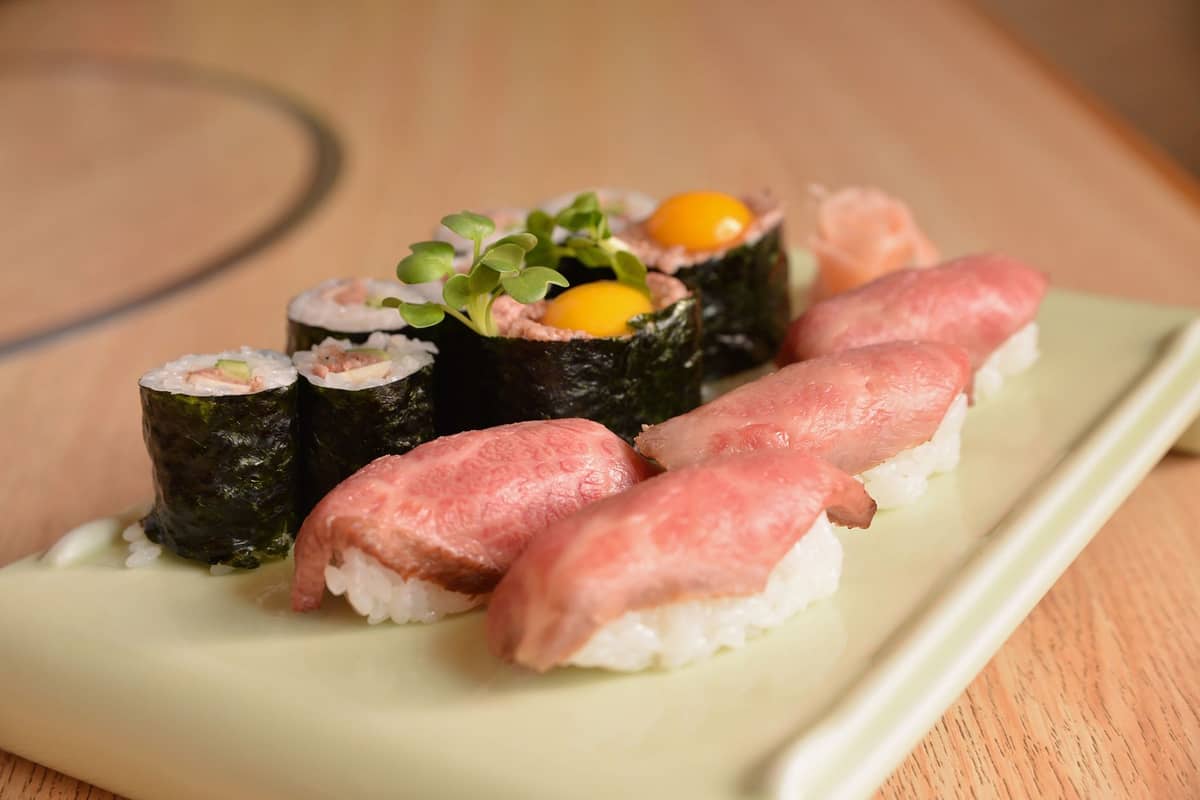
Sushi quality in Tokyo is tied directly to the fishing calendar. Winter — roughly December through February — is widely considered peak season for omakase dining. This is when fatty bluefin tuna (otoro and chutoro) from cold northern waters reaches its highest fat content, when snow crab and oysters are at their best, and when premium seasonal fish commands the highest prices. Omakase menus during this period reflect the cost: expect the upper end of quoted price ranges.
Spring brings lighter fish — sea bream (tai) features prominently around cherry blossom season, kohada (gizzard shad) appears in early spring, and the first of the year's young yellowtail (inada and then buri) cycle through. Summer is the hardest season for fatty fish but introduces sudachi-dressed white fish, sea urchin from Hokkaido at its summer peak, and sweetfish (ayu). Autumn offers a return of richer flavours as water temperatures drop. If you're planning a trip specifically around food, the guide to the best time to visit Tokyo covers this alongside other seasonal factors.
Golden Week (late April to early May) and the New Year period are when some high-end counters adjust prices or close entirely for private bookings. If you're travelling during these windows, book earlier than you think necessary and confirm your reservation closer to the date.
Practical Notes: Etiquette, Eating and Common Mistakes
At an omakase counter, eat each piece as soon as it's placed in front of you. The chef has seasoned it precisely and the rice is at the temperature they want — both deteriorate within a minute or two. Using your hands is entirely acceptable and traditional for nigiri; chopsticks are fine too. Don't dip pre-seasoned nigiri into extra soy sauce: the chef has already balanced the flavour. If a piece arrives without visible seasoning, a light dip may be appropriate, but watch what other diners do and follow their lead.
Japan has a no-tipping culture. Service charges are sometimes included in omakase prices (check the menu); tipping on top is not expected and will likely be declined. Smoking is broadly restricted inside restaurants under Japanese indoor smoking regulations, with only designated smoking rooms and some small grandfathered venues allowing it. Regarding payment: cash is widely accepted everywhere, and many high-end counters prefer or require it. Carry yen. For getting around between neighbourhoods and restaurants, the guide to getting around Tokyo has full details on the train and subway network.
- Eat nigiri immediately after it's placed down — don't let it sit.
- Don't re-dip pre-seasoned nigiri in soy sauce.
- Ginger (gari) is a palate cleanser between pieces, not a topping.
- Arrive on time or slightly early — omakase counters run on precise timing.
- If you're allergic to anything, declare it at booking, not at the counter.
- Ask questions if you're curious about the fish — most chefs appreciate engaged diners.
- Don't wear heavy cologne or perfume to a serious counter — it interferes with the subtlety of the meal.
For a wider food-and-drink picture in the same city, the Tokyo izakaya guide covers the informal drinking-and-eating format that often follows or precedes a sushi meal, particularly in areas like Shinjuku and Ginza.
FAQ
How much does sushi cost in Tokyo?
It ranges enormously. Conveyor belt chains start at ¥110–¥150 per plate and a full meal costs ¥1,500–¥3,000 per person. Mid-range sit-down counters run ¥2,000–¥5,000. Serious omakase lunches start around ¥5,000–¥15,000, with dinner omakase at established counters typically ¥15,000–¥40,000. One of the most expensive counters in Tokyo (Sukiyabashi Jiro) currently charges a minimum of ¥88,000.
Do I need a reservation for sushi in Tokyo?
For conveyor belt chains, reservations aren't required but the apps help you manage wait times. For mid-range neighbourhood counters, walk-ins are often possible at lunch. For omakase counters at any serious level, reservations are essential — sometimes weeks or months in advance. The most sought-after seats require booking through a Japanese speaker or specialist concierge service.
What is the difference between kaiten sushi and omakase?
Kaiten (conveyor belt) sushi is a self-service format where plates circulate on a belt or are ordered via tablet and delivered by rail. You choose what you eat and pay per plate. Omakase is a chef-led tasting format where you eat a set sequence of pieces chosen by the chef, priced as an all-in course. The gap in price, technique and ingredient quality between the two formats is significant.
Is Sukiyabashi Jiro worth the price?
At ¥88,000 per person it requires a specific kind of reasoning. The technique is extraordinary and the experience is historically significant. But the meal lasts around 30 minutes, the atmosphere is famously austere, and many knowledgeable Tokyo diners feel that counters in the ¥30,000–¥40,000 range offer a more complete and enjoyable experience. It depends entirely on what you're looking for.
What is the best time of year to eat omakase sushi in Tokyo?
Winter (December through February) is peak season for fatty tuna, crab and rich cold-water fish. Prices reflect this — expect to pay at the top of quoted ranges. Spring and autumn offer excellent variety at slightly lower cost. Summer is the weakest season for high-fat fish but strong for sea urchin and certain white fish. If a specific ingredient drives your trip, check what's in season before booking.