Getting Around Tokyo: The Complete Transport Guide
Tokyo's transport network is one of the most efficient in the world, but its sheer scale can overwhelm first-time visitors. This guide covers everything: IC cards, subway passes, airport transfers from Haneda and Narita, buses, taxis, and the key mistakes to avoid.
Plan and book this trip
Tools from our partner Travelpayouts help you compare flights and hotels. If you book through them, we may earn a commission at no extra cost to you.
Flights
Hotels map
TL;DR
- Get a Suica or PASMO IC card at the airport on arrival — it works on almost every train, subway, bus, and in convenience stores across Tokyo.
- Haneda (HND) is much closer to central Tokyo (15-20 km) than Narita (NRT) at roughly 60 km; factor this into your accommodation choice.
- The Japan Rail Pass does NOT cover Tokyo Metro, Toei Subway, or private railways — see our first-time visitor guide for the full breakdown.
- The Tokyo Subway Ticket (24/48/72-hour) is worth buying if you plan more than 4-5 subway rides per day in central Tokyo.
- During Golden Week, Obon, and New Year, book Skyliner and N'EX tickets in advance — trains fill up fast.
Understanding Tokyo's Transport Network
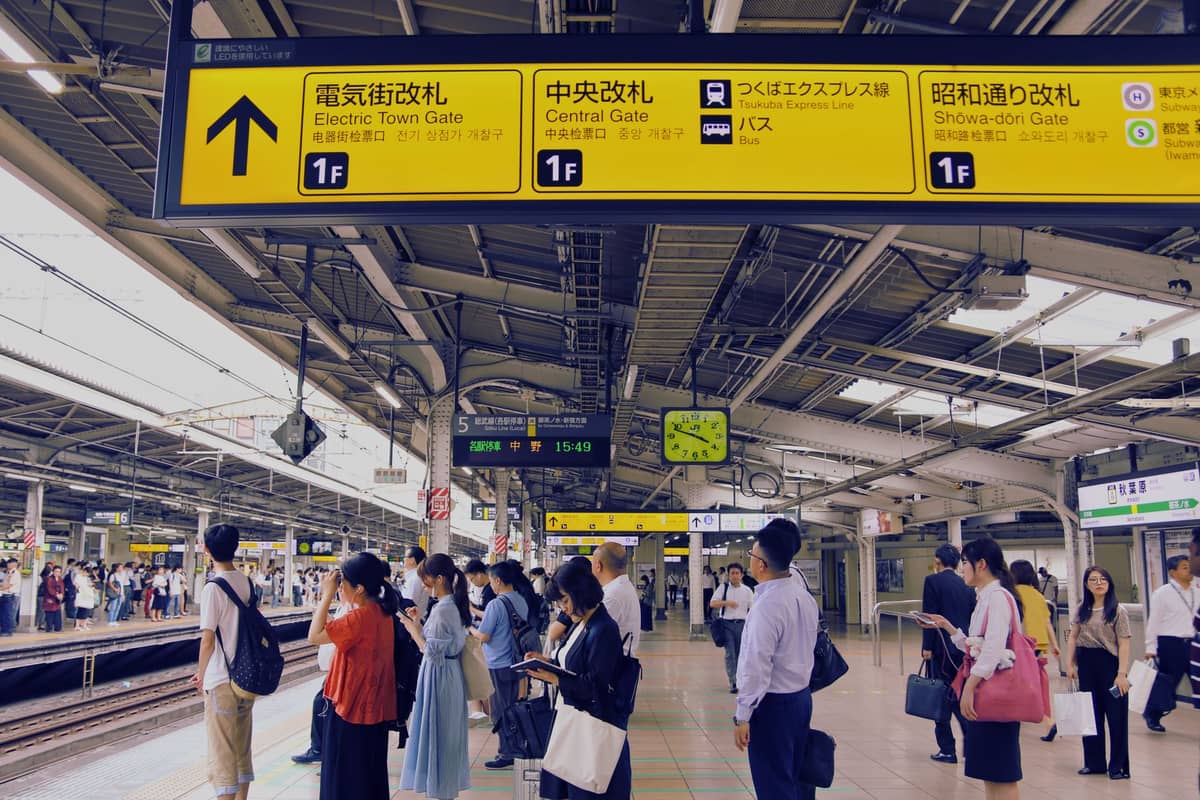
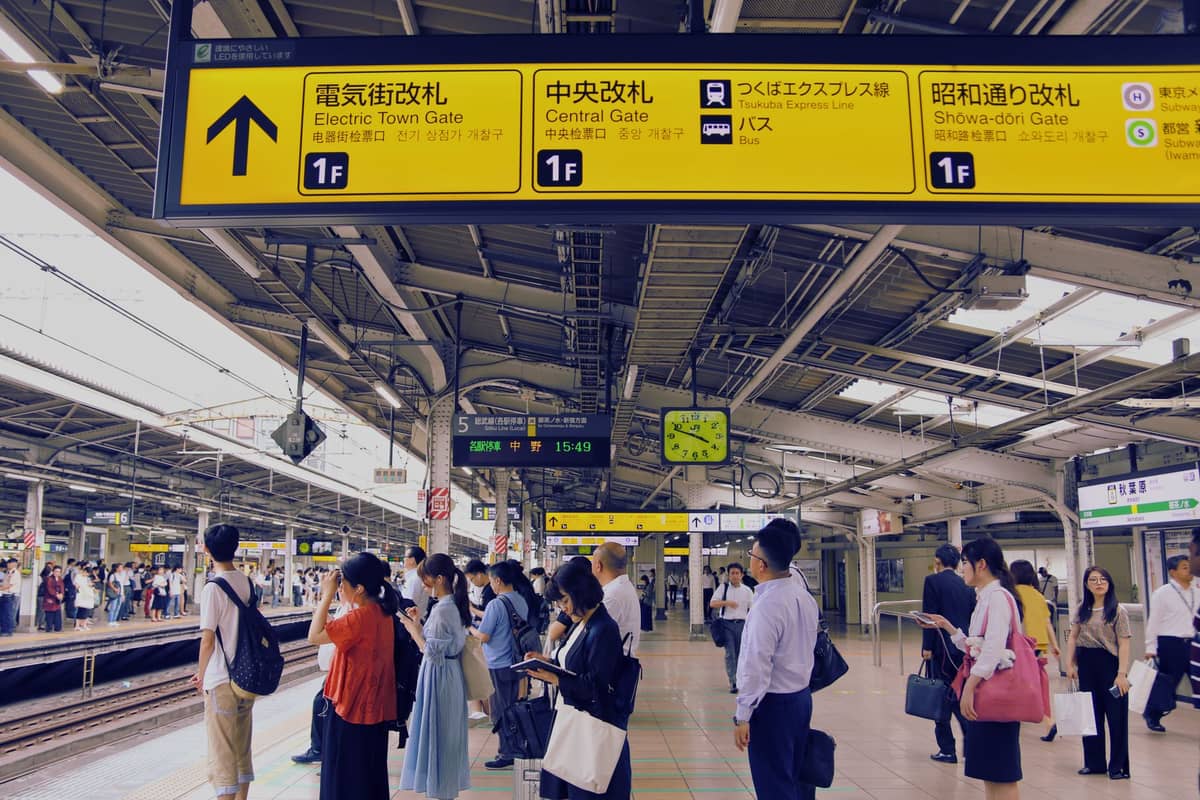
Getting around Tokyo means navigating a layered system of overlapping networks: two subway operators, JR East urban lines, and a dozen private railways, all running alongside an extensive bus network. The good news is that these systems are remarkably punctual, well-signed in English, and covered by a single IC card. The challenge is knowing which ticket or pass saves you the most money for your specific itinerary.
The Tokyo Metro and Toei Subway together operate 13 lines covering the 23 special wards. JR East's Yamanote Line is the famous circular route linking major hubs like Shinjuku, Shibuya, Harajuku, Tokyo Station, Ueno, and Ikebukuro — indispensable for most visitors. Private railways (Keio, Odakyu, Tokyu, Keikyu, Seibu, Tobu) extend service into the suburbs and neighboring prefectures, and are also IC-card compatible.
ℹ️ Good to know
Tokyo operates on Japan Standard Time (JST, UTC+9) with no daylight saving. Train services typically run from around 5:00 AM to midnight or just after. After the last train, taxis become your only public option — and they are expensive.
IC Cards: Suica, PASMO, and the Tourist PASMO
An IC card is the single most useful thing you can pick up in Tokyo. Both Suica (issued by JR East) and PASMO (issued by the private rail consortium) are stored-value cards that deduct the exact fare per ride. They are interchangeable across networks — load either one and use it on Tokyo Metro, Toei Subway, JR lines, private railways, most buses, and even at convenience stores and vending machines. There is no practical difference between Suica and PASMO for day-to-day travel in Tokyo.
⚠️ What to skip
IC cards are NOT unlimited-ride passes. They work like a prepaid debit card: each ride deducts the exact fare. If you are doing 8-10 subway rides a day, a timed subway pass will be cheaper. If you are doing 3-4 rides, the IC card is perfectly fine.
As of May 2026, a Tourist PASMO launched specifically for visitors, with a 28-day validity period and no refundable deposit required. It is sold at Narita Airport and Haneda Airport. Standard Suica and PASMO cards require a ¥500 deposit, which is refunded when you return the card. Either option works well; the Tourist PASMO simply removes the deposit step if you do not want the hassle of returning it before you fly.
- Suica Issued by JR East. Available at JR ticket machines and Haneda/Narita airports. Works on all IC-compatible networks across Japan, useful if you are also traveling to Osaka or Kyoto.
- PASMO Issued by private rail operators. Functionally identical to Suica for Tokyo use. Available at Tokyo Metro, private rail, and Toei machines.
- Tourist PASMO (from May 2026) 28-day validity, no deposit, sold at airports and major stations. Designed for short-stay visitors who do not want to manage a deposit refund.
- Mobile Suica iPhone and Android users can load Suica onto Apple Wallet or Google Pay and tap to ride without a physical card. Convenient but requires app setup before arrival.
Tokyo Subway Ticket: When It Makes Sense
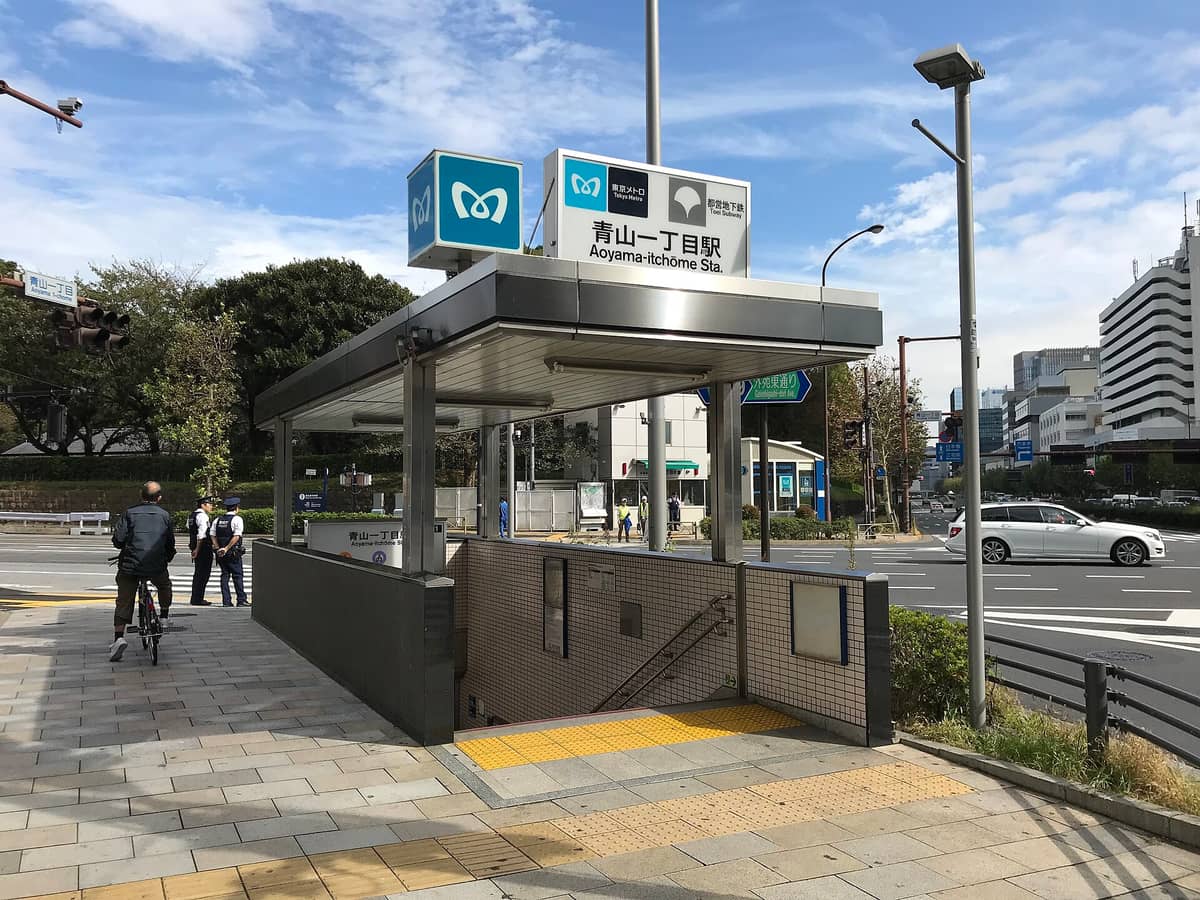
The Tokyo Subway Ticket covers unlimited rides on both Tokyo Metro and Toei Subway lines for a set duration. Current official pricing: 24 hours costs ¥1,000 for adults (¥500 children), 48 hours ¥1,500 (¥750), and 72 hours ¥2,000 (¥1,000). Crucially, the clock starts from first use, not from midnight — so a 24-hour ticket used at 10 AM on Monday is valid until 10 AM on Tuesday. Tickets are sold at major stations and airport counters.
A standard single subway ride costs around ¥180-¥320 depending on distance. If you are making 5 or more subway trips in a day — for example, moving between Asakusa, Shibuya, Roppongi, and back — the 24-hour pass pays for itself quickly. For a single sightseeing day covering 6 or more stops, the math almost always favors the pass.
✨ Pro tip
The Tokyo Subway Ticket does NOT cover JR lines, including the Yamanote Line. If your itinerary relies heavily on JR (e.g., Shibuya to Shinjuku to Harajuku), you will still pay separately for those legs on your IC card. Plan your day around Metro lines when using the pass to maximize value.
Getting from the Airports to Central Tokyo
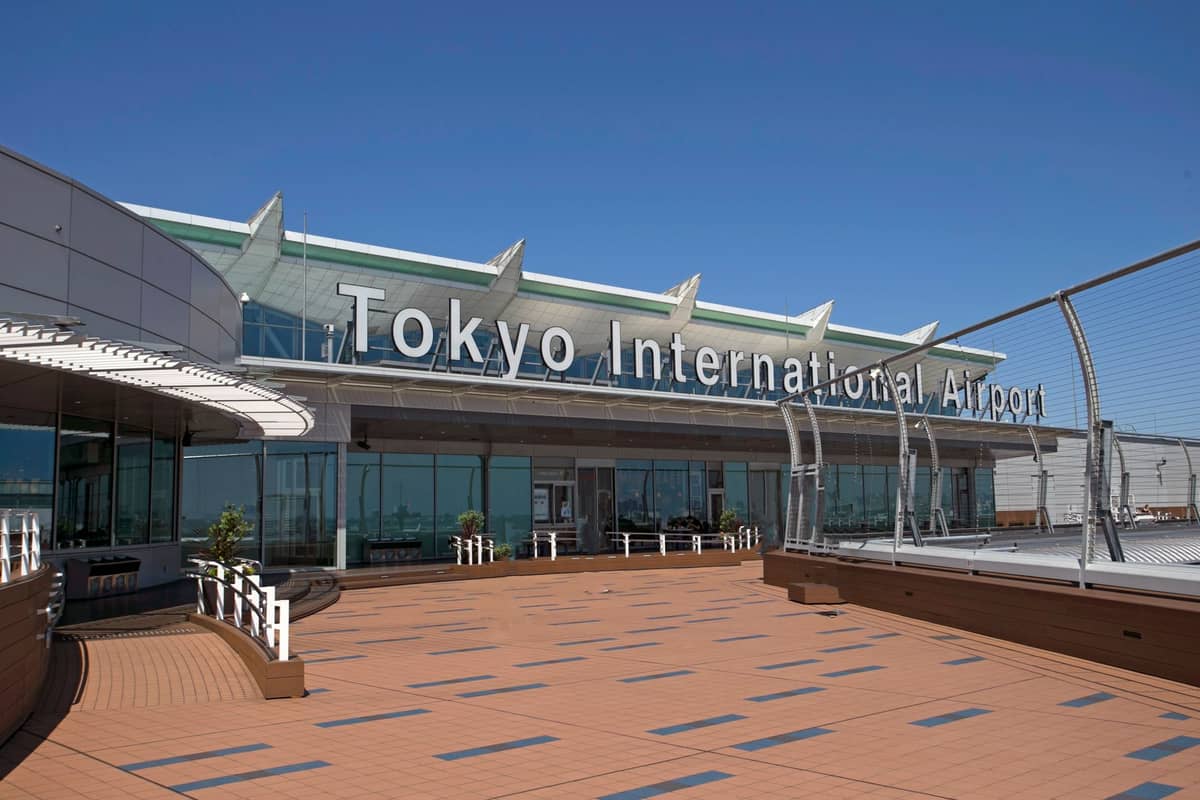
Tokyo is served by two major airports. Haneda (HND) sits in Ota Ward, roughly 15-20 km from central Tokyo, making it the more convenient option for most visitors. Narita (NRT) is in Chiba Prefecture, about 60 km east of the city center. Both airports have excellent rail connections, but the time and cost difference is significant.
For full airport logistics including terminal layouts and baggage services, the Tokyo airports guide covers both Haneda and Narita in detail.
- Haneda: Tokyo Monorail From Haneda to Hamamatsucho Station, then JR Yamanote Line to major hubs. Total time to central Tokyo around 30 minutes. Cost approximately ¥500-¥700 depending on final destination.
- Haneda: Keikyu Line Connects Haneda directly to Shinagawa, with onward JR and subway connections to Shibuya, Ginza, and Asakusa. Journey time 30-45 minutes, around ¥500.
- Haneda: Limousine Bus Door-to-hotel service to major hotel areas. Fare around ¥1,300-¥1,500. Travel time 30-60 minutes depending on traffic — can be much longer during peak hours.
- Narita: Keisei Skyliner Direct express to Ueno and Nippori, with onward subway connections. Takes 36-41 minutes to Ueno. Costs around ¥2,580. Best option if your hotel is in the east of the city.
- Narita: JR Narita Express (N'EX) Direct service to Tokyo Station, Shibuya, and Shinjuku. Around 53-60 minutes to Tokyo Station, costing approximately ¥3,070 one-way. Covers the widest range of final destinations.
- Narita: TYO-NRT Low-Cost Bus Budget option to Tokyo Station at ¥1,500 adult fare (¥3,000 late night/early morning). Slower than rail but significantly cheaper. Not ideal when traffic is heavy.
- Narita: Keisei Limited Express Slower than the Skyliner but costs around ¥1,270 — slightly cheaper than the bus on some routes. Takes around 70-80 minutes to Ueno. Good budget option if you are not in a hurry.
⚠️ What to skip
The Japan Rail Pass covers the N'EX from Narita at no extra cost, which is a genuine saving. However, it does NOT cover Keisei Skyliner, Tokyo Metro, Toei Subway, or private railways within Tokyo. If the majority of your Japan trip is spent in Tokyo, a JR Pass is unlikely to pay for itself on city travel alone.
Navigating the City: Practical Tips by Area
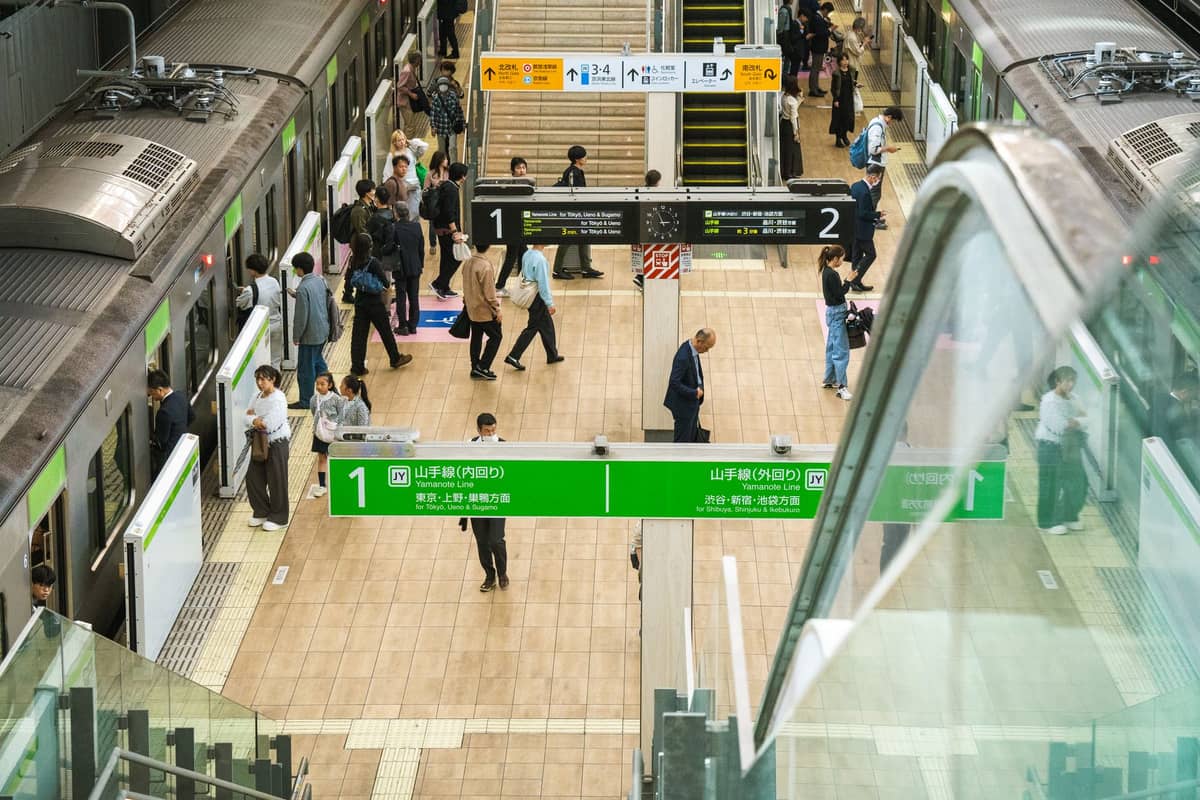
Tokyo's neighborhoods each have distinct rail access patterns worth knowing before you go. Shinjuku is served by JR (Yamanote, Chuo, Sobu lines), Tokyo Metro (Marunouchi Line), and multiple private railways, making it one of the busiest stations in the world with over 200 exits. Give yourself extra time when navigating Shinjuku Station for the first time.
For the eastern side of the city, the Hibiya and Ginza Metro lines are most useful for reaching Ginza and Tsukiji. The Asakusa area in Taito Ward is well-served by the Ginza Line (the oldest subway line in Asia, opened 1927) and Asakusa Line. For Odaiba, the Yurikamome automated guideway transit line from Shimbashi is the most direct — and the most scenic, crossing Rainbow Bridge.
Taxis are widely available throughout the city and are metered, safe, and reliable. The starting fare is around ¥500-¥730 for the first 1-2 km, rising quickly thereafter. Late-night surcharges apply after 10 PM. App-based taxi services including GO (formerly JapanTaxi) operate in Tokyo and accept credit cards. For short hops under 2 km late at night, taxis are often the only sensible option. For anything longer, the fare adds up fast.
Cycling is a legitimate option in flatter neighborhoods like Yanaka, Shimokitazawa, and Koenji, where dedicated hire options exist. However, cycling on busy arterial roads in central Tokyo is not recommended for visitors unfamiliar with the city. Walking remains underrated: many of Tokyo's best walking routes connect neighborhoods that look far apart on the map but are actually 10-15 minutes on foot.
Common Mistakes and How to Avoid Them
The most frequent error visitors make is assuming the Japan Rail Pass covers all transport in Tokyo. It does not. JR East urban lines including the Yamanote Line are covered, but Tokyo Metro, Toei Subway, and private railways are not. If your itinerary centers on central Tokyo sightseeing rather than intercity travel, a combination of an IC card and a Tokyo Subway Ticket will serve you better than a JR Pass.
Another common mistake is underestimating Narita's distance from the city. Travelers who book accommodation near Ueno or Akihabara are better positioned for the Keisei Skyliner, while those staying near Shinjuku should factor in either the N'EX or a transfer at Ueno. Planning your transport route before you land is 20 minutes well spent.
- Do not rely on Google Maps alone for fare estimates — use Tokyo Metro's official Fare/Transfer Search tool for accurate Metro pricing.
- Avoid airport taxis from Narita unless cost is irrelevant; a taxi to central Tokyo from Narita can exceed ¥20,000.
- In Tokyo, stand on the left and walk on the right of escalators. Osaka is the opposite.
- Avoid eating or making phone calls on trains; it is considered poor etiquette and you will stand out immediately.
- During rush hour (7:30-9:30 AM and 5:30-8:00 PM on weekdays), Yamanote Line trains are extremely crowded. If you have luggage, travel outside these windows.
For a broader picture of how to structure your time across the city's neighborhoods and districts, the Tokyo neighborhoods guide pairs well with this transport overview — knowing where you want to go makes choosing the right ticket far simpler.
FAQ
What is the cheapest way to get from Narita Airport to Tokyo?
The TYO-NRT low-cost bus runs between Narita Airport and Tokyo Station for ¥1,500 (adult), making it the cheapest direct option except for late-night services (¥3,000). The Keisei Limited Express train is also around ¥1,270 to Ueno and can be slightly cheaper depending on your destination. Both are slower than the Skyliner or N'EX but perfectly comfortable for budget travelers.
Is the Japan Rail Pass worth it for getting around Tokyo?
Generally no, if Tokyo is your main base. The JR Pass covers JR East lines (including the Yamanote Line and N'EX from Narita), but not Tokyo Metro, Toei Subway, or private railways. Most central Tokyo sightseeing relies heavily on the subway networks the pass does not cover. The pass becomes worthwhile if you are making multiple intercity trips to Kyoto, Osaka, or other destinations.
What is the difference between Suica and PASMO?
For day-to-day travel in Tokyo, there is no practical difference. Both are stored-value IC cards accepted on Tokyo Metro, Toei Subway, JR lines, private railways, most buses, and in convenience stores. Suica is issued by JR East; PASMO by the private rail consortium. Choose whichever is most convenient at the machine you are standing in front of.
How do I avoid Tokyo's rush hour on public transport?
Rush hour on weekdays runs approximately 7:30-9:30 AM and 5:30-8:00 PM. The Yamanote Line and central Tokyo Metro lines are the most affected. If you have large luggage, plan arrivals and departures outside these windows. Major tourist attractions like Senso-ji or Shinjuku Gyoen are also noticeably quieter before 9 AM.
Can I use my IC card (Suica or PASMO) outside Tokyo?
Yes. Suica and PASMO work across most of Japan's major IC-compatible transit networks, including in Osaka, Kyoto, and Fukuoka. Suica is slightly more widely accepted nationally, which makes it a marginally better choice if you plan to travel beyond the Kanto region. Both cards also work at convenience stores, vending machines, and many restaurants nationwide.