Tokyo Architecture Guide: Modern & Traditional Buildings Worth Seeking Out
Tokyo's architecture spans over a thousand years in the space of a single subway ride. This guide covers the city's most significant modern and traditional structures, with practical details on opening hours, ticket prices, access routes, and what to know before you go.
Plan and book this trip
Tools from our partner Travelpayouts help you compare flights and hotels. If you book through them, we may earn a commission at no extra cost to you.
Flights
Hotels map
TL;DR
- Tokyo's architectural range runs from 7th-century Shinto traditions to 21st-century engineering, often within the same neighbourhood.
- Meiji Jingu's main grounds are free, but the Inner Garden (around ¥500) and Museum (around ¥1,000) charge separately and close earlier — see the Meiji Jingu Shrine listing for full seasonal hours.
- Tokyo Skytree ticket prices depend on deck level, weekday vs. holiday, and advance vs. same-day purchase — always confirm current rates before visiting.
- For a structured itinerary that incorporates key architectural landmarks, the 3 days in Tokyo guide is a practical starting point.
- Spring (late March to early May) and autumn (late October to mid-November) offer the most comfortable temperatures for walking between outdoor sites.
Why Tokyo's Architecture Repays Serious Attention
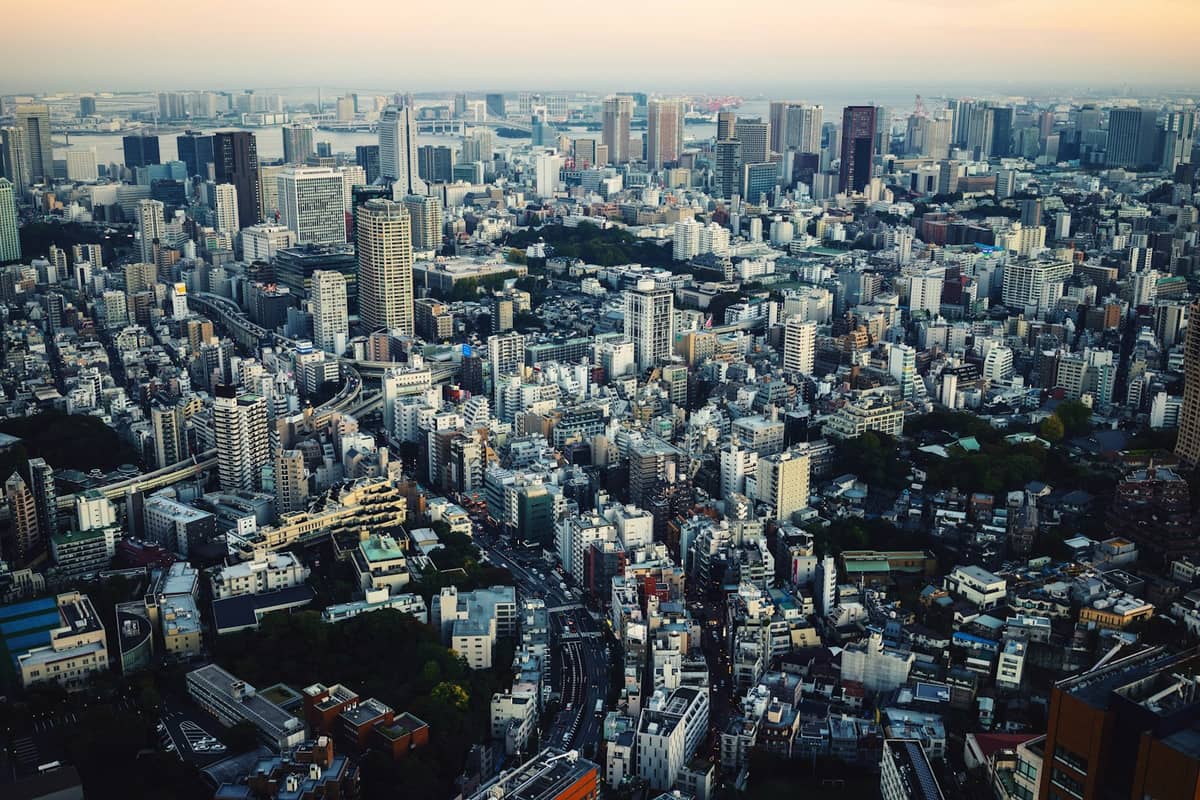
Tokyo was largely rebuilt after two catastrophic events in the 20th century: the Great Kanto Earthquake of 1923 and the Allied bombing raids of 1945. The city that emerged is not a preserved historic capital in the European sense. It is a working metropolis that has layered eras on top of each other with pragmatic speed. That history explains both the scarcity of pre-modern buildings and the extraordinary density of postwar and contemporary architecture. What survives from earlier periods tends to survive with intention, which means the traditional structures that remain are often among the best examples of their type anywhere in Japan.
The city's 23 special wards cover about 627 km² of the wider 2,200 km² Tokyo Metropolis, and they contain an architectural catalogue that no other city can match for range: Edo-period shrine gates, Meiji-era Western-influenced government buildings, postwar Metabolism experiments, late-20th-century commercial gigantism, and genuinely inventive 21st-century civic structures. The geography helps too. Tokyo's flat alluvial plain means that tall structures are visible from unexpected distances, and the density of the rail network (Tokyo Metro, Toei Subway, JR East, and numerous private lines) puts almost every significant building within 30 minutes of the centre.
Traditional Architecture: Shrines, Temples, and Historic Districts
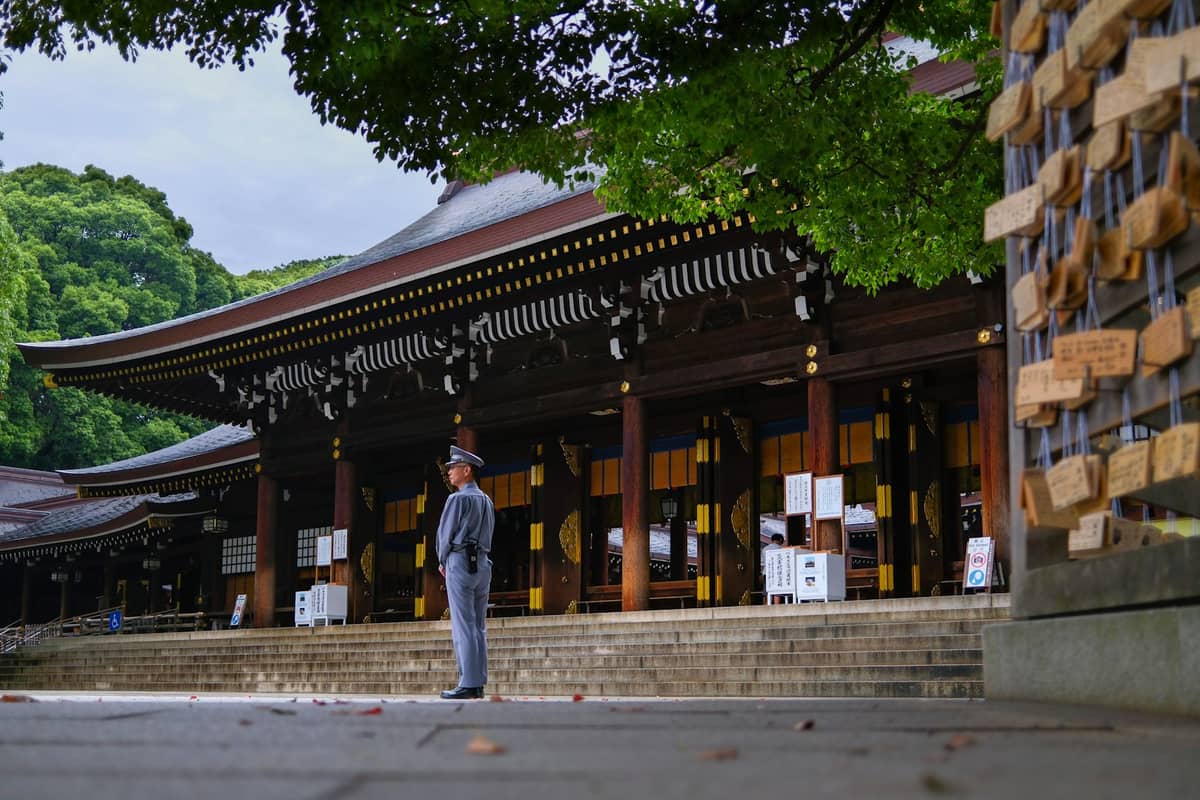
The clearest example of traditional architecture in central Tokyo is Meiji Jingu Shrine in Shibuya. The shrine was completed in 1920 to honour Emperor Meiji and Empress Shoken, and rebuilt in 1958 after wartime destruction. Its architecture follows the Nagarezukuri style, with sweeping cypress-bark roofs, unpainted wood, and a deliberate simplicity that contrasts with the decorative complexity of many older shrines. The approach through 70 hectares of secondary forest — unusual for central Tokyo — is itself part of the architectural experience.
⚠️ What to skip
Meiji Jingu's opening and closing times follow sunrise and sunset throughout the year, with a published month-by-month schedule. In January, the grounds close around 16:20; in June, they stay open until around 18:30. Do not assume standard 9:00–17:00 hours. The Inner Garden (around ¥500 admission) and the Meiji Jingu Museum (around ¥1,000, closed Thursdays) operate on separate, shorter schedules and close earlier than the main grounds. Check the official Meiji Jingu website before visiting.
Asakusa's Senso-ji Temple is Tokyo's oldest temple, with origins in the 7th century, though the current structures date from postwar reconstruction in the 1950s. The Nakamise shopping street leading to the main gate and the Kaminarimon thunder gate with its enormous paper lantern form one of the most photographed architectural sequences in Japan. Come before 8:00 in the morning if you want to see the structures without crowds. The five-storey pagoda nearby is worth examining for its bracketing system, which is a faithful reproduction of 17th-century carpentry techniques.
For a less visited example of traditional architecture, the Nezu Shrine in Bunkyo Ward dates to the early 18th century and contains several Important Cultural Properties, including its main hall and karamon gate. Unlike Senso-ji, it sees a fraction of the tourist traffic outside of azalea season (late April to early May). The Yanaka neighbourhood nearby preserves more pre-war streetscape than almost anywhere else in central Tokyo, with wooden machiya townhouses, low-rise temples, and a cemetery that doubles as a surprisingly calm green space.
- Senso-ji Temple, Asakusa Postwar reconstruction of a 7th-century original. Grounds open at all hours; inner hall opens around 06:00. Free entry to main grounds.
- Meiji Jingu Shrine, Harajuku Nagarezukuri cypress-wood shrine within 70 hectares of urban forest. Main grounds free; Inner Garden around ¥500; Museum around ¥1,000. Hours vary by month — check before visiting.
- Nezu Shrine, Bunkyo Early 18th-century Gongen-style shrine with intact original structures, classified as Important Cultural Properties. Free entry. Quieter than most central-Tokyo shrines.
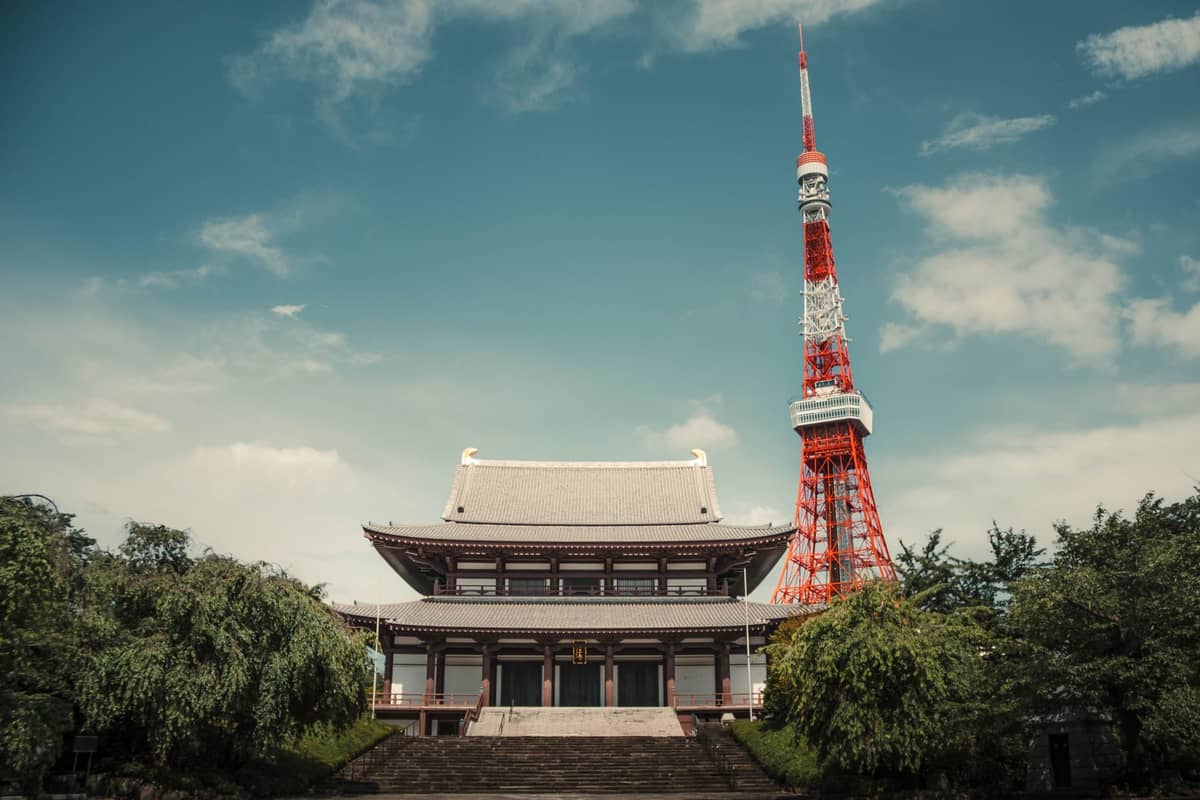
- Zojo-ji Temple, Minato One of Tokyo's major Jodo-sect temples, sited with Tokyo Tower directly behind it. The Sangedatsumon gate dates to 1622 and survived both 1923 and WWII. Free to enter the grounds.
- Yanaka District Pre-war streetscape with surviving machiya townhouses, small temples, and independent shops. No admission fees; best explored on foot in 2–3 hours.
Modern Landmarks: Towers, Observation Decks, and Civic Architecture
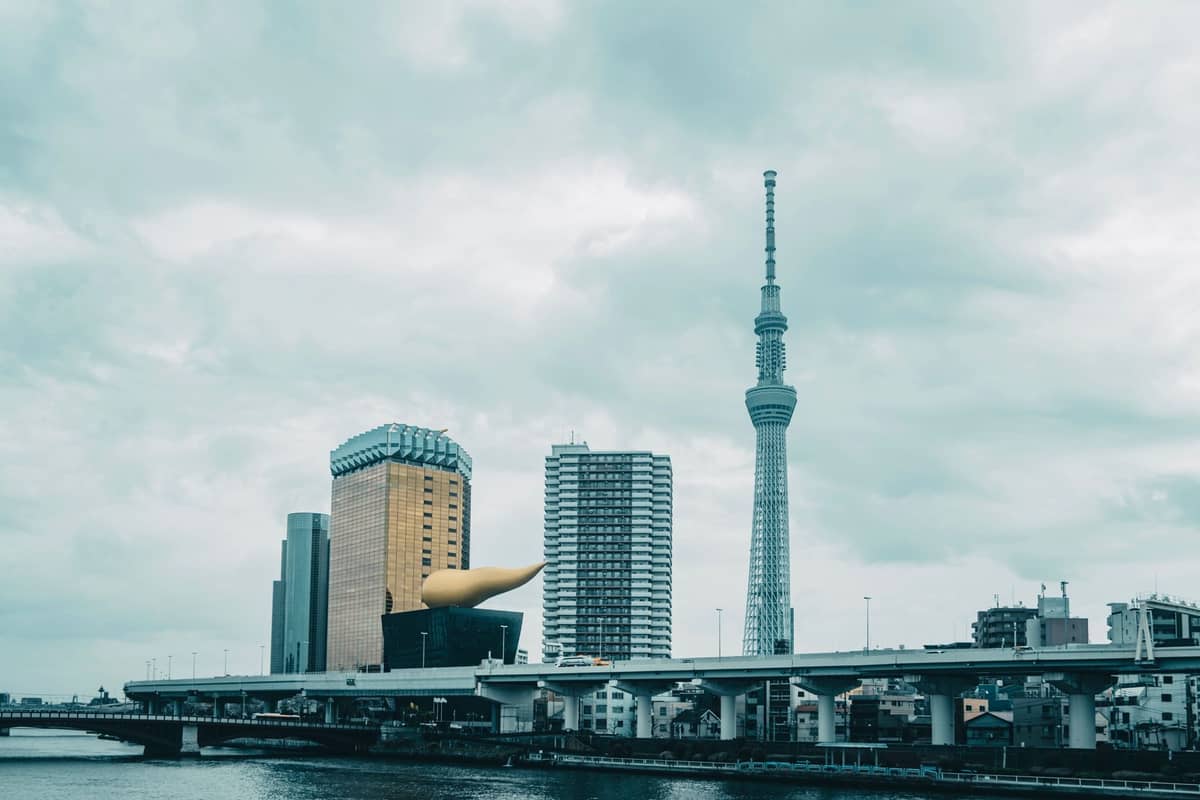
Tokyo Skytree in Sumida Ward is the tallest structure in Japan at 634 metres, and the second tallest in the world at time of completion in 2012. The number is not arbitrary: 634 is pronounced 'mu-sa-shi' in one reading of Japanese numerals, a reference to the historic Musashi Province that covered much of the Kanto plain. The structural engineering is equally deliberate: the tower uses a central reinforced concrete shaft connected to the outer steel lattice by damping mechanisms designed to absorb earthquake energy. Two observation floors are open to visitors: Tembo Deck at 350 metres and Tembo Galleria at 450 metres.
ℹ️ Good to know
Tokyo Skytree ticket prices are not fixed. A same-day combo ticket covering both the Tembo Deck (350 m) and Tembo Galleria (450 m) runs approximately ¥3,100–¥3,800 depending on whether it is a weekday or public holiday. The Tembo Deck only costs around ¥2,100–¥2,600. Advance tickets cost less and sell out on weekends and during school holidays. Hours are typically 09:00–22:00 with last admission around 21:00, but verify current schedules on the official Tokyo Skytree website before booking.
For a free alternative at significant height, the Tokyo Metropolitan Government Building in Shinjuku offers observation rooms at 202 metres above ground with no admission charge. It lacks the engineering spectacle of Skytree, but the view across the Shinjuku skyline to Mount Fuji on clear days (typically October to February) is genuinely impressive. The building itself, designed by Kenzo Tange and completed in 1991, is one of the most significant examples of Japanese Postmodernism: its twin towers reference Gothic cathedral facades and traditional castle keeps simultaneously.
The National Art Center Tokyo in Roppongi, designed by Kisho Kurokawa and opened in 2007, is worth visiting even without a specific exhibition in mind. Its undulating glass facade, curved concrete volumes, and inverted cone-shaped café structures inside demonstrate what ambitious late-career Japanese Modernism looked like. Entry to the permanent collection areas and building itself is free; exhibition admission varies. The building sits within the broader Roppongi Art Triangle alongside Mori Art Museum and Suntory Museum of Art, making this district Tokyo's most concentrated cluster of contemporary architecture and contemporary art.
Postwar Metabolism and 20th-Century Experiments
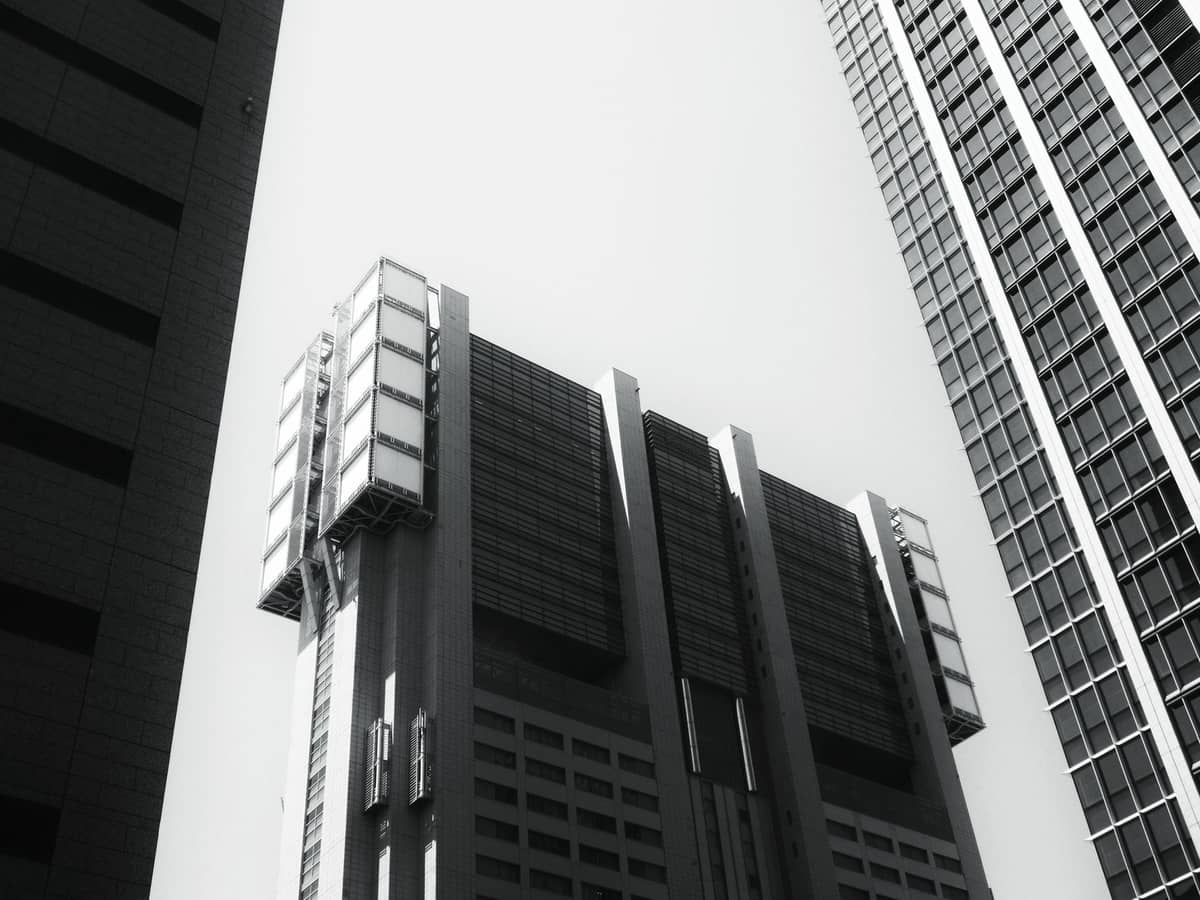
Tokyo produced one of the most influential architectural movements of the 20th century in Metabolism, a Japanese school that proposed cities as organic systems whose components could be replaced like cells. The most accessible surviving example is Nakagin Capsule Tower in Shimbashi, designed by Kisho Kurokawa and completed in 1972. Note, however, that the tower was demolished in 2022 after decades of debate, making it no longer visitable. Its influence persists in later Japanese architecture, and several of its capsules have been preserved in museums including the Edo-Tokyo Open Air Architectural Museum.
The Edo-Tokyo Open Air Architectural Museum in Koganei Park is one of the most practical places to understand Tokyo's architectural history in a single visit. The open-air museum has relocated around 30 historical structures from across Tokyo to a single site: farmhouses, Meiji-era commercial buildings, a police box, a bathhouse, and more. Entry is ¥400 for adults. The site is in western Tokyo (about 30 minutes from Shinjuku by rail and bus via Musashi-Koganei Station), which deters casual visitors, but the collection justifies the detour for anyone seriously interested in vernacular and early modern Japanese architecture.
✨ Pro tip
Kenzo Tange's work is scattered across Tokyo and represents the clearest through-line of 20th-century Japanese civic architecture. Beyond the Metropolitan Government Building in Shinjuku, his St. Mary's Cathedral in Bunkyo (1964) and the former gymnasium structures built for the 1964 Olympics at Yoyogi National Gymnasium are both worth seeking out. Yoyogi is accessible from Harajuku Station and stands adjacent to Meiji Jingu, making a combined visit logical and efficient.
Architectural Neighbourhoods: Where to Walk and What to Look For
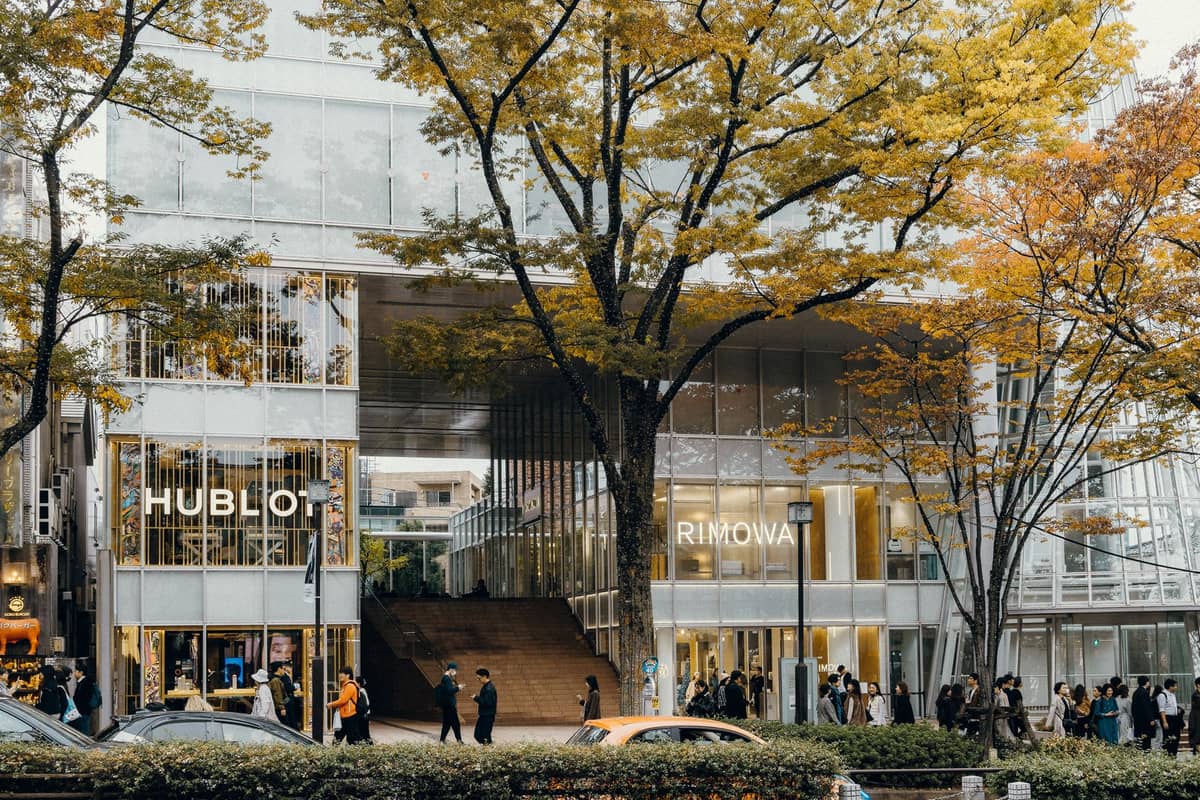
Certain Tokyo neighbourhoods reward architectural walking more than others. Omotesando is Tokyo's most architecturally serious shopping street. The zelkova-lined boulevard contains buildings by Tadao Ando (Omotesando Hills, 2006), Toyo Ito (Tod's flagship), SANAA (Dior), and Herzog and de Meuron (Prada, opened 2003). The concentration of significant contemporary architecture within a 400-metre stretch is unusual by any international standard. None of these buildings charge admission, and the street is walkable in an hour.
The area around Roppongi contains several architecturally notable complexes. Roppongi Hills (completed 2003, master-planned by Jon Jerde with individual buildings by various architects) and Tokyo Midtown (2007) both represent the scale at which Tokyo redevelopment operates: mixed-use complexes covering several city blocks, combining office towers, retail, hotels, and cultural institutions. The Mori Art Museum sits at the top of Roppongi Hills Mori Tower; the 21_21 Design Sight in Tokyo Midtown Garden is a Tadao Ando-designed underground gallery whose concrete and glass roofline barely rises above the garden level.
For older commercial architecture, the Nihonbashi district in Chuo Ward preserves several early-20th-century Western-influenced bank buildings alongside contemporary glass towers. The Nihonbashi bridge itself, rebuilt in 1911 in Renaissance Revival style, sits directly beneath an elevated expressway built for the 1964 Olympics — a juxtaposition that has frustrated urban planners and preservationists for decades and that the city has been slowly working to address.
- Omotesando Boulevard Zelkova-lined shopping street with buildings by Ando, Ito, SANAA, Herzog and de Meuron. Walkable in 1 hour. Free to explore externally.
- Roppongi Art Triangle National Art Center Tokyo (Kurokawa), Mori Art Museum (Roppongi Hills), and Suntory Museum of Art (Tokyo Midtown) within 600 metres of each other. Plan 3–5 hours for all three.
- Marunouchi and Nihonbashi Early 20th-century Western-influenced bank and commercial buildings alongside contemporary redevelopment. Best explored by walking the blocks between Tokyo Station and the Nihonbashi bridge.
- Yanaka and Nezu Pre-war residential streetscape with surviving wood-frame machiya houses, small temples, and garden walls. Pair with Nezu Shrine and the Yanaka Cemetery for a half-day walk.
Planning Your Architectural Visit: Practical Details
Tokyo's architecture is spread across a city of roughly 2,200 km², but the most significant buildings cluster in the central 23 wards, all connected by one of the world's densest urban rail networks. Tokyo Metro and Toei Subway lines, combined with JR East urban services including the Yamanote Line loop, put virtually every site in this guide within 40 minutes of each other. IC cards (Suica or Pasmo) work across all systems and are the most practical way to travel.
Seasonal timing matters for outdoor sites in particular. Meiji Jingu closes at sunset, which in winter means around 16:00–16:20. If you are visiting in December or January, schedule the shrine first in the day. Cherry blossom season (late March to early April, exact timing varies by year) brings crowds to every open space in the city; Shinjuku Gyoen, which contains both a traditional Japanese garden and a formal French garden, becomes extremely crowded on weekends during peak bloom. Autumn colour (koyo) peaks in Tokyo around mid-November to early December and draws comparable crowds to the most scenic spots. For architectural photography, overcast days in autumn and winter produce the most even light at outdoor sites.
💡 Local tip
The Tokyo Free Wi-Fi network is available in major train stations, tourist areas, and many public buildings. For deeper navigation between sites, a pocket Wi-Fi device or local SIM card is more reliable. Google Maps covers Tokyo's public transport comprehensively and updates in real time, including platform numbers and transfer times.
Budgeting for architecture in Tokyo is straightforward: most exterior viewing costs nothing, and many civic buildings including the Metropolitan Government Building offer free observation. Paid admissions where they apply (Skytree, Edo-Tokyo Open Air Museum, temple inner gardens) typically fall in the ¥400–¥3,400 range. For a broader budget framework, the Tokyo on a budget guide covers strategies for managing costs across accommodation, food, and transport.
FAQ
What is the best area in Tokyo for modern architecture?
Omotesando and Roppongi together form the most concentrated district of significant contemporary architecture in the city. Omotesando has flagship retail buildings by Tadao Ando, Toyo Ito, SANAA, and Herzog and de Meuron along a single 400-metre boulevard. Roppongi adds the National Art Center Tokyo (Kisho Kurokawa), 21_21 Design Sight (Tadao Ando), and Mori Art Museum within the Roppongi Hills complex. The two areas are about 15 minutes apart on foot or two stops by metro.
Is Meiji Jingu free to visit?
The main shrine grounds at Meiji Jingu are free to enter. However, the Inner Garden (Gyoen) charges around ¥500 admission, and the Meiji Jingu Museum charges around ¥1,000. Both the Inner Garden and Museum have separate opening hours that are shorter than the main grounds and differ by season. The museum is closed on Thursdays and during exhibition changeovers. Always check the official Meiji Jingu website for the current monthly schedule before visiting.
How much does Tokyo Skytree cost to visit?
Ticket prices vary based on several factors. A same-day combo ticket for both the Tembo Deck (350 m) and Tembo Galleria (450 m) runs approximately ¥3,100–¥3,400, with the higher end applying on public holidays. The Tembo Deck only costs around ¥2,100–¥2,300. Advance purchase tickets are cheaper and recommended for weekend visits, as same-day tickets can sell out. Confirm current rates and availability on the official Tokyo Skytree website, as pricing is subject to change.
What traditional architecture survived in central Tokyo?
Relatively little original pre-modern architecture survives in central Tokyo due to the 1923 Kanto Earthquake and Second World War destruction. The main exceptions include the Sangedatsumon gate at Zojo-ji Temple (dating to 1622), Nezu Shrine (early 18th century, with several structures classified as Important Cultural Properties), and various smaller shrine and temple structures in outer wards. Much of what visitors see — including Senso-ji and the current Meiji Jingu buildings — dates from postwar reconstruction, though often faithful to earlier forms. The Edo-Tokyo Open Air Architectural Museum in Koganei preserves about 30 relocated historical structures and is the best single site for understanding pre-war Tokyo architecture.
Can I see significant Tokyo architecture without paying admission?
Yes. The Omotesando boulevard and its landmark retail buildings (Ando's Omotesando Hills, Ito's Tod's, SANAA's Dior, Herzog and de Meuron's Prada) are all free to view externally and walkable in under an hour. The Tokyo Metropolitan Government Building in Shinjuku offers free observation from 202 metres. The grounds of Meiji Jingu, Senso-ji, Zojo-ji, and Nezu Shrine are all free. Nihonbashi and Marunouchi contain early-20th-century bank and commercial buildings accessible from the street at no cost. The Yanaka neighbourhood preserves pre-war residential architecture across an entire freely walkable district.