21_21 Design Sight: Tokyo's Most Thoughtful Design Museum
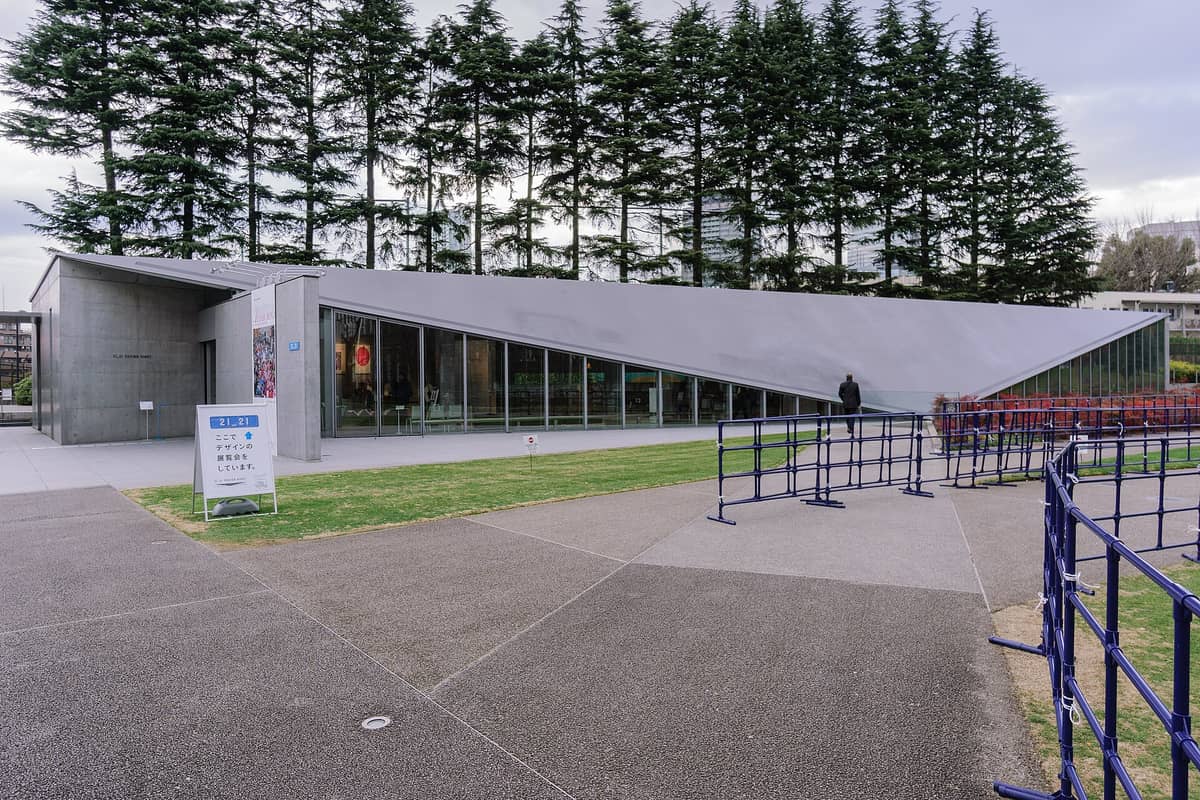
Tucked into the garden of Tokyo Midtown, 21_21 Design Sight is a world-class design museum conceived by Issey Miyake and designed by architect Tadao Ando. Its rotating exhibitions challenge how visitors perceive everyday objects and experiences, making it one of Roppongi's most rewarding cultural stops for curious minds.
Quick Facts
- Location
- Midtown Garden, Tokyo Midtown, 9-7-6 Akasaka, Minato-ku, Tokyo
- Getting There
- Roppongi Station (Hibiya/Toei Oedo lines) or Nogizaka Station (Chiyoda line), both approx. 5-min walk
- Time Needed
- 1–2 hours
- Cost
- Fees vary by exhibition; check current prices on the official website
- Best for
- Design lovers, architecture enthusiasts, contemporary art fans, curious repeat visitors to Tokyo
- Official website
- www.2121designsight.jp/en
What Is 21_21 Design Sight?
21_21 Design Sight is not a conventional art museum. It describes itself as a venue to redirect attention toward everyday things and events, and to explore the world from a design perspective. That sounds abstract until you step inside and find an exhibition that makes you rethink the engineering of a plastic bag, the geometry of traditional Japanese craft, or the invisible systems behind global food production. The programming here consistently rewards visitors who arrive with no prior knowledge of design.
The institution was founded by fashion designer Issey Miyake, with graphic designer Taku Satoh and product designer Naoto Fukasawa serving as its directors, three of Japan's most internationally recognized creative figures. That pedigree shows in every curatorial decision. Exhibitions tend to run for several months at a stretch, occupying both Gallery 1 and Gallery 2, which means repeat visitors to Tokyo genuinely have reason to return.
For visitors planning a focused cultural itinerary in Roppongi, 21_21 pairs naturally with the Mori Art Museum and the National Art Center Tokyo, both within a 10-minute walk, making this corner of Minato Ward one of the most concentrated pockets of contemporary art and design in the country.
The Architecture: Tadao Ando's Underground Statement
The building itself is reason enough to visit, even before you pay admission. Architect Tadao Ando, perhaps best known internationally for the Church of the Light in Osaka and the Naoshima Art Island complex, designed 21_21 Design Sight as a largely subterranean structure. From the Midtown Garden above ground, what you see first are two angular folded steel planes rising from a low concrete plinth, more like geological formations than a conventional building facade. The structure sits partially below grade, drawing visitors down into the earth rather than upward.
Ando used a single sheet of steel folded across the roof, a reference to Issey Miyake's concept of making a single piece of cloth into a garment. That conceptual thread runs through the whole project: the form is derived from the founding idea, not imposed upon it. Inside, the exposed concrete walls and controlled natural light through skylights create a calm, almost meditative atmosphere that gives each exhibition room to breathe. The proportions feel considered rather than grand.
💡 Local tip
Even if you skip the paid exhibitions, walk through Midtown Garden to view the exterior of the building at no cost. The low-profile structure reads differently in morning light versus the amber glow of early evening, when the steel planes catch warm reflections from the garden trees.
Tickets & tours
Hand-picked options from our booking partner. Prices are indicative; availability and final rates are confirmed when you complete your booking.
Tsukiji Fish Market Walking Food Tour
From 40 €Instant confirmationFree cancellationMt.Fuji,Owakudani, Hakone Cruise & Ropeway, Oshino Hakkai 1-Day Trip
From 54 €Instant confirmationFree cancellationTour to Mt. Fuji Area, Oshino Hakkai and Kawaguchi Lake from Tokyo
From 57 €Instant confirmationFree cancellationNikko UNESCO Shrine and Nature View 1-Day Tour from Tokyo
From 78 €Instant confirmationFree cancellation
What the Exhibitions Are Actually Like
The two galleries are not large. Gallery 1 is the main exhibition space, with the lower-level concrete rooms linked by ramps and corridors. Gallery 2 is more compact and sometimes used for related or supplementary programming. A full circuit of both galleries, if you engage genuinely with the work, takes between 90 minutes and two hours. If you move quickly or the exhibition is not to your taste, an hour is realistic.
Past exhibitions have addressed subjects as varied as mathematical patterns in nature, the history of Japanese typography, the science of fermentation, and the design of Olympic sports equipment. The approach is always accessible rather than academic. Wall text is available in both Japanese and English, and the spatial design of each show tends to carry meaning even if you do not read every caption. Expect interactives, tactile elements, and objects you can walk around rather than rooms of framed prints.
Exhibitions change several times a year, with each show typically running from late summer through winter or from spring into summer. The museum website publishes exact dates well in advance. Between exhibitions, the museum closes for installation periods, so checking the schedule before visiting is not optional, it is essential.
⚠️ What to skip
21_21 Design Sight closes on Tuesdays, during New Year holidays, and between exhibition installations. These installation periods can last several weeks. Always confirm the current schedule at 2121designsight.jp/en before building a visit around it.
When to Visit and How It Changes by Time of Day
The museum opens at 10:00 and closes at 19:00 with last admission at 18:30. Weekday mornings between 10:00 and noon tend to be quietest. On weekends and public holidays, crowds build from mid-morning, particularly for well-promoted exhibitions. The galleries are intimate enough that ten people in a single room can feel crowded, so timing matters more here than at a larger institution.
Late afternoon visits, arriving around 16:00 or 17:00 on a weekday, offer a good balance: the midday surge has thinned and you still have two hours before closing. The natural light through the skylights is at its warmest in the late afternoon, which affects how the concrete interiors read. If you are interested in photographing the building exterior, early morning before the garden fills with office workers and lunchtime crowds gives cleaner shots.
The surrounding Midtown Garden is free to enter at any time and worth at least 20 minutes before or after your museum visit. The garden connects directly to Tokyo Midtown, where you can find a wide range of cafes and restaurants for before or after your visit.
Getting There and Practical Logistics
The most direct route from central Tokyo is via Roppongi Station, served by the Tokyo Metro Hibiya Line and the Toei Oedo Line. From Exit 8 of Roppongi Station, the walk to Tokyo Midtown takes about five minutes. Alternatively, Nogizaka Station on the Tokyo Metro Chiyoda Line has a direct underground connection to Tokyo Midtown, which is useful in hot or rainy weather. Once inside the Midtown complex, follow signs for the Midtown Garden to reach the museum entrance.
Tickets can be purchased at the reception desk on arrival. Online advance tickets are available through the ArtSticker platform, which requires account registration. Admission fees are set per exhibition, so check current prices and any available discounts when booking. Visitors with a disability certificate receive free admission, as does one accompanying caregiver.
If you are combining this with other Roppongi attractions, note that the Mori Art Museum in Roppongi Hills is about a 10-minute walk. The National Art Center Tokyo in Nogizaka is similarly close. Plan for at least half a day if visiting two or more of these institutions.
ℹ️ Good to know
Opening hours: 10:00–19:00 (last admission 18:30). Closed Tuesdays, New Year holidays, and during exhibition changeovers. Admission: Fees vary by exhibition; check current prices on the official website.
Photography, Accessibility, and What to Bring
Photography policies vary by exhibition and are posted at the entrance of each gallery. In many exhibitions, personal photography without flash is permitted in specific zones, but some objects are restricted. Check the signage at the gallery entrance rather than assuming either way. The building exterior and garden are freely photographable.
The galleries are reached via stairs and ramps. While the museum acknowledges accessibility through its admission policy for visitors with disabilities, the precise physical accessibility of the subterranean galleries, including lift provision, should be confirmed directly with the museum before visiting if this is a concern. The Tokyo Midtown complex above is fully accessible.
There is no permanent cafe inside the museum itself, though Tokyo Midtown has numerous food and drink options within the same complex. The museum has a small shop near the entrance that stocks design books, exhibition catalogues, and objects related to current programming. It is worth a browse even if you are not buying.
Honest Assessment: Is It Worth Your Time?
The answer depends almost entirely on the current exhibition. When the programming is strong, which it frequently is, 21_21 Design Sight delivers a genuinely thought-provoking experience that you will not find replicated anywhere else in Tokyo. The combination of Ando's architecture and curatorial quality places it among the more distinctive museum visits the city offers. When the exhibition is between shows or on a topic that does not resonate, the museum is brief and may feel expensive for its size.
For travelers with a particular interest in Japanese design culture, this belongs on the same itinerary as the Daikanyama T-Site and a walk through Omotesando. Together, they trace the arc of how Japan translates creative ambition into physical space.
Visitors who arrive expecting a broad survey of Japanese design history will be disappointed: this museum does not work that way. Each exhibition is a focused, single-theme deep dive. If that kind of concentrated conceptual experience appeals, 21_21 Design Sight will likely be one of the more memorable hours you spend in Tokyo.
Insider Tips
- Check the museum's official website for exhibition dates before visiting. Installation changeover periods can last two to four weeks, and arriving to find the museum closed for installation is a frustratingly common mistake among first-time visitors.
- The Midtown Garden entrance to the museum is easy to miss if you enter the Tokyo Midtown complex from the main retail atrium. Look for exit signs toward the garden once inside the complex, then follow the low concrete structure through the trees.
- If you visit on a weekday afternoon around 17:00, you will often have Gallery 2 almost entirely to yourself. The later light through the skylights also changes the atmosphere of the concrete spaces noticeably.
- The museum shop stocks exhibition catalogues and design publications that are hard to find elsewhere in Tokyo. Even if the current exhibition does not interest you, the shop is worth five minutes of browsing.
- Combine your visit with a loop through the rest of Midtown Garden, particularly in late March for early cherry blossom viewing or in mid-November for zelkova tree color. The garden is free and the museum sits at its quieter southern edge.
Who Is 21_21 Design Sight For?
- Design and architecture enthusiasts who want more than decorative objects
- Repeat visitors to Tokyo looking for experiences beyond the main tourist circuit
- Travelers pairing a Roppongi cultural day with the Mori Art Museum and National Art Center
- Students of graphic design, product design, fashion, or visual culture
- Anyone who appreciated Tadao Ando's work and wants to see a less-visited example of it in Tokyo
Nearby Attractions
Other things to see while in Roppongi:
- Mori Art Museum
Perched on the 53rd floor of Roppongi Hills Mori Tower, the Mori Art Museum is Tokyo's highest-altitude contemporary art space. Open until 22:00 most nights, it combines serious international exhibitions with one of the city's most dramatic elevated settings. Open until 22:00 most nights, it combines serious international exhibitions with one of the city's most dramatic elevated settings.
- The National Art Center, Tokyo
The National Art Center, Tokyo is Japan's largest exhibition facility, housed in a wave-fronted glass building in Roppongi. Entry to the building is free, though major exhibitions require tickets. Expect rotating international and Japanese art shows, a serious architecture experience, and a surprisingly good restaurant inside.
- Roppongi Hills
Roppongi Hills is a large-scale mixed-use complex in Minato City that anchors one of Tokyo's most international neighborhoods. Beyond its shopping floors and restaurants, it houses the Mori Art Museum and Tokyo City View observatory, making it a serious cultural destination as well as a place to simply wander for an afternoon.
- Suntory Museum of Art
Tucked inside Tokyo Midtown's Galleria in Roppongi, the Suntory Museum of Art dedicates itself entirely to Japanese art through carefully curated rotating exhibitions. From ancient lacquerware to Edo-period textiles, each show is a deep dive into a single theme, presented in a calm, gallery-quality setting that rewards slow looking.