Suntory Museum of Art: Tokyo's Most Elegant Japanese Art Experience
Tucked inside Tokyo Midtown's Galleria in Roppongi, the Suntory Museum of Art dedicates itself entirely to Japanese art through carefully curated rotating exhibitions. From ancient lacquerware to Edo-period textiles, each show is a deep dive into a single theme, presented in a calm, gallery-quality setting that rewards slow looking.
Quick Facts
- Location
- Tokyo Midtown Galleria 3F, 9-7-4 Akasaka, Minato-ku, Tokyo 107-8643, Japan
- Getting There
- Roppongi Station (Toei Oedo Line Exit 8, or Tokyo Metro Hibiya Line underground walkway); Nogizaka Station (Tokyo Metro Chiyoda Line Exit 3, 3-min walk)
- Time Needed
- 1.5 to 2.5 hours
- Cost
- Admission varies by exhibition (check official site); junior high school students and younger free
- Best for
- Japanese art lovers, design-minded travelers, quiet museum afternoons, Friday evening culture
- Official website
- www.suntory.com/sma
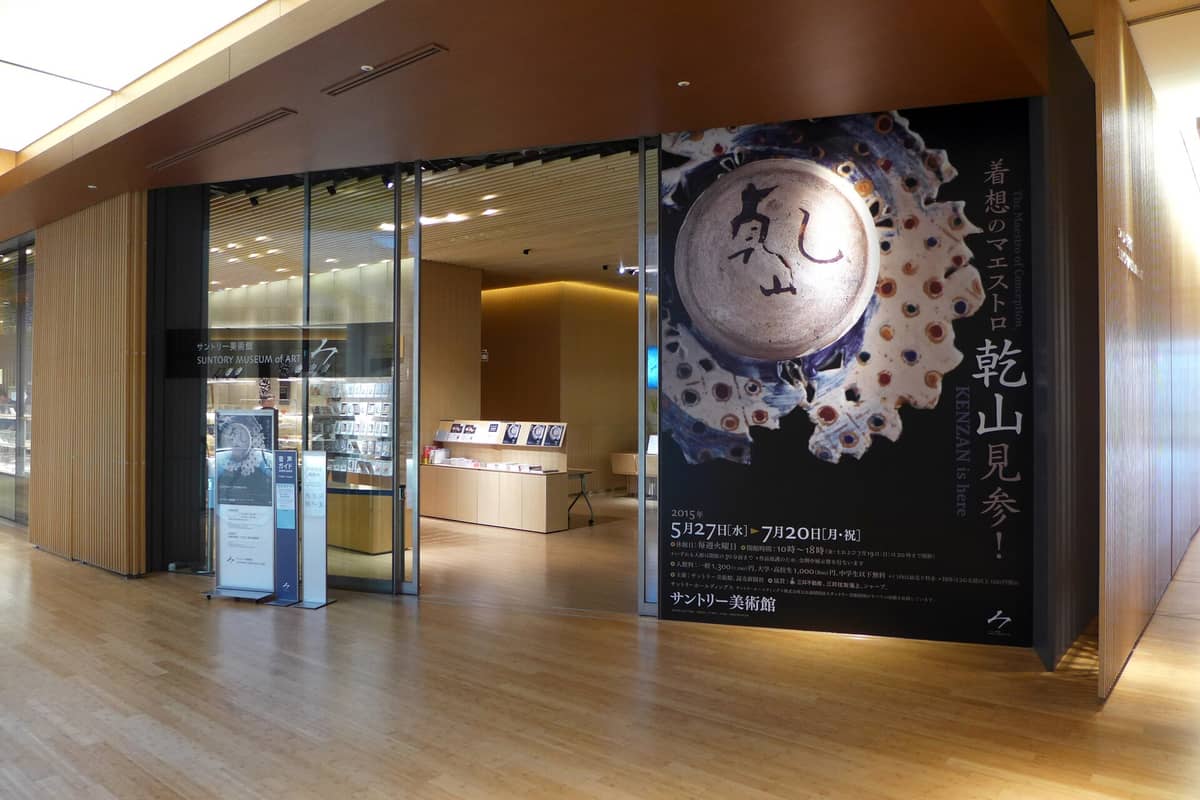
What the Suntory Museum of Art Actually Is
The Suntory Museum of Art is not a sprawling encyclopedic institution. It does not have permanent galleries filled with labeled display cases. What it offers instead is something harder to find in Tokyo's museum landscape: total focus. Founded in 1961, the museum has spent over six decades presenting Japanese art through thematic exhibitions that treat each object, whether a Muromachi-era lacquer box or an Edo-period folding screen, as worth extended attention rather than a quick glance.
The collection itself spans ceramics, glass, lacquerware, textiles, paintings, and decorative arts, but you will never see all of it at once. Each exhibition draws on the collection and sometimes on loans, constructing a focused narrative around a period, material, or aesthetic tradition. This model asks something of the visitor: you need to read the show, not just scan it. Travelers who prefer to tick off highlights may find the pace slow. Those who genuinely enjoy Japanese craft traditions will find it deeply rewarding.
ℹ️ Good to know
The museum has no permanent exhibition. Galleries close between shows, and themes rotate several times per year. Always check the current exhibition on the official website before visiting, as the content, hours, and admission price can all change.
The Setting: Inside Tokyo Midtown
The museum occupies the third floor of the Galleria building within the Tokyo Midtown complex, a high-end mixed-use development that includes shops, restaurants, and offices. Reaching the museum requires walking through that retail environment, which can feel jarring if you arrive expecting a traditional cultural campus. The contrast is real: you step off an escalator past a luxury accessories boutique and into a serious art museum. It takes a moment to calibrate.
The museum's interior, designed by architect Kengo Kuma, handles the transition well. Kuma used a grid of small wooden screens, called kumiko lattice, to filter light and soften the space. The effect is immediately quieting. The woodwork references traditional Japanese joinery without being decorative pastiche, and it gives the galleries a warmth that many contemporary art spaces lack. Even when the museum is reasonably busy, the atmosphere stays controlled, closer to a tea room than a convention hall.
Tokyo Midtown itself is worth noting as a destination in Roppongi's cultural corridor. The complex sits steps from the 21_21 Design Sight and is a short walk from the National Art Center Tokyo, making the area one of the densest concentrations of quality exhibition space in the city. If you are planning a full day around art, combining all three is practical.
Tickets & tours
Hand-picked options from our booking partner. Prices are indicative; availability and final rates are confirmed when you complete your booking.
Japanese Whisky Collection Suntory Premium Selection at Captain's Bar
From 27 €Instant confirmationFree cancellationArt and soul of the sword samurai experience
From 156 €Instant confirmationFree cancellationTokyo Dining Bar Experience with Darts Throwing Plan
From 8 €Instant confirmationFree cancellationTokyo Dining Darts Bar Experience with Unlimited Darts Plan
From 8 €Instant confirmationFree cancellation
What Visiting Feels Like at Different Times of Day
Mornings, especially between 10:00 and 11:00, are the quietest period. During this window, the only entrance available is the Galleria 1F door. The upside is that you arrive into a nearly empty museum. The galleries feel genuinely hushed, the lighting is steady, and you can spend as long as you like in front of any single object without the social pressure of other visitors waiting behind you.
Midday on weekends brings the largest crowds, particularly when an exhibition ties into a popular historical period or media tie-in. Lines at the ticket counter rarely become severe, but gallery spaces can feel cramped around key display cases. Weekday afternoons are reliably comfortable.
Friday evenings deserve specific mention. The museum stays open until 20:00 on Fridays, two hours later than the standard 18:00 closing time. After around 18:00, the tone shifts. Office workers from the surrounding Minato Ward stop in after work. The crowd is small, the light outside has dropped, and the kumiko screens glow softly. It is one of the more civilized ways to spend a Tokyo Friday evening, and the admission cost is no different than any other day.
💡 Local tip
Friday evenings after 18:00 are the sweet spot: lower visitor numbers, extended hours, and a relaxed atmosphere. Combine with dinner at one of Tokyo Midtown's restaurant floor options afterward.
The Art: What You Can Expect to Encounter
Because the Suntory Museum of Art runs only rotating exhibitions, the specific works on display will not be the same show to show. However, the museum's collecting strengths give each exhibition a recognizable character. Lacquerware tends to appear frequently: the museum holds an outstanding collection of Heian through Edo-period lacquered objects, ranging from writing boxes to sake cups, and the craftwork visible under good lighting is extraordinary. The maki-e technique, in which powdered gold and silver are worked into lacquer surfaces, produces detail that photography cannot fully capture.
Textile and dyeing traditions form another major area. Kimonos from the Edo and Meiji periods appear regularly, displayed flat under glass or mounted vertically, and the scale of the fabric work, entire garment surfaces patterned with seasonal motifs using yuzen dyeing or embroidery, makes even a single piece feel monumental. Ceramics, glass, and paintings round out most exhibitions, and the curatorial tendency is always toward cohesion: shows rarely feel like they have been assembled from unrelated works.
Object labels are provided in Japanese and English, which is not universal across Tokyo's art museums. The English translations are clear and informative rather than perfunctory, giving historical and technical context without assuming prior knowledge.
Practical Details for Your Visit
The museum is open Tuesday through Sunday, 10:00 to 18:00, with Friday hours extended to 20:00. Last admission is 30 minutes before closing. The museum closes on Tuesdays, during the New Year holiday period, and during the changeover gaps between exhibitions. Last admission is 30 minutes before closing. The museum closes on Tuesdays, during the New Year holiday period, and during the changeover gaps between exhibitions. These changeover closures can last one to two weeks and are announced in advance on the official website.
Admission pricing changes with each exhibition and is listed on the official site. Junior high school students and younger visitors enter free, which makes the museum accessible for families with older children who have a genuine interest in Japanese art. There is no discount for simply arriving late in the day.
Getting there is straightforward. The most direct approach is Roppongi Station on the Toei Oedo Line, using Exit 8, which connects directly into the Tokyo Midtown complex. The Tokyo Metro Hibiya Line also serves Roppongi Station and has an underground walkway to Midtown. Visitors can also use the Nogizaka Station entrance on the Tokyo Metro Chiyoda Line, about a three-minute walk away.
The museum interior is barrier-free with elevator access between levels, though some exhibition spaces have narrow passages. Wheelchairs and strollers can be borrowed from the cloakroom desk. Assistance dogs are permitted. For broader context on navigating Tokyo's transit system, the getting around Tokyo guide covers IC card options, subway line distinctions, and accessibility resources.
Photography, Shopping, and the Museum Shop
Photography policies vary by exhibition. Some shows permit photography of certain works or in designated areas; others prohibit it entirely. Look for posted signs at the gallery entrance rather than assuming either way. Flash photography and tripods are generally not permitted regardless of the exhibition policy.
The museum shop is worth browsing even if you are visiting briefly. It stocks a curated selection of books, reproduction prints, textiles, ceramics, and small objects related to the current exhibition. The curation tends toward quality over volume, and the selection changes with each show. Items here are not the generic souvenir fare found in larger institutions; many of the books and craft objects are genuinely hard to find elsewhere in Tokyo.
How This Museum Fits Into Roppongi's Cultural Landscape
Roppongi has spent the past two decades rebranding around art and design, with the Mori Art Museum at Roppongi Hills, the National Art Center, 21_21 Design Sight, and the Tokyo Midtown complex all contributing to what local planners call the "Roppongi Art Triangle." The Suntory Museum of Art anchors the Midtown corner of that triangle.
Where the Mori Art Museum leans toward large-scale contemporary work and the National Art Center handles major international survey shows, the Suntory occupies a distinct position: Japanese traditional and decorative arts, presented with precision and restraint. It is a quieter institution than its neighbors, which is not a criticism. The contrast means that a day moving between all three exposes you to genuinely different scales, aesthetics, and curatorial philosophies.
For travelers interested specifically in the breadth of Tokyo's museum scene, the best museums in Tokyo guide provides a comparative overview of major institutions across the city, including the Suntory's peers in Roppongi and Ueno.
Who Should Skip This Museum
The Suntory Museum of Art is not designed for high-volume tourism. If your priority is covering as many attractions as possible in a single day, the deliberately slow pace and single-theme format will feel limiting. The absence of a permanent collection also means there is no guaranteed "highlight" to see regardless of when you visit, which frustrates travelers who have planned a visit around a specific work and find the exhibition has changed.
Children below early teenage years may be less likely to engage meaningfully with the content, even though entry is free for them. The museum has no hands-on elements, no interactive displays, and the exhibitions require sustained reading and close looking. Families with young children will find the nearby parks and the Tokyo Midtown shopping floors more suitable. The museum has no hands-on elements, no interactive displays, and the exhibitions require sustained reading and close looking. Families with young children will find the nearby parks and the Tokyo Midtown shopping floors more suitable.
Insider Tips
- Check the exhibition schedule at least two weeks before your visit. Changeover periods between exhibitions can mean the museum is closed, with no partial access.
- If you arrive between 10:00 and 11:00, use the Galleria 1F entrance.
- The museum's audio guide (available for most exhibitions) is worth renting if your knowledge of Japanese art history is limited. The English commentary adds technical detail that the wall labels summarize but do not fully explain.
- The Midtown Garden behind the complex provides a useful decompression space after the museum. In autumn, the maple and zelkova trees in the garden reach their peak color, and combining a morning museum visit with a late-morning walk through the garden is a logical pairing.
- If budget matters, check whether the current exhibition offers a discount through Tokyo's Grutto Pass, which covers admission to dozens of museums for a single flat fee.
Who Is Suntory Museum of Art For?
- Travelers with a specific interest in Japanese decorative arts, lacquerware, textiles, or ceramics
- Museum-goers who prefer focused, thematic exhibitions over broad permanent collections
- Friday evening visitors looking for a calm, quality cultural experience before dinner in Roppongi
- Design-oriented travelers who want to see Kengo Kuma's kumiko lattice interior alongside the art it houses
- Anyone building a full day around Roppongi's art corridor, combining Suntory with the National Art Center and 21_21 Design Sight
Nearby Attractions
Other things to see while in Roppongi:
- 21_21 Design Sight
Tucked into the garden of Tokyo Midtown, 21_21 Design Sight is a world-class design museum conceived by Issey Miyake and designed by architect Tadao Ando. Its rotating exhibitions challenge how visitors perceive everyday objects and experiences, making it one of Roppongi's most rewarding cultural stops for curious minds.
- Mori Art Museum
Perched on the 53rd floor of Roppongi Hills Mori Tower, the Mori Art Museum is Tokyo's highest-altitude contemporary art space. Open until 22:00 most nights, it combines serious international exhibitions with one of the city's most dramatic elevated settings. Open until 22:00 most nights, it combines serious international exhibitions with one of the city's most dramatic elevated settings.
- The National Art Center, Tokyo
The National Art Center, Tokyo is Japan's largest exhibition facility, housed in a wave-fronted glass building in Roppongi. Entry to the building is free, though major exhibitions require tickets. Expect rotating international and Japanese art shows, a serious architecture experience, and a surprisingly good restaurant inside.
- Roppongi Hills
Roppongi Hills is a large-scale mixed-use complex in Minato City that anchors one of Tokyo's most international neighborhoods. Beyond its shopping floors and restaurants, it houses the Mori Art Museum and Tokyo City View observatory, making it a serious cultural destination as well as a place to simply wander for an afternoon.