Roppongi Hills: Art, Architecture, and Sky-High Views in Tokyo
Roppongi Hills is a large-scale mixed-use complex in Minato City that anchors one of Tokyo's most international neighborhoods. Beyond its shopping floors and restaurants, it houses the Mori Art Museum and Tokyo City View observatory, making it a serious cultural destination as well as a place to simply wander for an afternoon.
Quick Facts
- Location
- 6-10-1 Roppongi, Minato City, Tokyo 106-6108
- Getting There
- Roppongi Station (Tokyo Metro Hibiya Line, Exit 1C; Toei Oedo Line, Exit 3)
- Time Needed
- 2–4 hours for the complex; add 1–2 hours if visiting Mori Art Museum
- Cost
- Complex entry free; Mori Art Museum / Tokyo City View typically from around ¥2,200 (online) to ¥2,400 (on-site) for adults; prices vary by exhibition and ticket type
- Best for
- Contemporary art, city views, architecture, date nights, rainy-day culture
- Official website
- www.roppongihills.com
What Roppongi Hills Actually Is
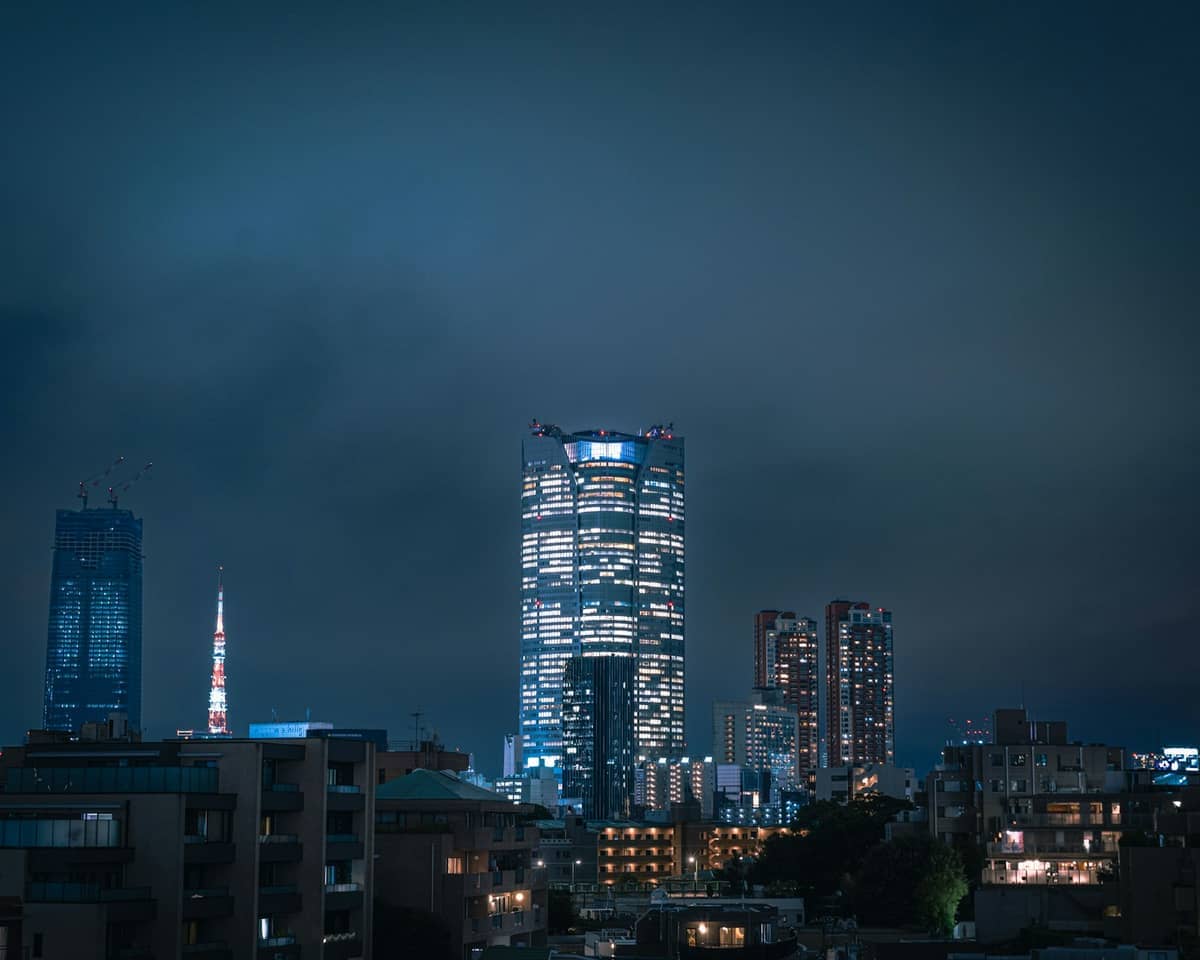
Roppongi Hills is one of Tokyo's most significant urban redevelopment projects, a self-contained city block in Minato Ward that combines retail, offices, residences, a hotel, a TV broadcasting studio, outdoor plazas, and cultural institutions into a single interconnected complex. The anchor is Mori Tower, a 54-story skyscraper that holds the Mori Art Museum near its summit and the Tokyo City View observatory on the same upper floors. At street level, the complex spreads across a web of pedestrian walkways, garden terraces, and open-air courtyards linking different wings and buildings.
First-time visitors sometimes arrive expecting a conventional shopping center and leave surprised by how much there is to navigate. This is not a mall in the typical sense. The scale is closer to a small city district than a retail complex, and the art installations, architectural choices, and views across Tokyo give it a character that goes well beyond commerce.
ℹ️ Good to know
Complex entry is free. The Mori Art Museum and Tokyo City View observatory require separate tickets, typically priced at around ¥2,200 online or ¥2,400 at the counter for adults (as of 2026, subject to change by exhibition and ticket type). Concessions are available for some disabled visitors; check the latest eligibility details and required ID on the official Mori Art Museum / Tokyo City View site or at the Museum and Observatory Tickets counter.
Arriving and Getting Oriented
The most direct approach is via Roppongi Station on the Tokyo Metro Hibiya Line (Exit 1C), which deposits you almost directly at the base of Mori Tower after a short covered walkway. The Toei Oedo Line also serves Roppongi Station (Exit 3), a slightly longer walk to the main complex entrance. Neither route involves much exposure to the elements, which is useful during Tokyo's rainy season in June and early July or the humid August heat.
The main outdoor plaza, Roppongi Hills Arena, sits at the center of the complex at street level. It doubles as an event space and serves as the clearest landmark for orientation. From here, signage in both Japanese and English points toward Mori Tower, the Keyakizaka shopping corridor, the Grand Hyatt hotel wing, and the hillside terraces. The complex is large enough that a rough mental map helps before you set off.
💡 Local tip
Pick up a free complex map at the information counter near the main Mori Tower entrance. The floor plans are clearer than most digital maps for navigating between the tower's ticketed floors and the street-level wings.
Tickets & tours
Hand-picked options from our booking partner. Prices are indicative; availability and final rates are confirmed when you complete your booking.
Japanese Yakiniku experience at Nikuazabu Roppongi in Tokyo
From 29 €Instant confirmationFree cancellationTsukiji Fish Market Walking Food Tour
From 40 €Instant confirmationFree cancellationMt.Fuji,Owakudani, Hakone Cruise & Ropeway, Oshino Hakkai 1-Day Trip
From 54 €Instant confirmationFree cancellationTour to Mt. Fuji Area, Oshino Hakkai and Kawaguchi Lake from Tokyo
From 57 €Instant confirmationFree cancellation
Mori Art Museum: The Cultural Anchor
The Mori Art Museum is located mainly on the 53rd floor of Mori Tower and is one of Tokyo's leading contemporary art institutions. It focuses primarily on contemporary works from Asia and internationally, with a programming philosophy that takes design, architecture, and fashion as seriously as painting or installation. Exhibitions change several times a year and have historically included major retrospectives and large-scale international shows. The quality and ambition of the programming genuinely justify the admission price.
Because the ticket for Tokyo City View includes access to the Mori Art Museum (and vice versa, depending on the ticket type), it makes practical sense to combine both. Check the current exhibition before you go, since the scale and subject matter vary considerably. The Mori Art Museum maintains an English-language website with exhibition calendars and ticketing details.
Crowds inside the museum tend to peak on weekend afternoons. A weekday morning, especially in the period shortly after opening, is noticeably quieter and allows more time in front of individual works without competing with school groups or tour parties. The galleries themselves are large and well-lit with flexible configurations that change between exhibitions.
Tokyo City View: The Observatory
Tokyo City View sits on floor 52 of Mori Tower with floor-to-ceiling glass panels wrapping around the entire perimeter. The viewing angle takes in a broad sweep of central Tokyo including Tokyo Tower to the south, the Imperial Palace grounds to the north, Tokyo Bay glittering to the east on clear days, and on exceptional days in winter, a distant silhouette of Mount Fuji to the west. The interior observation floor is climate-controlled and comfortable year-round.
The best time to visit the observatory is the hour or two before sunset, when the light shifts from afternoon gold to the amber glow of dusk before the city lights come on fully. The transition period, roughly 30 minutes before and after sunset, gives you two dramatically different views from the same spot. Night views are spectacular, particularly looking toward the Shinjuku skyline, but they offer less geographic legibility than the daytime panorama. On clear winter days between December and February, Mount Fuji sightings are most likely, as the humid haze that obscures the view in summer and autumn largely dissipates.
There is also a rooftop terrace called Sky Deck on the roof level (above the indoor deck), open in fair weather, which offers unobstructed open-air views at an additional charge. If the weather is good and you don't mind wind at altitude, it is worth the supplement. For a comparison of Tokyo's viewing platforms, the guide to best views in Tokyo gives a useful breakdown of how City View compares to Shibuya Sky, Tokyo Skytree, and Tokyo Tower.
⚠️ What to skip
Mount Fuji is visible only on clear, low-humidity days, most reliably December through February. Summer views of Fuji from Tokyo are rare. Don't plan the entire visit around a Fuji sighting without checking the forecast.
The Complex at Street Level: Plazas, Gardens, and Public Art
Much of what makes Roppongi Hills worth spending time in is free and outdoors. The Mori Garden, a traditional Japanese garden on the south side of the complex, was incorporated into the redevelopment plan as a preserved green space within the site. It is small but composed with care, and it offers an oddly peaceful contrast to the steel-and-glass towers around it. In autumn, the maple foliage here turns, making it a worthwhile detour even for visitors with no interest in shopping.
Public sculpture appears throughout the complex, including Louise Bourgeois's large bronze spider sculpture Maman near the tower entrance, one of several casts of this work installed in major cities around the world. The piece is striking enough at ground level but the perspective from the elevated walkways above it changes the experience considerably. Other smaller sculptural works are positioned along the Keyakizaka promenade.
The Keyakizaka corridor, lined with zelkova trees, is one of the more attractive pedestrian streets in this part of Tokyo. In December it is illuminated with white lights along the tree branches, making it a popular winter evening walk. If you are planning a visit around this time, the Tokyo in December guide covers seasonal events and illumination schedules across the city.
Dining, Shopping, and What to Expect
The restaurant and cafe selection at Roppongi Hills ranges from quick casual options in the basement food court to mid-range chains and a handful of high-end restaurants on upper floors with city views. Pricing across the complex skews upward compared to the surrounding neighborhood. Budget travelers will find better value a few streets away. That said, for a coffee break or a meal timed with a museum visit, there are solid options at different price points within the complex.
Shopping here follows a similar pattern: the brands are mostly mid-to-premium tier, with a concentration of international labels alongside Japanese retailers. This is not where you come for street fashion or independent boutiques. For that kind of shopping, Harajuku and the surrounding streets offer a very different experience.
If you are combining Roppongi Hills with broader exploration of the neighborhood, the Roppongi neighborhood guide covers nearby galleries, bars, and dining options that give more local texture to the area around the complex.
How the Atmosphere Changes Through the Day
Weekday mornings are the quietest window. The offices are filling up, the retail floors have barely opened, and the plazas have a calm that feels removed from the usual Tokyo density. This is the best time for the Mori Art Museum. By early afternoon on weekends, the complex is noticeably more active, particularly around the arena plaza during events and along Keyakizaka.
Evening brings a different crowd, especially on Friday and Saturday nights when Roppongi's nightlife district draws people through the area. The observatory takes on a very different energy at night, more romantic than educational, with couples making up a large share of visitors in the post-dinner hours. The complex itself stays animated until late on weekends, and the transition from gallery-visiting afternoon to evening drinks happens naturally here without needing to go far.
💡 Local tip
For photography at the observatory, visit in the 90 minutes before sunset for the most versatile light. Bring a wide-angle lens or use the panoramic mode on your phone: the windows are large and clean, and reflection is manageable if you position the lens close to the glass.
Insider Tips
- The combined Mori Art Museum and Tokyo City View ticket is the most practical option if you want both. Buying online in advance saves a small amount and avoids the counter queue, particularly on weekends.
- The elevated garden terraces on the west side of the complex, above the Mori Garden level, are easy to miss because signage does not emphasize them. They offer a different angle on the tower and quieter seating than the main plaza.
- TV Asahi, one of Japan's major broadcasters, has its headquarters and a public lobby in the complex. The broadcast facility faces the main arena plaza and is worth a look, especially if you are interested in Japanese media.
- Roppongi Hills has an annual outdoor cinema event, Roppongi Hills Summer Night Cinema, that screens films in the arena plaza. If visiting in summer, check the official site for the schedule.
- For the clearest shot of Maman, the Bourgeois spider sculpture, position yourself on the elevated walkway above it rather than at ground level. You get a wider frame and avoid most of the foot traffic that crosses underneath.
Who Is Roppongi Hills For?
- Contemporary art visitors who want a serious museum combined with a panoramic observatory in one stop
- Couples or groups looking for a refined evening that moves from culture to dinner without changing neighborhoods
- Architecture-focused travelers interested in large-scale urban design and integrated public space
- Visitors with limited time who want to cover a major cultural attraction and a view in a single half-day
- Travelers planning a December visit who want to see Tokyo's better winter illuminations on foot
Nearby Attractions
Other things to see while in Roppongi:
- 21_21 Design Sight
Tucked into the garden of Tokyo Midtown, 21_21 Design Sight is a world-class design museum conceived by Issey Miyake and designed by architect Tadao Ando. Its rotating exhibitions challenge how visitors perceive everyday objects and experiences, making it one of Roppongi's most rewarding cultural stops for curious minds.
- Mori Art Museum
Perched on the 53rd floor of Roppongi Hills Mori Tower, the Mori Art Museum is Tokyo's highest-altitude contemporary art space. Open until 22:00 most nights, it combines serious international exhibitions with one of the city's most dramatic elevated settings. Open until 22:00 most nights, it combines serious international exhibitions with one of the city's most dramatic elevated settings.
- The National Art Center, Tokyo
The National Art Center, Tokyo is Japan's largest exhibition facility, housed in a wave-fronted glass building in Roppongi. Entry to the building is free, though major exhibitions require tickets. Expect rotating international and Japanese art shows, a serious architecture experience, and a surprisingly good restaurant inside.
- Suntory Museum of Art
Tucked inside Tokyo Midtown's Galleria in Roppongi, the Suntory Museum of Art dedicates itself entirely to Japanese art through carefully curated rotating exhibitions. From ancient lacquerware to Edo-period textiles, each show is a deep dive into a single theme, presented in a calm, gallery-quality setting that rewards slow looking.