Tokyo in Spring: The Complete Cherry Blossom Season Guide
Spring in Tokyo runs from mid-March through May, with cherry blossom season as the centerpiece. This guide covers bloom forecasts, the best hanami spots, crowd strategy, spring weather, and practical planning advice for one of Japan's most spectacular seasonal events.
Plan and book this trip
Tools from our partner Travelpayouts help you compare flights and hotels. If you book through them, we may earn a commission at no extra cost to you.
Flights
Hotels map
TL;DR
- Cherry blossoms in central Tokyo typically reach full bloom between late March and early April. In 2026, full bloom was forecast around March 26–28, earlier than the long-term average.
- The best hanami spots include Chidorigafuchi, Ueno Park, Shinjuku Gyoen, and Sumida Park. Most are free or charge a small entry fee.
- Bloom windows are short — strong rain or wind can strip trees within days. Check updated forecasts from the Japan Meteorological Corporation or Japan Weather Association in the weeks before you travel.
- Spring is Tokyo's most crowded season. Book accommodation three to six months in advance and plan to arrive at popular parks before 9am on weekends.
- No special rail passes are needed for hanami. All major viewing spots are reachable by standard JR and subway lines. See our guide to getting around Tokyo for transport basics.
When Do Cherry Blossoms Bloom in Tokyo?
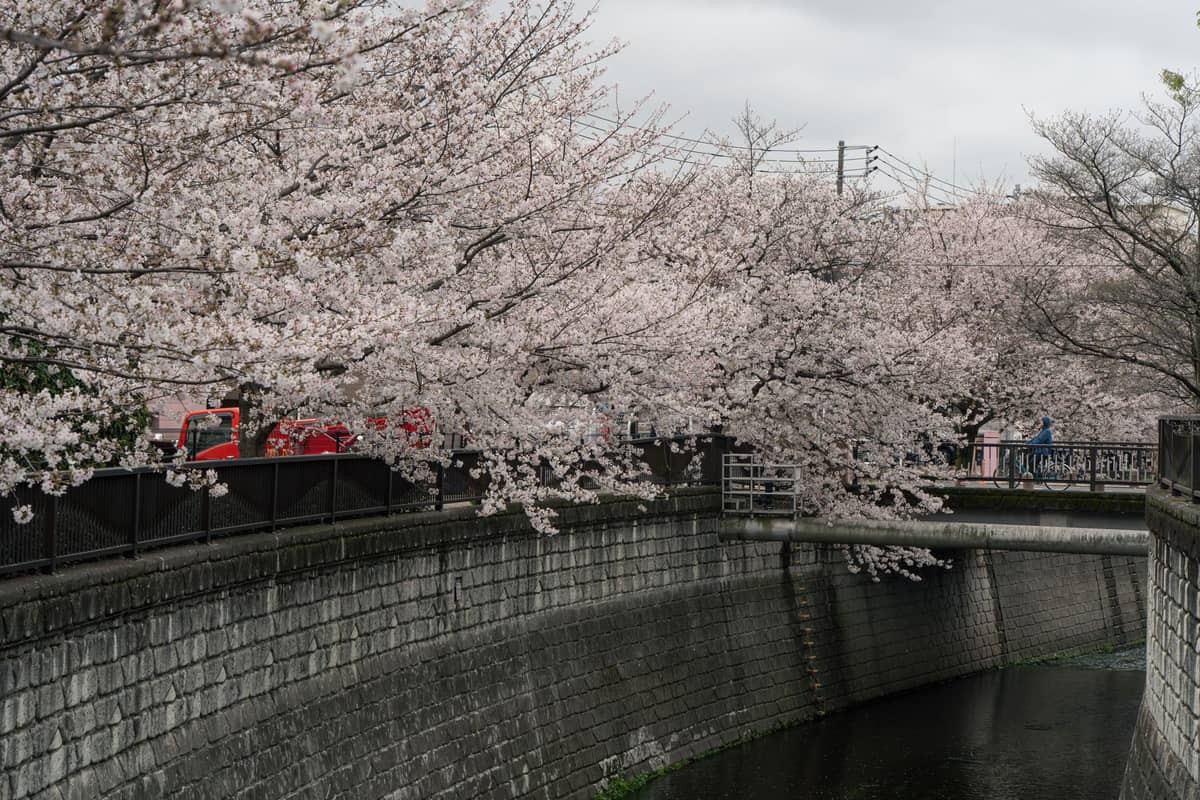
Tokyo's cherry blossom season is not fixed to a calendar date. Bloom timing shifts year to year depending on winter temperatures and the rate of spring warming. The standard Somei Yoshino variety, which dominates most of Tokyo's parks and riverbanks, typically shows first bloom sometime between mid-March and early April, with full bloom arriving roughly one to two weeks later.
For the 2026 season, multiple forecasting bodies including the Japan Meteorological Corporation (JMC) and Japan Weather Association (JWA) placed first bloom in central Tokyo around March 19–21, with full bloom around March 26–28. That put the best viewing window in the last week of March to the first few days of April — several days earlier than the historical average, reflecting a warmer-than-usual March. Forecasts are updated frequently through the season, and any significant rain or wind after full bloom can cut the viewing window to just three or four days.
⚠️ What to skip
Do not lock in non-refundable travel plans based on a single bloom forecast published months in advance. JMC and JWA both update their Tokyo predictions regularly through February and March. The Japan Guide website (japan-guide.com) also publishes daily sakura reports during the season and is one of the most reliable real-time trackers available in English.
Beyond the Somei Yoshino, Tokyo has other cherry varieties that extend the season. Weeping cherry trees (shidarezakura) often bloom a few days earlier. Yamazakura and late-blooming Kanzan varieties can push flowering into mid-April in some locations, particularly at Shinjuku Gyoen. If you miss the main wave, it is worth checking whether later varieties are still flowering before writing off the season entirely.
The Best Hanami Spots in Tokyo
Hanami — the practice of gathering under flowering cherry trees — is less about finding the most trees and more about finding the right atmosphere. Tokyo has dozens of legitimate sakura spots, but a handful stand out for the combination of tree density, setting, and access.
- Chidorigafuchi Moat One of the most iconic sakura settings in the city. The moat's green water, lined with overhanging cherry branches, creates a tunnel effect that photographs well and feels genuinely beautiful in person. Rowboats can be rented for around ¥800 per 30 minutes. The walking path is free and open late for night-viewing (yozakura) illuminations during peak bloom. Closest station: Kudanshita on the Tozai, Shinjuku, and Hanzomon lines.
- Ueno Park Tokyo's most famous and most crowded hanami destination. Around 1,000 trees line the central path, and the park fills with blue tarpaulin picnics from morning on weekends. The atmosphere is festive to the point of chaotic. Best visited on weekday mornings or after 7pm during yozakura. Entry to the park is free; some inner gardens charge a fee.
- Shinjuku Gyoen A formal garden with around 1,000 trees across multiple varieties, which means a longer viewing window than most spots. Alcohol is banned, making this the quieter, more family-oriented alternative to Ueno. Entry costs around ¥500 for adults. It's one of the few places where you can see Somei Yoshino and late-blooming Kanzan side by side.
- Sumida Park Stretching along the Sumida River between Asakusa and Mukojima, this park has around 600 trees and a backdrop of Tokyo Skytree. It's large enough to find quieter spots even during peak season. Accessible via the Asakusa area, which means you can combine it with a visit to Senso-ji Temple.
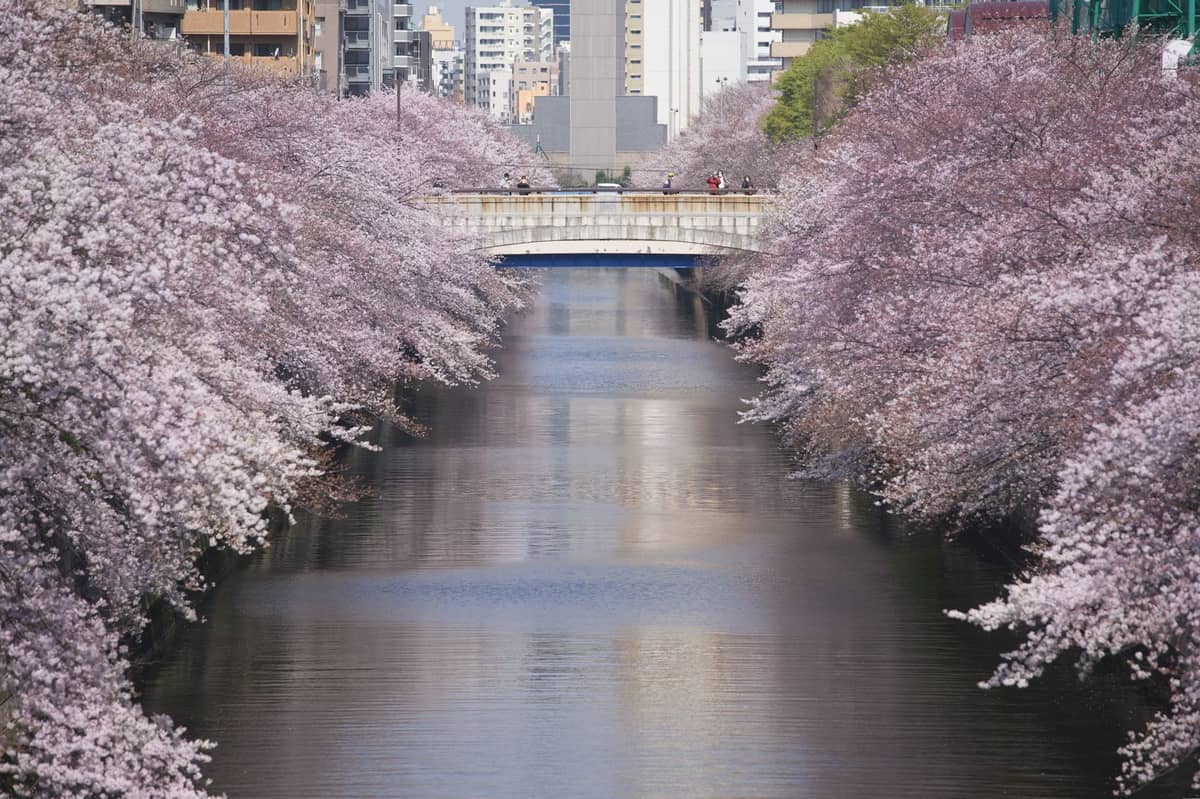
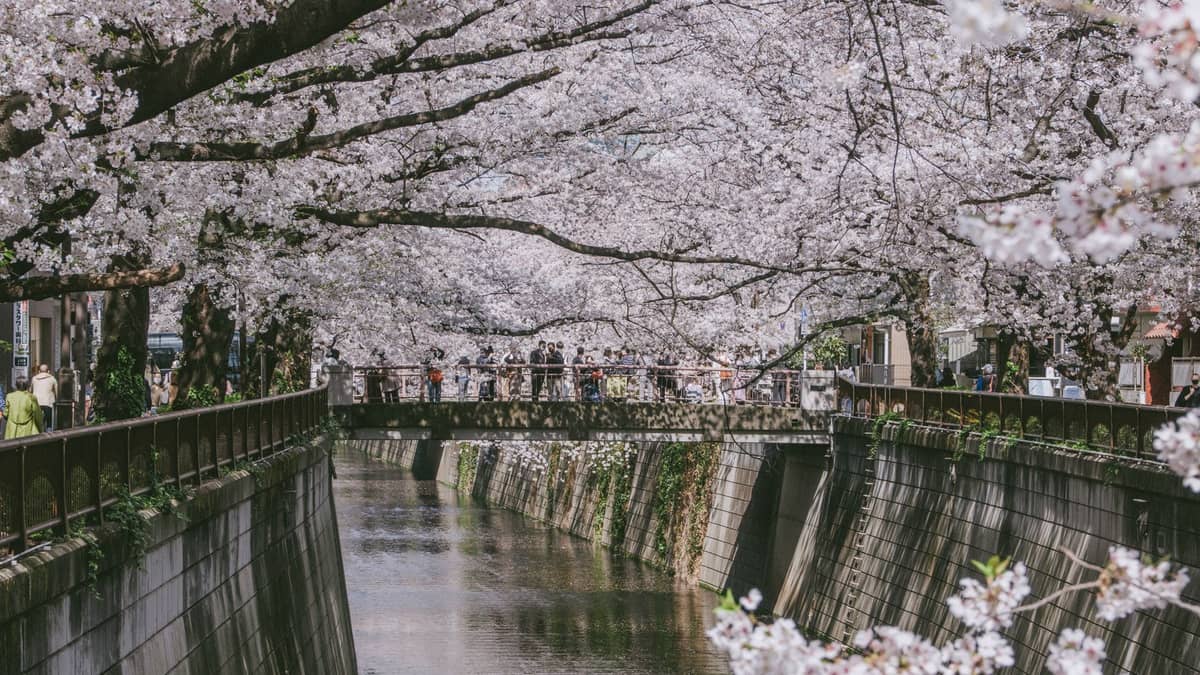
- Meguro River A 4km stretch of canal lined with approximately 800 trees. This is less a park and more an urban walking experience through Nakameguro and Daikanyama. The combination of low branches, café terraces, and evening lighting makes it one of the best nighttime hanami routes. It gets extremely narrow and crowded at weekends; aim for Tuesday through Thursday evenings.
For a broader view of Tokyo's seasonal gardens and natural spaces, the Tokyo gardens guide covers spots like Koishikawa Korakuen and Rikugien, both of which have excellent cherry trees and are far less overwhelmed than Ueno during peak bloom.
✨ Pro tip
Yozakura (night cherry blossom viewing) is underrated. Major parks illuminate the trees after dark, and the crowds thin out significantly compared to daytime weekends. Chidorigafuchi and the Meguro River are both excellent at night, and the reflections on the water are worth the cold evening temperatures.
Spring Weather and What to Pack
Tokyo in spring covers a wide temperature range across March, April, and May. March averages around 13°C in the daytime with overnight lows near 4°C. By May, highs reach 23°C with mild evenings. The transition is gradual but not always smooth — late cold snaps in March are not unusual, and rainfall increases as spring progresses toward the early-June rainy season (tsuyu).
- March: Layer up. Mornings and evenings during hanami season can be close to 5°C. A mid-weight jacket, scarf, and warm underlayers are practical rather than excessive.
- April: More comfortable, but bring a light waterproof layer. April sees around 125mm of rainfall averaged across the month.
- May: Generally pleasant. Light clothing for the daytime, with a light jacket for evenings. Humidity begins building toward the end of the month.
- Rain gear: A compact umbrella is worth carrying throughout spring. Convenience stores sell them for around ¥500–¥700 if you get caught out.
For a broader picture of how spring compares to other seasons when deciding on travel timing, see our best time to visit Tokyo guide, which weighs up crowds, costs, and weather across the full year.
Crowds, Costs, and Booking Strategy
Spring is unambiguously Tokyo's peak tourism season, and cherry blossom season concentrates demand into a two-to-three-week window. Hotel prices in late March and early April can be two to three times higher than winter rates in equivalent properties. The further in advance you book, the better: three to six months ahead is not excessive for central Tokyo during hanami peak.
If your budget is a concern, staying in neighborhoods slightly outside the core hanami zones can help. Areas like Ueno and Akihabara or Asakusa offer well-priced guesthouses and capsule hotels within walking distance of major parks. See our guide to where to stay in Tokyo for neighborhood comparisons.
Food and transport costs don't change significantly in spring. Street food stalls (yatai) set up around parks during hanami season, selling yakitori, takoyaki, and beer — expect to pay ¥400–¥800 per item. Convenience stores are a cost-effective alternative for picnic supplies. The train network runs on standard fares with no spring surcharges; an IC card (Suica or Pasmo) loaded with yen handles all journeys across JR, Tokyo Metro, and Toei Subway lines.
💡 Local tip
Weekday hanami beats weekend hanami every time. If your schedule allows, plan any major park visits from Monday to Thursday. Ueno Park on a Saturday during peak bloom can feel more like a festival crowd than a nature experience, which some people love and others find exhausting.
Beyond Cherry Blossoms: What Else Spring Offers
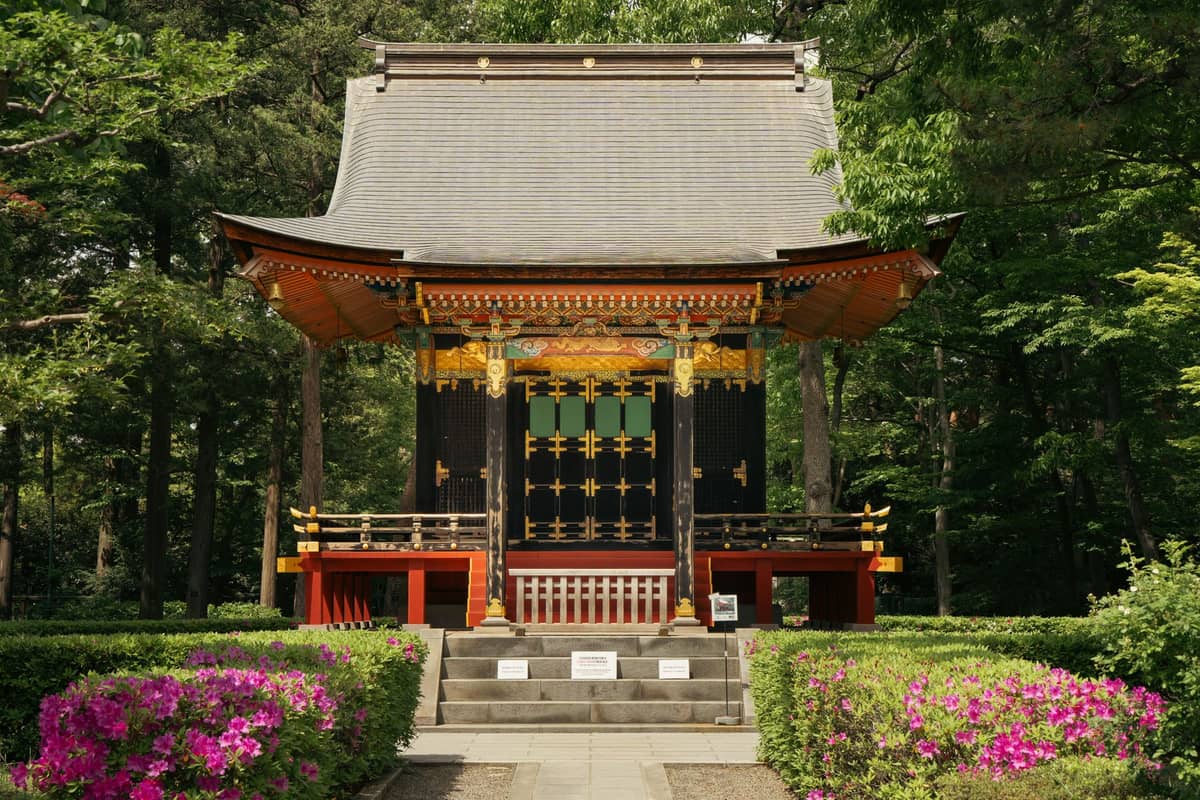
Fixating entirely on sakura means missing a broader spring that runs through May. Late April and May bring wisteria season — Kameido Tenjin Shrine in eastern Tokyo has a famous wisteria garden, and Ashikaga Flower Park in Tochigi prefecture (a feasible day trip) is one of the most photographed wisteria spots in the country. Tokyo's gardens also come alive with azaleas, peonies, and fresh green foliage as temperatures climb.
Golden Week, Japan's major national holiday cluster, runs from late April into early May and brings its own crowds — different in character from sakura season but equally intense in popular areas. If you're visiting over Golden Week, Tokyo's festival calendar picks up from late spring onward. The city also hosts numerous outdoor events and open-air exhibitions through the season.
Spring is a strong time to explore neighborhoods that reward slow walking rather than landmark-ticking. Yanaka in northern Tokyo has a historical streetscape, independent shops, and cherry trees along the cemetery path that attract far fewer visitors than Ueno Park despite being a short walk away. The Meguro River corridor through Nakameguro combines sakura with one of the city's best collections of independent cafes and boutiques.
- Wisteria at Kameido Tenjin Shrine: late April to early May, free entry to the shrine grounds.
- Spring illuminations at Roppongi Hills and Tokyo Midtown: both run outdoor art and light installations through spring evenings.
- Shinjuku Gyoen's late-blooming cherry varieties: worth a second visit in mid-April if you caught only the early wave.
- Yoyogi Park on a Sunday: free entry, sprawling lawns, and a festive atmosphere that continues long after the cherry blossoms have gone.
Practical Planning Checklist for Spring in Tokyo
Spring in Tokyo rewards preparation more than almost any other season. The combination of peak crowds, narrow bloom windows, and high accommodation demand means that leaving things to chance is genuinely risky. The following covers the logistics most likely to catch visitors off guard.
- Accommodation Book three to six months in advance for late March and early April. Central wards (Shinjuku, Shibuya, Taito, Sumida) fill fastest. If you're flexible on dates, consider targeting early April rather than the peak final-week-of-March window.
- Bloom forecasts Follow JMC (japan-meteorological.co.jp) or JWA (jwa.or.jp) for official English-language forecasts. Japan Guide (japan-guide.com/sakura) posts daily reports during the season and is trusted by both locals and experienced Japan visitors.
- Transport card Load a Suica or Pasmo card at any major station. These work across JR, all subway lines, most buses, and many convenience stores. No special pass is needed for hanami travel within Tokyo.
- Entry fees Shinjuku Gyoen charges around ¥500 per adult. Chidorigafuchi walking path is free. Ueno Park is free. Rowboats at Chidorigafuchi cost around ¥800 per 30 minutes. Confirm current prices before visiting as they are updated periodically.
- Visa and entry Many nationalities including most European, North American, and Oceanian passport holders can enter Japan visa-free for stays up to 90 days. Verify current rules at mofa.go.jp before booking as regulations can change.
For first-time visitors planning a full trip around spring, the Tokyo first-time visitor guide covers the logistics of arriving, navigating, and orienting yourself in the city, including airport options and neighborhood choices that are useful context before cherry blossom planning.
FAQ
When exactly do cherry blossoms bloom in Tokyo?
Bloom timing shifts each year depending on temperature patterns. The Somei Yoshino variety, which dominates most parks, typically reaches first bloom between mid-March and early April, with full bloom around one to two weeks later. In 2026, full bloom was forecast around March 26–28. For the most accurate current-season predictions, check the Japan Meteorological Corporation or Japan Weather Association forecasts, which are updated regularly through February and March.
How long does cherry blossom season last in Tokyo?
Full bloom for the main Somei Yoshino variety typically lasts around one to two weeks under normal conditions. Strong rain or wind can shorten this to just three or four days. However, Tokyo's overall cherry blossom season is broader — earlier-blooming weeping cherry trees and later varieties like Kanzan can extend flowering from mid-March into mid-April depending on the year.
What is the best hanami spot in Tokyo for avoiding huge crowds?
Chidorigafuchi is spectacular but still attracts large numbers. For a quieter experience, consider Shinjuku Gyoen on a weekday morning (alcohol is banned, which changes the atmosphere significantly), the Yanaka Cemetery cherry tree path, or Kyu-Furukawa Gardens. The Meguro River corridor through Nakameguro is crowded at weekends but manageable on weekday evenings.
Do I need a special ticket or pass for cherry blossom viewing in Tokyo?
No. All major hanami sites are regular parks, riverbanks, and gardens served by standard JR and subway lines. Shinjuku Gyoen charges an entry fee (around ¥500 for adults), but most spots including Ueno Park, Chidorigafuchi, Sumida Park, and the Meguro River are free to access. A standard Suica or Pasmo IC card handles all transport.
Is spring a good time to visit Tokyo beyond the cherry blossoms?
Yes, but come prepared for crowds and higher prices. Late March through April is genuinely one of the most pleasant times to be in the city weather-wise, with mild temperatures and long days. May is excellent — the cherry blossoms are gone but wisteria, azaleas, and comfortable weather make it arguably the best month to explore Tokyo without the sakura-season intensity. Golden Week (late April to early May) brings domestic travel crowds, so factor that in when planning.