Meguro River: Tokyo's Favorite Riverside Walk
The Meguro River is Tokyo's most celebrated urban waterway, winding through the fashionable Nakameguro neighborhood with tree-lined promenades, independent cafes, and some of the city's most photographed cherry blossoms. Free to visit at any hour, it rewards walkers across every season.
Quick Facts
- Location
- Nakameguro, Meguro City, Tokyo 153-0061
- Getting There
- Nakameguro Station (Tokyu Toyoko Line / Tokyo Metro Hibiya Line) — 1–2 min walk to river
- Time Needed
- 1–2 hours for a leisure stroll; half a day during cherry blossom season
- Cost
- Free (riverside promenade open 24 hours, no ticket required)
- Best for
- Cherry blossom season, evening walks, cafe-hopping, photography
- Official website
- www.gotokyo.org/en/spot/103/index.html
What the Meguro River Actually Is
The Meguro River (目黒川) is an urban river that flows roughly 8 kilometers through Setagaya City, Meguro City, and Shinagawa before emptying into Tokyo Bay. The stretch that draws visitors is far shorter: a 2- to 3-kilometer section of paved promenade running through Nakameguro, where both riverbanks have been developed into one of central Tokyo's most pleasant walking corridors. There are no gates, no admission booths, and no closing time. The promenade is simply there, open at 3am if you want it to be.
What makes this stretch distinctive is the density of what surrounds it. On both sides of the narrow canal, low-rise buildings house an unusually high concentration of independent coffee roasters, vintage clothing shops, small galleries, and restaurants with outdoor seating that nearly overhangs the water. This is not a park. It is a neighborhood, and the river is its spine.
💡 Local tip
Nakameguro Station sits almost directly above the river. Exit the station, walk down either staircase, and you are within a two-minute walk of the water. The river runs roughly northeast–southwest from the station; both directions are worth exploring.
Cherry Blossom Season: The Reason Most Visitors Come
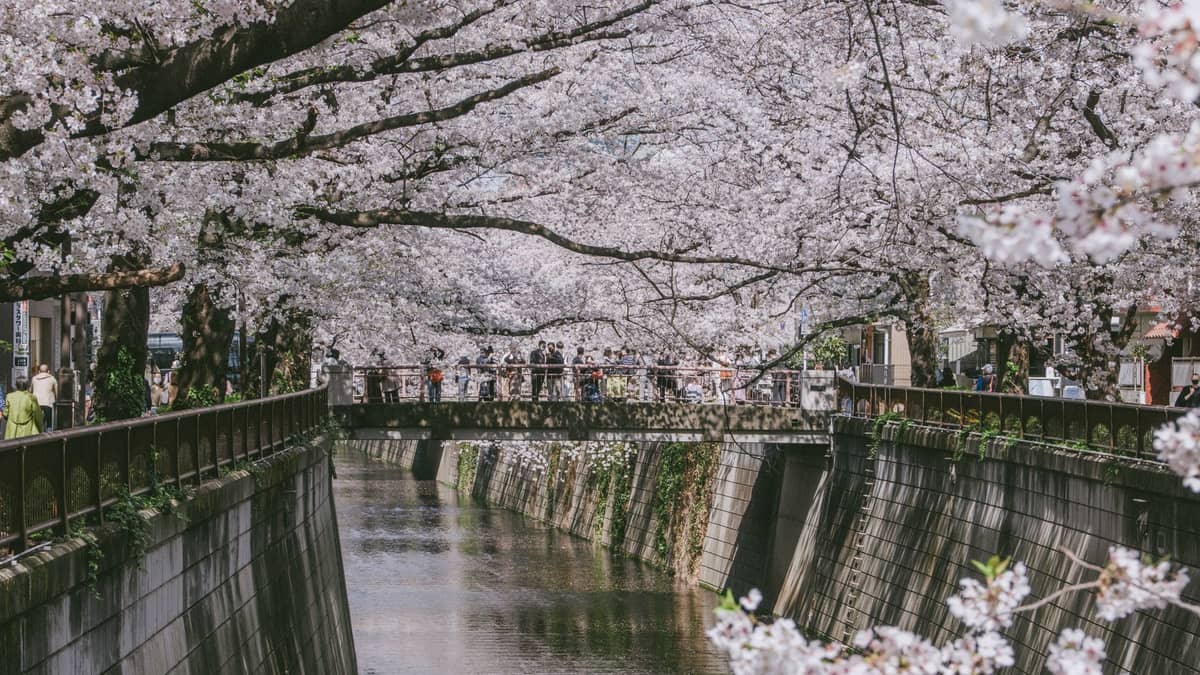
Roughly 800 somei yoshino cherry trees line the Nakameguro riverbanks, their branches trained to arch over the water and meet in the middle. When they reach full bloom in late March to early April, the effect is a continuous tunnel of pale pink blossoms reflected in the water below. This is legitimately one of the most photogenic cherry blossom settings in Tokyo, and the crowds reflect that.
On peak weekend afternoons during bloom season, the promenade becomes nearly shoulder-to-shoulder. Food stalls appear on the bridges, the nearest convenience stores sell out of drinks by midday, and the surrounding streets back up with people funneling toward the water. If this is your main reason for visiting, the experience is still worthwhile, but the conditions matter enormously. Weekday mornings before 9am offer a genuinely different experience: the blossoms are the same, the crowds are a fraction of the size, and the light on the water is softer.
For the broader context of cherry blossom timing and the best spots across the city, the Tokyo in spring guide covers what to expect and how to plan around peak dates, which shift by several days each year.
⚠️ What to skip
During peak cherry blossom weekends, alcohol is often restricted on the promenade itself (specific rules vary by year). Check current regulations before planning a hanami picnic here — nearby Yoyogi Park and Shinjuku Gyoen have more consistent picnic space.
Tickets & tours
Hand-picked options from our booking partner. Prices are indicative; availability and final rates are confirmed when you complete your booking.
Mount Fuji full-day tour from Tokyo with private driver and guide
From 683 €Instant confirmationFree cancellationTokyo full-day tour with private driver and local guide
From 683 €Instant confirmationFree cancellationNikko full-day tour from Tokyo with private driver and local guide
From 683 €Instant confirmationFree cancellationKamakura full-day tour with private driver and local guide
From 683 €Instant confirmationFree cancellation
The River Through the Rest of the Year
The Meguro River is not a one-season destination, though many visitors treat it that way. Summer along the promenade is warm and occasionally muggy, but the dense tree canopy provides meaningful shade along the central Nakameguro stretch. The cafes put chairs outside, the water level drops slightly, and the area settles back into a neighborhood rhythm rather than a tourist spectacle.
Autumn brings a different kind of color: the cherry trees turn yellow and orange before dropping their leaves in November, and the foot traffic is a fraction of spring. The light in October and early November hits the water at a lower angle and gives the canal a warm, amber quality in the late afternoon that is genuinely worth timing your visit around. If you want to photograph the river without competing for space, this is the season.
Winter sees the Meguro River Illuminations near Gotanda, typically running evenings from around 17:00 to 22:30, when the bare branches are strung with warm white lights reflecting off the water. The dates vary by year, so check the Go Tokyo official site for current scheduling before planning an evening visit. Even without the illuminations, the winter promenade at night is calm, empty by Tokyo standards, and easy to walk.
The illumination event is one of several winter-season highlights covered in the Tokyo in December guide, which includes practical notes on timing and what else is happening in the city during that period.
How to Walk the Promenade
Most visitors start at Nakameguro Station and walk in one direction, then return or cut up into the surrounding streets. The promenade itself is paved, mostly flat, and wide enough for two people to walk comfortably side by side (though not during cherry blossom season, when it fills completely). The paths on both sides of the river are accessible to pram and wheelchair users along the main Nakameguro stretch, though step-free access at some bridges and transition points should be confirmed locally.
Walking northeast from Nakameguro Station toward the Meguro Station end takes roughly 20–25 minutes at a relaxed pace without stopping. Meguro Station is served by the JR Yamanote Line, the Tokyo Metro Namboku Line, the Toei Mita Line, and the Tokyu Meguro Line, making it a practical finishing point if you want to continue to other parts of the city. Ikejiri-Ohashi Station on the Tokyu Den-en-toshi Line provides another entry or exit point a few minutes' walk from the western sections of the promenade.
The Nakameguro neighborhood surrounding the river is one of Tokyo's most interesting places to simply wander. For a wider look at what the area contains beyond the river itself, the Daikanyama and Nakameguro neighborhood guide covers the adjacent streets, key shops, and how the two areas connect.
Photography: What Actually Works Here
The obvious shot is from one of the low bridges during cherry blossom season looking along the canal with blossoms forming an arch overhead. That image is real and achievable, but it requires either early morning timing or patience. The bridges are narrow, and during peak season they fill with people immediately.
A less obvious but equally effective approach is to position yourself at water level on the bank rather than on a bridge, shooting along the canal with a slight upward angle. This gives the blossoms more presence against the sky and reduces the number of people in frame. The best light for this is in the hour after sunrise, when the low angle catches both the water surface and the undersides of the branches.
For winter illuminations, a tripod is not strictly necessary but helps with longer exposures that capture reflections cleanly. The most effective frames are taken from the center of a bridge looking straight along the canal, where the lights on both sides converge toward a vanishing point. Arrive at dusk rather than full dark to catch the brief overlap of ambient blue sky and the warm artificial light.
ℹ️ Good to know
There is no single parking facility serving the river promenade. Visitors arriving by car typically use coin parking in surrounding residential streets, which fills quickly during cherry blossom season. Train access via Nakameguro Station is strongly recommended.
Eating and Drinking Along the River
The cafes and restaurants along the Nakameguro stretch of the river are a legitimate draw in themselves. Onibus Coffee, Fuglen Tokyo's Nakameguro outpost, and a rotation of smaller roasters have established Nakameguro as one of Tokyo's better coffee neighborhoods. Most of these places are small, with limited seating, and they fill quickly on weekends. Arriving before 10am generally means a shorter wait and easier access to window seats facing the water.
The food options skew toward the casual end: pasta restaurants, ramen shops, crêpe stands during cherry blossom season, and a few more considered Japanese restaurants on the side streets. During peak blossom season, outdoor food stalls appear near the main bridges selling takoyaki, yakitori, and seasonal items. Prices along the river corridor tend to run slightly above the Tokyo average, reflecting the neighborhood's reputation rather than exceptional food quality across the board.
If coffee is a priority and you want to map out a morning around the best options, the Tokyo cafe guide includes specifics on the Nakameguro coffee scene alongside other neighborhoods worth exploring.
Insider Tips
- The promenade between Nakameguro Station and the Meguro Station end becomes less crowded the further you walk from the station. Most visitors turn around before reaching the quieter eastern sections, where the trees are equally good but the foot traffic drops off significantly.
- Nakameguro Station's two exits deposit you on opposite sides of the river. Exit A leads to the east bank, Exit B to the west. Both are valid starting points, but the west bank (Exit B side) has slightly more cafe density in the first few hundred meters.
- During cherry blossom season, the 7-Eleven and convenience stores near the station sell out of drinks and snacks by midmorning on weekends. Bring your own water or stop before you reach the river.
- The Meguro River Illuminations typically run only on weekday and weekend evenings — check the current year's schedule on the Go Tokyo official site before planning an evening trip in winter, as dates are not fixed.
- If you are visiting in autumn, the stretch between Nakameguro and Ikejiri-Ohashi stations gets noticeably less foot traffic and has some of the better views of the turning foliage reflected in the water.
Who Is Meguro River For?
- Photographers targeting cherry blossom reflections or winter illumination shots
- First-time Tokyo visitors wanting a photogenic but unhurried half-day walk
- Coffee enthusiasts looking to combine a river walk with Nakameguro's cafe scene
- Couples wanting a quieter alternative to the larger and more crowded hanami parks
- Autumn foliage seekers looking for an urban setting without the crowds of spring
Nearby Attractions
Other things to see while in Daikanyama & Nakameguro:
- Daikanyama T-Site
Daikanyama T-Site is a low-rise cultural complex in one of Tokyo's most refined neighborhoods, built around Daikanyama Tsutaya Books. Free to enter and open late, it draws readers, design enthusiasts, and anyone needing a slower pace in a fast city.