Yanaka Ginza: A Walk Through Old Tokyo That Actually Feels Old
Yanaka Ginza is a 170-meter pedestrian shopping street in one of Tokyo's last intact shitamachi neighborhoods. Free to enter, lined with family-run shops and street food stalls, it offers a rare glimpse of everyday Tokyo life before mass redevelopment.
Quick Facts
- Location
- 3-13-1 Yanaka, Taitō-ku, Tokyo 110-0001
- Getting There
- Nippori Station (JR Yamanote Line / JR Keihin-Tōhoku Line / JR Jōban Line / Keisei Main Line) — about 5–10 min walk; or Sendagi Station (Tokyo Metro Chiyoda Line) — about 5–10 min walk
- Time Needed
- 1–2 hours for the street; half a day if exploring the wider Yanaka cemetery and temple area
- Cost
- Free to walk; budget ¥500–¥1,500 for snacks and shopping
- Best for
- Slow travelers, culture seekers, food lovers, photographers
- Official website
- www.yanakaginza.com
What Yanaka Ginza Actually Is
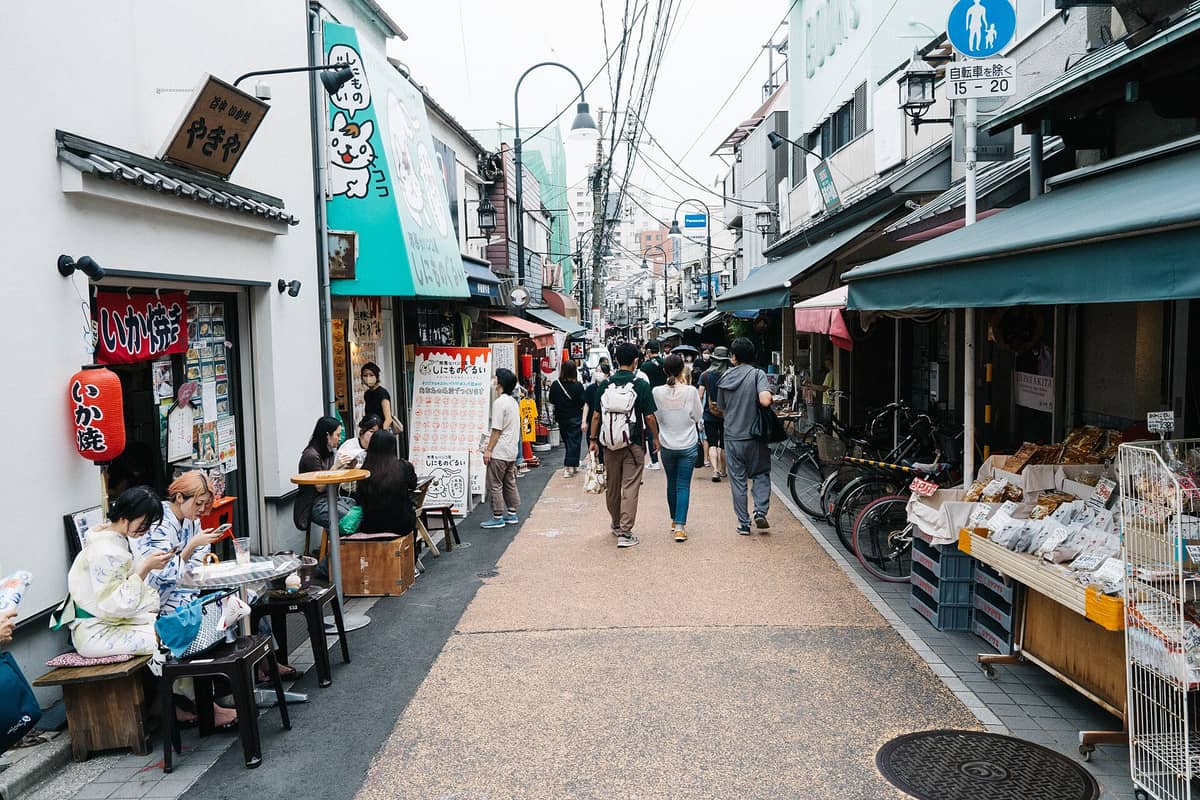
Yanaka Ginza Shotengai (谷中銀座商店街) is a pedestrian shopping street stretching roughly 170 meters through the Yanaka district of Taitō ward. It is not a museum recreation of old Tokyo. It is an actual working neighborhood commercial strip where residents still buy tofu, fresh fish, and pickled vegetables alongside travelers who have come specifically to see what this part of the city looks like.
The street is anchored at its western end by the Yuyake Dandan staircase, whose name translates loosely to 'Sunset Steps.' From the top of those stairs on a clear afternoon, the view down the gently sloping street, with its mix of low wooden shopfronts and the occasional cat lazing on a windowsill, captures the quality that makes Yanaka different from almost everywhere else in Tokyo.
💡 Local tip
Monday is the quietest day to visit — many individual shops close or have reduced hours. Tuesday through Sunday, especially late morning, gives you the fullest experience of the street.
The Historical Context: Why Yanaka Survived
Most of central Tokyo was rebuilt twice in the twentieth century: once after the Great Kanto Earthquake of 1923, and again after the firebombing of 1945. Yanaka, positioned slightly north of the areas hit hardest by both disasters, escaped significant destruction in each case. The result is one of the few neighborhoods in the city where the street grid, building scale, and social character of prewar shitamachi (literally 'low city,' the traditional working-class districts of Edo and early Tokyo) remain recognizable.
The shopping street itself developed as a commercial strip serving both local residents and visitors to the many temples and shrines in the surrounding area, including the large Yanaka Cemetery, which dates to 1874 and contains the graves of several notable Meiji-era figures. Shops here have historically been family operations passed down across generations, and that pattern, while changing, still shapes what you find on the street today.
This context matters when you compare Yanaka to more polished heritage experiences in Tokyo. The Senso-ji area in Asakusa is grander and better preserved architecturally, but it is also far more tourist-oriented. Yanaka Ginza serves actual neighbors first, which makes the atmosphere noticeably different.
Tickets & tours
Hand-picked options from our booking partner. Prices are indicative; availability and final rates are confirmed when you complete your booking.
Yanaka: historical walking tour in Tokyo's old town
From 40 €Instant confirmationFree cancellationGinza Wagyu and Sake Tour in Tokyo
From 150 €Instant confirmationFree cancellationKaiten Sushi Ginza Onodera in Kyoto
From 21 €Instant confirmationFree cancellationHalf-Day Imperial Palace, Ginza and Japanese Tea Ceremony Guided Tour
From 190 €Instant confirmationFree cancellation
Walking the Street: What You Will Actually See
Most visitors approach from Nippori Station, which puts them at the top of the Yuyake Dandan steps. The staircase descends steeply into the shopping street, and the transition is immediate: the noise of the rail corridor behind you gives way to the sound of shop owners calling out, cats occasionally yowling from hidden perches, and the low hum of a neighborhood going about its day.
The shops along the 170-meter strip are small, densely packed, and varied. You will find cooked meat skewers (melon pan, menchi katsu, and croquettes are particularly popular as walking snacks), fresh produce vendors, fishmongers, tofu shops, traditional sweets, handmade craft items, and a few cafes. The smell changes as you walk: frying oil near the food stalls, then something cooler and slightly herbal near the produce sellers, then coffee as you pass one of the newer additions.
Cats are a genuine presence in Yanaka, not a marketing gimmick. The neighborhood has long had a reputation as a cat town, and while the free-roaming population varies, you are likely to spot at least one or two, either in shopfronts or on neighboring rooftops. Many of the shops lean into this, stocking cat-themed goods.
ℹ️ Good to know
Eating while walking is generally considered impolite in Japanese public spaces, but Yanaka Ginza is one of the places where it is widely accepted, specifically because the street food culture here is established and expected by local sellers.
How the Experience Changes by Time of Day
Arrive before 10:00 and the street is quiet, with shutters still down on most shops. This is a good time for photographers who want the architecture and staircase without crowds, but a poor time for anyone who came for the food and atmosphere.
Late morning, from around 10:30 to noon, is the sweet spot for most visitors. Shops are open, the lunch preparation smell begins to drift from a few of the food stalls, and local residents are doing their shopping. The energy is active without being crowded.
Weekend afternoons, particularly Saturdays from around 13:00 to 16:00, are the most crowded periods. The street is narrow enough that a moderate number of visitors creates a genuine bottleneck near popular snack sellers. If you visit on a weekend, arriving closer to opening time or later in the afternoon (around 16:00–17:00) is a better choice.
The Yuyake Dandan steps at sunset are a well-known local gathering point. When conditions are right, the western sky frames the staircase in orange and pink light, which is where the name 'Sunset Steps' comes from. This is the most photographed moment in the entire neighborhood, and worth timing if your schedule allows.
Practical Details for Getting There and Getting Around
Nippori Station is the easiest access point. It is served by the JR Yamanote Line, the JR Keihin-Tohoku Line, and the Keisei Main Line, making it reachable from Shinjuku, Shibuya, Tokyo Station, and Ueno without transfers. From the station's south exit, the walk to the top of the Yuyake Dandan stairs takes about five minutes through a quiet residential lane.
Sendagi Station on the Tokyo Metro Chiyoda Line provides an alternative approach from the opposite end of the shopping street, passing through more of the residential Yanaka neighborhood. This route is slightly longer on foot but passes interesting side streets and is useful if you are arriving from Omotesando, Otemachi, or other Chiyoda Line stations.
⚠️ What to skip
The Yuyake Dandan staircase at the Nippori end has no wheelchair ramp. Wheelchair users should approach the shopping street from the Sendagi side or via the side streets that run parallel to the steps.
Yanaka pairs well with a broader half-day itinerary through the Ueno area. Ueno Park, with its cluster of museums and Shinobazu Pond, is about 15 minutes on foot from Nippori Station, making a combined visit efficient without feeling rushed.
Photography and Seasonal Considerations
The street photographs best in soft morning light or in the hour before sunset. The shopfronts face roughly east-west, so midday light on a clear day creates flat, harsh shadows in the narrow lane. Overcast conditions, common in spring and autumn, often produce better results for street photography here than bright sunshine.
Spring brings cherry blossoms to nearby Yanaka Cemetery, which becomes one of the quieter and more atmospheric hanami spots in the city. If you are planning a spring visit around blossom season, the guide to Tokyo in spring has detailed timing information. Autumn colors arrive in the cemetery in November, adding another seasonal reason to visit the wider Yanaka area.
The shopping street itself looks essentially the same year-round at street level. Weather affects comfort more than character: summer afternoons are hot and humid, and the narrow street offers limited shade. Lightweight clothing and arriving before noon is advisable from late June through August. Winter visits are pleasant for those comfortable with temperatures in the 5–10°C range; the cold keeps crowds smaller, and the street retains its atmosphere even in December.
Who Should Skip This, and Who Will Love It
Yanaka Ginza is a short street. If you have come expecting a large-scale attraction with extensive sights, you may find it underwhelming. The value here is atmosphere and context, not volume of things to do. Visitors who feel satisfied only when checking major landmarks or museums will not find much to hold their attention for long.
Similarly, anyone visiting Tokyo with very limited time who has not yet seen Senso-ji or the Meiji Jingu Shrine should probably prioritize those first. Yanaka rewards curiosity and a slower pace; it is not a destination that benefits from being rushed through in 20 minutes between other stops.
Travelers who appreciate urban texture, who like buying food from small independent producers, who want to walk through a neighborhood rather than a designed experience, or who are curious about what Tokyo looked like before its postwar reinvention will find Yanaka Ginza genuinely worthwhile.
Insider Tips
- The menchi katsu (deep-fried minced meat cutlet) sold by several shops along the street is widely regarded as the signature snack. There is usually a short queue at the most popular vendor, but it moves quickly.
- Walk the side streets running perpendicular to the main shopping strip. The residential lanes of Yanaka proper, with their low wooden houses, small temples, and occasional moss-covered stone walls, are where the neighborhood's real character lives.
- Yanaka Cemetery is not a morbid detour: it is a large, tree-lined park that functions as a community green space. During cherry blossom season it is significantly less crowded than Ueno Park while being equally beautiful.
- If you want to buy something meaningful to take home, look for the shops selling traditional Japanese craft items (tenugui cotton cloths, wooden crafts, ceramic pieces) rather than the cat-themed novelty goods, which are available everywhere in the area.
- The Keisei Skyliner passes through Nippori Station on its route between Narita Airport and Ueno. If your Tokyo itinerary includes a day trip or arrival from Narita, adding Yanaka to that transit corridor costs no extra travel time.
Who Is Yanaka Ginza For?
- Slow travelers who want to experience neighborhood Tokyo rather than tourist-zone Tokyo
- Food lovers interested in traditional Japanese street snacks and local produce
- Photographers looking for textured, low-key urban scenes with authentic character
- First-time visitors to Tokyo who want cultural context beyond temples and skyscrapers
- Travelers combining a visit with nearby Ueno Park, the Tokyo National Museum, or a Narita Skyliner connection at Nippori
Nearby Attractions
Other things to see while in Yanaka:
- Nezu Shrine
Nezu Shrine (根津神社) is one of Tokyo's oldest and most atmospheric Shinto sanctuaries, its current buildings dating to 1706 and designated as Important Cultural Properties. Set in the quiet Yanaka district, it draws visitors year-round for its winding torii gate corridors, historic architecture, and a spectacular azalea garden that erupts in color each spring.