Tokyo in Autumn: The Complete Fall Foliage Guide
Tokyo's autumn foliage season runs from mid-November into early December, transforming gardens, parks, and temple grounds across the city. This guide covers the best spots, exact peak timing, admission costs, and practical advice for planning your visit.
Plan and book this trip
Tools from our partner Travelpayouts help you compare flights and hotels. If you book through them, we may earn a commission at no extra cost to you.
Flights
Hotels map
TL;DR
- Peak foliage in central Tokyo falls between mid-November and early December, later than most visitors expect.
- Top spots include Shinjuku Gyoen (¥500 entry), Rikugien Garden (¥300, plus ¥1,000 for night illuminations), and free sites like Yoyogi Park and the Imperial Palace East Gardens.
- Weekday mornings are significantly less crowded; popular gardens fill up on autumn weekends.
- Autumn is one of the two best times to visit Tokyo weather-wise: expect highs of 15–20°C in November with low rainfall. See our best time to visit Tokyo guide for a full seasonal breakdown.
- Night illumination events at select gardens run through late November and into December — check official GO TOKYO listings for exact dates each year.
When Does Autumn Foliage Peak in Tokyo?
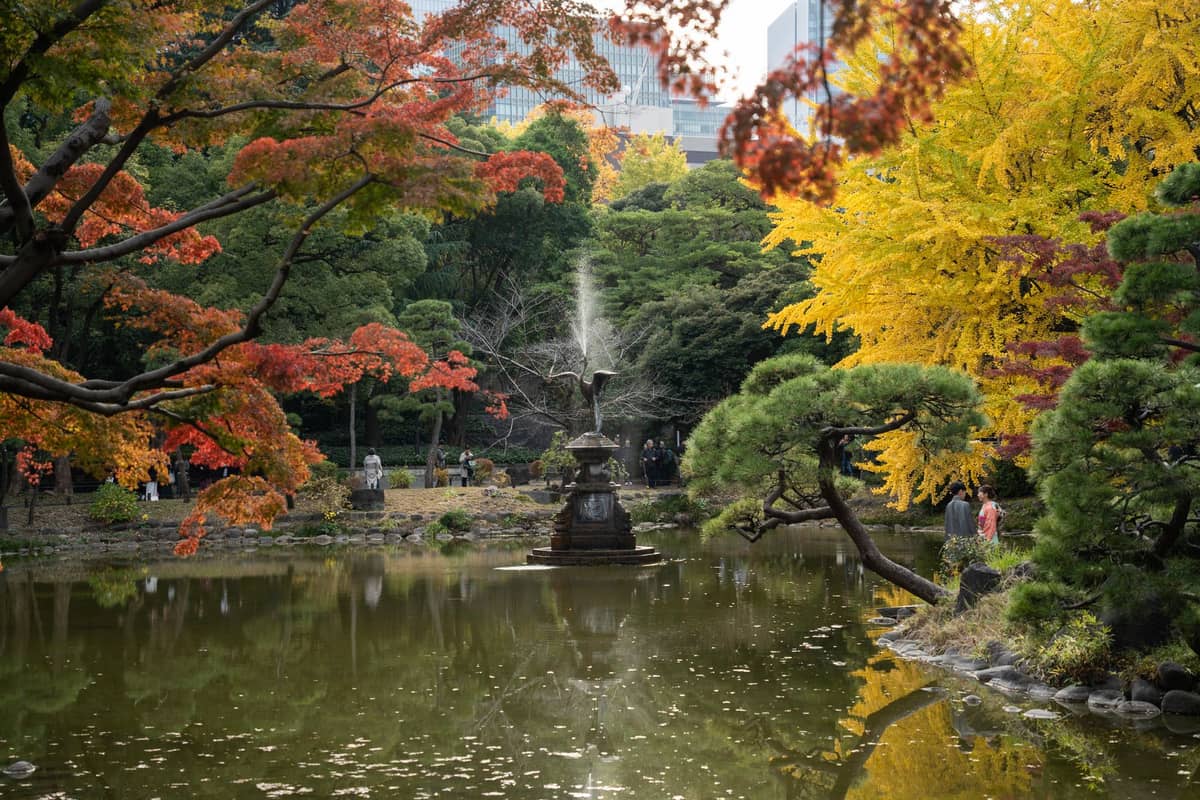
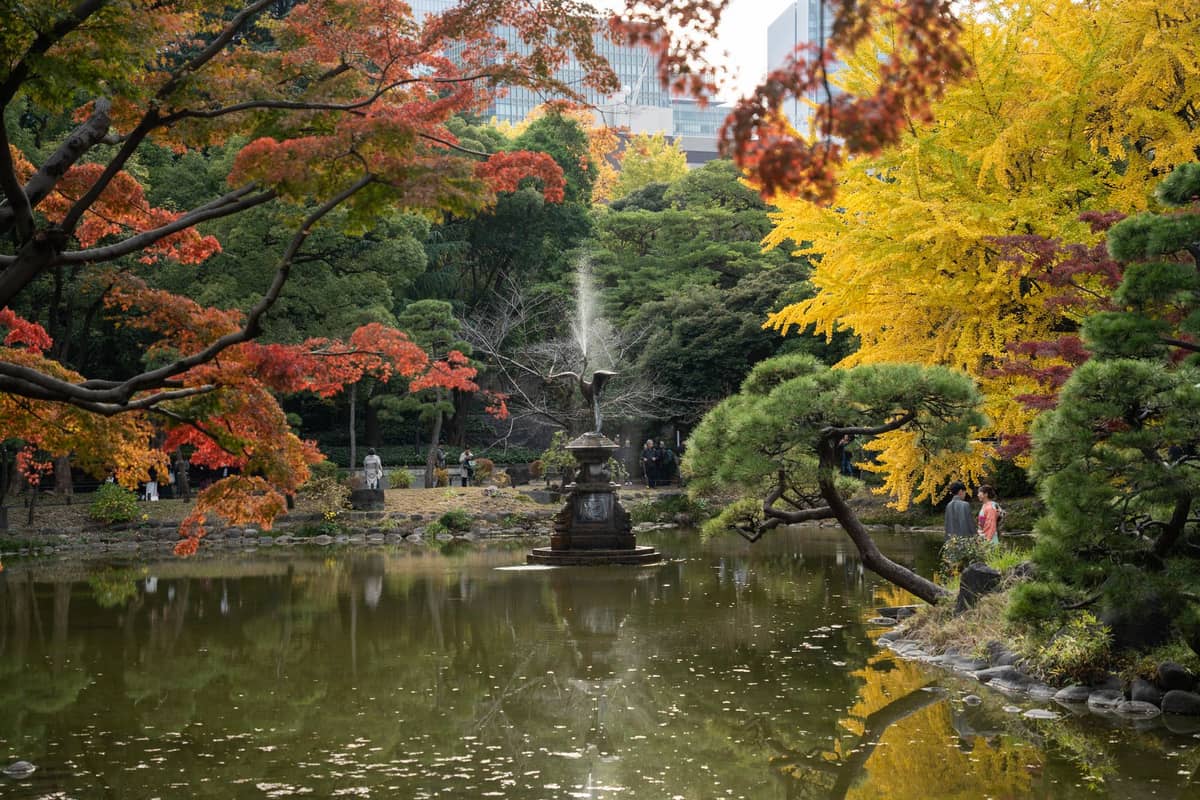
This is where most visitors go wrong: Tokyo's fall foliage does not peak in October. The city sits at low elevation near sea level, which means the color change arrives later than in mountain areas or even in parts of northern Japan. In a typical year, the first noticeable color change in central Tokyo begins in early November with ginkgo trees turning yellow, while maples and other deciduous trees reach peak color between mid-November and early December. Some gardens in central Tokyo don't hit their best until the first week of December.
The progression matters if you're planning around a specific visit window. Higher-elevation areas accessible as day trips, such as Mount Takao (599 m), typically peak 2–3 weeks earlier than central Tokyo. Nikko, a popular excursion north of the city, peaks in mid to late October. If you're arriving in late October hoping for fiery foliage in Tokyo's parks, you'll likely be disappointed. If you're arriving in mid to late November, you'll be right on time.
ℹ️ Good to know
GO TOKYO publishes an annual autumn leaves forecast (koyo yoho) each season. Check the official GO TOKYO website in October for that year's predicted peak dates by location, as peak timing can shift by 1–2 weeks depending on summer temperatures and early autumn rainfall.
September in Tokyo is warm and rainy, with average highs around 27°C and rainfall around 210 mm, partly due to typhoons. By October, conditions improve significantly: highs drop into the low 20s, rainfall decreases, and the air becomes clearer. November is arguably the best month to be in Tokyo, with highs of 15–18°C, low humidity, and comfortable walking conditions. For a full seasonal weather breakdown, see our guide on the best time to visit Tokyo.
The Best Spots for Fall Foliage in Tokyo
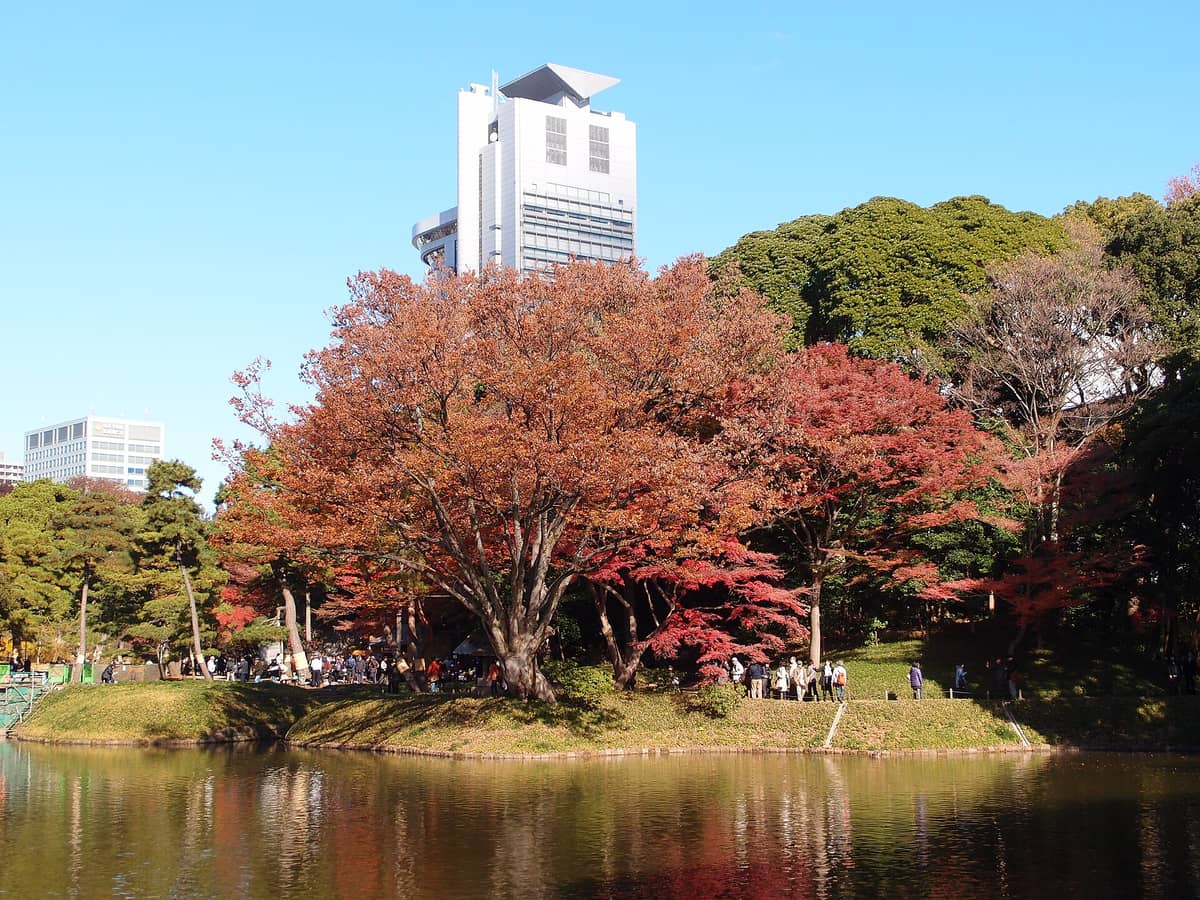
Tokyo has a surprising number of high-quality foliage viewing spots spread across the city. The best are formal gardens with designed landscapes built around seasonal beauty, but several free parks offer excellent color without the admission cost.
- Shinjuku Gyoen National Garden The most reliable and varied foliage experience in central Tokyo. The garden's 58.3 hectares contain French formal, English landscape, and Japanese traditional sections, with over 1,500 trees including cherry, maple, ginkgo, and zelkova. Autumn hours run 9:00–16:30 (last entry 16:00) from October 1 to March 14. Admission: ¥500 adults, ¥250 seniors and students, free for children 15 and under. Closed Mondays (or the following Tuesday if Monday is a public holiday).
- Rikugien Garden A classical stroll garden in Bunkyo Ward, built in the early 18th century, with a large central pond and a single spectacular weeping cherry at the entrance that also flames red in autumn. Standard admission is ¥300, open 9:00–17:00 with last entry 30 minutes before closing. During the autumn illumination event, the garden stays open into the evening on a separate ¥1,000 ticket. This is one of the better night viewing experiences in the city.
- Imperial Palace East Gardens (Higashi Gyoen) Free to enter and well-maintained, these gardens within the former Edo Castle grounds offer a quieter alternative to commercial gardens. Open 9:00–16:00 from November through February, with last entry at 15:30. Closed Mondays, Fridays, and occasionally for Imperial functions. The Japanese-style garden section near the Ninomaru area is the focal point for autumn color.
- Yoyogi Park Free, open 24 hours, and large enough that it never feels genuinely crowded even on busy autumn weekends. The rows of ginkgo trees along the main paths turn a vivid yellow in November. Less curated than formal gardens but worth combining with a visit to nearby Meiji Jingu Shrine or a walk through Harajuku.
- Koishikawa Korakuen Garden One of Tokyo's oldest surviving Edo-period gardens, dating from the early 17th century. The maple grove near the central pond is particularly strong in late November. Admission is around ¥300, open 9:00–17:00 (last entry 16:30). Often less crowded than Shinjuku Gyoen despite similar quality.
- Rikugien's alternative: Kyu-Furukawa Gardens A short walk from Rikugien, this garden combines a Western-style rose garden and a Japanese-style lower garden. The autumn maple color in the Japanese section is good, and it receives far fewer visitors than the major spots. Admission around ¥150.
💡 Local tip
Arrive at Shinjuku Gyoen or Rikugien by 9:00–9:30 on weekdays for the quietest conditions. Weekend afternoons in late November can involve queues of 20–30 minutes just to enter Shinjuku Gyoen. If you visit on a weekday, you'll often have sections of the garden nearly to yourself.
Day Trips for Earlier or More Dramatic Foliage
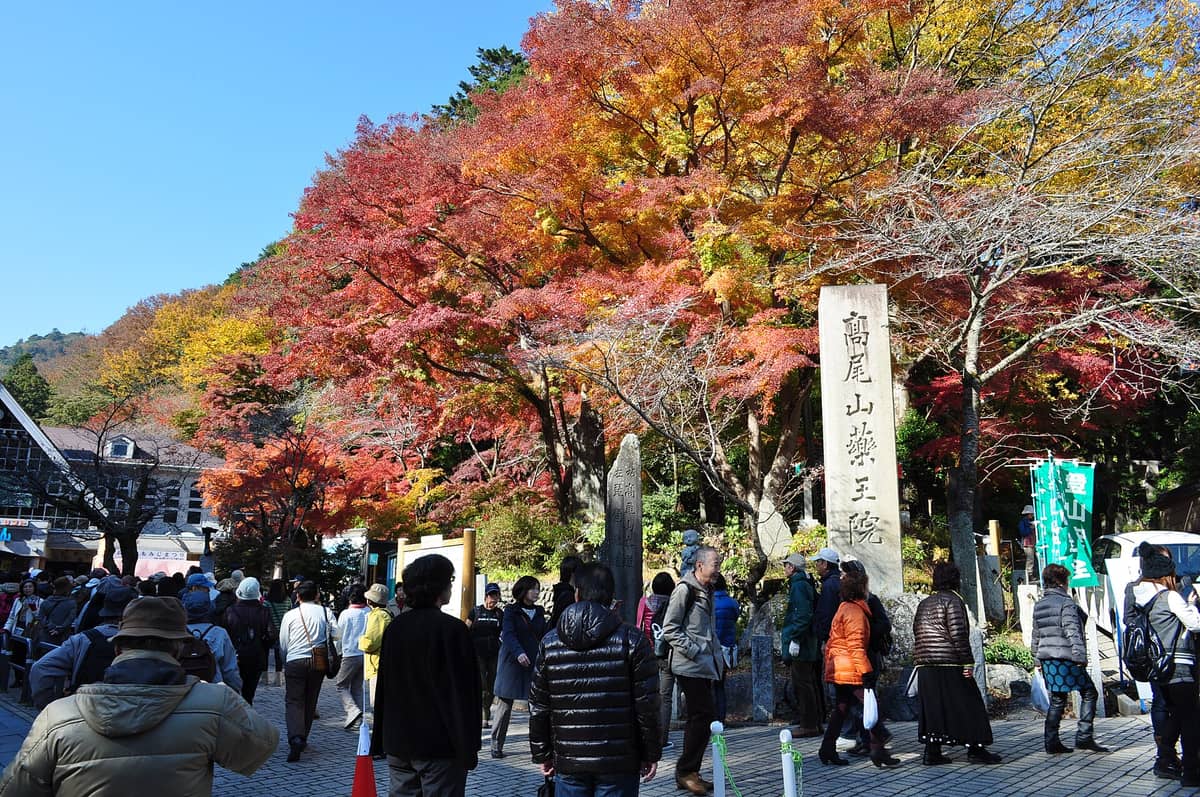
If you're visiting Tokyo in late October or early November, the surrounding area offers better foliage than the city itself at that time. Mount Takao (Takaosan), accessible in about 50 minutes from Shinjuku on the Keio Line, typically peaks in mid to late November but the higher trails see color from late October. The mountain is free to hike and genuinely worth the trip. You can also combine Takao with other day trips from Tokyo for a full autumn excursion.
Nikko, about 1 hour 50 minutes from Asakusa on the Tobu Nikko Line, offers spectacular foliage around Toshogu Shrine and Lake Chuzenji in mid to late October. Kamakura, 1 hour from Tokyo, is another option: temples like Engakuji and Kencho-ji have good maple gardens that peak in late November, roughly in sync with central Tokyo. If you're planning a broader autumn itinerary including Kyoto, note that Kyoto typically peaks slightly earlier than Tokyo in a given year. See the Tokyo to Kyoto guide for logistics.
Night Illuminations and Autumn Events
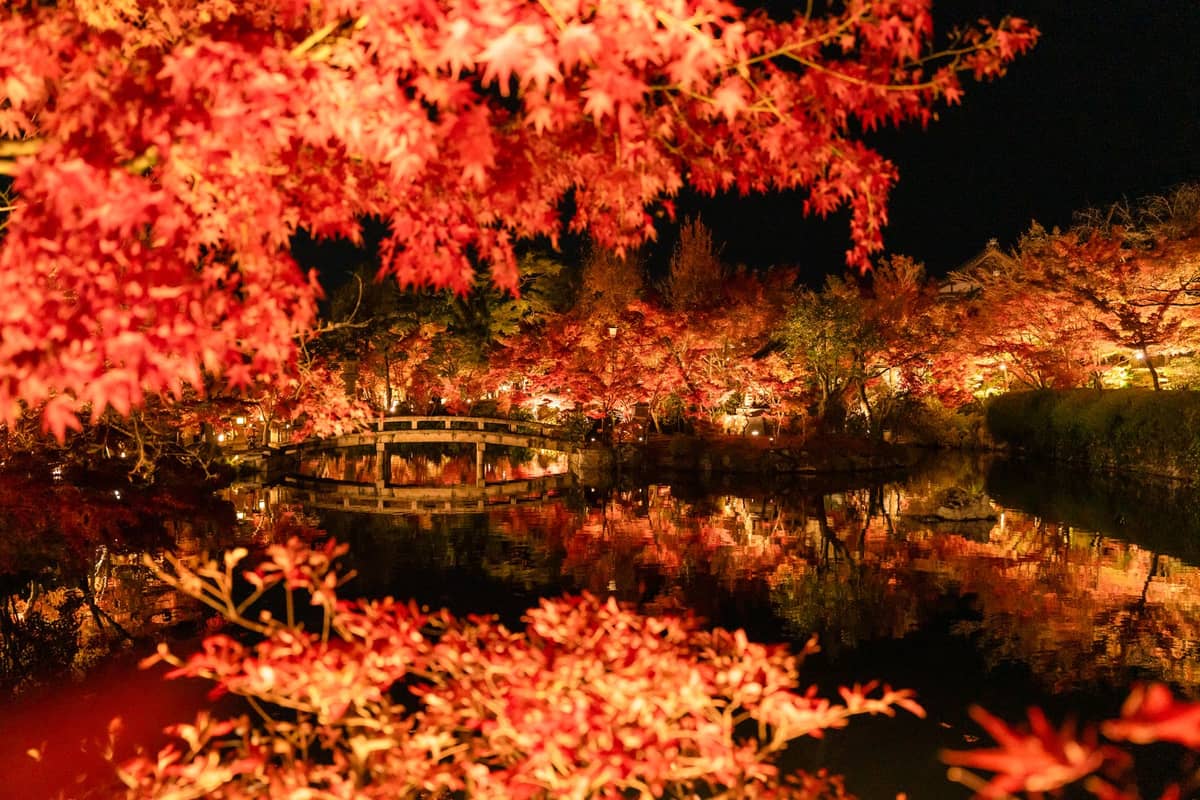
Tokyo's autumn season includes several dedicated night illumination events that light up foliage after dark. These are separate from daytime garden visits and generally require a specific event ticket. Rikugien's autumn illumination is the best-known: the weeping maple at the garden entrance and the surrounding trees are lit from below, reflecting in the central pond. The event ticket is around ¥1,000 and the garden stays open into the evening (typically until around 20:30) during the event period. Lines can be long on Friday and Saturday evenings; Tuesday and Wednesday evenings are considerably calmer.
Other illumination events pop up in parks and commercial spaces across the city each year. Showa Kinen Park in Tachikawa (western Tokyo) runs a well-regarded autumn lights event. Tokyo Midtown in Roppongi hosts outdoor illuminations from mid-November. These commercial events are free to walk through but draw significant weekend crowds. For evening plans that go beyond foliage, there's plenty of overlap with general autumn nightlife in the city.
⚠️ What to skip
Night illumination events at gardens like Rikugien are popular enough that queues of 45–60 minutes are normal on peak weekends in late November. The event dates and ticket prices are set annually — confirm on the official GO TOKYO website before your visit, as dates shift based on foliage conditions each year.
Autumn in Tokyo's Neighborhoods: Where Foliage Meets the City
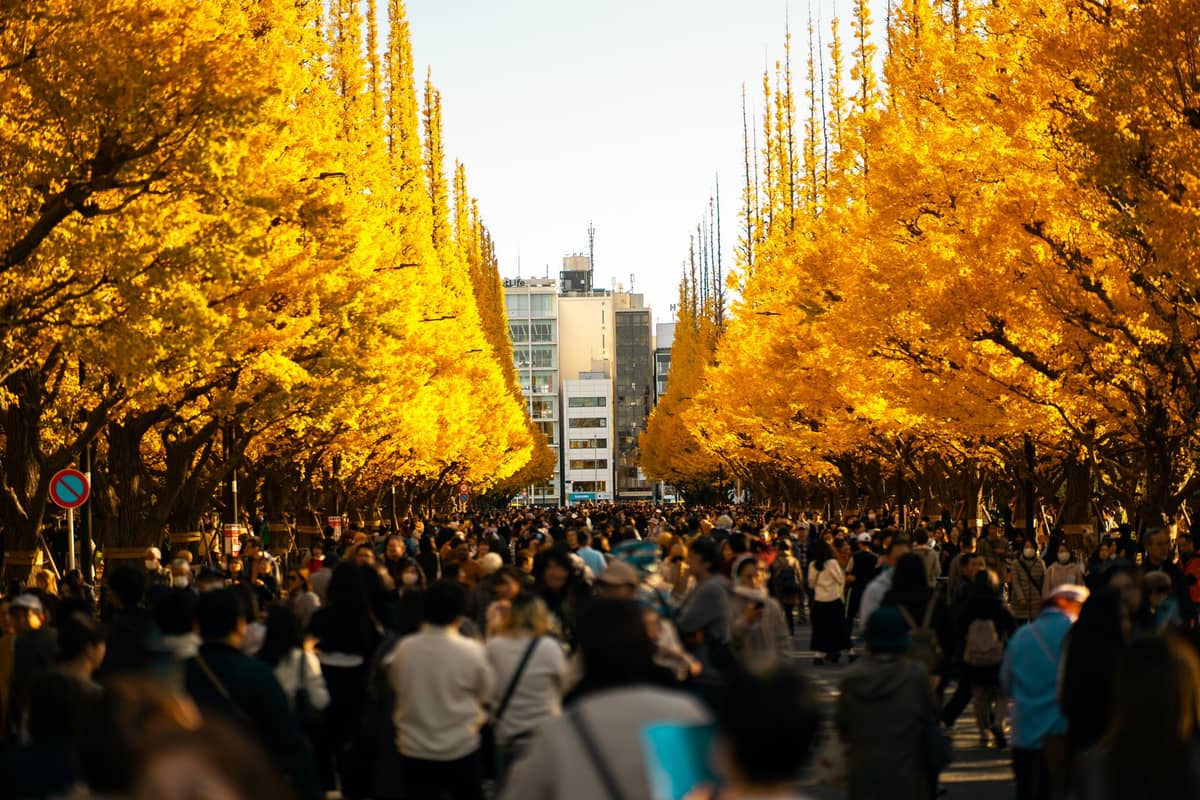
Beyond formal gardens, several Tokyo neighborhoods offer strong street-level foliage that doesn't require an entry ticket. The ginkgo avenue along Gaien Nishi-dori in Aoyama is one of the city's most photographed autumn scenes: a 300-meter boulevard flanked by 146 ginkgo trees that turn a uniform golden yellow in mid-November. It's free, open, and the surrounding area in Harajuku and Omotesando adds good cafes and shopping to the walk.
The Meguro River, which runs through Nakameguro, is better known for spring cherry blossoms but the overhanging trees also produce decent autumn color in November. It's a good option for an evening walk, with riverside cafes and bars open late. In Ueno, the park paths around Shinobazu Pond are lined with maples and zelkova trees that peak in late November, and Ueno Zoo's surrounding paths are free to walk.
For a quieter neighbourhood walk with good foliage, Yanaka in Taito Ward is worth considering. The old temple district has numerous small temple grounds with mature maples, and the area sees far fewer tourists than major garden sites. Yanesen Cemetery, which runs through the heart of the area, is lined with large ginkgo and zelkova trees. It sounds unusual but the cemetery walk is genuinely good in mid-November.
Practical Tips for Planning Your Autumn Visit
Tokyo in autumn requires a bit more planning than spring cherry blossom season, mostly because the peak window is longer and more variable by location. The upside is that unlike sakura, which has a precise 1–2 week peak, good autumn foliage in Tokyo can stretch from mid-November through the first week of December. You have more margin for error.
- Visit gardens on weekday mornings: Shinjuku Gyoen and Rikugien are noticeably quieter before 10:30 on Tuesday through Thursday.
- Layer clothing for November: morning temperatures can drop to 8–10°C, while afternoons warm to 15–18°C. A mid-layer and a light jacket handle the range.
- Most Tokyo gardens now accept cashless payment at the entry gate as well as cash; carry a mix of coins, small notes, and a card or mobile payment for admissions under ¥500.
- Autumn weekends in late November coincide with Japanese school excursion season; Shinjuku Gyoen in particular gets significant domestic group visitors on weekdays in mid-November.
- Check GO TOKYO's annual koyo (autumn leaves) forecast in October for that year's site-by-site peak predictions before finalizing your itinerary.
- The Imperial Palace East Gardens close on Mondays, Fridays, and certain dates for Imperial events; check the Imperial Household Agency website before visiting.
- Night illumination events sell out or reach capacity on weekends; aim for a Tuesday or Wednesday evening if possible.
Getting between garden sites is straightforward on Tokyo's rail network. Shinjuku Gyoen is a short walk from Shinjuku-Gyoenmae on the Tokyo Metro Marunouchi Line (and also walkable from JR Shinjuku and Sendagaya stations). Rikugien is a 5-minute walk from Komagome on the JR Yamanote or Tokyo Metro Namboku Line. Koishikawa Korakuen is near Korakuen on the Marunouchi and Namboku lines. For navigating between these spots efficiently, the getting around Tokyo guide covers IC card setup and line-by-line routing.
✨ Pro tip
Combine Rikugien and Kyu-Furukawa Gardens in a single half-day: they are a 10-minute walk apart and together give you two contrasting garden styles with a combined admission of ¥450. Kyu-Furukawa is almost always quieter and the Western-style upper garden provides a completely different visual backdrop.
FAQ
When exactly is autumn foliage peak in Tokyo?
In a typical year, peak foliage in central Tokyo falls between mid-November and early December, with most major parks and gardens hitting their best color around the third and fourth weeks of November. Ginkgo trees tend to peak slightly earlier (mid-November) than maples (late November to early December). Higher-elevation areas like Mount Takao peak 2–3 weeks earlier. GO TOKYO publishes a site-specific forecast each October with predicted peak dates for that year.
Is Shinjuku Gyoen the best place to see autumn leaves in Tokyo?
Shinjuku Gyoen is the most diverse and reliably good spot, with a large variety of tree species spread across formal and informal garden sections. However, Rikugien has a more atmospheric setting and better night illuminations, and Koishikawa Korakuen is equally beautiful with fewer crowds. If you only have time for one, Shinjuku Gyoen is the safest choice; if you have two mornings, add Rikugien or Koishikawa Korakuen.
Do I need to book tickets for Tokyo's autumn foliage gardens in advance?
Most Tokyo gardens, including Shinjuku Gyoen, Rikugien, and the Imperial Palace East Gardens, do not require advance booking for standard daytime admission. You can pay at the gate. The exception is special night illumination events at Rikugien, which have limited capacity and can sell out; check the official event page for that year's ticketing arrangements. During peak weekends in late November, expect queues at entry gates but not pre-booking requirements.
What should I wear for autumn sightseeing in Tokyo?
Mid-November temperatures in Tokyo range from around 8–10°C in the early morning to 15–18°C in the afternoon. A light to mid-weight jacket, a layer you can remove by midday, and comfortable walking shoes are the standard setup. Late November and early December can drop below 10°C in the evenings, especially for night illumination visits, so bring a warmer layer if you're planning evening garden events.
Can I see autumn foliage in Tokyo for free?
Yes. Several of the best foliage spots are free: Yoyogi Park, the Gaien Ginkgo Avenue in Aoyama, the Meguro River in Nakameguro, Ueno Park, and the Yanaka temple district all offer good autumn color at no cost. The Imperial Palace East Gardens are also free. The main paid gardens (Shinjuku Gyoen at ¥500, Rikugien at ¥300) charge modest admission, but a full day of foliage viewing in Tokyo is entirely feasible without spending on entry fees.