Tokyo to Kyoto: The Complete Bullet Train Guide
The Tokaido Shinkansen is one of the world's great train journeys, covering roughly 450 km between Tokyo and Kyoto in just over two hours. This guide breaks down every train type, fare tier, JR Pass rule, and booking option so you can plan the trip without second-guessing yourself.
Plan and book this trip
Tools from our partner Travelpayouts help you compare flights and hotels. If you book through them, we may earn a commission at no extra cost to you.
Flights
Hotels map
TL;DR
- The Tokyo to Kyoto bullet train runs on the Tokaido Shinkansen line, operated by JR Central between Tokyo Station and Kyoto Station.
- The fastest service is the Nozomi (around 2h10–2h20); the Hikari takes about 30–50 minutes longer but accepts the standard JR Pass.
- A standard one-way reserved seat costs around ¥13,850–¥14,170 in regular season; see our Tokyo to Osaka travel guide if you plan to continue west.
- The JR Pass does NOT cover Nozomi or Mizuho trains. Use Hikari with your pass, or pay a ¥4,960 supplement to ride Nozomi with a valid pass.
- Book reserved seats in advance during Golden Week, Obon, and New Year — unreserved cars fill fast and standing for two-plus hours is not fun.
The Route: What You're Actually Boarding
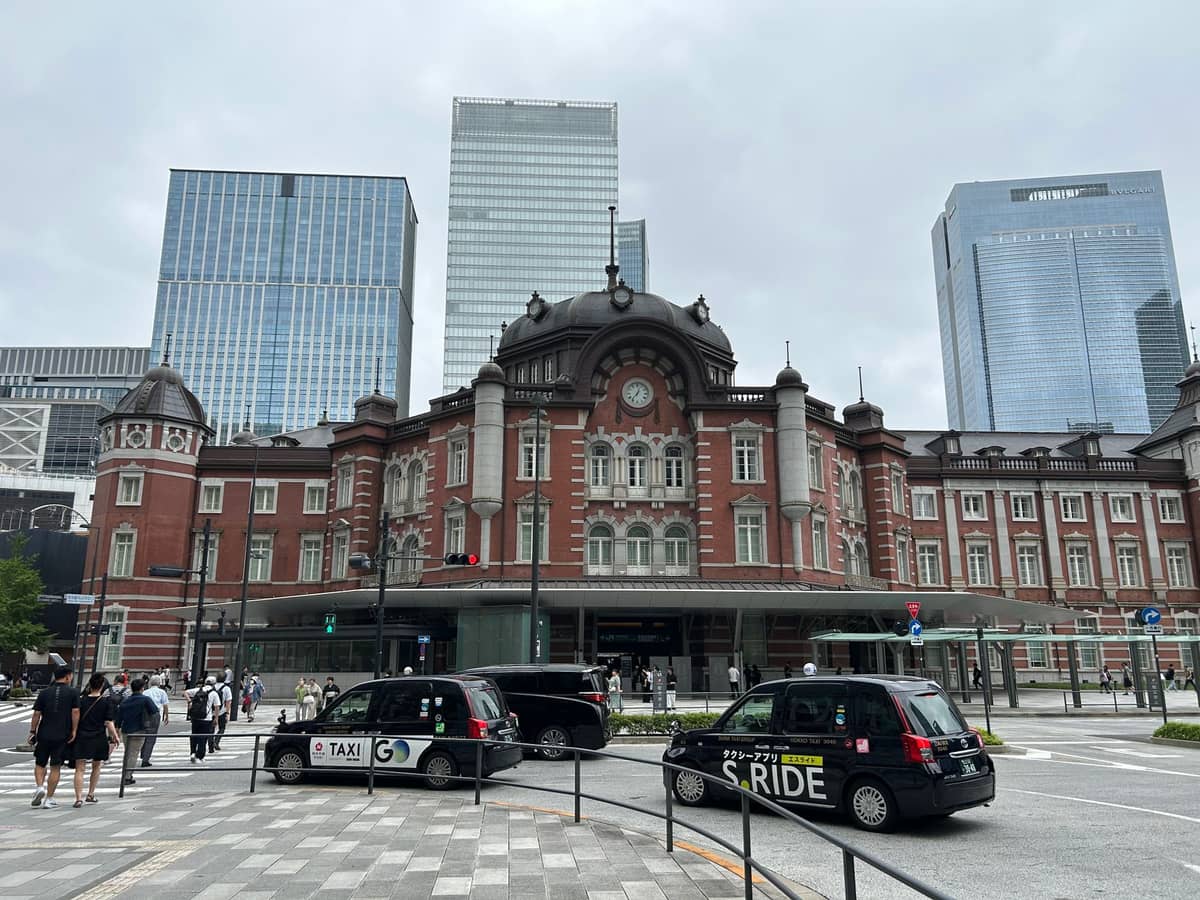
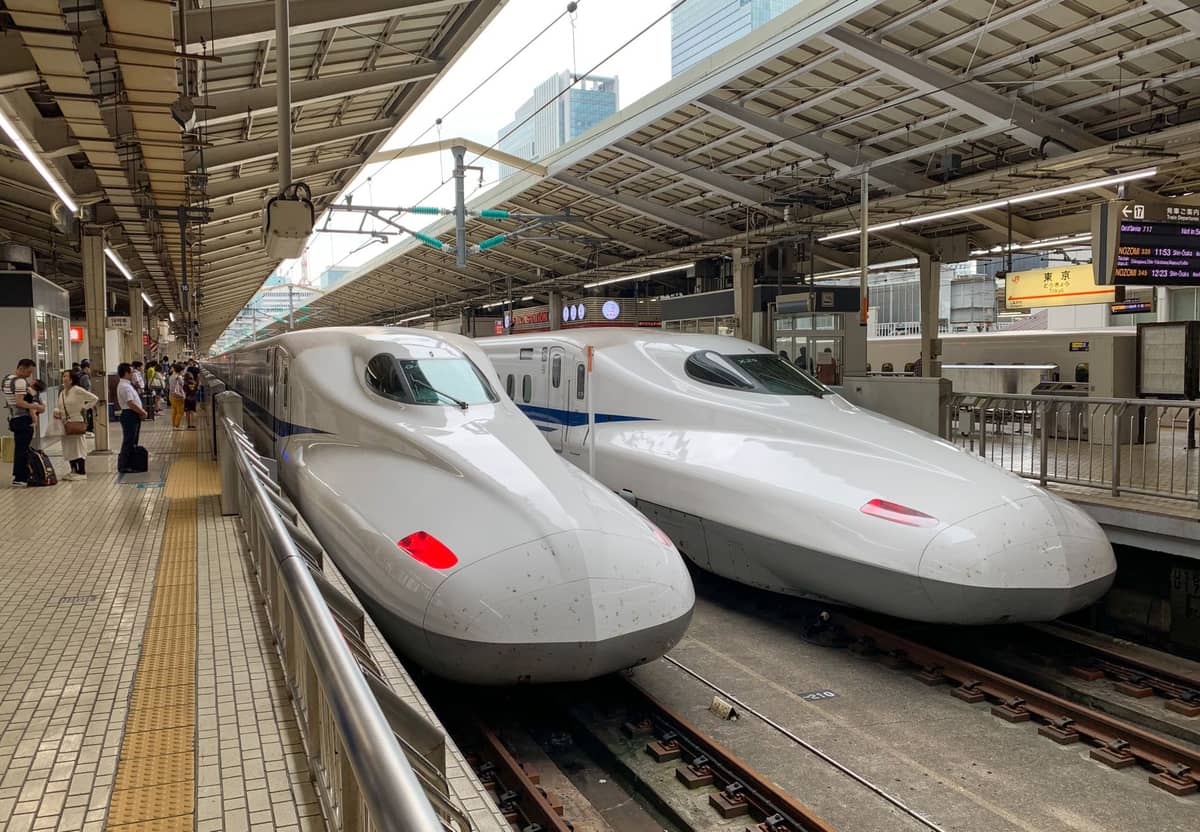
The Tokyo to Kyoto bullet train runs on the Tokaido Shinkansen, one of the world's busiest high-speed rail corridors. JR Central operates the line, and all services depart from Tokyo Station (not Shinjuku, not Shibuya). This is worth knowing before you plan your morning. The journey covers roughly 450 km and passes through some of Japan's most recognizable geography, including a clear view of Mount Fuji on a good day from the right-hand side heading west (D/E; E is the window).
If you're still deciding how long to spend in Tokyo before departing, the one-week Tokyo itinerary lays out a logical sequence. Tokyo Station itself sits in the Marunouchi district near the Imperial Palace, well connected to every major train and subway line in the city.
ℹ️ Good to know
The Tokaido Shinkansen for Tokyo–Kyoto commonly departs from Tokyo Station (JR platforms 14–19), with additional services starting from Shinagawa. Tokyo Station is typically the main boarding point and offers the highest seat availability.
Train Types: Nozomi vs Hikari vs Kodama
Three service types run the Tokyo–Kyoto corridor, and choosing between them affects your journey time, your wallet, and your JR Pass eligibility.
- Nozomi (fastest) Stops at Tokyo, Shinagawa, Shin-Yokohama, Nagoya, Kyoto, Shin-Osaka. Travel time: approximately 2h10–2h20. This is the train most travelers want, but it is NOT covered by the standard JR Pass.
- Hikari (mid-speed) Makes additional stops but still reaches Kyoto in around 2h30–2h40. Fully covered by the JR Pass at no surcharge. For most travelers, the extra 20–30 minutes is a reasonable trade-off to use a pass they've already paid for.
- Kodama (all-stops) Stops at every station and takes considerably longer — roughly 3h45 or more. Almost never the right choice for Tokyo–Kyoto unless you're specifically stopping at intermediate cities.
The common assumption that Hikari is meaningfully cheaper than Nozomi is worth correcting: the base fares for Tokyo–Kyoto are nearly identical between the two. The Nozomi express surcharge is built into the standard fare, so you don't pay more to ride it if you're buying a regular ticket. The only scenario where this distinction matters on price is if you hold a JR Pass.
Fares and Ticket Types: What You'll Actually Pay
Standard one-way fares for Tokyo to Kyoto in ordinary (non-Green Car) class break down roughly as follows. The base fare is around ¥8,360, with a Shinkansen express surcharge of approximately ¥4,960, bringing the unreserved seat total to about ¥13,320. A reserved seat in regular season runs ¥13,850–¥14,170 depending on the train and whether it's a standard or peak period. During peak travel dates — Golden Week (late April to early May), Obon (mid-August), and the New Year period — reserved fares can climb to around ¥14,570.
Green Car (the Japanese equivalent of first class) on the Nozomi between Tokyo and Kyoto can approach ¥19,000 one-way. The seats are wider, the carriages quieter, and the upper deck view (on some trains) is better — but for a two-hour journey, most travelers don't find it necessary. The practical upgrade worth paying for is a reserved ordinary seat over an unreserved one, especially if you're traveling in spring or autumn peak periods. The price gap between unreserved and reserved is only a few hundred yen, and the certainty of a guaranteed seat is worth far more than that.
⚠️ What to skip
During Golden Week, Obon, and the New Year holiday, unreserved cars on popular Nozomi departures fill to standing capacity within minutes of boarding. If you're traveling in these windows, book a reserved seat well in advance — at least two to three weeks ahead if possible.
- Unreserved seat (Jiyuseki) Around ¥13,320. No seat guarantee. Works fine on off-peak weekdays. Avoid on Friday afternoons and holiday periods.
- Reserved seat (Shiteiseki) — regular season Around ¥13,850–¥14,170. Specific seat assigned. The sensible default for most travelers.
- Reserved seat — peak season Up to approximately ¥14,570. Same seat, higher demand surcharge applied automatically.
- Green Car ¥18,000 and above. Wider seats, quieter car, more legroom. Harder to justify for a 2h15 journey.
- JR Central discount packages JR Central occasionally offers bundled packages (train + hotel) from around ¥10,960 for a one-way Tokyo–Kyoto fare. These require booking through their Japanese-language travel plan site and have date restrictions.
The JR Pass Question: Is It Worth It for This Route?
The Japan Rail Pass is a flat-fee pass covering most JR trains nationwide, sold exclusively to foreign visitors. A 7-day ordinary pass costs ¥50,000. If your trip includes Tokyo to Kyoto and back, plus significant JR travel within each city, the math can work out. But there are two things to understand clearly before buying.
First: the JR Pass does not cover Nozomi or Mizuho trains. This is not a minor footnote. Most Shinkansen services on the Tokaido line are Nozomi. If you board one with only a JR Pass, you'll be charged the full fare on the train. The solution is to use Hikari, which runs roughly once per hour and reaches Kyoto in around 2h35 — a perfectly reasonable journey time.
Second: as of 2026, JR Central introduced a dedicated supplement ticket called 'ONLY WITH JAPAN RAIL PASS' that allows JR Pass holders to ride Nozomi and Mizuho trains by paying a ¥4,960 surcharge on top of their pass. For Tokyo or Shinagawa to Kyoto, this means you can ride the fastest train for about ¥4,960 extra, which is significantly less than a full unreserved ticket. This option is worth knowing about if you're time-sensitive and already hold a pass.
✨ Pro tip
If your Japan itinerary involves only Tokyo, Kyoto, and Osaka, calculate carefully before buying a 7-day JR Pass. Two return Shinkansen trips (Tokyo–Kyoto on Hikari) plus local JR lines may approach break-even, but if your travel is concentrated in one city, buying individual tickets is often cheaper. The pass makes clear financial sense when you add day trips or routes to Hiroshima, Nara, or beyond.
For a broader look at getting around Japan, the guide to getting around Tokyo covers local transport in detail, including how to navigate Tokyo Station itself, which can be disorienting the first time.
Where to Buy Tickets and How to Book
You have four practical options for purchasing Shinkansen tickets. The right one depends on your flexibility, your pass situation, and how far ahead you're planning.
- JR Central's official English booking site The most reliable source for reserved seats on the Tokaido Shinkansen. You can select specific trains, seat positions, and pay by international credit card. Tickets can be picked up at station machines or sent as mobile tickets.
- JR Ticket Offices (Midori-no-Madoguchi) at Tokyo Station Walk-up counter service. Staff speak enough English for basic ticket transactions. Queues can be long during peak travel periods. Best for same-day or next-day bookings when online options feel uncertain.
- Self-service ticket machines Available in English at Tokyo Station. Suitable for buying unreserved tickets or picking up pre-booked tickets with a confirmation code. Not suitable for complex itineraries.
- Third-party booking platforms Sites like Japan-Guide or Ekitan provide current fare and timetable information. Some third-party platforms add booking fees; compare against the JR Central site before confirming.
One practical note on seat selection: when booking online, request seats on the right-hand side (D/E window seats heading west) for the best chance of a Mount Fuji view between Shin-Fuji and Mishima. The window is clearest in the morning on west-bound trains. Cloud cover frequently obscures the mountain between late spring and late summer, so don't build your day around it.
Practical Tips for the Journey Itself
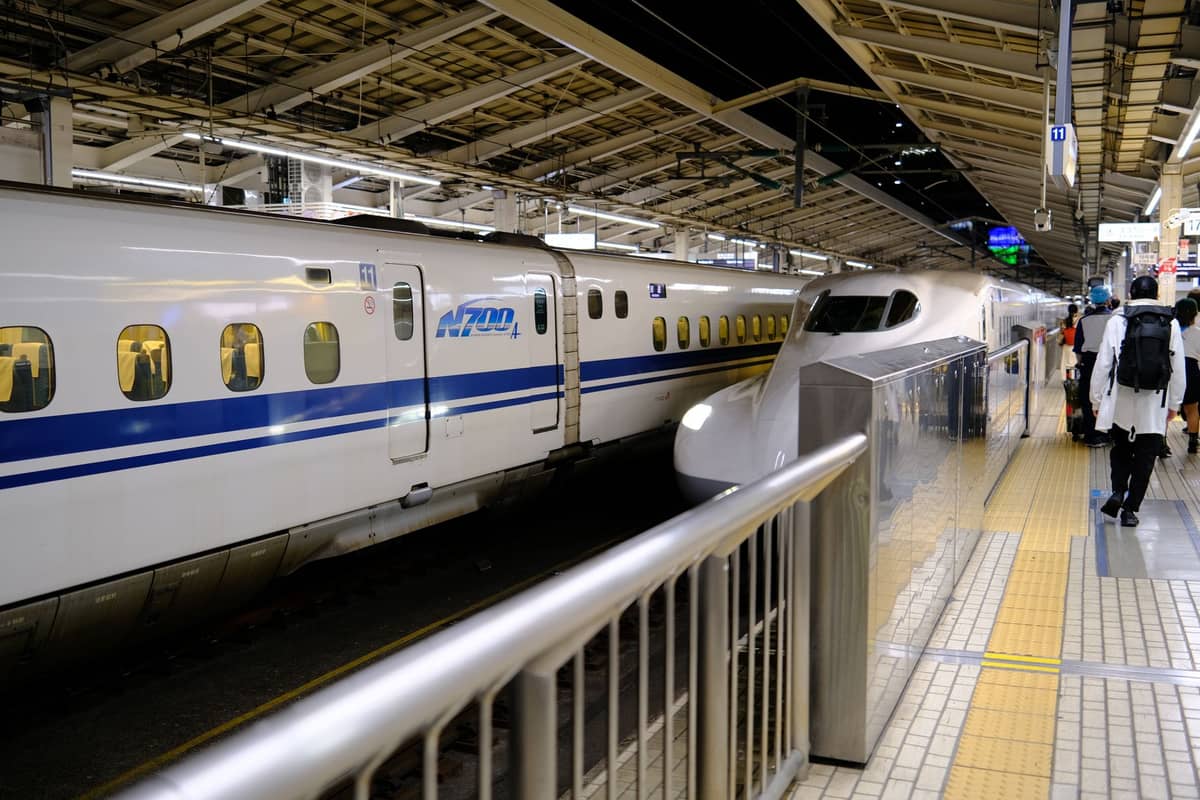
Tokyo Station can be confusing. The Shinkansen platforms (14–19 for the Tokaido line) are on a different level from the regular JR platforms and require passing through a separate Shinkansen gate using your Shinkansen ticket or pass. Arrive at least 15 minutes before departure, particularly if you're navigating the station for the first time. The station has excellent food options in its basement and ground floor — the Gransta and Ecute shopping areas stock bento boxes specifically designed to be eaten on the train, a practice called ekiben that's worth doing at least once.
Kyoto Station is large and efficient, with direct subway access to central Kyoto and bus connections to major temple districts. If you're planning to visit temples and shrines during your time there, the guide to Tokyo's best temples and shrines makes for good contrast reading — the aesthetic difference between Tokyo's surviving Edo-period sites and Kyoto's older structures is significant.
💡 Local tip
Shinkansen trains depart precisely on schedule — not 'approximately' on schedule. If the board says 10:33, the train leaves at 10:33. Platform assignments are displayed on screens above the gates and change occasionally, so confirm your platform number when you arrive rather than assuming it matches what you saw online.
If you're planning your wider Japan trip from Tokyo, the day trips from Tokyo guide covers shorter rail journeys worth building into your schedule before heading to Kyoto.
FAQ
How long does the bullet train from Tokyo to Kyoto take?
The Nozomi, the fastest service, covers Tokyo to Kyoto in approximately 2 hours 15 to 20 minutes. The Hikari, which is valid on the standard JR Pass, takes around 2 hours 30 to 40 minutes. The all-stops Kodama takes roughly 3 hours 45 minutes and is rarely the right choice for this route.
How much does the Tokyo to Kyoto Shinkansen cost?
In regular season, an unreserved seat costs around ¥13,320 and a reserved ordinary seat runs roughly ¥13,850–¥14,170. During peak periods like Golden Week and Obon, reserved seat surcharges push the price to around ¥14,570. Green Car (first class) exceeds ¥18,000. Prices are set by JR Central and are subject to change; verify current fares on their official booking site before traveling.
Can I use my Japan Rail Pass on the Tokyo to Kyoto Shinkansen?
Yes, but with an important restriction. The standard JR Pass covers Hikari and Kodama services but NOT Nozomi or Mizuho trains. As of 2026, JR Central offers a supplement ticket allowing JR Pass holders to ride Nozomi by paying an additional ¥4,960 between Tokyo or Shinagawa and Kyoto. Without that supplement, boarding a Nozomi with only a JR Pass means paying the full fare on-board.
Do I need to book a seat in advance, or can I just show up?
During off-peak weekdays, unreserved seats are generally available without advance booking. During Golden Week, Obon, the New Year period, and peak autumn foliage weekends, unreserved cars fill quickly and you may end up standing. For any travel during these windows, book a reserved seat at least two to three weeks ahead. The price difference between unreserved and reserved is only a few hundred yen, so there's little reason not to reserve.
Which side of the train should I sit on to see Mount Fuji?
Heading from Tokyo to Kyoto (westbound), sit on the right side — seats in the D or E position on your ticket. The best views appear roughly between Shin-Fuji and Mishima stations, about 40–50 minutes into the journey. Cloud cover, especially from June through August, frequently obscures the mountain. Clear sightings are most reliable in winter and early spring.