Tokyo to Osaka: Bullet Train, Bus, and Flight Options Compared
Three options connect Tokyo and Osaka: the Tokaido Shinkansen, overnight highway buses, and short-haul flights. This guide breaks down real costs, door-to-door times, and the clear pros and cons of each so you can book the right one for your trip.
Plan and book this trip
Tools from our partner Travelpayouts help you compare flights and hotels. If you book through them, we may earn a commission at no extra cost to you.
Flights
Hotels map
TL;DR
- The Nozomi Shinkansen covers Tokyo to Shin-Osaka in about 2 hours 30 minutes, with standard fares around ¥14,720 reserved — the fastest and most reliable option for most travelers.
- Highway buses take 8 to 11 hours but cost as little as ¥1,500 to ¥6,980 on budget departures, making them ideal if you can sleep on a bus.
- Flights from Haneda (HND) to Itami (ITM) are around 1 hour 15 minutes in the air, but door-to-door time often stretches to 3 to 4 hours once you add airport transfers.
- JR Pass holders can ride the Hikari Shinkansen free — but not the Nozomi. Check our guide to getting around Tokyo for rail pass strategy before you book.
- Peak season surcharges apply on Shinkansen reserved seats during Golden Week, Obon, and New Year. Book well ahead or travel unreserved.
The Tokaido Shinkansen: The Default Choice for Good Reason
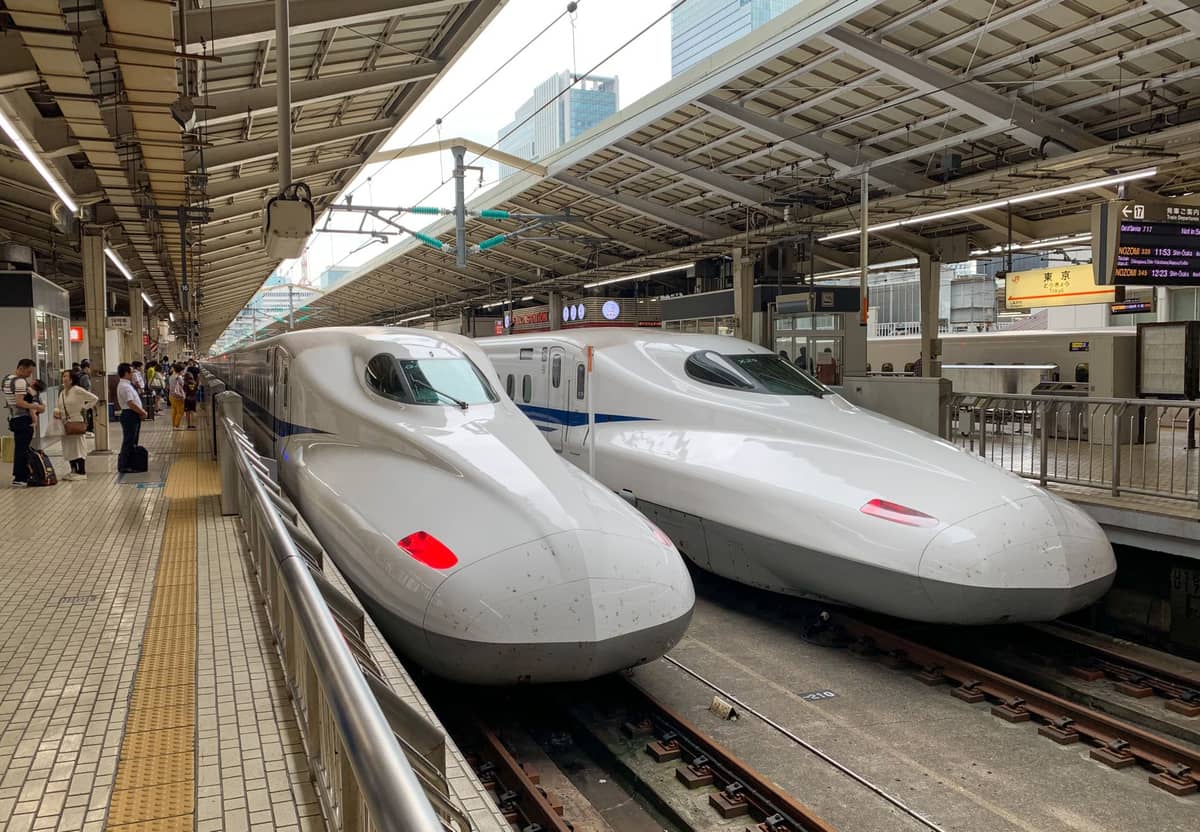
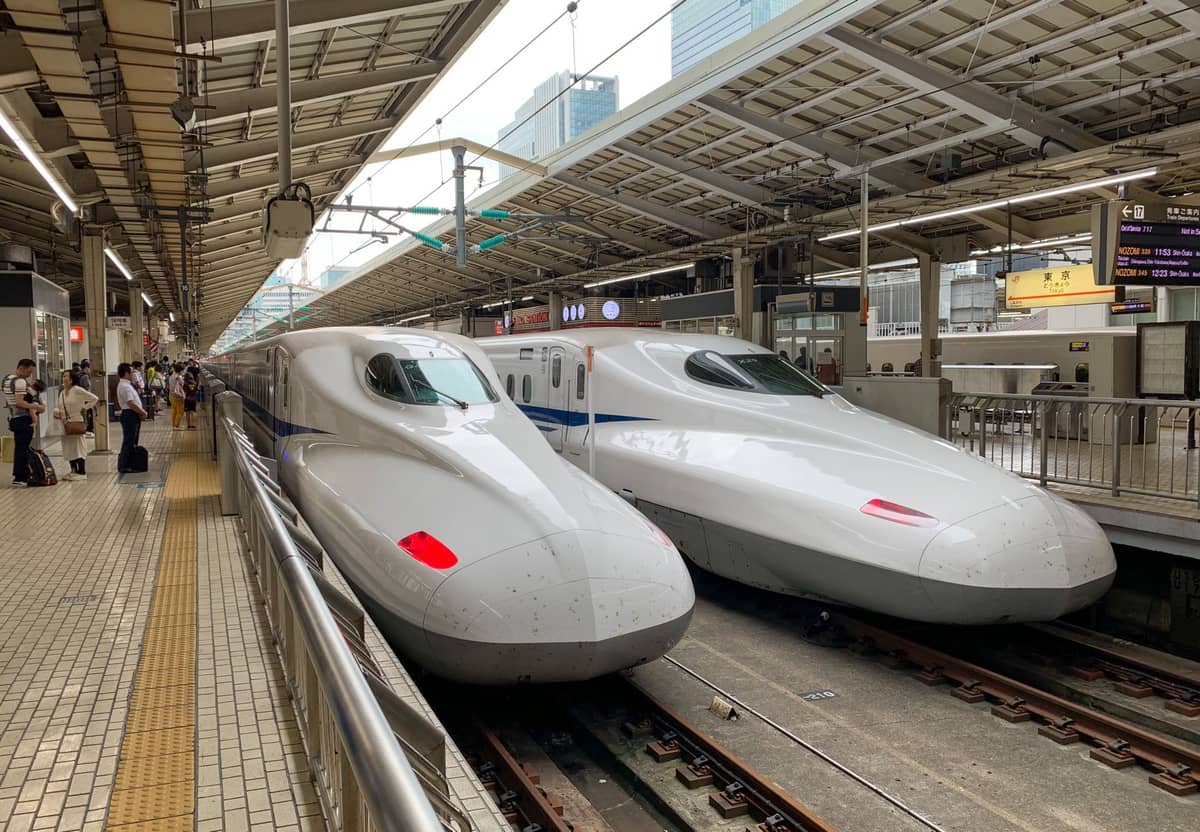
The Tokyo to Osaka corridor is one of the most heavily traveled rail routes in the world, and for most visitors, the Tokaido Shinkansen is the answer before the question is even finished. Trains depart Tokyo Station roughly every 10 to 15 minutes throughout the day, so you rarely need to plan around a single departure. The Nozomi service — the fastest type — reaches Shin-Osaka in approximately 2 hours 30 minutes. The Hikari takes closer to 3 hours, stopping at a handful of additional stations. The Kodama stops everywhere and takes around 4 hours; there is very little reason to choose it for this specific journey.
Standard one-way fares on Tokyo to Shin-Osaka break down as follows: unreserved seating runs around ¥13,870, a reserved seat in an ordinary car is approximately ¥14,720, and Green Car (first class) seats are roughly ¥19,100. These are base fares and increase modestly during peak travel periods. There are no real budget tiers within the Shinkansen itself, so if cost is your main concern, compare against buses and flights rather than hunting for Shinkansen deals — they rarely exist.
ℹ️ Good to know
JR Pass holders can ride the Hikari and Kodama Shinkansen free between Tokyo and Shin-Osaka; the Nozomi is not covered by the pass’s base fare and requires a separate supplement ticket if you choose to use it. If you have a JR Pass and value your time, take the Hikari — the 30-minute difference from the Nozomi is a reasonable trade for a zero-cost ticket.
- Nozomi Fastest at ~2 hrs 30 mins. Stops only at Shinagawa, Nagoya, Kyoto, Shin-Osaka. Not covered by JR Pass.
- Hikari Around 3 hours. Covered by JR Pass. Stops vary but include Nagoya and Kyoto — useful if you want a Kyoto detour.
- Kodama Stops at every station, takes roughly 4 hours. Only makes sense if you have a specific mid-route stop in mind.
One practical note: Shin-Osaka is not the same as Osaka Station, though they are close. Shin-Osaka is on the Midosuji subway line and connects easily to central Osaka in under 10 minutes. Most travelers bound for Namba, Shinsaibashi, or Umeda will need one subway hop from Shin-Osaka, which adds roughly ¥200 to ¥300 and about 10 minutes to the journey.
Highway Buses: The Slowest Option, Sometimes the Smartest
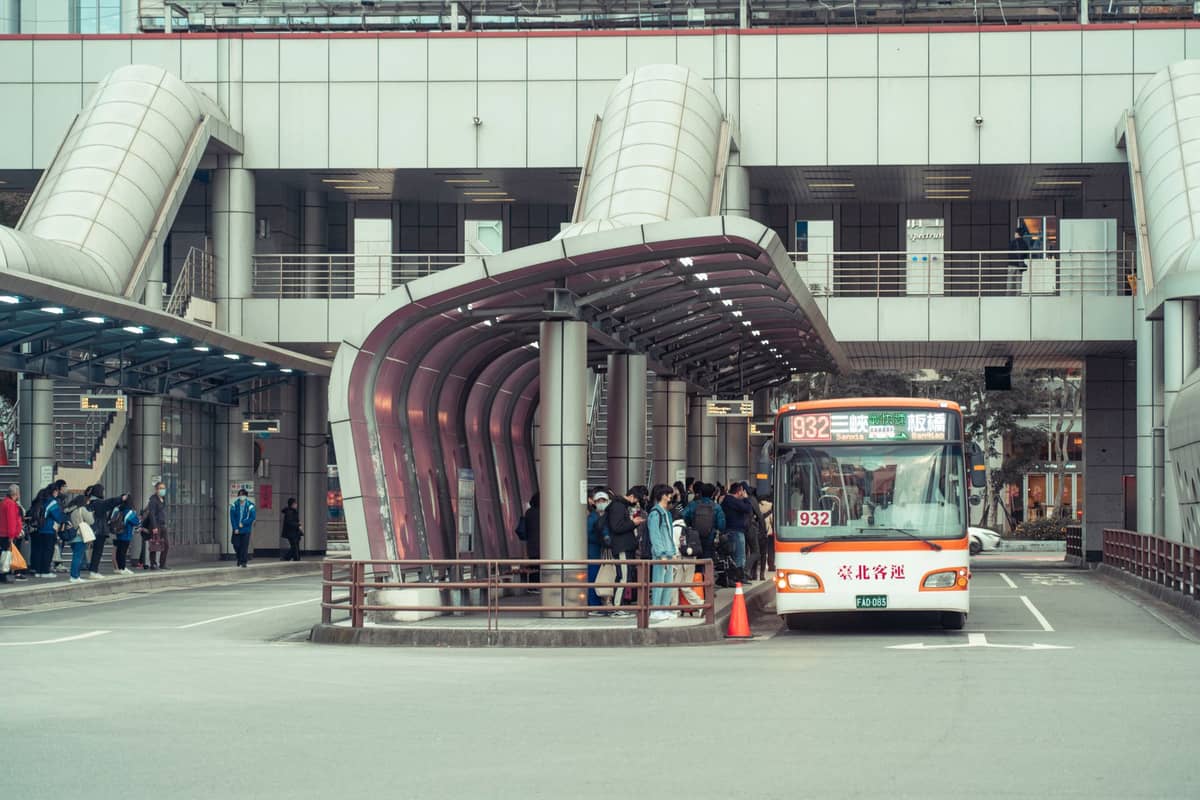
If your travel budget is tight and you are comfortable sleeping on a bus, the overnight highway bus from Tokyo to Osaka is worth serious consideration. Journey times run between 8 and 11 hours depending on the operator and route, with most night buses departing from Shinjuku or Tokyo Station in the evening and arriving in Osaka in the early morning. This effectively saves you a night's accommodation, which can reframe the value calculation entirely.
Prices vary widely. Discount operators list fares from around ¥3,000 to ¥6,980 for budget departures, while more comfortable multi-seat configurations — with wider seats, more legroom, and partition curtains — typically run ¥6,530 to ¥16,500. A ¥3,000 bus ticket is genuinely achievable on off-peak weeknight departures. Weekend and holiday buses cost significantly more, and at that point, the value proposition weakens considerably compared to a Shinkansen.
⚠️ What to skip
Bus fares on weekends and national holidays can spike to ¥10,000 or more, which overlaps with lower Shinkansen prices. Always check both before booking. A ¥14,000 Shinkansen that saves 8 hours of your trip is often the better deal once you do the math.
Day buses also operate on the Tokyo to Osaka route, but they offer almost no advantage over overnight services unless you specifically want to see the countryside. The journey still takes most of the day, the views through a bus window are not particularly dramatic, and you arrive tired. Night buses let you sleep through the inconvenience. If you are traveling with luggage, note that storage is limited on buses compared to Shinkansen overhead racks and luggage areas.
Flying: Technically Faster, Rarely Better
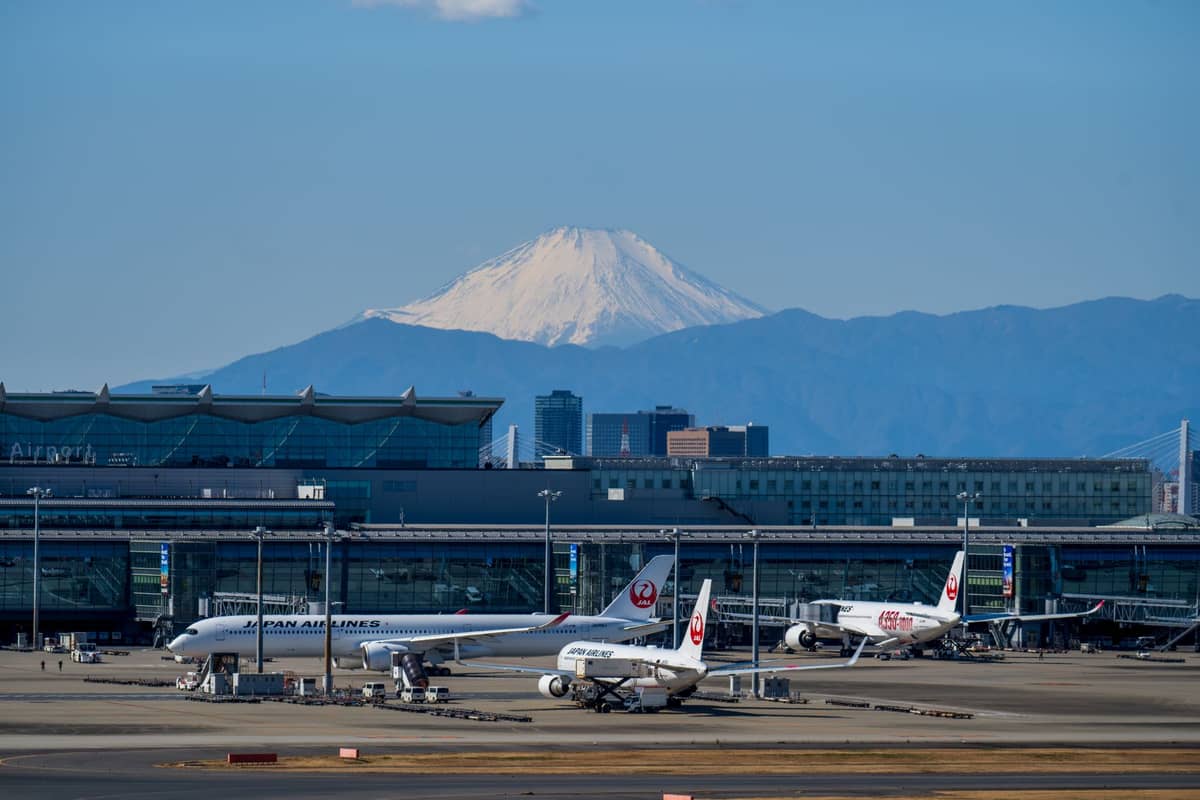
Flights from Haneda (HND) to Itami (ITM) take about 1 hour 15 minutes in the air. Fares start from around US$80 one-way on the cheapest available dates, with round trips from roughly US$130. On paper, this looks competitive. In practice, the door-to-door calculation changes everything.
Getting from central Tokyo to Haneda takes around 20 to 30 minutes and costs roughly ¥300 to ¥500 by Keikyu Line or Tokyo Monorail. Arriving about 60 minutes before departure for a domestic flight is standard. At the Osaka end, Itami is well-connected to central Osaka by limousine bus (around 25 to 40 minutes), but you are no longer near a Shinkansen station at that point. Total door-to-door time from, say, Shinjuku to central Osaka by air typically runs 3 to 4 hours. The Nozomi from Tokyo Station to Shin-Osaka takes 2 hours 30 minutes, with no security queues and no liquid restrictions.
Flying makes most sense when Shinkansen fares are not subsidized by a JR Pass and you find a genuinely low airfare, or when your starting point in Tokyo is closer to Haneda than to Tokyo Station. It can also make sense for budget travelers who dislike overnight buses but cannot stretch to the Shinkansen fare. Just be realistic about the total time commitment.
✨ Pro tip
Flights from Narita (NRT) to Kansai International Airport (KIX) look cheap on aggregator sites but add substantial transfer time at both ends. Kansai Airport sits on a man-made island about 40 minutes from central Osaka by limited express train. Factor that in before booking what appears to be a bargain fare.
Seasonal Pricing and When to Book
All three options are affected by Japanese peak travel seasons, though in different ways. The Shinkansen applies peak surcharges on reserved seats during Golden Week (late April to early May), Obon (mid-August), and the New Year period (late December to early January). These are not dramatic price hikes compared with the base fares (now around ¥13,870 unreserved and ¥14,720 reserved for Tokyo–Shin-Osaka), but trains sell out early during these windows. Unreserved cars remain available and cost slightly less, but on busy holiday trains you may be standing for portions of the journey.
Highway bus fares are more elastic and can double or triple during peak periods. Budget bus deals essentially disappear over long weekends. If your travel dates align with cherry blossom season, see Tokyo in spring for context on how crowded and expensive the entire country becomes during that window. Book buses two to four weeks in advance for the best prices. For the Shinkansen, booking opens one month before departure and popular trains fill reserved cars quickly.
Flights fluctuate on typical airline yield-management cycles. Booking four to six weeks out generally produces reasonable fares. Same-week or next-day domestic flights in Japan can be surprisingly cheap if seats are unsold, but this is unreliable as a strategy.
- Golden Week (late Apr to early May): highest demand, book Shinkansen reserved seats as early as possible
- Obon (mid-August): second most congested period, bus prices spike significantly
- New Year (Dec 28 to Jan 4): Shinkansen trains often fully reserved; unreserved queues are long
- Shoulder periods (late October, early March): fares are normal, trains are comfortable, ideal for this journey
Stopping in Kyoto: The Route's Best Side Benefit
Kyoto sits on the Tokaido Shinkansen line between Tokyo and Shin-Osaka, just around 15 minutes before the Osaka terminus. If you have any flexibility in your itinerary, breaking the journey in Kyoto costs nothing extra on an open ticket and adds access to one of Japan's most visited cities. Both the Hikari and the Nozomi stop in Kyoto. For travelers using a JR Pass, this route through Kyoto is the natural way to structure a Tokyo to Kyoto journey before continuing to Osaka — all on the same pass.
If you are planning a longer itinerary that covers both cities plus Tokyo, review the one-week Tokyo itinerary to figure out how many days to allocate to the capital before heading west. Most visitors find two to three full days in Tokyo barely enough before wanting more.
Which Option Should You Actually Take?
The Shinkansen is the right choice for the majority of travelers making the Tokyo to Osaka journey. The combination of speed, reliability, frequency, and central station locations is hard to beat. You leave from Tokyo Station or Shinagawa, arrive at Shin-Osaka, and are in central Osaka within 15 minutes of stepping off the train. No security theater, no baggage restrictions, no anxiety about weather delays.
Buses make sense for one specific traveler type: budget-conscious visitors who do not have a JR Pass, can sleep on a moving vehicle, and are traveling on a weeknight when cheap fares are available. If that is you, an overnight bus at ¥3,000 is genuinely a good deal. If you are traveling on a Friday evening in August, the bus loses its advantage quickly.
Flights work if you find a fare well below ¥10,000 one-way, you are already near Haneda, and you are not traveling with large bags. For most people most of the time, the Shinkansen wins. If you are still deciding when to make the trip, check the best time to visit Tokyo to align your journey with favorable conditions on both ends.
- Best overall: Nozomi Shinkansen ~2.5 hrs, ¥14,700 reserved, departs every 10–15 mins, no JR Pass coverage
- Best with JR Pass: Hikari Shinkansen ~3 hrs, free with pass, stops in Kyoto, runs frequently throughout the day
- Best on a tight budget: Overnight highway bus 8–11 hrs, from ~¥1,500 on off-peak weeknights, saves a night's accommodation cost
- Best if you find a deal: Haneda to Itami flight ~1 hr 15 mins flying, 3–4 hrs door-to-door, from ~¥6,000 on sale days
FAQ
How long does the bullet train from Tokyo to Osaka take?
The Nozomi Shinkansen takes approximately 2 hours 30 minutes between Tokyo Station and Shin-Osaka. The Hikari takes around 3 hours, and the Kodama stops at every station and takes about 4 hours. For most travelers, the Nozomi is the practical choice unless you have a JR Pass, which covers the Hikari but not the Nozomi.
How much does the Shinkansen from Tokyo to Osaka cost?
Standard one-way fares are approximately ¥13,870 for an unreserved seat, ¥14,720 for a reserved ordinary seat, and around ¥19,100 for Green Car. Prices increase slightly during peak holiday periods. There are no significant discount tiers within the Shinkansen system itself, so if budget is the priority, compare buses and flights instead.
Is flying from Tokyo to Osaka faster than the Shinkansen?
Not on a door-to-door basis for most travelers. The flight itself is about 1 hour 15 minutes, but getting to and from airports adds significant time. Total door-to-door from central Tokyo to central Osaka is typically 3 to 4 hours by air — comparable to or longer than the Shinkansen, which runs from central station to central station.
Can I use a JR Pass on the Tokyo to Osaka Shinkansen?
Yes, but only on the Hikari and Kodama services by default, not the Nozomi, unless you purchase a separate Nozomi/Mizuho supplement ticket. The Hikari takes around 3 hours and runs frequently, so in practice the difference is manageable. JR Pass holders can make seat reservations in advance at no extra cost, which is recommended during peak travel periods.
Are overnight buses from Tokyo to Osaka worth it?
For budget travelers on off-peak dates, yes. Fares can be as low as ¥1,500 to ¥3,000 on weeknight departures, and an overnight journey effectively saves the cost of a night's accommodation. However, weekend and holiday bus fares can rise to ¥10,000 or more, at which point the Shinkansen becomes more competitive once you factor in the 8 hours you save.