Schwabing stretches north from the Siegestor triumphal arch along Leopoldstraße into one of Munich's most desirable residential quarters. Once the city's creative heartland, it blends grand 19th-century architecture, a dense café and bar scene, and direct access to the Englischer Garten.
Schwabing is where Munich's artistic and intellectual identity was forged around 1900, and the district has never quite let go of that reputation. Today it is a well-heeled university quarter of broad tree-lined boulevards, Jugendstil apartment facades, and a café culture that runs from morning espresso to late-night bars without missing a beat.
Orientation
Schwabing sits in northern Munich, directly above Maxvorstadt and connected to it at the Siegestor, the 19th-century triumphal arch that marks the district's southern gateway where Ludwigstraße becomes Leopoldstraße. From there the neighborhood extends northward along that central spine for roughly three kilometers, ending at the Mittlerer Ring To the east, the district opens onto the Englischer Garten. To the west, the boundary runs loosely along Friedrichstraße and Mainzer Straße.
Administratively, what most people call Schwabing falls across two boroughs: Schwabing-West (Stadtbezirk 4) covers the western residential streets, while Schwabing-Freimann (Stadtbezirk 12) takes in the eastern side toward the park and continues north. For visitors, this split is irrelevant in practice. The area functions as a coherent neighborhood with Leopoldstraße as its axis, Münchner Freiheit as its social center, and Hohenzollernstraße as its most rewarding cross-street for day-to-day life.
Schwabing is positioned between two of Munich's most visited areas. To the south, Maxvorstadt holds the city's major museum cluster, including the Alte Pinakothek and the Lenbachhaus. To the east, the Englischer Garten runs for kilometers along the Isar. This positioning makes Schwabing one of the most logistically convenient residential bases in Munich without being in the thick of the tourist core.
Character & Atmosphere
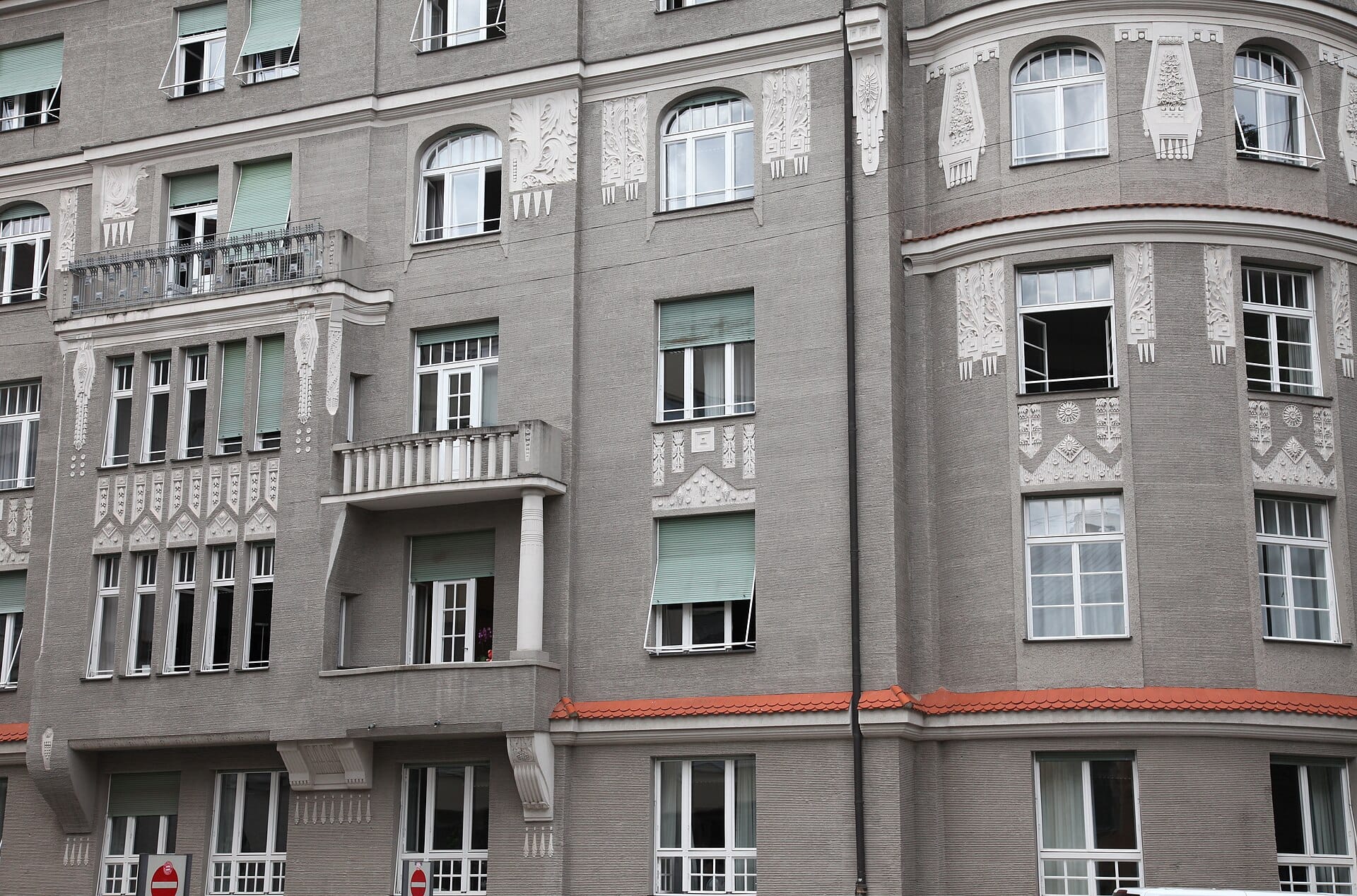
Mornings in Schwabing have a particular quality. Around Münchner Freiheit and along Hohenzollernstraße, bakeries and independent cafés fill with regulars before 8am. The light on a clear day catches the stucco facades of the Jugendstil apartment blocks, picking out the ornamental ironwork and carved details that give the streets their distinctive 19th-century texture. This is a neighborhood where people actually live, and the morning rhythm reflects that: dog walkers, parents with pushchairs, students cycling south toward the university.
By midday, Leopoldstraße shifts register. It is a wide, Parisian-style boulevard and was built to impress, lined with café terraces that fill in good weather. The street can feel more performative than the quieter residential lanes to the west, like Haimhauserstraße or Kaulbachstraße, where the residential character is more pronounced and foot traffic drops to almost nothing. This contrast is worth noting: Leopoldstraße is Schwabing's public face, but the streets behind it are the neighborhood's actual character.
After dark, the area around Münchner Freiheit and Feilitzschstraße becomes one of Munich's more active going-out zones, with a mix of wine bars, cocktail bars, and traditional Bavarian Wirtschaften. It is not the city's most intense nightlife district — that distinction belongs more to Glockenbachviertel to the south — but it is lively without being raucous. The crowd skews toward students, young professionals, and older residents who have lived here long enough to have a regular table somewhere.
💡 Local tip
If you want the café-boulevard experience without the crowds, head to Hohenzollernstraße rather than Leopoldstraße. The street runs east-west through the middle of the neighborhood and has a denser concentration of independent shops, bakeries, and quieter places to sit.
History & Identity
Schwabing was an independent town that received city rights in 1886 and was absorbed into Munich in 1890. By that point it had already developed a reputation as a place where artists, writers, and intellectuals lived cheaply on its outskirts. In the two decades around 1900, during the Wilhelmine and early Weimar periods, the area became genuinely significant in European cultural history. Wassily Kandinsky and Paul Klee were based here. The writer Frank Wedekind lived here. The circle around the poet Stefan George passed through. The concentration of creative energy in a small number of streets around the turn of the century was real, not retrospective myth.
What remains from that era is largely architectural. The Jugendstil apartment blocks — Munich's version of Art Nouveau — give the streets their coherent visual character. Many of the buildings date from the 1890s to the 1910s, and unlike some other Munich districts, Schwabing emerged from World War Two relatively intact. Walking along Kaulbachstraße or through the residential blocks west of Leopoldstraße, you can read the ambition of that late-19th-century building campaign in the proportions of the facades, the height of the ceilings behind the windows, the quality of the entranceways.
Today the bohemian reputation has faded in sociological terms — rents are among the highest in Munich — but the university presence keeps the neighborhood younger and more intellectually active than many comparable upmarket districts. Ludwig Maximilian University and the Technical University of Munich both sit on Schwabing's southern edge, and the student population flows northward into the neighborhood's cafés and bars throughout the academic year.
What to See & Do
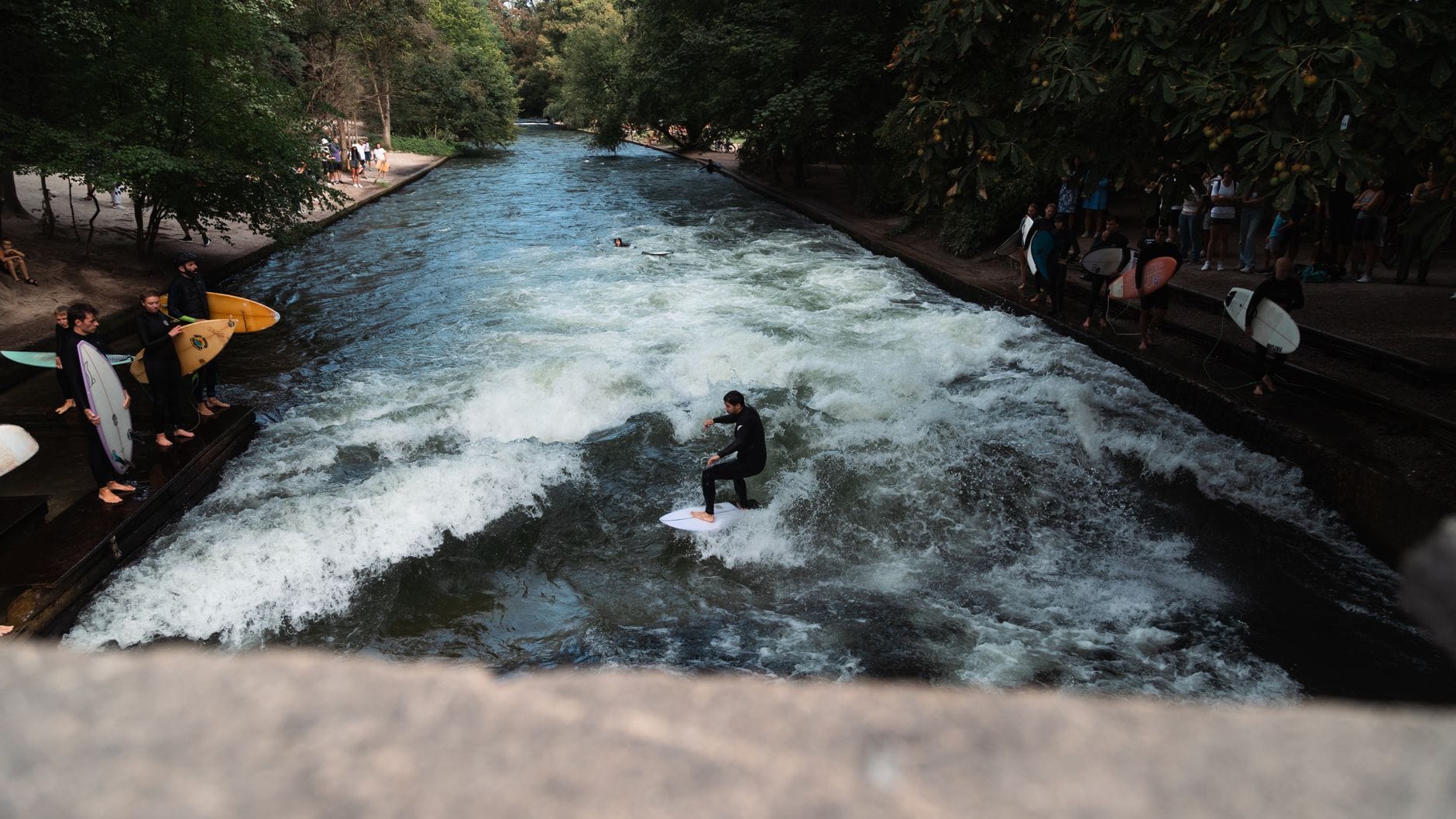
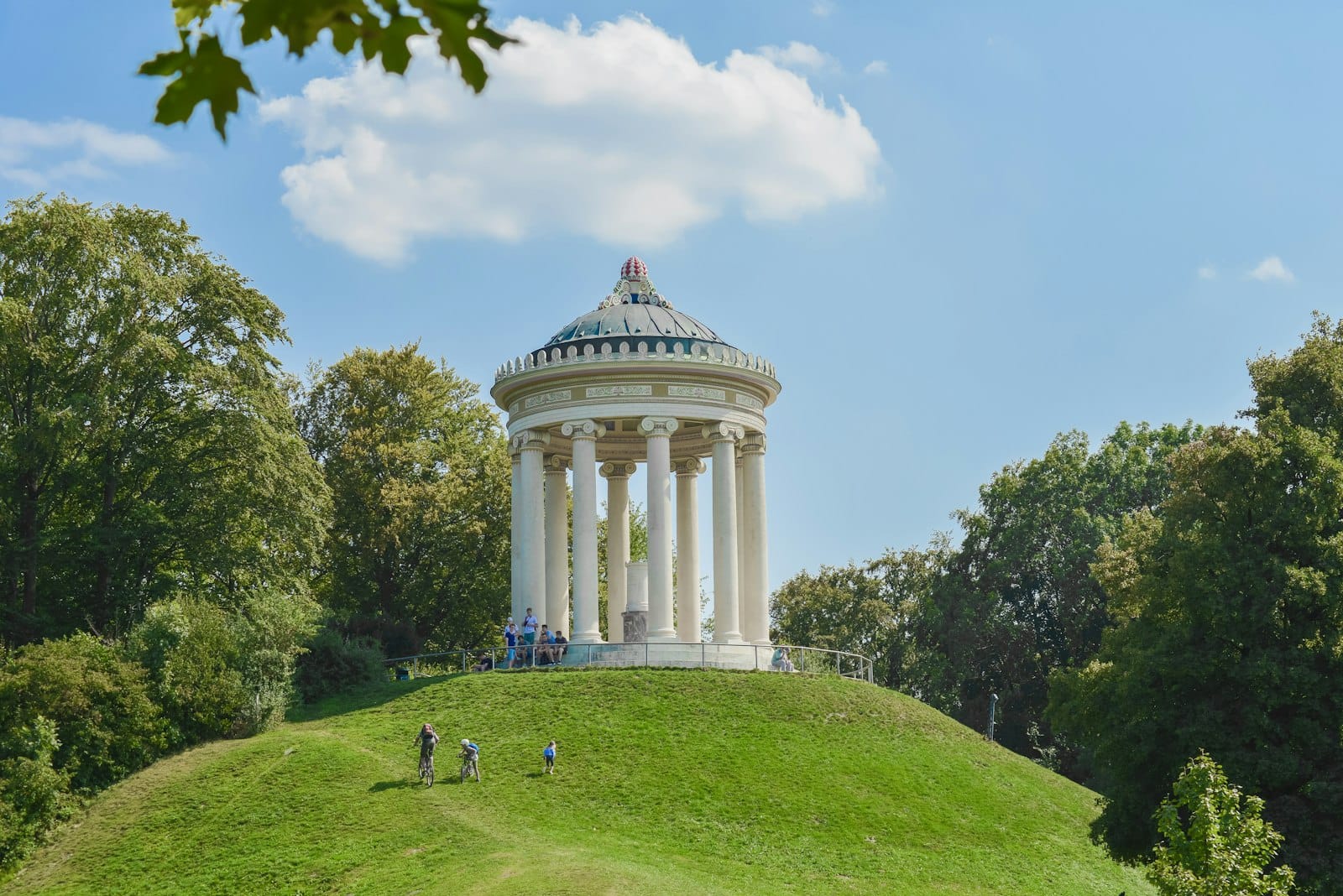
The most immediate draw is the Englischer Garten, which runs along Schwabing's entire eastern side. At around 3.7 square kilometers it is slightly larger in area than New York's Central Park, and the sections closest to Schwabing, around the Kleinhesseloher See lake and the Chinese Tower beer garden, are among the most used and most pleasant. On summer afternoons the Eisbach canal that runs along the park's western edge draws crowds to watch — and attempt — surfing at its artificial standing wave.
The Siegestor at the district's southern entrance is worth pausing at rather than walking straight past. Built in 1852 in imitation of Rome's Arch of Constantine, it was badly damaged in World War Two and rebuilt with a deliberate incompleteness as a reminder of the war — an inscription on the south face reads 'Dedicated to victory, destroyed by war, urging peace.' From here, Ludwigstraße stretches south through Maxvorstadt toward the Feldherrnhalle and Odeonsplatz, giving a strong sense of Munich's 19th-century urban planning ambitions in a single glance.
The museum cluster of Maxvorstadt is a ten-minute walk south from the Siegestor. This means the Alte Pinakothek, the Pinakothek der Moderne, the Lenbachhaus with its major collection of Kandinsky and the Blue Rider group, and the NS-Dokumentationszentrum are all accessible on foot from Schwabing without needing any transit.
Leopoldstraße boulevard: wide café terraces, street life, and the route FC Bayern fans use for victory celebrations
Englischer Garten: beer gardens, the Kleinhesseloher See, and the famous Eisbach surfing wave
Siegestor: the triumphal arch marking the boundary between Schwabing and Maxvorstadt
Hohenzollernstraße: independent shops, bookshops, and one of Munich's better street-level retail strips
Münchner Freiheit square: the neighborhood's social hub, with market stalls and café terraces
ℹ️ Good to know
Schwabing borders Maxvorstadt along Siegestor, which means the Kunstareal museum district is walkable from any point in southern Schwabing. If you are staying in the neighborhood, factor in an afternoon in the museums — they are closer than they appear on most city maps.
Eating & Drinking
Schwabing's food scene reflects its dual character: there are places that have been feeding students cheaply for decades alongside considerably more expensive restaurants catering to the area's well-off residents. The mid-range is where the neighborhood is strongest, particularly for cafés, bistros, and Italian-influenced cooking.
Leopoldstraße itself skews toward terrace cafés and casual dining with a focus on visibility rather than food quality — it is a place to watch people and drink coffee, and the food is largely incidental. The better eating is found on the cross-streets. Feilitzschstraße, running east from Münchner Freiheit, has a good concentration of independent restaurants. Hohenzollernstraße rewards walking its full length for bakeries, a decent market hall section, and a handful of wine bars that open early and close late.
Beer culture is present but not dominant. Schwabing has traditional Bavarian Wirtschaften — unpretentious rooms serving Brotzeit platters and half-liters of Helles — alongside wine bars, cocktail spots, and the terrace beer gardens along the Englischer Garten edge. For a full Bavarian beer garden experience, the Chinese Tower in the Englischer Garten is a five-minute walk from the eastern side of the neighborhood and seats around 7,000–7,500 people.
For a broader picture of where and what to eat across Munich, the where to eat in Munich guide covers the city's food scene by neighborhood and cuisine type. Schwabing's cafés and Bavarian cooking also sit within the context of the city's wider Bavarian food traditions — Weißwurst, Obatzda, and Brezn are as available here as anywhere.
Getting There & Around
Schwabing is one of Munich's best-served districts for public transit. The U3 and U6 U-Bahn lines run directly under Leopoldstraße, with stops at Universität (southern edge), Giselastraße (mid-Schwabing), and Münchner Freiheit (northern center). From Münchner Freiheit, it is around eight minutes by U-Bahn to Marienplatz in the Altstadt, which makes the neighborhood genuinely central despite its northern position.
Multiple bus and tram routes serve Münchner Freiheit, which functions as a local interchange. Trams run east toward Bogenhausen and west toward Maxvorstadt and Schwabing-West. For visitors arriving from Munich Hauptbahnhof, the U3 or U6 from Odeonsplatz takes approximately ten minutes to Münchner Freiheit with no changes required.
Cycling is practical throughout Schwabing. The streets are flat, many have dedicated bike lanes, and the Englischer Garten's internal paths offer car-free routes south toward the city center and the Isar river beyond. Munich's public bike-share system operates across the neighborhood. For a full overview of cycling logistics in the city, the Munich cycling guide covers routes and rental options.
Walking from Schwabing to the Altstadt takes around 25-30 minutes at a comfortable pace, passing through Maxvorstadt and down Ludwigstraße past the Siegestor. For full transit orientation across Munich, the getting around Munich guide covers the MVV network, ticketing, and practical advice.
⚠️ What to skip
Leopoldstraße can be noisy on weekend nights, particularly between Münchner Freiheit and the Siegestor. If you are sensitive to street noise, look for accommodation on the quieter side streets west of the boulevard rather than directly on it.
Where to Stay
Schwabing is a good base for travelers who want to be close to the Englischer Garten and the Maxvorstadt museums without paying the premium prices of the Altstadt or the inconvenience of staying further out. The hotel stock is more limited than in the city center, with a mix of mid-range business hotels, boutique options, and apartment rentals occupying converted residential buildings.
The best positioning within Schwabing for most visitors is the zone between Münchner Freiheit and Giselastraße, within three or four blocks of Leopoldstraße. This puts you within a short walk of transit, the park, and the neighborhood's main eating and drinking options, while being far enough from the Altstadt tourist core that prices are noticeably lower.
Schwabing suits independent travelers, those combining city sightseeing with time in the park, and anyone spending significant time at the Maxvorstadt museums or the university. It is less well-suited to first-time visitors who want to be within walking distance of the Marienplatz or the Hofbräuhaus. For a full comparison of Munich's accommodation zones, the where to stay in Munich guide maps out the tradeoffs by neighborhood.
Is Schwabing Right for You?
Schwabing works well for a certain kind of traveler: someone who wants a residential neighborhood with good transit, strong café culture, and proximity to green space, without needing to be in the center of everything. It is not a neighborhood with a single unmissable anchor attraction — the Englischer Garten is technically adjacent rather than within it, and the best museums are a few blocks south in Maxvorstadt.
The area's historical reputation as a bohemian artists' quarter is more useful as context than as a description of what you will find on the street today. The rents are high, the residents are affluent, and the creative scene that made the name has long since dispersed to cheaper parts of the city. What remains is a very pleasant, architecturally handsome neighborhood with good food, reliable transit, and a street life that actually involves local people going about their day.
For travelers trying to decide between Schwabing and nearby alternatives: Maxvorstadt is better if museum access is the priority; Haidhausen across the Isar has a more mixed and less polished feel; Glockenbachviertel to the south is the better choice for nightlife and a younger social scene.
TL;DR
Schwabing is a well-connected, architecturally distinguished northern Munich neighborhood, ideal for travelers who want residential character over tourist infrastructure.
The U3/U6 lines make Marienplatz under ten minutes away, and the Englischer Garten is on the doorstep — two significant practical advantages.
The café and bar scene is strong, particularly on Hohenzollernstraße and around Münchner Freiheit; Leopoldstraße is more show than substance for eating.
Best suited to independent travelers, couples, and anyone spending time at the Maxvorstadt museums or the Englischer Garten.
Not the right choice for first-timers who want to be in the center of the Altstadt action, or for travelers on a tight budget — Schwabing is an upmarket neighborhood with upmarket prices.
Three days is enough time to cover Munich's historic core, its great palace estates, world-class museums, and one excellent day trip. This itinerary structures each day for maximum efficiency, with practical advice on what to skip, what to prioritize, and how to get around without wasting time.
Bavarian cuisine is one of the most distinctive regional food cultures in Europe, and Munich is its undisputed home. This guide covers the essential dishes, realistic prices, where to find authentic food, seasonal tips, and practical advice on avoiding tourist traps.
Munich has more than 80 museums, ranging from one of the world's largest science institutions to intimate Art Nouveau villas. This guide covers the 18 best, organized by theme, with practical advice on tickets, free entry days, and how long to spend at each.
Munich rewards visitors in every season, but the right time depends entirely on what you want from the trip. This guide breaks down weather, crowd patterns, hotel prices, and major events month by month so you can make an informed decision before you book.
Munich sits at the center of one of Europe's most rewarding regions for day trips. Within two hours of the city you can reach fairy-tale castles, a sobering memorial site, a foreign capital, and medieval old towns. This guide covers the best options, how to get there cheaply, what to expect, and when to go.
Munich has a reputation for being expensive, but the city rewards those who know where to look. From vast royal parks and free Baroque churches to BMW showrooms and €1 museum Sundays, there is more to experience here without paying full price than most visitors realize.
Munich has one of Europe's most comprehensive public transport networks, covering the entire city and its suburbs through a single ticketing system. This guide breaks down every option, from the S-Bahn airport connection to cycling the Isar, so you can move around Munich with confidence.
Munich consistently ranks as Germany's safest large city, with violent crime against tourists being genuinely rare. But that does not mean you can be complacent. This guide breaks down the real risks, the neighborhoods to know, seasonal crime patterns, and practical safety tips that will help you travel smarter.
The 1972 Munich Olympics were supposed to redefine Germany's image on the world stage. They did, but not in the way anyone intended. This guide covers the full story: the groundbreaking design, the athletic records, the tragedy of September 5th, and how Olympiapark stands today as both a leisure destination and a site of memory.
Munich Airport (MUC) is one of Europe's busy hubs, serving over 1,100 daily flights across two main terminals. This guide covers everything from reading the terminal map and making connections to catching the S-Bahn into Munich city center in under 40 minutes.
Munich was the birthplace of the Nazi movement and home to some of the most significant sites of 20th-century German history. This guide covers the essential locations, how to reach them, what to expect, and how to approach them with the seriousness they deserve.
Munich hosts some of Germany's most celebrated Christmas markets, from the iconic Münchner Christkindlmarkt on Marienplatz to a dozen smaller themed Weihnachtsmärkte spread across the city. This guide covers every major market, what to eat and drink, how to avoid the worst crowds, and what first-timers consistently get wrong.
The Munich City Pass bundles free entry to 40+ attractions with optional public transport into one prepaid card. But at up to €113 per person for five days, it only pays off under specific conditions. This guide breaks down exactly who benefits, how to calculate your savings, and when you're better off paying as you go.
Munich has roughly 1,200 km of bike paths, flat terrain through the city center, and landmark-packed corridors along the Isar and English Garden. This guide covers the best cycling routes, where to rent a bike, what the rules actually say, and when to go.
The Dachau Concentration Camp Memorial Site is one of the most important historical sites in Germany, located just over 20 km northwest of Munich. This guide covers exactly how to get there, what you will find on site, how long to allow, and how to prepare for a visit that demands both practical planning and emotional readiness.
Munich rewards those who look beyond Marienplatz. From a Rococo theatre tucked inside a royal palace to a Baroque beer garden in a former deer park, these lesser-known spots reveal a richer, quieter side of Bavaria's capital.
Summer transforms Munich into one of Europe's most enjoyable cities. From riverside parks and open-air festivals to world-class opera and Alpine day trips, this guide covers everything you need to make the most of June, July, and August in Bavaria's capital.
Munich (München) competes confidently with Europe's established luxury destinations. From storied 5-star hotels steps from Marienplatz to Michelin-starred kitchens and world-class cultural institutions, this guide covers everything you need to plan a genuinely high-end stay, including when to book, what to skip, and how much to budget.
Munich (München) offers far more after dark than beer halls and Oktoberfest. From techno clubs in Werksviertel-Mitte to jazz in Glockenbachviertel and cocktail bars in Schwabing, this guide covers every facet of the city's nightlife scene, with practical advice on prices, transport, and where to go depending on your taste.
Munich Oktoberfest is the world's largest folk festival, drawing nearly 7 million visitors to the Theresienwiese each year. This guide covers dates, beer tent strategy, costs, transport, dress codes, and the practical details that separate a great Wiesn from a chaotic one.
Munich (München) has a reputation as one of Germany's priciest cities, but a well-planned trip can cost far less than you'd expect. This guide breaks down realistic daily budgets, the best free and low-cost attractions, transport savings, and the key timing decisions that will make or break your spending.
Munich (München) offers one of Germany's most diverse retail landscapes, from a 2-kilometer pedestrian shopping mile to Europe-class luxury streets, historic food markets, and independent neighborhood boutiques. This guide breaks down every district, market, and Bavarian buy worth your time and money.
The Munich to Frankfurt corridor is one of Germany's most traveled routes, and you have four real options: train, flight, bus, or car. This guide breaks down journey times, realistic costs, seasonal factors, and which mode of transport actually makes sense for your trip.
Neuschwanstein Castle is one of Bavaria's most iconic sights, and Munich is the natural base for visiting it. This guide covers every transport option, ticket logistics, seasonal considerations, and practical tips for making the most of your day trip from Munich to Neuschwanstein.
The Munich to Prague train is one of central Europe's great cross-border journeys, connecting Bavaria's capital with Bohemia's in around 5.5 hours. This guide covers journey times, fares, booking strategy, route options, and practical tips for making the trip as smooth as possible.
Salzburg sits just 150 km from Munich and is one of the most rewarding day trips in Central Europe. This guide covers every practical detail: which train to take, how to save money with the Bayern Ticket, whether driving makes sense, and how to spend your time in Mozart's birthplace.
The Munich to Vienna train route is one of Central Europe's great rail journeys, covering around 355 km in roughly 4 to 4.5 hours. This guide covers every operator, ticket strategy, and practical detail you need to get from München Hauptbahnhof to Wien Hauptbahnhof without overpaying or getting caught out.
Munich sits about 50 km north of the Alps, and on a clear day, the payoff from its towers and hilltops is extraordinary. This guide covers every worthwhile viewpoint in the city, from free park hills to paid observation decks, with clear-eyed guidance on what's worth the climb and what to skip.
Munich is one of Europe's most underrated family destinations. From the hands-on Deutsches Museum to the sprawling Englischer Garten, the city offers a remarkable range of activities for children of all ages, many of them free or heavily discounted. This guide covers the best family attractions, money-saving strategies, seasonal planning, and logistics to make your trip run smoothly.
Munich rewards couples with an unexpectedly rich mix of romantic experiences: palace parks, candlelit beer halls, canal walks, and winter butterfly gardens. This guide covers the best things to do in Munich for couples across every season and budget, from free afternoon strolls to genuinely memorable evenings.
Munich (München) packs royal palaces, world-class museums, beer halls, sprawling parks, and one of Europe's great food markets into a compact, walkable city. This guide breaks down the best things to do in Munich by category, with real prices, seasonal advice, and practical guidance on what is worth your time.
Munich's dining scene runs deeper than Weißwurst and pretzels. This guide covers the best restaurants in Munich across every budget and neighborhood, from century-old beer halls to modern fine dining, with practical tips on reservations, prices, and where locals actually eat.
Choosing where to stay in Munich shapes your entire trip. This guide breaks down every major neighborhood by price, atmosphere, and proximity to key attractions, so you can book with confidence whether you're here for Oktoberfest, a city break, or a business trip.