Getting Around Munich: The Complete Transport Guide
Munich has one of Europe's most comprehensive public transport networks, covering the entire city and its suburbs through a single ticketing system. This guide breaks down every option, from the S-Bahn airport connection to cycling the Isar, so you can move around Munich with confidence.
Tickets & tours
Live prices and dates from our booking partner. If you book, we may earn a commission at no extra cost to you.
TL;DR
- Munich's public transport (MVV) covers U-Bahn, S-Bahn, tram, and bus on one unified ticket system.
- The S1 and S8 S-Bahn lines connect Munich Airport (MUC) to the city centre in around 35-45 minutes. Always buy a multi-zone ticket — the airport sits outside Zone M and standard city tickets do not cover it.
- Validate your ticket before boarding. Inspectors are routine and the on-the-spot fine is €60.
- Most of central Munich is walkable, and the city's cycling infrastructure is excellent. For attractions spread across districts, check out the Munich City Pass for unlimited transit and museum entry.
- U-Bahn trains do not run 24 hours. There is a service gap on most lines between roughly 01:00 and 04:00 on weeknights.
Understanding the MVV: Munich's Unified Transport Network
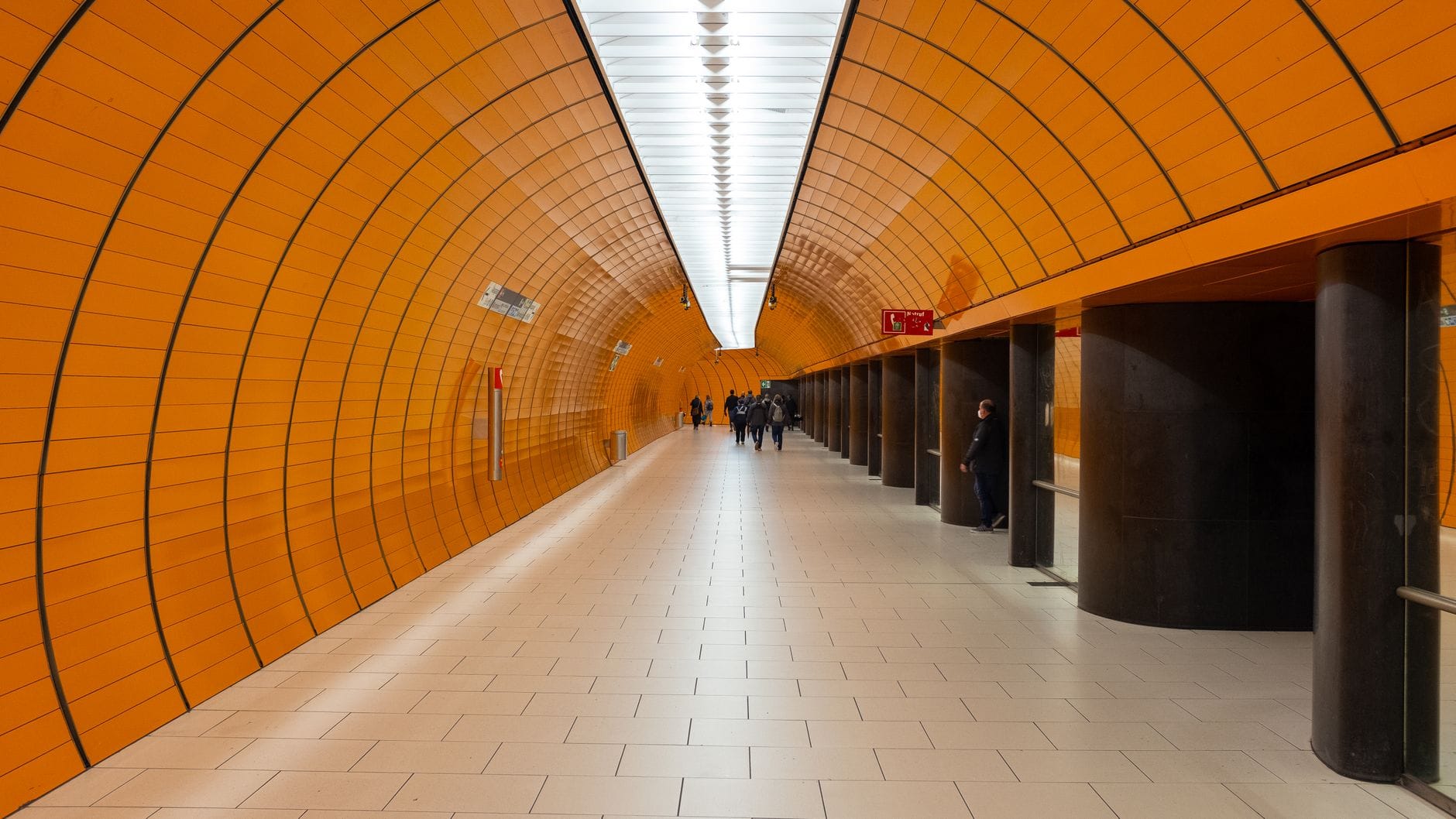
Getting around Munich starts with understanding the MVV (Münchner Verkehrs- und Tarifverbund), the transport authority that coordinates every regular mode of public transit in the greater Munich area. The key practical point: one ticket works on all of them, U-Bahn, S-Bahn, tram, and bus, as long as you are travelling within the correct zones. You do not need to buy separate tickets for each mode.
The network is operated jointly by two bodies. MVV manages fares and coordination across the region. MVG (Münchner Verkehrsgesellschaft) operates the U-Bahn, trams, and city buses day to day. The S-Bahn is operated by Deutsche Bahn but uses MVV ticketing within the network. For route planning and mobile tickets, the MVV app and the MVG Fahrinfo app both work well and offer English-language interfaces.
⚠️ What to skip
Tickets must be validated (stamped) before you board, using the blue machines at platforms or on buses and trams. There is no barrier system on most Munich transit. Plainclothes inspectors check regularly, and a fare-dodging fine starts at €60, issued on the spot with no exceptions for tourists.
MVV fares are zone-based. The inner city falls within Zone M, and zones extend outward to Zone 6 covering the outer metropolitan area. Munich Airport (MUC) sits in Zone 5, roughly 28-30 km northeast of Marienplatz in Freising municipality. This is why a standard single city ticket is not enough for airport travel. Always check the zone map before buying, especially for day-trip destinations.
The Four Modes: U-Bahn, S-Bahn, Tram, and Bus
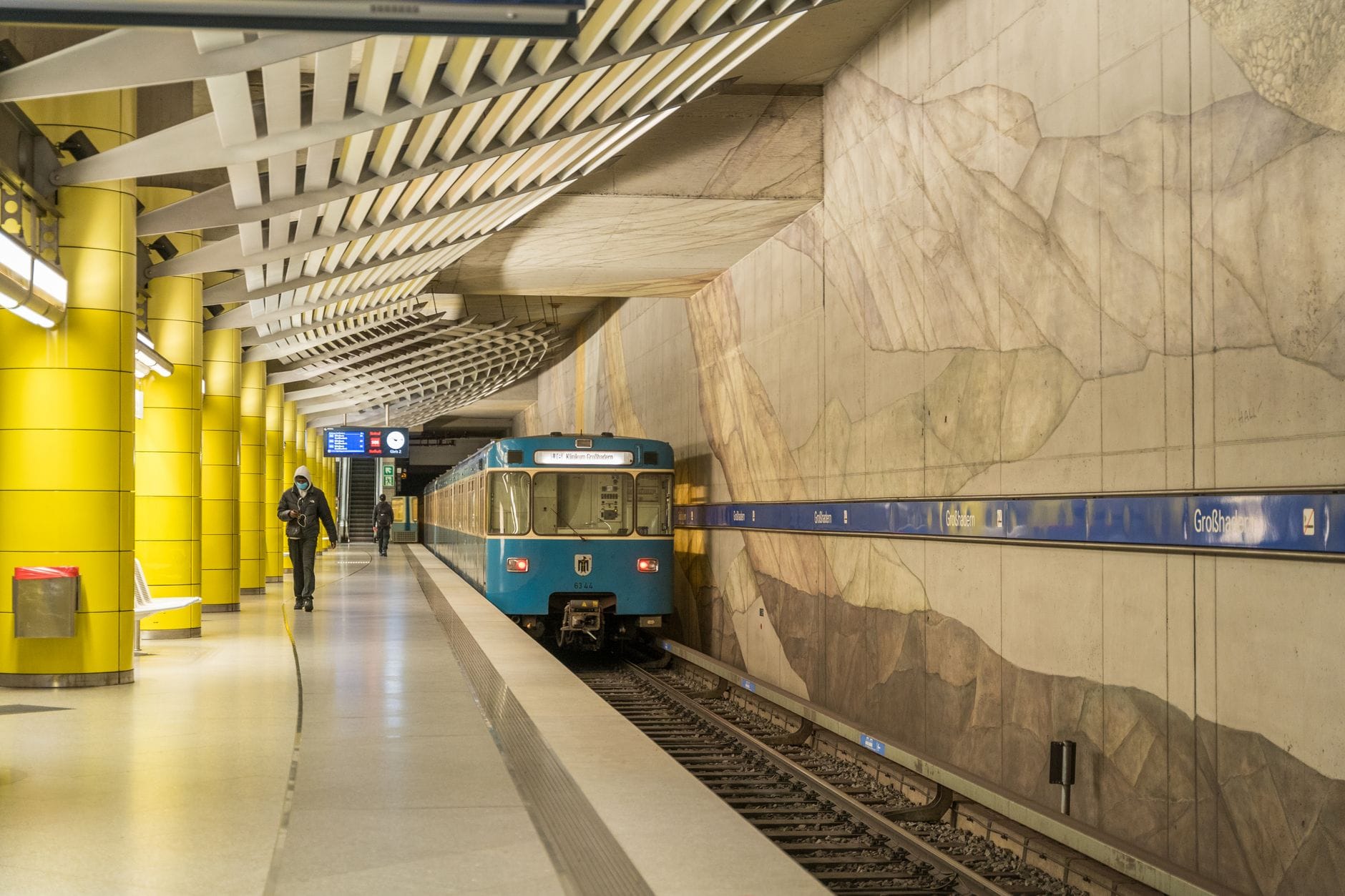
The U-Bahn is the backbone of inner-city travel. Eight lines serve 102 stations across about 103 km of track, with core interchange hubs at Hauptbahnhof, Marienplatz, and Odeonsplatz. Frequencies reach every 5 minutes at peak hours, dropping to around 10 minutes off-peak and 20 minutes in the early morning. The U-Bahn does not run continuously overnight: most lines shut down between roughly 01:00 and 04:00 on weeknights, and between 02:00 and 04:00 on weekends. Night buses (Nachtbus lines) cover gaps, and on special occasions like New Year's Eve, extended services run through the night.
The S-Bahn is the suburban rail layer, connecting central Munich with outlying districts, the airport, and towns like Freising and Herrsching. It also links key city-centre stops along a shared central corridor from Hauptbahnhof through Marienplatz to Ostbahnhof. For visitors, the S-Bahn is particularly important for reaching the airport and for day trips. If you're planning excursions beyond the city, also consult the day trips from Munich guide to understand which zones and services you will need.
Trams run primarily within the inner city and complement the U-Bahn in areas where underground lines don't reach. They are useful for specific routes, especially around Maxvorstadt, Schwabing, and Haidhausen. Buses fill in the remaining gaps, particularly in outer districts and for late-night travel when rail services have ended. The network map available from MVV (free at Hauptbahnhof and Marienplatz information points) shows all modes together and is worth picking up on arrival.
- U-Bahn 8 lines, ~100 stations, best for fast cross-city travel within the inner zones. Peak frequency: every 5 minutes.
- S-Bahn Suburban rail connecting city centre, outer districts, and the airport. Essential for MUC transfers and day trips.
- Tram Street-level lines covering Maxvorstadt, Schwabing, Haidhausen, and Neuhausen. Slower than U-Bahn but scenic.
- Bus City and regional services covering areas not reached by rail, plus Nachtbus lines running overnight when the U-Bahn is closed.
Getting from Munich Airport to the City Centre
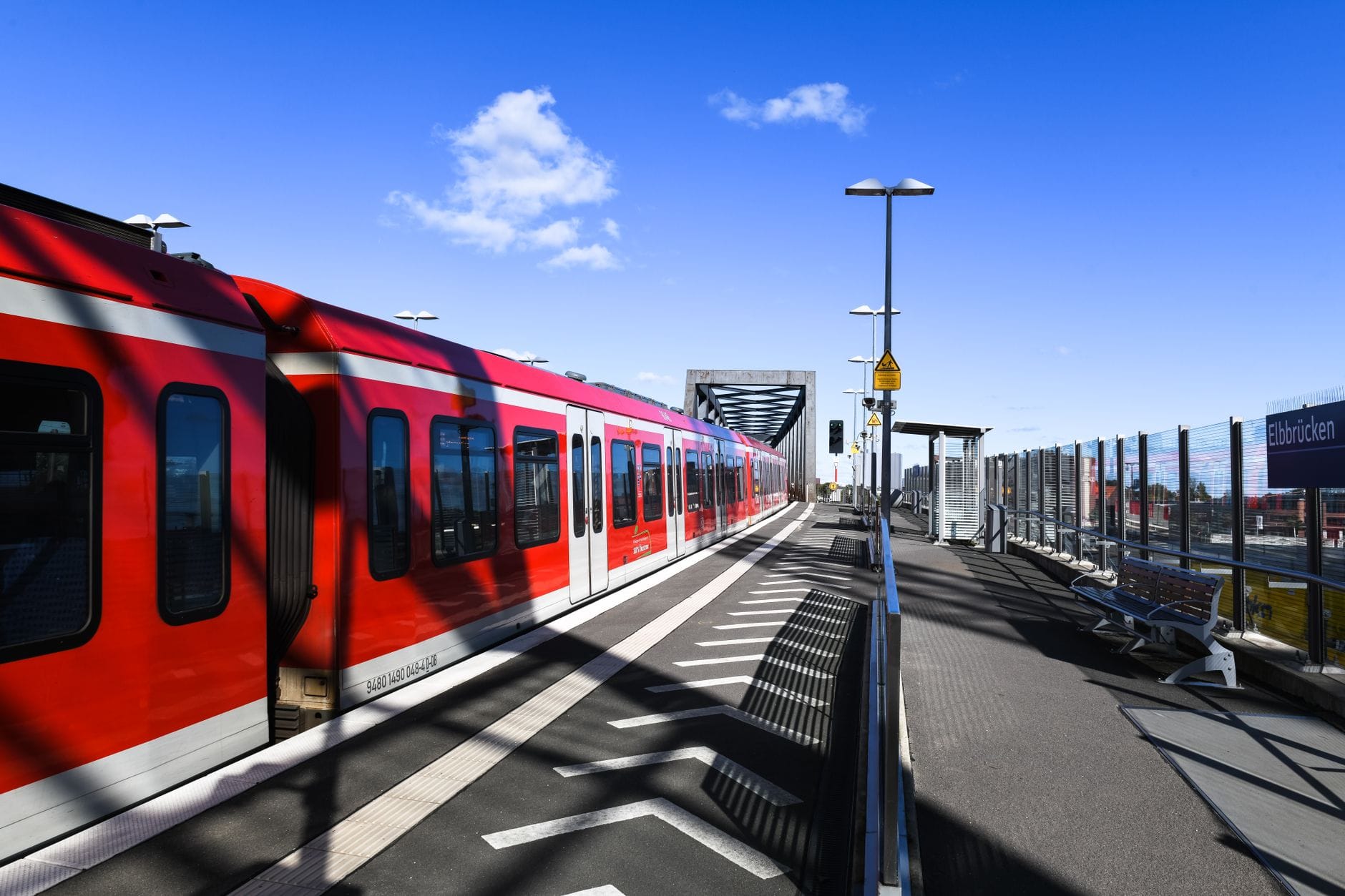
Munich Airport (IATA: MUC) is located in Freising, about 28-30 km northeast of Marienplatz. Two S-Bahn lines handle the connection. The S1 departs from the airport and travels west through the northern suburbs, passing through Hauptbahnhof before ending at Ostbahnhof. The S8 takes the eastern route, also serving Ostbahnhof, Marienplatz, and Hauptbahnhof. Both run frequently and take around 35-45 minutes to the city centre, depending on your destination station.
💡 Local tip
If you are travelling in a group of up to five people, the Airport-City-Day-Ticket (covering Zones M through 5) is often better value than buying five individual single tickets. It's sold at ticket machines in the airport and at S-Bahn platforms. Verify the current price at the machine before buying, as MVV adjusts fares periodically.
Airport buses also run between MUC and Munich Central Station (Hauptbahnhof), with a journey time of around 45 minutes depending on traffic conditions. The bus is a reasonable alternative if S-Bahn services are disrupted, but under normal circumstances the S-Bahn is faster and more predictable. Taxis from the airport to the city centre take roughly 35-45 minutes in normal traffic; the ride is metered under Bavarian taxi regulations, and costs can climb significantly during peak hours or with heavy luggage. Ride-hailing apps including Uber and Free Now (formerly mytaxi) also operate at MUC and may offer fixed-price options depending on availability.
- S1 or S8 S-Bahn: fastest and most reliable, 35-45 minutes to Hauptbahnhof or Marienplatz, runs every 10 minutes combined
- Airport Bus: good backup option, ~45 minutes to Hauptbahnhof, susceptible to road traffic
- Taxi / ride-hail: door-to-door convenience, significantly more expensive, metered fares under Bavarian regulations
- Remember: you need a multi-zone ticket covering Zones M-5 for any airport journey — standard city-zone tickets are not valid
Tickets, Day Passes, and How Not to Overpay
Single tickets are zone-based and time-limited, not unlimited-use passes. Once validated, a single ticket covers travel within the purchased zones for a set duration, but you cannot use it to make a return journey later. If you plan to make more than two or three journeys in a day, a day ticket almost always works out cheaper than individual singles. MVV offers single-person day tickets and group day tickets covering up to five people, both available for inner zones only or for extended zones including the airport.
Tickets are purchased at blue vending machines in every U-Bahn and S-Bahn station, at many tram stops, and on board some buses and trams (usually at a slight premium). MVV and MVG apps allow mobile ticket purchase. If you are visiting multiple museums alongside using transit, the Munich City Pass bundles unlimited public transport with discounted or free admission to major attractions and can represent genuine savings for a multi-day visit.
✨ Pro tip
English-speaking MVV information staff are available at two central locations: inside Hauptbahnhof and in the basement of Marienplatz U-Bahn station. If you are confused about zones or ticket types on your first day, these offices will clarify quickly and can print out a network map.
One thing that catches visitors out: a Kurzstrecke (short-distance ticket) is valid only for a very limited number of stops, typically two U-Bahn or S-Bahn stops, or four bus or tram stops. It is cheaper but only useful for genuinely short hops. For anything else, buy the correct single or day ticket for your zone range. Also worth noting: during Oktoberfest and other major events, trains get extremely crowded. The timetables remain largely the same, but journey times effectively increase due to platform congestion. Plan extra time if you are heading to or from Theresienwiese during the festival.
Taxis, Ride-Hailing, and Getting Around by Car
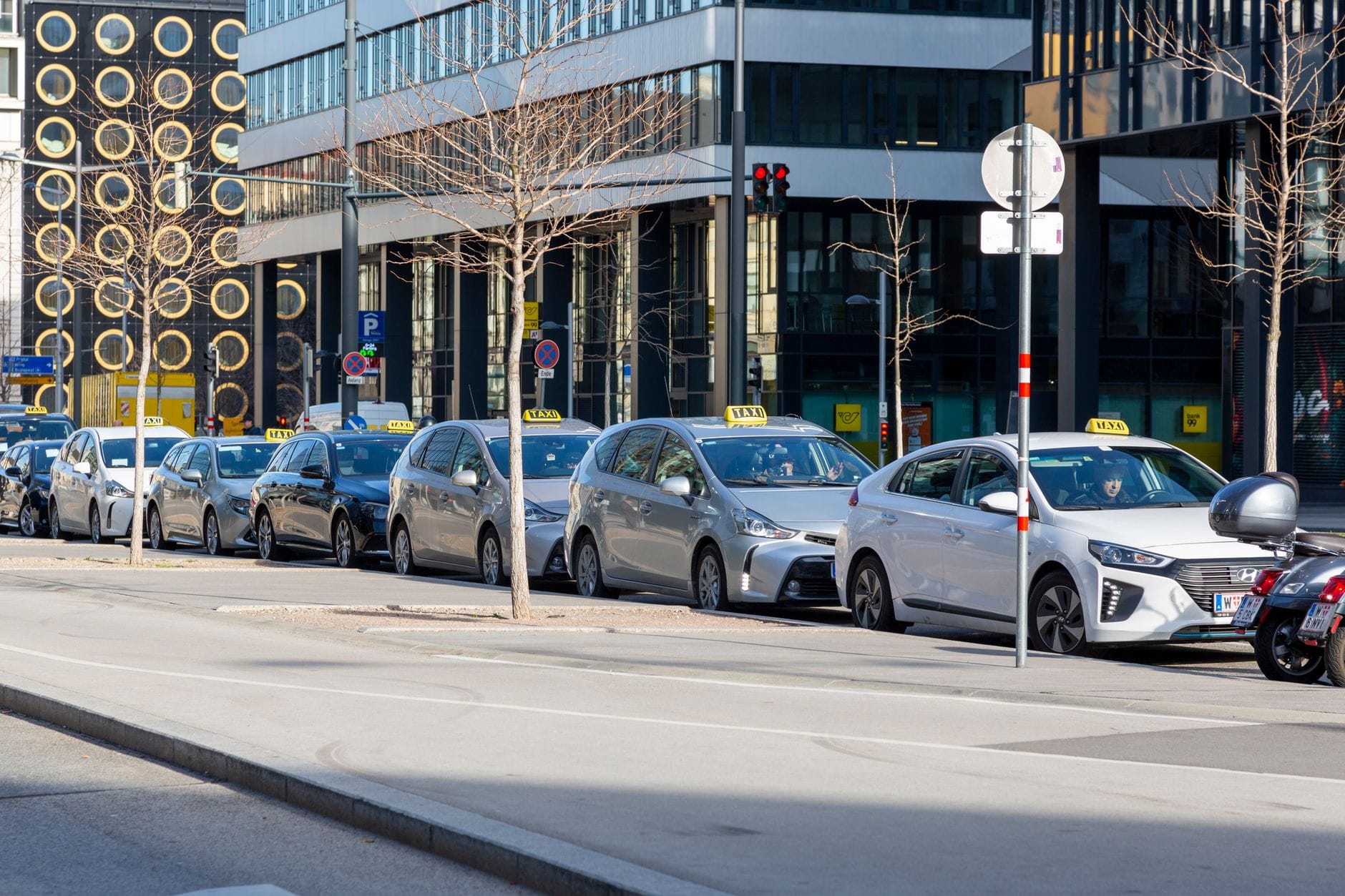
Licensed taxis in Munich are regulated under Bavarian transport law and run on meters. They are available at dedicated taxi stands throughout the city centre, at major transport hubs, and at the airport. You can also flag them on the street or book via the Free Now app. Uber operates in Munich but often uses licensed taxi drivers rather than private individuals due to German transport regulations, meaning prices may be similar to regular taxis rather than significantly cheaper as in some other markets.
Driving your own car in central Munich is possible but rarely worth it for visitors. Parking is expensive and limited in the Altstadt and Maxvorstadt areas. The city operates a low-emission zone (Umweltzone) covering much of the city centre, which requires a green environmental badge (Umweltplakette) displayed on the windscreen. Foreign vehicles are not exempt. If you are renting a car for day trips rather than city travel, that is a different matter — roads to destinations like Neuschwanstein Castle are straightforward, and parking is available near most out-of-city attractions.
Walking, Cycling, and Getting Around Without Transit
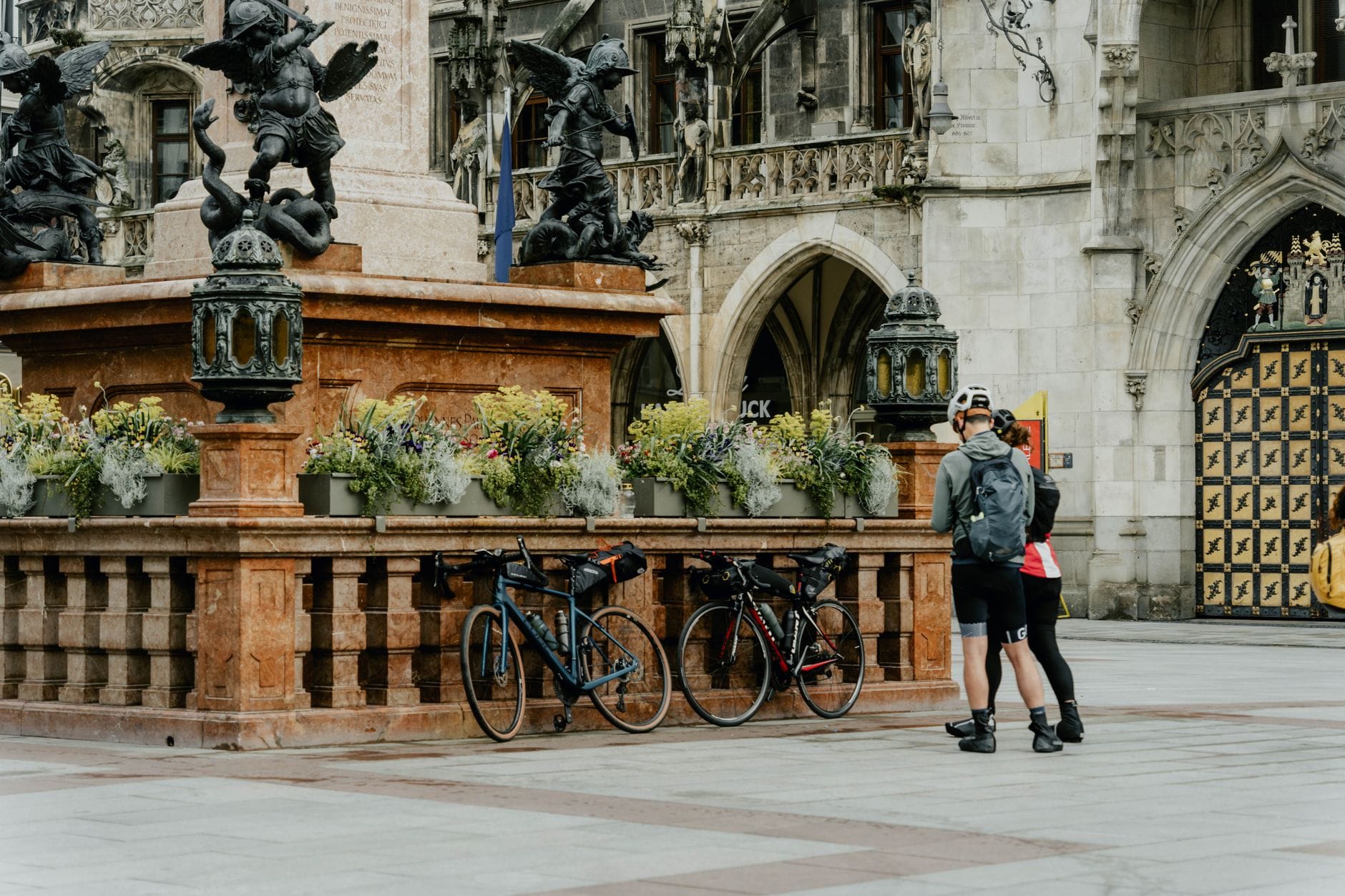
Central Munich is compact and very walkable. The distance from Hauptbahnhof to Marienplatz is roughly 900 metres, and from Marienplatz to the southern edge of the Englischer Garten is under 2 km. Most attractions in the Altstadt, including the Frauenkirche, Viktualienmarkt, and Marienplatz, are within a few minutes of each other on foot. Walking is almost always the best option within the core historic centre.
Cycling is a legitimate transport option across the whole city. Munich has an extensive network of dedicated cycle lanes, and the flat terrain makes it accessible for most fitness levels. MyRadl (the city's bike-share system, launched May 2026) provides short-term rentals through the MVV, MVGO and nextbike apps, with stations distributed across central districts. For a deeper look at cycling routes and rental options, the Munich cycling guide covers everything from the Isar towpath to cross-city commuter routes.
ℹ️ Good to know
Munich's pavement culture is strict about cycle lanes. Walking in a designated cycle lane, marked by red or blue tiling or road signs, will earn you a sharp bell ring at minimum and is technically a traffic offence. Always check the ground markings when walking in unfamiliar areas, especially in Schwabing and Maxvorstadt where cycling traffic is heavy.
For visitors staying several days, combining walking in the centre with transit for outer districts is the most efficient approach. The 3 days in Munich itinerary demonstrates this well: most core sightseeing requires little more than a day ticket and comfortable shoes, while visits to districts like Nymphenburg or the Olympic Park benefit from a quick U-Bahn or tram hop.
Practical Tips for Navigating Munich's Transport System
- Download the MVV or MVG Fahrinfo app before you arrive. Both offer English interfaces, real-time departures, and mobile ticket purchase.
- Always validate your ticket in the stamping machines before boarding. On U-Bahn platforms, the machines are at the entrance to the platform. On trams and buses, they are inside the vehicle.
- The U-Bahn gap between roughly 01:00 and 04:00 is real. Check Nachtbus routes in the MVV app if you are out late — they run on a different schedule and may require a new ticket.
- During Oktoberfest (late September to early October), expect trains toward Theresienwiese to be packed from midday onward. Getting there before noon or after 22:00 is significantly more comfortable.
- The Munich Airport is Zone 5. A standard day ticket for Zone M only does not cover it. Buy an Airport-City-Day-Ticket or a single with the correct zone range.
- Tipping taxi drivers and rounding up restaurant bills by 5-10 percent is customary in Munich. Handing the amount directly to the driver or server rather than leaving it on the table is the local convention.
- Tap water in Munich is safe and high-quality. Carry a refillable bottle rather than buying bottled water, which is expensive at tourist areas.
FAQ
Is the Munich public transport system easy to use for first-time visitors?
Yes, but the zone system requires attention. Download the MVV app, set the language to English, and always check which zones your journey covers before buying a ticket. The machines at stations have English-language interfaces. The biggest mistakes visitors make are using a standard city ticket to reach the airport (which is Zone 5, not Zone M) and forgetting to validate tickets before boarding.
How long does it take to get from Munich Airport to the city centre?
The S1 and S8 S-Bahn lines take around 35-45 minutes to reach Hauptbahnhof or Marienplatz from Munich Airport, depending on which line and which stop you are heading to. Trains run every 10 minutes combined (each line runs every 20 minutes, staggered). Taxis and airport buses take a similar time in normal traffic but can be slower during rush hour.
Does the Munich U-Bahn run all night?
No. Most U-Bahn lines stop running between approximately 01:00 and 04:00 on weeknights, and slightly later on weekends (around 02:00 to 04:00). Night buses (Nachtbus routes) cover the gaps. On major holidays like New Year's Eve, extended overnight services run. Check the MVV app for the specific night schedule on your travel date.
Can I use one ticket for the U-Bahn, tram, and bus in Munich?
Yes. The MVV system uses unified ticketing across all modes: U-Bahn, S-Bahn, tram, and bus. As long as your ticket is valid for the zones you are travelling through, you can transfer between modes without buying a new ticket. The exception is if your single ticket expires or you travel beyond the covered zones.
Is it worth renting a car to get around Munich?
For the city itself, no. Parking is scarce and expensive in central areas, traffic congestion is significant, and the public transport network covers everywhere tourists typically want to go. The city centre also has a low-emission zone requiring a valid green Umweltplakette badge. A rental car is worth considering if you plan day trips to rural Bavaria, such as to Neuschwanstein or Berchtesgaden, where public transport options are slower or less frequent.
Tickets & tours
Live prices and dates from our booking partner. If you book, we may earn a commission at no extra cost to you.
Planning a trip? Discover personalized activities with the Nomado app.