Neuschwanstein Castle: The Complete Day Trip Guide from Munich
Schloss Neuschwanstein is the 19th-century Romanesque Revival palace that defined the world's image of a fairy-tale castle. Built for King Ludwig II starting in 1869 and never finished, it draws about 1.5 million visitors a year. This guide covers what the experience actually looks like, when to go, and how to get there without wasting a day.
Quick Facts
- Location
- Neuschwansteinstraße 20, 87645 Schwangau, Bavaria — approx. 120 km southwest of Munich
- Getting There
- Train from Munich Hauptbahnhof to Füssen (approx. 2 hrs), then bus 73 or 78 to Hohenschwangau. Car: ~1.5 hrs via A96/B17.
- Time Needed
- Full day from Munich (8–10 hours including travel); guided tour inside castle lasts approx. 35 minutes
- Cost
- €21 regular / €20 reduced plus a €2.50 online booking fee (2026 rates); children under 18 free. Tickets must be booked online in advance; the ticket center in Hohenschwangau handles pickup and on-site services.
- Best for
- Architecture lovers, Ludwig II history, Alpine scenery, photography, first-time Bavaria visitors
- Official website
- http://www.neuschwanstein.de
What Neuschwanstein Castle Actually Is
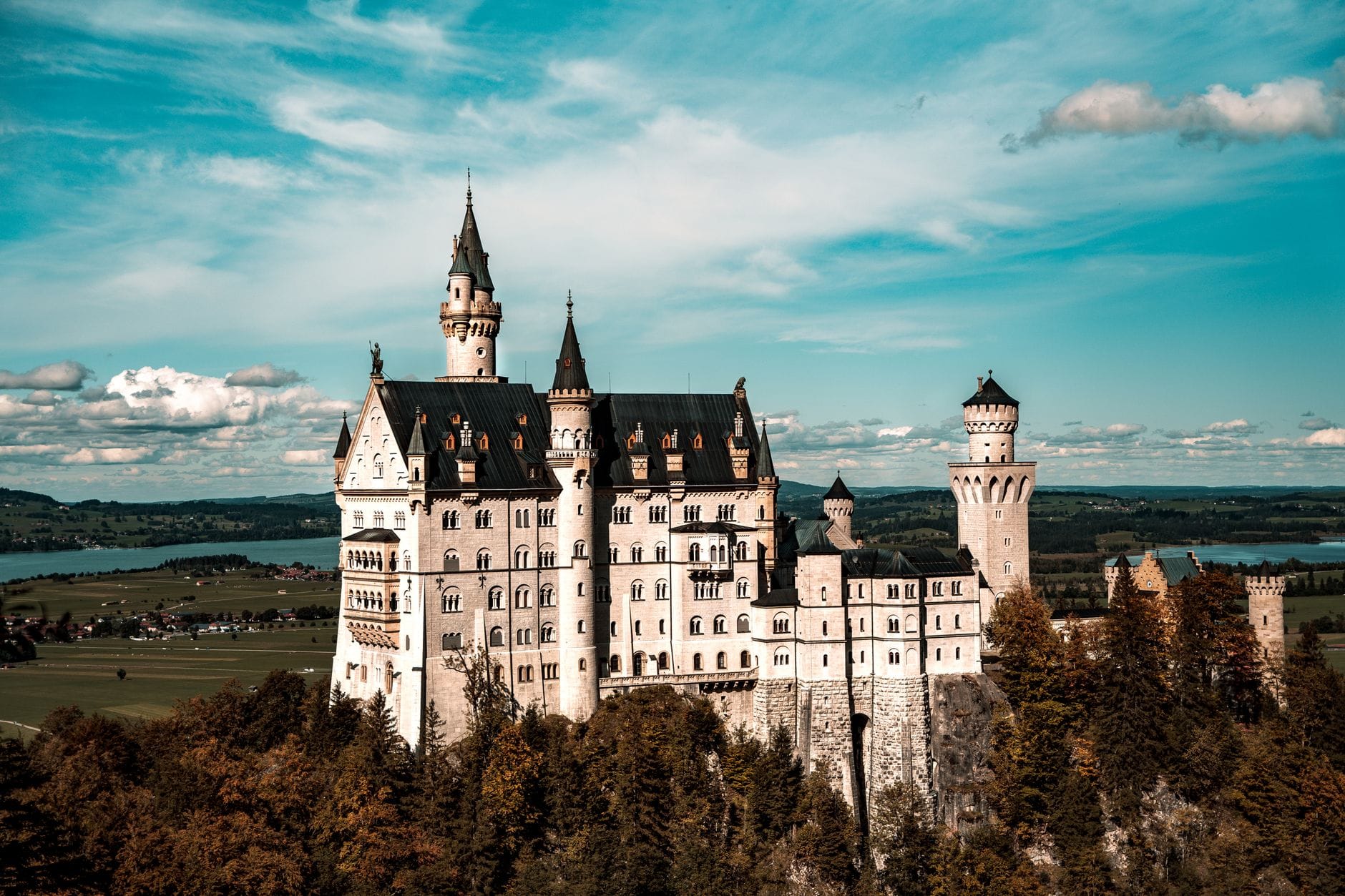
Neuschwanstein Castle, officially Schloss Neuschwanstein, is a Romanesque Revival palace perched on a rugged outcrop above the village of Hohenschwangau in the Bavarian Alps. Construction began in 1869 under the orders of King Ludwig II of Bavaria, a reclusive monarch who drew inspiration from Wagnerian opera, medieval legend, and his own elaborate fantasy of kingship. He never saw it completed. Ludwig died under mysterious circumstances in 1886, and the palace opened to the public just weeks after his death.
What you see today is an incomplete palace that the king inhabited for fewer than 200 days total. The exterior looks like a coherent whole. The interior tells a different story: dozens of rooms were planned; only 15 were ever finished, and those are extravagant in a way that borders on overwhelming. Every surface in the state rooms carries painted scenes from Norse and Germanic mythology, with gold leaf, carved oak, and artificial grottoes built into the walls. It is theatrical in the literal sense. Ludwig was staging a world, not building a residence.
ℹ️ Good to know
Neuschwanstein is administered by the Bavarian Palace Administration (Bayerische Schlösserverwaltung). All interior visits are guided tours only, available in multiple languages including English. Audioguide tours are also available. Duration is approximately 35 minutes.
The Approach: Getting Up the Hill
The ticket center is in Hohenschwangau village, at the base of the hill. This is where you collect or pick up pre-booked tickets and where timed entry slots are assigned. From there, you have three ways to reach the castle: walk (about 30–40 minutes uphill on a paved path), take a horse-drawn carriage (partway, not to the gate itself), or catch the shuttle bus from the car park area to a drop-off point still a short walk below the entrance. The walk is the most rewarding option on clear days, with increasingly wide views over the Alpsee lake and Hohenschwangau Palace below.
The path up through the forest smells of pine resin and damp rock. In summer, you hear the bells of horse carriages ahead and the crunch of gravel underfoot. In October, when the larch trees have turned, the surrounding hillsides are amber and the crowds have thinned noticeably from August peaks. In winter, the path can be icy and the shuttle bus may be your only sensible option. Wear proper footwear regardless of season.
⚠️ What to skip
Tickets often sell out in advance during summer. Book online at the official site before your trip if possible, not on the day. If you arrive without a ticket in July or August, there is a realistic chance you will not get inside.
Tickets & tours
Live prices and dates from our booking partner. If you book, we may earn a commission at no extra cost to you.
Inside the Castle: What the Tour Covers
The guided tour moves through a fixed sequence of rooms. You enter through the lower courtyard and pass through servants' quarters before reaching the throne room, which is the first truly staggering space: a Byzantine-inspired hall with a mosaic floor depicting the natural world, a semicircular apse where a throne was planned but never installed, and a chandelier shaped like a Byzantine crown weighing several tons. The throne itself was never built. The room was completed posthumously, and the empty dais says more about Ludwig's story than any finished furnishing could.
The Singers' Hall on the fourth floor was designed for performances of Wagnerian opera, despite the fact that no performance was ever staged there during Ludwig's lifetime. The walls are covered in scenes from Parsifal. The room has near-perfect acoustics, and concerts have been held there since the castle opened to the public. The king's bedroom is densely carved in late Gothic style, with a bed that took 14 craftsmen four years to complete. The artificial grotto connecting two rooms — complete with a waterfall mechanism — is disorienting in the best way, and easy to overlook if you are focused on the painted panels.
Photography inside the castle is not permitted during the guided tour. This is a firm rule enforced throughout. Take your photos from the exterior and from the viewpoints, and give the interior your full attention instead.
The Marienbrücke: The View Everyone Comes For
The Marienbrücke (Mary's Bridge) is an iron pedestrian bridge spanning the Pöllat Gorge about a 10–15 minute walk above the castle entrance. The view from it frames Neuschwanstein against the forested cliff face and the valley below, and it is the angle that appears on essentially every photograph of the castle ever taken. Get there before your tour time if possible, or immediately after.
The bridge itself is narrow and gets crowded fast. In summer, a queue forms to stand at the center railing. Early morning arrivals, before 9:30, find it nearly empty. The gorge below is deep and the waterfall audible even from the bridge deck. In winter, the bridge sometimes closes due to ice or structural maintenance, so check ahead. If it is closed, a viewpoint on the path above the castle still gives a partial version of the same angle.
💡 Local tip
Book the earliest available tour slot, pick up your ticket, then walk directly to the Marienbrücke before the bulk of visitors arrive. Come back down to the castle entrance for your timed entry. This sequence maximizes both the bridge view and the tour experience.
How to Get There from Munich
The standard route from Munich is by train from München Hauptbahnhof to Füssen, with a change typically at Buchloe or Kaufbeuren depending on the service. Total rail journey is around 2–2.5 hours. From Füssen station, regional buses 73 and 78 run to Hohenschwangau (ticket center). The bus journey takes about 10 minutes. Check current schedules on the Bavarian transport network (BayernFahrer or DB) before you travel, as weekend and seasonal timetables differ.
By car, the drive from Munich takes approximately 2 hours via the A96 motorway toward Lindau and then the B17 toward Füssen. There are paid car parks in Hohenschwangau village, but they fill completely by 9 a.m. in peak summer months. Organized coach tours from Munich also run to Neuschwanstein frequently. For context on planning the wider day and what else lies nearby, see the Munich to Neuschwanstein day trip guide, which covers transport options and timing in more detail.
Opening Hours and Admission
The castle is open daily for guided tours. From 28 March to 15 October, tours run from 9:00 to 18:00. From 16 October to 27 March, hours are 10:00 to 16:00. The castle closes on 1 January, 24 and 25 December, and 31 December. The 2026 admission price is €21 for regular entry and €20 for reduced (concessions), with an additional €2.50 online booking fee applied per ticket. Children under 18 enter free. These are the Bavarian Palace Administration's published rates, but verify on the official site before booking as prices are subject to revision.
A combination ticket covering Neuschwanstein and nearby Hohenschwangau Palace (where Ludwig actually grew up and spent much more time) is available from the ticket center. If you have a full day, Hohenschwangau is worth the extra hour. It is smaller and quieter, the interiors are more livable in feel, and it provides direct context for understanding what Ludwig was reacting against and escaping from when he designed Neuschwanstein.
Weather, Seasons, and Honest Expectations
Neuschwanstein sits at around 965 meters elevation. In summer, afternoon thunderstorms are common in the Bavarian Alps and can close the Marienbrücke temporarily. Mornings are nearly always clearer. From late June through August, the site receives its heaviest visitor volumes, with up to around 6,000 people a day during peak weeks. The exterior and grounds feel crowded, the Marienbrücke queue is long by mid-morning, and the surrounding village is loud with tour groups. The castle interior, being guided-tour-only, is controlled in group size and feels more manageable than the exterior chaos suggests.
October is the sweet spot for most visitors: stable weather, autumn color in the surrounding forest, meaningfully smaller crowds, and full operating hours until the 15th. Snow appears on the peaks by October or November and makes the castle backdrop more dramatic from a distance, though access requires more planning. For a broader view of when Bavaria rewards a visit, the best time to visit Munich guide covers seasonal tradeoffs across the region.
Who should consider skipping this trip: travelers with limited mobility will find the uphill walk genuinely demanding, the shuttle bus only partial in its help, and the interior staircases steep and without lifts in some sections. If you have serious mobility constraints, check directly with the Bavarian Palace Administration about current accessibility provisions before booking. Also, visitors who have already seen major European palaces such as Versailles or the Munich Residenz may find the interior relatively brief and the surrounding landscape the more memorable element.
Combining Neuschwanstein with Munich
For visitors based in Munich, Neuschwanstein works best as a standalone day trip rather than a half-day addition to a busy city itinerary. The travel time alone means you will leave Munich early and return in the evening. If you are planning several days and want to make the most of the city before or after, the 3 days in Munich itinerary helps structure the balance between city sights and day trips. Within Munich itself, the architectural contrast is interesting: Nymphenburg Palace in the city's western district represents the Baroque tradition that shaped Bavarian royal taste before Ludwig II rejected it entirely.
For those drawn to Bavarian royal history more broadly, the Munich Residenz in the city center offers 600 years of Wittelsbach dynasty history across 130 rooms, and the Residenz Treasury holds the royal collection of crowns, regalia, and ceremonial objects. Together with Neuschwanstein, these three sites give a more complete picture of the dynasty whose last major creative act was the castle on the cliff.
Insider Tips
- Book the first available tour slot of the day (9:00 in summer) and go directly to the Marienbrücke before your entry time. The bridge is walkable in about 10 minutes from the castle gate, and the early light on the eastern face of the castle is better for photography than the harsh midday sun.
- The ticket pickup queue at Hohenschwangau moves faster than it looks, but still allow 20 minutes minimum before your tour time. Pre-booking online lets you skip the separate purchase line, but you still join the ticket collection queue.
- Wear layers even in summer. The walk up shades itself under tree cover, but the castle terrace and the Marienbrücke are fully exposed and alpine wind picks up quickly, especially in afternoon hours.
- The castle café and the village restaurants are expensive and ordinary. Pack your own lunch or eat in Füssen before taking the bus up. Füssen has a small old town with better food options than anything adjacent to the castle.
- If the Marienbrücke is closed due to ice or maintenance, the footpath that continues above and around the ridge offers a longer but less crowded alternative view of the castle. It adds about 30 minutes but is almost always open.
Who Is Neuschwanstein Castle For?
- First-time visitors to Bavaria who want the defining Alpine landscape experience
- Architecture and design enthusiasts interested in 19th-century Historicism and royal patronage
- Photography travelers prioritizing dramatic natural backdrops and architectural subjects
- Families with older children (12+) who can handle the uphill walk and a 35-minute structured tour
- Anyone with a specific interest in King Ludwig II, Richard Wagner, or the end of the German monarchy
Nearby Attractions
Combine your visit with:
- Allianz Arena & FC Bayern Museum
The Allianz Arena is one of Europe's most recognizable stadiums, home to FC Bayern München and capable of holding over 75,000 spectators. Paired with the FC Bayern Museum, it offers a full day of football history, architectural spectacle, and behind-the-scenes access for fans and curious visitors alike.
- Bavaria Statue & Ruhmeshalle
Standing 18.52 metres tall above Theresienwiese, the Bavaria Statue is one of the largest bronze figures in the world, and you can climb inside it. Behind her rises the Ruhmeshalle, a sweeping Doric colonnade commissioned by King Ludwig I to honour distinguished Bavarians. Together they form one of Munich's most undervisited monumental sites.
- Dachau Concentration Camp Memorial
The Dachau Concentration Camp Memorial Site, located 25 minutes from Munich by train, preserves the grounds of the first Nazi concentration camp, opened in 1933. With free admission, a comprehensive documentary exhibition, and guided tours in English, it draws many visitors each year who come to understand one of history's darkest chapters. Plan for at least three to four hours, and go prepared — emotionally as much as practically.
- Tierpark Hellabrunn (Munich Zoo)
Tierpark Hellabrunn has organized its animals by geographic region since 1928, making it the world's first geozoo. Spread across 40 hectares along the Isar River in southern Munich, it is one of Bavaria's most popular family destinations and a serious conservation institution. This guide covers everything you need to plan a rewarding visit.
Planning a trip? Discover personalized activities with the Nomado app.