Allianz Arena & FC Bayern Museum: Munich's Cathedral of Football
The Allianz Arena is one of Europe's most recognizable stadiums, home to FC Bayern München and capable of holding over 75,000 spectators. Paired with the FC Bayern Museum, it offers a full day of football history, architectural spectacle, and behind-the-scenes access for fans and curious visitors alike.
Quick Facts
- Location
- Franz-Beckenbauer-Platz 5, 80939 München (Fröttmaning district, northern Munich)
- Getting There
- U6 to Fröttmaning, then a 10-minute walk across the esplanade to the South Main Entrance
- Time Needed
- 1.5–3 hours (museum only: ~1.5 hrs; museum + arena tour: ~3 hrs)
- Cost
- Museum: €19 adults, €11 children (6–13), under 6 free. Museum + Arena Tour combo: €29 adults, €19 children (6–13). Verify current prices before visiting.
- Best for
- Football fans, families with older kids, architecture enthusiasts, sports history buffs
- Official website
- fcbayern.com/museum/en
What the Allianz Arena Actually Is
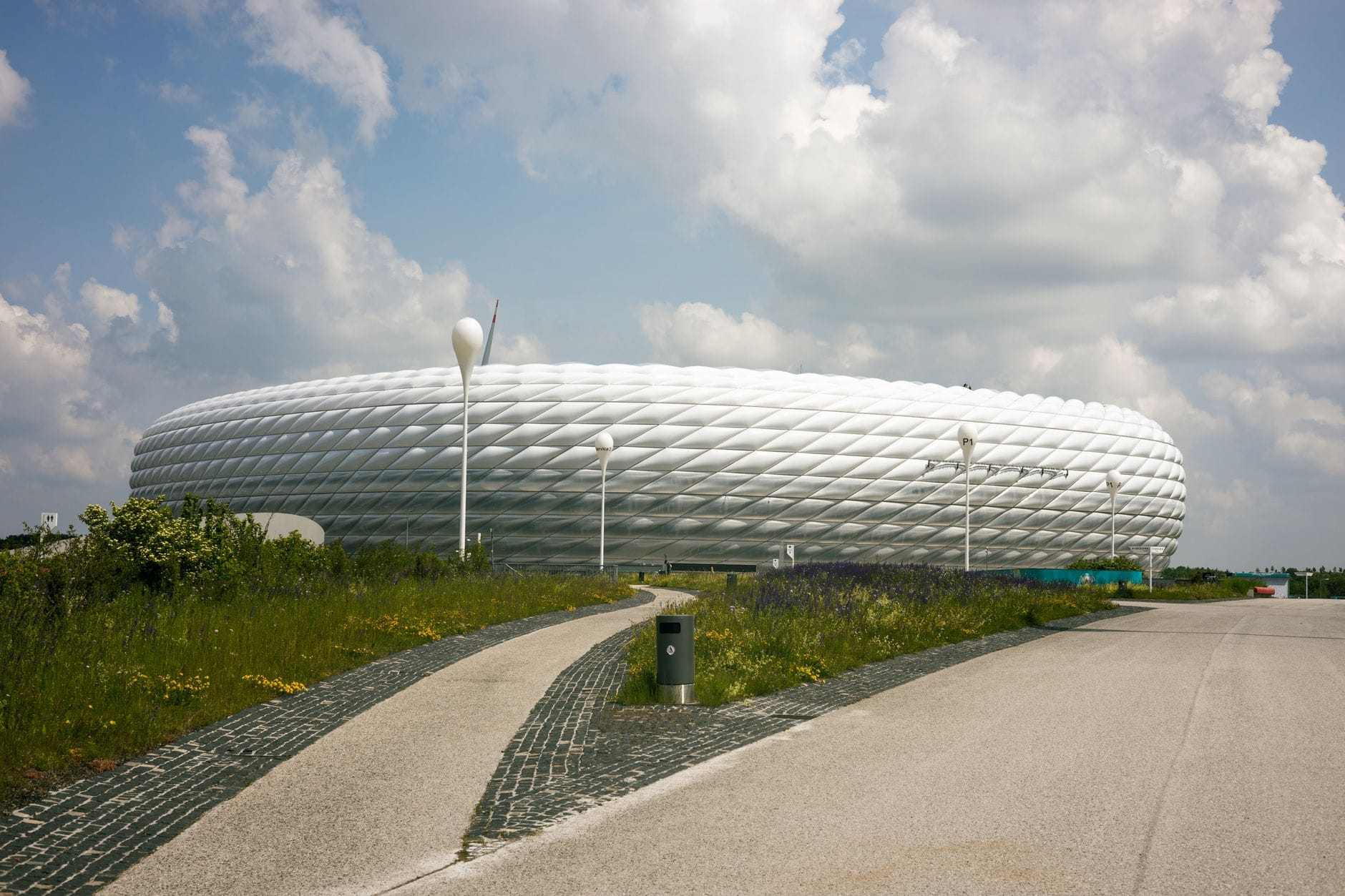
The Allianz Arena opened in 2005 in Munich's northern Fröttmaning district, built to host the 2006 FIFA World Cup and designed by architects Herzog and de Meuron, the same Swiss firm behind London's Tate Modern. It is the home ground of FC Bayern München and seats up to 75,024 spectators for domestic matches, dropping to around 70,000 in UEFA competition configuration. Measuring 258 metres long, 227 metres wide, and 50 metres tall, it is one of the largest stadiums in Germany by capacity and among the most architecturally distinct in the world.
For UEFA matches, the stadium's official name is Munich Football Arena, though it is universally known as the Allianz Arena after its naming rights sponsor. The FC Bayern Museum occupies part of the southern end of the stadium complex and functions as a standalone attraction on non-matchdays, typically open daily from 10:00 to 18:00 (check current last admission time on the official website, as it may vary). Together, the museum and the various arena tour options form a coherent visitor experience that goes well beyond a simple stadium selfie.
⚠️ What to skip
On FC Bayern matchdays, the museum is accessible only to ticket holders, and museum admission is not included in the price of a match ticket. If you plan to visit the museum on a matchday, factor in an additional €19 per adult on top of your match ticket cost. Check the FC Bayern schedule before booking.
The Exterior: Why the Building Itself Is Worth the Trip
The Allianz Arena's outer skin consists of 2,874 ETFE (ethylene tetrafluoroethylene) cushions, each independently inflatable, that wrap the entire stadium in a seamless white shell during daylight hours. At night, LED panels illuminate red for FC Bayern München home matches and white for German national team fixtures. The effect in the dark, viewed from the motorway or from across the flat Fröttmaning heathland, is genuinely striking: a glowing form with no visible seams or support structure.
Arriving in daylight, the stadium reads as a vast, pale, slightly alien object sitting alone on a plateau, disconnected from the surrounding urban fabric. The open esplanade that surrounds it is deliberately wide, designed to manage the flow of 75,000 people simultaneously. Outside matchdays, that same esplanade is almost eerily quiet. You walk across a windswept concrete plaza with the stadium filling the horizon. It is more industrial park than tourist promenade, and first-time visitors are sometimes caught off guard by how exposed and non-commercial the approach feels.
💡 Local tip
For the best photographs of the exterior, arrive in late afternoon when low sun catches the translucent cushions and gives the facade a warm glow. Evening visits near sunset, especially if Bayern have a midweek game, let you see the full illumination effect from the esplanade without needing a ticket.
Tickets & tours
Live prices and dates from our booking partner. If you book, we may earn a commission at no extra cost to you.
Inside the FC Bayern Museum
The FC Bayern Museum is not a casual football exhibit. It covers over 1,500 square metres of display space and traces the club's history from its founding in 1900 to its current status as one of the most successful football clubs in the world. The layout is chronological in structure but interrupted by thematic rooms dedicated to specific eras, European Cup campaigns, and individual players. The presentation quality is high: touchscreens, archival footage, original kits, trophies behind glass, and interactive scoring games are woven together without feeling cluttered.
The centrepiece of the museum is the Trophy Room, where the Champions League trophies, Bundesliga titles, and DFB-Pokal cups are displayed under dramatic lighting. The sheer volume of silverware is sobering for any football fan. An audioguide (currently free) adds context for visitors who are not deep into German football history, covering players like Franz Beckenbauer, whose name now graces the address of the stadium itself. A guided museum tour costs an additional €10 and runs on a fixed schedule, worth checking on arrival.
Non-fans visiting out of curiosity will find the museum holds their attention longer than expected. The historical sections on German football in the post-war period, the club's near-bankruptcy, and its evolution into a global brand are genuinely interesting stories told with enough visual material to carry non-specialist visitors through. Children tend to gravitate toward the interactive zones, particularly the penalty kick simulator and the chance to hold replica trophies for photos.
Arena Tours: What You Get Beyond the Museum
Two tour formats are available in combination with museum access. The Arena View ticket (currently €23 for adults when combined with museum entry) grants access to a panoramic viewpoint inside the stadium bowl, looking down across the pitch from the upper tier. The Arena Tour (€29 combined with museum) goes further: you walk through the players' tunnel, stand pitchside, visit the press conference room, and enter the VIP and media areas. Both options are available on non-matchdays only.
The pitchside moment is the standout for most visitors. The grass is immaculate, the stadium is completely silent, and the scale of the bowl from field level is genuinely different from how it reads on a television screen. The press conference room, where post-match interviews are conducted, is surprisingly small and institutional in person, which adds to rather than detracts from its interest. Guides on the Arena Tour are generally knowledgeable and adapt their commentary for both dedicated fans and visitors who have never watched a Bundesliga match.
ℹ️ Good to know
Arena Tours operate on a fixed schedule and must be booked in advance on matchday-adjacent dates, as availability tightens. Book via the official FC Bayern Museum website. Bring comfortable shoes: the tour covers multiple levels and significant walking distance inside the stadium structure.
Getting There and Practical Logistics
The most straightforward route is U-Bahn line U6, direction Garching-Hochbrück, alighting at Fröttmaning station. The stadium is visible from the platform on exit. From the station, follow signs across the esplanade toward Haupteingang Süd (South Main Entrance), then look for FC Bayern Museum and Arena Touren signage. The walk takes roughly 10 minutes at a normal pace. The area around the station is open and flat, with no significant hills or steps on the approach route.
On matchdays, U6 trains become extremely crowded in the final 45 minutes before kick-off. If attending a match rather than the museum, allow extra time and consider arriving 90 minutes early. The MVV transit network is the recommended option for all visitors; taxis to the stadium can be expensive and slow in pre-match traffic. For broader transit planning across the city, the Munich transport guide covers zone ticketing, the Bayern-Ticket day pass, and how to navigate the U-Bahn system.
Parking is available in the stadium's own multi-storey car park, but on matchdays it fills quickly and road closures complicate approaches from several directions. For non-matchday museum visits, driving is manageable, but the U6 remains faster and cheaper.
Accessibility: The complex is described as barrier-free in official materials, with lift access and step-free routes between all main visitor areas. Visitors with disabilities receive reduced admission on presentation of a valid disability ID. For specific assistance requirements, the service team can be reached by phone at +49 89 69931-222 before your visit.
Timing Your Visit and What to Expect by Season
The museum is generally open daily 10:00 to 18:00 (check current information for last admission), with closures on Christmas Day, New Year's Eve, New Year's Day and occasional other special dates such as certain home matchdays. There are no regular seasonal closures otherwise. Crowd levels inside the museum are highest on weekends and during the football season (roughly August through May), with Saturdays after home matches drawing noticeably more visitors who combine the museum with post-match atmosphere. Midweek mornings from Tuesday to Thursday are the quietest periods. If you are travelling during Munich's summer months, expect more international tourists at the museum from June through August, but the experience does not suffer significantly from crowds since the space is large enough to absorb them.
Weather affects the exterior experience more than the indoor museum. In winter, the approach across the esplanade from Fröttmaning station is exposed and cold, with wind funnelling across the flat site. Dress accordingly. In summer, the same esplanade offers no shade, and the ETFE exterior reflects considerable heat. Early morning or late afternoon visits are more comfortable in July and August.
Is It Worth It If You Are Not a Football Fan?
Honestly: the museum is best experienced with at least a passing interest in football. The depth of content rewards those who can connect names to players, eras to championships, and jerseys to matches. Pure architecture enthusiasts will find the exterior of the Allianz Arena worth seeing without entering at all, and the free view from the esplanade costs nothing.
Visitors who want a broader day of Munich sightseeing might pair this with nearby attractions rather than making the Allianz Arena the centrepiece of a day itinerary. The BMW Museum and BMW Welt are both accessible via the U3 line and offer a similarly modern, large-format experience for visitors interested in German industrial and design heritage. The Allianz Arena sits further north and is not walkable from the city centre, so it requires a deliberate half-day commitment.
Families travelling with children who follow European football will find this among the strongest value-for-money experiences in Munich. The combination of interactive exhibits, trophy displays, and the pitchside tour moment lands well with ages 8 and up. Very young children (under 6) enter free but may find the museum's depth less engaging than the open space outside.
Photography Notes
Photography is permitted throughout the museum for personal use. The Trophy Room is the most photographed space, with dramatic backlighting that works well even with phone cameras. The Arena Tour pitchside access offers the widest-angle shots of the stadium interior, best attempted with a wide lens or phone ultra-wide mode. Flash photography of individual displays behind glass causes significant reflection; disable flash for trophy cabinet shots.
For exterior shots of the full building, the elevated berm on the western side of the esplanade gives a slightly elevated vantage point and separates the stadium from the parking structure behind it. At dusk on a matchday, the illuminated exterior is visible from several kilometres away and can be photographed effectively from the motorway overpass near the Fröttmaning exit, though this requires a vehicle or considerable walking.
Insider Tips
- Book the Arena Tour online in advance rather than queuing at the box office. On weekends and during the football season, same-day availability for tours can run out by early afternoon.
- If you plan to attend an actual FC Bayern match, note that museum admission on matchdays requires a separate ticket purchase on top of your match ticket. Budget accordingly and factor in the museum before kick-off, as the experience is calmer earlier in the day.
- The museum shop near the exit sells official merchandise at standard retail prices. It is not meaningfully cheaper than the FC Bayern megastore at Marienplatz, but the selection skews more toward stadium-specific items and limited edition pieces.
- The esplanade's heathland surroundings are part of the Fröttmaning nature reserve, one of Munich's less-visited green spaces. On a non-matchday, the area around the stadium is genuinely peaceful and the contrast between the colossal building and the quiet meadow landscape is worth a slow walk.
- Children 6–13 pay €19 for the Museum + Arena Tour combo, which is substantially better value than adult pricing relative to what they get from the pitchside experience. Prioritise the full tour for families rather than the Museum + Arena View option.
Who Is Allianz Arena & FC Bayern Museum For?
- FC Bayern fans and Bundesliga followers who want direct engagement with the club's history and trophies
- Families with football-interested children aged 8 and older
- Architecture and design enthusiasts drawn to the Herzog and de Meuron ETFE facade
- Sports tourists combining Munich with European football culture more broadly
- Travellers who want a structured half-day itinerary away from the historic city centre
Nearby Attractions
Combine your visit with:
- Bavaria Statue & Ruhmeshalle
Standing 18.52 metres tall above Theresienwiese, the Bavaria Statue is one of the largest bronze figures in the world, and you can climb inside it. Behind her rises the Ruhmeshalle, a sweeping Doric colonnade commissioned by King Ludwig I to honour distinguished Bavarians. Together they form one of Munich's most undervisited monumental sites.
- Dachau Concentration Camp Memorial
The Dachau Concentration Camp Memorial Site, located 25 minutes from Munich by train, preserves the grounds of the first Nazi concentration camp, opened in 1933. With free admission, a comprehensive documentary exhibition, and guided tours in English, it draws many visitors each year who come to understand one of history's darkest chapters. Plan for at least three to four hours, and go prepared — emotionally as much as practically.
- Tierpark Hellabrunn (Munich Zoo)
Tierpark Hellabrunn has organized its animals by geographic region since 1928, making it the world's first geozoo. Spread across 40 hectares along the Isar River in southern Munich, it is one of Bavaria's most popular family destinations and a serious conservation institution. This guide covers everything you need to plan a rewarding visit.
- Neuschwanstein Castle
Schloss Neuschwanstein is the 19th-century Romanesque Revival palace that defined the world's image of a fairy-tale castle. Built for King Ludwig II starting in 1869 and never finished, it draws about 1.5 million visitors a year. This guide covers what the experience actually looks like, when to go, and how to get there without wasting a day.
Planning a trip? Discover personalized activities with the Nomado app.