BMW Museum Munich: What to Expect, What It Costs, and Whether It's Worth Your Time
The BMW Museum sits beside the company's iconic four-cylinder headquarters near Olympiapark, tracing over a century of automotive and motorcycle design through original vehicles, interactive displays, and striking architecture. It rewards car enthusiasts and design lovers alike, but knowing what to expect beforehand makes the visit significantly better.
Quick Facts
- Location
- Am Olympiapark 2, 80809 Munich (Olympiapark district)
- Getting There
- U-Bahn Olympiazentrum (line U3)
- Time Needed
- 2 to 3 hours for a thorough visit
- Cost
- Adults €17 | Reduced €7 | Groups (5+) €9 | Family (2 adults + up to 3 children) €24. Verify current prices before visiting.
- Best for
- Automotive history, German industrial design, architecture fans, family visits
- Official website
- http://www.bmw-museum.de
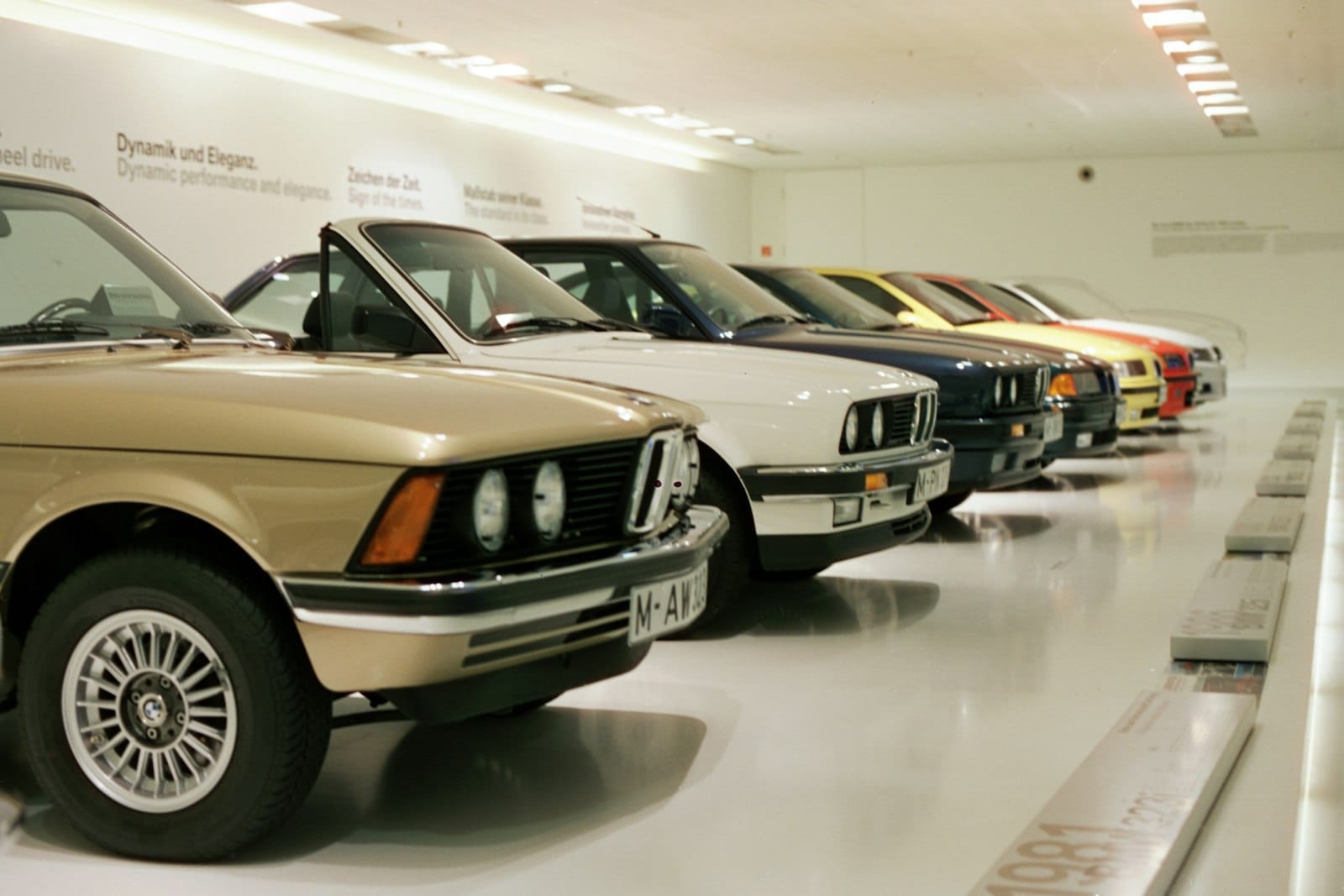
What the BMW Museum Actually Is
The BMW Museum is a purpose-built automotive and design museum located at Am Olympiapark 2 in Munich's Olympiapark district, immediately beside the company's global headquarters. The museum opened in 1973, and the complex, including the curved glass BMW Welt showroom and the instantly recognizable four-cylinder tower, forms part of BMW's corporate campus.
This is not a neutral, arms-length history of the automobile. The BMW Museum is brand-owned and openly celebratory of BMW's products and engineering philosophy. That framing matters: if you come expecting critical industrial history or broad automotive context, you will find the tone promotional. If you come to see exceptional vehicles, meticulous restoration, and genuinely innovative spatial design, you will likely leave impressed.
ℹ️ Good to know
Opening hours: Tuesday to Sunday, 10:00 am to 6:00 pm (last admission 5:30 pm). Closed Mondays. Check the official website before you travel.
The Architecture: A Building Worth Examining Before You Go Inside
The original museum structure, a silver bowl-like building known informally as the 'Schüssel' (bowl), was designed by Karl Schwanzer and opened in 1973. It was radical for its time: a circular, multi-level interior where ramps spiraled visitors downward through themed sections rather than through conventional corridor galleries. The design deliberately avoided the boxy room-to-room format of traditional museums, creating a sense of continuous motion that mirrors the subject matter.
The building underwent a major expansion that reopened in 2008, adding considerably more floor space and a second architectural language alongside Schwanzer's bowl. The newer wing uses angular, interconnected spaces with high ceilings and dramatic lighting designed to showcase large vehicles and architectural models. Standing outside before entering, you can read both phases clearly: the silver bowl sits in visual conversation with the more angular expansion and, across the plaza, the four-cylinder tower that serves as BMW's corporate headquarters.
The entire site sits adjacent to the Olympiapark complex. Arriving on foot from the U-Bahn exit at Olympiazentrum, you pass the Olympic stadium roofline before reaching the museum plaza, which gives useful spatial context for how the 1972 Games and corporate Munich overlap in this part of the city.
Tickets & tours
Live prices and dates from our booking partner. If you book, we may earn a commission at no extra cost to you.
Luggage Storage in Munich
From 6 €Instant confirmationFree cancellationOne hour city sightseeing bus tour in Munich
From 21 €Instant confirmationFree cancellationMunich Third Reich walking tour
From 32 €Instant confirmationFree cancellationRomantic Road Day Trip to Rothenburg and Harburg
From 74 €Instant confirmationFree cancellation
What You'll See Inside: A Practical Walkthrough
The permanent collection covers BMW's history from its origins in aircraft engine manufacture during World War One, through motorcycles in the 1920s, into the postwar car era, and up to current concept and electric vehicles. Exhibits are organized thematically across seven 'Houses': Design, Company, Motorcycle, Racing, Technology, Brands, and Vision. This structure means you can follow your own interests rather than being forced through a strictly chronological sequence.
The motorcycle section consistently draws visitors even from people who arrived mainly for the cars. The machines span from early flat-twin bikes of the 1920s through to racing machines, and the contrast in scale, material, and purpose across a century of production is visually compelling in a way that photographs fail to capture. The motorcycles are positioned at eye level and close enough to read mechanical details.
The racing and motorsport section features factory competition cars with full explanatory context. The Design House section is particularly strong for anyone interested in industrial design process: it includes sketches, clay models, and full-size prototypes that show how a production car's form evolves. This is uncommon content that distinguishes the BMW Museum from a simple vehicle display.
💡 Local tip
Audio guides are available and add meaningful depth to the exhibits, particularly in the Company and Technology sections where the display panels alone can feel sparse. Worth picking up at the entrance if you plan to spend more than 90 minutes.
Time of Day and Crowd Patterns
Mornings from opening until around midday are noticeably quieter, particularly on weekdays outside school holiday periods. The museum fills significantly after 11:30 am as day-trippers and tour groups arrive. Weekend afternoons, especially between June and September, can become crowded around the most photographed vehicles and in the Motorsport section. If you want space to examine individual cars without other visitors crowding the frame, a Tuesday or Wednesday morning visit is ideal.
The lighting inside is largely artificial and controlled, which means the experience does not change dramatically between morning and afternoon the way an outdoor attraction would. The bowl section uses diffused overhead light that flatters the older vehicles. The newer expansion uses spotlighting that creates strong shadows on vehicle bodywork, which is technically interesting but can make photography difficult without a capable camera or phone with good low-light performance.
If you are combining this visit with BMW Welt, the free showroom and event space directly across the plaza, plan the museum first while your attention is fresh. BMW Welt takes roughly an hour on its own and works well as a lighter follow-up. Together, the two form a half-day itinerary that pairs naturally with a walk through the Olympiapark afterward.
Historical and Cultural Context
BMW, Bayerische Motoren Werke, was founded in Munich in 1916. Its early identity was built on aircraft engines, a history the museum treats carefully given the wartime context. The company's move into motorcycles and then cars followed in the 1920s, and its postwar reconstruction in West Germany form the core of the historical narrative. The museum's framing of the war years is careful but not evasive; it acknowledges the period without making it a centerpiece.
Munich's identity as Germany's automotive and engineering capital extends well beyond BMW. The city's broader industrial heritage connects to institutions across Maxvorstadt and the museum district, but the BMW complex in Olympiapark is where that industrial confidence is most visibly expressed in architectural form. The four-cylinder tower, completed in 1972, was designed by Schwanzer and became one of Munich's defining skyline elements. Seeing it in person makes clear why it remains iconic: the four interlocking cylinders in silver and glass have a logic that still reads as modern.
The opening of the museum in 1973 was partly timed to capitalize on global attention following the 1972 Munich Olympics. The Games transformed this part of the city and the BMW campus, already under construction, benefited from the infrastructure investment and international profile that the Olympics brought to the area.
Practical Information: Getting There, Accessibility, and Photography
From central Munich, the U-Bahn is the most direct route. Take the U3 line to Olympiazentrum station. Exiting the station, the BMW tower is visible immediately and the museum entrance plaza is a short walk. Bus line 173 also serves the area.
The museum is fully wheelchair accessible across all levels. Multi-storey parking is available on site. Arriving by car is straightforward but unnecessary given the direct U-Bahn connection; parking costs are an avoidable expense.
Photography is permitted throughout the museum, though tripods and commercial shoots may require prior arrangement. The bowl section offers the most distinctive architectural shots: looking up from the lower ramp levels captures the spiraling structure in a way that has become one of the more recognizable interior images in Munich.
⚠️ What to skip
Ticket prices listed here were accurate at time of writing (adults €17, reduced €7, family €24) but BMW updates pricing periodically. Confirm on the official site before your visit: bmw-museum.de.
Who Gets the Most from This Museum
The BMW Museum delivers most clearly for people with a genuine interest in automotive design, engineering history, or German industrial culture. The vehicle collection is exceptional in condition and presentation, and the design process exhibits offer content you will not find in general history museums. Architecture and design students often cite the Schwanzer bowl as a reason to visit in its own right.
Families with children over around 10 years old tend to engage well, particularly in sections with interactive elements and the motorsport displays. Younger children may find the pacing long, though the open floor plans mean movement is not restricted. For families looking for broader Munich options, the Munich with kids guide covers complementary attractions nearby.
Visitors with limited time in Munich and no particular interest in cars or motorcycles should calibrate expectations. The museum is well-presented but its subject matter is specific. If your Munich itinerary is built around art, history, or the old town, the BMW Museum is not the highest priority use of a half-day. For those who feel indifferent about cars, BMW Welt next door is free to enter and gives a reasonable sense of the campus without the ticket cost.
If you are working through Munich's broader museum landscape, note that the BMW Museum sits within a very different register from the classical and fine art collections of Munich's museum district. It pairs best with a half-day in the Olympiapark area rather than being appended to an Altstadt museum day.
Insider Tips
- The bowl building's interior ramp photography is best captured from the lowest level looking upward, where the full circular spiral is visible. Most visitors photograph from the mid-level and miss the full geometry. Arrive at opening on a weekday to have the space largely to yourself.
- Combined tickets covering both the BMW Museum and special events at BMW Welt are sometimes available. Check the official website before buying a standard museum ticket at the door.
- The café inside the museum is a reasonable stop for a midday break, but the tables facing the plaza and the four-cylinder tower give a better sense of the campus than the internal seating. Weather permitting, the outdoor terrace is worth prioritizing.
- If you are a genuine BMW enthusiast, BMW Group Classic operates separate vintage and classic vehicle restoration services and events that go beyond the museum's permanent collection. Checking their event calendar before your trip may reveal scheduled demonstrations or exhibitions running during your visit.
- The Olympiazentrum U-Bahn exit nearest the museum is the northern exit. Using the wrong exit adds several minutes of walking around the station. Follow signs for BMW Welt once street-level to orient correctly.
Who Is BMW Museum For?
- Automotive and motorcycle enthusiasts wanting to see rare production and racing vehicles up close
- Industrial design and architecture students interested in Karl Schwanzer's iconic bowl building and the 2008 expansion
- Families with older children (10+) who engage with design and engineering content
- Visitors combining an Olympiapark half-day with BMW Welt and a walk around the 1972 Olympic grounds
- Travelers curious about Munich's identity as a corporate and design capital beyond its Baroque and medieval heritage
Nearby Attractions
Other things to see while in Olympiapark:
- BMW Welt
BMW Welt is a free-entry exhibition and delivery center next to the Olympiapark, housed in one of Munich's most striking pieces of contemporary architecture. Whether you're a car enthusiast or just architecture-curious, it rewards a couple of hours without costing a euro.
Planning a trip? Discover personalized activities with the Nomado app.