Maxvorstadt is Munich's third borough, a compact district of grand neoclassical boulevards, world-class museums, and university campuses that keeps the area grounded in everyday intellectual life. It sits directly north of the Altstadt and holds a dense concentration of cultural institutions.
Maxvorstadt is where Munich keeps its greatest art, its oldest universities, and its most architecturally ambitious public spaces. The neoclassical streetscape of Ludwigstraße, the vast museum quarter known as the Kunstareal, and the open plaza of Königsplatz give this district a weight and seriousness you won't find in the beer gardens and tourist lanes of the old town. It rewards people who came to Munich for more than a stein.
Orientation: Munich's Cultural Core
Maxvorstadt is Munich’s third city district (Stadtbezirk 3), positioned directly north and northwest of the historic Altstadt. It functions as the connective tissue between the city’s medieval center and the leafy residential sprawl of Schwabing to the north. On a map, the district forms a rough rectangle, and it’s compact enough to walk across in under twenty minutes.
The southern boundary follows the railway lines along Arnulfstraße and the Altstadtring, where Maxvorstadt meets the Altstadt proper. The eastern edge runs roughly along Königinstraße, where the neighborhood gives way to the Englischer Garten. To the north, the Siegestor triumphal arch on Ludwigstraße marks the unofficial gateway into Schwabing, and Georgenstraße serves as a rough northern border. The western edge follows Lothstraße and Mailingerstraße before the district transitions toward Neuhausen.
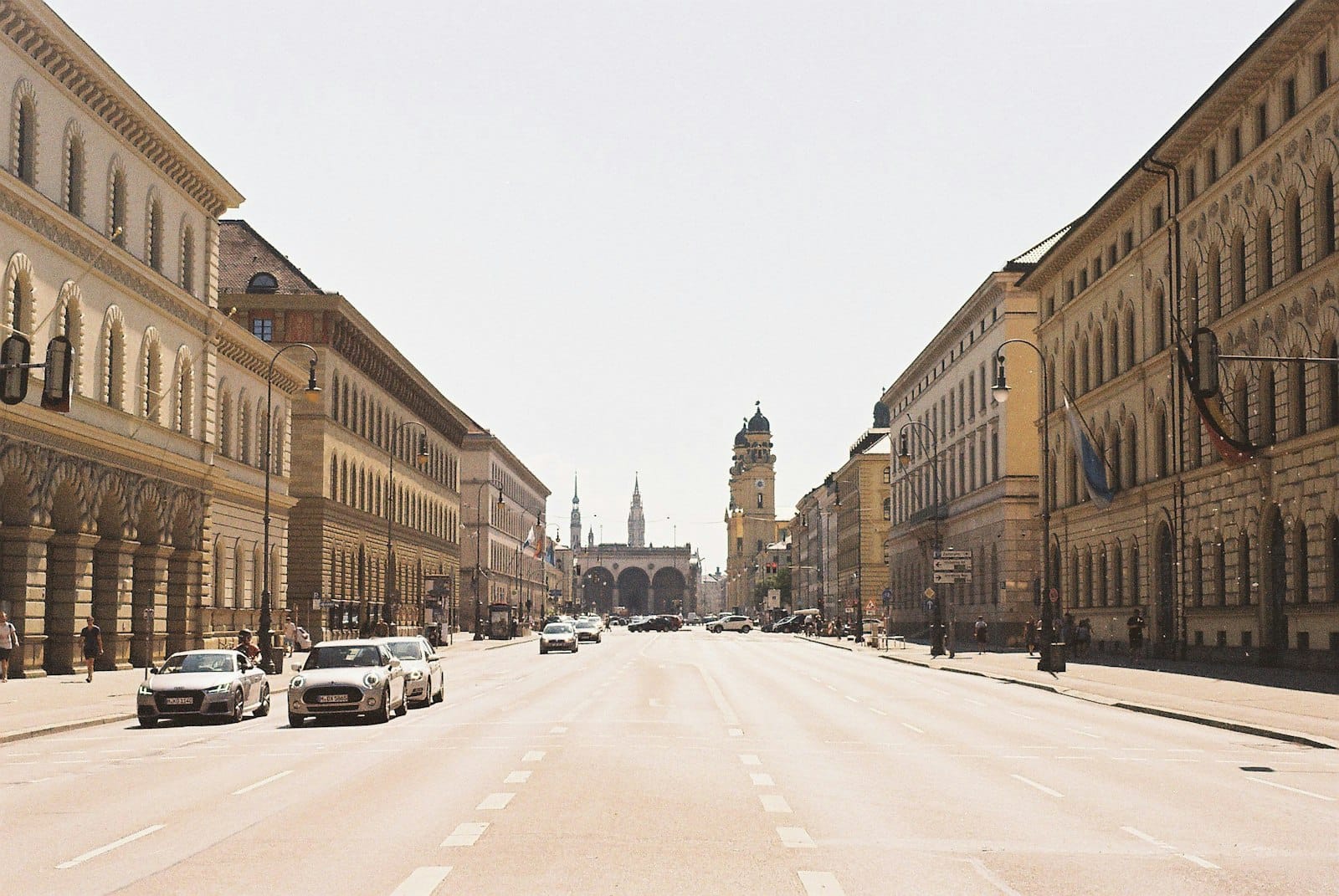
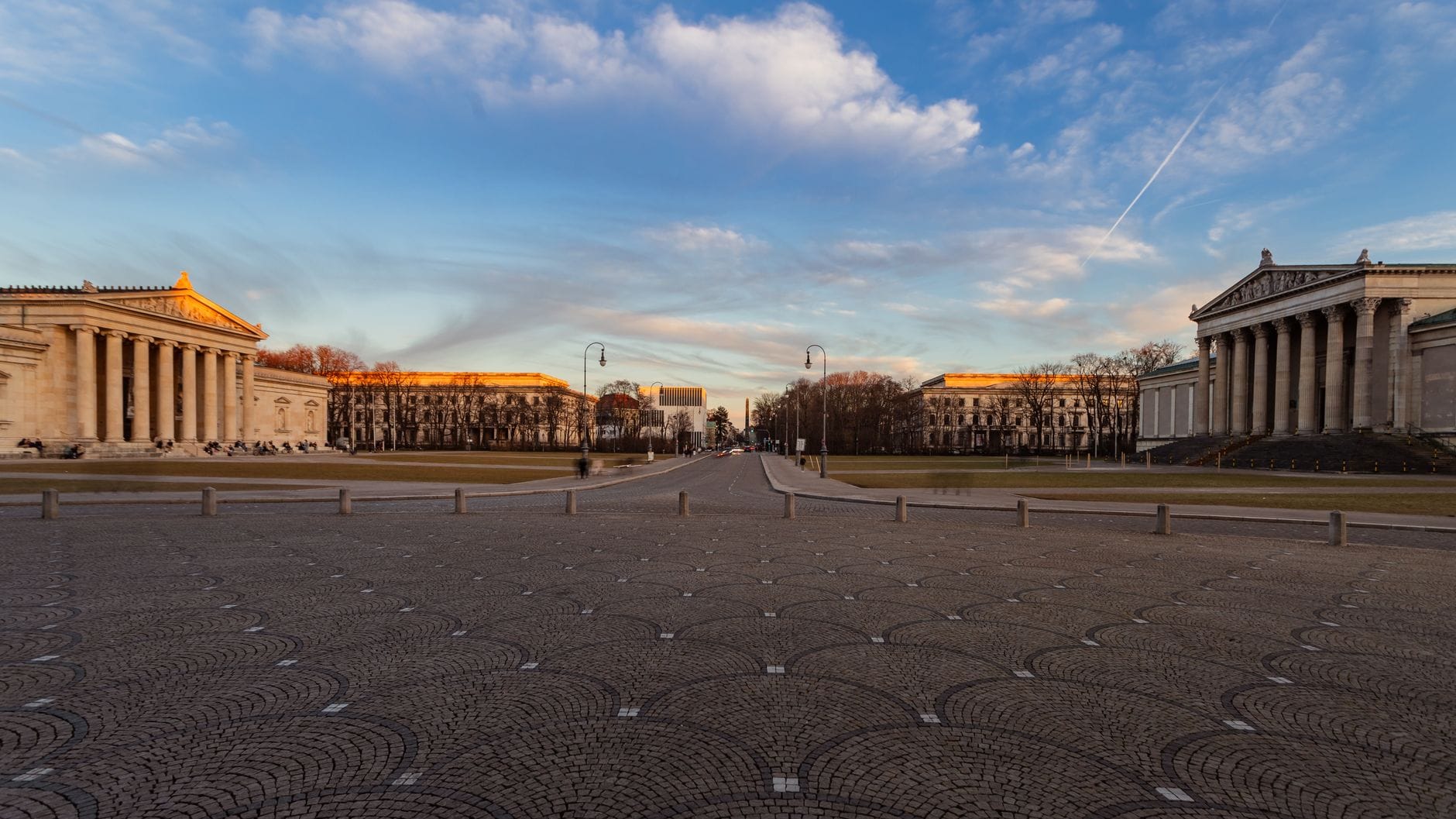
Two of Munich’s grandest planned streets cut through the district. Ludwigstraße runs arrow-straight from Odeonsplatz northward to the Siegestor, lined with imposing neoclassical facades commissioned by King Ludwig I in the early nineteenth century. Parallel to it, Brienner Straße heads westward from Odeonsplatz toward Königsplatz, the austere Greek Revival plaza that anchors the western half of the district. Between these two axes, the Kunstareal museum quarter occupies a concentrated cluster of blocks that is one of Munich’s most important museum districts.
ℹ️ Good to know
Maxvorstadt is entirely walkable from the Altstadt. Odeonsplatz, at the district's southeastern corner, is about a 10-minute walk north from Marienplatz along Theatinerstraße or Residenzstraße.
Character & Atmosphere
Walking into Maxvorstadt from Odeonsplatz on a weekday morning, the first thing you notice is the scale. The streets are wide, the buildings are tall and stone-fronted, and the sidewalks are broad enough for cyclists, pedestrians, and the occasional food market stall without anyone colliding. This is a planned district, and it shows. Ludwig I intended it as a showcase of Bavarian cultural ambition, and the bones of that ambition are still legible in every block.
By mid-morning, the university population asserts itself. The main campuses of Ludwig-Maximilians-Universität München (LMU) sit in Maxvorstadt, and during term time the surrounding streets fill with students moving between lectures, sitting outside cafés on Amalienstraße, and locking bicycles in dense rows outside the library buildings. There are said to be over 100,000 students across the various universities and colleges concentrated here, and on a Tuesday at noon you can believe it. The ratio of bookshops, cheap lunch spots, and copy shops to luxury retailers tells you exactly what kind of neighborhood this is.
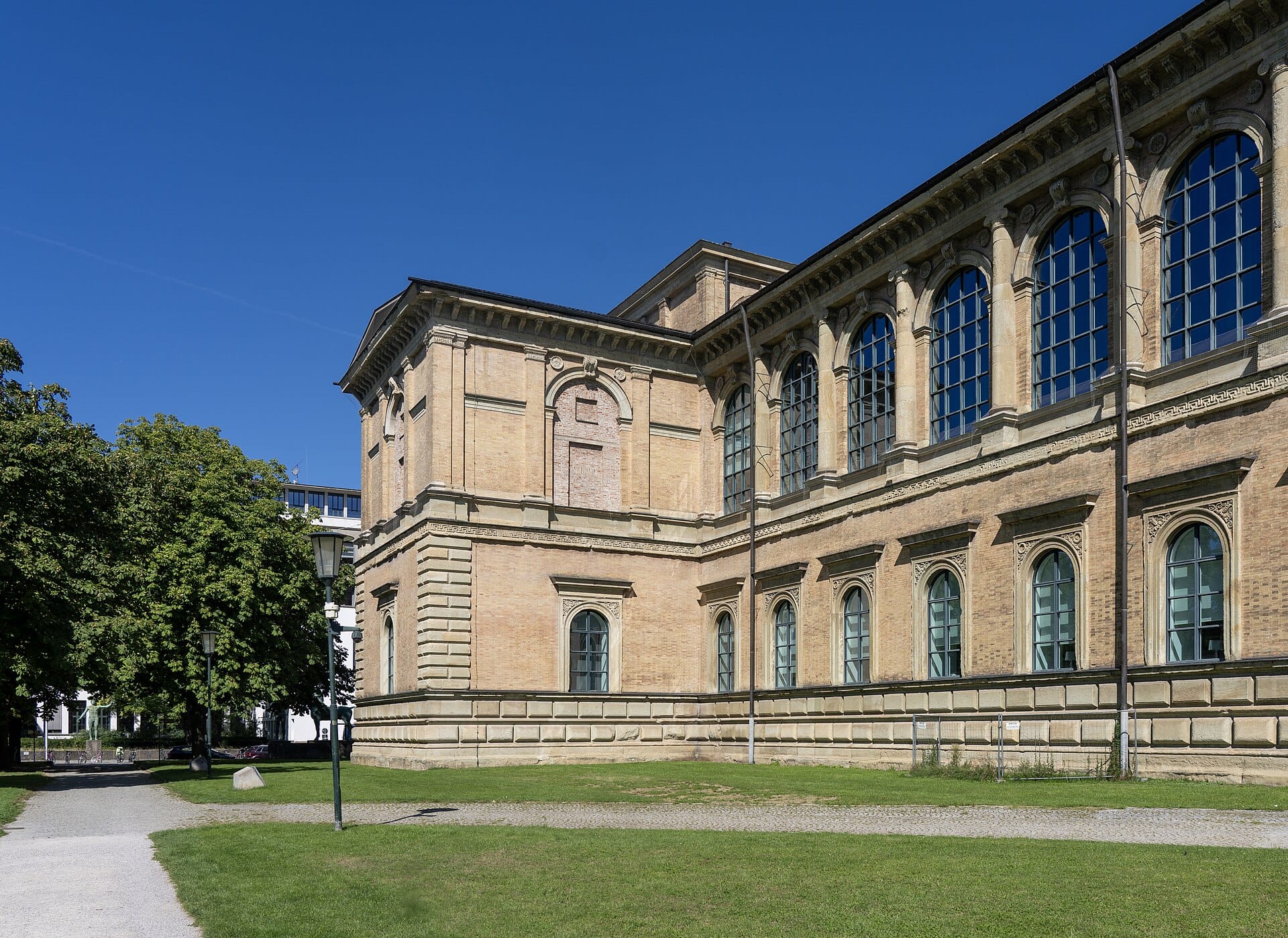
The museum blocks around the Pinakotheken feel quieter, more deliberate. Theresienstraße and Barer Straße see a slower pace: people arrive with bags over one shoulder, check museum opening times on their phones, debate which building to enter first. In the afternoon, when the light turns golden and rakes across the stone facades of the Alte Pinakothek, the street outside takes on the quality of a stage set. It is one of the more reliably beautiful parts of Munich in the late afternoon, particularly in spring and autumn when the trees along the museum esplanades are doing something interesting.
After dark, Maxvorstadt is not a nightlife district in the way that the Glockenbachviertel is. The museum quarter goes quiet once the galleries close. But Amalienstraße and the streets around the university retain energy well into the evening, with students spilling out of bars and the kind of relaxed, low-key pub culture that comes naturally to a district with a large student population. It is not loud, not particularly rowdy, and feels safe at night. The main streets remain well-lit and well-used.
What to See & Do
The Kunstareal is the primary reason most visitors come to Maxvorstadt, and it justifies the trip. The museum quarter clusters around Barer Straße and contains institutions that would anchor the cultural calendar of much larger cities individually. Taken together, they make for a genuinely overwhelming concentration of art.
Alte Pinakothek: Old Masters from the 14th to 18th centuries, one of the world's great collections of European painting
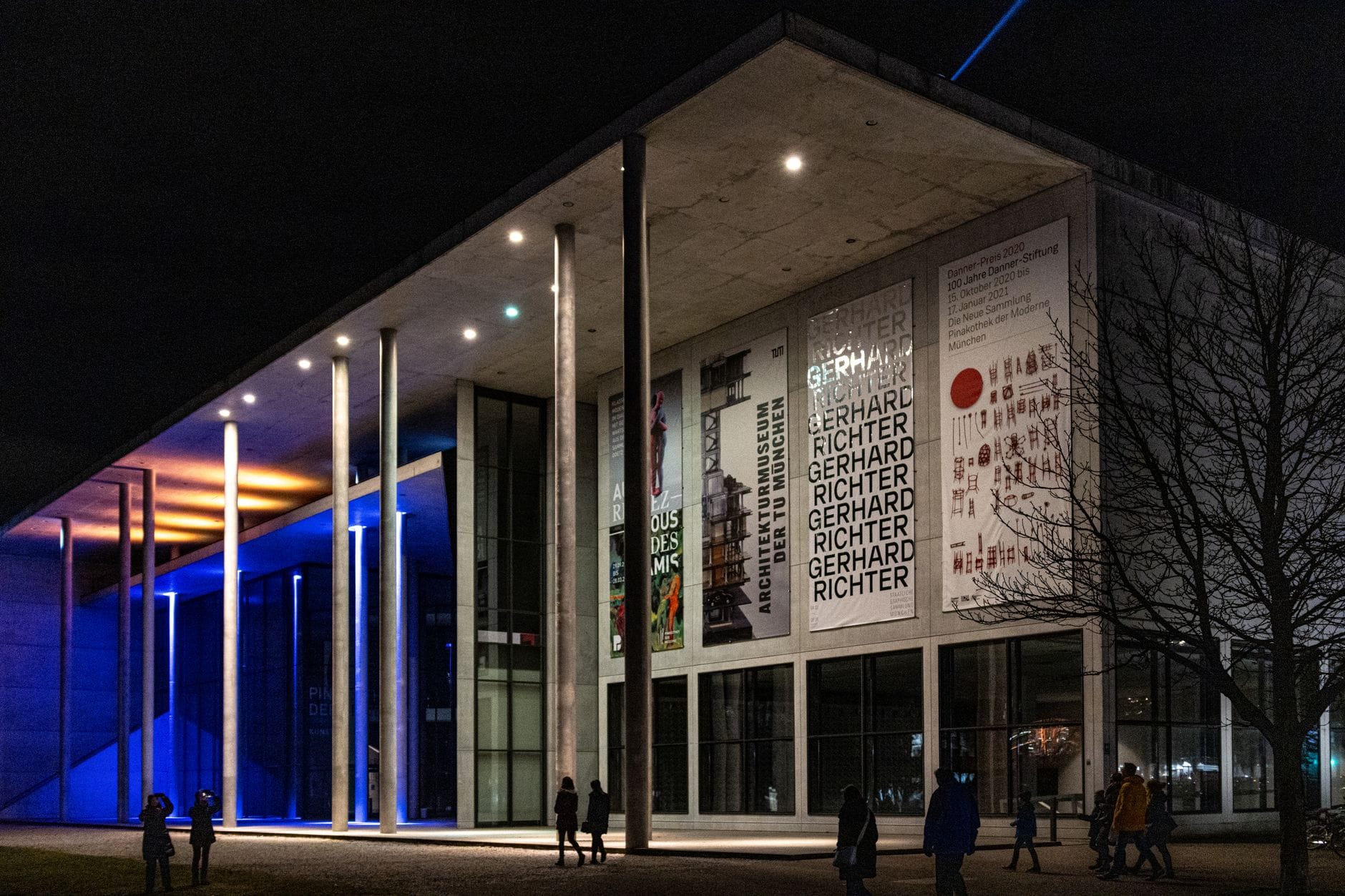
Pinakothek der Moderne: The city's flagship modern and contemporary art museum, also housing design, graphics, and architecture collections under one roof
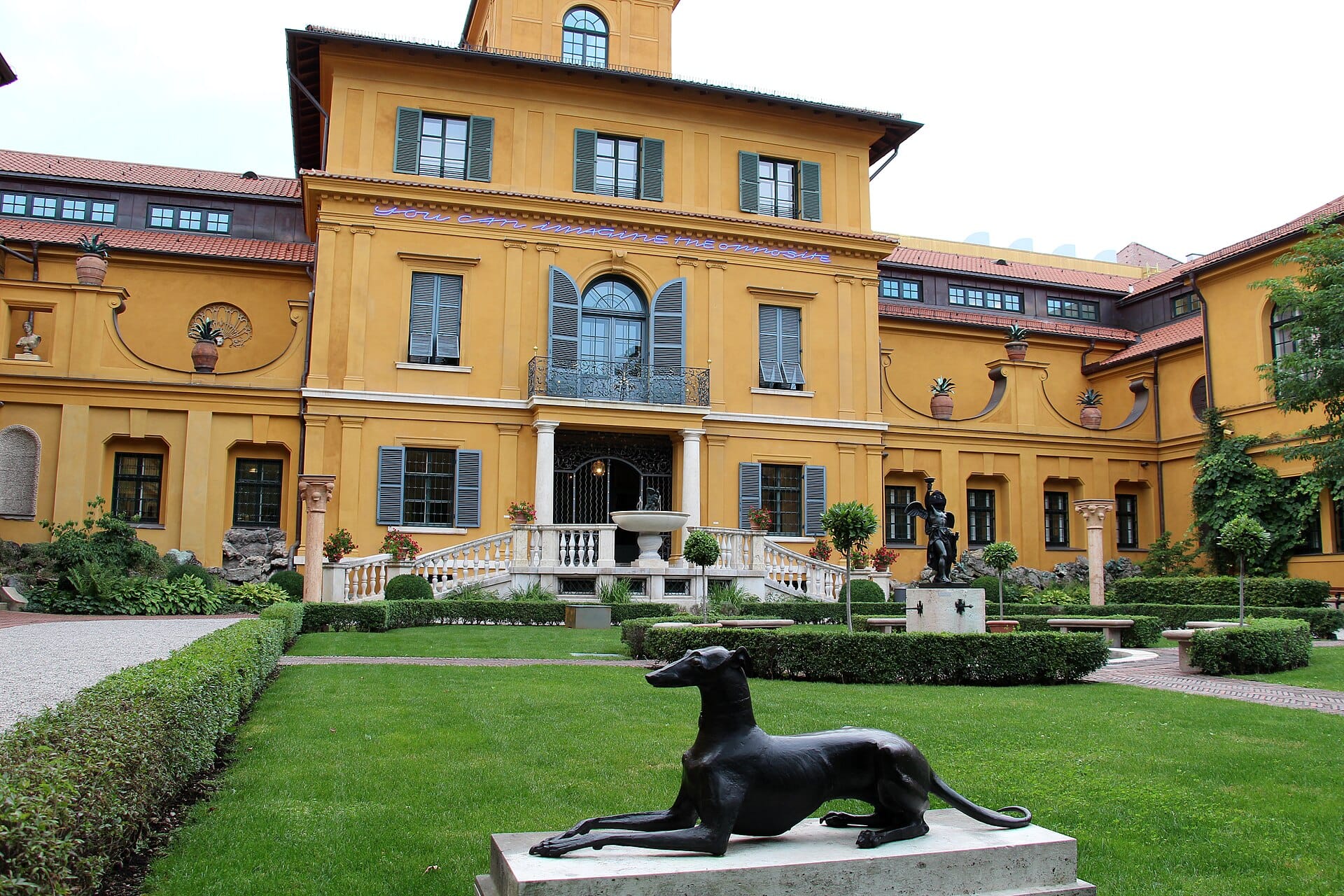
Lenbachhaus: Best known for its collection of Kandinsky and the Blue Rider group, in a handsome villa setting
Museum Brandhorst: Contemporary art with a strong focus on Cy Twombly and Andy Warhol, in a striking building clad in colored ceramic rods
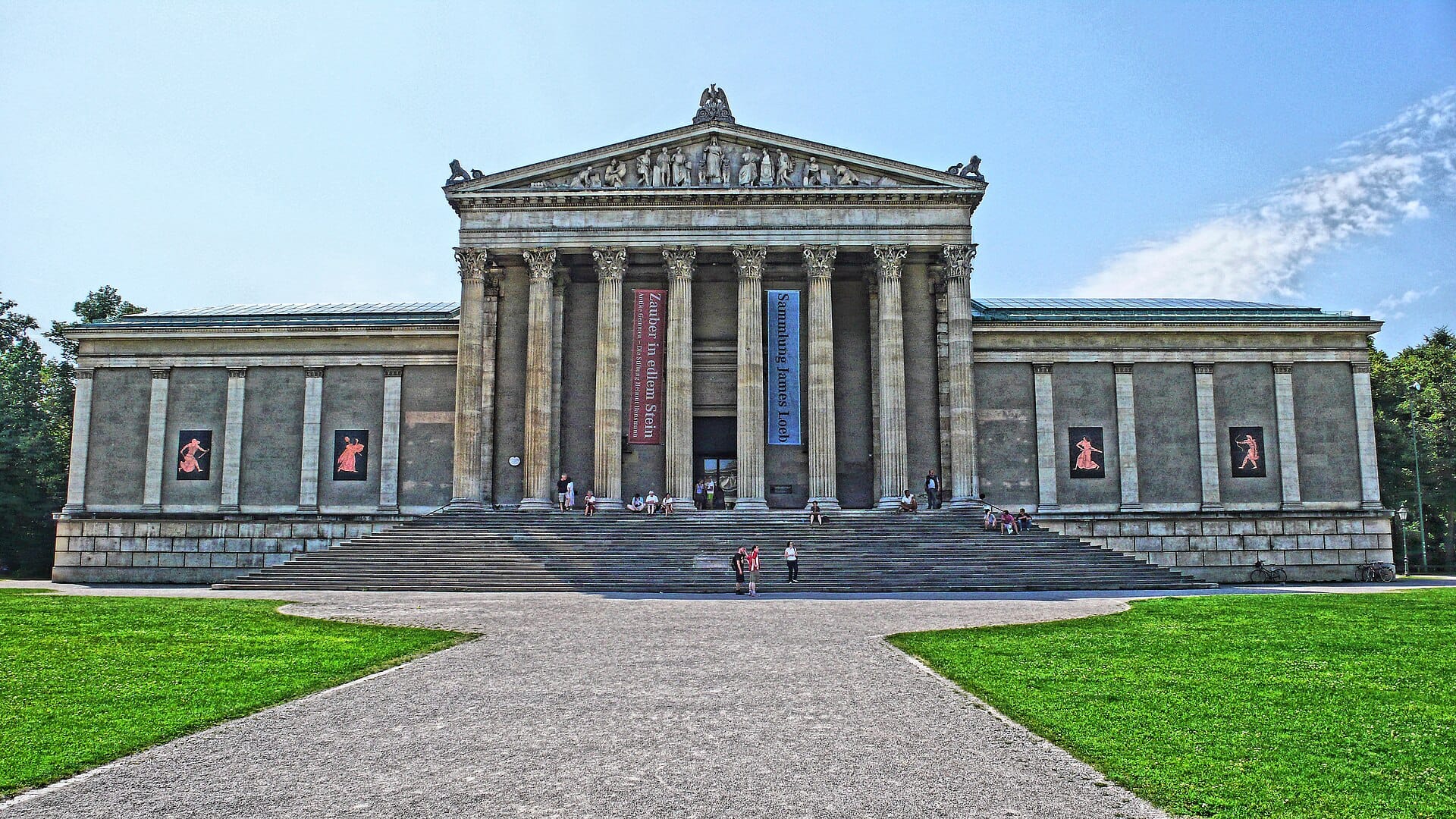
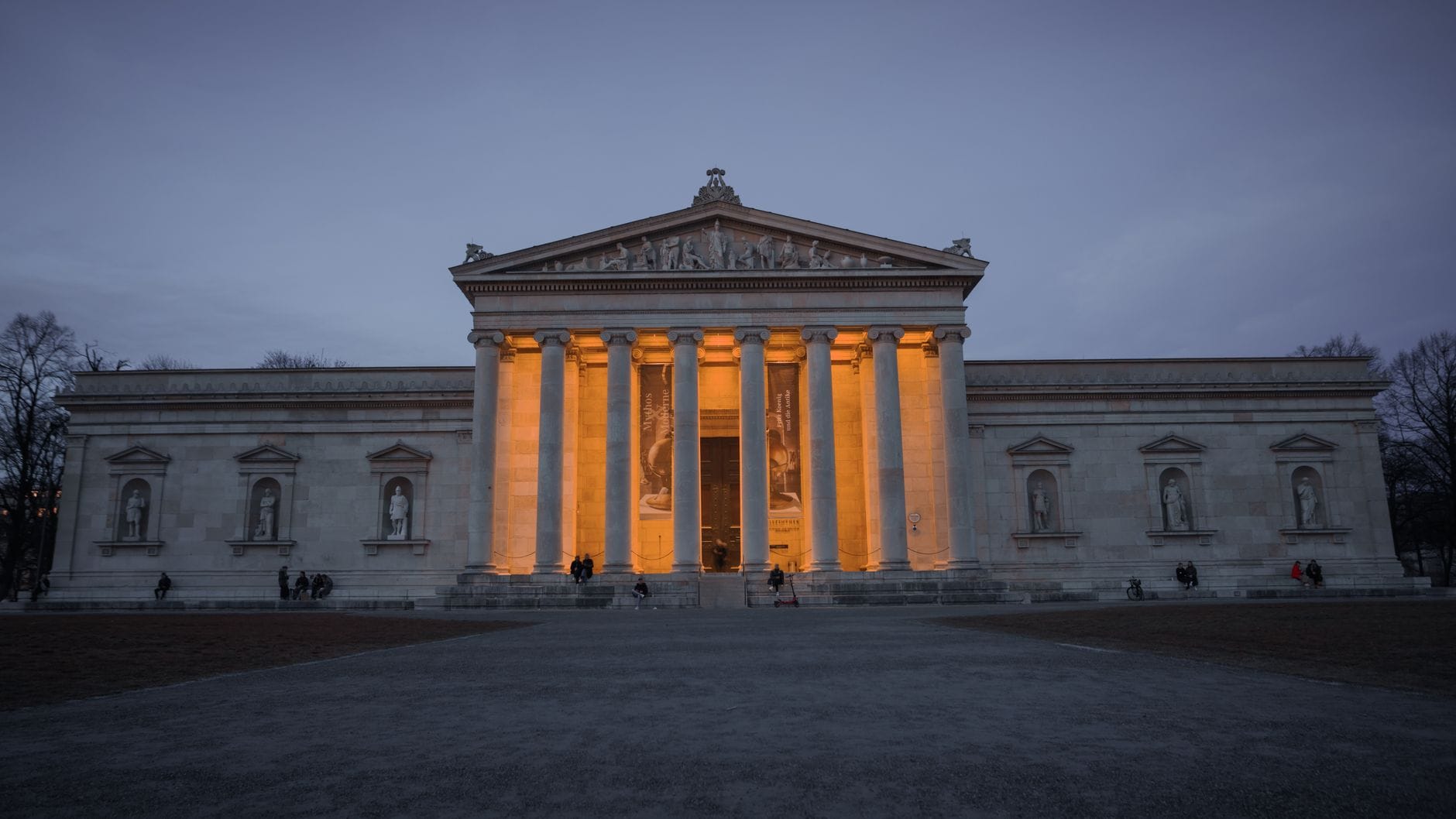
Glyptothek: Greek and Roman sculpture arranged in neoclassical halls around Königsplatz
Staatliche Antikensammlungen: Across the plaza from the Glyptothek, ancient Greek vases, jewelry, and bronzes
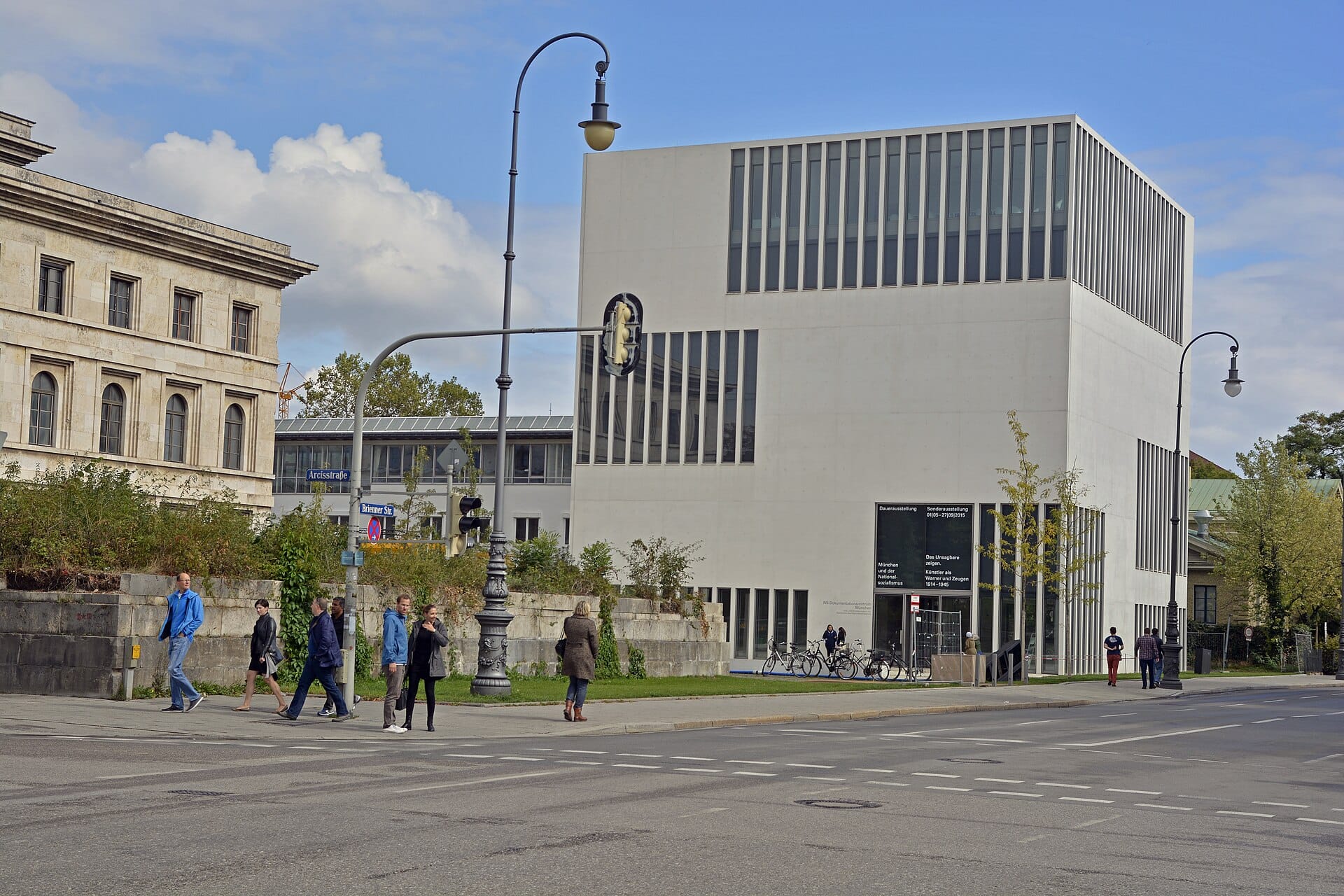
NS-Dokumentationszentrum: A serious and well-designed documentation center on the history of National Socialism in Munich, directly facing Königsplatz
Beyond the Kunstareal, Königsplatz itself is worth time as an architectural and historical space. In summer the plaza hosts open-air concerts. The adjacent Lenbachhaus and the neoclassical buildings that frame the square give it a monumental quality that is unusual for a public open space.
The NS-Dokumentationszentrum deserves particular mention. Maxvorstadt played a specific and painful role in twentieth-century German history: several Nazi party buildings and institutions were concentrated around Königsplatz and Brienner Straße. The documentation center addresses this history directly and thoroughly, and stands where the Nazi party headquarters once stood. Visiting it alongside the classical museum landscape around Königsplatz gives the district a layered historical quality that is impossible to reduce to simple aesthetics.
Elsewhere in the district, the Siegestor at the northern end of Ludwigstraße repays a closer look. Built to celebrate the Bavarian army, it was badly damaged in World War II and deliberately left partially unrestored, with an inscription added that dedicates it not to victory but to peace. It is one of Munich's more quietly affecting monuments.
💡 Local tip
The Kunstareal museums are too much for one day. Most visitors find two to three institutions is the realistic maximum before fatigue sets in. The Pinakothek der Moderne and the Museum Brandhorst share a plaza and pair naturally. The Alte Pinakothek rewards a morning visit when crowds are lightest.
Eating & Drinking
Maxvorstadt's food scene divides roughly along the fault line between the student population and the museum-visiting crowd. The area around the universities, particularly along Amalienstraße and Schellingstraße, concentrates affordable lunch spots, Italian-run cafés, kebab shops, and the kind of Bavarian Wirtschaft that charges reasonable prices for Schnitzel and a half-litre of beer. This is practical, everyday eating rather than destination dining.
The blocks immediately around the Pinakotheken and Königsplatz are quieter on the food front, with museum cafés and a handful of restaurants oriented toward visitors rather than regulars. Quality varies. If you want a proper lunch between museum visits, you are generally better served walking a few blocks toward the university area than eating at whatever is directly adjacent to the ticket desk.
For coffee, Amalienstraße has a concentration of independent cafés that do reliable espresso and often function as student study spaces during the day. For a more substantial Bavarian meal or a beer in a traditional setting, the Altstadt is a ten-minute walk south, but Maxvorstadt has its own quieter options in the form of small neighborhood Wirtschaften that are easier to get a seat in during peak hours.
In the evenings, the bar scene along Schellingstraße caters to students and young professionals, with a mix of traditional pub formats and slightly more contemporary wine bars. Nothing here competes with the concentrated nightlife of the Glockenbachviertel, but for a relaxed drink after a day in the museums, the options are more than adequate. Prices across the district are generally mid-range, with the university-adjacent spots at the cheaper end.
Getting There & Around
Maxvorstadt is served by several U-Bahn stations on its boundaries and edges. Odeonsplatz (U3, U4, U5, U6) sits at the southeastern corner and is the most useful single entry point, giving direct access to Ludwigstraße and a short walk to the museum quarter. Karlsplatz/Stachus (U1, U2, U4, U5), at the southern edge, connects to Munich Hauptbahnhof and the broader MVV network. For comprehensive transit options across the city, the getting around Munich guide covers ticketing, zones, and route planning in detail.
Tram lines cross the district and are often the most direct way to move between specific points. Several bus routes link the Kunstareal directly to Hauptbahnhof and to the Altstadt. The district itself is flat, compact, and straightforward to navigate on foot: walking from Odeonsplatz to Königsplatz takes around fifteen minutes along Brienner Straße.
Cycling is practical and common. Maxvorstadt has wide enough streets and a significant cycling infrastructure, which reflects its large student population. Bike rental is available across the city through various operators, and the flat terrain makes the district easy to cover on two wheels.
💡 Local tip
From Munich Hauptbahnhof, the most direct walking route into the museum quarter is along Luisenstraße heading northeast, which brings you directly to the Alte Pinakothek in about 12 minutes on foot.
Where to Stay
Maxvorstadt has a reasonable selection of hotels and serviced apartments, with options concentrated around the museum area and the streets close to Hauptbahnhof. It is not as dense with accommodation as the Altstadt or the area immediately around the central station, but staying here puts you within walking distance of the Kunstareal and a short transit ride from the old town. For a broader overview of accommodation across the city, the Munich accommodation guide compares neighborhoods in detail.
Maxvorstadt suits travelers who prioritize cultural access over nightlife proximity. The area is quiet enough to sleep well, but close enough to everything to avoid feeling remote. Families with museum-focused itineraries, solo travelers on academic or cultural trips, and couples who want a more residential feel than the Altstadt provides will find it a comfortable base. It is not the right base for anyone whose evenings will be centered around bars and clubs: for that, the Glockenbachviertel or Haidhausen offer better proximity.
Room rates tend to be somewhat lower than equivalent hotels in the Altstadt, particularly on the university-side streets. The western part of the district, closer to Lothstraße, offers slightly more budget-oriented options and is still within comfortable walking distance of the main sights.
⚠️ What to skip
During major trade fairs at the Munich exhibition center (Messe München) and during Oktoberfest, hotel prices across all Munich neighborhoods spike significantly. Book well in advance if your visit overlaps with these periods.
Historical Context: Why Maxvorstadt Is What It Is
Maxvorstadt was developed in the early nineteenth century under King Ludwig I of Bavaria, who commissioned a systematic urban expansion north of the medieval city. The plan was explicitly cultural: Ludwig wanted to establish Munich as a city that could compete intellectually and artistically with Vienna, Berlin, and Rome. He brought in leading architects, most notably Leo von Klenze and Friedrich von Gärtner, to design the grand boulevard of Ludwigstraße, the museum buildings, and the Königsplatz ensemble modeled on Athenian civic space.
The universities arrived in the same period, with LMU relocating from Landshut to Munich in 1826. The combination of royal patronage, major educational institutions, and a purpose-built museum quarter created the character that Maxvorstadt still carries today. That character was briefly and violently interrupted in the Nazi period, when the area around Königsplatz and Brienner Straße was appropriated for party headquarters and administrative buildings. The NS-Dokumentationszentrum now occupies the former site of the NSDAP party headquarters and addresses this history directly. The Munich Beer Hall Putsch history guide provides further context on the city's role in the early Nazi movement.
Post-war reconstruction restored much of the bombed fabric, and the district has been largely stable in character since. The student population, which grew significantly through the second half of the twentieth century as both LMU and TU München expanded, injected a younger, less formal energy into streets that might otherwise have become purely institutional. The result is a district that manages to be both monumental and lived-in, which is rarer than it sounds.
Is Maxvorstadt Right for You?
If your Munich trip has art, history, or architecture at its center, Maxvorstadt is almost certainly where you will spend a significant portion of your time, whether or not you stay there. The Alte Pinakothek, the Pinakothek der Moderne, and the Glyptothek alone would justify a full day. The best museums in Munich guide provides a full comparison across the city's institutions if you are planning a museum-focused itinerary.
If your priorities are nightlife, markets, and the social texture of street-level Munich, Maxvorstadt is better treated as a daytime destination than a base. It is not the most dynamic part of the city after 9pm, and its restaurant and bar options, while solid, are not the reason to come. But as a place to spend daylight hours with serious intent, it competes with the best districts of any German city.
TL;DR
Maxvorstadt is Munich's arts and university district, home to the Kunstareal museum quarter, Königsplatz, and the main campuses of LMU and TU München.
Best for: travelers with cultural and architectural interests, museum-focused itineraries, visitors who want a quieter residential base close to the Altstadt.
Not ideal for: travelers whose evenings center on nightlife; the district is calm after dark and lacks the bar density of Glockenbachviertel or Haidhausen.
Key transit: Odeonsplatz (U3/U4/U5/U6) and Karlsplatz/Stachus (U1/U2/U4/U5) are the main entry points; the district is flat and highly walkable.
The Kunstareal alone warrants a full day; plan for multiple visits or prioritize two to three institutions per trip to avoid fatigue.
Three days is enough time to cover Munich's historic core, its great palace estates, world-class museums, and one excellent day trip. This itinerary structures each day for maximum efficiency, with practical advice on what to skip, what to prioritize, and how to get around without wasting time.
Bavarian cuisine is one of the most distinctive regional food cultures in Europe, and Munich is its undisputed home. This guide covers the essential dishes, realistic prices, where to find authentic food, seasonal tips, and practical advice on avoiding tourist traps.
Munich has more than 80 museums, ranging from one of the world's largest science institutions to intimate Art Nouveau villas. This guide covers the 18 best, organized by theme, with practical advice on tickets, free entry days, and how long to spend at each.
Munich rewards visitors in every season, but the right time depends entirely on what you want from the trip. This guide breaks down weather, crowd patterns, hotel prices, and major events month by month so you can make an informed decision before you book.
Munich sits at the center of one of Europe's most rewarding regions for day trips. Within two hours of the city you can reach fairy-tale castles, a sobering memorial site, a foreign capital, and medieval old towns. This guide covers the best options, how to get there cheaply, what to expect, and when to go.
Munich has a reputation for being expensive, but the city rewards those who know where to look. From vast royal parks and free Baroque churches to BMW showrooms and €1 museum Sundays, there is more to experience here without paying full price than most visitors realize.
Munich has one of Europe's most comprehensive public transport networks, covering the entire city and its suburbs through a single ticketing system. This guide breaks down every option, from the S-Bahn airport connection to cycling the Isar, so you can move around Munich with confidence.
Munich consistently ranks as Germany's safest large city, with violent crime against tourists being genuinely rare. But that does not mean you can be complacent. This guide breaks down the real risks, the neighborhoods to know, seasonal crime patterns, and practical safety tips that will help you travel smarter.
The 1972 Munich Olympics were supposed to redefine Germany's image on the world stage. They did, but not in the way anyone intended. This guide covers the full story: the groundbreaking design, the athletic records, the tragedy of September 5th, and how Olympiapark stands today as both a leisure destination and a site of memory.
Munich Airport (MUC) is one of Europe's busy hubs, serving over 1,100 daily flights across two main terminals. This guide covers everything from reading the terminal map and making connections to catching the S-Bahn into Munich city center in under 40 minutes.
Munich was the birthplace of the Nazi movement and home to some of the most significant sites of 20th-century German history. This guide covers the essential locations, how to reach them, what to expect, and how to approach them with the seriousness they deserve.
Munich hosts some of Germany's most celebrated Christmas markets, from the iconic Münchner Christkindlmarkt on Marienplatz to a dozen smaller themed Weihnachtsmärkte spread across the city. This guide covers every major market, what to eat and drink, how to avoid the worst crowds, and what first-timers consistently get wrong.
The Munich City Pass bundles free entry to 40+ attractions with optional public transport into one prepaid card. But at up to €113 per person for five days, it only pays off under specific conditions. This guide breaks down exactly who benefits, how to calculate your savings, and when you're better off paying as you go.
Munich has roughly 1,200 km of bike paths, flat terrain through the city center, and landmark-packed corridors along the Isar and English Garden. This guide covers the best cycling routes, where to rent a bike, what the rules actually say, and when to go.
The Dachau Concentration Camp Memorial Site is one of the most important historical sites in Germany, located just over 20 km northwest of Munich. This guide covers exactly how to get there, what you will find on site, how long to allow, and how to prepare for a visit that demands both practical planning and emotional readiness.
Munich rewards those who look beyond Marienplatz. From a Rococo theatre tucked inside a royal palace to a Baroque beer garden in a former deer park, these lesser-known spots reveal a richer, quieter side of Bavaria's capital.
Summer transforms Munich into one of Europe's most enjoyable cities. From riverside parks and open-air festivals to world-class opera and Alpine day trips, this guide covers everything you need to make the most of June, July, and August in Bavaria's capital.
Munich (München) competes confidently with Europe's established luxury destinations. From storied 5-star hotels steps from Marienplatz to Michelin-starred kitchens and world-class cultural institutions, this guide covers everything you need to plan a genuinely high-end stay, including when to book, what to skip, and how much to budget.
Munich (München) offers far more after dark than beer halls and Oktoberfest. From techno clubs in Werksviertel-Mitte to jazz in Glockenbachviertel and cocktail bars in Schwabing, this guide covers every facet of the city's nightlife scene, with practical advice on prices, transport, and where to go depending on your taste.
Munich Oktoberfest is the world's largest folk festival, drawing nearly 7 million visitors to the Theresienwiese each year. This guide covers dates, beer tent strategy, costs, transport, dress codes, and the practical details that separate a great Wiesn from a chaotic one.
Munich (München) has a reputation as one of Germany's priciest cities, but a well-planned trip can cost far less than you'd expect. This guide breaks down realistic daily budgets, the best free and low-cost attractions, transport savings, and the key timing decisions that will make or break your spending.
Munich (München) offers one of Germany's most diverse retail landscapes, from a 2-kilometer pedestrian shopping mile to Europe-class luxury streets, historic food markets, and independent neighborhood boutiques. This guide breaks down every district, market, and Bavarian buy worth your time and money.
The Munich to Frankfurt corridor is one of Germany's most traveled routes, and you have four real options: train, flight, bus, or car. This guide breaks down journey times, realistic costs, seasonal factors, and which mode of transport actually makes sense for your trip.
Neuschwanstein Castle is one of Bavaria's most iconic sights, and Munich is the natural base for visiting it. This guide covers every transport option, ticket logistics, seasonal considerations, and practical tips for making the most of your day trip from Munich to Neuschwanstein.
The Munich to Prague train is one of central Europe's great cross-border journeys, connecting Bavaria's capital with Bohemia's in around 5.5 hours. This guide covers journey times, fares, booking strategy, route options, and practical tips for making the trip as smooth as possible.
Salzburg sits just 150 km from Munich and is one of the most rewarding day trips in Central Europe. This guide covers every practical detail: which train to take, how to save money with the Bayern Ticket, whether driving makes sense, and how to spend your time in Mozart's birthplace.
The Munich to Vienna train route is one of Central Europe's great rail journeys, covering around 355 km in roughly 4 to 4.5 hours. This guide covers every operator, ticket strategy, and practical detail you need to get from München Hauptbahnhof to Wien Hauptbahnhof without overpaying or getting caught out.
Munich sits about 50 km north of the Alps, and on a clear day, the payoff from its towers and hilltops is extraordinary. This guide covers every worthwhile viewpoint in the city, from free park hills to paid observation decks, with clear-eyed guidance on what's worth the climb and what to skip.
Munich is one of Europe's most underrated family destinations. From the hands-on Deutsches Museum to the sprawling Englischer Garten, the city offers a remarkable range of activities for children of all ages, many of them free or heavily discounted. This guide covers the best family attractions, money-saving strategies, seasonal planning, and logistics to make your trip run smoothly.
Munich rewards couples with an unexpectedly rich mix of romantic experiences: palace parks, candlelit beer halls, canal walks, and winter butterfly gardens. This guide covers the best things to do in Munich for couples across every season and budget, from free afternoon strolls to genuinely memorable evenings.
Munich (München) packs royal palaces, world-class museums, beer halls, sprawling parks, and one of Europe's great food markets into a compact, walkable city. This guide breaks down the best things to do in Munich by category, with real prices, seasonal advice, and practical guidance on what is worth your time.
Munich's dining scene runs deeper than Weißwurst and pretzels. This guide covers the best restaurants in Munich across every budget and neighborhood, from century-old beer halls to modern fine dining, with practical tips on reservations, prices, and where locals actually eat.
Choosing where to stay in Munich shapes your entire trip. This guide breaks down every major neighborhood by price, atmosphere, and proximity to key attractions, so you can book with confidence whether you're here for Oktoberfest, a city break, or a business trip.