Munich's Nazi History: Key Sites & How to Visit Them Responsibly
Munich was the birthplace of the Nazi movement and home to some of the most significant sites of 20th-century German history. This guide covers the essential locations, how to reach them, what to expect, and how to approach them with the seriousness they deserve.
Tickets & tours
Live prices and dates from our booking partner. If you book, we may earn a commission at no extra cost to you.
TL;DR
- Munich was officially designated 'Hauptstadt der Bewegung' (Capital of the Movement) by Hitler — the NSDAP was founded here and operated from the city until 1945.
- The NS-Dokumentationszentrum at Königsplatz is the essential starting point: free entry, open Tuesday to Sunday, with English-language guided tours on Sundays at 13:00.
- Feldherrnhalle (Odeonsplatz) and the White Rose Memorial at LMU are free outdoor and walkable sites that pair well with a half-day itinerary.
- Dachau Concentration Camp Memorial is a separate full-day commitment, roughly 20 minutes by S-Bahn from Munich — see our Dachau visitor guide for detailed logistics.
- These are sites of learning and remembrance, not attractions. Approach them with time, silence, and preparation.
Why Munich? Understanding the City's Role in Nazi History
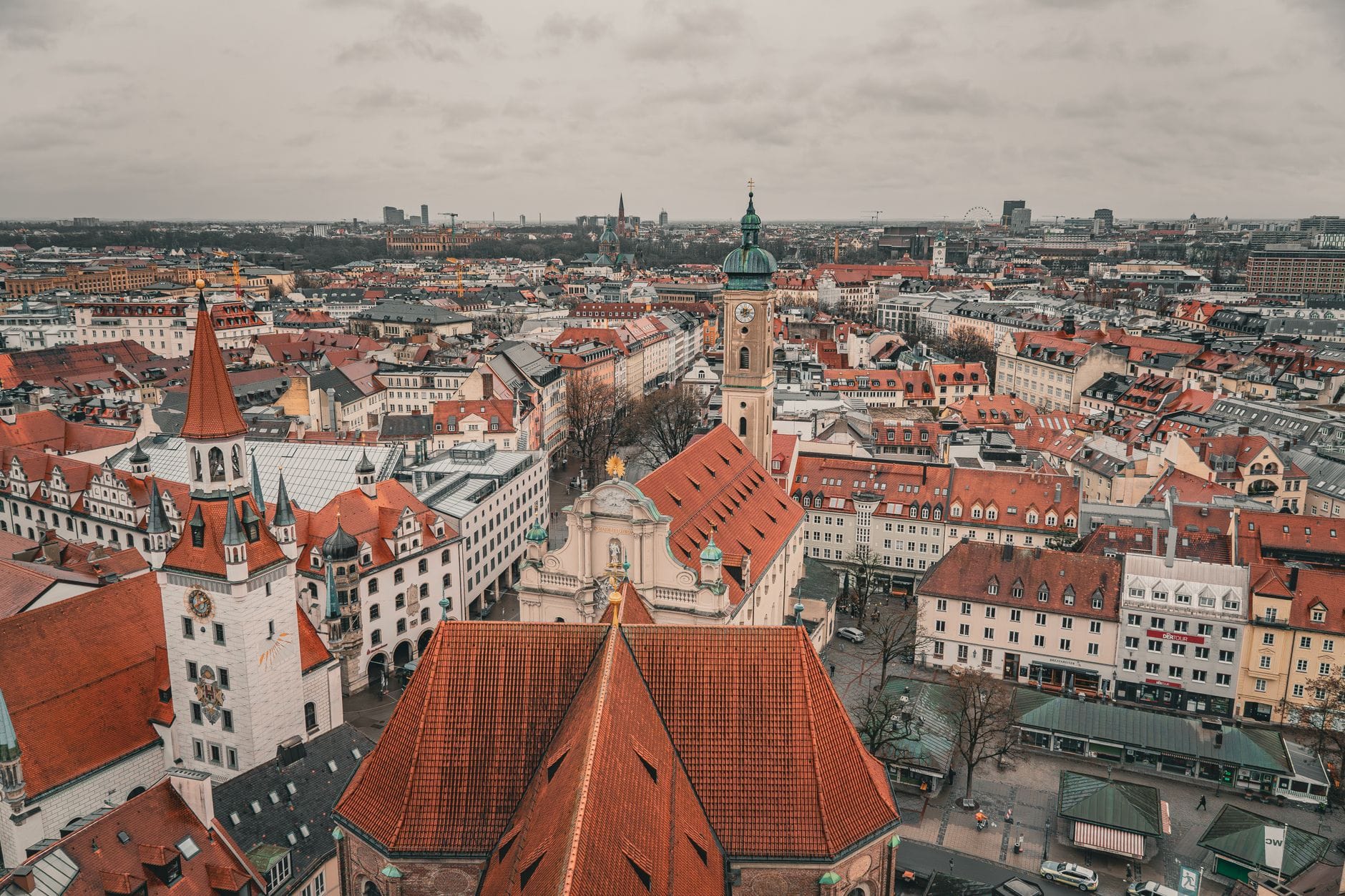
Most visitors associate Munich with beer gardens, Oktoberfest, and Baroque architecture. But the city carries a far heavier historical identity. Munich was where the Nazi Party (NSDAP) was founded around 1919–1920, where Adolf Hitler staged his failed Beer Hall Putsch in November 1923, and where the infamous Munich Agreement was signed in 1938. Hitler himself designated Munich 'Hauptstadt der Bewegung' — Capital of the Movement — a title that reflected the city's central role in the rise of National Socialism.
This history is not incidental. The streets of central Munich, particularly around Königsplatz and Odeonsplatz, were physically reshaped by the Nazi regime to project power. Several key party buildings were located within a few hundred metres of each other — a concentration of ideological infrastructure that the NS-Dokumentationszentrum now helps visitors understand and interpret. Engaging with this history is not 'dark tourism' in a sensational sense. Munich's own cultural institutions frame these sites explicitly as places of remembrance and civic responsibility.
ℹ️ Good to know
A common misconception: Munich was not simply swept along by broader German events. The city was an active centre of Nazi organisation, propaganda, and political violence from the movement's earliest days. Understanding this distinction is key to visiting these sites meaningfully.
The NS-Dokumentationszentrum: Where to Start
The NS-Dokumentationszentrum München (Munich Documentation Center for National Socialism) sits at Max-Mannheimer-Platz 1, on the exact site of the former Nazi Party headquarters, the so-called 'Brown House.' Opened in 2015, it is the most comprehensive resource in the city for understanding Munich's role in the Nazi period, and it is free to enter.
- Opening hours Tuesday to Sunday, 10:00–19:00. Closed Mondays.
- Admission Free. Audio guides and publications are available for purchase.
- English guided tours Sundays at 13:00. German-language tours run Sundays at 11:00 and 14:00. Group tours in other languages can be booked in advance.
- Getting there U2 to Königsplatz is the simplest option. Bus lines 100, 150, 58, and 68 also stop at Königsplatz. Trams 27 and 28 stop at nearby Karolinenplatz.
- Time needed Allow 2–3 hours minimum for the permanent exhibition. The building itself, a stark white cube set into the ground, is architecturally significant.
The permanent exhibition, 'Munich and National Socialism,' covers the city's role from the NSDAP's founding through the postwar period and uses primary sources, photographs, and spatial design to avoid sensationalism while confronting the material directly. It does not shy away from showing Munich's enthusiasm for the regime — not merely its victimhood. That honesty makes it one of the more intellectually rigorous historical museums in Germany.
💡 Local tip
Visit on a Tuesday or Wednesday morning to avoid weekend crowds. The Sunday English tour at 13:00 is excellent but draws larger groups, especially in summer. If you prefer a self-guided visit, the museum's audio guide covers the major themes well.
Königsplatz and the Former Nazi District
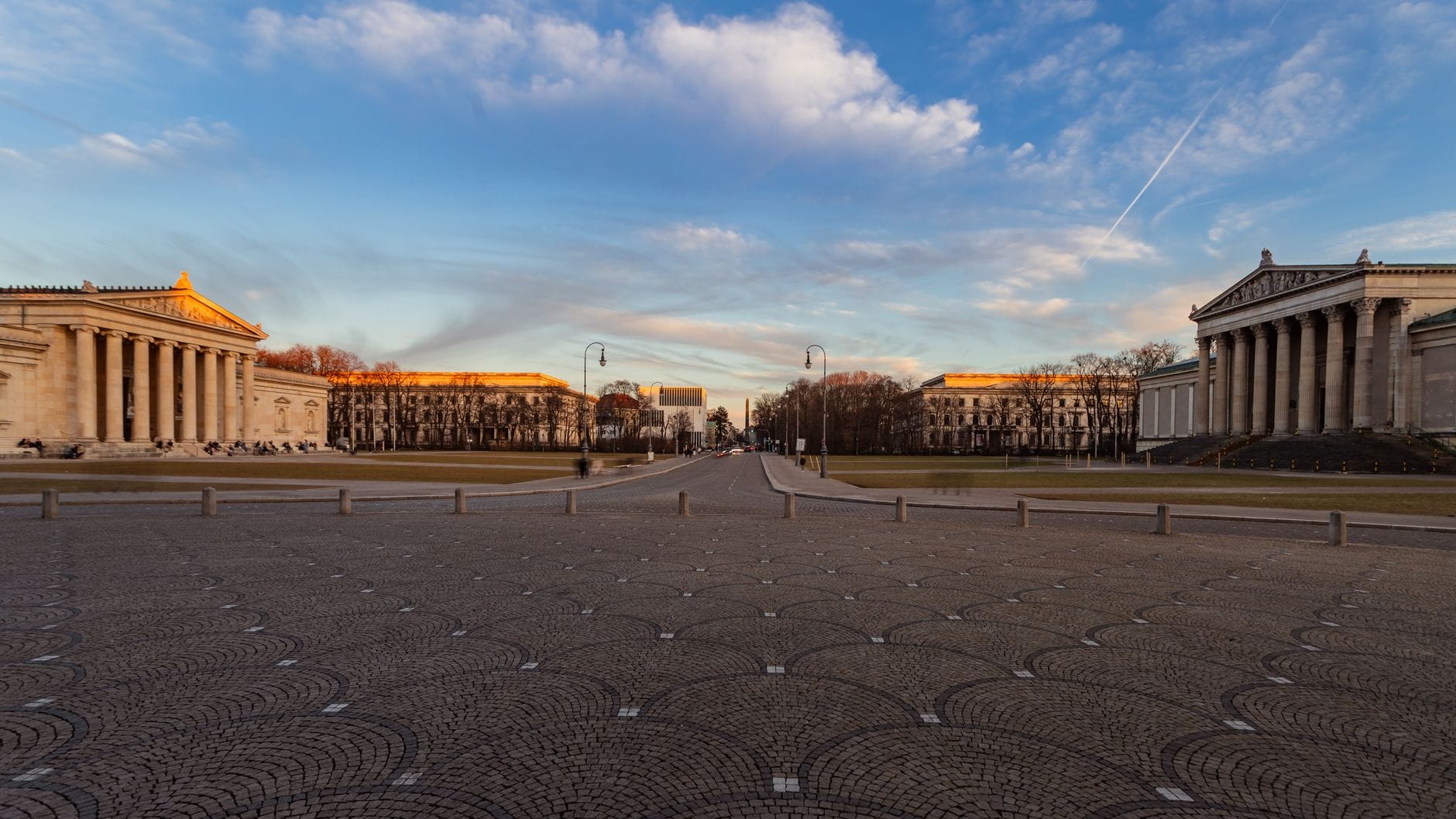
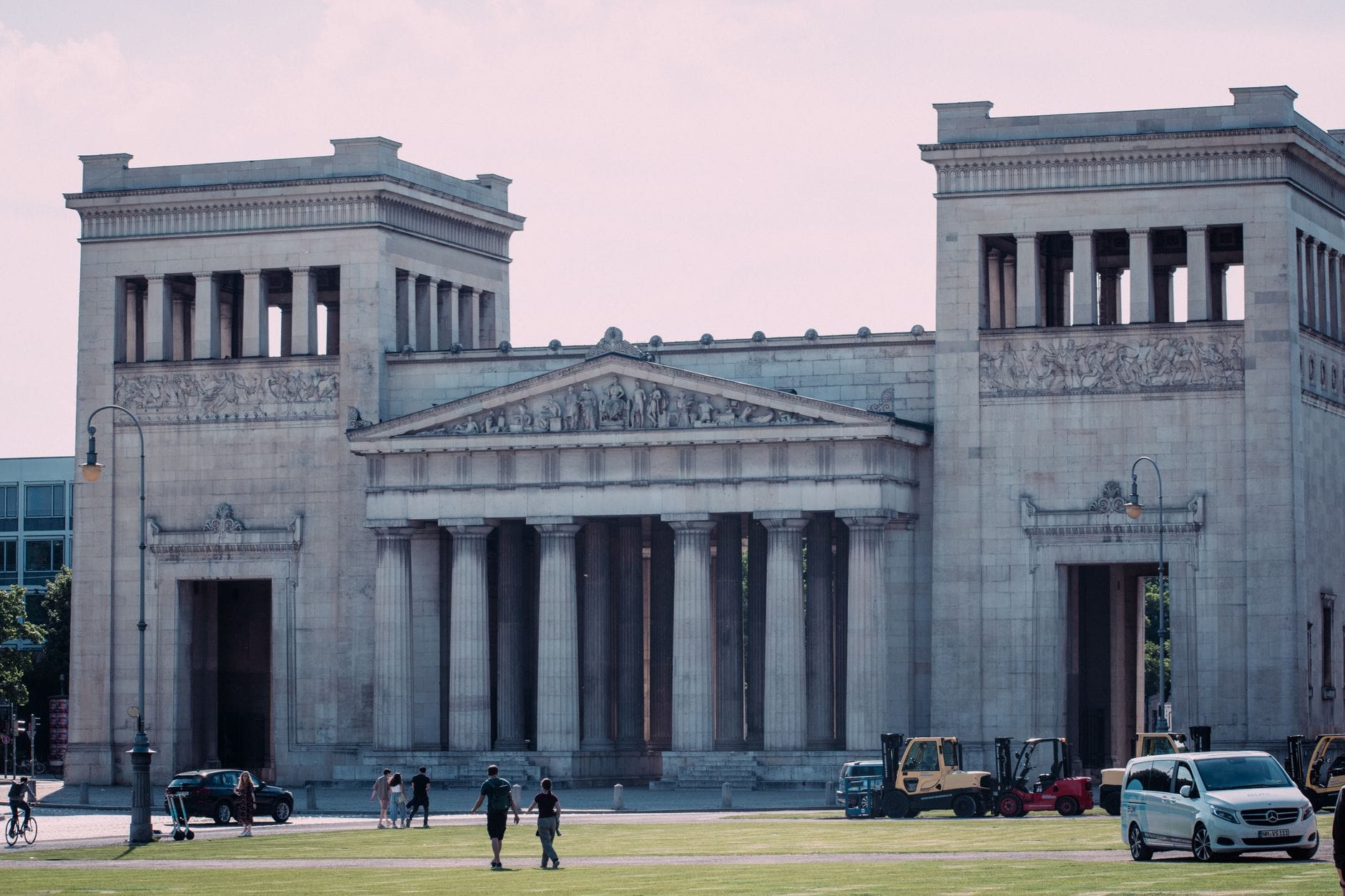
Königsplatz was originally conceived in the early 19th century as a neoclassical showpiece, inspired by ancient Athens. From 1933 onward, the Nazi regime paved it with granite and used it as a parade ground and stage for mass rallies. The paving was removed after the war, and the square has since returned to grass, but the surrounding architecture still tells the story.
Two key buildings from the Nazi era survive nearby. The Führerbau, at Arcisstrasse 12, was Hitler's personal Munich offices and the site of the 1938 Munich Agreement — the diplomatic capitulation that ceded Czechoslovakia's Sudetenland to Nazi Germany. It now houses the University of Music and Performing Arts. The Verwaltungsbau (administrative building) directly opposite is today used by the State Collections of Antiquities. Neither building is open for Nazi-history touring, but their presence on either side of Meiserstrasse is unmistakable once you know what you're looking at. The NS-Dokumentationszentrum provides detailed context for both.
Walking this area — Königsplatz, Brienner Strasse, and the streets linking to Odeonsplatz — takes roughly 30–45 minutes on foot and works well as a self-guided outdoor circuit. The spatial relationship between the Nazi party's former buildings and institutions like the Glyptothek and the Antikensammlungen (which were already there and were appropriated into the regime's aesthetic project) is part of what makes this neighbourhood worth walking slowly.
Feldherrnhalle and the Beer Hall Putsch
The Feldherrnhalle at Odeonsplatz was built in 1841–1844 as a monument to Bavarian military commanders. On 9 November 1923, it became the site of the final, violent confrontation of Hitler's attempted coup: the Beer Hall Putsch. A column of around 2,000 Nazi marchers, led by Hitler and Ludendorff, was stopped here by Bavarian state police. Shots were fired, sixteen Nazi marchers and four police officers were killed, and Hitler fled. He was later arrested and sentenced to prison, where he wrote Mein Kampf.
After Hitler came to power, the Feldherrnhalle was turned into a Nazi shrine. Passersby were required to give the Hitler salute as they walked past. Those who wanted to avoid this — and many Munich residents did — took a detour through the narrow Viscardigasse alley behind the loggia, which locals quietly nicknamed the 'Drückebergergasse' (Shirker's Alley). That alley still exists and is marked with a brass stripe in the pavement. It is one of the more quietly meaningful spots in the city.
✨ Pro tip
Look for the brass line running through Viscardigasse, the alley directly behind the Feldherrnhalle. It marks the path Munich residents took to avoid saluting the Nazi memorial. It takes 30 seconds to walk through and is one of the most understated pieces of historical memory in the city.
The White Rose Memorial and Student Resistance
One of the most important counterpoints to Munich's role as the movement's capital is the story of the White Rose (Weiße Rose), a student resistance group based at Ludwig-Maximilians-Universität (LMU). Between June 1942 and February 1943, siblings Hans and Sophie Scholl, along with several fellow students and a professor, distributed anti-Nazi leaflets across Munich and other German cities. They were arrested in February 1943 after being caught distributing leaflets inside the university's main building. They were executed by guillotine four days later.
The White Rose Memorial is located in the atrium of LMU's main building on Geschwister-Scholl-Platz (named after the siblings). Replicas of the leaflets are embedded in the pavement outside. Entry is free and the memorial is accessible during university opening hours, typically Monday to Friday during term time. The adjacent White Rose Foundation runs a small exhibition room inside the building — check their website for current hours before visiting, as access can vary. This site is particularly worth visiting alongside the NS-Dokumentationszentrum to understand both the machinery of repression and the individuals who resisted it.
Dachau: The Essential Day Trip
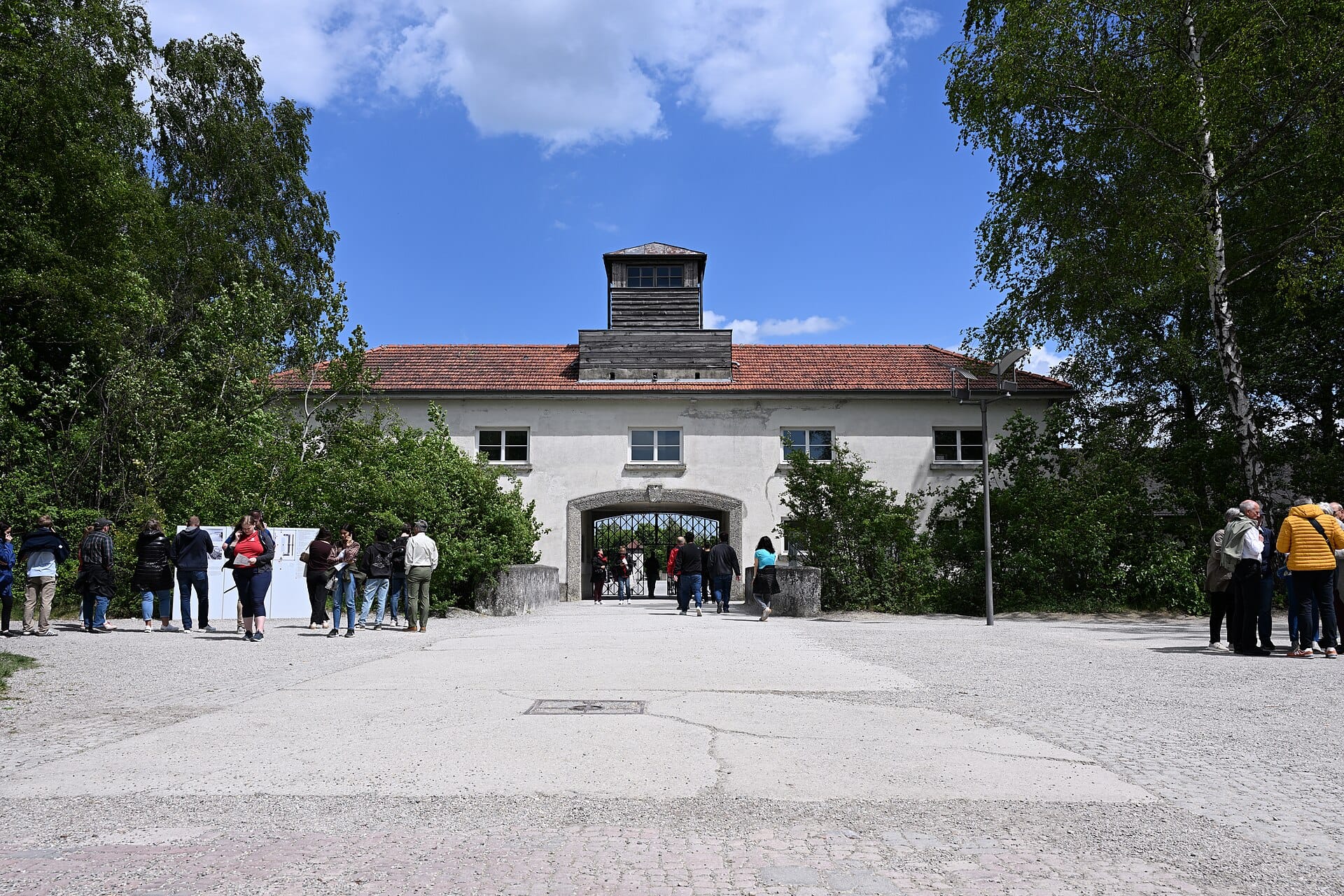
The Dachau Concentration Camp Memorial Site is not technically within Munich, but it is inseparable from any serious engagement with Munich's Nazi history. Established in March 1933 as the first regular concentration camp of the Nazi regime, Dachau held over 200,000 prisoners and was a template for the camp system that followed. It is located about 16 km northwest of central Munich.
Getting there by public transport takes around 45 minutes total: take S2 from Munich Hauptbahnhof to Dachau station (about 20 minutes), then bus 726 to the memorial site (about 12 minutes). Admission is free. The site is open Tuesday to Sunday, 09:00–17:00. Plan for a full half-day at minimum — most visitors spend 3–4 hours. Do not combine Dachau with other major Holocaust or NS sites on the same day; it is emotionally and intellectually demanding. Our dedicated Dachau visitor guide covers logistics, what to see inside, and how to prepare.
⚠️ What to skip
Dachau is not appropriate for very young children, and parents should research the site's content before deciding. It is also not a site to photograph freely or treat as a backdrop. Follow the memorial's guidance on respectful conduct throughout your visit.
Planning Your Visit: Practical Logistics
Most of the central Munich sites — NS-Dokumentationszentrum, Königsplatz, Feldherrnhalle, and LMU — can be covered in a single full day on foot. The NS-Dokumentationszentrum should anchor the day, ideally in the morning. From there, Königsplatz is immediately adjacent. Odeonsplatz and the Feldherrnhalle are about a 15-minute walk east along Brienner Strasse. LMU is a further 5-minute walk. For getting around Munich more broadly, see our guide to getting around Munich — the U-Bahn and tram network make all of these sites easy to reach without a car.
- Arrive at the NS-Dokumentationszentrum at opening (10:00) to get the most from the permanent exhibition before crowds build.
- The outdoor circuit around Königsplatz and Brienner Strasse is best done in dry weather; winter visits are fine but the context boards can be harder to read in poor light.
- Feldherrnhalle and Odeonsplatz are busiest in the afternoons — visit in the morning if you want quiet.
- LMU's main building is a functioning university; be aware of lecture schedules and avoid disrupting study spaces.
- Dachau should be a separate day from the city-centre circuit — do not attempt both in one day.
- All of the central sites are within the Munich MVV ticketing zones; a day ticket covers the U-Bahn, tram, and bus travel needed.
If you want structured context before visiting independently, several Munich tour operators run walking tours specifically focused on NS history, covering the Königsplatz area, the Putsch route, and related sites. These vary in quality — look for guides with historical credentials rather than general city tour companies. For broader context on Munich's history and what else the city offers, the things to do in Munich guide covers the full picture.
FAQ
Is the NS-Dokumentationszentrum really free?
Yes. The permanent exhibition 'Munich and National Socialism' is free to enter. Some temporary exhibitions or guided tours may have a fee — check the official site at nsdoku.de before your visit to confirm current pricing.
Can I visit all the Munich Nazi history sites in one day?
The central sites — NS-Dokumentationszentrum, Königsplatz, Feldherrnhalle, and the White Rose Memorial at LMU — can be covered in a full day. Dachau requires a separate day. Trying to combine Dachau with the city-centre circuit is not recommended; it is too much material to process meaningfully.
Is there an English-language guided tour of the NS-Dokumentationszentrum?
Yes. English-language guided tours of the permanent exhibition run every Sunday at 13:00. No booking is required for standard Sunday tours, but it is worth confirming on nsdoku.de as schedules can change for public holidays or special events.
What is the Beer Hall Putsch and why does it matter?
The Beer Hall Putsch was Hitler's failed coup attempt on 8–9 November 1923, launched from the Bürgerbräukeller beer hall (no longer standing) and ending in a deadly confrontation at the Feldherrnhalle. The failure led to Hitler's imprisonment, but his subsequent trial gave him a national platform. The Putsch is central to understanding how Munich incubated the Nazi movement before it seized national power in 1933.
Are these sites suitable for teenagers studying World War II?
The NS-Dokumentationszentrum and the White Rose Memorial are well-suited to older teenagers (14+) studying this period — both are thoughtfully curated and educational rather than graphic. Dachau is appropriate for older teenagers but requires preparation and should not be rushed. Parents and teachers should review each site's content in advance.
Tickets & tours
Live prices and dates from our booking partner. If you book, we may earn a commission at no extra cost to you.
Planning a trip? Discover personalized activities with the Nomado app.