Dachau Concentration Camp Memorial Site: A Complete Visitor Guide
The Dachau Concentration Camp Memorial Site, located 25 minutes from Munich by train, preserves the grounds of the first Nazi concentration camp, opened in 1933. With free admission, a comprehensive documentary exhibition, and guided tours in English, it draws many visitors each year who come to understand one of history's darkest chapters. Plan for at least three to four hours, and go prepared — emotionally as much as practically.
Quick Facts
- Location
- Pater-Roth-Str. 2a, 85221 Dachau, Germany (approx. 16 km northwest of Munich city centre)
- Getting There
- S-Bahn S2 to Dachau Bahnhof, then bus 726 to KZ-Gedenkstätte stop
- Time Needed
- 3–4 hours minimum; up to a full day with a guided tour and the crematorium area
- Cost
- Free admission. Guided tours in English at 11:00 and 13:00 (fee applies); check the official website for audio guide availability
- Best for
- History students, adults seeking historical context, school groups, anyone with family connections to WWII Europe
- Official website
- www.kz-gedenkstaette-dachau.de/en
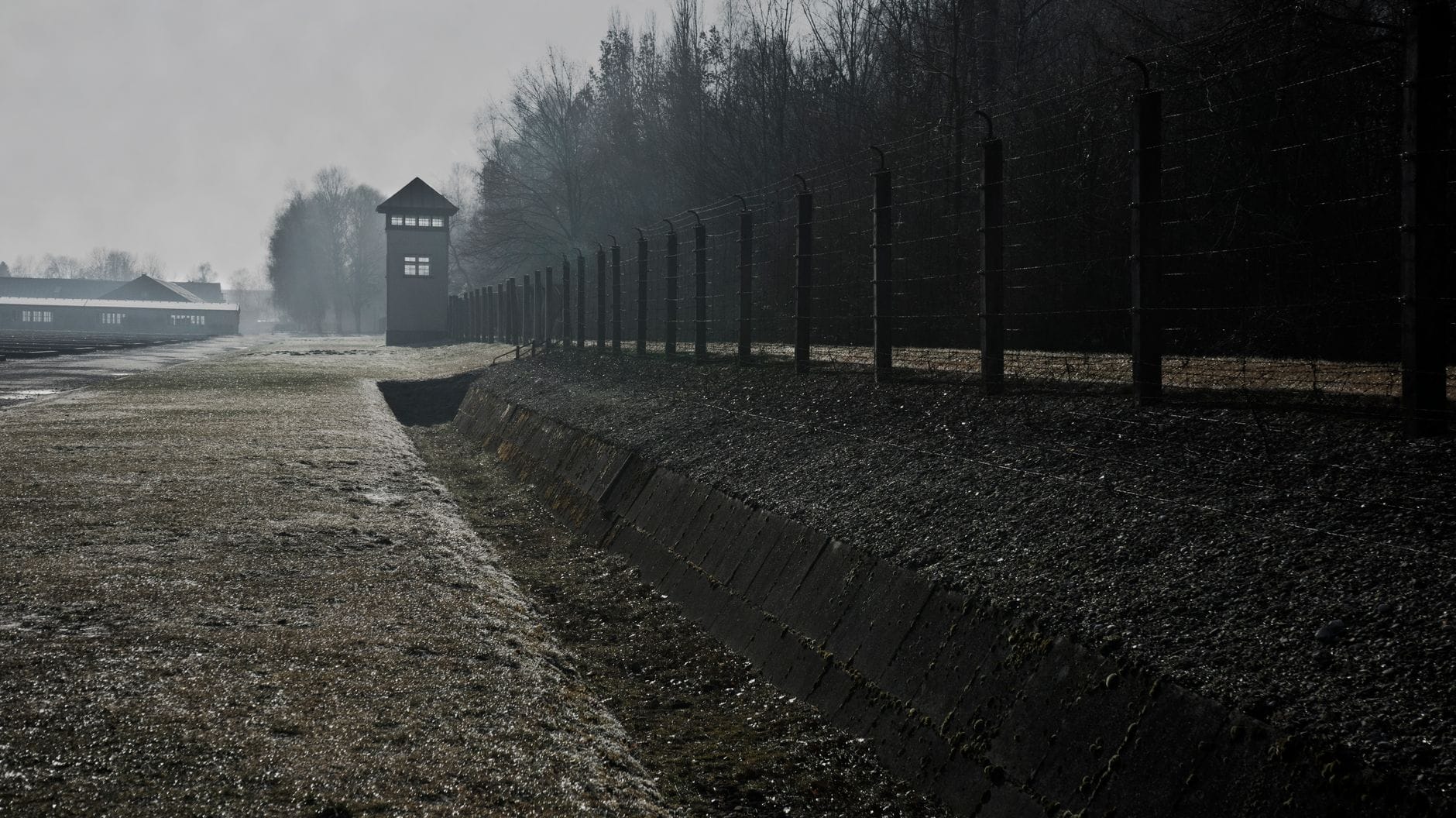
What the Dachau Memorial Actually Is
The Dachau Concentration Camp Memorial Site (German: KZ-Gedenkstätte Dachau) stands on the grounds where the Dachau concentration camp operated from 22 March 1933 until its liberation by US forces on 29 April 1945. It was one of the first camps the Nazi regime established, and it became a model for the entire concentration camp system that followed. More than 200,000 prisoners from over 40 nations were imprisoned here and in its subcamps; many died.
The memorial site as visitors experience it today opened in May 1965, established on the former prisoners' camp grounds and around the crematorium area. It is not a reconstruction of horror for dramatic effect. It is a carefully maintained historical site run with scholarly seriousness, where the preserved structures, the documentary exhibition, and the remaining physical spaces are intended to educate, commemorate, and resist forgetting.
This is not a peripheral day trip for Munich visitors who want something different to do on a Tuesday afternoon. It is one of the most historically significant sites in Germany, comparable in weight and purpose to the NS-Dokumentationszentrum in Munich, which documents the broader rise of National Socialism in Bavaria. Both sites demand genuine attention. If you have any interest in 20th-century European history, the Dachau memorial repays that attention in full.
ℹ️ Good to know
Opening hours: daily 9:00–17:00. The former crematorium area closes at 16:30. Closed on 24 December. Admission is free; no advance booking or time-slot reservation is required.
How to Get There from Munich
The journey from central Munich is straightforward and takes roughly 40–50 minutes door to door. From Munich Hauptbahnhof, take S-Bahn line S2 in the direction of Dachau or Petershausen. The ride to Dachau Bahnhof takes approximately 25 minutes. From Dachau station, bus 726 (direction: Saubachsiedlung) stops directly at the KZ-Gedenkstätte entrance.
Your standard MVV public transport ticket for the Greater Munich network covers the entire journey. If you are using a day ticket, check that it includes the outer zones, as Dachau falls outside the inner city rings. Drivers will find parking at Alte Römerstraße 73, adjacent to the memorial grounds.
💡 Local tip
Aim to arrive at opening (9:00) or at least 30 minutes before the 11:00 English-language guided tour starts. The tour sells out quickly on busy days, particularly in summer. Pick up a free floor plan and exhibition booklet at the Visitor Center on arrival.
Tickets & tours
Live prices and dates from our booking partner. If you book, we may earn a commission at no extra cost to you.
Arriving at the Site: First Impressions
The Visitor Center at Pater-Roth-Str. 2a is your entry point: a modern, low-key building where you collect maps and join tours. There is no grand entrance, no theatrical buildup. You walk through the Visitor Center and approach the main gate of the former camp, the infamous iron gate bearing the inscription 'Arbeit Macht Frei' (Work Sets You Free). Seeing it in person, on a grey Bavarian morning with drizzle coming off the gravel, carries a different weight than any photograph conveys.
Beyond the gate, a vast roll call square opens out, flanked by the long, low former barracks foundations. Two reconstructed barracks stand to the right. The rest were demolished after the war, but their concrete foundations remain in rows across the ground, giving an immediate sense of the original scale. On a cold morning, the open expanse of gravel feels particularly exposed. In summer, the same space can feel crowded with school groups and tour parties, which changes the atmosphere significantly.
The Documentary Exhibition
The permanent documentary exhibition is housed in the former maintenance building. It is extensive, covering the camp's history from its opening in 1933 through every phase of its operation to liberation in 1945. The exhibition is organized chronologically and includes photographs, documents, prisoners' testimonies, SS records, and objects recovered from the site. Texts are in both German and English.
Budget a minimum of 90 minutes for the exhibition alone if you intend to read rather than skim. The content is thorough and unflinching. It does not sensationalize, but it does not soften either. Photographs of prisoners, records of medical experiments conducted on inmates, evidence of systematic cruelty and mass death are presented clearly and with proper historical framing. Children under approximately 12 may find significant portions distressing; this is a site better suited to older teenagers and adults.
One section that consistently stops visitors is the documentation of Dachau's role as a training ground. The camp was not only a place of detention and killing. SS guards trained here. Procedures developed here were exported to camps across occupied Europe. Understanding Dachau means understanding how the broader system was built.
The Memorial Grounds: Beyond the Exhibition
The grounds beyond the exhibition building are where the experience shifts from documentation to something more difficult to name. The reconstructed barracks show how prisoners were housed, first in conditions that were already brutal, then in increasingly overcrowded circumstances as the war progressed. The interiors are spare: wooden bunks stacked tightly, narrow passages, the smell of old timber.
At the far end of the camp, separated from the main grounds, is the former crematorium area. This section closes at 16:30, so plan your visit accordingly. It contains the original 'Old Crematorium' and the larger 'New Crematorium' (Baracke X), built in 1942. The gas chamber in Baracke X was constructed but, according to official historical research, was never used for mass killings at Dachau itself, unlike at the Operation Reinhard camps in occupied Poland. This distinction is documented clearly on-site. The space is heavy and quiet. Most visitors move through it slowly and in near-silence.
Several religious memorial structures have been built on the grounds by different faith communities. These include a Catholic chapel, a Protestant church of Reconciliation, a Jewish memorial, and a Russian Orthodox chapel. Each was built after the memorial opened in 1965 and each reflects the diverse origins of those imprisoned here.
⚠️ What to skip
Photography is permitted on the memorial grounds but should be approached with deliberate restraint. Treat the space as you would a functioning place of mourning. Loud conversations, group selfies at the crematorium, and rushed visits are considered disrespectful by other visitors and staff alike.
Guided Tours and Audio Guides
English-language guided tours run daily at 11:00 and 13:00. These tours last approximately 2.5 hours and cover the main exhibition and the grounds. A fee applies; check the official website for current pricing, as rates are periodically updated. The guides are knowledgeable and provide historical context that goes well beyond what you will absorb from the exhibition panels alone. For a first visit, the guided tour is strongly recommended.
Audio guides are available for hire at the Visitor Center in multiple languages, including English. They allow you to move at your own pace and are a solid option if the tour times do not fit your schedule.
Visitors who want deeper historical background before arriving can also visit the NS-Dokumentationszentrum in Munich's Maxvorstadt — a museum dedicated to the origins and history of National Socialism in Munich and Bavaria. Visiting it before Dachau provides useful context. The two sites complement each other well within a single day if you start early.
Practical Considerations: What to Know Before You Go
Wear comfortable, weather-appropriate clothing. The grounds are largely open-air and exposed, and the gravel paths are extensive. In winter, temperatures in Dachau can drop to around -3°C or below, and the open roll call square offers little shelter from wind. In summer, bring water, as there are limited refreshment options on-site. A small cafe operates near the Visitor Center but is not always open.
The memorial site is almost fully accessible to wheelchair users. The main paths are paved or gravel with gentle gradients, and the exhibition building has lift access. Contact the memorial site directly if you have specific accessibility requirements, as the official site has detailed guidance.
Visitors traveling as part of a broader Munich trip should note that the round journey from Munich takes the better part of a day when combined with time at the memorial itself. Do not try to pair this with a full afternoon of central Munich sightseeing. Give the memorial the time it deserves and keep the rest of the day light.
For those planning a full historical itinerary through Bavaria, the Munich Dachau visitor guide covers logistics in detail, including transport options, tour booking, and how to structure the day.
Who Should and Should Not Visit
The Dachau Concentration Camp Memorial is appropriate for older teenagers and adults with any degree of interest in modern European history, World War II, the Holocaust, or political systems. It is meaningful for first-time visitors to Germany and for those returning repeatedly. It is particularly important for anyone whose family history intersects with this period of European history, regardless of national origin.
Young children should be considered carefully. The memorial does not shield visitors from difficult content. Graphic images, detailed accounts of violence and death, and the physical remnants of the crematoria are all present. Many families choose to wait until children are in their mid-teens before visiting.
Travelers who are looking for a 'light' historical attraction or who want to fit the memorial into a schedule already packed with beer halls and shopping are likely to do it a disservice. This site rewards full attention and adequate time. If your itinerary does not have space for three to four focused hours, it is worth reconsidering the timing rather than rushing through.
If you are building a broader Munich itinerary, the 3-day Munich itinerary guide can help you sequence major sites efficiently without compromising the weight a visit here deserves.
Insider Tips
- Arrive at 9:00 when the gates open. The early morning hours, particularly on weekdays, are noticeably quieter. By 11:00, tour groups and school parties arrive in numbers that can make the exhibition crowded and emotionally harder to absorb at your own pace.
- The 11:00 English-language guided tour books up quickly in July and August. If you plan to join it, walk directly to the tour meeting point when you arrive and register before exploring anything else.
- The former crematorium area (Baracke X) closes at 16:30, 30 minutes before the rest of the site. If you arrive after midday and want to visit it, plan your route through the exhibition so you reach the crematorium area no later than 16:00.
- The free printed guide available at the Visitor Center is more than a simple map. It contains a condensed historical overview that is worth reading on the S-Bahn journey out. It will help orient you before you arrive and gives you something concrete to refer back to later.
- Grey, overcast days are oddly fitting for this visit. Bright summer sunshine can feel incongruous and even disorienting at a site of this kind. There is no 'bad weather' for Dachau — bring layers and waterproofing rather than waiting for an ideal day.
Who Is Dachau Concentration Camp Memorial For?
- Adults and older teenagers with an interest in 20th-century European history
- Travelers on a historical itinerary through Bavaria and Germany
- Students and researchers studying the Holocaust, National Socialism, or WWII
- Visitors with family connections to WWII-era Europe seeking historical grounding
- Anyone who has already visited the NS-Dokumentationszentrum in Munich and wants to see the physical reality it documents
Nearby Attractions
Combine your visit with:
- Allianz Arena & FC Bayern Museum
The Allianz Arena is one of Europe's most recognizable stadiums, home to FC Bayern München and capable of holding over 75,000 spectators. Paired with the FC Bayern Museum, it offers a full day of football history, architectural spectacle, and behind-the-scenes access for fans and curious visitors alike.
- Bavaria Statue & Ruhmeshalle
Standing 18.52 metres tall above Theresienwiese, the Bavaria Statue is one of the largest bronze figures in the world, and you can climb inside it. Behind her rises the Ruhmeshalle, a sweeping Doric colonnade commissioned by King Ludwig I to honour distinguished Bavarians. Together they form one of Munich's most undervisited monumental sites.
- Tierpark Hellabrunn (Munich Zoo)
Tierpark Hellabrunn has organized its animals by geographic region since 1928, making it the world's first geozoo. Spread across 40 hectares along the Isar River in southern Munich, it is one of Bavaria's most popular family destinations and a serious conservation institution. This guide covers everything you need to plan a rewarding visit.
- Neuschwanstein Castle
Schloss Neuschwanstein is the 19th-century Romanesque Revival palace that defined the world's image of a fairy-tale castle. Built for King Ludwig II starting in 1869 and never finished, it draws about 1.5 million visitors a year. This guide covers what the experience actually looks like, when to go, and how to get there without wasting a day.
Planning a trip? Discover personalized activities with the Nomado app.