3 Days in Munich: The Perfect Itinerary (2026 Guide)
Three days is enough time to cover Munich's historic core, its great palace estates, world-class museums, and one excellent day trip. This itinerary structures each day for maximum efficiency, with practical advice on what to skip, what to prioritize, and how to get around without wasting time.
Tickets & tours
Live prices and dates from our booking partner. If you book, we may earn a commission at no extra cost to you.
TL;DR
- Three days in Munich covers the Altstadt, English Garden, Nymphenburg Palace, the Museumsinsel district, and one solid day trip without feeling rushed.
- Use the MVV U-Bahn and S-Bahn network to move between neighborhoods — getting around Munich by public transport is fast, cheap, and far easier than driving.
- Oktoberfest starts in September, not October — if that's your reason for visiting, check the exact dates before booking.
- Shoulder season (April–May and late September) offers the best balance of weather, crowd levels, and prices — see the full best time to visit Munich breakdown.
- Budget around €120–180 per day in shoulder season covering mid-range accommodation, meals, transport, and entrance fees.
Is 3 Days in Munich Enough?
Munich rewards longer stays, but three full days is a genuinely workable window for first-time visitors. The city is compact enough that most major sights are within 30 minutes of the historic center by U-Bahn or on foot, and the layout lends itself naturally to themed days: one day for the Altstadt and old town churches, one for the museum quarter and palaces, and one for a day trip or deeper neighborhood exploration.
Where three days falls short is in depth. The English Garden alone covers roughly 375 hectares — you can walk it in a day, but you can't truly explore it in two hours. Similarly, the Residenz complex has multiple museums and a treasury that each deserve more than a quick pass-through. The itinerary below builds in this reality, prioritizing quality over quantity.
ℹ️ Good to know
Munich (München) sits at around 520 m above sea level on the Isar River, about 50 km north of the Alps. Its elevation and proximity to the mountains means weather can shift quickly — pack a light layer even in summer.
Day 1: The Altstadt, Beer Gardens, and the English Garden
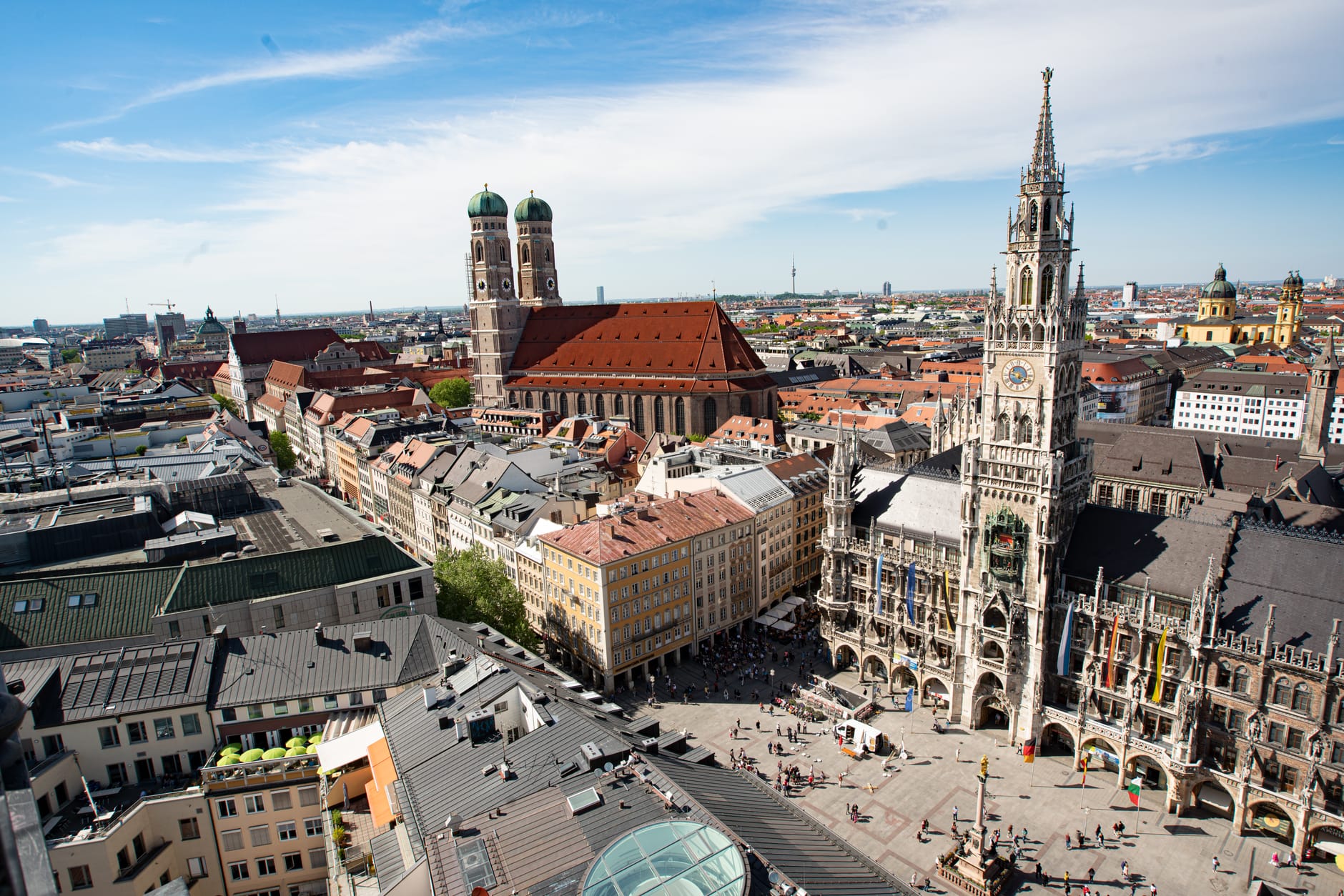
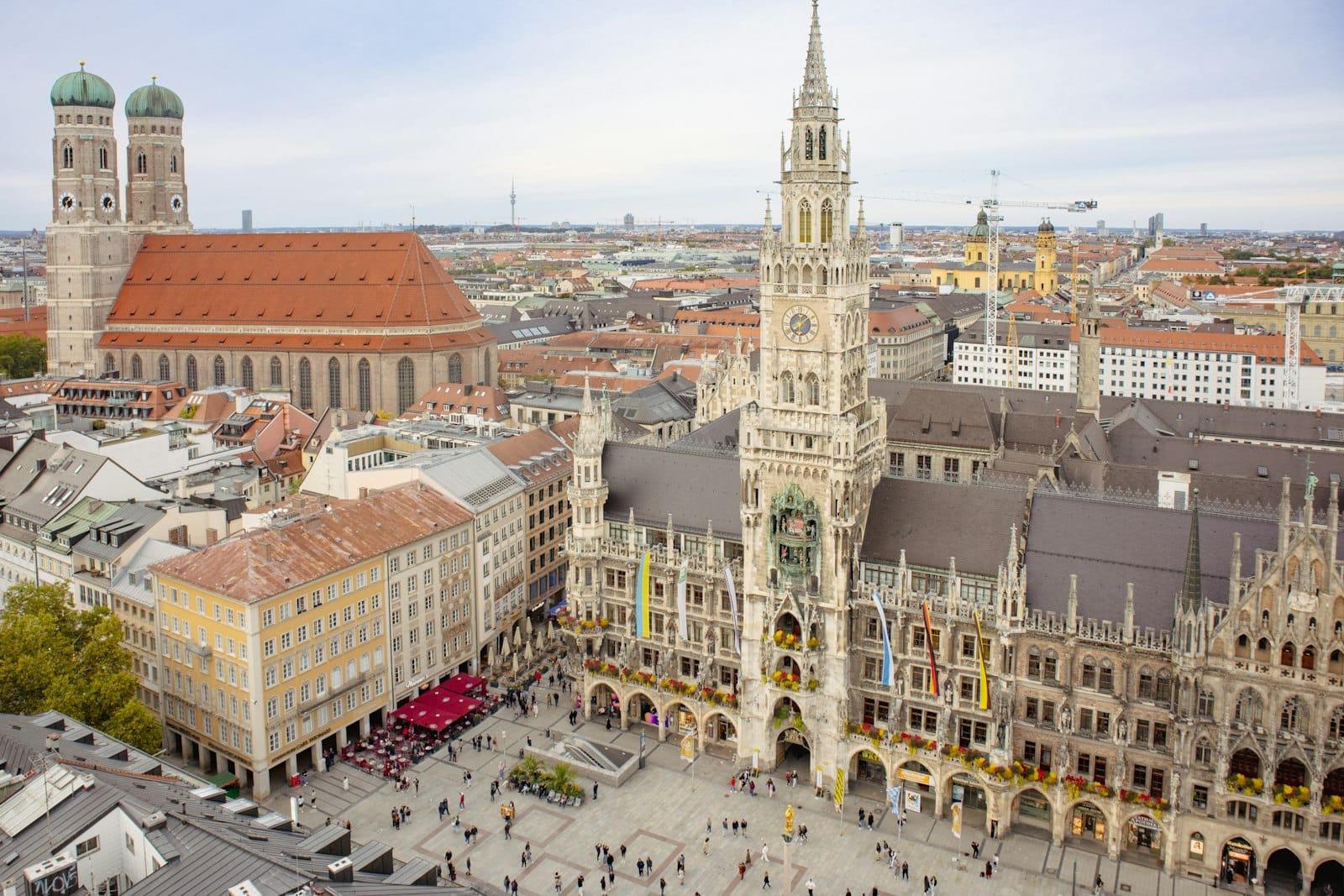
Start at Marienplatz, Munich's central square and the geographic anchor of the Altstadt. The Glockenspiel on the Neues Rathaus performs daily at 11:00 and 12:00, with an additional 17:00 show in summer. It lasts about 15 minutes. Worth watching once, not worth planning your entire morning around — treat it as a bonus rather than the main event.
From Marienplatz, walk south to the Viktualienmarkt, Munich's central open-air food market. It operates Monday through Saturday, with individual stall hours varying. This is the best place in the city for a market breakfast: fresh pretzels, Obatzda (Bavarian cheese spread), radishes, and local sausage from the butcher stalls. Arrive before 10:00 on weekdays to avoid the thickest crowds.
After the market, spend an hour in the immediate Altstadt area. The Asamkirche on Sendlinger Strasse is a compact baroque church built by the Asam brothers as a private chapel and is free to enter. It takes 20 minutes and is one of the most intensely decorated interiors in Bavaria. A few minutes north, the Frauenkirche with its distinctive twin towers has been Munich's cathedral since the 15th century.
In the afternoon, head northeast to the English Garden. Enter near the Eisbach stream at the southern tip to watch surfers ride the Eisbach wave — a permanent standing wave where skilled surfers ride year-round. Walk north through the park to the Chinese Tower (Chinesischer Turm), the second-largest beer garden in Munich with around 7,000 seats. Order a Mass (1-litre mug) of local beer and a plate of Steckerlfisch (grilled fish on a stick) or Schweinshaxe (pork knuckle). Beer gardens operate on a bring-your-own-food policy at the benchtables, though the restaurant section has table service.
💡 Local tip
Munich's beer gardens close when it rains or when temperatures drop below roughly 12°C. Check the weather the night before — if Day 1 looks wet, swap the English Garden afternoon with the Residenz or a museum visit instead.
Day 2: Palaces, the Kunstareal, and Olympiapark
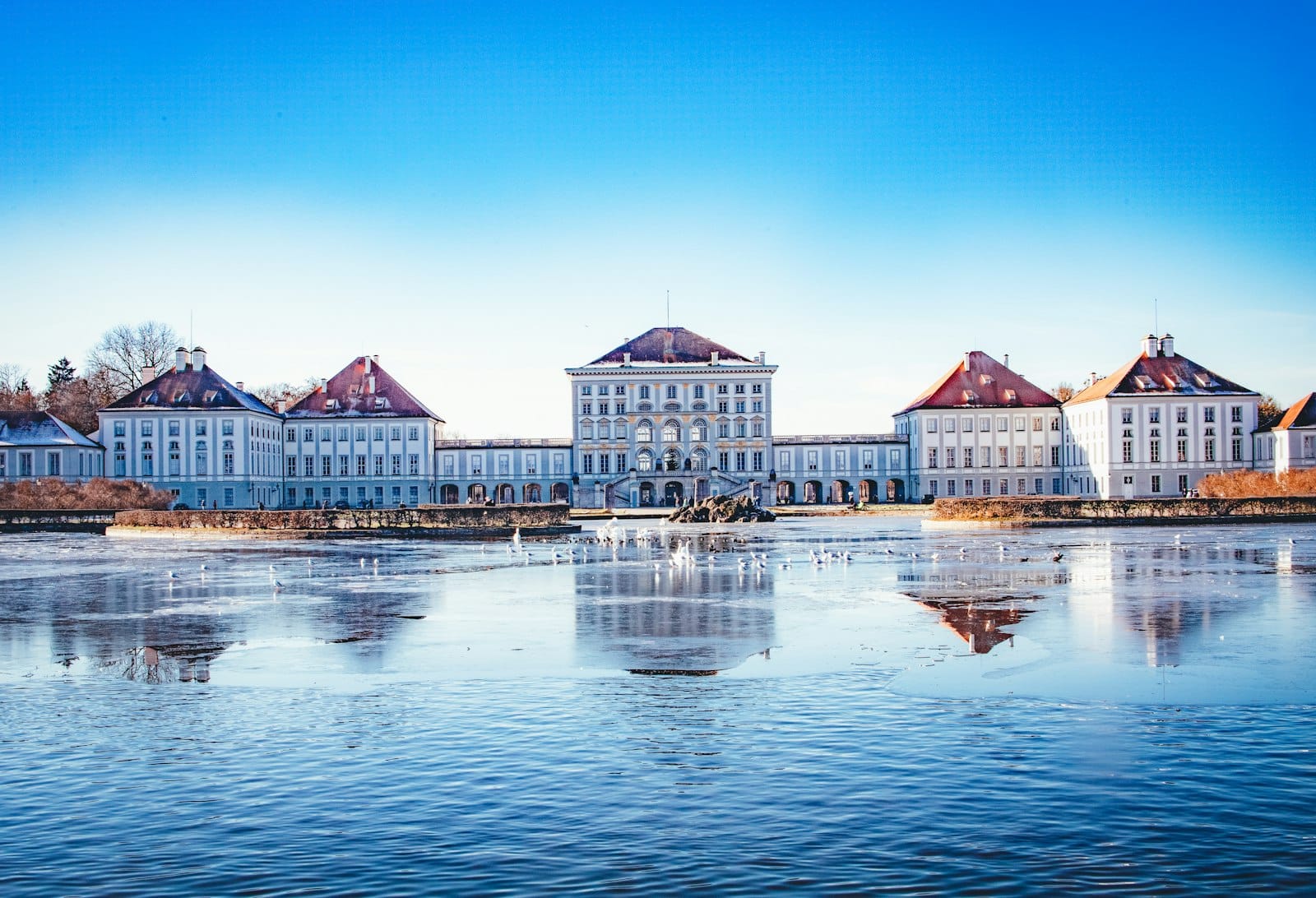
Day 2 starts west of the city center at Nymphenburg Palace, the Wittelsbacher dynasty's baroque summer residence. Take U1 to Rotkreuzplatz, then tram 12 to Schloss Nymphenburg. Admission to the palace and its museums ranges from about €8 for the grounds to €15 for the combined ticket including the palace interior, carriage museum, and Marstallmuseum — verify current prices at the Bayerische Schlösserverwaltung website before visiting. Allow two to three hours minimum. The palace gardens are free to enter and worth the time even if you skip the interior on a tight schedule.
After Nymphenburg, take the tram back east toward Maxvorstadt, Munich's museum district. The Kunstareal (Art Quarter) packs three major pinakotheken into a walkable stretch along Barer Strasse. The Alte Pinakothek holds one of Europe's finest collections of Old Masters, with particular depth in Flemish and Dutch painting. The Pinakothek der Moderne covers 20th and 21st-century art, design, and architecture. If you only have time for one, the Alte Pinakothek is the stronger art-historical argument; if contemporary design interests you more, the Moderne wins.
End Day 2 at BMW Welt and the BMW Museum near Olympiapark. These are adjacent but separate. BMW Welt is a free exhibition and car delivery center with impressive architecture and interactive displays. The BMW Museum next door has a paid entry (around €10) and covers the brand's full history through vehicles, engines, and design exhibitions. Common mistake: visitors assume they're the same thing. If you're not an automotive enthusiast, BMW Welt alone is worth the trip for the building and the free access. The Museum adds meaningful depth for anyone who cares about the engineering story.
- Alte Pinakothek Closed Mondays. Budget 90–120 minutes for the highlights. Sunday admission drops to €1.
- Pinakothek der Moderne Closed Mondays. Strong permanent design and graphics collections in addition to painting.
- Nymphenburg Palace The palace interior closes in winter (November–March, partial openings). Gardens are open year-round.
- BMW Museum Closed Mondays. Combined BMW Museum + BMW Welt area recommended as a 2–3 hour visit.
Day 3: The Residenz, Odeonsplatz, and a Day Trip Option
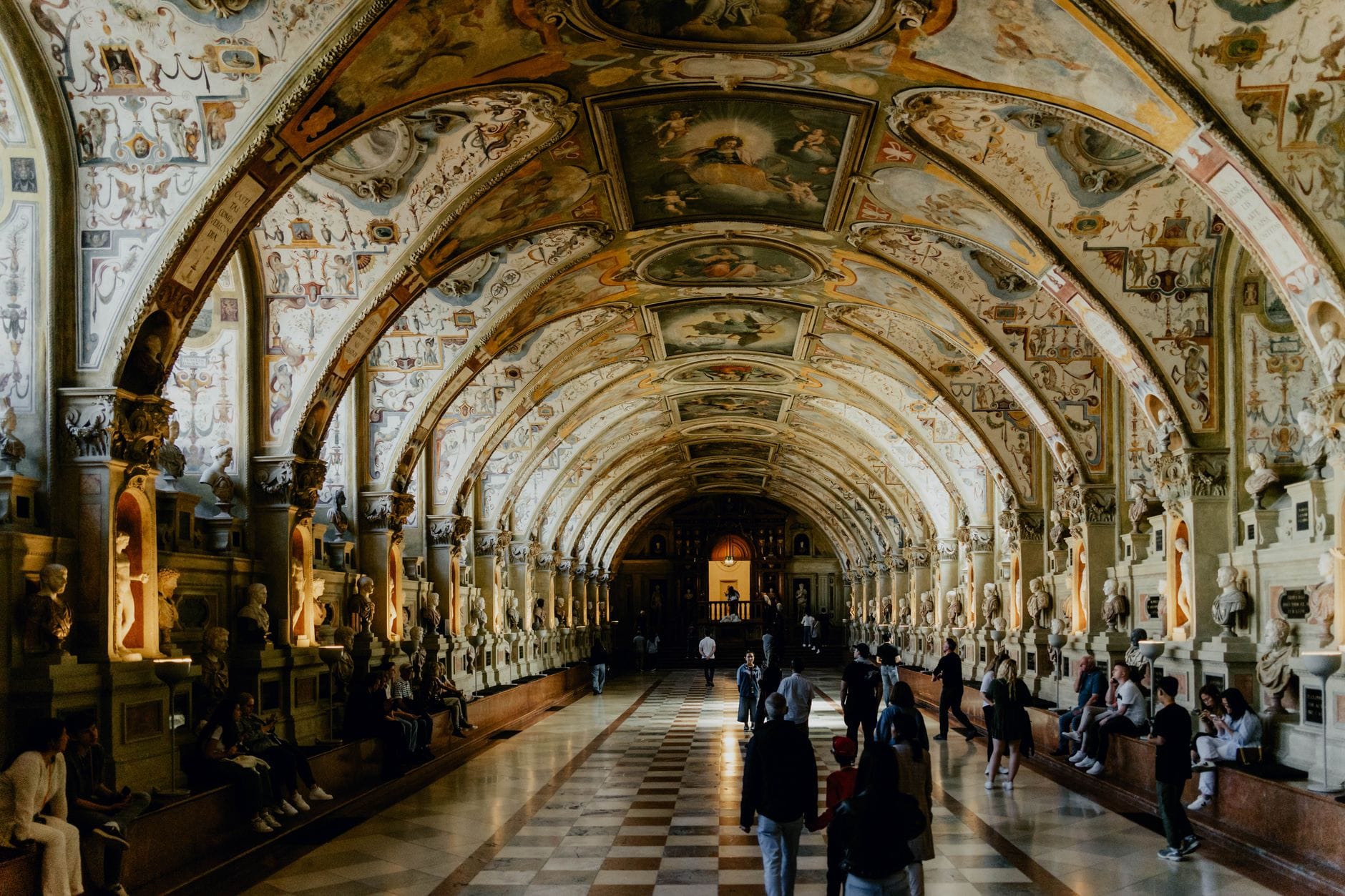
The Munich Residenz is the former royal palace of the Wittelsbach monarchs and one of the most significant Renaissance buildings in Germany. The complex contains the Residenz Museum, the Treasury, and the Cuvilliés-Theatre. A combined ticket for the museum and treasury runs around €13. The Treasury alone is worth the admission: it holds crown jewels, reliquaries, and ceremonial objects spanning 1,000 years of Bavarian royal history. Allow at least two hours for both.
From the Residenz, walk two minutes north to Odeonsplatz, one of Munich's grandest squares. The Theatinerkirche on its western flank is a yellow baroque church with a striking twin-tower facade. The Feldherrnhalle on the south side of the square is a 19th-century loggia modelled on the Loggia dei Lanzi in Florence. It also carries heavy historical weight as the site of the failed 1923 Beer Hall Putsch.
If you have energy for a day trip on Day 3 rather than more city sightseeing, Neuschwanstein is the most iconic option and takes a full day from Munich. The castle is about 2 hours by train and bus from Hauptbahnhof. Book castle tickets well in advance, especially in summer — walk-up availability is rare. Alternatively, the Dachau Concentration Camp Memorial is 30 minutes northwest by S2 train and is one of the most important historical sites in Germany. It is not a comfortable visit, but it is a serious and significant one.
⚠️ What to skip
Oktoberfest is often assumed to be an October event, but it traditionally begins in mid-September and ends on the first Sunday in October. If Oktoberfest is a core reason for your trip, plan for the September window. A three-day visit planned for 'early October' will usually miss the festival entirely.
Getting Around: Transport for a 3-Day Visit
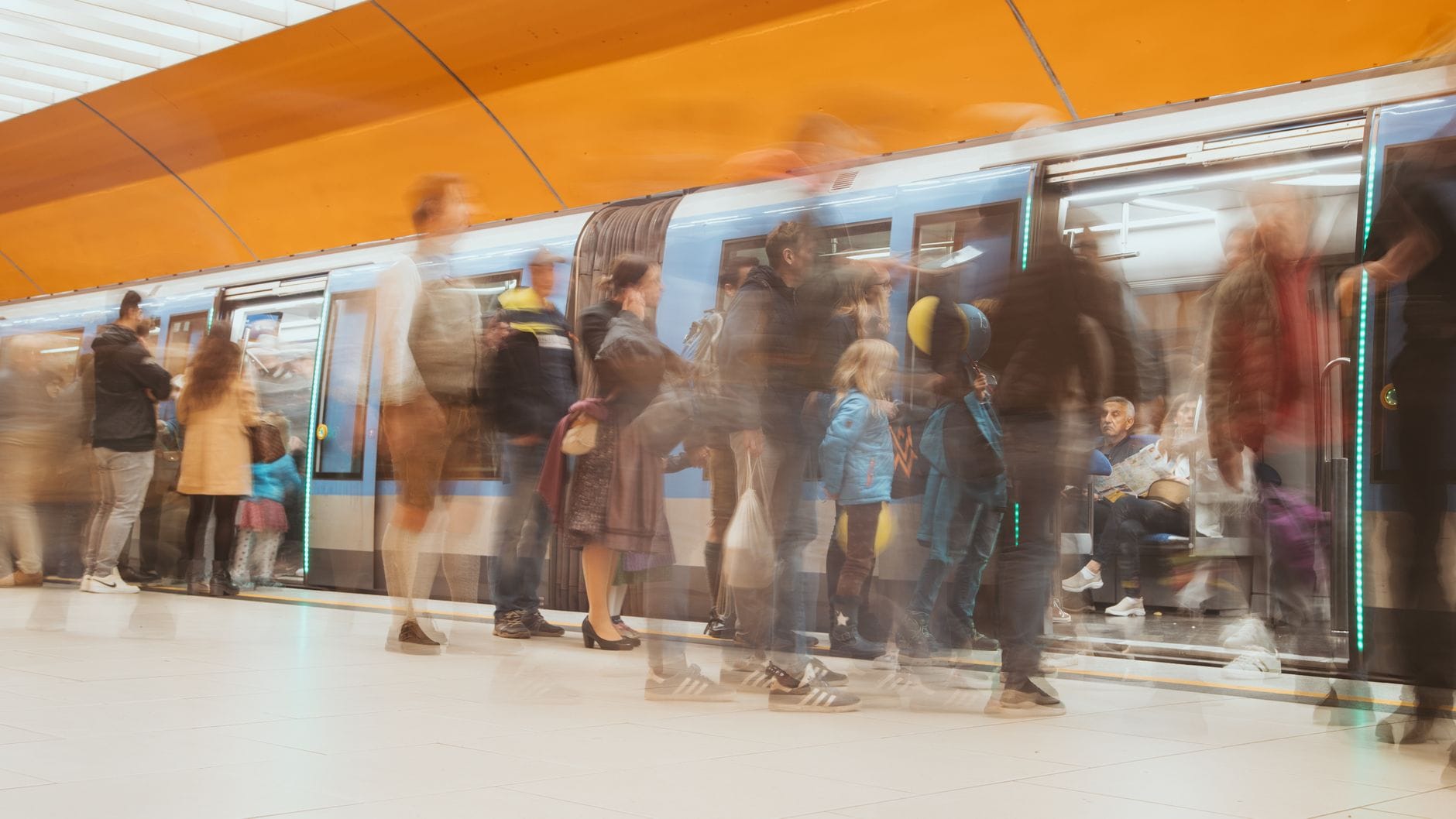
Munich's public transport network, coordinated by the MVV (Münchner Verkehrs- und Tarifverbund), covers the entire city and surrounding region via U-Bahn (underground metro), S-Bahn (suburban rail), trams, and buses. For three days of city sightseeing, the U-Bahn and tram lines are sufficient for almost every destination in this itinerary.
Day tickets (Tageskarte) are the most practical option for a full day of sightseeing — they cover unlimited travel across the Munich city zones for the day. A group day ticket covers up to 5 people and is significantly cheaper per person than individual tickets. Verify current pricing directly at MVV's website, as fares are updated periodically. For the full 3-day stay, consider whether a city pass including museum entry makes financial sense — compare costs against your planned attractions before purchasing.
- U-Bahn lines U3/U6 connect the city center to Olympiapark (Olympiazentrum station) in about 15 minutes from Marienplatz.
- Tram 17 or 19 connects the Altstadt to the Viktualienmarkt and Sendlinger Tor areas.
- Tram 12 from Rotkreuzplatz reaches Nymphenburg Palace directly.
- S1 and S8 connect Munich Airport (MUC) to central Munich in 35–45 minutes.
- Taxis and ride-hailing apps (Uber, Free Now) are available but significantly more expensive than public transport for cross-city trips.
✨ Pro tip
The Munich city center is genuinely walkable for Altstadt sightseeing. From Marienplatz to the Residenz is a 5-minute walk. From the Residenz to Odeonsplatz is 2 minutes. Save the transit pass for the longer legs to Nymphenburg, Olympiapark, and the English Garden's northern sections.
Budget, Seasons, and Practical Logistics
A realistic mid-range daily budget for three days in Munich runs €120–180 in shoulder season (April–May, late September), covering a mid-range hotel, two restaurant meals, public transport, and two to three paid attractions. Summer prices and Oktoberfest period push accommodation rates significantly higher. For a detailed breakdown by travel style, the Munich on a budget guide covers free attractions, cheap eats, and where to save without compromising the experience.
Tipping in Munich follows German norms: round up the bill or add around 5–10%, handed directly to the server when paying rather than left on the table. Say 'stimmt so' ('keep the change') or state the total you want to pay. Tap water is safe to drink throughout Munich and meets strict German quality standards — there's no need to buy bottled water.
Munich sits within easy reach of several compelling day trips. Neuschwanstein Castle is the obvious choice, but the logistics require an early start and advance ticket booking. For a lower-effort day trip with Alpine scenery, the Tegernsee or Starnberger See lakes are accessible in under an hour by S-Bahn and work well as half-day add-ons in summer. The Munich to Salzburg day trip is around 90 minutes by train and pairs well with a three-day Munich base.
FAQ
Is 3 days enough time to see Munich?
Three days covers Munich's main highlights comfortably without feeling rushed — the Altstadt, English Garden, Nymphenburg Palace, the Residenz, the museum quarter, and one day trip or deeper neighborhood exploration. It's not enough time to cover everything in depth, but it's the right length for a first visit that leaves you with a genuine sense of the city.
What is the best area to stay in Munich for a 3-day trip?
The Altstadt (District 1) and Maxvorstadt (District 3) are the most practical bases for a short stay. Both put you within walking distance of major sights and excellent U-Bahn connections for excursions. Schwabing to the north is quieter and slightly cheaper, with good tram links to the center.
How do I get from Munich Airport to the city center?
The S1 and S8 S-Bahn lines connect Munich Airport (MUC) directly to Marienplatz and Hauptbahnhof in 35–45 minutes. This is the most cost-effective option. Airport buses also connect to Hauptbahnhof in around 45 minutes. Taxis take a similar time but cost significantly more.
When does Oktoberfest take place in Munich?
Oktoberfest traditionally begins in mid-September and runs through the first Sunday in October. The festival is mostly a September event. Visitors planning a trip 'for Oktoberfest in October' often arrive after it has already ended — always check the official festival dates for the current year at muenchen.de.
What is the difference between BMW Welt and the BMW Museum?
BMW Welt is a free exhibition and car delivery center — impressive architecture, interactive displays, and no admission fee. The BMW Museum next door is the actual historical museum covering BMW's full brand history from motorcycles to Formula 1, with a paid entry of around €10. They are physically adjacent near Olympiapark but are separate facilities. BMW Welt is worth visiting even for non-enthusiasts; the Museum adds value if you have a genuine interest in automotive history or design.
Tickets & tours
Live prices and dates from our booking partner. If you book, we may earn a commission at no extra cost to you.
Planning a trip? Discover personalized activities with the Nomado app.