Munich Christmas Markets: Your Complete Guide to the Best Weihnachtsmärkte
Munich hosts some of Germany's most celebrated Christmas markets, from the iconic Münchner Christkindlmarkt on Marienplatz to a dozen smaller themed Weihnachtsmärkte spread across the city. This guide covers every major market, what to eat and drink, how to avoid the worst crowds, and what first-timers consistently get wrong.
Tickets & tours
Live prices and dates from our booking partner. If you book, we may earn a commission at no extra cost to you.
TL;DR
- The main Münchner Christkindlmarkt at Marienplatz runs 20 November to 24 December 2026, free to enter, open daily from 10:00.
- Some Munich Christmas markets close on Totensonntag (Sunday of the Dead) — check the date before you go.
- Most traditional markets close on 24 December; if you want a post-Christmas market experience, the Tollwood Winter Festival is your only real option — see our best time to visit Munich guide for seasonal context.
- Glühwein costs around €4–6 per cup, plus a €2–4 refundable Pfand (mug deposit) — keep your mug receipt.
- Weekday mornings and early afternoons are significantly quieter than weekends; Marienplatz on a Saturday afternoon in December is genuinely overwhelming.
The Main Market: Münchner Christkindlmarkt at Marienplatz
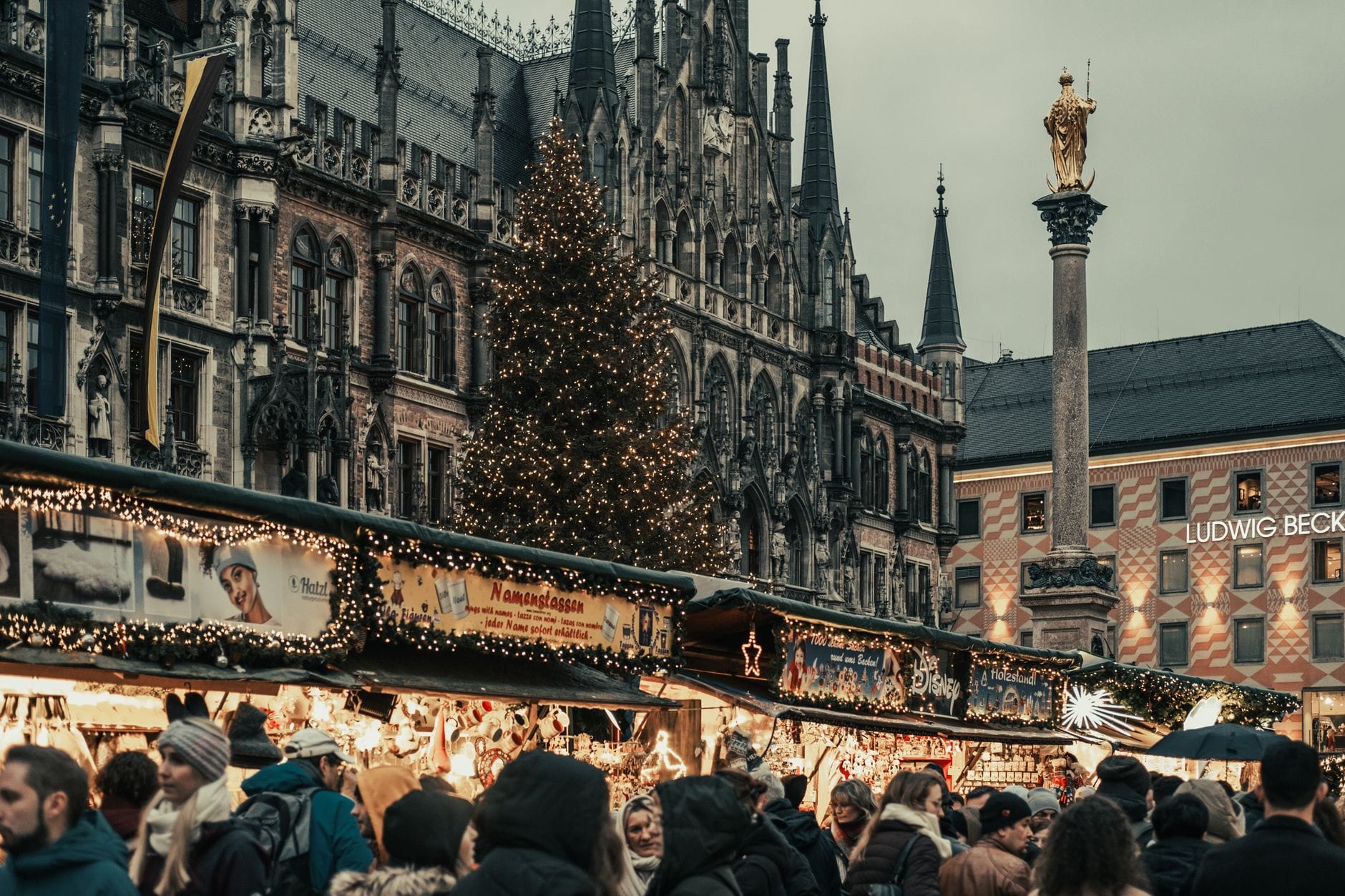
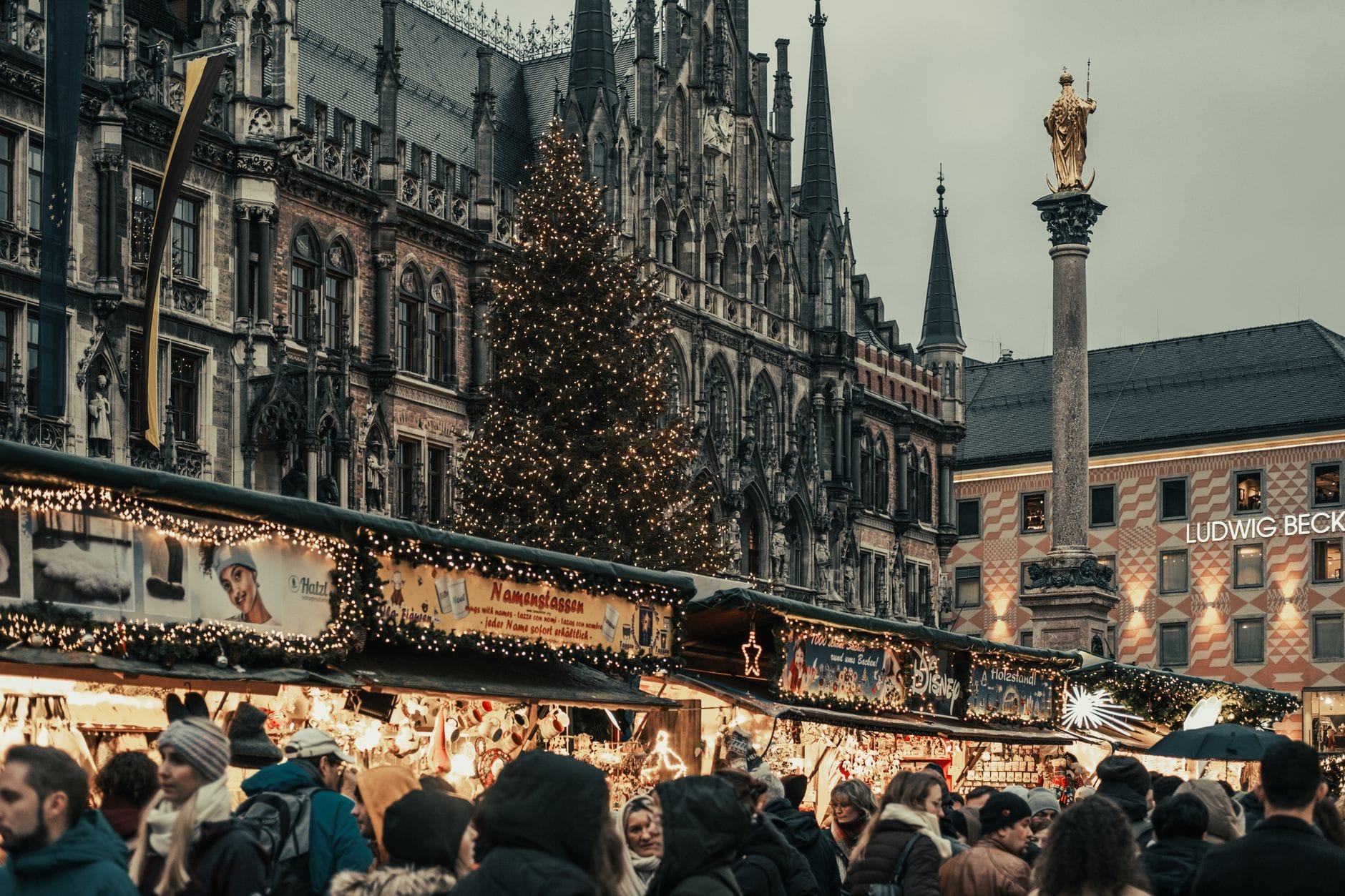
The Münchner Christkindlmarkt is Munich's official, city-run Christmas market, held on Marienplatz and the adjacent Rindermarkt in the heart of Altstadt. In 2026, it opens on 20 November and runs until 24 December, closing at 14:00 on Christmas Eve. Standard hours are Monday to Saturday 10:00–21:00 and Sunday 10:00–20:00. Entry is free.
The setting is genuinely spectacular. The neo-Gothic towers of the Neues Rathaus form the backdrop, the Glockenspiel is lit up above the stalls, and the central Christmas tree stands tall above the market. This is the market that fills the postcard shots, and there is a reason for that. The atmosphere in early December, especially on a cold weekday evening with snow on the ground, is hard to replicate anywhere else in Germany.
That said, the Marienplatz market is also Munich's most crowded. On weekends from early December onward, the square becomes genuinely difficult to navigate. Stall quality is regulated by the city, which means fewer novelty tat vendors than you find at less curated markets, but it also means prices are not cheap. Expect to pay more here than at neighbourhood markets a few U-Bahn stops away.
⚠️ What to skip
The main Christkindlmarkt — including Marienplatz — is closed on Totensonntag (the Protestant day of remembrance for the dead). In 2026 this falls on 22 November, meaning the market opens on the 20th but is closed on the 22nd. Do not assume the market is open every day from opening date to Christmas Eve.
The Other Markets Worth Visiting
Munich runs well over a dozen distinct Christmas markets across the city each year. The best ones are genuinely different in character from Marienplatz and worth seeking out, either as alternatives or additions to the main event.
- Tollwood Winter Festival (Theresienwiese) The most distinctive market in Munich. Tollwood is focused on sustainability, international crafts, and live performances. It runs from late November into early January, making it the only major Munich market that survives past Christmas Eve. Expect organic food stalls, unusual artisan goods, and a strong music programme. Entry to the grounds is free; some performance venues charge.
- Mittelaltermarkt (Medieval Market, Wittelsbacherplatz) A themed medieval Christmas market with fire jugglers, craftspeople in period costumes, and mead alongside the usual Glühwein. It draws a younger crowd and is worth an evening visit for the atmosphere alone.
- Schwabing Christmas Market (Münchner Freiheit) A neighbourhood market in the heart of Schwabing, smaller and less touristy than Marienplatz. Local families outnumber tour groups here. A good choice if you want to drink Glühwein without being jostled.
- Haidhausen Christmas Market (Weißenburger Platz) One of Munich's most local-feeling markets, set in the relaxed eastern district of Haidhausen. The square itself is pretty and the crowd is predominantly residents rather than visitors.
- Nymphenburg Palace Christmas Market Held in the baroque courtyard approach to Nymphenburg Palace, this market leans heavily on high-end handcrafted goods. Prices are higher than average, but the setting in front of the palace is unmatched for elegance.
- Kripperlmarkt (Nativity Market, Rindermarkt) One of the oldest speciality markets in Munich, dedicated entirely to nativity scenes, figurines, and religious folk art. It runs alongside the main Christkindlmarkt and is a serious resource for collectors.
✨ Pro tip
Hours vary considerably between markets. Family-oriented neighbourhood markets often close at 20:00 or earlier on weeknights, while larger markets like Tollwood run later. The city's aggregated listing at muenchen.de is a reliable source for confirming exact hours for each individual market each year.
What to Eat and Drink
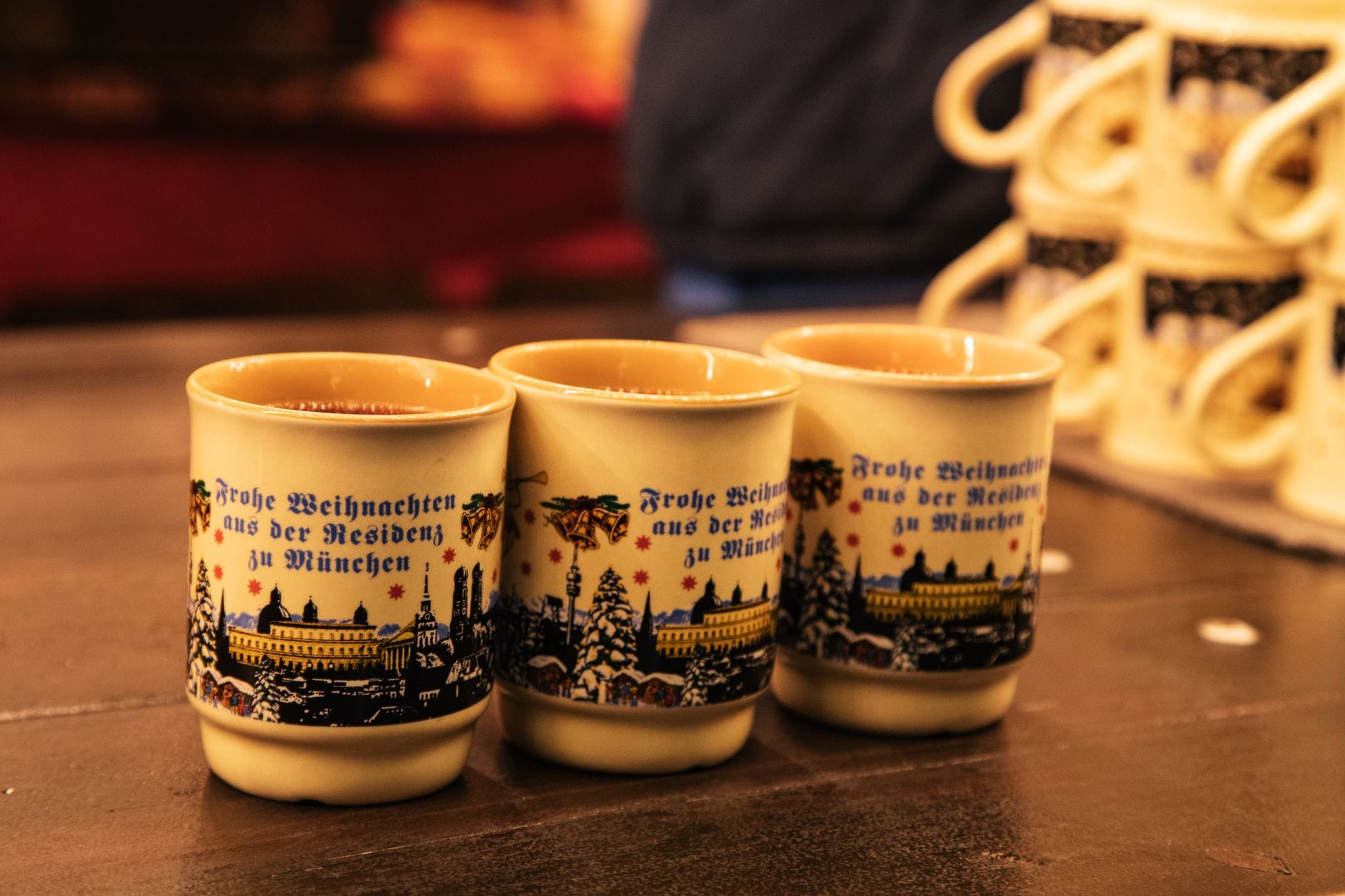
Glühwein is the centrepiece of any Munich Christmas market visit. The hot spiced wine — typically red, though white Glühwein (Weißer Glühwein) is increasingly common — often costs a few euros per cup at most stalls. The Pfand system means you pay an additional deposit for the ceramic or glass mug, which you reclaim when you return it. Many visitors keep the mug as a souvenir, which is exactly what the stall operators are banking on. If you want your deposit back, hold onto the paper receipt you are given with the mug.
Beyond Glühwein, look for Feuerzangenbowle — a theatrical preparation involving a rum-soaked sugar cone set on fire over a bowl of red wine, the burning sugar dripping into the wine as it melts. Some stalls at the larger markets offer this and it is worth watching even if you do not drink it. Other seasonal drinks include Heißer Apfelsaft (hot apple juice, a non-alcoholic option that is genuinely good), Kinderpunsch (spiced fruit punch for children), and various Bavarian wheat beer options served warm.
- Lebkuchen Soft gingerbread rounds, often decorated with icing and sold in various sizes. The large decorative ones make popular gifts. Quality varies significantly between stalls; the best are made fresh on site.
- Gebrannte Mandeln Caramelised roasted almonds, sold in paper cones. The smell is essentially the olfactory signature of a German Christmas market. Also available in hazelnut and walnut versions.
- Steckerlfisch Fish (usually mackerel or herring) grilled on a stick over an open flame. A Bavarian Christmas market staple that surprises most first-time visitors who expect only sweet foods.
- Kartoffelpuffer Potato pancakes served with apple sauce or sour cream. Substantial and warming — a good choice if you are spending several hours outdoors in cold weather.
- Maroni Roasted chestnuts, sold from braziers. The quintessential hand-warming snack while walking between stalls.
When to Go: Crowd Patterns and Practical Timing
Munich's summer months get plenty of tourism attention, but the Christmas market season brings a different kind of pressure. December weekends in Munich are extremely busy across the entire city centre, not just at the markets. The combination of domestic German visitors making weekend trips and international tourists means hotels fill up and prices spike from the first weekend of December onward.
The quietest windows are Tuesday through Thursday mornings, particularly in late November and the very first days of December. The week before Christmas (18–23 December) is busy again as last-minute shoppers arrive. If you have flexibility, a weekday visit in the first two weeks of December gives you the full market experience without the crowd density that makes Marienplatz uncomfortable on a Saturday afternoon.
Weather is a genuine factor. Munich in December sits at around 520 metres above sea level in a continental-influenced climate, and temperatures can drop below freezing at night. Average December highs are around 3–5°C, with lows around -3 to -1°C. Snow is possible but not guaranteed — some years the markets are picturesque and white, others are grey and damp. Pack for cold and wet conditions regardless of the forecast.
💡 Local tip
The S-Bahn and U-Bahn are the practical way to reach and leave Marienplatz during Christmas market season. Driving into central Munich in December is inadvisable — parking is extremely limited and the city centre is largely pedestrianised around the market. The MVV network (S-Bahn, U-Bahn, tram, bus) covers every major market location efficiently.
Getting to Munich and Getting Around
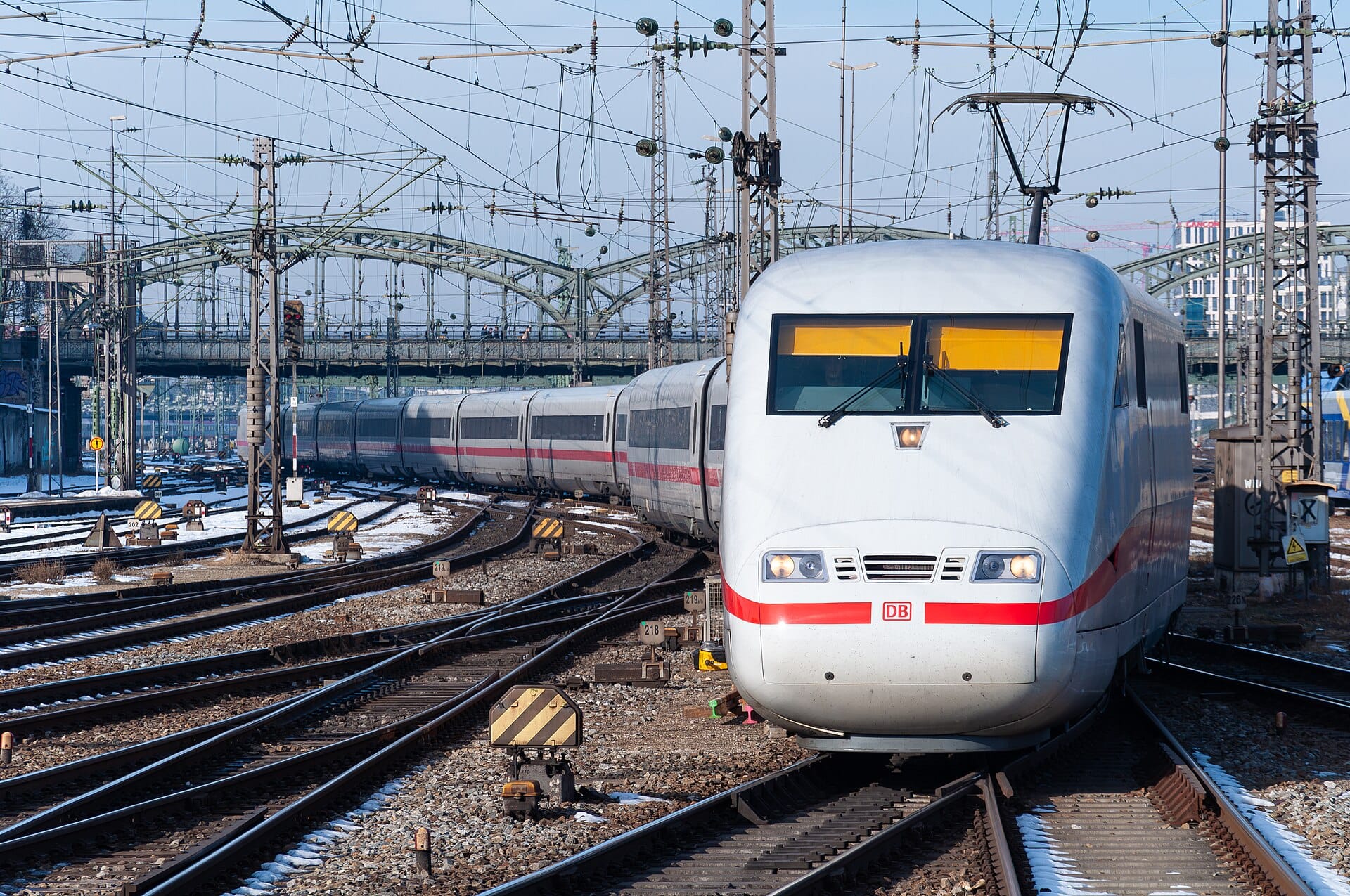
Munich Airport (IATA: MUC) sits approximately 28–30 km northeast of Marienplatz, in the municipality of Freising. The S1 and S8 S-Bahn lines connect the airport directly to central Munich, with journey times of around 35–45 minutes to Marienplatz or Hauptbahnhof. An airport bus service also connects to Hauptbahnhof in around 45 minutes, subject to traffic. For full details on navigating the airport, see the Munich Airport guide.
Within Munich, the MVV network — covering S-Bahn, U-Bahn, trams, and buses under one ticketing system — makes market-hopping straightforward. Marienplatz is directly served by the U3, U6, S-Bahn lines, and multiple trams. Theresienwiese (Tollwood) is a short walk from Theresienwiese U-Bahn station on the U4 and U5. The Munich transport guide covers ticketing options in detail, including day passes that can make sense if you are visiting multiple markets in one day.
If you are considering multiple days in Munich around the Christmas market season, a Munich City Pass may offer value depending on how many attractions you plan to combine with market visits. The Viktualienmarkt is a two-minute walk from Marienplatz and takes on its own festive character in December — worth combining on the same visit.
Common Mistakes and What to Know Before You Go
A common misconception about Munich's Christmas markets is that they run through New Year's Eve. In reality, most traditional Weihnachtsmärkte in Munich close on 24 December, many as early as 14:00 on Christmas Eve. If you are planning a trip between Christmas and New Year, the Tollwood Winter Festival at Theresienwiese is the main market-style event that continues into early January.
A second common mistake is assuming opening dates and hours are consistent year to year. The main Christkindlmarkt has started earlier in recent years — opening on 20 November in 2026. Smaller neighbourhood markets may open a week later than the main market. Always verify dates directly with the official city listing rather than relying on previous years' information.
Visitors focused solely on Marienplatz miss some of Munich's more interesting market experiences. The Schwabing and Haidhausen neighbourhood markets feel genuinely local, and the Tollwood Winter Festival at Theresienwiese has a character completely different from the main market. A well-planned visit covers at least two or three distinct markets.
ℹ️ Good to know
Munich Christmas market stalls are cash-friendly but increasingly accept card payments, particularly at larger markets. That said, smaller or artisan stalls at neighbourhood markets may be cash-only. Carry some euros to avoid being caught out at a Glühwein stall with no ATM nearby.
FAQ
When do Munich Christmas markets open in 2026?
The main Münchner Christkindlmarkt at Marienplatz opens on 20 November 2026. Many smaller markets open in November. The Christkindlmarkt is closed on Totensonntag (22 November 2026) by city regulation. Most traditional markets close on 24 December, with the Tollwood Winter Festival being the main exception that continues into early January.
Is there an entrance fee for Munich Christmas markets?
No. All Munich Christmas markets, including the main Christkindlmarkt at Marienplatz, are free to enter. You pay only for food, drinks, and purchases at individual stalls. Note that Glühwein cups usually carry a refundable Pfand deposit of a few euros — you get this back when you return the mug.
Which Munich Christmas market is best for locals vs. tourists?
The Marienplatz Christkindlmarkt is the most visited and most touristic. For a more local experience, the Schwabing market at Münchner Freiheit or the Haidhausen market at Weißenburger Platz draw predominantly Munich residents. The Tollwood Winter Festival appeals to a broad mix and is the most distinctive alternative to the traditional format.
How do I get from Munich Airport to the Christmas markets?
The S1 and S8 S-Bahn lines connect Munich Airport directly to Marienplatz in around 40 minutes. An airport bus to Hauptbahnhof is an alternative. Marienplatz station is directly under the Christmas market, making the S-Bahn the most convenient option.
Are Munich Christmas markets open on Christmas Day?
No. The vast majority of Munich's traditional Christmas markets close on 24 December, many at 14:00. They do not operate on 25 or 26 December. The Tollwood Winter Festival is an exception and continues into early January.
Tickets & tours
Live prices and dates from our booking partner. If you book, we may earn a commission at no extra cost to you.
Planning a trip? Discover personalized activities with the Nomado app.