What to Eat in Munich: A Complete Guide to Bavarian Food
Bavarian cuisine is one of the most distinctive regional food cultures in Europe, and Munich is its undisputed home. This guide covers the essential dishes, realistic prices, where to find authentic food, seasonal tips, and practical advice on avoiding tourist traps.
Tickets & tours
Live prices and dates from our booking partner. If you book, we may earn a commission at no extra cost to you.
TL;DR
- Weißwurst, Schweinshaxe, pretzels, and Leberkässemmel are the core dishes you should try in Munich — all available year-round.
- Budget eaters can eat well for €25–€35 per day using bakeries, market stalls at the Viktualienmarkt, and street food spots.
- A liter of beer (Mass) at Hofbräuhaus runs €12–€13; snacks like Leberkässemmel cost about €4–€6.
- Beer gardens are primarily a warm-season experience (late April to October), but beer halls operate year-round.
- During Oktoberfest, prices inside tents are significantly higher — plan and book ahead.
The Dishes You Actually Need to Try
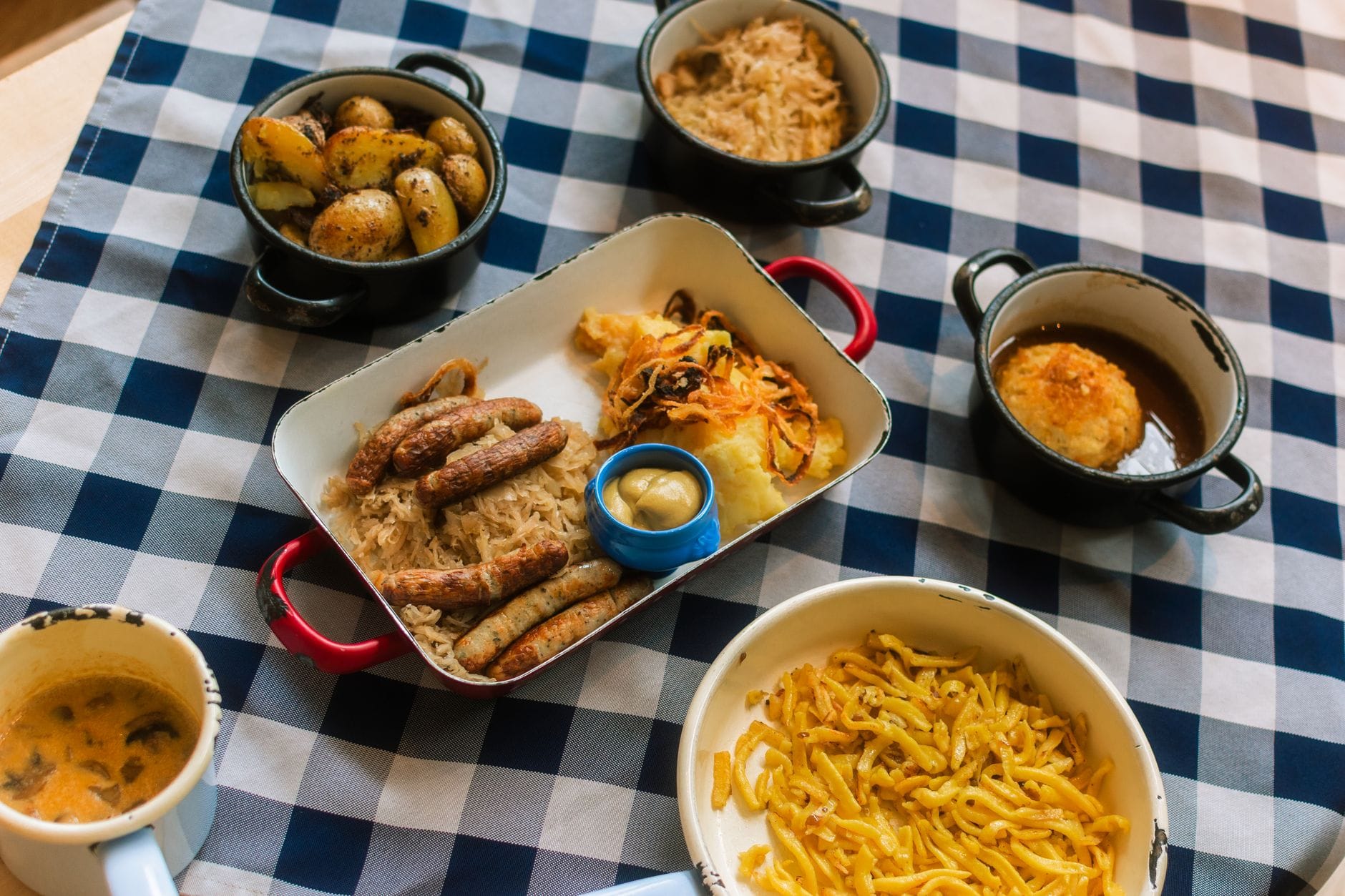
Munich's food culture is built on a handful of iconic dishes that have barely changed in centuries. They are not subtle or light. Bavarian cuisine was designed for long winters, physical labor, and washing everything down with a Mass of lager — and it tastes exactly like that, in the best possible way.
- Weißwurst Munich's most iconic dish: white veal sausages served warm in a bowl of hot water, eaten before noon by tradition. Peel the skin back, dip in sweet mustard (Süßer Senf), and eat with a fresh pretzel. A pair with mustard and pretzel costs around €5.90 at most bakeries and beer halls.
- Schweinshaxe Roasted pork knuckle with crackling skin, served with potato dumpling (Knödel) and sauerkraut or red cabbage. This is the centerpiece dish of any serious Bavarian meal. Expect to pay around €22 at major beer halls — it's a large portion and generally worth it.
- Leberkässemmel A thick slice of Leberkäse (a baked meat loaf, despite the name containing neither liver nor cheese) served in a bread roll with mustard. The fastest and cheapest authentic Bavarian meal you'll find — €3.80–€5 from butcher counters and market stalls.
- Obatzda A spreadable cheese mixture made from Camembert, butter, cream cheese, paprika, and onion. Served with pretzels as a starter or beer garden snack. It's sharper and more pungent than it looks — one of the best things to eat in Munich.
- Steckerlfisch Whole fish (typically mackerel) grilled on a stick over an open flame. Almost exclusively a beer garden dish in summer. One of the few lighter options in Bavarian cuisine and a genuine local favorite.
- Dampfnudel Steamed sweet dumplings served with vanilla sauce or potato soup, depending on the region. Less famous than the meat dishes but worth seeking out as a dessert or light lunch.
ℹ️ Good to know
The Weißwurst tradition of only eating them before noon ("before the church bells ring at noon") is a real cultural convention, not just a tourist story. Most Munich bakeries and traditional restaurants stop serving them around midday. If you want them fresh and warm, aim for a 9–11am breakfast.
What Eating in Munich Actually Costs
Munich is not cheap. It consistently ranks among Germany's most expensive cities for food and drink. That said, you can eat well on a range of budgets if you know where to look — the key is knowing which venues are priced for locals and which ones are priced for people who just got off a tour bus.
- Budget: €25–€35 per day Achievable with bakery breakfasts (Weißwurst + pretzel + coffee for under €8), Leberkässemmel or currywurst for lunch (€4–€6), and a sit-down Bavarian meal at a mid-market Wirtshaus for dinner. Beer gardens let you bring your own food and only buy drinks — a legitimate local practice.
- Mid-range: €50–€75 per day Covers sit-down lunches with a beer and proper dinners at traditional restaurants. A Bavarian main like schnitzel with garnish runs €15.50–€20, soups €5.50–€10, desserts €4.50–€10.
- Beer: €12–€13 per liter (Mass) This is the standard price at major beer halls like Hofbräuhaus. Smaller neighborhood pubs and beer gardens are occasionally slightly cheaper. Half-liters (Halbe) are available at around €6–€7.
For a detailed breakdown of how to manage costs across food, transport, and accommodation, the Munich on a budget guide covers strategies that work for most trip lengths.
⚠️ What to skip
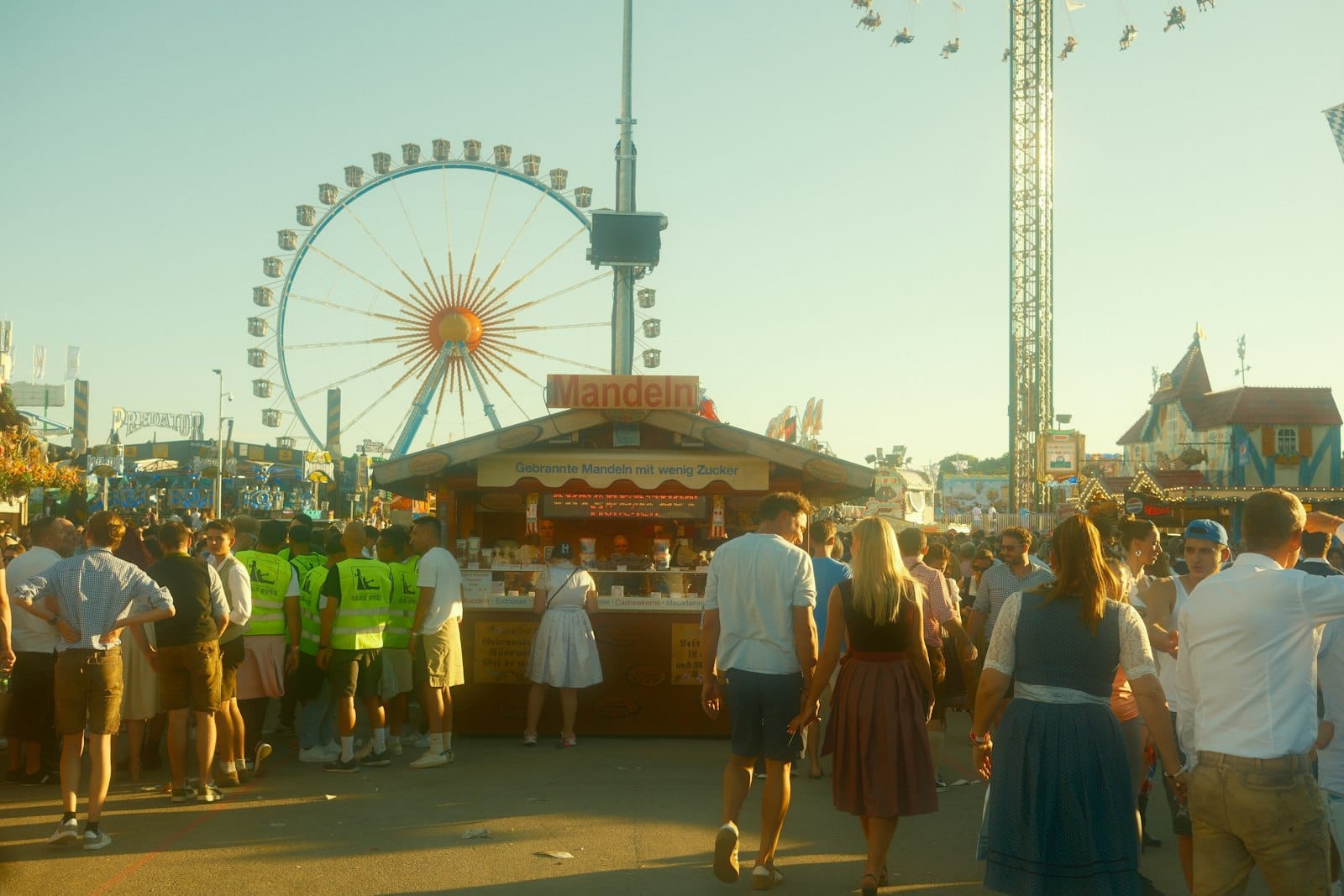
During Oktoberfest (late September to early October), food and beer prices inside the festival tents at Theresienwiese are noticeably higher than at any other time of year. Roast chicken (Hendl), fish, and beer all cost more than their standard beer-hall equivalents, and most tent tables require advance reservations. If you're visiting in that period without a reservation, eating around the perimeter or in nearby neighborhoods is the practical fallback.
Where to Eat: Beer Halls, Beer Gardens, and Markets
Munich's food landscape is shaped by three types of venues that don't really exist in the same form anywhere else: the Wirtshaus (traditional pub-restaurant), the Biergarten (beer garden), and the Markthalle (market hall). Each has its own etiquette and its own best use case.
The Hofbräuhaus is unavoidable and worth experiencing at least once, though its tourist-to-local ratio is now heavily skewed. The food is competent and the beer is genuine, but you're essentially paying a premium for the spectacle. The Augustiner am Platzl, Zum Franziskaner, and Weisses Bräuhaus are all better choices for food quality and fewer crowds.
Beer gardens are a different experience entirely. The Hirschgarten in Nymphenburg is one of the largest in the world and genuinely local in its crowd. The Englischer Garten has several beer gardens including the famous Chinese Tower (Chinesischer Turm), which draws a mix of locals and visitors. All proper beer gardens allow guests to bring their own food, though you must buy drinks from the garden itself.
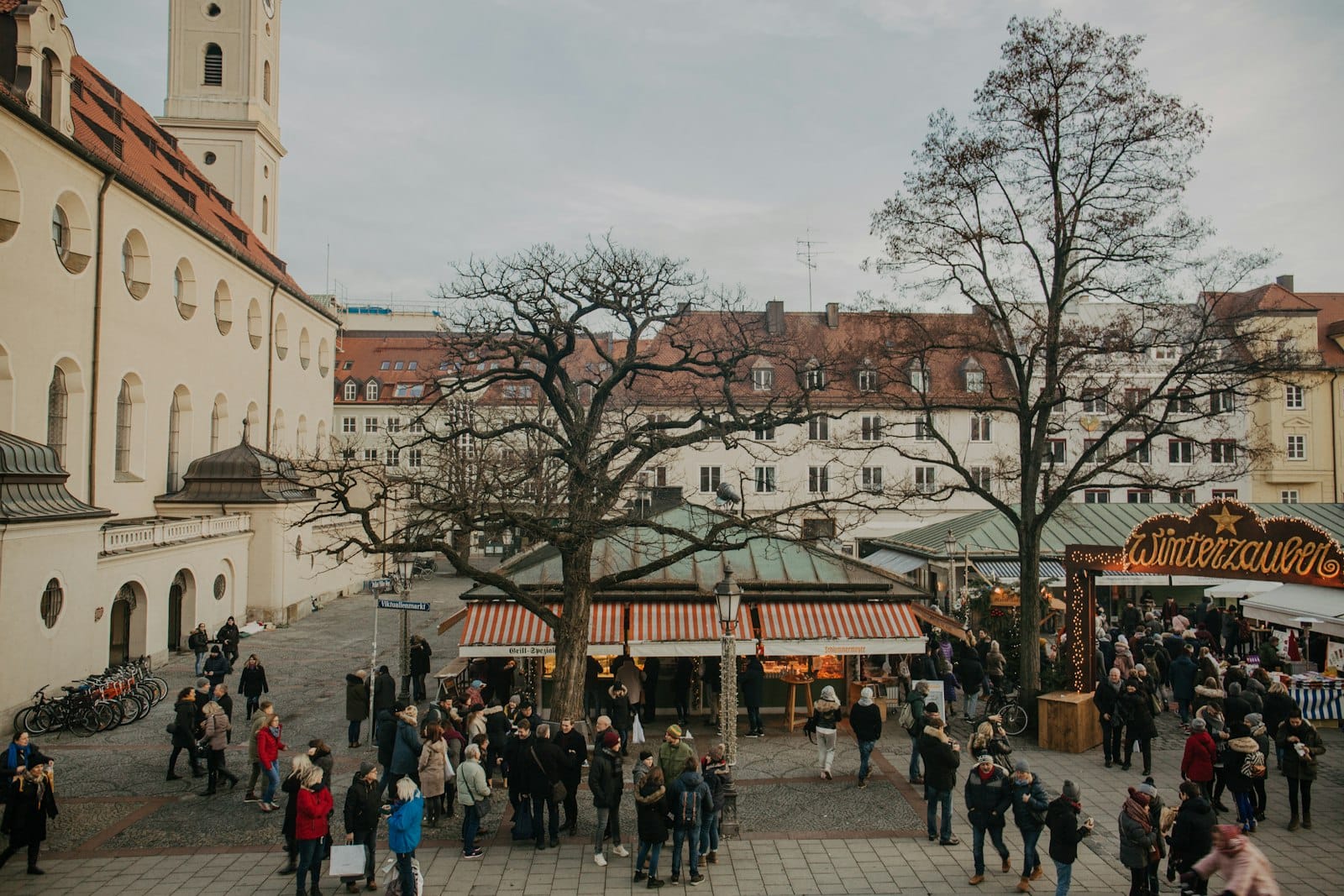
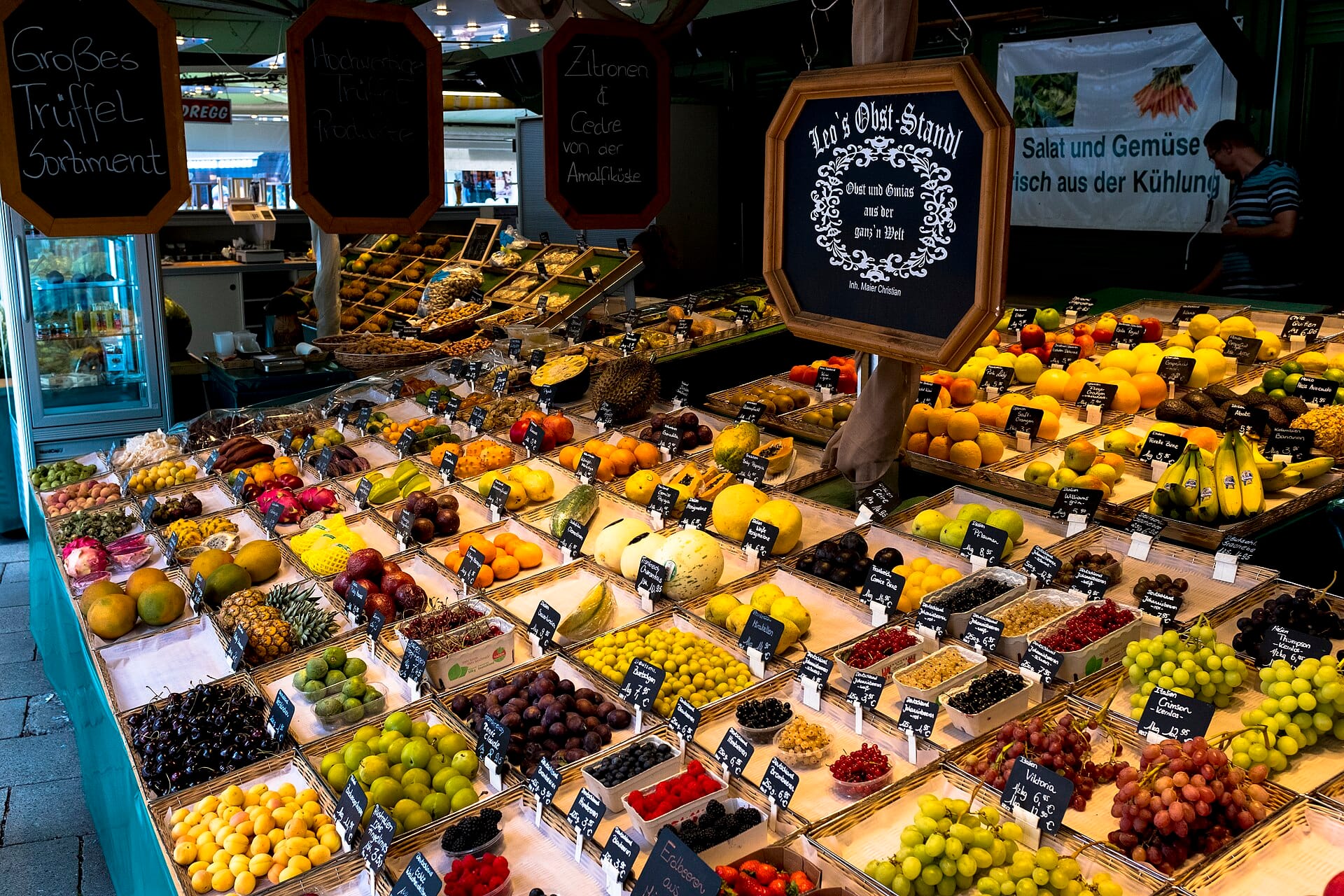
The Viktualienmarkt in central Munich is the city's main daily food market, open Monday through Saturday. It has multiple butcher counters selling Leberkässemmel, sausage stalls, cheese vendors, and a beer garden in the center. It's one of the few places in the Altstadt where you can eat authentically and cheaply. Prices at stalls are higher than a supermarket but far lower than a sit-down restaurant in the same area.
Seasonal Eating: What Changes Throughout the Year
Bavarian food is year-round, but the context shifts significantly by season. The dishes themselves don't change much — Weißwurst is a 12-month institution — but the setting and some specific items are strongly tied to time of year.
Beer gardens open when temperatures allow, typically from late April through October, depending on the weather. They close when it gets cold, full stop. If you're visiting between November and March, you'll be eating in Wirtshäuser and beer halls, which have their own appeal: lower ceilings, warmer atmosphere, and hearty winter dishes like Tafelspitz (boiled beef) and Leberknödelsuppe (liver dumpling soup).
Summer brings Steckerlfisch to beer garden grills and lighter dishes to some menus. The Munich in summer guide covers the full seasonal picture, including which beer gardens are best in the heat. For Oktoberfest specifically, food is part of the cultural experience rather than just sustenance — roast Hendl, Obatzda, pretzels, and Strudel are all traditional tent foods.
✨ Pro tip
If you want to try Steckerlfisch, go to a beer garden on a warm weekend afternoon — that's when the grills are running. Weekday evenings are less reliable. The Chinese Tower beer garden in the Englischer Garten is one of the most consistent places to find it in season.
Common Misconceptions About Munich Food
A few persistent myths about eating in Munich are worth correcting before you arrive.
- "Bavarian food is only for meat eaters." The traditional menu is heavy on pork, veal, and beef, but Munich has a growing range of vegetarian and vegan options, including restaurants that recreate Bavarian classics without meat. Obatzda, pretzels, Käsespätzle (cheese noodles), and Dampfnudel are all traditionally meat-free. The market at Viktualienmarkt also has strong vegetable, cheese, and bread options.
- "Traditional food is always expensive." This is only true in the wrong venues. A Leberkässemmel from a butcher counter costs €4–€5. A pretzel from a bakery costs €1.40–€3. Supermarkets like Edeka and Rewe sell excellent Bavarian cheeses, breads, and charcuterie cheaply. Expensive Bavarian food is largely a tourist-zone problem, not an inherent feature of the cuisine.
- "Beer halls are just tourist traps." This is partly true for Hofbräuhaus, which is genuinely tourist-heavy. But Augustiner-Keller, Löwenbräukeller, and smaller neighborhood Wirtshäuser are frequented by locals daily. The beer garden at Hirschgarten has tens of thousands of regular local patrons.
- "You have to drink beer." Weißbier and lager dominate, but Bavarian non-alcoholic drinks have genuine tradition: Spezi (cola-orange mix), Radler (beer with lemonade, low alcohol), and Maß Wasser (sparkling water) are all normal orders. Nobody will look at you strangely for not drinking beer in Munich.
Practical Tips for Eating in Munich
Tipping in Munich follows the standard German convention: round up the bill or add about 5–10%, handed directly to the server when paying (say the amount you want to pay, not the change you want back). Tipping is customary but not mandatory. Service charges are rarely added automatically.
Most central Munich restaurants accept cards, but some traditional beer halls and smaller Wirtshäuser still prefer cash. Carry at least €20–€30 in euros when visiting markets or smaller venues. For planning your overall visit, the full Munich restaurant guide covers specific venue recommendations by neighborhood and budget.
The neighborhoods of Haidhausen and Glockenbachviertel have strong local restaurant scenes with more diverse menus and lower prices than the Altstadt. If you want to eat where residents eat, these areas are more reliable than anywhere within 10 minutes' walk of Marienplatz.
FAQ
What is the most famous food in Munich?
Weißwurst is Munich's most iconic dish — white veal sausages eaten before noon with sweet mustard and a pretzel. Beyond that, Schweinshaxe (roast pork knuckle), Leberkässemmel (meat loaf in a bread roll), and Obatzda (spiced cheese spread) are the dishes most associated with Bavarian food culture.
How much does food cost in Munich?
A budget day of eating costs around €25–€35, relying on bakeries, market stalls, and street food. Mid-range dining with sit-down Bavarian meals runs €50–€75 per day. A main course at a traditional restaurant typically costs €15–€22. A Mass (1 liter) of beer at Hofbräuhaus is around €12–€13.
Where can I find cheap, authentic Bavarian food in Munich?
The Viktualienmarkt is the best starting point: butcher counters sell Leberkässemmel for €4–€5, and sausage stalls offer quick authentic meals. Bakeries throughout the city sell Weißwurst sets for under €6. Beer gardens that allow self-brought food (like Hirschgarten) let you buy cheap food from nearby shops and only pay for drinks on-site.
Are beer gardens open year-round in Munich?
No. Beer gardens operate seasonally, typically from late April through October, weather permitting. During winter, traditional beer halls and Wirtshäuser are the equivalent indoor experience. Some larger beer gardens have heated indoor areas that extend the season slightly.
Is Munich food good for vegetarians?
Traditional Bavarian cuisine is meat-focused, but vegetarians can eat well. Obatzda with pretzels, Käsespätzle (cheese noodles), Dampfnudel, and many soups are traditionally vegetarian. Munich also has dedicated vegetarian and vegan restaurants that recreate Bavarian classics, and the city's broader restaurant scene covers most dietary requirements, especially in neighborhoods like Glockenbachviertel.
Tickets & tours
Live prices and dates from our booking partner. If you book, we may earn a commission at no extra cost to you.
Planning a trip? Discover personalized activities with the Nomado app.