Hofbräuhaus Munich: A Visitor's Honest Guide to the World's Most Famous Beer Hall
The Hofbräuhaus am Platzl has been at the center of Munich life since 1828. Free to enter, open daily, and seating up to 3,000 guests, it's a genuine piece of Bavarian history — though one that now draws as many tourists as locals. Here's what you'll actually find inside.
Quick Facts
- Location
- Platzl 9, 80331 München (Altstadt, ~4-min walk from Marienplatz)
- Getting There
- Marienplatz (U3, U6, S-Bahn all lines) — exit toward Tal/Platzl
- Time Needed
- 1.5–3 hours for a full meal and drinks; 20 minutes for a quick look around
- Cost
- Free entry. Food and drink charged à la carte from the menu.
- Best for
- First-time visitors to Munich, lovers of Bavarian food and culture, groups
- Official website
- www.hofbraeuhaus.de/en
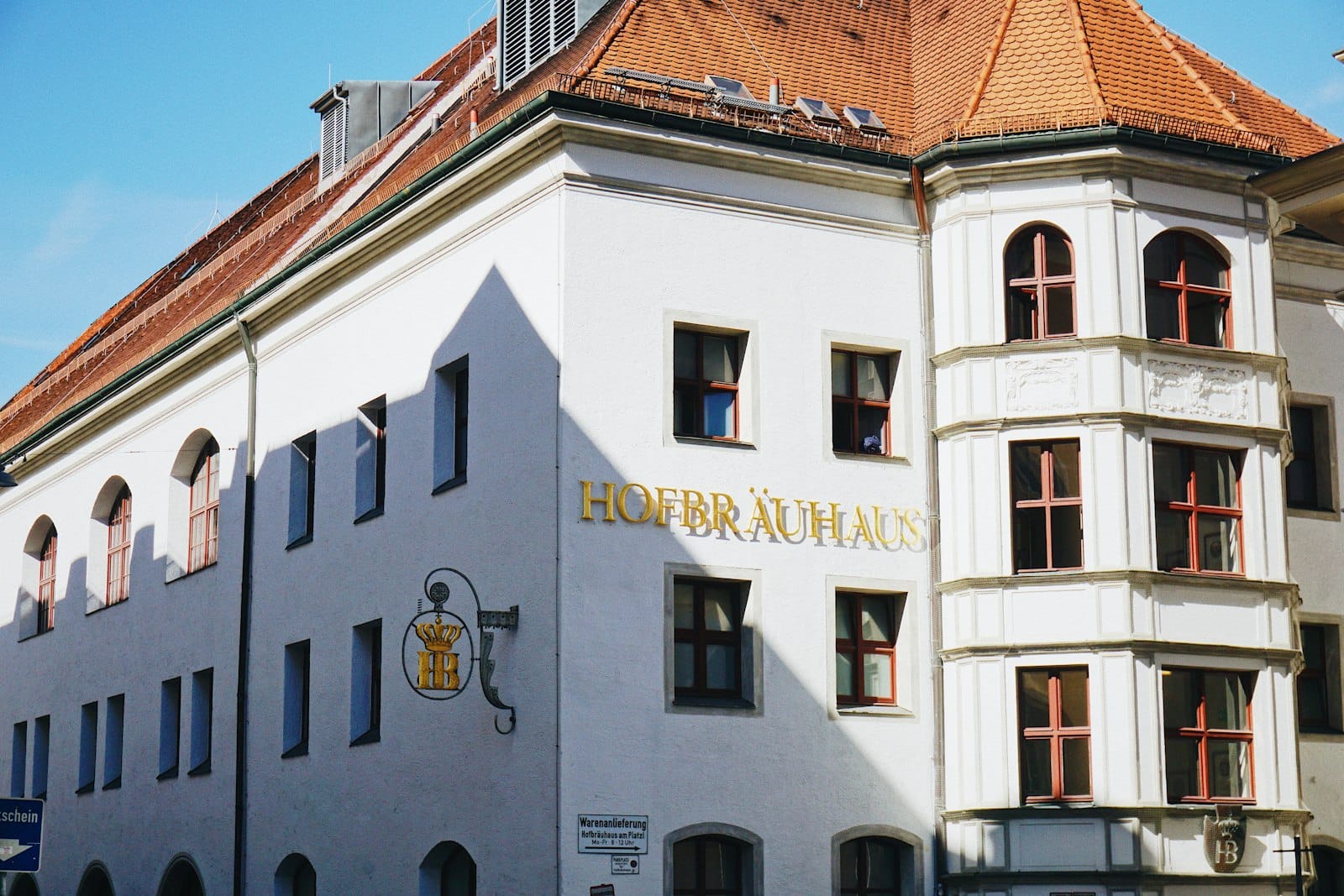
What the Hofbräuhaus Actually Is
The Hofbräuhaus am Platzl is one of the most visited beer halls in Munich and by many measures one of the most recognizable beer halls in the world. That reputation is both its biggest draw and its most honest limitation. Founded in 1589 by Bavarian Duke Wilhelm V as a court brewery, the building at Platzl opened to the general public in 1828, and it has operated continuously as a public restaurant and beer hall since then.
The venue is owned and operated by Staatliches Hofbräuhaus in München, a state-owned brewery. The building you see today reflects late-19th-century renovations and the familiar blue-and-white Bavarian pattern above the entrance. What greets you from the street is a wide, painted facade on the Platzl square, with the blue and white Bavarian diamond pattern above the main entrance — recognizable before you've even pushed open the door.
ℹ️ Good to know
There is no admission fee to enter the Hofbräuhaus. You pay only for what you order. The venue is open daily from 11:00 a.m. to midnight.
Inside: Three Spaces, Three Different Experiences
The Hofbräuhaus is not one room — it's a complex with distinct spaces that attract different crowds at different hours. Understanding the layout before you arrive makes the difference between a frustrating experience and a memorable one.
The ground-floor Schwemme is the main hall — the one in every photograph. Long wooden tables stretch the length of the room, with vaulted ceilings overhead, and a brass band at the far end. Benches seat strangers together by design, and you'll likely end up elbow-to-elbow with a group from Tokyo or São Paulo before the night is through. The noise level at peak hours is considerable: conversation happens at close range, chairs scrape across stone floors, and the band plays polkas and Bavarian folk standards with the kind of commitment that makes you want to at least tap your foot.
Upstairs, the Festsaal is often used for group events and reserved dinners, though it occasionally opens to walk-in visitors. It has the feel of a genuine 19th-century celebration hall, with carved wood paneling and a more ornate ceiling than the ground floor. If you can access it when not in private use, it's worth a few minutes to see it without the crowd noise of the Schwemme below.
The beer garden at the back of the building holds around 400 guests. During warm months, it fills quickly from mid-afternoon onward. For anyone who finds the interior overwhelming, the beer garden is the more relaxed alternative.
Tickets & tours
Live prices and dates from our booking partner. If you book, we may earn a commission at no extra cost to you.
Brewery and Hofbrauhaus tour in Munich
From 41 €Instant confirmationBrewery and Hofbrauhaus tour in Munich
From 41 €Instant confirmationLuggage Storage in Munich
From 6 €Instant confirmationFree cancellationOne hour city sightseeing bus tour in Munich
From 21 €Instant confirmationFree cancellation
How the Atmosphere Changes Through the Day
Arriving at 11:30 a.m. on a weekday means you can actually choose your seat. Tables are wiped clean, the smell of fresh pretzels competes with the hops-and-oak scent that permeates the old timber, and the band hasn't started yet. The lunch crowd tends to be calmer — a mix of guided tour groups making an obligatory stop, and solo travelers working through a Schweinshaxe and a Masskrug (one-liter stein).
By 5 p.m. on any day, and especially on weekends, the hall shifts into a different register entirely. Every seat is occupied, the band plays continuously, and the servers — carrying multiple Masskrugs with practiced efficiency — barely pause between deliveries. The smell is now unmistakably beer: cold and yeasty and thick. The noise from the band, the crowd, and the clinking of steins creates a kind of sustained roar that some visitors find exhilarating and others find exhausting. There is no neutral position on this.
💡 Local tip
Best time to visit: Weekday mornings or lunchtimes (11:00 a.m. to 2:00 p.m.) offer the most manageable crowd levels and the best chance of securing seating without waiting. Avoid Saturday evenings if you're uncomfortable in very loud, packed spaces.
The Food and Beer
The kitchen serves classic Bavarian food without much deviation from tradition. Obatzda (a spiced, creamy cheese spread) with a pretzel is the standard opening. Weisswurst — white veal sausage, served with sweet mustard — is available in the mornings and is the authentic choice for first-timers. Schweinshaxe (roasted pork knuckle) and Brathendl (roasted chicken) are the centerpiece dishes for a proper meal. Portions are substantial and unsentimental about vegetables.
The beer is Hofbräu München, brewed for the house. The Hofbräu Original is the everyday order. Hofbräu Dunkel (dark lager) and Weissbier (wheat beer) are also available. It's genuinely good beer. For anyone interested in exploring Munich's wider brewing culture, the Bavarian food and drink guide covers the full range of local styles and where to find them beyond the tourist circuit.
Prices are in line with central Munich restaurant standards — not cheap, but not inflated to a tourist trap level either. A Masskrug runs slightly more than you'd pay at a neighborhood beer garden, and main dishes sit in the mid-range for Munich dining. Tipping follows standard German practice: round up to the nearest euro or add 5–10%, handed directly to the server when paying.
Historical and Cultural Weight
The Hofbräuhaus carries more than four centuries of documented history, which gives the building a weight that its tourist-heavy crowds can't entirely dissolve. The venue was damaged in World War II and later rebuilt, preserving its historic character.
The Hofbräuhaus also sits uncomfortably in Munich's 20th-century political history. In February 1920, the hall was the location of the announcement of the Nazi Party's 25-point program by Adolf Hitler. This fact is part of the building's documented record and worth knowing before you visit. The NS-Dokumentationszentrum — Munich's documentation center on National Socialism — is located a short distance away in Maxvorstadt and provides the full historical context for this period in the city's history.
Today, the Hofbräuhaus exists as a state-owned institution that is simultaneously a working restaurant, a cultural landmark, and a heavily marketed symbol of Bavarian identity. It occupies the same neighborhood as Marienplatz and the Viktualienmarkt, making it a natural stop on any walk through Munich's historic center.
Getting There and Practical Details
The Hofbräuhaus is at Platzl 9 in Munich's Altstadt. From Marienplatz station — served by U3, U6, and all S-Bahn lines — it's about a 500 m walk to the Platzl. The entrance is impossible to miss: there are usually people photographing the facade even when the building isn't yet open.
The venue is confirmed to have barrier-free access for visitors with mobility requirements. For specific questions about accessible seating, lift availability, or accessible restrooms, contact the venue directly before your visit. The official website at hofbraeuhaus.de/en carries the most current information. If you're planning a broader walking route through the Altstadt, the guide to getting around Munich covers the full public transport network and walking distances between key sites.
No reservation is required for the main Schwemme hall — you simply walk in and find a seat, or join a table with other guests. For private events or the Festsaal, bookings are taken through the official site. The beer garden operates on a first-come, first-served basis and does not take reservations.
⚠️ What to skip
On peak summer evenings and during Oktoberfest season, wait times for seating in the main hall can exceed 30 minutes. If you arrive at 7 p.m. on a Saturday in August, have a backup option. The beer garden fills almost as fast as the Schwemme on warm evenings.
Is It Worth Your Time?
The honest answer is: yes, once — and with clear expectations. The Hofbräuhaus is not where most Munich locals go for a casual evening out. Its tourist concentration is real, and the atmosphere during peak hours is closer to a large public event than to a traditional neighborhood beer hall. If you want to see what the latter actually feels like, the Hirschgarten beer garden in the west of the city or a smaller hall in a residential district will show you a different dimension of Bavarian drinking culture.
That said, the Hofbräuhaus is not a fake. The building is genuinely old, the beer is genuinely brewed for this house, the food is genuinely Bavarian, and the band is genuinely playing live every day the doors are open. The scale of the main hall — seating up to 3,000 people — is something no photograph prepares you for.
Visitors who have no patience for crowds, loud music, or heavily touristic sites will likely find the experience frustrating rather than charming. Those travelers may prefer the Englischer Garten or the Viktualienmarkt for a more grounded interaction with Munich's everyday character. But if you're visiting Munich for the first time and want to understand what Bavarian beer hall culture looks and feels like at its most concentrated, the Hofbräuhaus delivers that experience completely and without apology.
Insider Tips
- Arrive at 11:00 a.m. on a weekday for the calmest experience. The Schwemme is nearly empty, you can examine the ceiling decorations and murals without craning around heads, and the Weisswurst breakfast (traditionally eaten before noon) is available.
- The beer garden entrance is separate from the main hall — on warm days, it fills up faster than most visitors realize, so head straight there rather than looking for a table inside first.
- Regulars historically reserved personal Masskrugs in locked wooden compartments near the entrance — a detail most people walk past without noticing.
- Photography of the interior is generally welcomed by other guests, but the band members sometimes signal that they prefer not to be photographed mid-performance. Pay attention and ask if in doubt.
- If you're visiting Munich during Oktoberfest, note that the Hofbräuhaus is not an Oktoberfest tent — it operates from its own premises year-round. The festival tents are at Theresienwiese, about 2 km away.
Who Is Hofbräuhaus For?
- First-time visitors to Munich wanting a direct experience of Bavarian beer hall culture
- Groups looking for a reliable shared meal with no booking anxiety
- Architecture and history enthusiasts interested in 19th-century Bavarian neo-Renaissance interiors
- Travelers visiting during off-peak hours (weekday mornings/lunchtimes) who want a calmer version of a famous landmark
- Anyone combining a walking tour of the Altstadt with a sit-down meal in the historic center
Nearby Attractions
Other things to see while in Altstadt (Old Town):
- Asamkirche
Squeezed into a narrow slot on Sendlinger Strasse, the Asamkirche is a privately built late Baroque church that packs more ornamental intensity into 22 metres than most cathedrals manage in a hundred. Built by the Asam brothers between 1733 and 1746, it is free to enter and sits in the heart of Munich's pedestrian zone.
- Cuvilliés Theatre
Hidden within the Munich Residenz complex, the Cuvilliés Theatre is an 18th-century Rococo opera house of extraordinary refinement. Its gilded tiers, crimson velvet boxes, and carved ivory ornaments make it one of the most visually concentrated rooms in all of Germany.
- Deutsches Museum
The Deutsches Museum sits on its own island in the Isar river and claims a place among the largest science and technology museums on earth. With 125,000 exhibited objects spanning aviation, mining, chemistry, musical instruments, and far more, it rewards careful planning rather than a casual stroll.
- Feldherrnhalle
Standing at the southern end of Odeonsplatz, the Feldherrnhalle is one of Munich's most architecturally striking and historically loaded monuments. Built between 1841 and 1844, it witnessed the gunfire that ended Hitler's failed coup and remains freely accessible at any hour. Few structures in the city compress so much of Bavaria's and Germany's history into a single loggia.
Planning a trip? Discover personalized activities with the Nomado app.