Hirschgarten Beer Garden: Munich's Largest, and Worth Every Seat
Königlicher Hirschgarten is Munich's largest beer garden, with roughly 8,000 seats spread beneath centuries-old chestnut trees in a 40-hectare park between the Laim and Nymphenburg districts. Founded as a royal hunting ground in 1780, it draws everyone from office workers to tourists to families with strollers, and remains one of the most honest expressions of Bavarian outdoor culture in the city.
Quick Facts
- Location
- Hirschgarten 1, 80639 Munich, between Laim and Nymphenburg
- Getting There
- S-Bahn: Hirschgarten or Laim; Tram 16/17 to Romanplatz, Steubenplatz or Kriemhildenstraße
- Time Needed
- 1.5 to 3 hours for beer garden; park open 24/7
- Cost
- Free entry; 1L beer approx. €7–9, food from approx. €5 (prices subject to change)
- Best for
- Authentic Bavarian beer culture, sunny afternoons, families, low-key evenings
- Official website
- www.hirschgarten.de/en
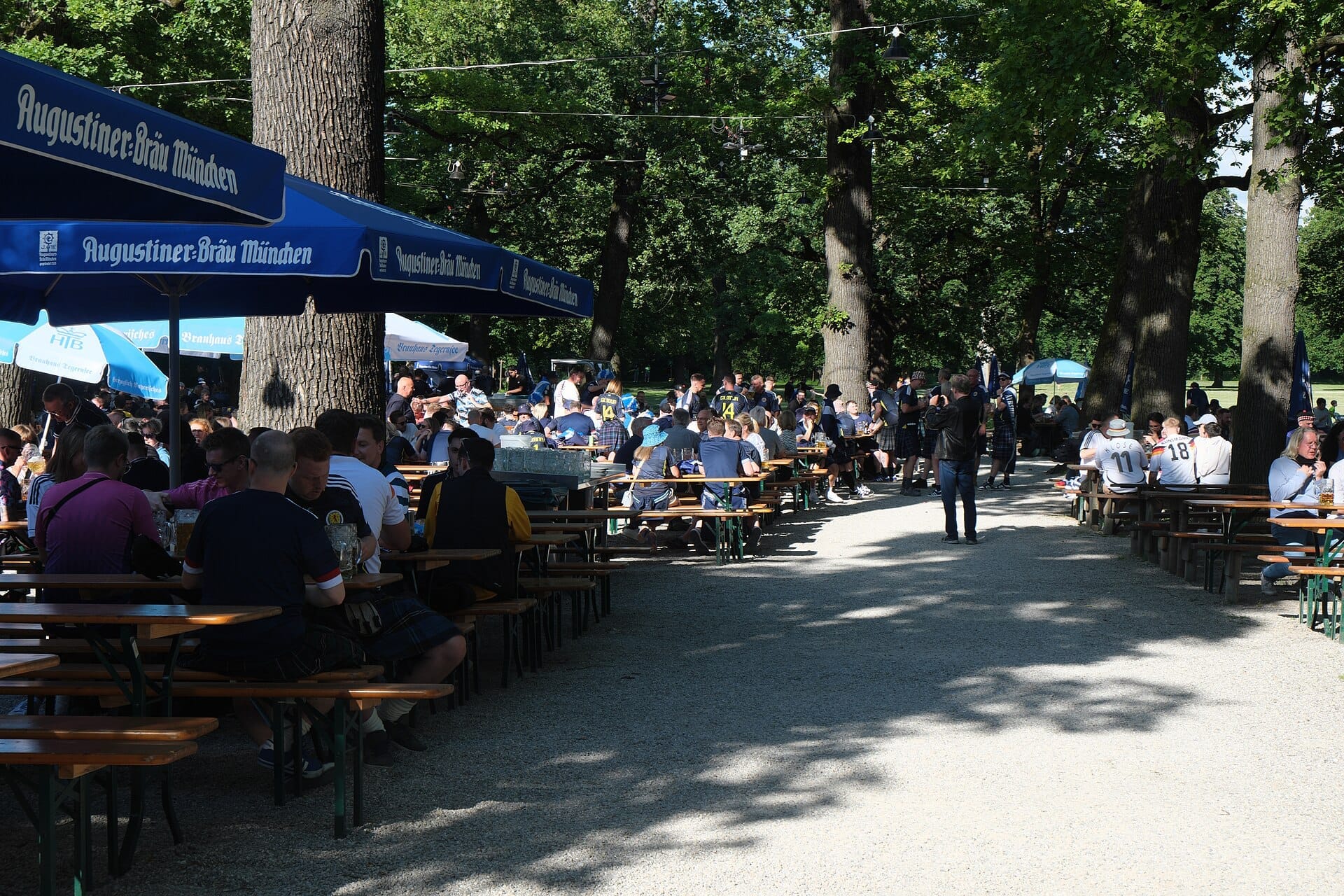
What Hirschgarten Actually Is
The Königlicher Hirschgarten, or Royal Hirschgarten, is not just a beer garden. It is a 40-hectare park in Munich's western districts of Laim and Nymphenburg that happens to contain the largest beer garden in Munich, and by many accounts one of the largest in the world. The beer garden itself seats around 8,000 people, arranged on gravel beneath a canopy of mature chestnut trees that have been shading drinkers for well over a century.
The park pre-dates the beer garden by some time. Elector Karl Theodor established Hirschgarten in 1780 as a hunting ground and deer enclosure for Bavarian nobility. Deer still live here today, in a fenced enclosure near the eastern end of the park. That detail surprises many first-time visitors: you arrive for a liter of Augustiner and end up watching a small herd of deer graze twenty meters away.
Despite its size and historical weight, Hirschgarten keeps a distinctly local atmosphere. It rarely tops tourist itineraries the way the Englischer Garten does, which is part of its appeal. On a warm Tuesday afternoon, the crowd is more office colleagues finishing early than selfie-taking tour groups.
The Experience: What You See, Hear, and Smell
Walking into Hirschgarten from the S-Bahn station of the same name, you pass through a wide park path lined with older trees. The sound of gravel underfoot gives way to the low murmur of several thousand people in unhurried conversation. On a sunny weekend in May or early September, the beer garden operates at something close to full capacity, and the sight of rows of wooden benches filled with people in a mix of jeans and Lederhosen, all holding one-liter ceramic mugs, is genuinely striking in a way that photographs rarely convey.
The smell hits before you see the service counters: roasted meat from the grill stations, the malt-forward warmth of Augustiner beer (the house beer, served directly from wooden barrels in the self-service section), and, closer to the pretzel stands, the faint yeasty scent of freshly baked bread. There is a full-service restaurant for those who prefer table service, but most of the cultural action happens at the self-service counters.
Acoustically, Hirschgarten is unusual. Eight thousand people should be loud, and in a closed space they would be. Under the open canopy of chestnuts, the sound disperses. Conversations stay at a human level. There is no piped music in the main beer garden area. This matters more than it sounds: after a day of city touring, sitting in near-silence under a tree with a cold beer is something you will not find at noisier alternatives.
💡 Local tip
In the self-service section, you are expected to bring your own food (packed picnics are welcome) or buy from the on-site counters. If you buy from an outside vendor, you still need to purchase your beer on-site. Bringing outside drinks is not permitted.
Tickets & tours
Live prices and dates from our booking partner. If you book, we may earn a commission at no extra cost to you.
Luggage Storage in Munich
From 6 €Instant confirmationFree cancellationOne hour city sightseeing bus tour in Munich
From 21 €Instant confirmationFree cancellationMunich Third Reich walking tour
From 32 €Instant confirmationFree cancellationRomantic Road Day Trip to Rothenburg and Harburg
From 74 €Instant confirmationFree cancellation
How the Experience Changes Through the Day
The beer garden opens daily at 11:00 and closes at midnight, weather permitting. Mornings are the quietest window. Arriving before noon on a weekday, you will find a fraction of the bench space occupied, mostly by older regulars who treat Hirschgarten as a neighborhood fixture. The light comes through the chestnut leaves at a low angle and the air is cooler under the canopy than in the open park.
By early afternoon on a warm day, the crowd shifts decisively. Families arrive with children, cyclists lock up at the entrance, and the gravel paths fill. The queue at the Augustiner barrel counter can stretch 10 to 15 people deep on a Saturday in summer. Peak hours are roughly 15:00 to 19:00. Finding a table during this window requires either patience or early arrival. Come at 12:30 and you can take your pick.
Evenings have a different character. By 20:00, children have largely gone home, the queue for beer shortens, and the temperature under the chestnuts is noticeably cooler than the surrounding streets. The restaurant section fills for dinner. If you are visiting in summer and want the classic Hirschgarten atmosphere without the crowd pressure, early evening is the most relaxed slot.
⚠️ What to skip
The beer garden only opens in good weather. If it rains, outdoor service stops and the indoor restaurant cannot absorb 8,000 people. Check the forecast before making Hirschgarten the centerpiece of your afternoon plans.
Getting There: Transit and Practical Navigation
The S-Bahn stop Hirschgarten (served by S1, S2, S3, S4, S6 and S8 on the main trunk line) deposits you at the park's eastern edge with a straightforward five-minute walk to the beer garden. Alternatively, Laim station is a short walk away on a different route through the park. Both work well. The tram is equally convenient: trams 16 and 17 stop at Romanplatz or Steubenplatz, from where signposted walking paths lead through the residential streets into the park.
If you are combining Hirschgarten with a visit to the area, Nymphenburg Palace is the natural pairing. The palace is about 1.5 km north and reachable on foot or by tram. Spending the morning at the palace and its extensive gardens, then walking south to Hirschgarten for a late lunch and a beer, works well as a half-day itinerary in the Nymphenburg district.
Parking exists on De-La-Paz-Straße and in areas around the park perimeter, but driving here on a sunny weekend is not recommended. Spots fill quickly and the public transport connections are good enough that a car adds no benefit.
Accessibility: the park terrain is mostly flat. The main paths between the S-Bahn station and the beer garden are paved or compacted gravel, manageable for wheelchairs and pushchairs. The beer garden floor itself is loose gravel, which can be more difficult to navigate for wheelchair users.
What to Order and How the Self-Service Works
Hirschgarten serves Augustiner beer, one of Munich's oldest and most respected breweries, poured from traditional wooden barrels in the self-service section. The flagship option is the Helles, a pale lager that is lighter and less bitter than many international lagers, served in a one-liter Mass mug. Prices change seasonally, but a liter has historically been around €7 to €9. A deposit is usually charged on the ceramic mug.
Food from the self-service counters covers Bavarian standards: Hendl (roast chicken), Steckerlfisch (grilled fish on a stick), Obatzda (a seasoned soft cheese blend) served with pretzels, and various sausage options. The pretzel with Obatzda is cheap, filling, and the right thing to order if you are not especially hungry. The roast chicken takes longer to queue for but is the more satisfying meal.
If beer gardens are new to you, it helps to read up on how Bavarian outdoor drinking culture actually works before you arrive. The general customs around self-service sections, table sharing, and food etiquette are covered in the Bavarian food guide for Munich, which gives useful context.
ℹ️ Good to know
Non-alcoholic options are available, including alcohol-free wheat beer, soft drinks, and water. Hirschgarten is not exclusively an adult space. Families with children are a common sight, and the park around the beer garden is appropriate for all ages.
The Deer Enclosure and the Park Beyond the Beer Garden
Many visitors spend their entire visit at the beer garden and never explore the rest of the 40-hectare park. That is understandable, but the deer enclosure near the park's eastern section is worth the short walk. A small herd of red deer lives here year-round, a direct continuation of the hunting ground that Karl Theodor established in 1780. Seeing deer in an urban park, with a beer garden humming in the background, is one of those details that makes Hirschgarten genuinely unlike any other place in Munich.
The park itself has open meadows suitable for picnics, playgrounds, and shaded walking paths. In winter, when the beer garden is closed, locals still use the park for walking and cycling. The park is open 24 hours and has no admission charge at any time of year.
Photography, Seasonal Notes, and Who Should Skip This
For photography, the hour before sunset on a clear day produces the best light through the chestnut canopy. The beer garden is photogenic in an understated way: rows of ceramic mugs, dappled shade, and groups of people in conversation. Wide-angle shots work better than close-ups for capturing the scale. The deer enclosure, with its leafy backdrop, rewards a longer lens in the quieter morning hours.
Seasonally, Hirschgarten is at its best from late April through early October, when the weather supports outdoor sitting and the chestnuts are in full leaf. The beer garden is closed or unreliable in winter and on cold or rainy days. If you are planning a trip around Munich's broader calendar, the best time to visit Munich guide covers seasonal considerations across the city.
Who should skip Hirschgarten: visitors who are not interested in beer culture and would find a large outdoor drinking space with Bavarian food an unremarkable experience. It is not a cultural institution in the museum sense, and it does not offer much for those who want architectural interest, nightlife energy, or high-end dining. It is also not the place to be on a cold or rainy day, when the restaurant cannot compensate for the closed outdoor section.
Insider Tips
- The self-service section allows you to bring your own food. If you want better or cheaper food than the on-site counters, pack your own and buy only the beer at the Augustiner barrel. This is completely accepted and practiced regularly by locals.
- Arrive on a weekday between 11:00 and 13:00 for the most relaxed experience. Tables are plentiful, queues are short, and you can choose your spot in the shade rather than taking whatever space remains.
- The wooden barrels in the self-service area are replaced as they empty, and freshly tapped barrels produce noticeably colder, better-conditioned beer. Watch for when a new barrel comes out and time your order accordingly.
- The deer are most active and visible in the early morning and in the hour before the beer garden closes. If seeing them is part of the plan, do not leave it as an afterthought at peak afternoon hours when the park paths are crowded.
- Hirschgarten's beer garden operates on a shared-table basis. Sitting down at a long bench next to strangers is normal and expected. If you want a private table or reserved seating, you need the full-service restaurant, which requires a booking and operates differently from the self-service section.
Who Is Hirschgarten Beer Garden For?
- Travelers who want an authentic, low-tourist-density Bavarian beer garden experience rather than a performance of one
- Families with children who need open space, shade, and flexibility alongside adult refreshments
- Visitors pairing a trip to Nymphenburg Palace with an afternoon outdoors
- Anyone who wants to sit quietly under trees with a cold Augustiner Helles and watch Munich be Munich
- Budget travelers, since the park entry is free and a pretzel with Obatzda is one of the most satisfying cheap meals in the city
Nearby Attractions
Other things to see while in Nymphenburg:
- Munich Botanical Garden (Botanischer Garten)
The Botanical Garden Munich-Nymphenburg is one of Central Europe's most significant scientific gardens, covering 21 hectares and cultivating over 16,000 plant species. Set beside Nymphenburg Palace Park in western Munich, it rewards visitors in every season with changing outdoor displays and year-round tropical greenhouses.
- Nymphenburg Palace
Nymphenburg Palace (Schloss Nymphenburg) is the largest city palace in Germany and the former summer residence of Bavaria's Wittelsbach rulers. Set within a vast formal park in Munich's western Neuhausen-Nymphenburg district, it rewards visitors who come early, take their time, and look beyond the main hall.
Planning a trip? Discover personalized activities with the Nomado app.