Cuvilliés Theatre: Munich's Most Dazzling Rococo Interior
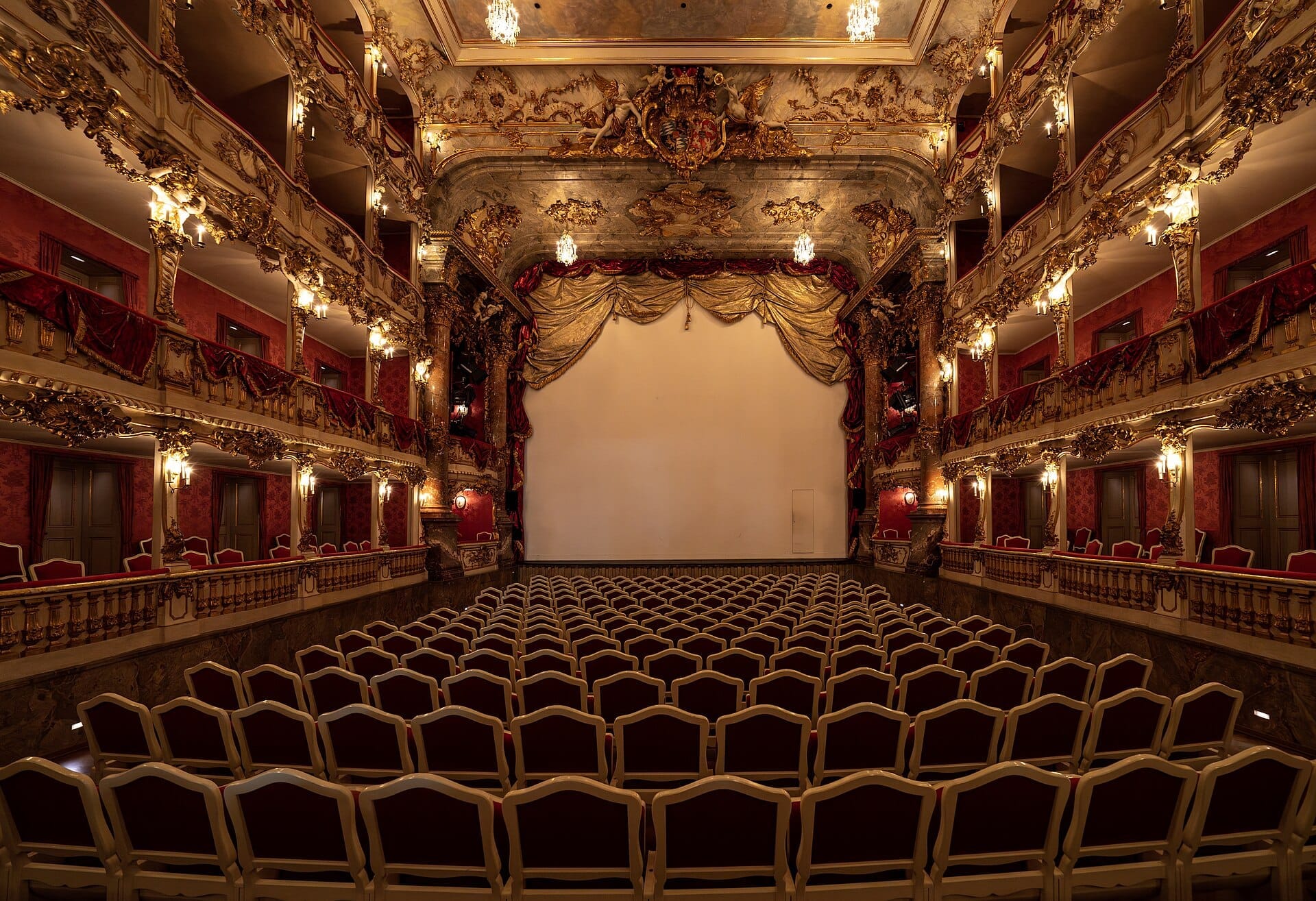
Hidden within the Munich Residenz complex, the Cuvilliés Theatre is an 18th-century Rococo opera house of extraordinary refinement. Its gilded tiers, crimson velvet boxes, and carved ivory ornaments make it one of the most visually concentrated rooms in all of Germany.
Quick Facts
- Location
- Residenzstraße 1, 80333 Munich (enter via Brunnenhof courtyard inside the Residenz)
- Getting There
- U-Bahn Odeonsplatz (U3/U6), then a short walk; also walkable from Marienplatz and other Altstadt stops
- Time Needed
- 30–60 minutes for the theatre alone; allow 2–3 hours if combining with the Residenzmuseum or Treasury
- Cost
- €5 regular / €4 reduced (current prices). Combined Residenz ticket €20 / €16. Under 18 free.
- Best for
- Architecture lovers, opera and theatre history enthusiasts, Baroque and Rococo art fans
- Official website
- www.residenz-muenchen.de/englisch/cuv/index.htm
What Is the Cuvilliés Theatre?
The Cuvilliés Theatre, known in German as the Cuvilliés-Theater or historically as the Altes Residenztheater, is a court opera house built between 1751 and 1755 by order of Elector Max III Joseph. It was designed by François de Cuvilliés the Elder, a Belgian-born architect who became the defining voice of Bavarian Rococo. The result is not simply a theatre — it is arguably the most ornate room in Munich, and one of the finest surviving Rococo interiors anywhere in Europe. For visitors who care about architectural detail, it consistently exceeds expectations. For those who prefer grand spaces or open-air spectacles, it may feel small and jewel-box tight by comparison.
The theatre sits within the sprawling Munich Residenz complex in Altstadt, the historic core of the city. You do not enter from Residenzstraße directly. Instead, the route passes through the Residenz's Brunnenhof courtyard, which gives the visit an added layer of ceremony — you are walking through one royal space to reach another.
💡 Local tip
The combined Residenz ticket (Residenzmuseum, Treasury, and Cuvilliés Theatre) at €20 regular / €16 reduced offers far better value than buying entry separately. If you plan to spend half a day at the Residenz complex, this is the obvious choice.
The Interior: What You Actually See
The auditorium is four tiers high, intimate in scale, and almost completely covered in carved ornament. The original woodwork — decorated in ivory white, gold leaf, and accents of red — was disassembled and stored during World War II, which is why it survived Allied bombing that destroyed the rest of the building. After the war, the carved panels were painstakingly reassembled in a reconstructed shell. What you are looking at is genuine 18th-century craftsmanship, not a replica.
The tiers of private boxes are framed by carved figures, floral garlands, and allegories of music and theatre. Look closely at the backs of the boxes: the carving depth and layering is remarkable even by the standards of the era. The ceiling above the stage features painted panels. The floor of the stalls, which can be leveled by removing the seating, was originally used for masquerade balls as much as opera performances.
Acoustically, the room is considered excellent for chamber opera and small ensembles. When the Bavarian State Opera uses it for performances, tickets sell out quickly. During visiting hours, the theatre is lit for daytime viewing rather than performance atmosphere, which gives you a clearer look at the detail but removes some of the drama you might imagine from period engravings.
Tickets & tours
Live prices and dates from our booking partner. If you book, we may earn a commission at no extra cost to you.
Luggage Storage in Munich
From 6 €Instant confirmationFree cancellationOne hour city sightseeing bus tour in Munich
From 21 €Instant confirmationFree cancellationMunich Third Reich walking tour
From 32 €Instant confirmationFree cancellationRomantic Road Day Trip to Rothenburg and Harburg
From 74 €Instant confirmationFree cancellation
Historical Context: From Court Theatre to Wartime Survival
François de Cuvilliés the Elder arrived at the Munich court in the early 18th century, initially as a court dwarf and page to Elector Maximilian II Emanuel. His talent for drawing was recognized and he was sent to Paris to train as an architect. He returned to become the leading Rococo architect in Bavaria, responsible for the Amalienburg hunting lodge in the Nymphenburg Palace grounds as well as this theatre.
The theatre opened in 1753 and was the venue for the Munich premiere of Mozart's Idomeneo in 1781, a fact that gives the room a specific place in music history beyond its visual importance. It remained a functioning court theatre through the 18th and 19th centuries before its role diminished. Today the Residenz Treasury and the Cuvilliés Theatre together represent the most concentrated display of Wittelsbach dynastic culture available to the public in Munich.
The wartime story is worth pausing on. When Munich came under sustained Allied bombing from 1943 onward, the Residenz complex was largely gutted. The theatre's decorative woodwork had been stored offsite in Bavarian castles. The reconstruction of the shell was completed in the 1950s using a partially modified design, and the original carved elements were reinstalled by 1958. The seams between original and reconstructed are not always obvious, which is a testament to the quality of the post-war work.
Opening Hours and Seasonal Variations
The Cuvilliés Theatre operates on a seasonal schedule that differs noticeably by time of year, and it closes for longer stretches than many Munich attractions. The schedule for 2025–2026 is as follows, though you should verify before visiting as hours are subject to change:
- 1 April – 31 July: Monday to Saturday 14:00–18:00; Sunday and public holidays 09:00–18:00
- 1 August – 15 September: Daily 09:00–18:00
- 16 September – 19 October: Monday to Saturday 14:00–18:00; Sunday and public holidays 09:00–18:00
- 20 October – 27 March: Monday to Saturday 14:00–17:00; Sunday and public holidays 10:00–17:00
- Closed: 1 January, Shrove Tuesday, 24–25 December, 31 December
The theatre also closes during performance periods when the Bavarian State Opera schedules productions here. These closures are not always announced far in advance. If your visit to Munich is specifically timed around the theatre, check the official Residenz website within a week of arrival to confirm normal visiting hours are in effect.
⚠️ What to skip
On weekdays during most seasons, the theatre does not open until 14:00. Morning visitors to the Residenz complex who expect to see it early will be disappointed. Plan your Residenz day accordingly: morning for the Residenzmuseum or Treasury, afternoon for the Cuvilliés Theatre.
How to Visit: Practical Walkthrough
Getting there is straightforward from the city centre. From U-Bahn Odeonsplatz (lines U3 and U6), it is a five-minute walk south through the Residenz quarter. The entrance to the Residenz complex on Residenzstraße brings you into a sequence of courtyards; follow signage to the passage between Brunnenhof and Apothekenhof, from which the Cuvilliés Theatre entrance is accessible.
The theatre is a short walk from several other significant sites in the Altstadt, including the Odeonsplatz and the Theatinerkirche. The proximity makes it easy to combine with a broader tour of Munich's historic core without needing transit between stops.
Photography is generally permitted inside during visiting hours, though flash and tripods are typically restricted. The interior lighting during daytime opening is adequate for handheld shots. The best angles are from the upper tiers looking down across the auditorium — the full symmetry of the carved boxes registers much more powerfully from above than from the stalls floor. If mobility is a concern, note that the theatre offers a wheelchair seating option but it requires manual booking by phone in advance, rather than online booking. Contact the Residenz administration directly if this applies to your visit.
When the Experience Is Most Rewarding
As a daytime visiting attraction rather than a performance venue, the Cuvilliés Theatre rewards patient looking more than it does a quick walkthrough. Visitors who rush through in ten minutes will have seen it but not absorbed it. The carved detail repays slow movement around the tiers, and the contrast between the white and gold ornament and the dark wood and crimson velvet is best appreciated with time to let your eyes settle.
Sunday mornings in summer, when the theatre opens at 09:00, offer noticeably quieter conditions than weekday afternoons. Crowds at the Cuvilliés Theatre are rarely oppressive by Munich standards — it does not attract the same volume as the Glockenspiel or the Viktualienmarkt — but the space is small enough that a tour group in the auditorium will fill it noticeably. Arriving within the first hour of opening generally means lighter visitor numbers.
If you have any interest in attending a live performance here, check the Bavarian State Opera schedule well in advance. Productions in this space are infrequent and tickets are allocated quickly. The acoustic and atmospheric experience of a performance in the original Rococo setting is categorically different from a daytime visit — though both are worth the effort on their own terms.
Insider Tips
- Buy the combined Residenz ticket before entering the Cuvilliés Theatre — you cannot upgrade to a combined ticket once you have paid for single admission, and the Residenzmuseum and Treasury easily justify the extra cost.
- The upper tier of the auditorium gives the best perspective on the full decorative scheme. If you can access it, spend most of your time here rather than on the stalls floor.
- The theatre closes for performance periods with limited advance notice. Check the official Residenz website at residenz-muenchen.de within a week of your planned visit to confirm visiting hours are active.
- The wartime survival story of the original woodwork is usually not explained in detail by on-site signage. Reading about it briefly before you arrive makes the visit significantly more meaningful — you understand that the carving you are touching with your eyes is genuinely 270 years old.
- Weekday afternoons in the shoulder seasons (October–November and March) tend to have the smallest crowds. Summer weekends can bring group tours that fill the compact space.
Who Is Cuvilliés Theatre For?
- Architecture and design enthusiasts who want to understand Bavarian Rococo at its most refined
- Music and opera history travelers, given the theatre's association with the 1781 premiere of Mozart's Idomeneo
- Visitors combining the Cuvilliés Theatre with a full day at the Munich Residenz complex
- Photographers seeking an extraordinary interior subject in the Altstadt
- Travelers interested in cultural survival stories — how wartime foresight preserved irreplaceable heritage
Nearby Attractions
Other things to see while in Altstadt (Old Town):
- Asamkirche
Squeezed into a narrow slot on Sendlinger Strasse, the Asamkirche is a privately built late Baroque church that packs more ornamental intensity into 22 metres than most cathedrals manage in a hundred. Built by the Asam brothers between 1733 and 1746, it is free to enter and sits in the heart of Munich's pedestrian zone.
- Deutsches Museum
The Deutsches Museum sits on its own island in the Isar river and claims a place among the largest science and technology museums on earth. With 125,000 exhibited objects spanning aviation, mining, chemistry, musical instruments, and far more, it rewards careful planning rather than a casual stroll.
- Feldherrnhalle
Standing at the southern end of Odeonsplatz, the Feldherrnhalle is one of Munich's most architecturally striking and historically loaded monuments. Built between 1841 and 1844, it witnessed the gunfire that ended Hitler's failed coup and remains freely accessible at any hour. Few structures in the city compress so much of Bavaria's and Germany's history into a single loggia.
- Frauenkirche (Cathedral of Our Lady)
The Frauenkirche, officially the Dom zu Unserer Lieben Frau, is Munich's most recognizable landmark. Its twin onion-domed towers have defined the city's skyline since the 15th century, and the cathedral remains an active seat of the Archbishop of Munich and Freising. Here is everything you need to visit with confidence.
Planning a trip? Discover personalized activities with the Nomado app.