Munich Residenz Treasury (Schatzkammer): The Wittelsbach Crown Jewels Up Close
The Schatzkammer der Residenz München holds one of Europe's finest collections of royal treasures, from jewel-encrusted reliquaries to ceremonial swords, all accumulated by the Wittelsbach dynasty over six centuries. Compact, climate-controlled, and surprisingly uncrowded compared to the adjacent palace rooms, it rewards careful visitors with extraordinary craftsmanship at close range.
Quick Facts
- Location
- Residenzstraße 1, 80333 München (Altstadt)
- Getting There
- U-Bahn Odeonsplatz (U3, U4, U5, U6)
- Time Needed
- 1 to 1.5 hours for the Treasury; 3+ hours with the Residenz Museum
- Cost
- Treasury only: €10 (reduced €9). Combo with Residenz Museum: €15 (reduced €13). Children under 18: free
- Best for
- History lovers, jewellery and decorative arts enthusiasts, rainy-day cultural visits
- Official website
- www.residenz-muenchen.de/englisch/residenc/index.htm
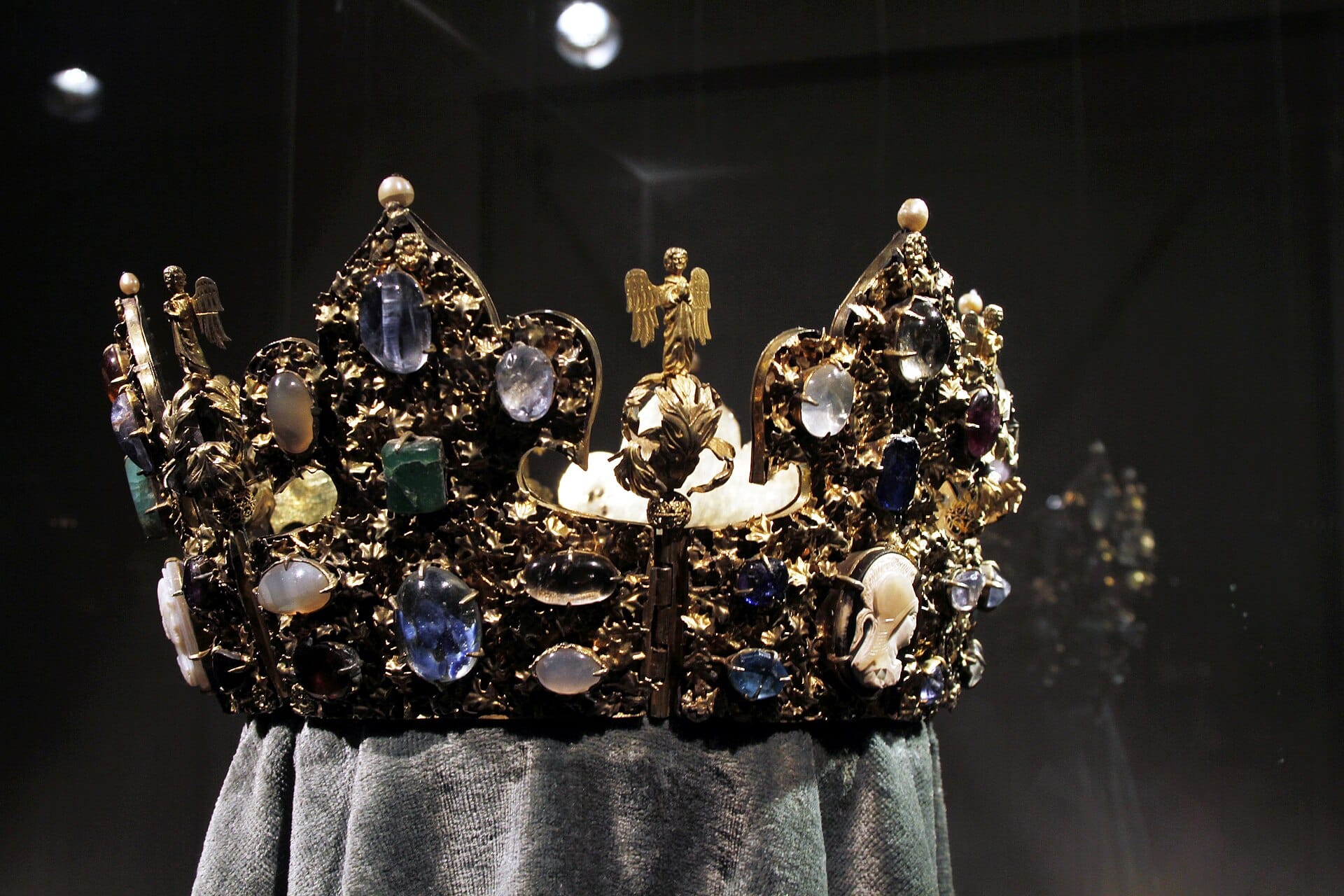
What the Schatzkammer Actually Is
The Schatzkammer der Residenz München, formally the Treasury of the Munich Residence, sits inside the sprawling Munich Residenz complex on Residenzstraße, a short walk north of Marienplatz. It is one of Europe's most concentrated collections of royal goldsmiths' work, precious stones, enamel, ivory, and ceremonial regalia, built up by the Wittelsbach dynasty from the late medieval period through the early 19th century.
The Wittelsbachs ruled Bavaria for over 700 years, and this collection reflects that longevity. Objects range from a 9th-century devotional cross said to predate the dynasty itself to Napoleon-era crown jewels commissioned when Bavaria was elevated to a kingdom in 1806. The sheer variety is part of what makes the Treasury so absorbing: you move from medieval reliquaries to Renaissance parade swords to Baroque pearl sculptures within a few rooms.
Unlike many royal treasuries elsewhere in Europe, the Schatzkammer survived the Second World War largely intact. The most important pieces were evacuated and hidden before the bombing raids that severely damaged the Residenz above. That context matters when you stand in front of objects that are not reconstructions or replacements, but originals with an unbroken provenance.
The Collection: What You Will Actually See
The Treasury is laid out across ten interconnected rooms on the ground floor of the Residenz, with cases arranged largely in chronological order. Lighting is deliberately low to protect the materials, which means your eyes need a minute to adjust when you enter from the courtyard. The atmosphere is closer to a cathedral sacristy than a conventional museum gallery.
The earliest rooms display medieval pieces including reliquary busts, liturgical crosses, and portable altarpieces. The craftsmanship in the goldwork from this period tends to stop visitors in their tracks, particularly the Prayer Book of Duke Albrecht V from the 1570s, a small object encrusted with enamel miniatures and precious stones that looks almost impossibly fine for its era.
The Renaissance and early Baroque rooms contain the collection's most famous pieces. The statuette of Saint George (Georgsfigur), created around 1586 to 1597, is arguably the single most photographed object in the building: a fully armoured knight on horseback, the entire figure encrusted with diamonds, rubies, emeralds, and pearls. It stands about 50 centimetres tall and occupies its own illuminated case. Even visitors with no prior interest in decorative arts tend to stop for several minutes in front of it.
💡 Local tip
The audio guide (available at the entrance for an additional fee) adds genuine depth to the Saint George statuette and to the Wittelsbach crown jewels. The context it provides on the political symbolism of specific stones and commissions is not replicated on the wall labels, which are fairly brief.
Later rooms cover the Baroque period and the Napoleonic era. The Bavarian Royal Crown, made for King Maximilian I Joseph in 1806, is displayed here alongside the coronation regalia of the new kingdom. These objects are slightly more sober in feel than the Renaissance pieces, but their historical weight is substantial: they represent the moment when Napoleon reorganised European monarchies and Bavaria became a full kingdom for the first time.
Tickets & tours
Live prices and dates from our booking partner. If you book, we may earn a commission at no extra cost to you.
How the Experience Changes by Time of Day
Morning visits, particularly on weekdays, offer the quietest conditions. The Treasury opens at 09:00 from April through mid-October, and arriving within the first hour means you can stand directly in front of the major cases without other visitors crowding behind you. The low ambient lighting means the experience does not change dramatically with outdoor weather, which makes this a practical choice on grey or rainy mornings when outdoor sights lose their appeal.
By late morning, tour groups begin arriving, and the narrower rooms can feel genuinely congested. The Saint George room in particular has limited floor space, and a single large group can make it difficult to get close to the main case. If you arrive after 11:00 on a weekend, expect to wait at certain cases. Early afternoon sees a partial thinning as groups move on, but the Treasury rarely reaches the crowd density of the Deutsches Museum or the Alte Pinakothek on peak days.
The last-entry cutoff is one hour before closing (typically 17:00 in the main season, 16:00 in the off-season). Arriving within the final hour is workable if you are focused, but rushing through a collection of this density is not satisfying. Plan for at least 75 minutes inside.
Getting There and Practical Logistics
The Treasury entrance is on Residenzstraße, the street running along the west side of the Residenz complex. From Odeonsplatz U-Bahn station (U3, U4, U5, U6), the walk takes about three minutes south along Residenzstraße. Bus lines 100 and 153 stop nearby. On foot from Marienplatz, the walk north through the Altstadt takes roughly seven minutes.
The entrance to the Treasury is separate from the main Residenz Museum entrance, though they share the same ticketing desk inside. If you plan to visit both, the combination ticket (€15 regular, €13 reduced) is the obvious choice. The three-site combination adding the Cuvilliés Theatre costs €20 regular. Children under 18 enter all three venues free of charge.
ℹ️ Good to know
Opening hours: April to mid-October, daily 09:00 to 18:00, last entry 17:00. Mid-October to March, daily 10:00 to 17:00, last entry 16:00. Closed 1 January, Shrove Tuesday, and 24, 25, 31 December. Verify current hours at the official Bavarian Palace Administration website before your visit, as seasonal dates can shift.
Wheelchair access is via ramp, and a disabled toilet is available on site. The rooms themselves are flat and navigable, though the low lighting and glass cases make it a less straightforward experience for visitors with significant vision impairment. Pushchairs can be taken in but will be tight in some of the narrower connecting rooms. Photography without flash is generally permitted, though individual cases have specific restrictions posted.
If you are planning a broader day in the Altstadt, the Treasury pairs well with the Cuvilliés Theatre and the Residenz Museum itself. The Theatinerkirche is also just across Odeonsplatz and worth the detour. For a longer cultural itinerary, see our guide to Munich's best museums.
Historical and Cultural Context
The Munich Residenz began as a castle built for the Wittelsbach dukes in the late 14th century. Over the following four centuries it was expanded, rebuilt, and decorated to reflect the dynasty's evolving political ambitions and cultural tastes. By the 18th century it was one of the largest palace complexes in Germany, encompassing dozens of state rooms, private apartments, chapels, and galleries.
The Treasury as a distinct space within the Residenz formalised a collecting practice that had been ongoing for generations. Wittelsbachs commissioned and acquired objects not merely as luxury goods but as political instruments: gifts exchanged with other European courts, symbols of religious patronage, and demonstrations of technical mastery that conferred prestige on the dynasty. Understanding this context transforms the collection from a display of wealth into a documentary record of how power was communicated in early modern Europe.
Bavaria's identity as a historically Catholic state is visible throughout the collection. Reliquaries, devotional objects, and ecclesiastical commissions make up a significant share of the medieval and Renaissance holdings. For broader context on Bavaria's political and cultural history, the NS-Dokumentationszentrum nearby offers a very different but complementary perspective on the region's 20th-century history.
Is It Worth Your Time?
The Schatzkammer is not a site that performs well for visitors who prefer expansive spaces, interactive displays, or outdoor experience. The rooms are relatively small, the lighting is deliberately subdued, and the collection demands close, slow attention to yield its full reward. If you are travelling with young children or find decorative arts and jewellery unengaging, the adjacent Residenz Museum with its painted ceilings, throne rooms, and Baroque furniture may hold more interest.
For visitors who respond to extraordinary craft at close range, however, the Treasury is one of the most compelling rooms in Munich. The density of exceptional objects is unusual even by the standards of major European collections. At €10 for a standalone visit, or €15 combined with the Residenz Museum, it represents strong value relative to the quality of what is inside.
⚠️ What to skip
The Treasury can feel uncomfortably warm in summer, especially when tour groups are present. The rooms are climate-controlled for conservation reasons, not visitor comfort, and the temperature can be stifling in July and August. A light layer you can remove is useful; arriving early to beat the groups makes the experience noticeably more pleasant.
Insider Tips
- The Saint George statuette draws the most attention, but the Prayer Book of Duke Albrecht V (Room 3) is arguably the more technically astonishing object. Most visitors walk past it too quickly. Spend time with the enamel miniatures on its cover under the available magnification.
- If you are combining the Treasury with the Residenz Museum, do the Treasury first while your concentration is fresh. The Museum's 120-plus rooms are exhausting, and the fine detail work in the Treasury cases deserves attentive eyes.
- The combination ticket is available at the single shared ticket desk near the main entrance. There is no separate queue for Treasury-only tickets, so you will not save time by buying only one component.
- The Bavarian Palace Administration issues a day-pass valid across multiple royal sites in Bavaria. If you are also planning to visit Nymphenburg Palace or Schloss Schleissheim, ask at the desk about multi-site options that can reduce your total spend.
- Photography in the Treasury is generally allowed without flash, but the low light makes handheld shots difficult. A phone with a strong night mode or a small tripod (where permitted) will produce far better results than the default camera app.
Who Is Munich Residenz Treasury (Schatzkammer) For?
- Travellers with a specific interest in European decorative arts, jewellery, or goldsmiths' work
- History enthusiasts focused on the Wittelsbach dynasty and Bavarian royal history
- Visitors looking for a culturally substantive indoor activity on a rainy or very hot day
- Anyone combining a half-day in the Residenz complex who wants to see all three sites
- Older travellers or those who prefer a calm, unhurried museum environment over large busy galleries
Nearby Attractions
Other things to see while in Altstadt (Old Town):
- Asamkirche
Squeezed into a narrow slot on Sendlinger Strasse, the Asamkirche is a privately built late Baroque church that packs more ornamental intensity into 22 metres than most cathedrals manage in a hundred. Built by the Asam brothers between 1733 and 1746, it is free to enter and sits in the heart of Munich's pedestrian zone.
- Cuvilliés Theatre
Hidden within the Munich Residenz complex, the Cuvilliés Theatre is an 18th-century Rococo opera house of extraordinary refinement. Its gilded tiers, crimson velvet boxes, and carved ivory ornaments make it one of the most visually concentrated rooms in all of Germany.
- Deutsches Museum
The Deutsches Museum sits on its own island in the Isar river and claims a place among the largest science and technology museums on earth. With 125,000 exhibited objects spanning aviation, mining, chemistry, musical instruments, and far more, it rewards careful planning rather than a casual stroll.
- Feldherrnhalle
Standing at the southern end of Odeonsplatz, the Feldherrnhalle is one of Munich's most architecturally striking and historically loaded monuments. Built between 1841 and 1844, it witnessed the gunfire that ended Hitler's failed coup and remains freely accessible at any hour. Few structures in the city compress so much of Bavaria's and Germany's history into a single loggia.
Planning a trip? Discover personalized activities with the Nomado app.