San Marco is the oldest and most storied of Venice's six sestieri, built around the iconic Piazza San Marco and the political legacy of the Venetian Republic. It holds the city's greatest concentration of monuments, museums, and luxury hotels, but also its heaviest crowds. Understanding what San Marco is, and what it isn't, is essential before deciding how much time to spend here.
San Marco is the ceremonial core of Venice, where the Venetian Republic announced its power to the world for over a thousand years. It is home to St Mark's Basilica, the Doge's Palace, and the Teatro La Fenice, concentrated into a compact sestiere that is simultaneously the most visited and most misunderstood part of the city. Arriving here without preparation means being swept along by the crowd; arriving with context means reading one of the most layered urban spaces in Europe.
Orientation: Where San Marco Sits in Venice
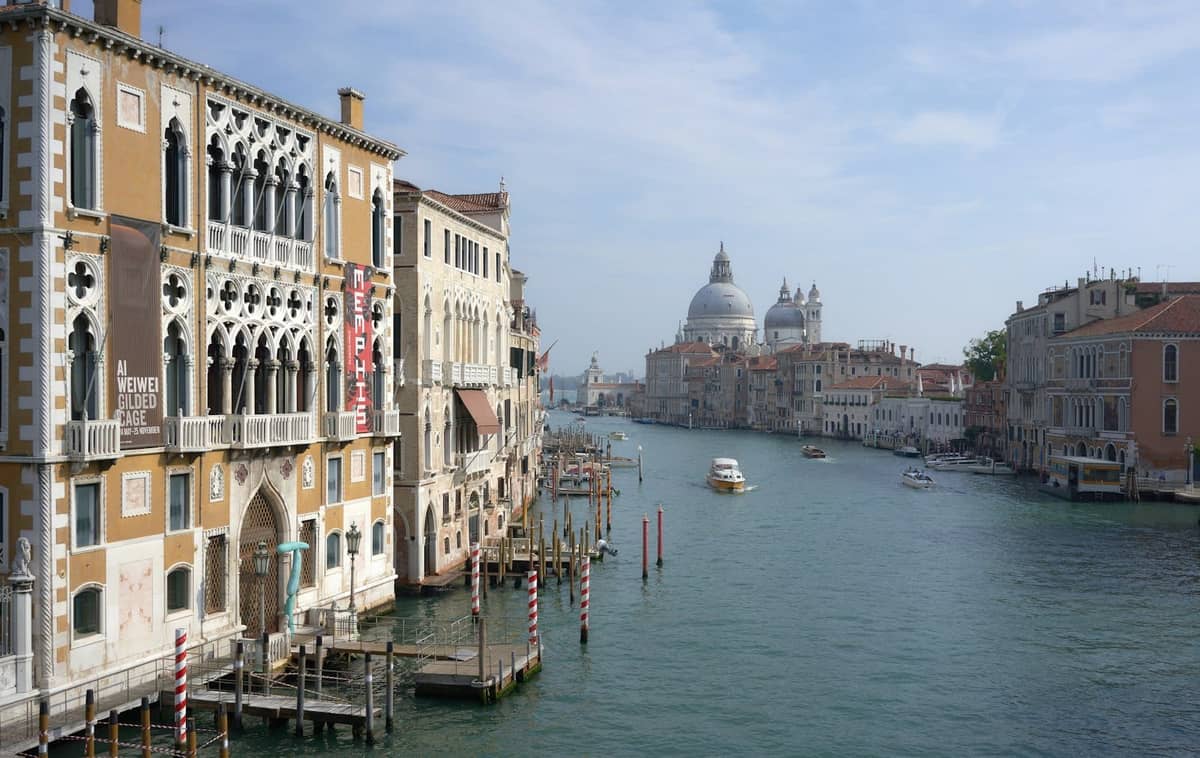
San Marco is one of Venice's six historic sestieri, and it occupies the symbolic center of the island city. The Grand Canal curves along its northern and western edges, separating it from San Polo and Santa Croce. To the northeast, the boundary blurs into Cannaregio; to the east, Castello begins where the dense tourist grid thins out toward the Arsenale. The southern edge of San Marco faces the open water of the Bacino di San Marco, the wide basin where the Grand Canal meets the lagoon.
Two of Venice's most important bridges define the sestiere's connections to the rest of the city. The Rialto Bridge connects San Marco to the markets and churches of San Polo to the northwest. The Accademia Bridge links San Marco's western edge to the university district of Dorsoduro, where the mood shifts noticeably the moment you cross it. San Marco also visually faces the separate island of San Giorgio Maggiore, sitting directly across the Bacino from Piazza San Marco.
The sestiere is compact but not small. The main tourist axis runs from the Rialto Bridge southwest through the Mercerie shopping street to Piazza San Marco, a walk of roughly 10 to 12 minutes at a steady pace. Away from that spine, the streets branch into quieter residential campi and parallel alleys. Campo Santo Stefano, Campo San Luca, and the area around the Teatro La Fenice each have a different pace from the Piazza itself. Travelers who only experience the Piazza often leave thinking San Marco is nothing but crowds and souvenir shops, which misses the point entirely.
Character and Atmosphere
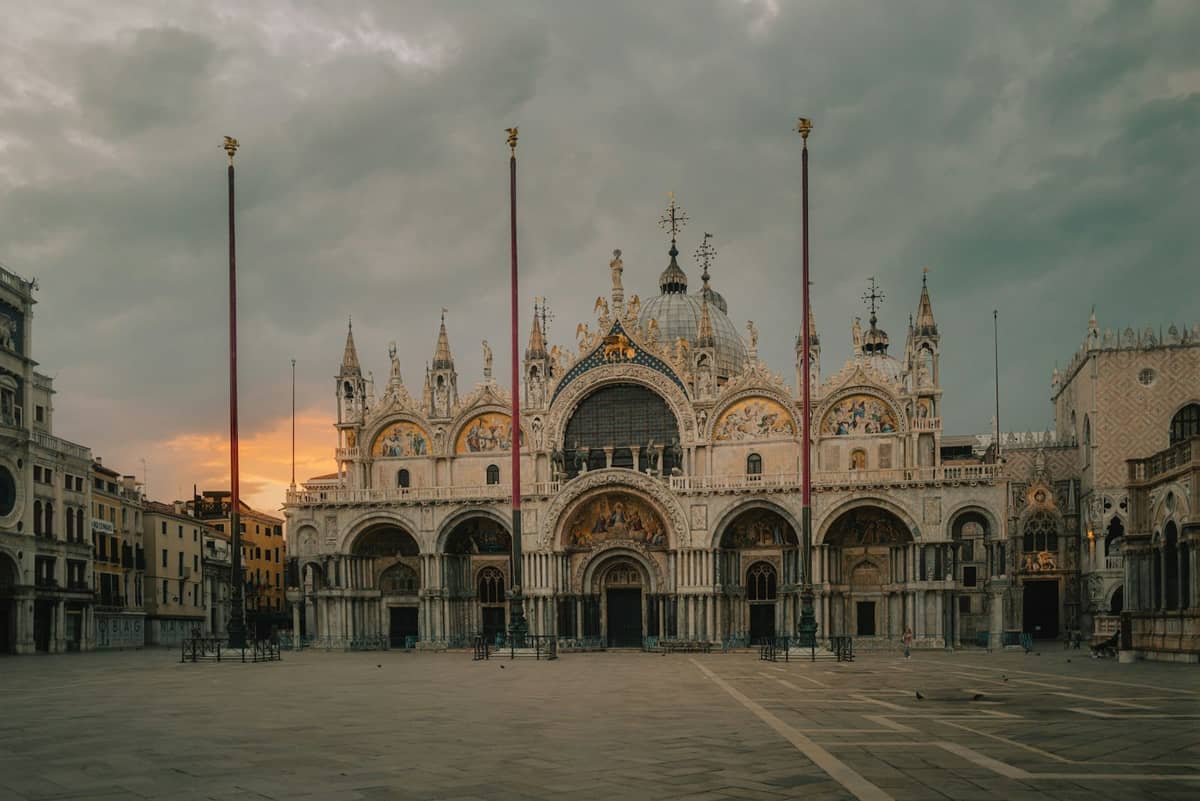
San Marco functions on two very different schedules. Before 9am, the streets around the Piazza are quiet enough to hear the pigeons and the water lapping against the stone. The light in early morning hits the golden mosaics of the Basilica's facade at a low angle, and the Campanile casts a long shadow across the paving stones. This is when the Piazza makes sense as a space, when you can walk across it without being routed around a selfie queue or a tour group with matching earpieces.
By mid-morning, the transformation is complete. The vaporetto stops at San Marco-Vallaresso and San Zaccaria disgorge wave after wave of visitors, and by 11am the area around the Basilica entrance and the Doge's Palace is operating at near-capacity. This is not hyperbole: San Marco sees some of the highest foot-traffic concentrations of any historic district in Italy, and the main routes between St Mark's Square, the Rialto, and the Accademia can feel more like crowd management than sightseeing. The afternoon heat in summer compounds this significantly.
After 6pm, the character shifts again. Day-trippers and cruise passengers leave, and the streets around Campo San Bartolomeo and Campo Santo Stefano fill with a different mix of people: hotel guests, long-stay visitors, and the relatively small number of Venetians who still live in the sestiere. The cafes and wine bars around Campo Sant'Angelo and the Frezzeria take on a more relaxed register. Late evening, the Piazza itself is transformed: with fewer people, the orchestras at Florian and Quadri playing across the square to each other, and the Basilica lit against the dark, the space finally lives up to its reputation.
💡 Local tip
Book timed entry for St Mark's Basilica and the Doge's Palace in advance, especially if visiting between April and October. Queues without a reservation regularly exceed 90 minutes during peak hours. Early morning slots (first entry opening) are the least crowded and offer the best light inside the Basilica.
What to See and Do
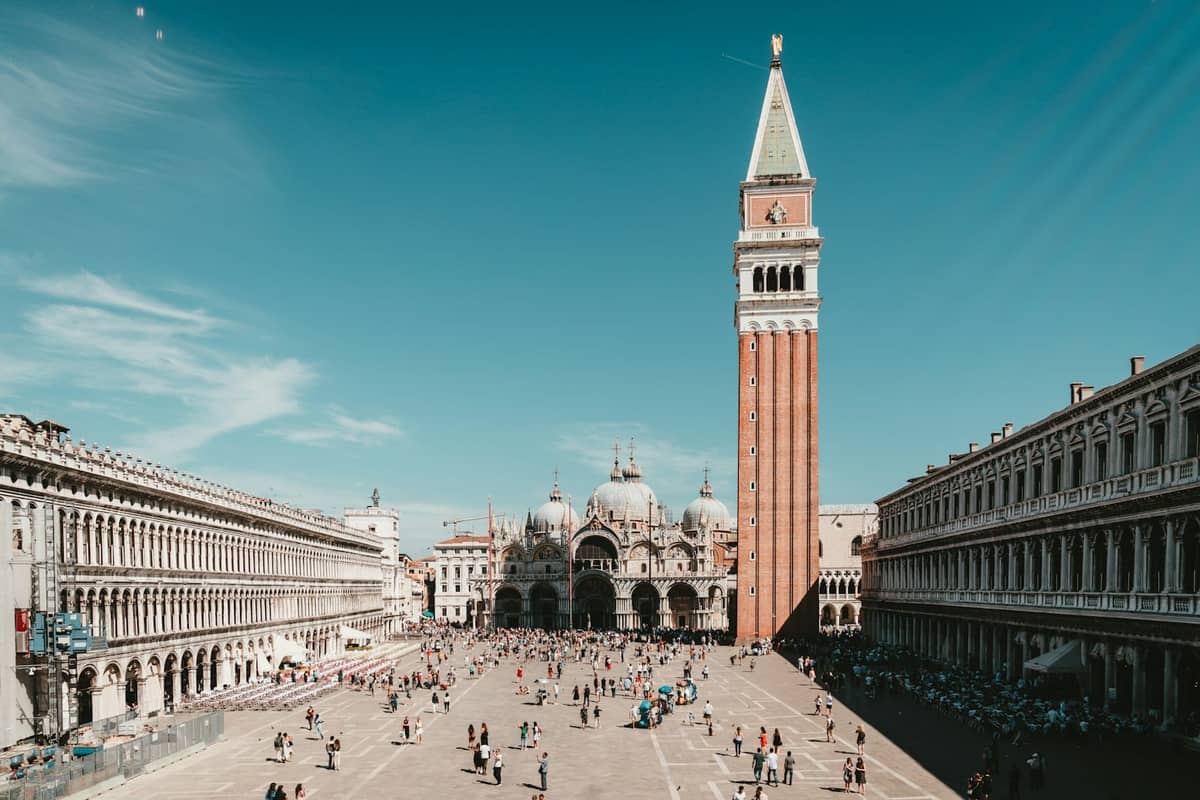
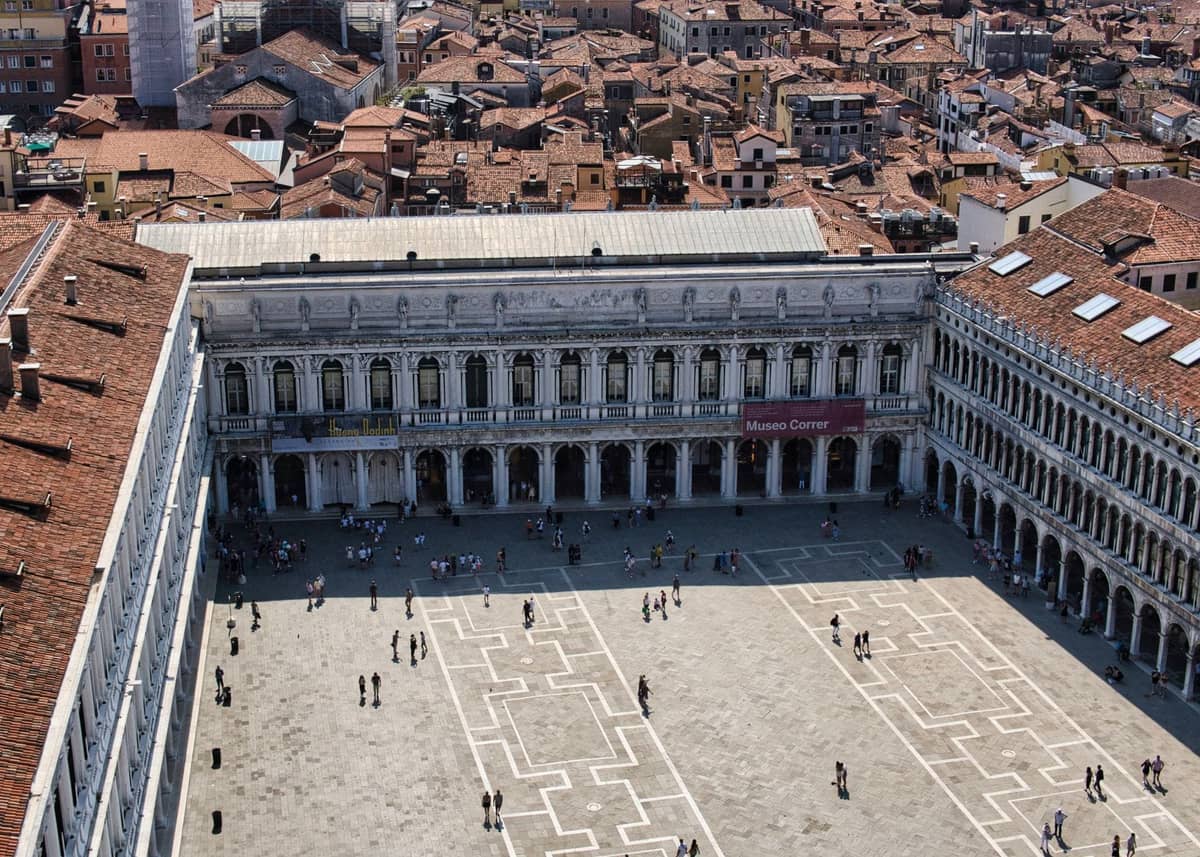
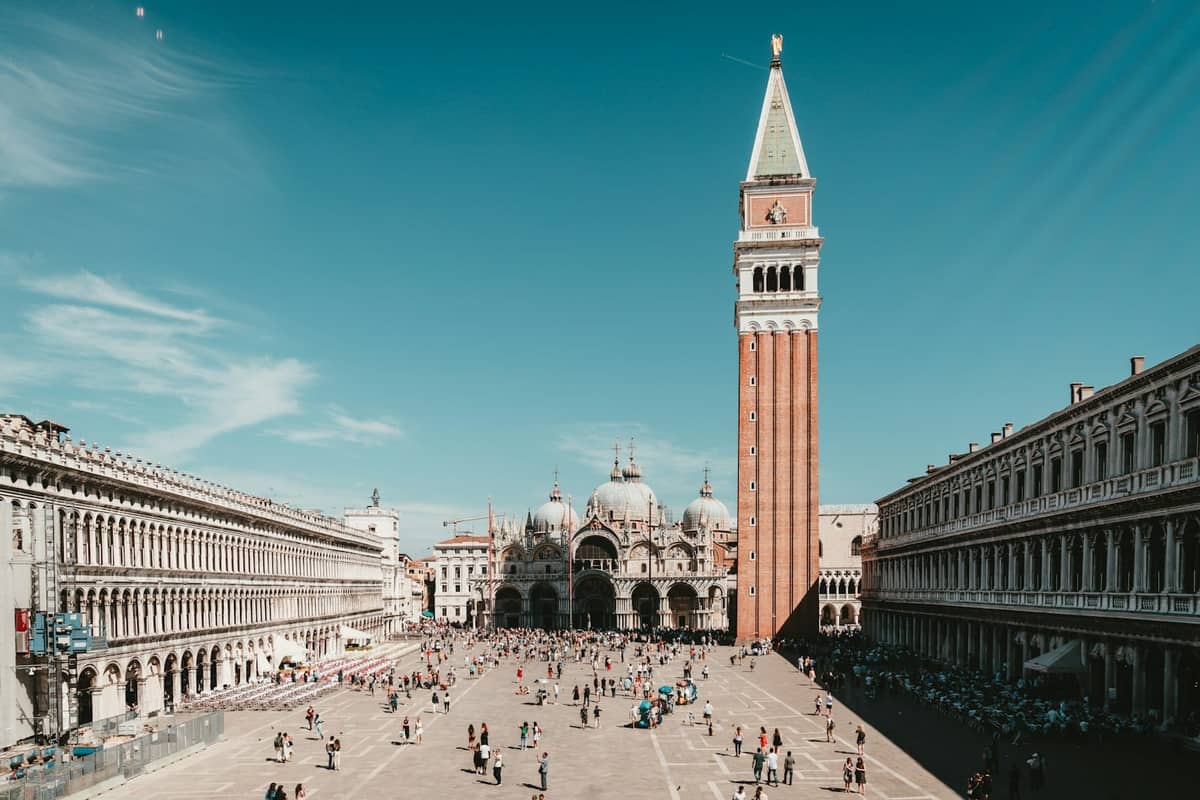
The core of San Marco's appeal is architectural and historical rather than experiential in the modern sense. Piazza San Marco is the only square in Venice granted the title of 'piazza' rather than 'campo', a distinction that reflects its status as the city's political and ceremonial center for centuries. The square is framed on three sides by the Procuratie, the long arcaded buildings that once housed the Procurators of Venice, and dominated on the fourth by the Basilica. The geometry of the space, slightly trapezoidal rather than rectangular, was designed to draw the eye toward the Basilica's facade and the Campanile beside it.
St Mark's Basilica is unlike any other church in Western Europe. Its Italo-Byzantine architecture, accumulated over centuries of renovation and embellishment, incorporates columns, capitals, and mosaics from across the former Byzantine world. The interior is dim and rich, covered in gold-ground mosaics that reward slow attention. The Pala d'Oro behind the high altar, a Byzantine gold altarpiece encrusted with enamels and gemstones, is considered one of the great masterworks of medieval art.
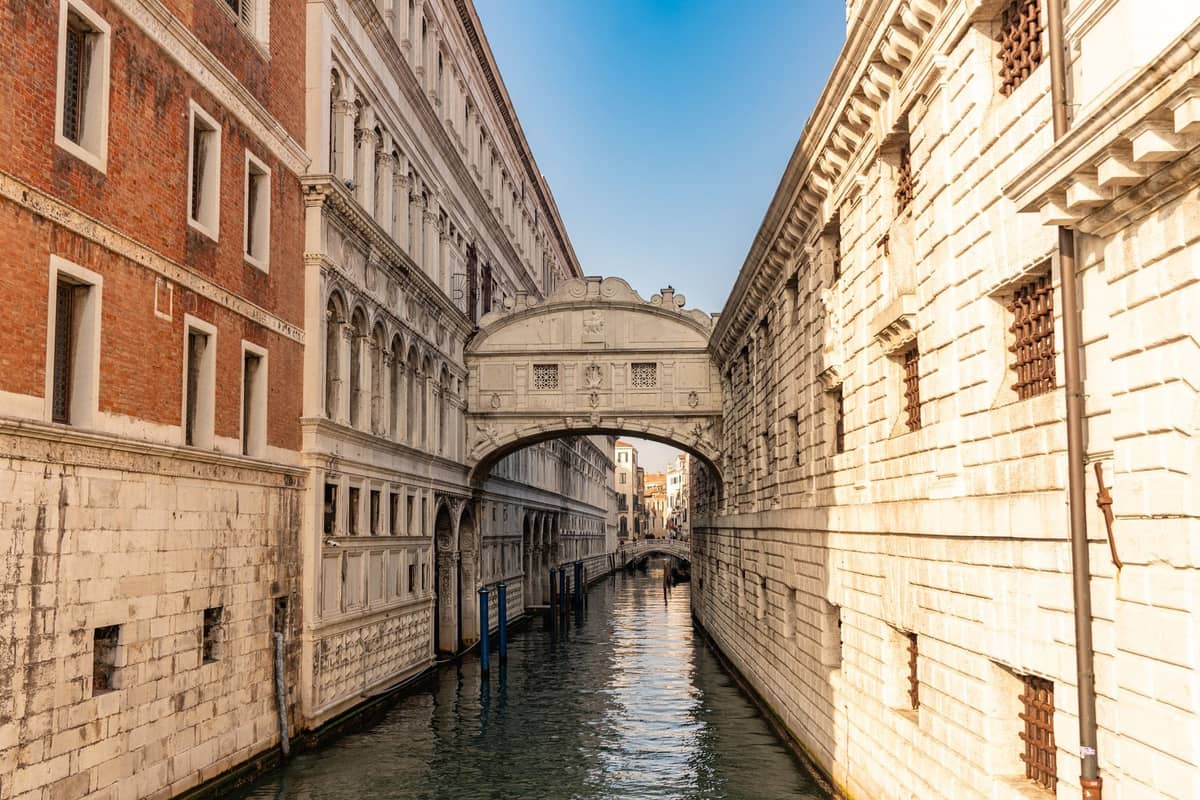
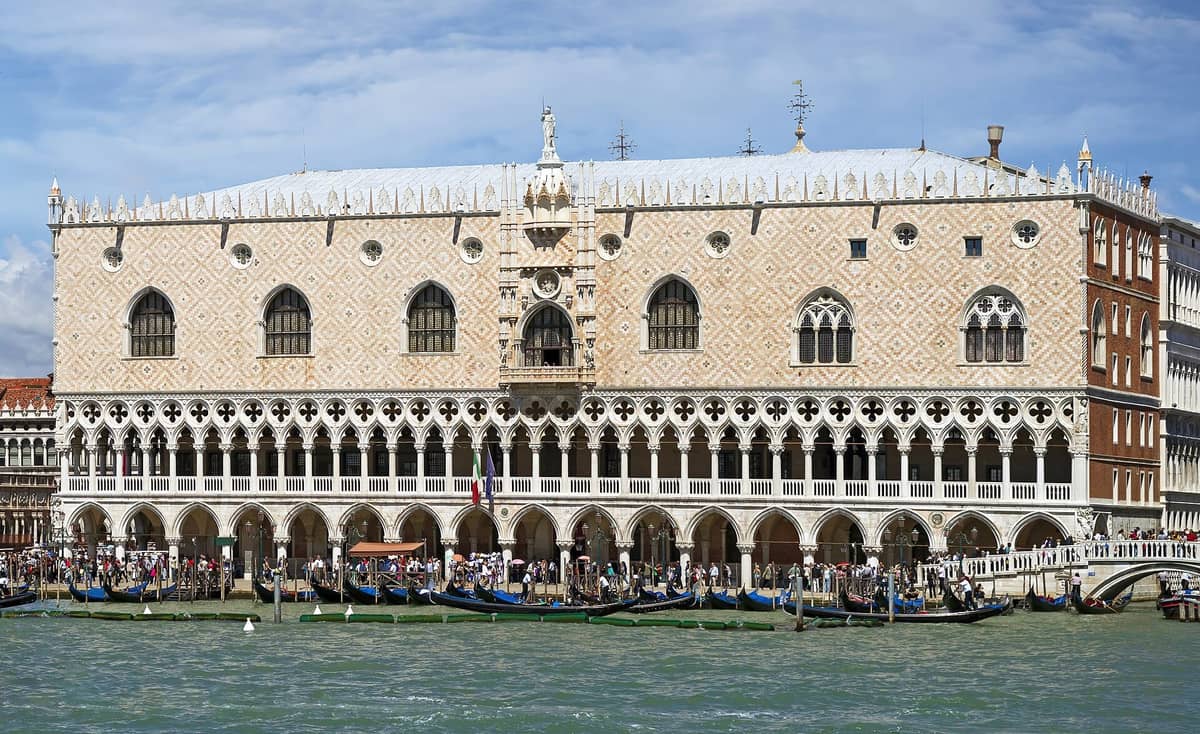
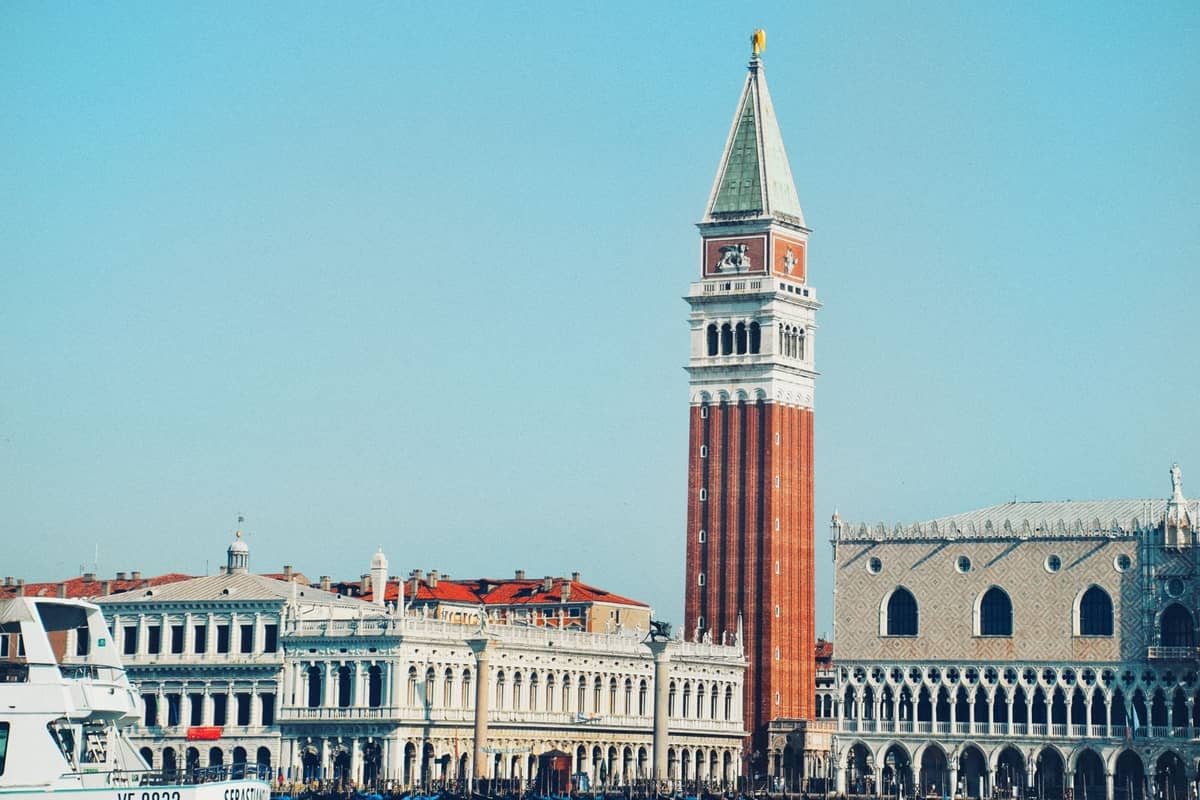
Adjacent to the Basilica, the Doge's Palace served as the seat of Venetian government from the 9th century until the fall of the Republic in 1797. The building visible today dates largely from the 14th and 15th centuries, a striking piece of Gothic architecture that uses white Istrian stone and pink Veronese marble to achieve an effect of weightlessness. The interior contains the largest oil painting in the world, Tintoretto's Paradise in the Great Council Chamber, as well as the infamous passage over the Bridge of Sighs to the adjoining prisons.
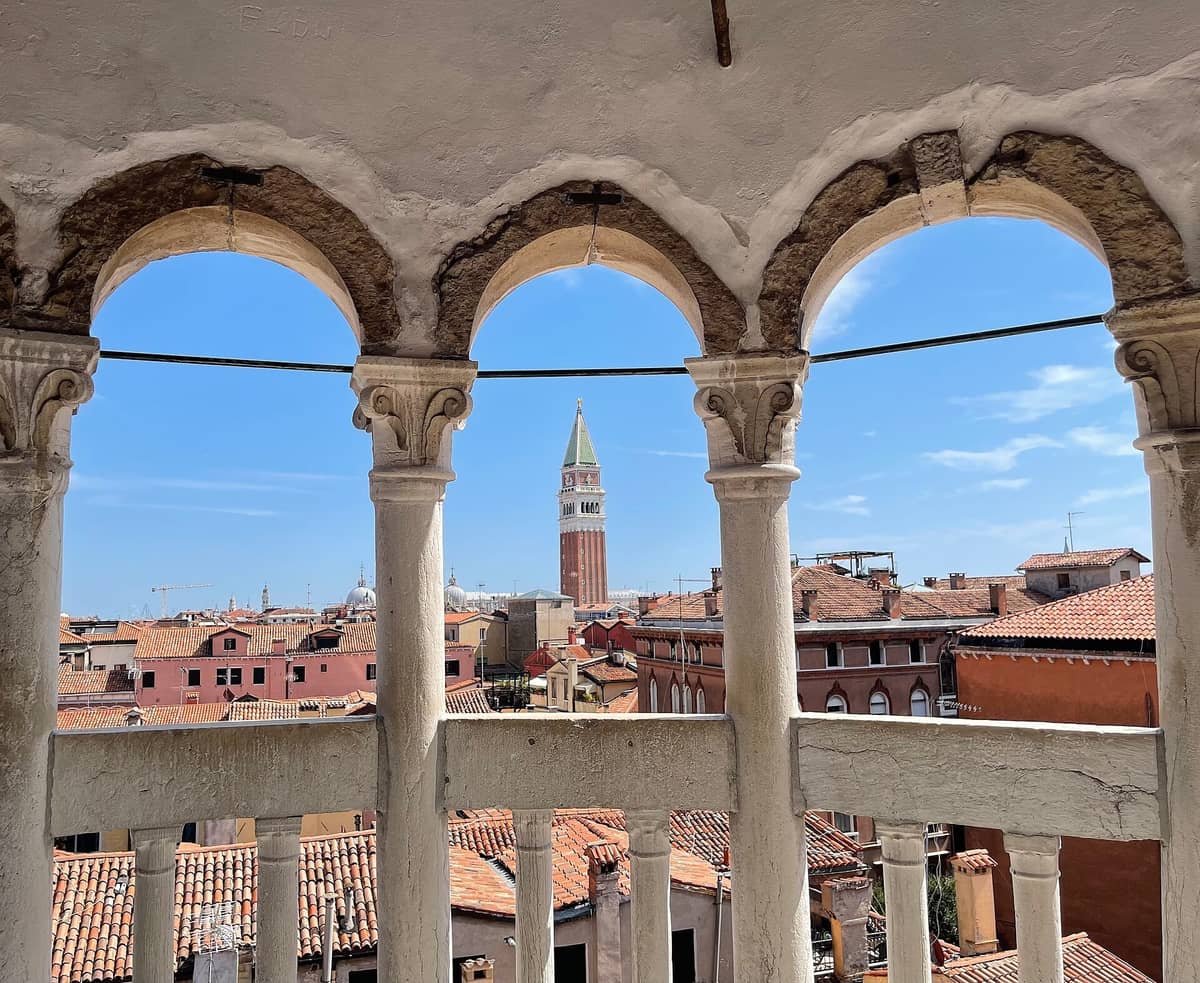
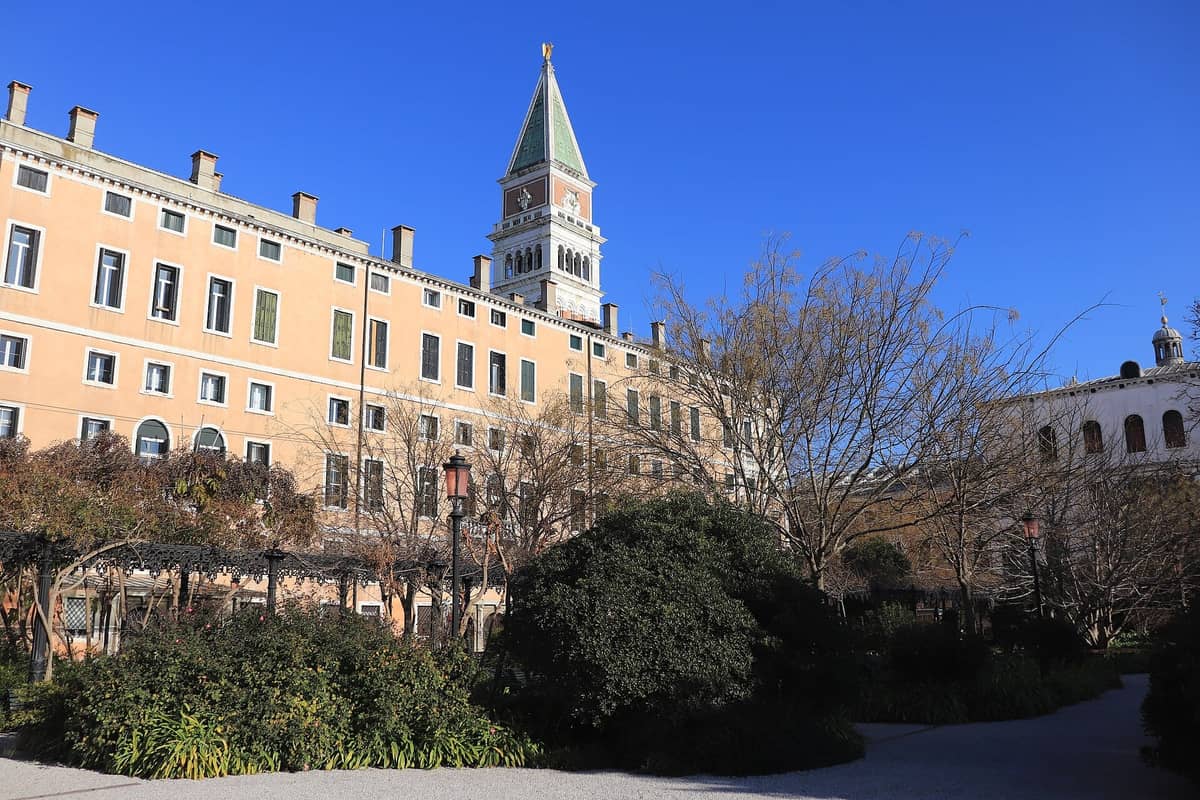
The Campanile di San Marco offers the best elevated view of the city, and because it stands at the edge of the Piazza rather than in the middle, the view includes both the lagoon and the roofscape of the sestieri. The current tower is a 1912 reconstruction: the medieval original collapsed suddenly in 1902, reportedly killing only the caretaker’s dog. Higher up the cultural register, the Museo Correr occupies the Procuratie Nuove along the south side of the square and contains an important collection of Venetian paintings, historical artifacts, and documents from the Republican period.
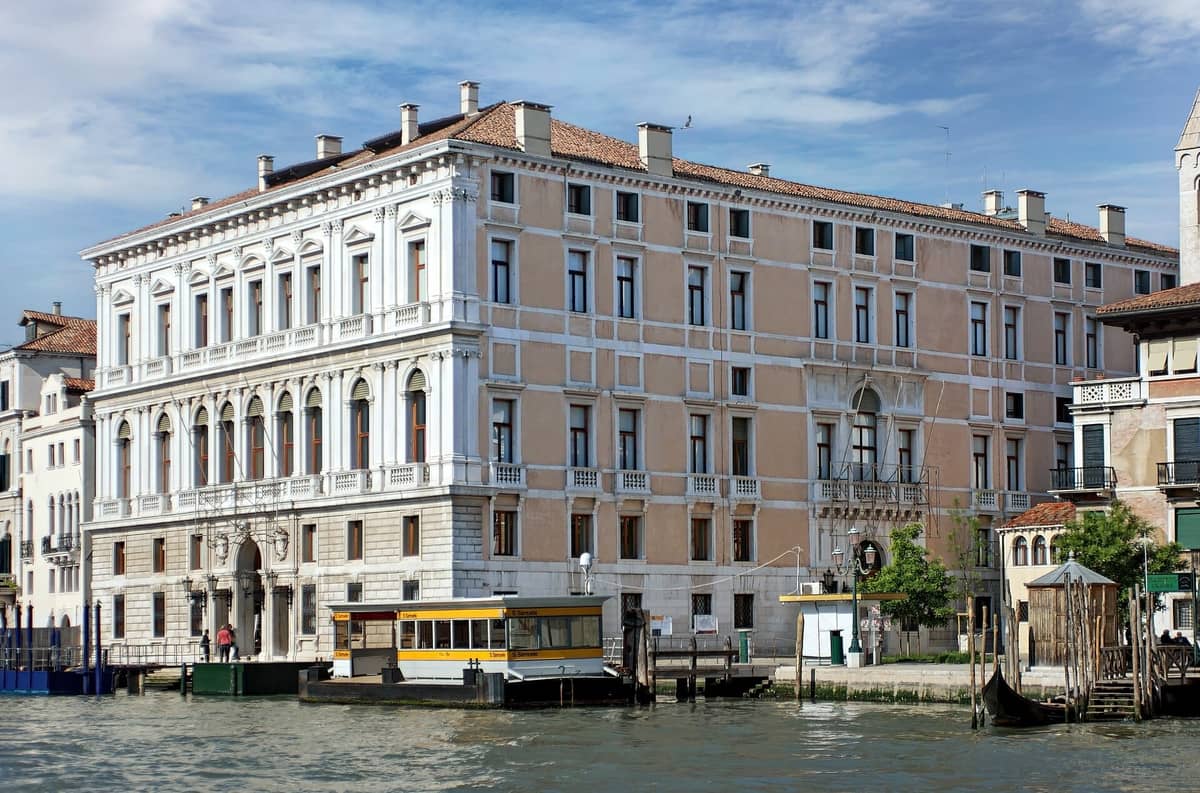
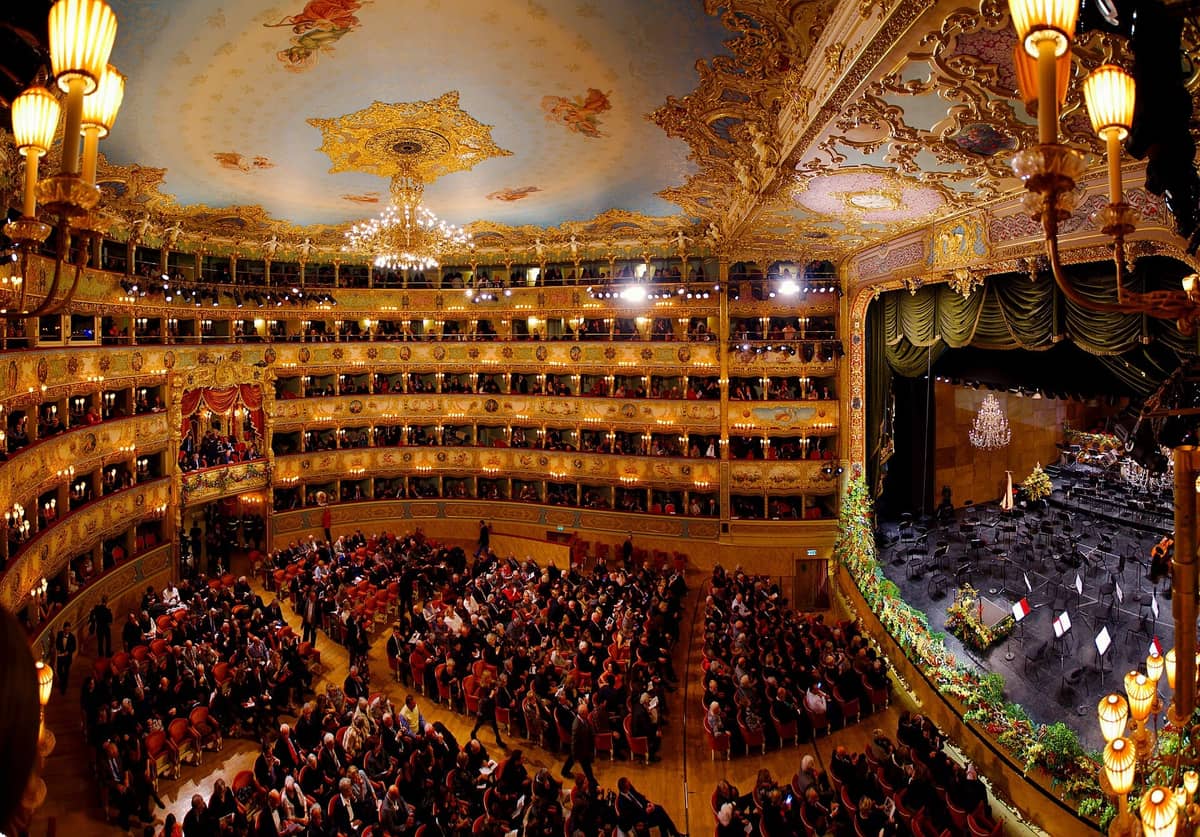
Teatro La Fenice, accessed from Campo San Fantin a few minutes' walk from the Piazza, is one of Italy's most celebrated opera houses and an important part of Venice's cultural identity. It has burned down and been rebuilt twice, most recently after a 1996 arson fire, and the current interior is a faithful recreation of the 19th-century auditorium. Performances take place throughout the year, and guided daytime tours of the theater are available. Nearby, the Palazzo Grassi on the Grand Canal shows major contemporary art exhibitions from the François Pinault collection, with a second venue at the Punta della Dogana just across the water in Dorsoduro.
St Mark's Basilica: book timed entry online to avoid the queue
Doge's Palace: allow at least 2 hours for the interior, longer if visiting the prisons
Campanile di San Marco: queues build quickly after 10am, go early or late afternoon
Museo Correr: less visited than the Basilica and Doge's Palace, good for escaping the crowds
Teatro La Fenice: book opera or concert tickets well in advance; daytime tours available without reservation
Palazzo Grassi: check current exhibitions before visiting, quality varies by show
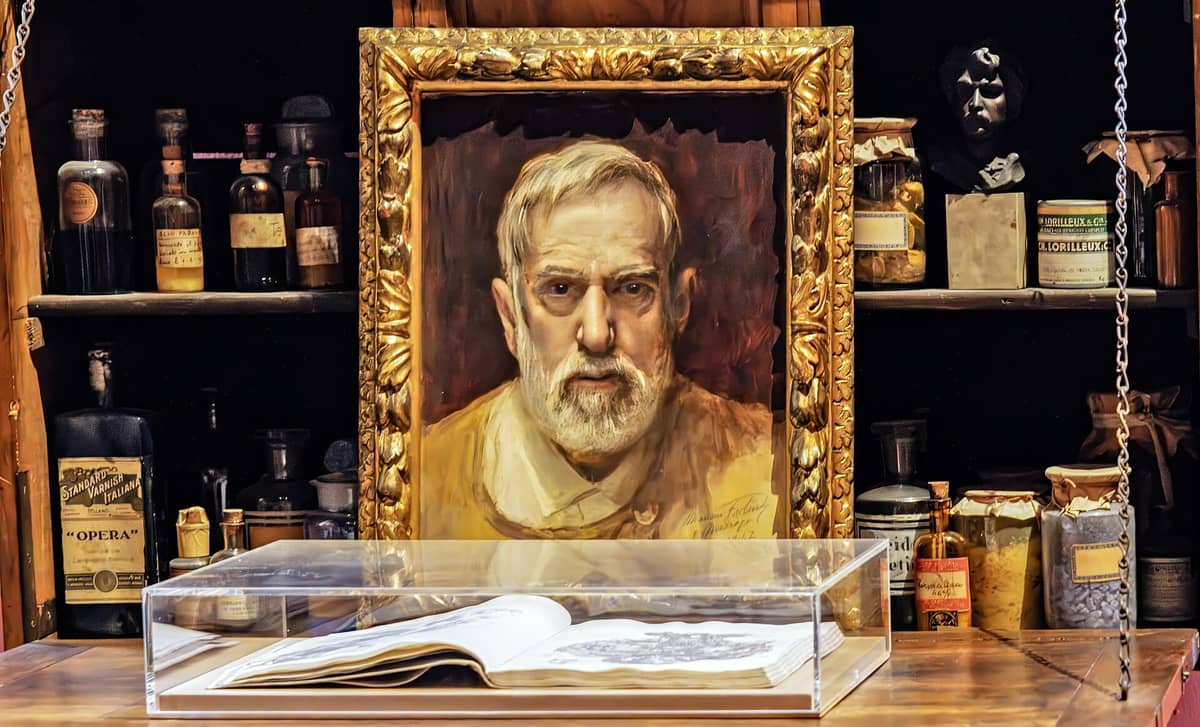
Museo Fortuny: small, atmospheric museum in the palazzo of textile designer Mariano Fortuny
ℹ️ Good to know
The Bridge of Sighs is best seen from the Ponte della Paglia on the Riva degli Schiavoni waterfront, not from inside the Doge's Palace. The famous view of the enclosed bridge passing over the narrow Rio di Palazzo is entirely external. Note that this is technically within the Castello boundary but is approached directly from the Doge's Palace exit.
Eating and Drinking
San Marco's food scene is genuinely bifurcated. There is a tier of establishments that survive entirely on tourist footfall and charge accordingly, with mediocre food and menus in six languages displayed outside. And there is a separate, smaller set of places that operate on quality and local reputation, often tucked into the side streets away from the main tourist routes.
The outdoor terraces of Caffè Florian and Caffè Quadri facing the Piazza are a historical experience rather than a gastronomic one. A coffee here comes with a table charge and live music and costs several times what you would pay at a bar counter elsewhere. The experience has genuine charm, especially in the evening, but it is not where you go when you want good coffee at a reasonable price. For the latter, step into any bar a few streets back from the Piazza and order standing at the counter.
For a more authentic eating experience in San Marco, look toward the Campo Santo Stefano area and the streets between Campo San Luca and the Rialto end of the sestiere. The Venetian tradition of cicchetti, small bar snacks served with wine, is practiced here with more authenticity than in the immediate vicinity of the Piazza. For a proper introduction to this tradition across the city, the cicchetti guide to Venice covers the best options by neighborhood.
Wine bars (bacari) and osterie that cater to a local lunchtime crowd can be found around Campo Manin and along the Calle dei Fabbri. The closer you get to Piazza San Marco or the Rialto end of the Mercerie, the more the prices reflect location rather than quality. Restaurants advertising 'tourist menus' at set prices are a reliable signal to walk further. The food culture in San Marco rewards exploration of the side streets.
⚠️ What to skip
Be aware that sitting down at a table in San Marco, even at an apparently ordinary bar, often triggers a coperto (cover charge) and significantly higher prices than standing at the counter. Always check the menu posted outside before sitting, and confirm whether a table service charge applies. This is legal and standard practice but catches many visitors off guard.
Getting There and Around
San Marco is served by two main vaporetto stops on the ACTV network. San Marco-Vallaresso sits at the western edge of the sestiere at the foot of the Piazza, where Line 1 and Line 2 stop along the Grand Canal route. San Zaccaria, on the Riva degli Schiavoni waterfront just east of the Piazza, serves multiple lines including services from the Lido, Murano, and the Giudecca. From Santa Lucia train station, Line 1 runs the full length of the Grand Canal to San Marco-Vallaresso in approximately 35 to 40 minutes. For a faster connection, Line 2 is generally quicker than Line 1, though actual journey times vary by route and season. For a full overview of vaporetto routes and how to navigate the canal network, see the guide to getting around Venice.
From Venice Marco Polo Airport at Tessera, the Alilaguna water bus (Linea Blu) stops at San Marco-Giardinetti, a short walk from the Piazza. The journey takes approximately 75 minutes and is the most scenic, if not the fastest, airport connection. A road taxi to Piazzale Roma in Santa Croce followed by a vaporetto is quicker. Water taxis from the airport directly to a canal stop near your hotel in San Marco are available but expensive.
On foot, San Marco connects easily to the surrounding sestieri. The walk from the Piazza to the Rialto Bridge through the Mercerie takes about 10 minutes at a moderate pace. Walking east along the Riva degli Schiavoni brings you into Castello within 5 minutes. The Accademia Bridge into Dorsoduro is about 12 minutes on foot from the Piazza via the Calle Larga XXII Marzo. There is no metro in Venice's historic center: all movement is on foot or by water.
Where to Stay
San Marco contains the highest concentration of luxury hotels in Venice, many of them occupying historic palazzi along the Grand Canal or within a few minutes of the Piazza. If staying in Venice is a priority and budget allows, the sestiere offers unmatched proximity to the major monuments. For a full picture of accommodation options across all neighborhoods, the where to stay in Venice guide provides detailed comparisons by sestiere.
The tradeoff for staying in San Marco is price and atmosphere. Room rates here are consistently among the highest in the city, and the area directly around the Piazza can be noisy until late evening from restaurant terraces and crowds on the waterfront. Travelers who want to experience Venice's residential character, or who are watching costs carefully, often find better value and more local atmosphere in Cannaregio, Dorsoduro, or Castello, all reachable from San Marco on foot in under 20 minutes.
For those set on San Marco, the area around Campo Santo Stefano and Campo Sant'Angelo offers a slightly quieter base than the Piazza's immediate surroundings, with good vaporetto access at San Samuele and Sant'Angelo on Line 1. The streets running north from Campo San Luca toward the Rialto also balance central position with marginally less overnight noise.
Honest Assessment: Who San Marco Is For
San Marco is not for travelers seeking a quiet, residential Venice experience. The daytime crowds are real, the prices around the Piazza are high, and the density of souvenir shops and tourist-facing restaurants along the main routes can make sections of the sestiere feel interchangeable with any heavily visited European monument zone. Anyone who has spent more than a day or two in Venice and wants to move beyond the obvious will feel more rewarded in Dorsoduro, Castello, or Cannaregio.
That said, the monuments in San Marco are genuinely among the most significant in Italy. St Mark's Basilica, the Doge's Palace, and the Piazza itself are not overhyped in the way that some famous European sights are. They reward proper attention and preparation. First-time visitors to Venice who follow the two-day Venice itinerary will rightly spend substantial time here. The key is to arrive early, book tickets in advance, and plan to spend the hottest midday hours somewhere else before returning to the Piazza in the evening.
For visitors trying to keep costs down without missing the major sights, several of San Marco's most powerful experiences are free or low cost: walking the Piazza at dawn, looking at the Basilica's exterior mosaics, or watching the city from the waterfront at the Riva degli Schiavoni. The guide to free things in Venice covers the best of these options across the city.
⚠️ What to skip
Pickpocketing is a real risk in and around Piazza San Marco, particularly in the crush near the Basilica entrance and on crowded vaporetto lines. Use a crossbody bag or money belt, keep phones and cameras close, and be especially vigilant when surrounded by large tour groups. This is standard advice from the UK Foreign Office and US State Department for this type of high-density tourist area in Italy.
TL;DR
San Marco is Venice's ceremonial and historical center, home to St Mark's Basilica, the Doge's Palace, the Campanile, Teatro La Fenice, and the Museo Correr, the largest single concentration of major monuments in the city.
Crowds are heaviest between 10am and 5pm, especially in summer. Arriving early and booking timed tickets in advance is essential for the Basilica and Doge's Palace.
The food and drink scene is split: tourist-facing establishments dominate near the Piazza, but genuine bacari and osterie exist in the quieter campi and side streets between Campo San Luca and Campo Santo Stefano.
San Marco suits first-time visitors to Venice, travelers prioritizing monument access, and those staying in luxury hotels, but it is not the best base for travelers wanting local atmosphere or budget-friendly options.
Evening in San Marco, when the day crowds thin and the Piazza is lit, is a genuinely different experience from the midday rush and well worth planning your day around.
Two days in Venice is enough to cover the iconic highlights and still find quieter corners the crowds miss. This guide gives you a realistic, hour-by-hour framework for both days, practical transport advice, booking warnings, and honest takes on what is worth your time.
Three days is enough time to cover Venice's iconic landmarks, explore its quieter sestieri, and take at least one lagoon island trip. This itinerary is structured around the city's geography, vaporetto routes, and crowd patterns so you spend less time backtracking and more time actually seeing the city.
Acqua alta is Venice's famous tidal flooding, and it's far less dramatic than most visitors expect. This guide explains exactly what causes it, when it happens, how much of the city it actually affects, and what gear and forecasting tools will keep your trip on track.
Venice has well over 130 church buildings, and its greatest ones hold masterpieces by Titian, Tintoretto, Bellini, and Palladio that rival any museum. This guide covers the 13 best churches in Venice, from the unmissable to the quietly extraordinary.
Venice packs more world-class art and history into one city than almost anywhere else on earth. This guide covers the best museums in Venice, from Gothic palaces full of Tintoretto to intimate scuole with Carpaccio cycles, across every district and budget.
Venice looks different in every season, and the right time to visit depends entirely on what you're after. This guide breaks down weather, crowds, hotel prices, and major events month by month, so you can choose the visit that actually suits you.
Venice rewards those who know where to look. This guide covers the city's finest viewpoints, from soaring bell towers and climbable domes to iconic canal bridges and waterfront promenades, with practical tips on booking, timing, and what you'll actually see from each spot.
Cicchetti are Venice's answer to tapas, and the bacari that serve them are the city's most authentic social spaces. This guide covers what to order, where to go across every sestiere, what things cost, and how to plan a bacaro crawl that skips the tourist traps.
Venice rewards lingering, but its surroundings reward exploration. Whether you board a vaporetto for a lagoon island or a train toward the Veneto hills, a day away from the sestieri reveals a completely different side of this corner of northeastern Italy.
Venice doesn't have to drain your wallet. From sweeping Grand Canal viewpoints to Gothic churches packed with Tintorettos, many of the city's greatest experiences are completely free. This guide covers the best no-cost attractions, walks, markets, and island escapes across the lagoon.
Venice operates on a completely different logic from any other city. There are no cars, no taxis, no metro. Getting around means walking across 438 bridges and navigating canals by water bus, private boat, or gondola ferry. This guide explains every option clearly, with real costs and practical advice.
Gondola rides in Venice are regulated by the city, with fixed fares per boat — not per person. This guide breaks down current prices, the best stations to board, what routes actually cover, and the myths that cost tourists money.
Venice rewards the curious traveler who wanders past the obvious landmarks. This guide collects the city's most rewarding under-the-radar sights, from a Carpaccio cycle hidden in Castello to a working gondola boatyard in Dorsoduro and a ghost island in the northern lagoon.
Venice is one of the most debated destinations in travel. Built on 118 islands, UNESCO-listed, and unlike anywhere else on earth, it also attracts millions of visitors a year and charges a day-tripper access fee. This guide cuts through the hype to tell you exactly what Venice delivers, what it does not, and how to make a visit that is genuinely worth the effort.
Venice rewards those who spend well. This guide covers where to stay, how to move, what to eat, and which experiences justify the premium price tag — along with honest warnings about where the luxury label is oversold.
Venice is the city most couples imagine before they arrive, and one of the few that actually delivers. This guide covers the best romantic experiences, the ideal seasons, practical logistics, and honest advice on what lives up to the hype, and what does not.
Venice is unlike any other city in the world, built on 118 islands linked by 438 bridges in a lagoon recognized as a UNESCO World Heritage site. This guide covers the essential things to do in Venice, from the iconic to the overlooked, with practical details on transport, costs, and timing to help you make the most of every hour.
The Venice Biennale is one of the world's most significant contemporary art events, spreading across two major venues and dozens of city locations. This guide covers the 2026 Art Biennale dates, ticket options, what to expect at each venue, and the practical details that make the difference between a rushed visit and a memorable one.
Venice Carnival (Carnevale di Venezia) runs for roughly two weeks before Lent, drawing around 3 million visitors for elaborate costumes, masquerade balls, and free public events. This guide covers the 2026 dates, practical logistics, what things actually cost, and how to get the most from the experience without being overwhelmed.
The Venice International Film Festival is the world's oldest film festival and, crucially, it's open to the public. This guide covers everything from buying tickets and reaching the Lido to navigating the festival grounds and setting realistic expectations about red carpets and celebrity sightings.
Summer brings Venice to its most intense: scorching heat, record crowds, and prices to match. This guide cuts through the noise with practical strategies for timing, booking, staying cool, and finding breathing room in Italy's most visited city.
Winter is one of the most rewarding times to visit Venice. Crowds thin out, prices drop significantly, and the city takes on a moody, atmospheric quality that summer visitors never see. This guide covers weather, acqua alta, Carnival, costs, and everything else you need to plan a winter trip.
The Venetian Lagoon holds far more than Venice itself. This guide covers every island worth visiting, from Murano's glass furnaces and Burano's painted houses to ancient Torcello, the Lido's beaches, and the quiet agricultural island of Sant'Erasmo.
Venice has a reputation for draining wallets fast, but the reality is more nuanced. With the right timing, a few local habits, and some strategic planning, you can experience one of the world's great cities for far less than you'd expect. This guide breaks down exactly where the money goes and how to keep it in your pocket.
Venice rewards shoppers who know where to look. This guide covers the city's best authentic buys, from Murano glass and Carnevale masks to artisan paper goods and gourmet specialties, along with the neighborhoods and markets where locals and savvy visitors actually spend their money.
Venice is one of the world's most walkable cities, built on 120 islands connected by around 430 bridges with no cars in sight. This guide covers the best self-guided walking routes by district, the ideal times to walk, what to skip, and how to explore beyond St. Mark's Square.
Venice with kids is more manageable than most parents expect. This guide covers everything families need: getting around by vaporetto, the best kid-friendly attractions, seasonal timing, safety on the canals, and how to keep the trip fun without exhausting everyone.
Venetian cuisine is one of Italy's most distinctive regional traditions, built on lagoon seafood, rice, polenta, and centuries of spice trade. This guide covers the essential dishes, where to find them, what to pay, and how to eat like a local rather than a tourist.
Venice's six historic districts each offer a completely different experience. This guide breaks down exactly where to stay in Venice based on your budget, travel style, and priorities — with honest trade-offs, realistic price ranges, and practical booking advice.