Venice Carnival Guide: Everything You Need to Know
Venice Carnival (Carnevale di Venezia) runs for roughly two weeks before Lent, drawing around 3 million visitors for elaborate costumes, masquerade balls, and free public events. This guide covers the 2026 dates, practical logistics, what things actually cost, and how to get the most from the experience without being overwhelmed.
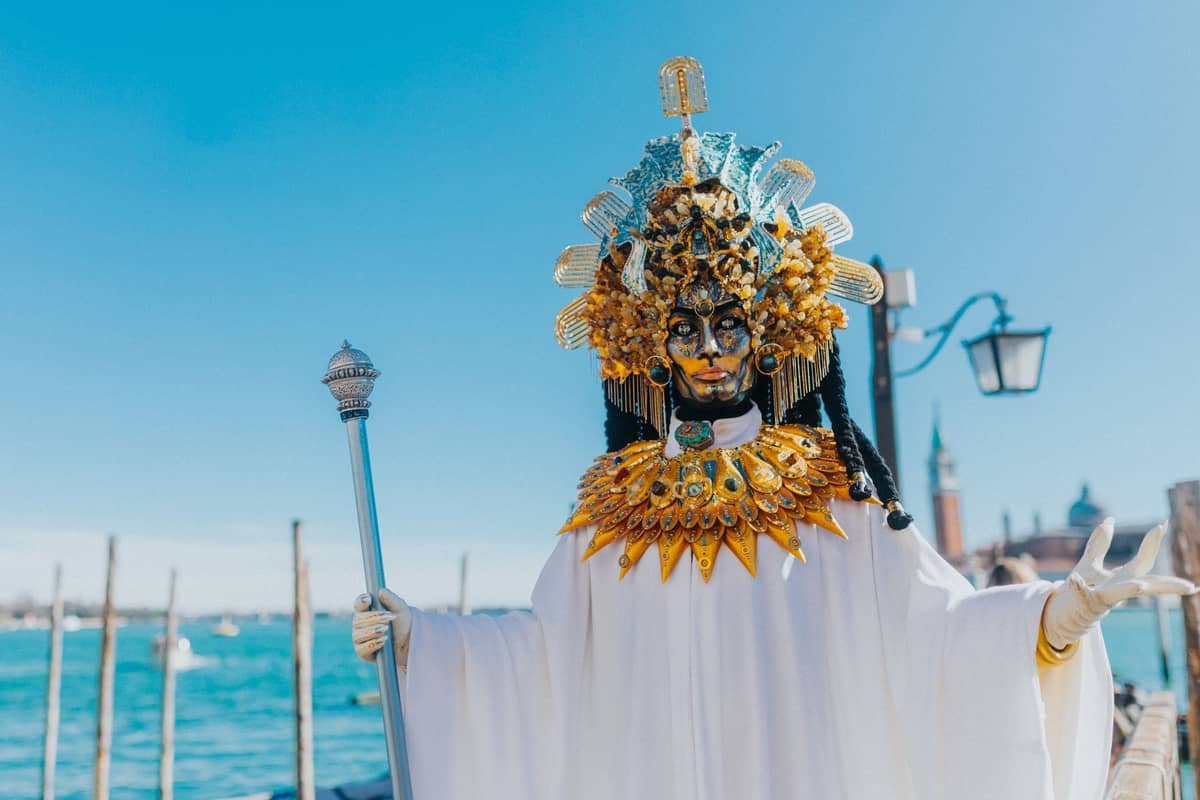
Plan and book this trip
Tools from our partner Travelpayouts help you compare flights and hotels. If you book through them, we may earn a commission at no extra cost to you.
Flights
Hotels map
TL;DR
- Venice Carnival 2026 runs 31 January to 17 February, ending on Shrove Tuesday (Martedì Grasso).
- Most outdoor events, parades, and costume watching in Piazza San Marco are free — only private masquerade balls carry high ticket prices, often around €500 per person.
- This is deep winter in Venice: expect temperatures close to freezing, possible fog, and a real chance of acqua alta flooding.
- Accommodation books out weeks or months in advance; if you plan to stay on the islands, read our guide to where to stay in Venice before you search.
- The Carnival spans roughly 10 to 14 days — not just one evening — so you can pace your visit and skip the single most crowded day (Shrove Tuesday itself).
What Is Venice Carnival and Why Does It Happen?
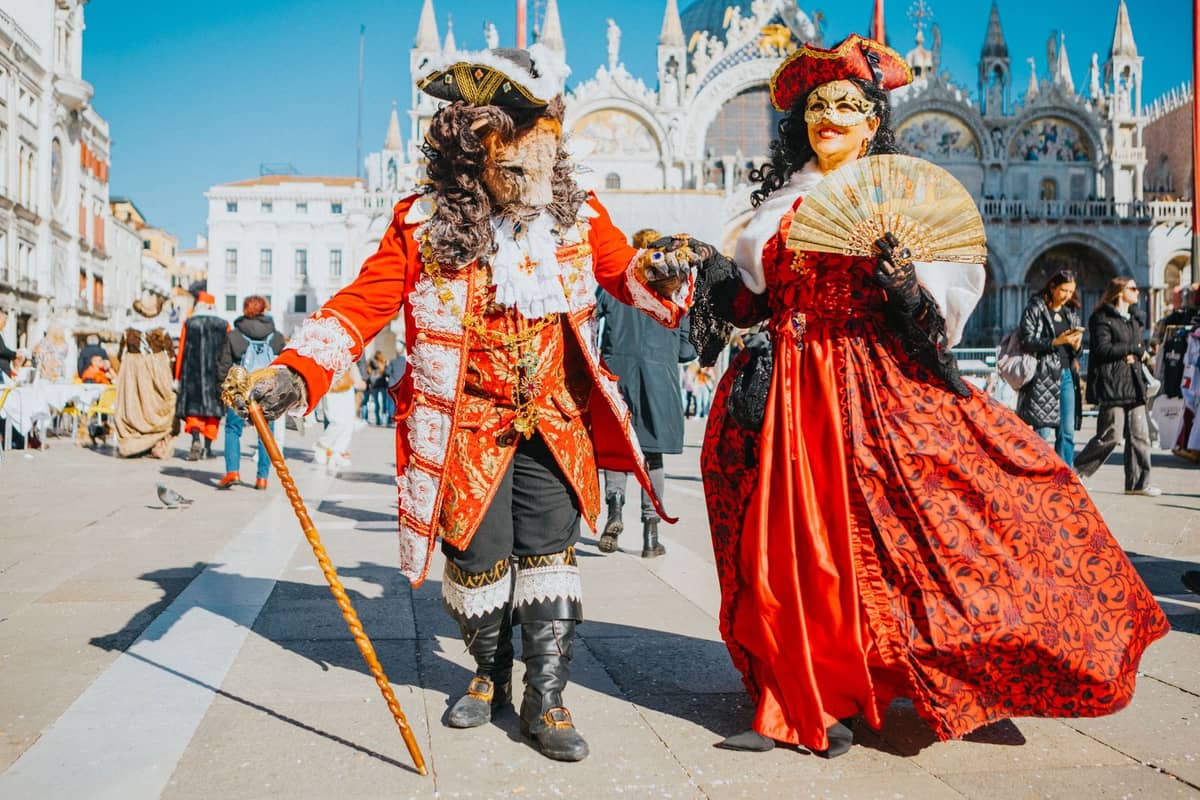
Carnevale di Venezia is a pre-Lent festival rooted in the old Christian calendar tradition of feasting before the 40-day fast. The name comes from the Latin 'carne vale', loosely meaning 'farewell to meat'. In Venice, that idea was taken to spectacular extremes. Documentary records of Carnival festivities in the city date to around 1092, and by the Republic of Venice's peak in the 15th and 16th centuries, the festival had become one of the most elaborate social events in Europe.
The political function of masks was not decorative. In the rigid social hierarchy of La Serenissima, the bauta mask and cape allowed a nobleman and a common tradesman to stand side by side in a piazza without either knowing who the other was. Gambling, flirtation, and business deals could all happen under the cover of anonymity. When Napoleon's forces ended the Venetian Republic in 1797, Carnival traditions began a long decline and were later suppressed under subsequent regimes. It stayed dormant for nearly two centuries before the city officially revived it in 1979, initially as a cultural tourism initiative. Today it draws an estimated 3 million visitors each year.
ℹ️ Good to know
The Carnival was revived in 1979 primarily to bring visitors to Venice during the low winter season. That context is worth keeping in mind: it is both a genuine historical tradition and a carefully managed tourism product, and the balance between the two shapes what you actually experience on the ground.
2026 Dates, Schedule, and Key Events
Venice Carnival 2026 runs from Saturday, 31 January to Tuesday, 17 February 2026. The final day, Shrove Tuesday (Martedì Grasso), is the most attended single day of the festival and the most chaotic. If large crowds are not your preference, the first and second weekends tend to offer nearly as much atmosphere with slightly more room to move.
The main stage for public events is Piazza San Marco, where the municipality organizes costume competitions (the traditional 'La Festa delle Marie' pageant and the 'Volo dell'Angelo' — the Flight of the Angel — on the opening weekend), live performances, and nightly projections on the Basilica facade. These events are free to watch, though the square fills up fast. Arriving at least 90 minutes before a scheduled show is not overcautious.
- Volo dell'Angelo (Flight of the Angel) A key opening-weekend highlight (dates vary by year — check the official Carnival calendar for 2026). A costumed performer descends on a wire from the top of the Campanile to Piazza San Marco.
- La Festa delle Marie A parade of 12 young women in historical costumes through the sestieri, culminating in Piazza San Marco. Held during the first week.
- Costume competitions Formal judged competitions for the best traditional and creative Carnival costumes take place in the piazza across multiple days.
- Private masquerade balls Organized by cultural associations and event companies in historic palazzi. Dates and venues vary each year — book well in advance through official Carnival listings or specialist operators.
- Mask-making workshops Available throughout the Carnival period from artisan studios in San Polo and Dorsoduro. Typically run 2 to 3 hours and cost €40 to €80 per person.
💡 Local tip
For the official event calendar and ticketed ball listings, check the Carnevale di Venezia municipal website directly. Third-party platforms aggregate tickets but often charge booking fees on top of already high prices.
Tickets and Costs: What You Actually Pay
The free-versus-paid split at Venice Carnival is frequently misunderstood. Street performances, the Volo dell'Angelo, costume parades, and general people-watching in any of the city's campi cost nothing beyond your presence. The Carnival atmosphere spills well beyond Piazza San Marco into neighborhoods like Campo Santa Margherita in Dorsoduro and the lanes around the Rialto.
Private masquerade balls are a different category entirely. Evenings in historic palazzi on the Grand Canal typically start at around €200 to €300 per person for basic entry and can exceed €500 for events with a sit-down dinner, live orchestra, and open bar. These events are genuinely theatrical and historically grounded, but they are not for everyone. The costuming expectation is serious: showing up in a casual costume from a party shop will earn you looks, and some events have dress codes enforced at the door.
- Free: all outdoor public events, piazza performances, parades, costume watching in streets and squares
- €40 to €80: mask-making workshops at artisan studios
- €80 to €150: guided Carnival walking tours, some with costume hire included
- €200 to €300+: entry to mid-range private masquerade balls
- €500+: premium historic palazzo balls with dinner and entertainment
- Note: gondola prices are officially regulated at €90 for 30 minutes in the daytime (verify before booking as tariffs are updated periodically).
⚠️ What to skip
Hotel prices during Carnival can be three to four times the standard February rate. Budget accommodation on the historic islands is effectively sold out by October for the Carnival period. If you are flexible, staying in Mestre on the mainland and taking the bus or train in costs significantly less, though it changes the experience.
Masks, Costumes, and What to Actually Wear
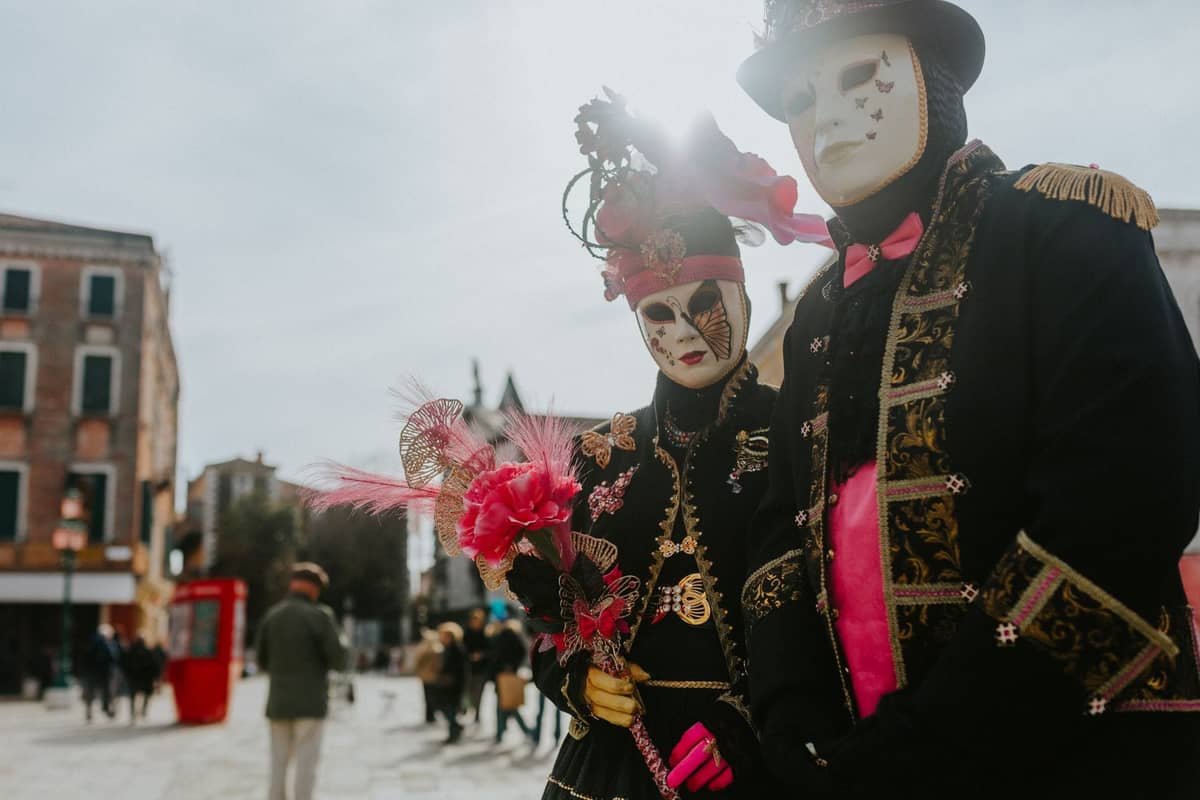
Venetian Carnival masks are not generic Halloween props. There are around 10 traditional mask types, each with specific historical roles. The bauta is arguably the most Venetian: a white mask with a projecting chin that allowed the wearer to eat and drink without removing it, worn with a black cape (tabarro) and a tricorne hat. The moretta is a small oval black velvet mask traditionally worn by women. The medico della peste, the long-beaked plague doctor mask, is visually iconic but was not originally a Carnival mask — it was medical protective equipment in the 17th century that has since become a Carnival staple.
You are not required to wear a costume to attend Carnival, and plenty of visitors watch in regular clothing. That said, dressing up significantly improves the experience: costumed visitors are welcomed into photographs, invited to pose in front of iconic backdrops, and generally treated as participants rather than spectators. Renting a quality costume in Venice for a day typically costs €80 to €200 from specialist hire shops, with historic 18th-century styles commanding the higher end. Buying a quality artisan mask to take home costs €20 to €80 from reputable workshops; the €5 imports you see near tourist stalls are made in China and bear no relation to the craft.
✨ Pro tip
The sestiere of San Polo and the area around Campo San Polo have a concentration of genuine mask-makers (mascherari). Look for studios where masks are made on site using papier-mâché or leather — the artisan is usually happy to explain the process. Shops that only sell ready-made imports will not have a workshop visible.
Practical Logistics: Weather, Crowds, and Getting Around
February in Venice is cold and often damp. Daytime temperatures typically sit between 3°C and 10°C, with occasional night drops close to or slightly below freezing. Fog is common in the lagoon in January and February, which creates an atmospheric backdrop but also means ferry delays and limited visibility on the water. Pack a genuinely warm coat, waterproof boots (the cobblestones get slippery), gloves, and layers. If you are wearing a costume outdoors, plan your warmth strategy in advance — historical Venetian costumes were made for heated ballrooms, not winter streets.
Acqua alta (high water flooding) is a real possibility during Carnival. The city's MOSE barrier system is activated during sustained high tides to protect the historic centre, but partial flooding can still occur in low-lying areas, particularly around Piazza San Marco and the Riva degli Schiavoni. Pack waterproof boots or buy a pair of the cheap rubber overboots (soprastivali) sold at hardware shops and some pharmacies throughout the city. Read more in our acqua alta guide before you visit.
Getting around during Carnival requires patience. The vaporetto (water bus) network run by ACTV is the main form of public transport within the historic island city, but Line 1 along the Grand Canal and stops near Piazza San Marco become severely crowded on peak Carnival days. Walking is often faster than waiting for a boat. Comfortable, waterproof walking shoes matter more during Carnival than almost any other time of year. For a full breakdown of transport options including vaporetto passes and routes, see our guide to getting around Venice.
Planning Your Visit: Neighborhoods, Timing, and What to Skip
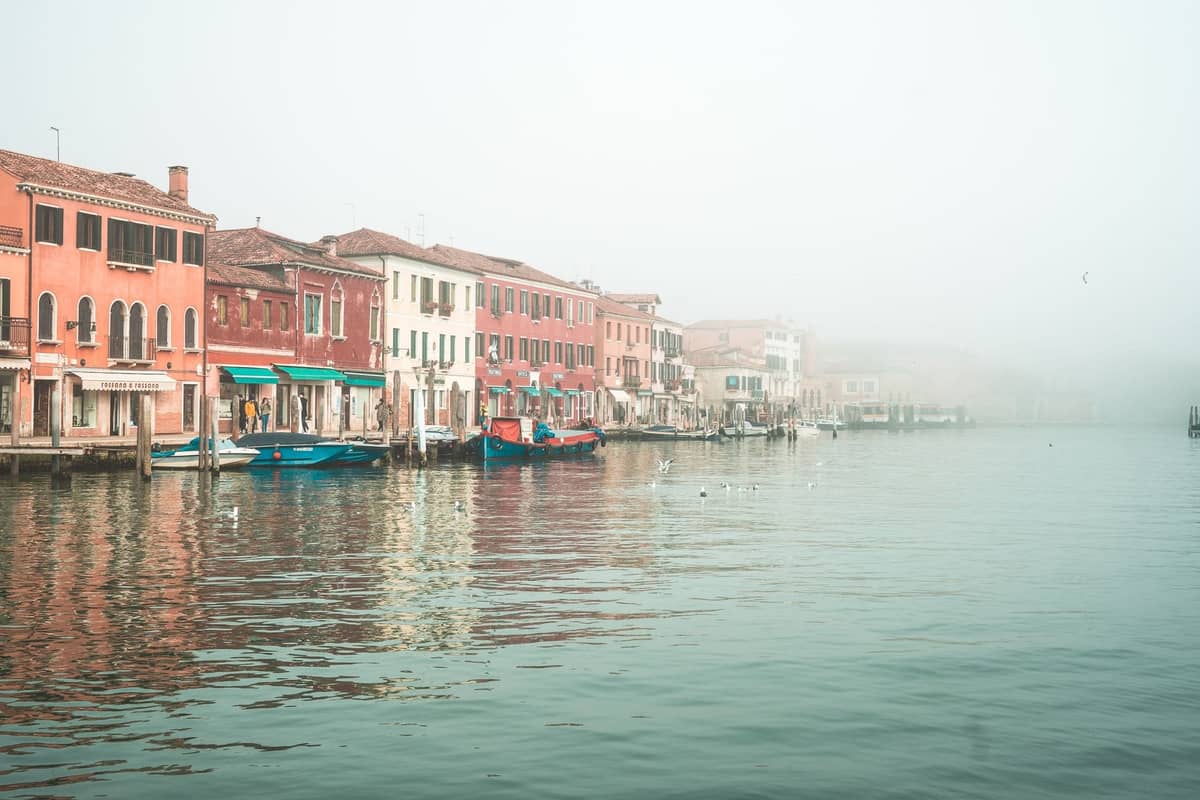
Piazza San Marco concentrates the official events but also the densest crowds. For a more manageable Carnival experience, spend time in Dorsoduro around Campo Santa Margherita and in Cannaregio, where locals actually live and where Carnival has a different, quieter register. Costumed Venetians still appear in these neighborhoods, often in genuinely extraordinary historical dress, but without the shoulder-to-shoulder tourist crush.
Shrove Tuesday is the single most crowded day of the festival. If you want the atmosphere without the extreme density, the first or second weekend of Carnival offers the Volo dell'Angelo and most major events, with marginally more breathing room. Weekday mornings, particularly before 11am, are when costumed participants photograph themselves against Venice's architecture before the tour groups arrive — this is genuinely one of the best times to experience the visual spectacle.
If you are visiting with children, Carnival is more accessible than it might seem. The costume culture is embraced by Venetian families, and children in elaborate dress are a common sight. For specific family planning, our Venice with kids guide covers logistics and age-appropriate activities across the city.
- Skip: overpriced Carnival 'packages' near the train station Tour desks around Santa Lucia station sell inflated Carnival bundles. Book balls and workshops directly through the official Carnival site or verified operators.
- Skip: Shrove Tuesday if crowds are a concern The final day draws the biggest single-day attendance of the entire two weeks. Every other day offers essentially the same experiences with less congestion.
- Worth it: early morning costume photography Before 10am, costumed participants take professional photos around the Rialto and San Marco. You can watch (and join) without any ticket.
- Worth it: a genuine mask-making class A 2 to 3 hour workshop with a working mascheraio gives you context for the tradition and a mask you actually made, which is more rewarding than any souvenir shop purchase.
FAQ
When is Venice Carnival 2026?
Venice Carnival 2026 runs from Saturday, 31 January to Tuesday, 17 February 2026. It ends on Shrove Tuesday (Martedì Grasso), the day before Ash Wednesday. The exact dates shift each year because they follow the Catholic liturgical calendar.
Do I need to buy tickets for Venice Carnival?
Most of Carnival is free. Public events, parades, the Volo dell'Angelo, and costume watching in piazzas and streets cost nothing. Private masquerade balls in historic palazzi are ticketed, typically ranging from around €200 to over €500 per person depending on the event. Mask-making workshops run €40 to €80 and should be booked in advance.
What should I wear to Venice Carnival?
You are not required to wear a costume, but participating adds significantly to the experience. If you dress up, prioritize warmth: February temperatures in Venice hover around 3 to 10°C. Layer a genuine warm coat under or over your costume, wear waterproof boots, and bring gloves. Costume hire from specialist Venice shops costs approximately €80 to €200 for the day.
How do I get to Venice for Carnival and where should I stay?
Venice is served by Marco Polo Airport (VCE), located about 8 km from the historic centre at Tessera. From the airport, Alilaguna water buses and ACTV buses both connect to the city. During Carnival, accommodation on the historic islands books out months in advance and prices spike sharply. Staying in Mestre on the mainland is a practical budget alternative with direct rail connections to Venezia Santa Lucia station.
Is Venice Carnival suitable for families and children?
Yes. Venetian families participate actively, and children in costume are a normal and welcome sight. The public events in Piazza San Marco are family-friendly, as are the neighborhood celebrations in areas like Campo Santa Margherita. The main caution is crowd management on the busiest days: Shrove Tuesday and opening-weekend afternoons can be overwhelming for young children in a dense crowd.