Getting Around Venice: Boats, Bridges, and Everything In Between
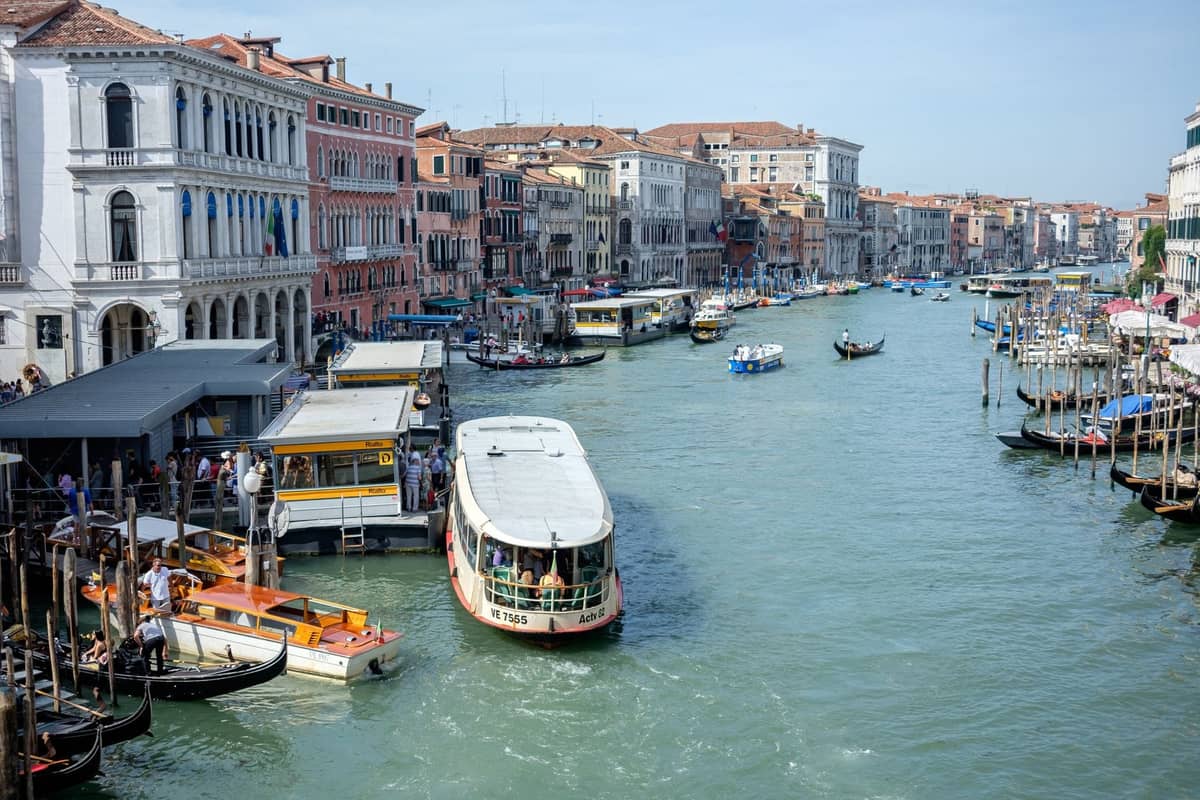
Venice operates on a completely different logic from any other city. There are no cars, no taxis, no metro. Getting around means walking across 438 bridges and navigating canals by water bus, private boat, or gondola ferry. This guide explains every option clearly, with real costs and practical advice.
Plan and book this trip
Tools from our partner Travelpayouts help you compare flights and hotels. If you book through them, we may earn a commission at no extra cost to you.
Flights
Hotels map
TL;DR
- Venice's historic center is entirely car-free: you get around on foot and by boat, full stop.
- The vaporetto (ACTV water bus) is the main public transport network, with a single ticket costing around €9.50 and multi-day passes available. Check the Venice on a budget guide if passes vs. single tickets matter to your trip.
- Walking is often faster than the vaporetto for short distances within the six sestieri of the historic center.
- Water taxis are legitimate and useful but expensive (around €140 from the airport). Alilaguna airport boats are the sensible middle ground at around €25.
- Gondolas are scenic, not practical. For crossing the Grand Canal cheaply, use a traghetto ferry for a few euros.
The Basics: How Venice Actually Works
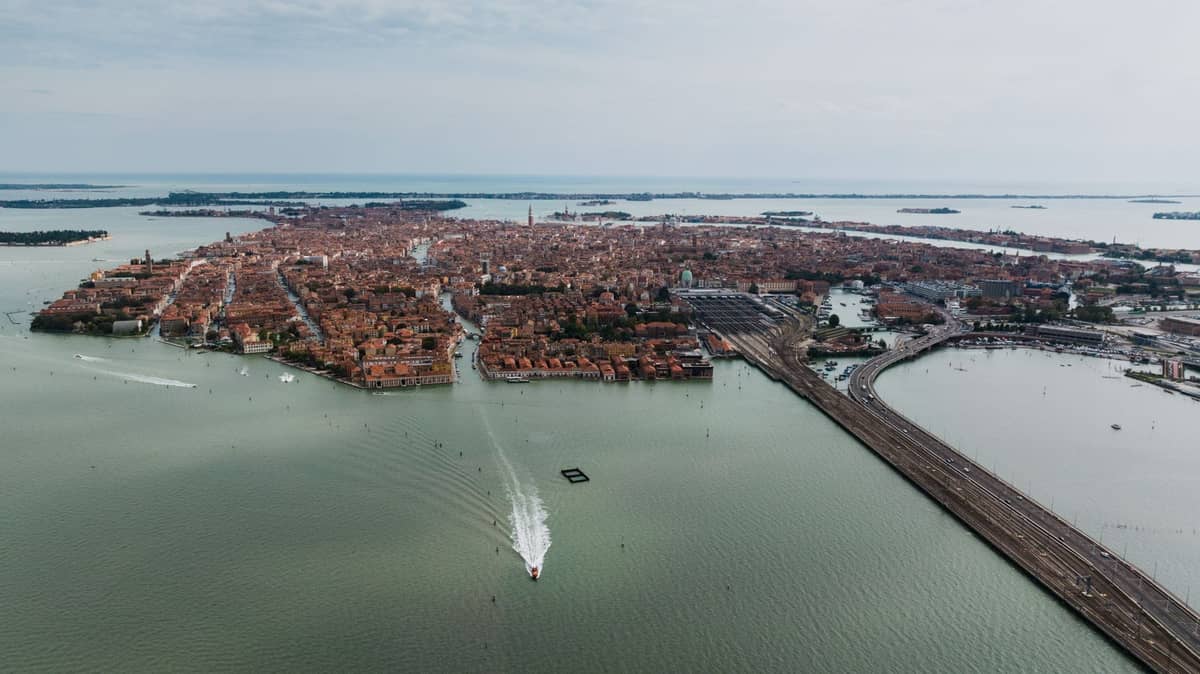
Getting around Venice starts with understanding the city's structure. The historic center is built across 118 small islands connected by 438 bridges, all sitting in the Venetian Lagoon (Laguna Veneta). Road vehicles stop at Piazzale Roma on the western edge or at Tronchetto (the parking island just beyond). From that point on, everything moves on foot or on water. There is no metro, no tram, no ride-hailing car service operating in the canal city itself.
The city is divided into six historic districts called sestieri: San Marco, Cannaregio, Castello, Dorsoduro, San Polo, and Santa Croce. Despite looking like a labyrinth on a map, the core island area is compact enough that walking end-to-end takes roughly 30 minutes in a straight line. In practice you will cover more ground, because there is no straight line in Venice. Yellow wayfinding signs posted at major junctions point toward key landmarks: Rialto, San Marco, Ferrovia (the train station), and Piazzale Roma. Follow them and you will stay oriented.
💡 Local tip
Download an offline map of Venice before you arrive. Google Maps works reasonably well for pedestrian routing, but cell data can be unreliable in narrow calli. Apps like Maps.me or the Venezia Unica app are useful backups.
Walking: The Default Mode of Transport
For most trips within the historic center, walking beats every other option on speed and cost. The vaporetto is slow because it stops at every landing stage, and popular lines like Line 1 along the Grand Canal can get genuinely packed between April and October. If you are moving between two points in the same sestiere, or between adjacent ones, the boat rarely makes sense unless you have heavy luggage or mobility constraints.
One practical warning: Venice's bridges all have steps. This is not a minor inconvenience. If you arrive with a rolling suitcase, you will be lifting it up and down stairs at every bridge crossing, sometimes dozens of times a day depending on your route. Backpacks or soft luggage over wheels are significantly more practical in the historic center. If you have limited mobility, this is something to plan carefully, and you should look at accommodation that minimizes bridge crossings from the nearest vaporetto stop.
- San Marco to Rialto About 15-20 minutes on foot through the main tourist corridor. Quick and straightforward, though busy in high season.
- Ferrovia (train station) to Piazzale Roma Under 10 minutes on foot or by the People Mover automated tram, which runs between the two and costs around €1.50.
- Accademia to Zattere 5-10 minutes through the Dorsoduro backstreets, far faster than any boat option.
- San Marco to Castello (Arsenale area) Around 20-25 minutes. The eastern parts of Castello are genuinely quiet, and walking there is one of the better ways to leave the crowds behind.
Vaporetto: The Water Bus Network
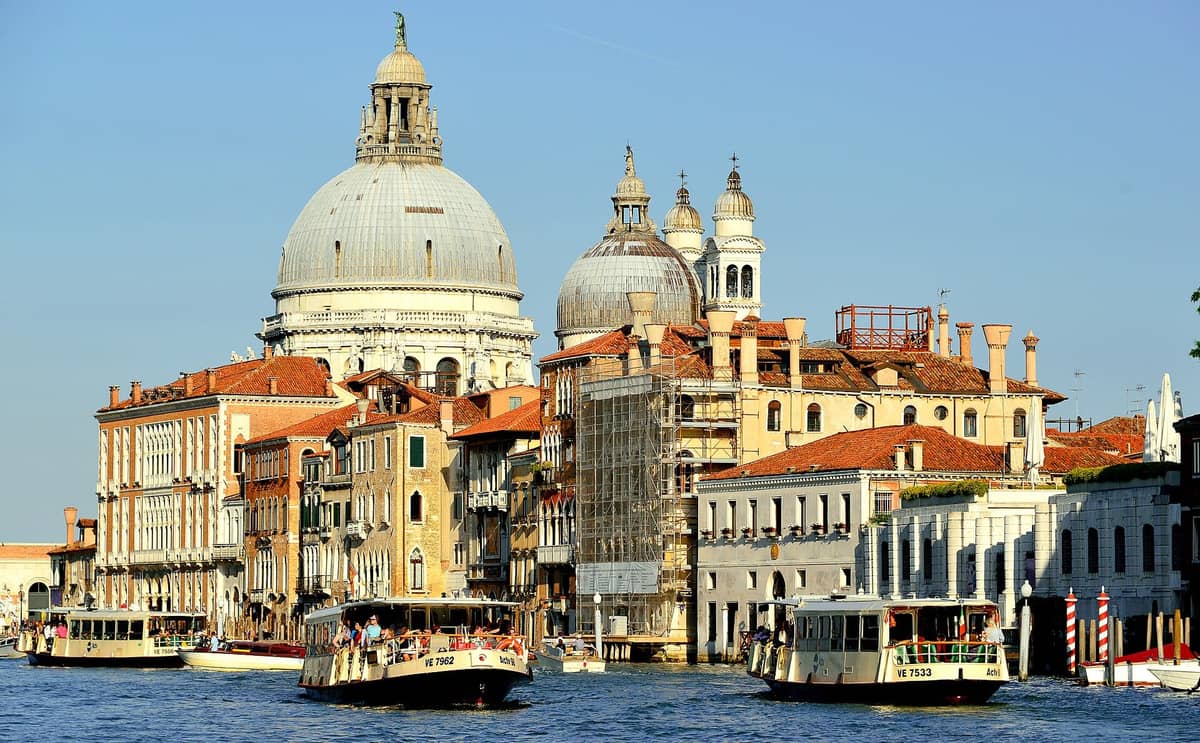
The vaporetto is operated by ACTV (Azienda Consorziale Trasporti Veneziana) and is the backbone of public transport in Venice. Around 23 lines cover the historic center, the Grand Canal, and lagoon destinations including Murano, Burano, and the Lido. Services typically run from around 04:30 to 00:30, with night routes filling the gap overnight.
A single vaporetto ticket costs around €9.50 and is valid for 75 minutes from the moment you validate it, allowing unlimited transfers within that window. For anything beyond one or two rides per day, a time-based travel pass is almost always better value. Options include 24-hour, 48-hour, 72-hour, and 7-day passes, priced in tiers. If you are spending three or more days in Venice and plan to reach the lagoon islands, the 72-hour or 7-day pass pays for itself quickly. Tickets are sold at ACTV booths at major stops, Venezia Unica offices, tobacconists displaying the ACTV sign, some bars, and online.
⚠️ What to skip
Always validate your ticket before boarding by tapping it on the reader at the dock entrance. Inspectors work all lines, including tourist-heavy ones like Line 1. An unvalidated ticket carries the same fine as traveling without one, typically €60 or more on the spot.
- Line 1 (Grand Canal, slow) Stops at every landing stage along the Grand Canal from Piazzale Roma to San Marco and beyond. The most scenic route, but slow. Expect standing room only in peak season.
- Line 2 (Grand Canal, fast) Makes far fewer stops along the Grand Canal, reaching Rialto and San Marco much faster. Good for practical travel rather than sightseeing.
- Line 4.1 / 4.2 (Murano circuit) Connects the historic center to Murano, running a circular route around the islands.
- Line 12 (Burano and Torcello) Runs from Fondamente Nove to Burano, with a connection to Torcello. Journey time around 40-45 minutes to Burano.
- Line 1 / 5.1 / 5.2 (Lido) Multiple lines serve the Lido barrier island, where the Venice Film Festival takes place each September.
Getting From the Airport to the City
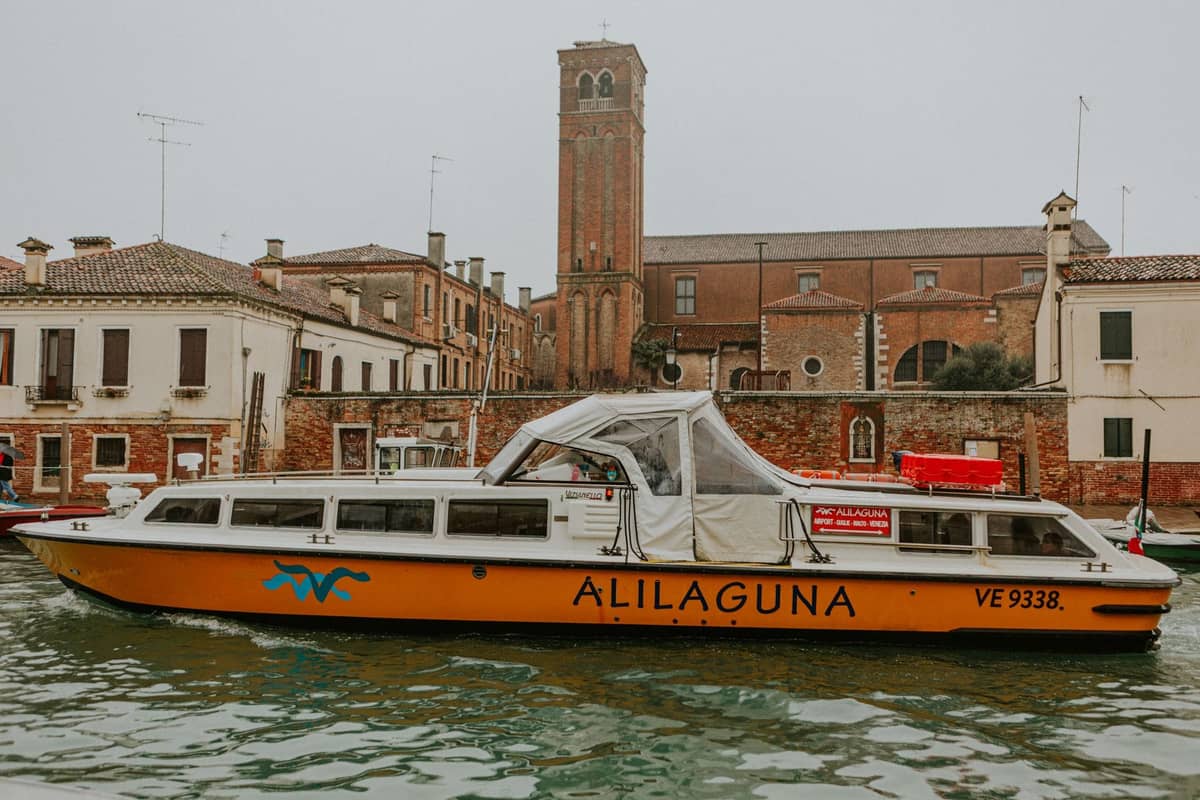
Venice Marco Polo Airport (IATA: VCE) sits at Tessera on the mainland, roughly 8-10 km north of the historic center. From there, you have three realistic options: bus to Piazzale Roma, Alilaguna airport boat directly into the canal city, or private water taxi. If you are flying with a low-cost carrier, double-check whether your ticket is for Marco Polo or Treviso Airport (IATA: TSF), which is considerably further away and requires a separate bus connection.
The Alilaguna network runs several lines from the airport's dedicated dock to stops including San Marco, Rialto, and the Lido. The journey takes roughly 1 hour to San Marco and costs around €25 per person. It is slower than a water taxi but eliminates the need to transfer at Piazzale Roma with luggage. The ACTV bus costs considerably less and drops you at Piazzale Roma in about 20 minutes, where you then take a vaporetto or walk to your accommodation. This combination is the most economical option for those comfortable managing luggage on crowded water buses.
A private water taxi from the airport runs around €140 and takes 30-40 minutes, delivering you directly to the nearest water gate (riva) to your hotel. For groups of three or four splitting the cost, or for travelers arriving late at night with heavy bags, it is worth considering. Insist on a licensed taxi: look for the yellow stripe and a visible license number on the hull. Unlicensed boats at the airport dock do exist and charge higher prices without accountability.
✨ Pro tip
If you are staying in Cannaregio or near the train station, the ACTV bus to Piazzale Roma followed by a short vaporetto or walk is often the fastest and cheapest airport transfer. The Alilaguna Orange Line to San Marco makes sense mainly for hotels in the San Marco or Castello sestieri.
Water Taxis, Traghetti, and Gondolas
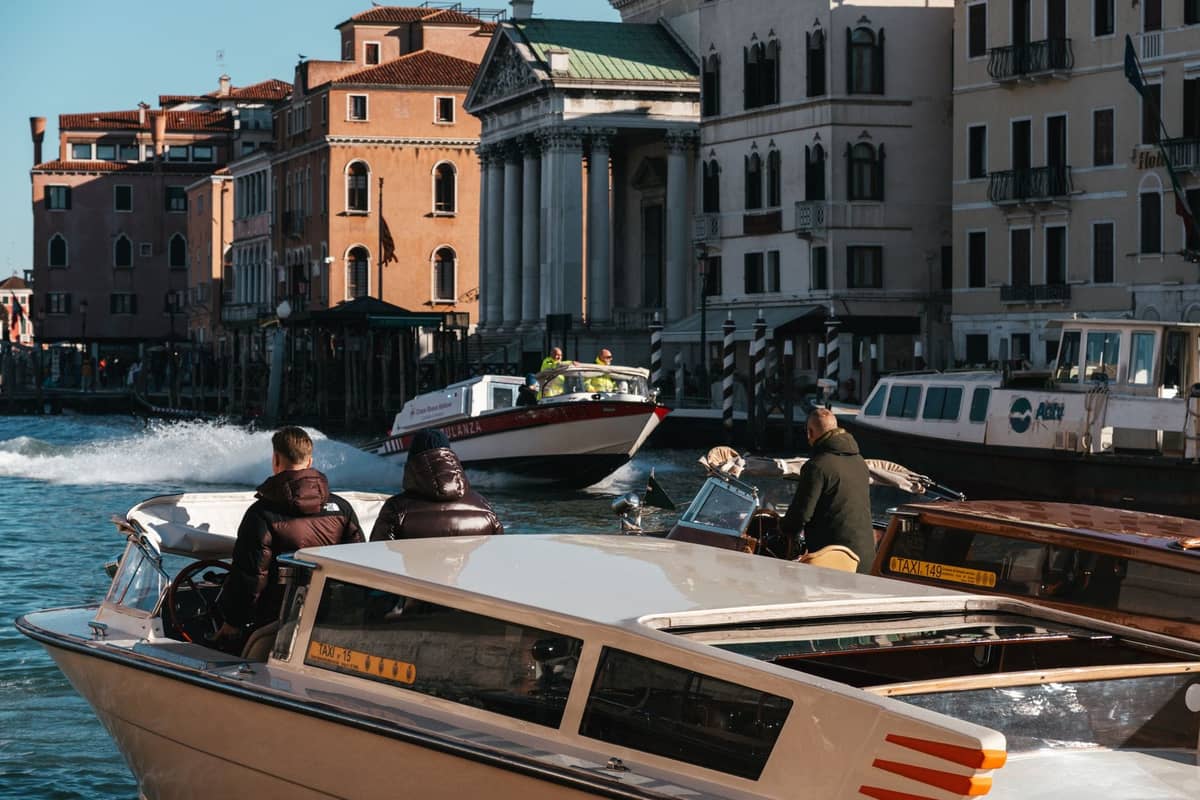
Private water taxis are the most flexible boat option in Venice. They take you directly from any dock to your destination and handle luggage without the crowds of the vaporetto. The base fare is regulated but not cheap: expect minimums of €15-20 for short trips within the city, rising quickly from there. Always agree on the price before boarding, and confirm it covers your full destination. Licensed taxis display a yellow stripe and a registration number. For a detailed look at the famous scenic alternative, see the complete gondola ride guide.
Gondolas are not practical transport. They are a scenic experience at a fixed, regulated price: currently €90 for 30 minutes during the day and €110 for 35 minutes after 19:00, with a maximum of five passengers per gondola. If you want to cross the Grand Canal cheaply without walking to a bridge, the traghetto is the answer. These are basic gondola ferries operated by local gondoliers at a small number of fixed crossing points along the Grand Canal. A crossing costs a few euros and takes a couple of minutes. Most Venetians stand for the crossing rather than sitting. Traghetti are not always easy to find if you do not know where to look, and their operating hours are inconsistent, so they are more of a bonus when convenient than something to rely on.
Seasonal Realities and Practical Logistics
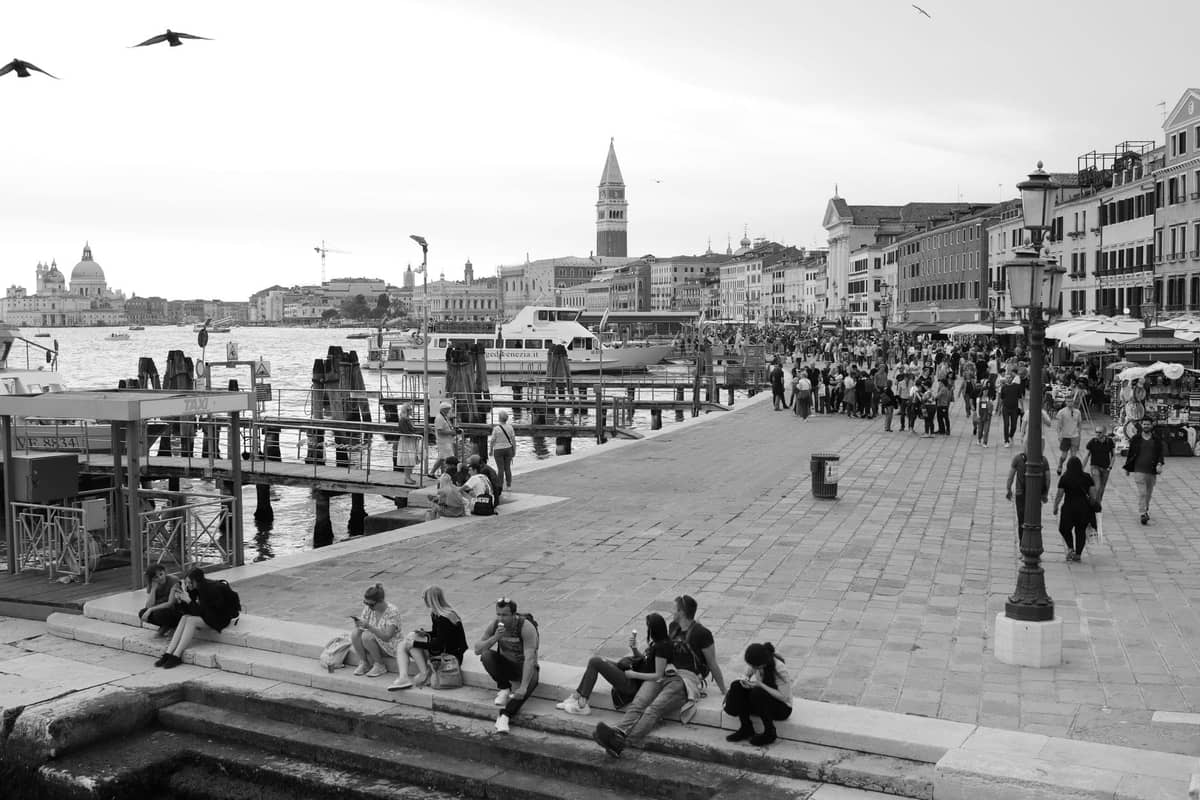
Getting around Venice changes depending on the time of year. In summer (June through August), the main vaporetto lines and pedestrian routes through San Marco become extremely congested. Line 1 in particular can feel like a rush-hour commuter train. Traveling early in the morning (before 09:00) or late in the evening makes a significant difference. Spring and autumn are generally more comfortable for getting around, though autumn brings the risk of acqua alta flooding.
Acqua alta (high water) occurs most often between October and January when tidal peaks coincide with southerly winds across the Adriatic. When it floods, sections of the city can see 20-80 cm of water in the streets and on the ground floors of buildings. The city deploys raised wooden walkways (passerelle) along main routes, and most flooding clears within a few hours as the tide drops. The MOSE barrier system is activated during sustained high tides to protect the city. If you are visiting in autumn or winter, check the acqua alta guide before you travel and pack waterproof boots or ankle-high wellies.
From 3 April 2024 onward, Venice applies a day visitor access fee on selected high-attendance days (hours 08:30-16:00). The fee applies to day-trippers entering the historic center; overnight guests with a hotel booking are exempt. Dates, prices, and exemption categories are confirmed on the official municipal portal (cda.ve.it) and are subject to change each year, so verify the current rules before your visit.
ℹ️ Good to know
Vaporetto timetables and Alilaguna routes change between summer and winter schedules. Always check current schedules on the official ACTV or Venezia Unica websites before planning day trips to the lagoon islands, as frequency and last-service times vary significantly by season.
For travelers planning to reach the outer lagoon islands, the logistics are worth planning in advance. Burano takes around 40-45 minutes from Fondamente Nove on Line 12. Torcello requires a connection at Burano. Murano is much closer, around 10-15 minutes on Lines 4.1/4.2 or 3. If you are combining multiple islands in one day, plan your return times carefully: last boats back to the main island in the evening can be earlier than expected, particularly for Torcello. The Venice lagoon islands guide covers this in full.
FAQ
Can you use a car in Venice?
No. The historic island center is entirely car-free. Road vehicles must park at Piazzale Roma or the Tronchetto parking island at the western edge of the city. From there, all travel is on foot or by boat. The mainland city of Mestre, which is part of the same municipality, does have normal road traffic.
Is the vaporetto pass worth it?
Almost always, if you plan to ride more than once or twice per day. A single ticket costs around €9.50, so a 24-hour pass (which covers unlimited rides) breaks even after just two journeys. For visits of three or more days that include lagoon island trips, a 72-hour or 7-day pass offers clear value. If you are only in Venice for a few hours and plan to walk most of the time, single tickets may be sufficient.
How do you get from Marco Polo Airport to Venice center?
Three main options: the ACTV bus to Piazzale Roma (cheapest, around 20 minutes), the Alilaguna airport boat directly to canal stops including Rialto and San Marco (around €25, roughly 60 minutes), or a private licensed water taxi (around €140, 30-40 minutes). The right choice depends on your budget, where your hotel is, and how much luggage you have.
What happens to transport during acqua alta flooding?
Vaporetto services generally continue during acqua alta, as the boats obviously cope with high water. Pedestrian routes are partly managed via raised walkways (passerelle) on main streets. Flooded calli (alleys) may be impassable without waterproof footwear. In severe events, some ground-floor access points are blocked. The situation usually resolves within a few hours as the tide drops. Check the Comune di Venezia website or the Venezia Unica app for real-time alerts.
Are gondolas worth taking in Venice?
As a scenic experience, yes, for many visitors. As a way of getting somewhere, no. The regulated fare is around €90 for 30 minutes (daytime), which buys you a slow, romantic loop through narrow canals rather than efficient point-to-point travel. If you want to cross the Grand Canal without walking to a bridge, the traghetto gondola ferry costs a few euros and takes two minutes. The choice depends entirely on what you want from the experience.