Murano is a cluster of seven small islands in the Venetian Lagoon, roughly 1.5 kilometres north-northeast of Venice's historic centre. Known since 1291 as the heart of Venetian glassmaking, it combines working furnaces, medieval churches, a dedicated glass museum, and a pace of daily life that feels noticeably quieter than the city it belongs to.
Murano is where Venice sent its glassmakers in 1291, and the island has built its entire identity around that single craft ever since. The result is a place that is part working town, part open-air showroom, and part genuine piece of Venetian history, with Byzantine church floors and Gothic palaces sitting alongside furnace workshops where molten glass is still shaped by hand.
Orientation: Where Murano Sits in the Lagoon
Murano lies about 1.5 kilometres north-northeast of the Fondamenta Nove, the northern waterfront of Venice's historic centre. It is not a single island but a group of seven: Isola dei Conventi, San Donato, Navagero, San Pietro, San Stefano, Sacca Serenella, and Sacca Mattia, all separated by canals and linked to each other by bridges. The total area is about 1.5 km² (roughly 150 hectares), making Murano a real settlement in its own right rather than a sandbank with a gift shop.
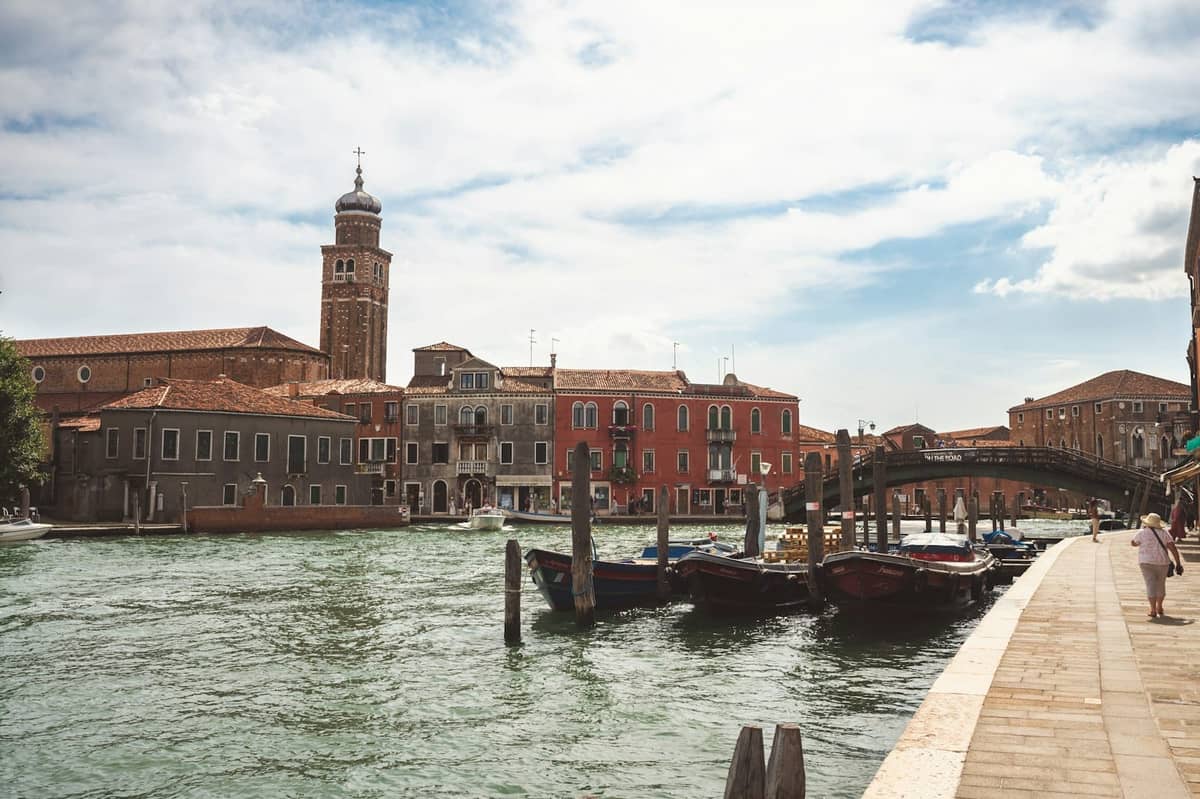
The main navigation channel through the island is the Canal Grande di Murano, which runs roughly north to south and is lined with the showrooms, workshops, and palaces that define the island's public face. Walking south along its fondamenta from the Murano Colonna vaporetto stop, you pass the majority of the glass-facing businesses before reaching the quieter residential southern end near San Donato. The northern tip of the island, around Sacca Serenella, is more industrial and rarely visited by tourists.
Murano sits within the same municipality as Venice and forms part of the wider Venice lagoon island network, which also includes Burano to the northeast and Torcello beyond that. The three islands are often combined into a single day trip, though each rewards more time than that arrangement typically allows.
Character and Atmosphere
Early morning on Murano has a quality you will not find in Venice proper. The first vaporetti bring workers rather than tourists, and for an hour or two the island belongs to people collecting bread, opening workshops, and sweeping fondamenta. The furnaces at the larger glassworks begin their day early, and if you arrive before 9am you can sometimes watch master glassblowers at work without crowds pressing around you. The smell of the lagoon is stronger here than in the city, partly because the island is more exposed and partly because there is less of the diesel and food-vendor noise that competes with it in central Venice.
By mid-morning the tour groups arrive, concentrated almost entirely along the Fondamenta dei Vetrai, the main canal-side street. This stretch becomes genuinely congested between 10am and 1pm, with guided groups funnelled from vaporetto stop to demonstration furnace to showroom. If your only goal is to buy glass or watch a demonstration, this is still manageable, but it strips away any sense of discovery. The smarter move is to walk one block back from the canal to the interior lanes, where you find the island's actual residential texture: small vegetable gardens behind iron gates, laundry overhead, cats on windowsills.
Afternoons in summer are hot and the island empties somewhat as the main tour groups complete their circuits and return to Venice. Late afternoon light hits the canal-facing facades in a way that rewards anyone willing to linger. By evening, Murano is quiet to the point of being sparse: most visitors have left, the showrooms close, and the island reverts to its residents. A handful of restaurants and bars serve the local population, and the atmosphere shifts noticeably toward the unhurried.
💡 Local tip
Arrive on the first or second vaporetto of the morning (before 9am) to watch glassblowing demonstrations in near-empty workshops. The same demonstrations later in the day are identical but draw crowds of 30 or 40 people.
What to See and Do
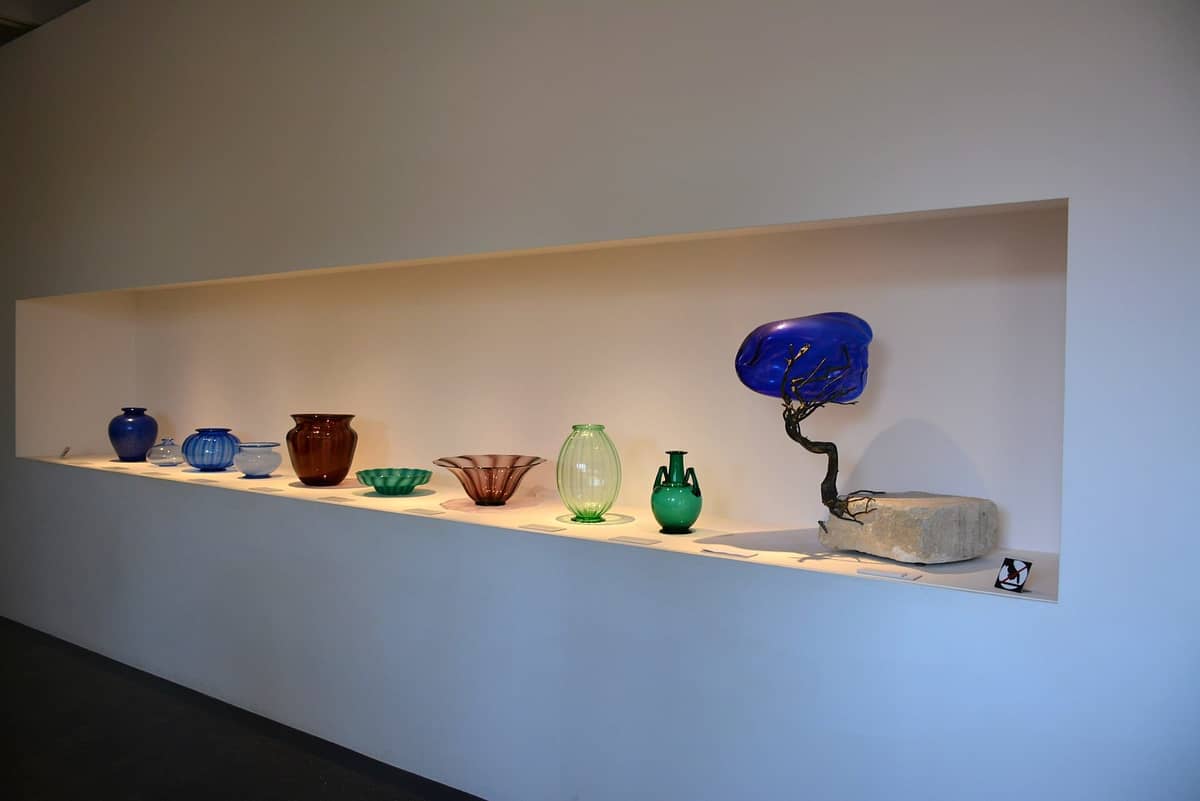
The Museo del Vetro (Glass Museum) is the most intellectually serious attraction on the island. Housed in the Palazzo Giustinian, a Gothic building on the Fondamenta Giustinian, it traces Venetian glass production from Roman-era pieces through medieval revival, Renaissance millefiori work, Baroque chandeliers, and 20th-century art glass. The collection is not purely decorative: it explains technique and historical context in a way that changes how you look at every piece in every showroom afterward. Budget 90 minutes at minimum.
The Basilica di Santa Maria e San Donato is Murano's most important architectural monument and one of the finest examples of Venetian-Byzantine Romanesque architecture anywhere in the lagoon. The 12th-century mosaic floor, made of glass tesserae and marble fragments in geometric and animal patterns, is genuinely extraordinary and tends to be underappreciated because visitors rush through the interior. The church is also traditionally said to hold the bones of a dragon slain by Saint Donatus, displayed in a reliquary behind the altar. True or not, it is the kind of detail that distinguishes a building from a backdrop.
The Church of San Pietro Martire, on the main canal, contains works attributed to Giovanni Bellini, including an altarpiece that would command significant attention in any mainland museum. The church interior is cool and often nearly empty even when the surrounding fondamenta is crowded, which makes it an underused refuge during peak hours.
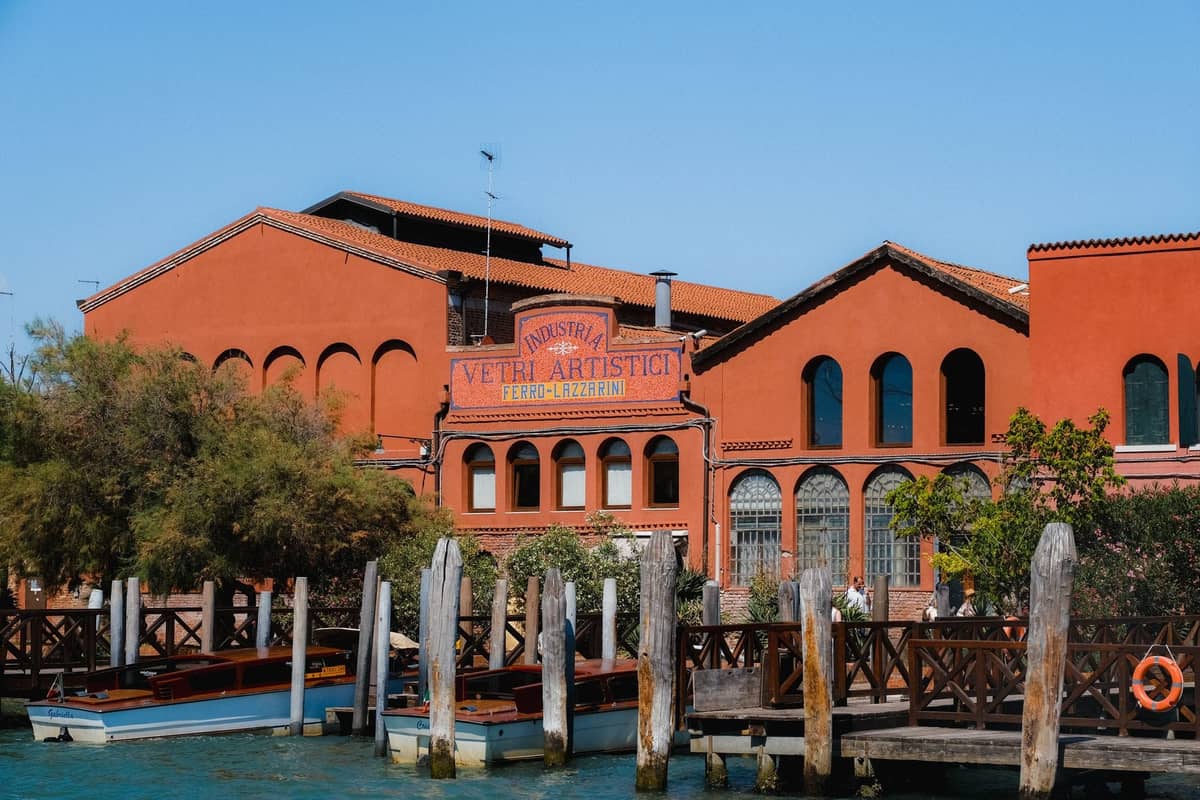
The glassblowing demonstrations themselves vary significantly in quality. Some workshops offer genuine master-level work: the shaping of a horse or vase in under three minutes from a bubble of molten glass is a real craft spectacle. Others offer a more cursory version aimed at moving groups quickly through to the sales floor. There is no reliable way to distinguish them from the outside. The Murano glass workshops page covers the major options in more detail.
Museo del Vetro (Glass Museum), Palazzo Giustinian: best single attraction on the island
Basilica di Santa Maria e San Donato: 12th-century mosaic floor, Byzantine apse, dragon bones reliquary
Church of San Pietro Martire: Bellini altarpiece, often uncrowded
Palazzo da Mula: Venetian Gothic facade on the canal, exterior viewing only
Glassblowing demonstrations: free at most workshops, quality varies
Eating and Drinking
Murano is not a food destination, and it would be dishonest to frame it as one. The restaurants along the Fondamenta dei Vetrai are priced for tourists and oriented toward quick turnover. That said, the island has a small but functioning local food culture, and if you know where to look, you can eat reasonably well.
For a quick midday stop, the bars and bacari along the canal serve cicchetti: small plates of baccalà mantecato (whipped salt cod), meatballs, and bruschetta-style bread with seasonal toppings, accompanied by a small glass of local wine called an ombra. This format, covered in depth in the Venice cicchetti guide, is the most honest and cost-effective way to eat on Murano. Expect to pay €1.50 to €3 per piece and under €2 for wine by the glass.
Sit-down restaurants cluster near the Murano Colonna and Murano Faro vaporetto stops. Price points are comparable to or slightly lower than tourist-facing restaurants in San Marco, but do not expect the kind of quality-to-price ratio you find in Cannaregio or Dorsoduro. The island's relative isolation means competition is limited and kitchens know their audience. Seafood is the default: sarde in saor (sweet-sour sardines), risotto di pesce, and fritto misto are all commonly available and reflect the lagoon context genuinely.
⚠️ What to skip
Several restaurants near the main vaporetto stops operate menus aimed entirely at day-trippers. Check whether a restaurant serves cicchetti at a bar counter (usually a good sign of local orientation) or only printed tourist menus with photographs.
Coffee options are straightforward. Murano has a handful of neighbourhood bars where residents take their morning espresso, and these are scattered through the residential interior streets away from the canal. Prices at these are standard Italian bar rates (roughly €1 to €1.50 standing at the counter), compared to the elevated prices at the larger tourist-facing cafés on the fondamenta.
Getting There and Around
Murano is accessible only by water. The main departure point from Venice is Fondamenta Nove, on the northern edge of the Cannaregio sestiere, where ACTV vaporetti on lines 3, 4.1, and 4.2 serve the island. The crossing takes approximately 10 minutes. Murano has four vaporetto stops: Murano Colonna (closest to the Glass Museum and the main commercial fondamenta), Murano Venier, Murano Navagero, and Murano Faro. For most visitors, Colonna is the practical arrival point, though Faro, at the southern end, is less congested. Full route and timetable details are in the guide to getting around Venice.
The Alilaguna airport boat service also calls at Murano on its route between Marco Polo Airport and central Venice, which makes it possible to stop at Murano as a first or last point in your trip without backtracking. This is worth knowing if you are arriving or departing from the airport and have a few hours free.
Navigation within Murano is entirely on foot. The island is compact enough that you can walk its full length in about 20 minutes at a relaxed pace. There are no cars, no bicycles, and no alternative transport within the island other than private water taxis for those arriving directly at a hotel or rented property. Canal edges are generally unfenced, which is standard for all Venetian islands, and worth keeping in mind if you are travelling with children or in poor weather.
ℹ️ Good to know
A standard ACTV travel card valid in Venice covers Murano vaporetti as well. There is no additional fee to visit the island itself, though individual museums charge entry. The Venice Access Fee introduced for day visitors (applicable on specific high-traffic dates from 2026 onward) applies to the historic centre of Venice, not to lagoon islands including Murano. Verify current exemption details on the official portal before travelling.
Buying Glass: What You Should Know
The glass industry is central to Murano's economy and is the reason most visitors come, so it deserves specific attention. Authentic Murano glass is made on the island using traditional techniques, and genuine pieces carry a 'Vetro Artistico Murano' trademark. Much of what is sold in Venice's tourist shops, and even some of what is sold on Murano itself, is imported glass from other countries and labelled in ways designed to imply Murano origin without stating it directly.
The most reliable approach is to buy directly from a workshop on the island where you can see production, ask about the provenance of specific pieces, and confirm the trademark. Prices for authentic handmade pieces start high and go considerably higher: a small bead or pendant might cost €15 to €30, a mid-range vase several hundred euros, and significant art pieces can cost thousands. If a price seems implausibly low for what appears to be an elaborate handmade piece, it almost certainly is.
Be aware that some visitors are approached at the Venice vaporetto stops by individuals offering free boat rides to Murano in exchange for attending a glass demonstration. This is a sales technique. The boat ride is genuinely free, but the demonstration is structured around a high-pressure sales environment. There is nothing illegal about it, but it is worth knowing what you are signing up for before you board.
Where to Stay
Staying overnight on Murano is a minority choice but a valid one for certain travellers. Accommodation options are limited: a small number of hotels and rental apartments, most clustered near the canal or the Colonna vaporetto stop. The advantage of staying here is a fundamentally different experience of the island after the day visitors leave, when the fondamenta is quiet, restaurants are less pressured, and the lagoon light in the evening is uncrowded. For a broader overview of accommodation strategy across the whole city, the Venice accommodation guide covers the tradeoffs between each area.
The practical drawback of basing yourself on Murano is that everything in Venice requires a vaporetto ride. For a first-time visitor who wants to be close to San Marco, the Rialto, or the main museum circuit, Murano adds friction to every itinerary. For a repeat visitor, a traveller specifically interested in glass or craft, or someone who wants a slower pace and is willing to organise their day around boat times, it works well. It is particularly worth considering for families with older children who are interested in the glassmaking process and would benefit from seeing it repeatedly and unhurriedly.
Murano as Part of a Wider Itinerary
Most people visit Murano as a half-day excursion from Venice. The standard combination is Murano in the morning, then continuing by vaporetto to Burano for its painted houses and the Lace Museum, and optionally extending to Torcello for the cathedral mosaics. This sequence works logistically because the boats run between the three islands without requiring a return to Venice, but it is rushed if you want to spend real time in the Glass Museum or the Basilica di Santa Maria e San Donato.
If you are planning a first visit to Venice and want to understand how Murano fits into a larger structure, the 2-day Venice itinerary and 3-day Venice itinerary both address this. Murano typically earns a half-day, with the understanding that three hours is enough to see the Glass Museum, one church, and one serious demonstration, with time for a cicchetti lunch. Four to five hours allows for a genuinely unhurried visit.
TL;DR
Murano is the centre of Venetian glassmaking and has been since 1291. The craft is real, active, and visible, not merely historical.
The Glass Museum and the Basilica di Santa Maria e San Donato are serious cultural attractions that go well beyond souvenir shopping.
The island is most rewarding before 9am or after 3pm, when the day-trip crowds thin and the residential character reasserts itself.
Buying glass here is worth doing if you understand authenticity markers; much of what is sold as 'Murano glass' elsewhere is not made on the island.
Best suited to: repeat Venice visitors, glass and craft enthusiasts, travellers combining it with Burano and Torcello, and anyone who wants a lagoon-island day that includes genuine substance alongside the shopping.
Two days in Venice is enough to cover the iconic highlights and still find quieter corners the crowds miss. This guide gives you a realistic, hour-by-hour framework for both days, practical transport advice, booking warnings, and honest takes on what is worth your time.
Three days is enough time to cover Venice's iconic landmarks, explore its quieter sestieri, and take at least one lagoon island trip. This itinerary is structured around the city's geography, vaporetto routes, and crowd patterns so you spend less time backtracking and more time actually seeing the city.
Acqua alta is Venice's famous tidal flooding, and it's far less dramatic than most visitors expect. This guide explains exactly what causes it, when it happens, how much of the city it actually affects, and what gear and forecasting tools will keep your trip on track.
Venice has well over 130 church buildings, and its greatest ones hold masterpieces by Titian, Tintoretto, Bellini, and Palladio that rival any museum. This guide covers the 13 best churches in Venice, from the unmissable to the quietly extraordinary.
Venice packs more world-class art and history into one city than almost anywhere else on earth. This guide covers the best museums in Venice, from Gothic palaces full of Tintoretto to intimate scuole with Carpaccio cycles, across every district and budget.
Venice looks different in every season, and the right time to visit depends entirely on what you're after. This guide breaks down weather, crowds, hotel prices, and major events month by month, so you can choose the visit that actually suits you.
Venice rewards those who know where to look. This guide covers the city's finest viewpoints, from soaring bell towers and climbable domes to iconic canal bridges and waterfront promenades, with practical tips on booking, timing, and what you'll actually see from each spot.
Cicchetti are Venice's answer to tapas, and the bacari that serve them are the city's most authentic social spaces. This guide covers what to order, where to go across every sestiere, what things cost, and how to plan a bacaro crawl that skips the tourist traps.
Venice rewards lingering, but its surroundings reward exploration. Whether you board a vaporetto for a lagoon island or a train toward the Veneto hills, a day away from the sestieri reveals a completely different side of this corner of northeastern Italy.
Venice doesn't have to drain your wallet. From sweeping Grand Canal viewpoints to Gothic churches packed with Tintorettos, many of the city's greatest experiences are completely free. This guide covers the best no-cost attractions, walks, markets, and island escapes across the lagoon.
Venice operates on a completely different logic from any other city. There are no cars, no taxis, no metro. Getting around means walking across 438 bridges and navigating canals by water bus, private boat, or gondola ferry. This guide explains every option clearly, with real costs and practical advice.
Gondola rides in Venice are regulated by the city, with fixed fares per boat — not per person. This guide breaks down current prices, the best stations to board, what routes actually cover, and the myths that cost tourists money.
Venice rewards the curious traveler who wanders past the obvious landmarks. This guide collects the city's most rewarding under-the-radar sights, from a Carpaccio cycle hidden in Castello to a working gondola boatyard in Dorsoduro and a ghost island in the northern lagoon.
Venice is one of the most debated destinations in travel. Built on 118 islands, UNESCO-listed, and unlike anywhere else on earth, it also attracts millions of visitors a year and charges a day-tripper access fee. This guide cuts through the hype to tell you exactly what Venice delivers, what it does not, and how to make a visit that is genuinely worth the effort.
Venice rewards those who spend well. This guide covers where to stay, how to move, what to eat, and which experiences justify the premium price tag — along with honest warnings about where the luxury label is oversold.
Venice is the city most couples imagine before they arrive, and one of the few that actually delivers. This guide covers the best romantic experiences, the ideal seasons, practical logistics, and honest advice on what lives up to the hype, and what does not.
Venice is unlike any other city in the world, built on 118 islands linked by 438 bridges in a lagoon recognized as a UNESCO World Heritage site. This guide covers the essential things to do in Venice, from the iconic to the overlooked, with practical details on transport, costs, and timing to help you make the most of every hour.
The Venice Biennale is one of the world's most significant contemporary art events, spreading across two major venues and dozens of city locations. This guide covers the 2026 Art Biennale dates, ticket options, what to expect at each venue, and the practical details that make the difference between a rushed visit and a memorable one.
Venice Carnival (Carnevale di Venezia) runs for roughly two weeks before Lent, drawing around 3 million visitors for elaborate costumes, masquerade balls, and free public events. This guide covers the 2026 dates, practical logistics, what things actually cost, and how to get the most from the experience without being overwhelmed.
The Venice International Film Festival is the world's oldest film festival and, crucially, it's open to the public. This guide covers everything from buying tickets and reaching the Lido to navigating the festival grounds and setting realistic expectations about red carpets and celebrity sightings.
Summer brings Venice to its most intense: scorching heat, record crowds, and prices to match. This guide cuts through the noise with practical strategies for timing, booking, staying cool, and finding breathing room in Italy's most visited city.
Winter is one of the most rewarding times to visit Venice. Crowds thin out, prices drop significantly, and the city takes on a moody, atmospheric quality that summer visitors never see. This guide covers weather, acqua alta, Carnival, costs, and everything else you need to plan a winter trip.
The Venetian Lagoon holds far more than Venice itself. This guide covers every island worth visiting, from Murano's glass furnaces and Burano's painted houses to ancient Torcello, the Lido's beaches, and the quiet agricultural island of Sant'Erasmo.
Venice has a reputation for draining wallets fast, but the reality is more nuanced. With the right timing, a few local habits, and some strategic planning, you can experience one of the world's great cities for far less than you'd expect. This guide breaks down exactly where the money goes and how to keep it in your pocket.
Venice rewards shoppers who know where to look. This guide covers the city's best authentic buys, from Murano glass and Carnevale masks to artisan paper goods and gourmet specialties, along with the neighborhoods and markets where locals and savvy visitors actually spend their money.
Venice is one of the world's most walkable cities, built on 120 islands connected by around 430 bridges with no cars in sight. This guide covers the best self-guided walking routes by district, the ideal times to walk, what to skip, and how to explore beyond St. Mark's Square.
Venice with kids is more manageable than most parents expect. This guide covers everything families need: getting around by vaporetto, the best kid-friendly attractions, seasonal timing, safety on the canals, and how to keep the trip fun without exhausting everyone.
Venetian cuisine is one of Italy's most distinctive regional traditions, built on lagoon seafood, rice, polenta, and centuries of spice trade. This guide covers the essential dishes, where to find them, what to pay, and how to eat like a local rather than a tourist.
Venice's six historic districts each offer a completely different experience. This guide breaks down exactly where to stay in Venice based on your budget, travel style, and priorities — with honest trade-offs, realistic price ranges, and practical booking advice.