Glass Museum Murano (Museo del Vetro): The Complete Visitor Guide
The Museo del Vetro on Murano island holds one of the world's most comprehensive collections of Venetian glass, from ancient Roman pieces to flamboyant 20th-century chandeliers. Housed in a 13th-century bishop's palace, it is the clearest lens through which to understand why this small lagoon island shaped decorative arts across Europe for five centuries.
Quick Facts
- Location
- Fondamenta Marco Giustinian 8, Murano (VE), Italy
- Getting There
- Vaporetto to 'Museo' stop (lines 3, 4.1, 4.2, 12, DM from Venice)
- Time Needed
- 1.5 to 2.5 hours
- Cost
- Standard €10, reduced €7.50, free for children under 6 and disabled visitors
- Best for
- Design and art history lovers, families with older children, travelers combining with a Murano glassblowing visit
- Official website
- museovetro.visitmuve.it
What the Museo del Vetro Actually Is
The Museo del Vetro, or Glass Museum Murano, is the definitive institutional collection documenting Venetian and Muranese glassmaking across more than two millennia. It is not a tourist showroom or a gallery annexed to a workshop. It is a serious civic museum, founded in 1861, housed in the Palazzo Giustinian, a 13th-century episcopal palace on Murano that carries its own architectural weight before you even look at a single exhibit.
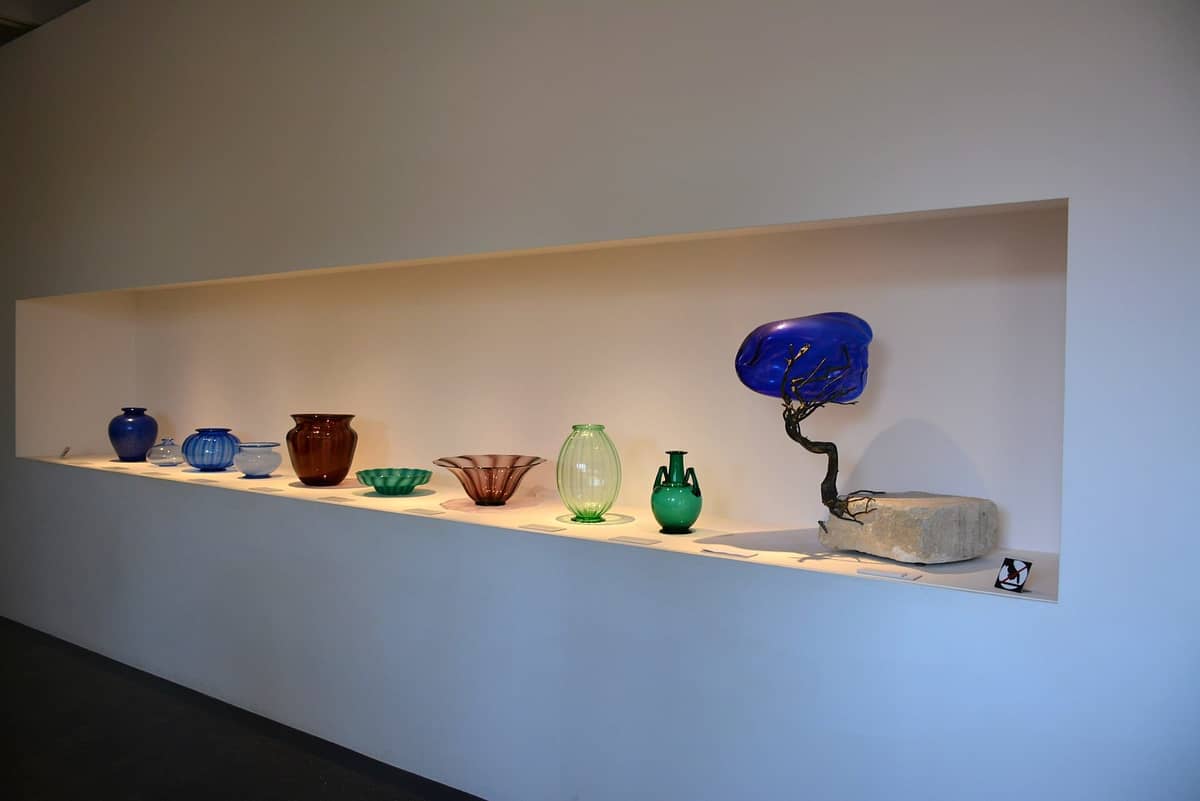
The collection spans from Roman glass of the 1st to 3rd centuries AD through medieval, Renaissance, Baroque, and modern periods, ending with striking 20th-century pieces that show how Murano's master glassblowers absorbed and reinterpreted modernist design movements. The scope is genuinely surprising. Many visitors arrive expecting decorative objects and leave having understood a craft that influenced European table culture, interior design, and scientific instrumentation for five hundred years.
💡 Local tip
The vaporetto stop is literally named 'Museo Murano', so navigation is straightforward. The museum entrance on Fondamenta Marco Giustinian is a short walk from the landing stage along the canal.
The Building: Palazzo dei Vescovi di Torcello
The palace itself is worth attention before and after you study the glass. Originally the residence of the bishops of Torcello, the building dates to the 13th century and was adapted over subsequent centuries to its current institutional form. Its rooms retain some of the proportions and material character of a Venetian Gothic noble residence: high ceilings, stone floors that catch the cold in winter, and windows that open onto the canal and its shifting light.
The architecture creates an interesting friction with some of the collection's more theatrical pieces. A large Baroque chandelier or a modernist 1950s vase reads very differently inside these centuries-old rooms than it would in a purpose-built contemporary gallery. That friction is part of the museum's character, not a design flaw.
Tickets & tours
Hand-picked options from our booking partner. Prices are indicative; availability and final rates are confirmed when you complete your booking.
Murano glass and Burano lace experience with prosecco wine
From 50 €Instant confirmationFree cancellationGlass Museum entrance ticket
From 10 €Instant confirmationGlass Museum entrance ticket
From 8 €Instant confirmationMurano, Burano, Torcello Tour with Glassblowing Show from Venice
From 30 €Instant confirmationFree cancellation
Navigating the Collection: What You Will See
Ancient Glass
The ground floor and early rooms establish the deep history of glassmaking in the Mediterranean. Roman pieces from the 1st through 3rd centuries AD include small unguentaria (perfume flasks), blown vessels, and mosaic glass fragments. These objects are modest in scale but technically sophisticated, and they make the argument, clearly and early, that glassblowing was never simply a Venetian invention but a tradition Venetian and Muranese craftsmen inherited, refined, and eventually dominated.
Medieval to Renaissance: Where Murano's Identity Was Forged
The collection moves through medieval production into the Renaissance period when Murano's political and commercial influence over glassmaking became official Venetian state policy. In 1291, the Republic of Venice ordered all glassmakers from the main islands to relocate to Murano, ostensibly to reduce fire risk in the city, but also to concentrate, monitor, and protect a craft that generated significant export revenue and technological advantage. The museum documents this period with production samples, tools, and finished pieces that demonstrate the emergence of cristallo, the clear, virtually colorless glass that astonished European courts and could not be replicated elsewhere for generations. In 1291, the Republic of Venice ordered all glassmakers from the main islands to relocate to Murano, ostensibly to reduce fire risk in the city, but also to concentrate, monitor, and protect a craft that generated significant export revenue and technological advantage. The museum documents this period with production samples, tools, and finished pieces that demonstrate the emergence of cristallo, the clear, virtually colorless glass that astonished European courts and could not be replicated elsewhere for generations.
Filigree glass, millefiori cane work, and lattimo (opaque white glass imitating porcelain) are all represented. These are not just beautiful objects. They are technical records of specific inventions that spread through European decorative arts and whose direct descendants are still produced in Murano workshops today.
Chandeliers and Large-Scale Baroque Pieces
The museum's most immediately dramatic exhibits are the large chandeliers, particularly those from the 18th and 19th centuries. If you have only ever seen smaller Murano glass objects in souvenir shops, these pieces recalibrate your understanding of the scale the craft can reach. They dominate entire rooms, and the detail in individual blown flowers, leaves, and arms requires close inspection to fully register. This is where visitors tend to slow down and spend unexpected time.
20th-Century Modernism and the Design Connection
One of the collection's more intellectually interesting sections covers the 20th century, when Murano glassmakers collaborated with Italian and international architects and designers. Names including Napoleone Martinuzzi, Carlo Scarpa, and Fulvio Bianconi appear in connection with pieces that directly engaged with Art Nouveau, Art Deco, and postwar modernism. Carlo Scarpa's contributions in particular represent a rare convergence of architectural sensibility and the physical properties of molten glass. These rooms are quieter than the chandelier halls and tend to attract visitors with a design or architecture background.
When to Go and How the Experience Changes
The museum opens daily at 10:00, with the ticket office closing one hour before closing time. It is open every day of the year, with seasonal closing times and occasional special evening openings; always verify the current schedule before visiting. Mid-morning on weekdays, roughly between 10:00 and 11:30, is consistently quieter. Murano as a whole receives the bulk of its day visitors from Venice between late morning and early afternoon, as tour groups and independent travelers combine the glass museum with a glassblowing demonstration and lunch. If you arrive at opening, you will likely have the main rooms largely to yourself.
Late afternoon, between 15:30 and closing, offers a second window of calm as day-trippers head back toward Venice. The light through the canal-facing windows shifts to a warmer tone in the late afternoon, which changes how the colored glass pieces read. The millefiori and filigree objects in particular look different under afternoon light than they do in the flat brightness of midday.
ℹ️ Good to know
The museum is described as accessible. If mobility is a consideration, confirm specific access details with the museum directly before your visit, as older Venetian palace buildings can have internal steps or uneven stone floors in some sections.
Winter visits have a particular quality that summer cannot replicate. The lagoon mist that settles over Murano between November and February enters the visual field through every window, the rooms are quieter, and the glass seems to absorb and diffuse the flat grey light in ways that are genuinely different from summer conditions. Photographers working with natural light will find winter mornings productive. That said, winter also means shorter days and the possibility of acqua alta affecting vaporetto schedules.
If you are planning a trip and weighing the seasons, the best time to visit Venice guide covers seasonal trade-offs across the city and lagoon islands.
Combining the Museum with the Rest of Murano
Murano is compact enough that the museum fits naturally into a half-day or full-day exploration of the island. The most logical combination is to visit the museum first, when energy and attention are fresh, and follow it with a visit to one of the working furnaces for a glassblowing demonstration. The demonstrations are free to attend at many workshops, though they are typically brief and function partly as a sales introduction. The contrast between the museum's finished historical pieces and the active production environment is useful: it grounds the techniques you have just seen documented in something physical and immediate.
For a sense of which workshops are worth visiting, Murano glass workshops covers the main options on the island.
Murano sits within a broader lagoon island circuit. If you are considering extending the day to include Burano and its lace-making tradition, the Venice lagoon islands guide lays out the logistics clearly.
Photography and Practical Notes
Photography policies inside Italian civic museums vary and can change. Verify the current policy at the ticket desk on arrival. For the glass itself, the main challenge is reflections from display case glass under artificial lighting. Shooting at a slight angle rather than directly perpendicular to case fronts reduces reflection considerably. The chandelier rooms allow wider shots and are generally the most forgiving for non-specialist photographers.
Stone floors throughout the palazzo mean appropriate footwear matters. The rooms can be cool even in summer due to the building's thermal mass, so an extra layer in spring and autumn is sensible. There is no requirement for particular dress beyond what you would wear to any civic museum.
⚠️ What to skip
Ticket prices, opening hours, and closures listed here were accurate at time of writing but are subject to change. Always verify directly at museovetro.visitmuve.it before your visit, particularly around public holidays.
Worth It?
The Museo del Vetro rewards visitors who bring some curiosity about craft history, material culture, or design history. If you are visiting Murano primarily to buy glass and have no particular interest in how or why Venetian glassmaking developed the way it did, the museum may feel slow. It is not an entertainment venue with interactive displays or immersive experiences. It is a traditional collection-based museum with good labeling and serious objects.
Visitors who want a broader framework for Venice's museums before deciding where to spend limited time may find the best museums in Venice guide a useful planning resource.
Families with young children will face the usual challenge of fragile objects and limited interactive content, though the chandelier rooms tend to produce genuine reactions from children of most ages. Families with older children who have some design or science education will find more to engage with than a casual visit might suggest.
For families planning a broader Venice itinerary, the Venice with kids guide covers which attractions and neighborhoods work best with children in tow.
Insider Tips
- Arrive at 10:00 when the museum opens to have the chandelier rooms and Renaissance galleries to yourself before the first wave of tour groups arrives from Venice, typically around 11:00.
- The top floor of the palazzo, where the 20th-century design pieces are displayed, receives noticeably fewer visitors than the lower floors. If you have a design or architecture interest, budget extra time here rather than rushing through.
- Combining the museum with the vaporetto ride itself pays dividends: Combining the museum with the vaporetto ride itself pays dividends: take Line 3, 4.1, 4.2, 12, or DM from Venice and sit on the external deck for the approach to Murano across the northern lagoon. The perspective of arriving by water contextualizes why the island developed as a self-contained manufacturing community. The perspective of arriving by water contextualizes why the island developed as a self-contained manufacturing community.
- The museum's courtyard, if accessible during your visit, offers one of the quieter outdoor spaces on the island, away from the canal fondamenta where tour groups congregate.
- If you plan to visit multiple Venice civic museums on the same trip, check the current Musei Civici Veneziani pass options through the official visitmuve.it portal, as combination tickets may reduce the per-museum cost.
Who Is Glass Museum Murano (Museo del Vetro) For?
- Design and decorative arts enthusiasts wanting historical depth beyond what workshops show
- Travelers combining Murano with a broader lagoon islands day trip
- Architecture-minded visitors interested in the Palazzo dei Vescovi di Torcello as a building
- Families with children aged 10 and older who can engage with craft history and material culture
- Photographers seeking dramatic chandelier and colored glass subjects in a historic interior
Nearby Attractions
Other things to see while in Murano:
- Murano Glass Workshops & Showrooms
Murano's glass workshops and showrooms are not a single attraction but a living industrial tradition spread across a small lagoon island north of Venice. Some venues offer free demonstrations; others charge for guided factory tours. Knowing the difference before you arrive makes all the difference.