Venice Biennale Guide: How to Visit the Art & Architecture Shows
The Venice Biennale is one of the world's most significant contemporary art events, spreading across two major venues and dozens of city locations. This guide covers the 2026 Art Biennale dates, ticket options, what to expect at each venue, and the practical details that make the difference between a rushed visit and a memorable one.
Plan and book this trip
Tools from our partner Travelpayouts help you compare flights and hotels. If you book through them, we may earn a commission at no extra cost to you.
Flights
Hotels map
TL;DR
- The 61st International Art Exhibition, titled Venice Biennale 2026, runs 9 May to 22 November 2026, curated by Koyo Kouoh under the theme In Minor Keys.
- Two main venues: Giardini della Biennale and Arsenale. Plan at least one full day — ideally two — to do both justice.
- Standard tickets are around €30; reduced rates apply for students and under-26s. Book through the official La Biennale website to avoid markups.
- The exhibition is closed every Monday, with a handful of exceptions. Check the official calendar before you travel.
- Beyond the ticketed venues, collateral events and national pavilions are scattered across Venice — many are free and worth seeking out. See our free things to do in Venice guide for complementary options.
What Is the Venice Biennale?
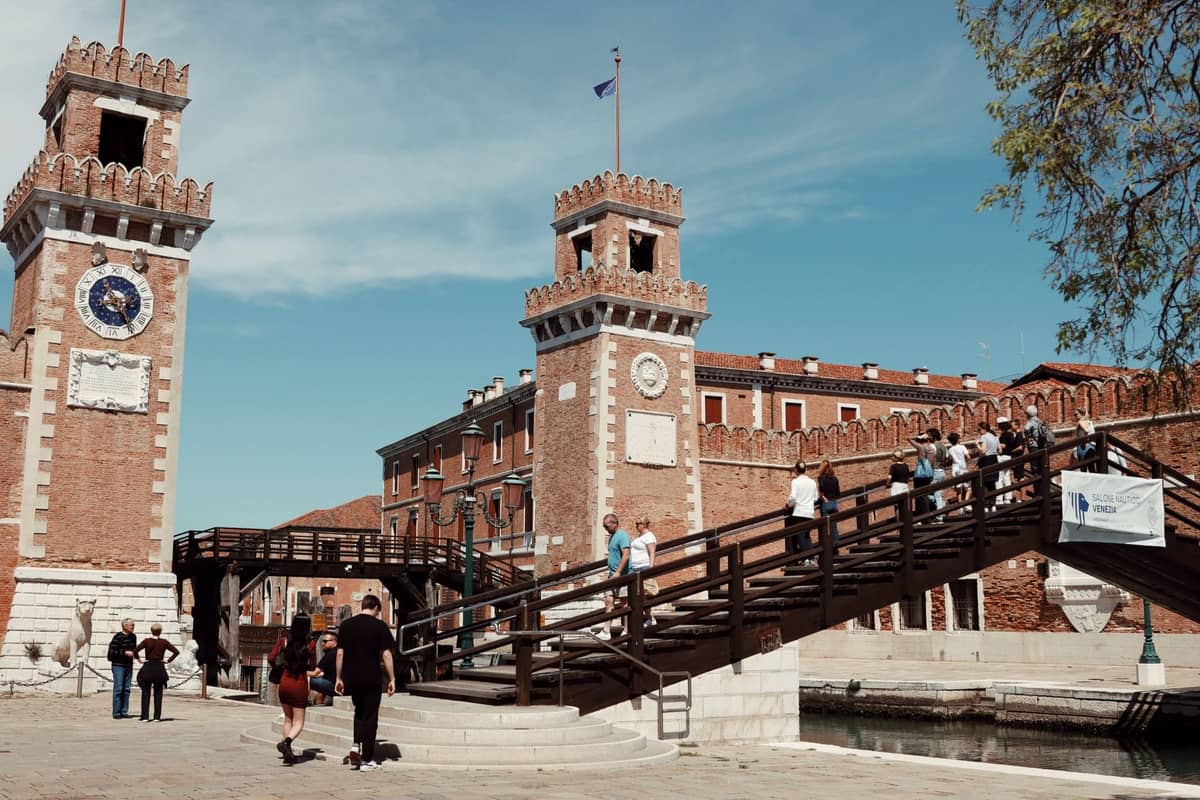
The Venice Biennale is not a single museum exhibition. It is a sprawling international cultural event that takes over large parts of the city every two years for contemporary art (the Art Biennale), and in alternating years for architecture (the Architecture Biennale). The Art Biennale is arguably the more famous of the two, and the 2026 edition, officially the 61st International Art Exhibition, is the focus of this guide.
The event has three distinct components that visitors often conflate. First, there is the curated central exhibition commissioned by the appointed curator, which occupies both the Giardini and the Arsenale. Second, there are national pavilions, where individual countries present their own commissioned works inside permanent or temporary structures, mostly at the Giardini. Third, there are collateral events: independently organized exhibitions, performances, and installations staged in palaces, churches, and galleries all over Venice, some ticketed and many free. Understanding this structure before you arrive will save you significant frustration on the day.
ℹ️ Good to know
The 2026 Art Biennale is curated by Koyo Kouoh, executive director of Zeitz MOCAA in Cape Town, under the theme 'In Minor Keys.' It engages with questions of multiplicity, interdependence, and voices that operate outside dominant cultural registers.
2026 Dates, Opening Hours, and Closures
The 61st Art Biennale opens to the public on 9 May 2026 and runs through 22 November 2026. Opening hours shift mid-season: from 9 May to 27 September, venues are open 11:00 to 19:00. From 28 September to 22 November, hours shorten to 10:00 to 18:00. Plan your arrival accordingly — afternoons in late October can feel rushed if you underestimate how much time the Arsenale alone requires.
The Biennale is closed on Mondays throughout the run, with four exceptions: 11 May, 1 June, 7 September, and 16 November 2026. These Monday openings coincide with public holidays or specific programming dates, so if Monday is your only available day, check the official La Biennale website to confirm whether that specific date is one of the exceptions.
- Summer hours (9 May – 27 Sept) 11:00–19:00 daily except Monday. Arsenale open until 20:00 on Fridays and Saturdays.
- Autumn hours (29 Sept – 22 Nov) 10:00–18:00 daily except Monday. Shorter days mean less time to cover both venues in a single visit.
- Closed Mondays With exceptions on 11 May, 1 June, 7 September, and 16 November 2026.
- Preview days (7–8 May 2026) Typically reserved for press and professionals; not accessible on standard public tickets.
Tickets: How to Buy, What to Pay, and What to Avoid
Standard adult tickets for the 2026 Art Biennale are reported at around €30, with reduced prices for students, under-26s, and other eligible categories. These figures are consistent with recent editions but should be confirmed on the official La Biennale website before booking, as pricing is subject to revision. Your ticket covers entry to both the Giardini and the Arsenale, and you can move between them on the same day if your ticket is valid for that day.
The safest way to book is directly through the official La Biennale ticketing portal. Ticket offices and Infopoints are also available at both venues. Third-party resellers are common and not inherently fraudulent, but they typically charge convenience fees of €5–10 above face value with no added benefit. For the Giardini della Biennale, the main entrance is at Viale Trento 1260, with an additional access point at Viale IV Novembre. The Arsenale entrance is at Campo de la Tana 2169/F, near the Ponte dei Pensieri.
⚠️ What to skip
Do not buy tickets from street vendors or unofficial kiosks near the Giardini or Arsenale. Scalping around major Biennale openings is a known problem, particularly during the first few weeks. The official La Biennale website and on-site box offices are the only guaranteed sources of valid tickets.
Giardini vs. Arsenale: What to Expect at Each Venue
The Giardini della Biennale, located in the eastern part of the Castello sestiere, is the historic heart of the event. It houses the permanent national pavilions of around 30 countries, including the Italian, American, British, German, French, and Japanese pavilions, each presenting independently commissioned works by their respective national representatives. The pavilions vary enormously in scale and ambition, from the grand neoclassical Italian pavilion to intimate single-room structures. The central exhibition also occupies a significant portion of the Giardini's indoor spaces.
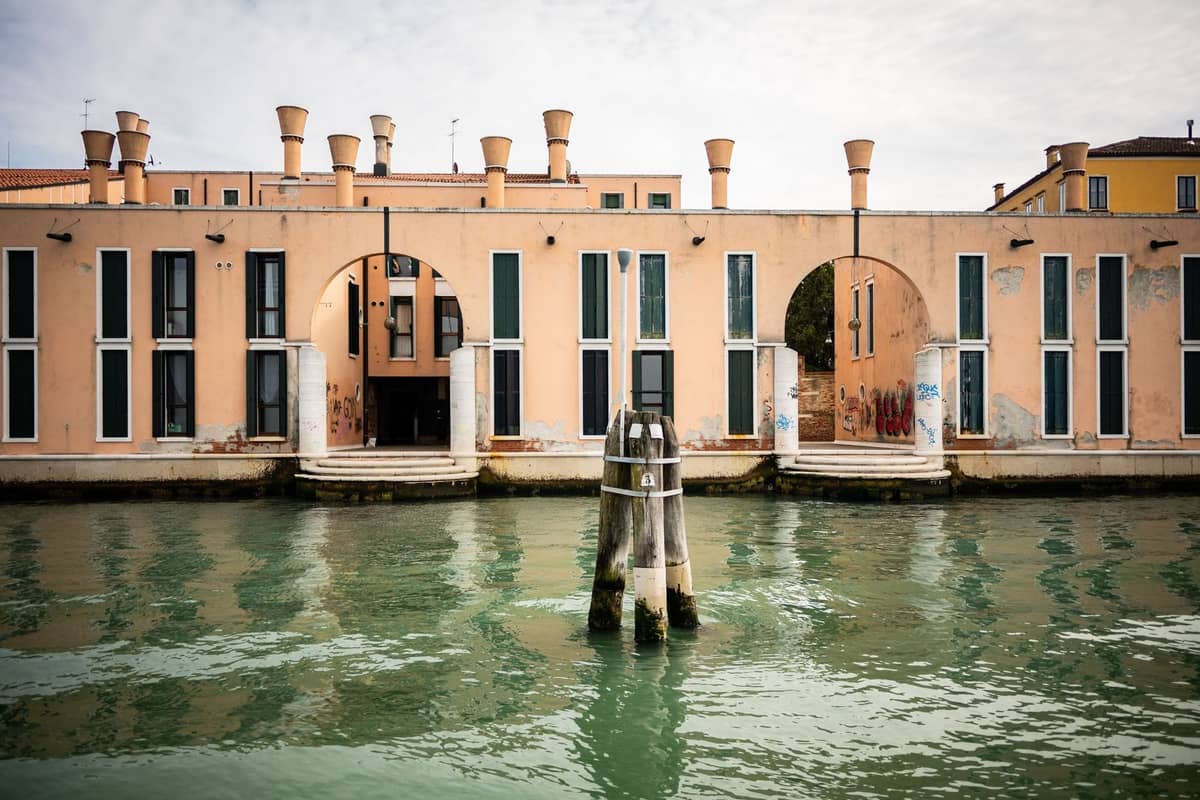
The Arsenale, Venice's former naval shipyard and one of the largest pre-industrial complexes in Europe, hosts the other major portion of the central exhibition. Its vast brick halls, known as the Corderie and Artiglierie, offer an extraordinary industrial backdrop for large-scale installations. If anything, the Arsenale tends to reward patience more than the Giardini: the sheer scale of the spaces allows for immersive works that cannot be accommodated elsewhere. Budget at least two to three hours here, more if you engage closely with each piece.
A common mistake is treating the two venues as interchangeable stops that can be ticked off in a morning. In practice, the Giardini alone can take three to four hours if you visit each national pavilion seriously, and the Arsenale adds another two to three on top. Visitors who arrive late in the afternoon with a single-day ticket often leave feeling rushed. The most effective approach is to dedicate a full day to the Giardini, arrive early at the Arsenale on a second morning, and use any remaining time for collateral events.
✨ Pro tip
The Arsenale stays open an hour later on Fridays and Saturdays during the summer season. If you are visiting the Giardini on a Friday morning, take the vaporetto to the Arsenale in the afternoon and stay until 20:00. You will find the crowds noticeably thinner in the final two hours compared to peak midday.
Collateral Events and Free Exhibitions Across Venice
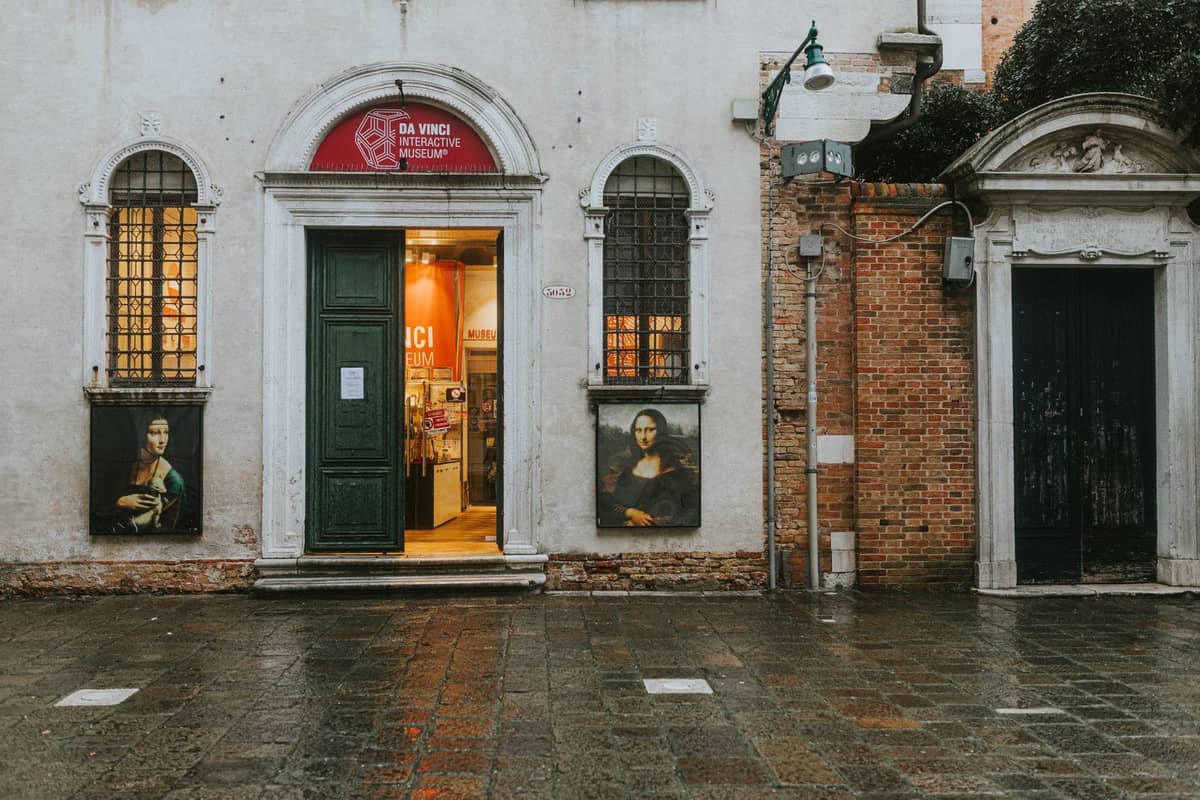
The collateral events programme is the most underused part of the Biennale experience, especially for first-time visitors who focus exclusively on the ticketed venues. Officially sanctioned collateral events are exhibitions organized by institutions, foundations, and national bodies that run concurrently with the main show but are staged in locations across Venice, from converted palaces on the Grand Canal to courtyards in Cannaregio. Many are free to enter.
The full list of collateral events is published on the La Biennale website and updated as the event approaches. Past editions have included major presentations at Palazzo Grassi and the Punta della Dogana, both operated by the François Pinault Foundation, which run their own ticketed exhibitions during Biennale years. These are independent of the main Biennale ticket and require separate entry. Factor them into your itinerary and budget separately.
- Download the official La Biennale app or map to identify collateral events near your accommodation or walking route.
- Many collateral events open later than the main venues and stay open on Mondays, giving you something to do on closure days.
- Institutions in Dorsoduro, San Polo, and Cannaregio regularly host major satellite exhibitions. Covering them requires understanding Venice's geography — the vaporetto network connects most areas in under 20 minutes.
- Some of the most memorable Biennale works in recent editions have appeared not in the Giardini or Arsenale but in unexpected sites: deconsecrated churches, former industrial buildings, and courtyards. Keep the programme handy.
- The national pavilions outside the Giardini, including those staged in palaces around the city by countries without permanent structures at the Giardini, are also part of the ticketed experience in a broader sense — but many require you to find them independently.
Practical Planning: When to Go, How Long to Stay, and What to Wear
The Biennale runs from May through November, spanning three very different seasons in Venice. The opening weeks in May coincide with the city's spring shoulder season: temperatures are moderate, typically in the mid-teens to low twenties Celsius, and the city is busy but not overwhelmed. June through August is peak summer, with temperatures often exceeding 30°C and humidity that makes the Arsenale's brick interiors feel oppressive by early afternoon. September and October offer some of the most comfortable visiting conditions, though autumn also brings the risk of acqua alta flooding, particularly from late October onward. Rubber boots are available for hire near Piazza San Marco during high water events, but this is not a reason to avoid the season.
For most visitors, two full days is the minimum to see the Giardini and Arsenale properly and catch a few collateral events. Three days allows genuine engagement. If you are combining the Biennale with the rest of Venice, a three-day Venice itinerary can accommodate both, but it requires discipline: the city's other major draws, from St Mark's Basilica to the Gallerie dell'Accademia, compete for the same hours.
Wear comfortable shoes with non-slip soles. The Giardini and Arsenale involve extensive walking on uneven surfaces, brick paving, and occasional outdoor-to-indoor transitions. The Arsenale in particular requires significant walking distance along its elongated halls. Dressing in layers is advisable: the Corderie can be cool even on warm days due to thick brick walls, while the Giardini gardens are fully exposed to sun.
💡 Local tip
Venice introduced a day-visitor access fee on specific high-attendance dates between 8:30 and 16:00. If you are visiting the Biennale on one of these designated days and are staying in a hotel outside Venice, you may need to register and pay the fee before entering the historic centre. Overnight guests in Venice are exempt. Check the official cda.ve.it portal for current dates, amounts, and exemptions before your trip.
FAQ
How long does it take to visit the Venice Biennale?
Allow a full day for the Giardini alone if you want to visit the national pavilions properly — that means at least four to five hours. The Arsenale requires another two to three hours minimum. Most dedicated visitors spend two full days across the two main venues, plus additional time for collateral events and satellite exhibitions around the city. Half-day visits are possible but leave most of the programme unseen.
Do I need to book Venice Biennale tickets in advance?
Booking in advance is strongly recommended, especially for the opening weeks in May and around public holidays. Tickets are available online through the official La Biennale website and at ticket offices and Infopoints at the Giardini and Arsenale. On-site queues during peak periods can be substantial. Booking online also lets you choose your entry date and avoid sold-out days.
Is the Venice Biennale only about art?
Art and Architecture alternate on the Biennale calendar (check dates for your year). For 2026 the Art Biennale runs roughly May–November and focuses on contemporary visual art; in other years the Architecture Biennale takes over the same venues with a programme focused on architecture and urbanism. Other Biennale events cover cinema (the Venice Film Festival), dance, music, and theatre, though these are separate programmes with their own dates and venues.
What is the difference between the Giardini and the Arsenale?
The Giardini della Biennale, in the Castello sestiere, is the historic core of the event and hosts most of the permanent national pavilions as well as part of the central curated exhibition. The Arsenale, Venice's vast former shipyard, hosts the other major portion of the central exhibition in its dramatic industrial halls. Both are included in the standard Biennale ticket. They are about 15 minutes apart on foot, or a short ride on vaporetto line 1 or 5.2.
Are there free things to see at the Venice Biennale?
Yes. Many collateral events, officially affiliated with the Biennale but organized independently, are staged in venues around Venice and are free to enter. Some national pavilions housed outside the Giardini also have their own entry policies. The public spaces of the Giardini are accessible without a ticket even when the exhibition is closed, though you cannot enter the pavilion buildings. For a broader view of free cultural activities in Venice during the Biennale period, see our guide to free things to do in Venice.