Luxury Venice: The Ultimate Splurge Guide
Venice rewards those who spend well. This guide covers where to stay, how to move, what to eat, and which experiences justify the premium price tag — along with honest warnings about where the luxury label is oversold.
Plan and book this trip
Tools from our partner Travelpayouts help you compare flights and hotels. If you book through them, we may earn a commission at no extra cost to you.
Flights
Hotels map
TL;DR
- Top-tier hotels in Venice often start around $800–$1,200 per night in peak season; book at least three to six months ahead for the best availability.
- The best windows for a luxury visit are April to June and September to October — milder weather, thinner crowds, and better restaurant availability. See our best time to visit Venice breakdown for full seasonal detail.
- Private water taxis are the backbone of a luxury Venice itinerary — skip the vaporetto queues entirely.
- Gondola rides are regulated at around €90 for 30 minutes (verify before booking, as rates are updated periodically); they are scenic but not the most efficient use of splurge budget.
- Four-person-or-larger rooms are rare in even the best Venetian hotels — plan group bookings carefully.
Why Luxury Venice Is Different From Any Other City
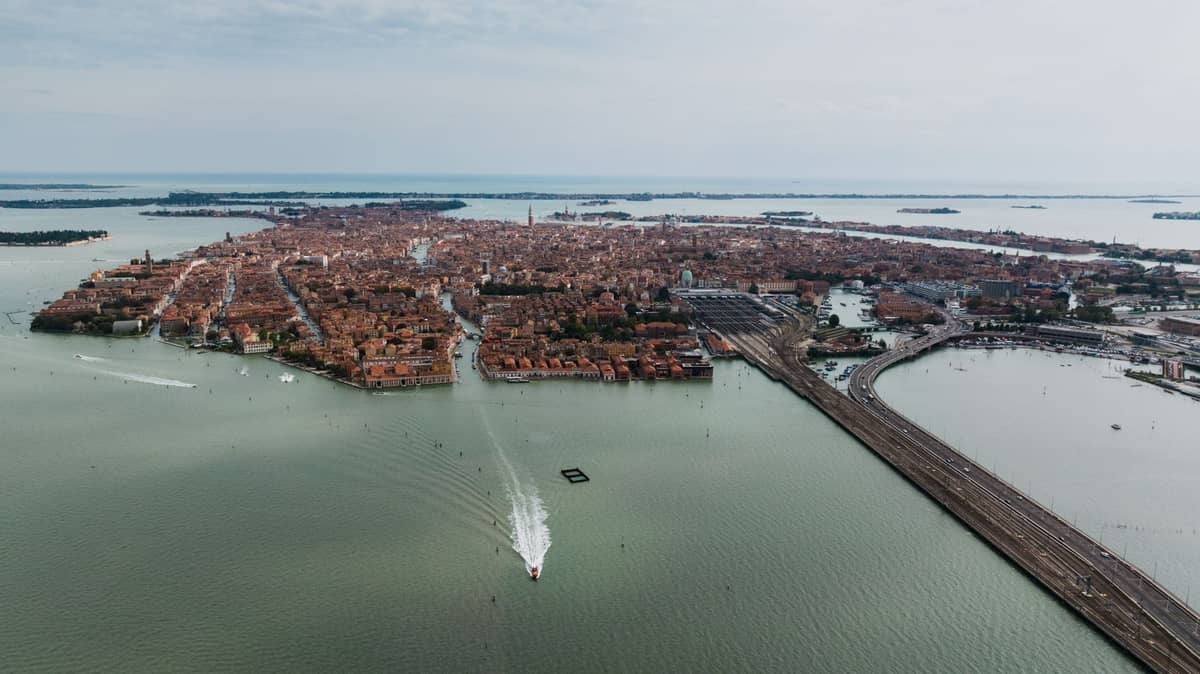
Venice is built on roughly 118 small islands connected by over 400 bridges, with no cars anywhere in the historic centre. That physical reality changes what luxury means here. There are no chauffeured cars, no airport limousines pulling up to your hotel door, no helicopter pads in Piazza San Marco. Instead, luxury logistics run entirely on water: private motor launches, reserved hotel docks, and the spatial drama of arriving by boat at a palazzo that has faced the Grand Canal for five centuries.
That same geography creates genuine scarcity. The finest hotels occupy historic buildings with fixed footprints. Suites are few. Restaurants with serious kitchens operate in cramped medieval spaces. Supply does not expand to meet demand the way it does in a typical city, which keeps both quality and prices high — and makes advance planning non-negotiable.
ℹ️ Good to know
Venice follows Italy's national entry rules and the Schengen Area framework. Many nationalities (US, Canada, UK, Japan) can visit visa-free for short stays, but regulations change. Always verify current requirements via the Italian Ministry of Foreign Affairs before booking.
When to Visit: Timing Your Splurge Right
April through June and September through October represent the practical sweet spot for a luxury trip. Temperatures are comfortable — generally 15-25°C depending on the month — natural light is excellent for photography, and restaurant tables at the serious establishments are somewhat easier to secure than in July or August. Spring can overlap with the Venice Biennale — Art and Architecture alternate on the Biennale calendar (check dates for your year); for 2026 the Art Biennale runs roughly May–November, which adds cultural depth and fills hotels faster, so book early if that overlaps with your dates.
July and August are the hottest and most crowded months. The heat in Venice is intensified by humidity from the lagoon, and the narrow calle (streets) trap warm air. If summer is your only option, book a hotel with air conditioning confirmed in writing and keep outdoor sightseeing to mornings before 11:00. From late October through January, acqua alta (high water flooding) becomes a real logistical factor. It is manageable with waterproof boots and the MOSE barrier system — which is activated during sustained high tides — but it adds unpredictability to itineraries.
February brings the Venice Carnival, historically one of the most spectacular events on the European calendar. Prices spike sharply and rooms at the best addresses sell out months in advance. If Carnival is the goal, treat it as its own category of planning. For a full picture of what each season actually delivers, the Venice Carnival guide covers the event's logistics in depth.
⚠️ What to skip
Starting 3 April 2026, Venice applies a day-visitor Access Fee on selected high-attendance dates (hours 8:30–16:00). Overnight guests staying in accommodation within the Municipality of Venice are exempt but must register. Verify current dates, amounts, and exemptions at the official portal (cda.ve.it) before finalising your plans, as these details are updated by the municipality.
Where to Stay: Hotels That Justify the Price
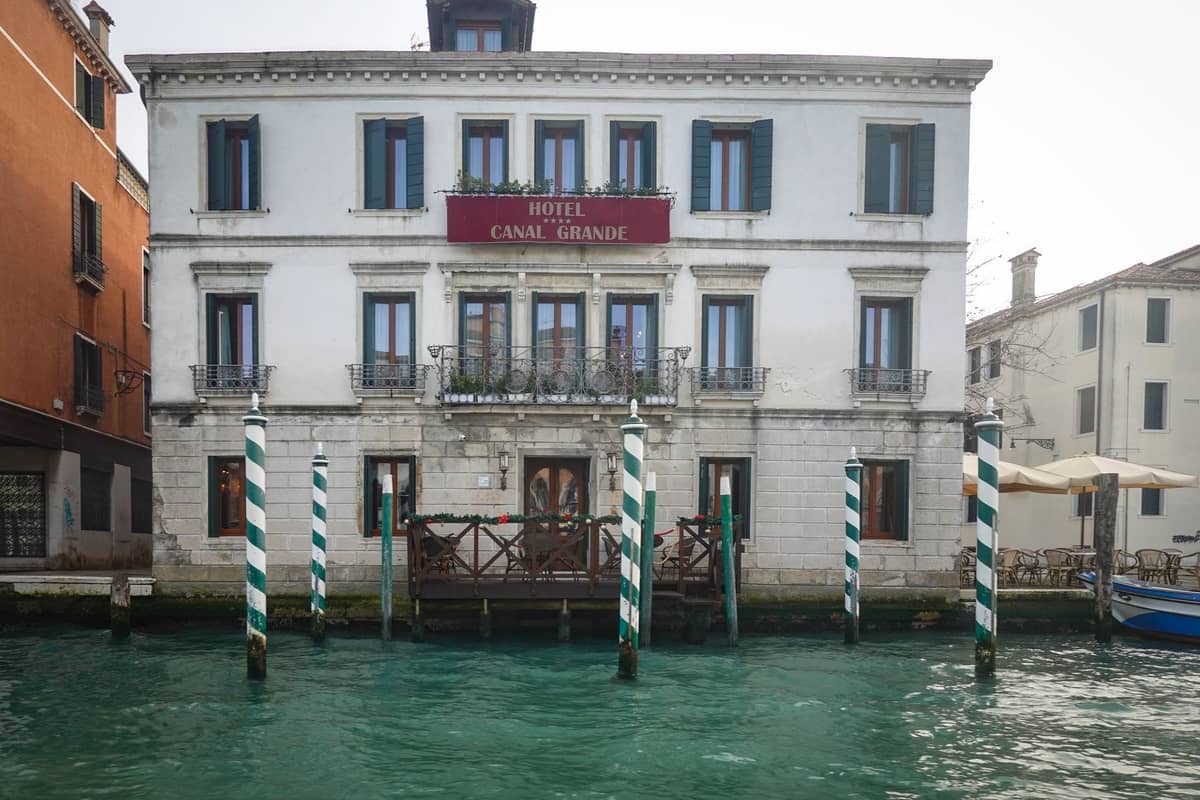
Venice's luxury hotel landscape breaks into three broad tiers: the grand canal-front palazzo hotels that trade primarily on location and heritage; the boutique five-star properties scattered across the sestieri that offer more intimate service in restored historic buildings; and the Lido di Venezia options, which provide a different pace — quieter, with access to the Adriatic beach strip and the Art Deco architecture associated with the Venice Film Festival.
The canal-front properties in San Marco and Dorsoduro give you the quintessential Venice arrival experience: a private dock, a boat transfer from the airport, and a room that looks directly onto the Grand Canal. Rates at this level start at roughly $1,500 per night for a standard room and climb steeply for canal-view suites. These figures are benchmarks, not guarantees — rates shift by season and availability, so treat any number as a planning baseline and verify current pricing directly with the hotel.
- Canal-front palazzo hotels Maximum drama, private dock arrivals, iconic Grand Canal views. Best for first-time luxury visitors who want the full visual impact. Book six months or more ahead for peak dates.
- Boutique five-star in quieter sestieri Often converted merchant houses or convents. Smaller room counts mean genuinely personalised service. Cannaregio and Castello have options with more residential character and slightly less tourist foot traffic outside the door.
- Lido di Venezia properties Historic beach hotels with Art Deco interiors, sea-facing rooms, and a 10-15 minute vaporetto ride to the historic centre. Better suited to longer stays or those who want beach access alongside city time.
✨ Pro tip
Families or groups of four or more should flag this early: large rooms and suites that comfortably accommodate four people are genuinely rare in Venice's historic hotels, even at the top end. Budget for connecting rooms or two separate rooms rather than assuming a single large suite will be available.
Getting Around: Private Water Transport and Smart Logistics
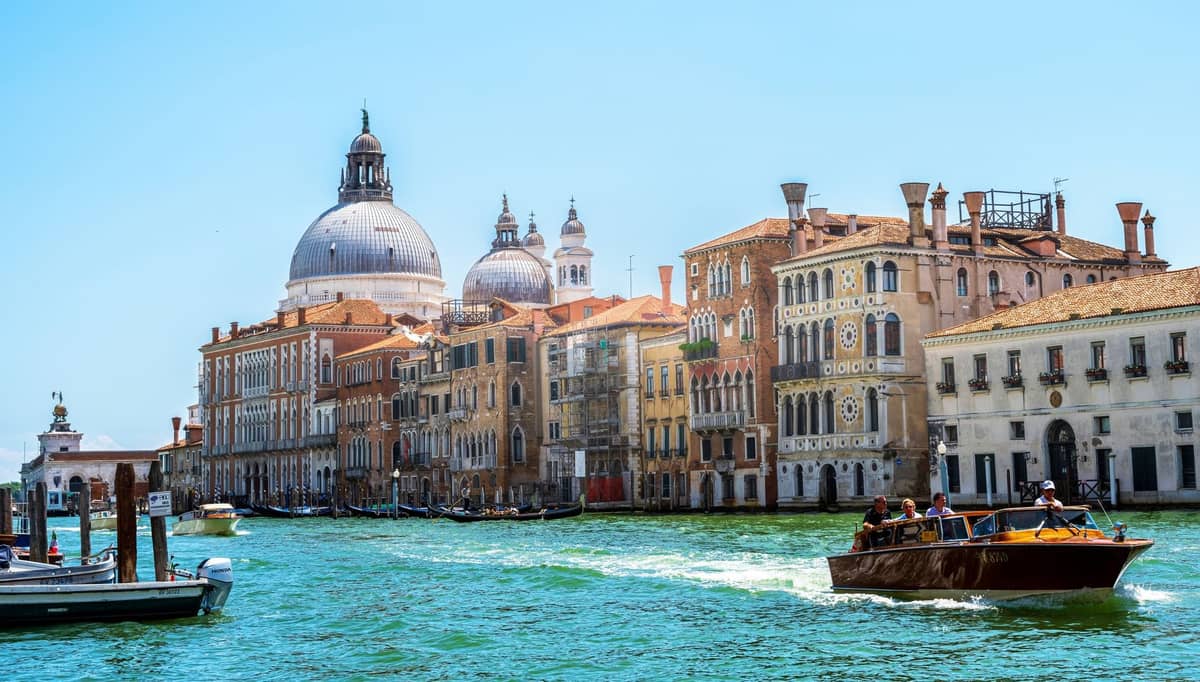
The defining luxury transport decision in Venice is simple: use private water taxis for airport transfers and key point-to-point moves, and walk for everything else. The public vaporetto network operated by ACTV is efficient and covers the major waterways, but queues at San Marco and Rialto stops during peak hours are long and the boats are crowded. A private motor launch from Marco Polo Airport (IATA: VCE, located in Tessera about 8-10 km from the historic centre) brings you directly to your hotel dock without shared transit.
Water taxi fares are regulated but not cheap — airport transfers to the historic centre typically run well above €100 depending on the operator, luggage, and time of day. Verify current rates with licensed operators (look for the official Venezia taxi water sign) before agreeing to a price. Unlicensed touts operate around the airport arrivals area; use only officially licensed water taxis. Alilaguna airport water buses are a middle-ground option: shared, slower, but far cheaper and they dock at multiple points including San Marco and the Rialto area.
On gondolas: the official regulated rate is around €90 for 30 minutes daytime (up to 5 passengers), rising to approximately €110 for about 35 minutes after 19:00. These fares are set by the city but are subject to periodic revision — verify current rates before booking. A gondola is a scenic experience, not an efficient way to get anywhere. For a practical guide to what the ride actually involves, the gondola ride Venice guide breaks down what to expect, where to board, and how to avoid being overcharged.
Dining at the Top: Where to Spend Your Food Budget
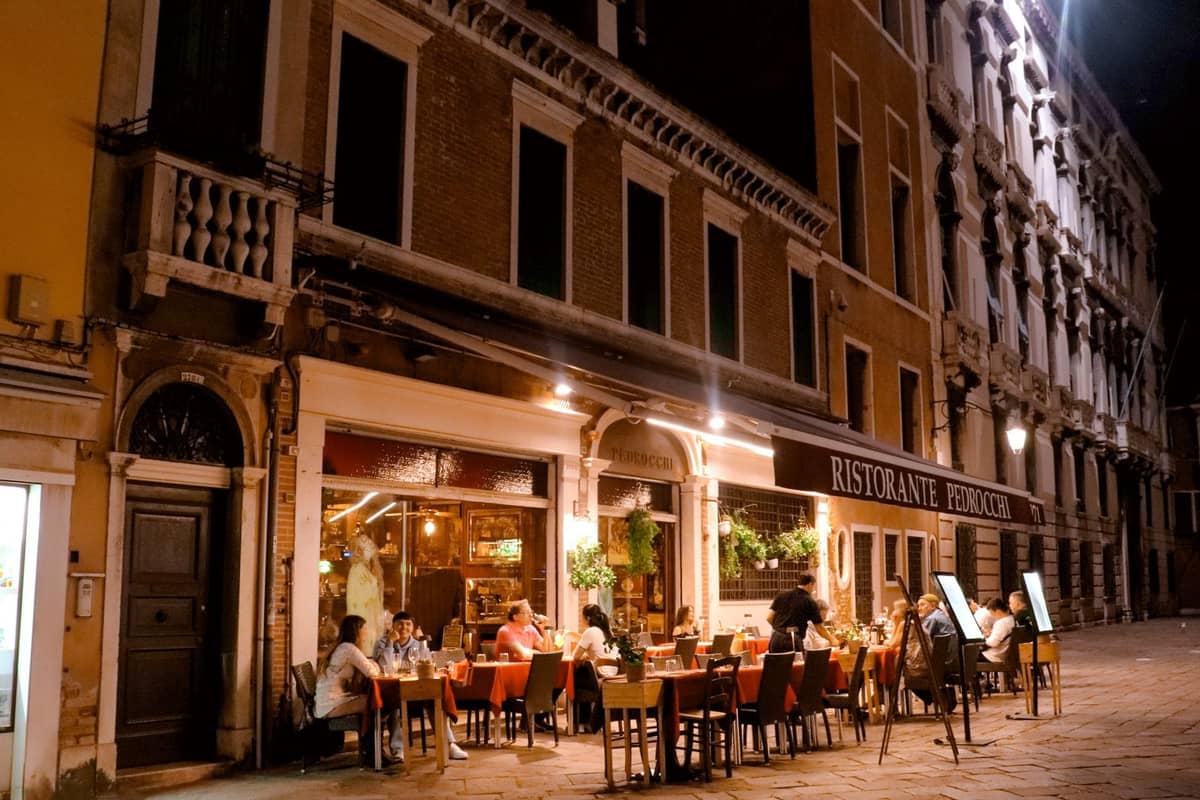
Venice has a Michelin-starred dining scene that is smaller than Milan or Rome but more coherent in its identity — rooted in lagoon seafood, Veneto wines, and a culinary tradition that predates modern Italian gastronomy by several centuries. Serious restaurant reservations during spring and autumn require booking weeks in advance, not days. Walk-in tables at the top addresses essentially do not exist in season.
The pre-dinner aperitivo ritual is genuinely worth engaging with at a good bar rather than a tourist-facing café on Piazza San Marco. The Bellini (Prosecco and white peach puree) was invented at Harry's Bar in Venice in the 1940s and remains the defining local aperitivo. Cicchetti — small bar snacks served at bacari (traditional Venetian wine bars) — represent one of the best-value luxury-adjacent experiences in the city: high-quality ingredients, standing or perching at the bar, cold glass of local white wine, total spend under €20. It is the Venetian equivalent of a tapas crawl and far more authentic than a €25 tourist pasta.
For a full breakdown of what and where to eat across all price points — including which dishes are distinctively Venetian versus generic Italian tourist food — the what to eat in Venice guide covers the essential vocabulary. And for the cicchetti bar crawl specifically, see the dedicated cicchetti guide for Venice.
- Book Michelin-level restaurants 4-6 weeks ahead in April-June and September-October; 2-3 months ahead for Carnival and peak summer.
- Lunch at top restaurants often offers the same kitchen at a lower price point than dinner — a genuine way to access quality without the full evening spend.
- Avoid restaurants directly on Piazza San Marco for anything beyond a coffee — the markup is extreme and quality is not proportional to price.
- Tipping: Italian restaurant bills often include a coperto (cover charge) and sometimes a servizio (service charge). Additional tipping is not mandatory but is appreciated for genuinely good service. Check your bill before adding anything.
- Venetian wines to know: Soave, Prosecco (DOC and DOCG), Valpolicella, and Amarone are all Veneto wines that pair naturally with lagoon seafood and cicchetti.
Premium Experiences and What They Actually Cost
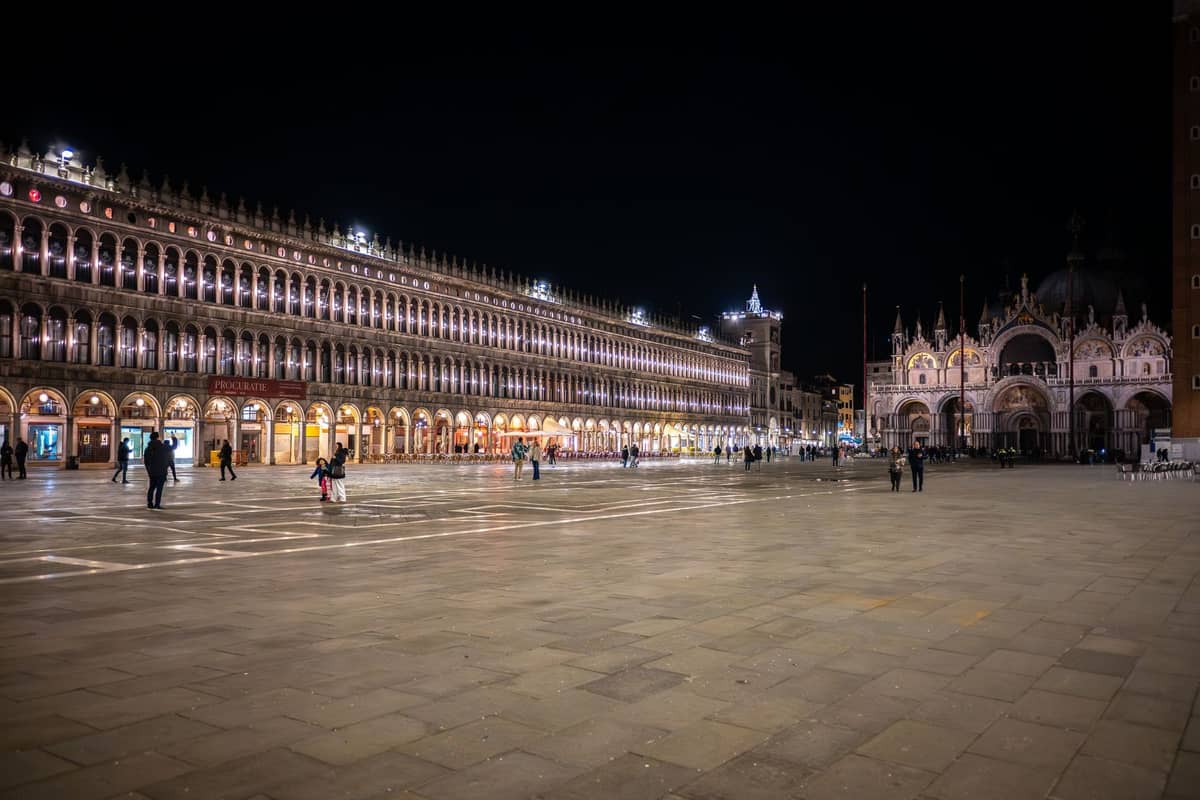
The experiences that separate a luxury Venice trip from a standard visit are mostly about access and timing rather than things money cannot buy anywhere. Private after-hours tours of the Doge's Palace and St Mark's Basilica are available through specialist operators and remove the main friction point of peak-hour crowds. The Basilica requires timed paid admission (about €10 for standard online tickets; check basilicasanmarco.it), with the museum and Pala d’Oro as extras; queues in summer can run 60-90 minutes, so a reserved time slot or private access arrangement eliminates that entirely.
The Peggy Guggenheim Collection and the Gallerie dell'Accademia both benefit from pre-booked timed entry. Neither is dramatically expensive — the premium is your time saved and the quality of the experience without crowds pressing from behind. Private guided visits to either institution, available through licensed guides, add genuine depth for those with serious interest in art history.
A day trip to Murano's glass workshops feels very different when arranged privately versus joining a group tour. Direct contact with a master glassblower's studio — where you can commission a piece rather than buy off a shelf — is the version worth paying for. Similarly, a private boat to Torcello Island at dawn, before the day-tripper vaporettos arrive, gives you the Byzantine mosaics of the cathedral in near-total silence.
💡 Local tip
Venice's dress code for churches is strictly enforced — covered shoulders and knees are required at St Mark's Basilica and most other churches. No exceptions regardless of how much you've paid for your outfit. Carry a light scarf or layer specifically for church visits.
- Private airport water taxi Direct Marco Polo Airport to hotel dock, no shared transit. Rates typically well above €100; verify with licensed operators. Non-negotiable comfort upgrade for a genuine luxury arrival.
- After-hours or private museum access Available through specialist tour operators for Doge's Palace, St Mark's Basilica, and select other venues. Prices vary significantly by operator and group size; enquire directly.
- Commissioned Murano glass Working directly with a master's studio rather than a retail showroom. Pieces take time to produce and require shipping arrangements — plan this well before your visit if it is a priority.
- Private boat day on the lagoon Charter a wooden bragozzo or motor launch for a full day: Murano, Burano, Torcello, and Sant'Erasmo in sequence, timed entirely around you. The logistics of the lagoon become a pleasure rather than a schedule.
Honest Drawbacks: Where Luxury Venice Underdelivers
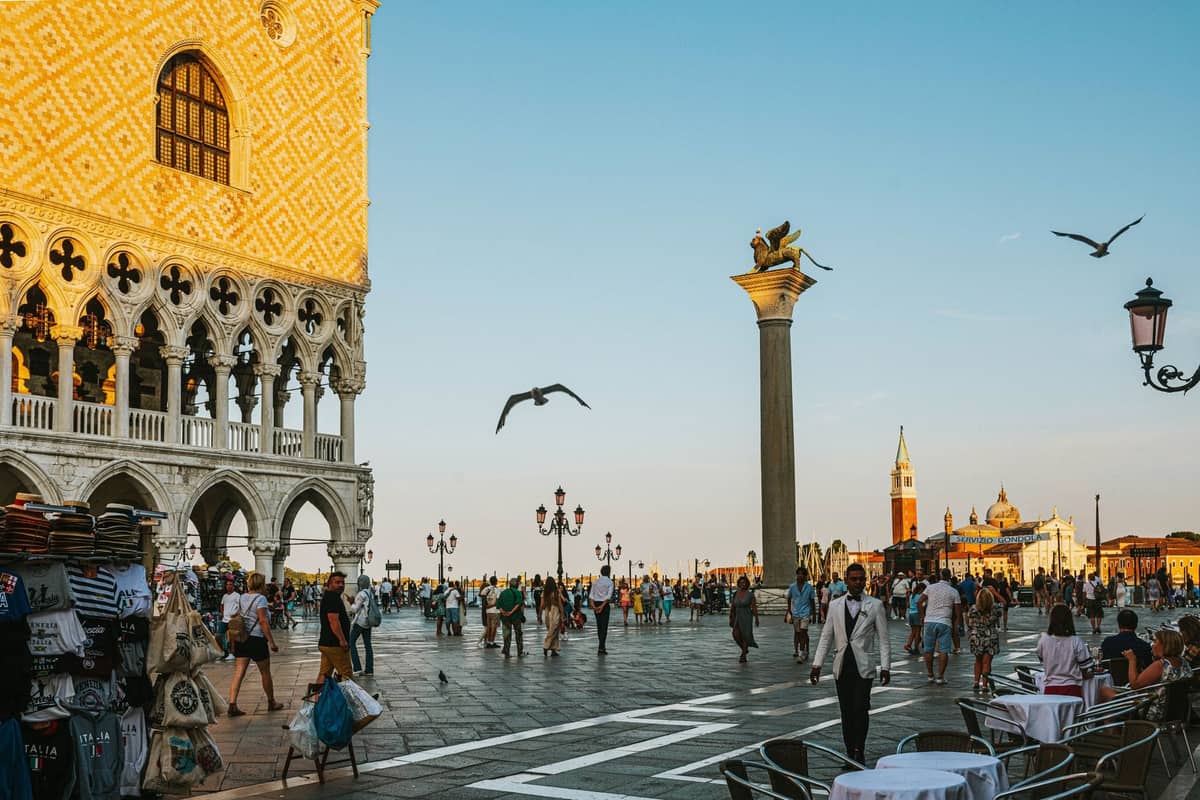
Venice is genuinely expensive and some of that cost does not translate into quality. The tourist infrastructure around Piazza San Marco is thoroughly oriented toward extracting money from people who will never return: mediocre food at absurd prices, souvenir shops selling mass-produced Murano-style glass made elsewhere in Europe, gondoliers who skip the agreed route if you do not know the waterways. None of this affects a well-planned luxury trip much, but it is the ambient texture of the city in peak season and it is worth knowing.
The city is also not a good fit for anyone who finds walking on uneven stone, crossing stepped bridges, or navigating tight alleyways with luggage physically difficult. Wheelchair and mobility-impaired access is improving but remains genuinely limited across much of the historic centre. No amount of budget resolves the physical structure of a medieval island city. Plan accordingly and speak to your hotel directly about accessible routes before arrival.
Finally: two days is not enough for a luxury pace. One day is barely an orientation. The three days in Venice itinerary gives a workable minimum for covering the main sights without feeling rushed, but four to five days allows the slower rhythm that actually justifies the hotel spend. Venice at a luxury pace means morning light on quiet canals before crowds arrive, long lunches, afternoon gallery visits, and unhurried evenings — none of which is possible if you are cramming everything into 48 hours.
FAQ
What is the best area to stay in Venice for a luxury trip?
The Grand Canal waterfront in San Marco and Dorsoduro offers the most iconic hotel addresses with private docks and direct water views. Cannaregio and Castello have boutique five-star options with a quieter, more residential feel. The Lido is a distinct experience — beachfront, Art Deco architecture, slightly removed from the historic centre — and suits longer stays more than a short city break.
How far in advance should I book a luxury Venice hotel?
For April-June and September-October, book three to six months ahead for the best rooms at the top properties. For Venice Carnival (February) and the Venice Film Festival period (late August to early September), six months or more is realistic. The finest canal-view suites at the most sought-after hotels can sell out even earlier than that for peak dates.
Is a private water taxi from Marco Polo Airport worth it?
Yes, for a luxury trip it is the correct choice. The Alilaguna airport water bus is reliable and covers the main stops, but it is shared, slower, and involves waiting. A private licensed water taxi brings you directly to your hotel dock with your luggage. Verify current rates with the operator before departing the airport — licensed taxis display official signage. Avoid unlicensed touts in the arrivals area.
Are gondola rides worth the money on a luxury Venice trip?
They are worth doing once for the experience, particularly in the quieter back canals rather than the Grand Canal. The official regulated rate is approximately €90 for 30 minutes daytime for up to five passengers, or about €110 after 19:00 (verify current rates, as these are periodically updated). A private evening gondola with advance arrangement is the most atmospheric version. Do not expect a gondola to be efficient transport — it is a scenic ritual, not a transfer.
What is the Venice Access Fee and does it affect hotel guests?
From 3 April 2026, Venice applies a day-visitor Access Fee on selected high-attendance dates, covering daytime hours (8:30–16:00). Overnight guests staying in accommodation within the Municipality of Venice with a valid booking are exempt but must register. Dates, prices, and exemption categories are managed by the municipality and are subject to change — check the official portal (cda.ve.it) before your trip for the current list of affected dates and the exact fee amount.