What to Eat in Venice: The Complete Venetian Food Guide
Venetian cuisine is one of Italy's most distinctive regional traditions, built on lagoon seafood, rice, polenta, and centuries of spice trade. This guide covers the essential dishes, where to find them, what to pay, and how to eat like a local rather than a tourist.
Plan and book this trip
Tools from our partner Travelpayouts help you compare flights and hotels. If you book through them, we may earn a commission at no extra cost to you.
Flights
Hotels map
TL;DR
- Venetian food centers on seafood, risotto, and polenta — not pasta and pizza. Order accordingly.
- Cicchetti (bar snacks, €1.50–4.00 each) at a bacaro are the most authentic and affordable way to eat in Venice. See our cicchetti guide for the best spots.
- The standout dishes are baccalà mantecato, sarde in saor, bigoli in salsa, and risotto al nero di seppia.
- Most sit-down restaurants add a coperto cover charge of €2–4 per person. It is not a tip and is not optional.
- Spring and autumn are the best seasons for fresh seafood and produce, with fewer crowds than summer.
Why Venetian Food Is Different From the Rest of Italy
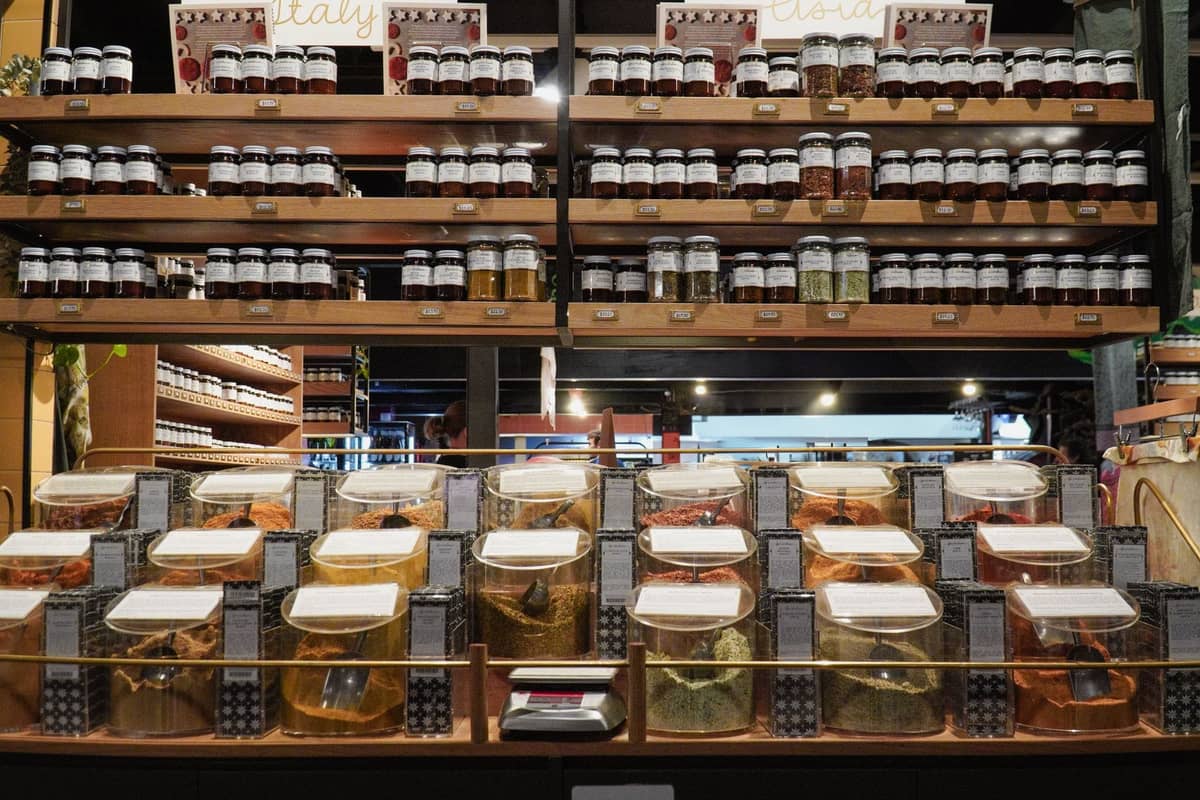
Venice spent centuries as the dominant trading power between Europe and the East, and that history is still visible on the plate. Spices like cinnamon, raisins, and pine nuts appear in savory dishes. Sweet-and-sour preparations, known as agrodolce, show up across the menu. Dried and preserved fish were staples long before refrigeration, and they remain central today.
The Veneto is Italy's leading rice-growing region, which is why risotto occupies the first-course slot that pasta holds almost everywhere else in the country. Polenta, either soft or grilled, replaces bread as the default accompaniment to seafood and braised meats. If you arrive expecting a carbonara or a Neapolitan pizza, you are looking at the wrong menu.
The lagoon itself defines what ends up in the kitchen. Cuttlefish, clams, spider crab, razor clams, and small lagoon shrimp are all local. The Rialto Market has operated as Venice's main fish and produce market for over a thousand years. Visiting it in the morning, ideally before 11:00, gives a clear picture of what is actually in season.
ℹ️ Good to know
Venice's culinary identity has no single signature dish the way Rome has carbonara or Naples has pizza. Instead, it is defined by a cluster of preparations — baccalà mantecato, sarde in saor, risotto al nero di seppia — and by the cicchetti culture itself. Expect variety, not one dish to rule them all.
The Essential Venetian Dishes You Should Order
These are the dishes that define Venetian cooking. Some appear on restaurant menus, others are best found at a bacaro bar. A few require specific timing or seasons to find at their best.
- Baccalà mantecato Salt cod whipped with olive oil into a smooth, creamy spread served on grilled polenta or bread. This is the definitive cicchetto and the dish most visitors remember longest. It should be rich but not heavy, with a clean cod flavor.
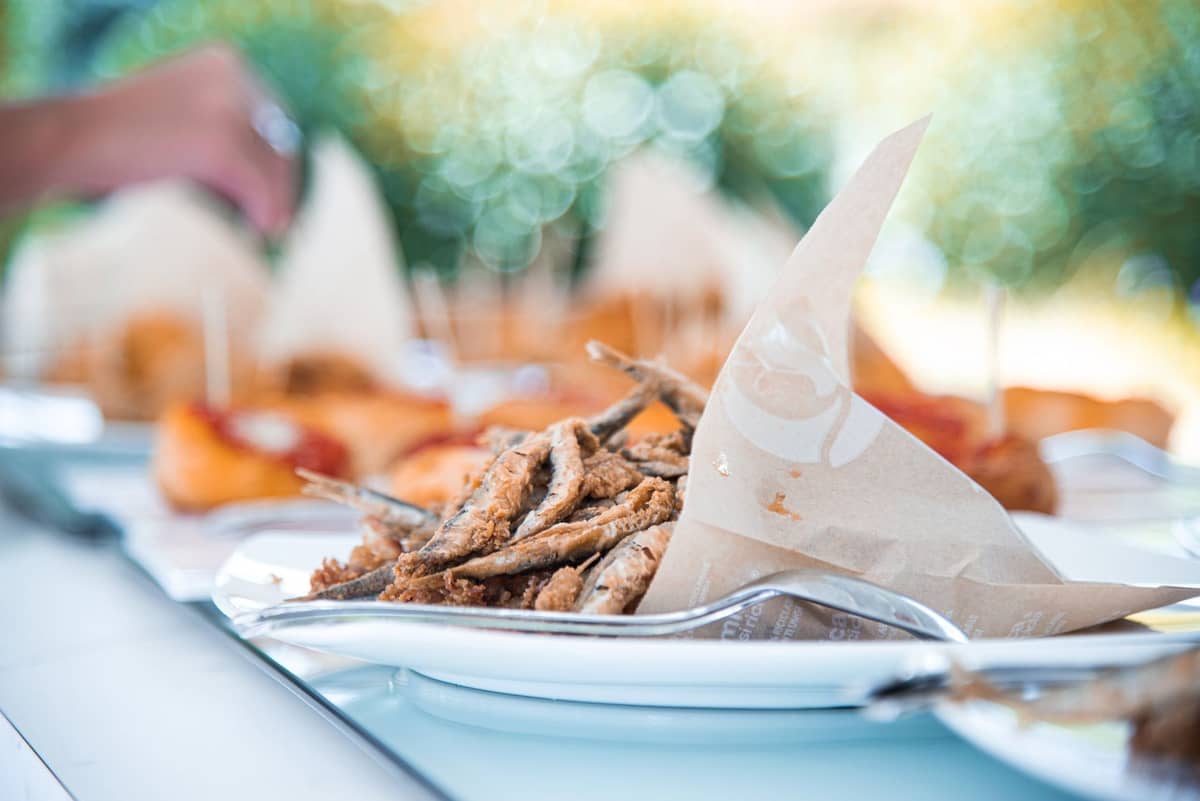
- Sarde in saor Fried sardines marinated in a sweet-sour mix of vinegar-cooked onions, raisins, and pine nuts. The agrodolce profile is unmistakably Venetian and traces directly back to the spice trade. Best after marinating for at least 24 hours.
- Bigoli in salsa Thick whole-wheat pasta (bigoli) tossed with a slow-cooked sauce of anchovies and onions. One of the few pasta dishes genuinely native to Venice and the Veneto. Simple, intensely savory, and deeply satisfying.
- Risotto al nero di seppia Cuttlefish risotto made black by its own ink. The flavor is briny and oceanic, the texture properly loose (all'onda, meaning wave-like). Served as a first course in restaurants; occasionally appears as a cicchetto in smaller portions.
- Fegato alla veneziana Thinly sliced calves liver slow-cooked with sweet onions until both are soft and deeply caramelized. The sweetness of the onions balances the intensity of the liver. Served with grilled polenta.
- Moeche Soft-shell lagoon crabs, briefly available in spring and autumn when the crabs molt. Fried whole and eaten entirely. A true seasonal specialty and not available year-round — if you see them on a menu in July, ask questions.
- Sopa de pesce A robust lagoon fish soup, varying by what is fresh that day. More of a restaurant dish than a cicchetto, and a reliable indicator of whether a kitchen is working with the actual catch.
⚠️ What to skip
Any restaurant near Piazza San Marco offering a 'traditional Venetian seafood platter' at €15–20 per person is almost certainly working with frozen or imported fish. Genuine local seafood costs more than that. The price of authenticity is real — budget accordingly or stick to cicchetti at a bacaro.
Cicchetti Culture: How the Bacaro System Works
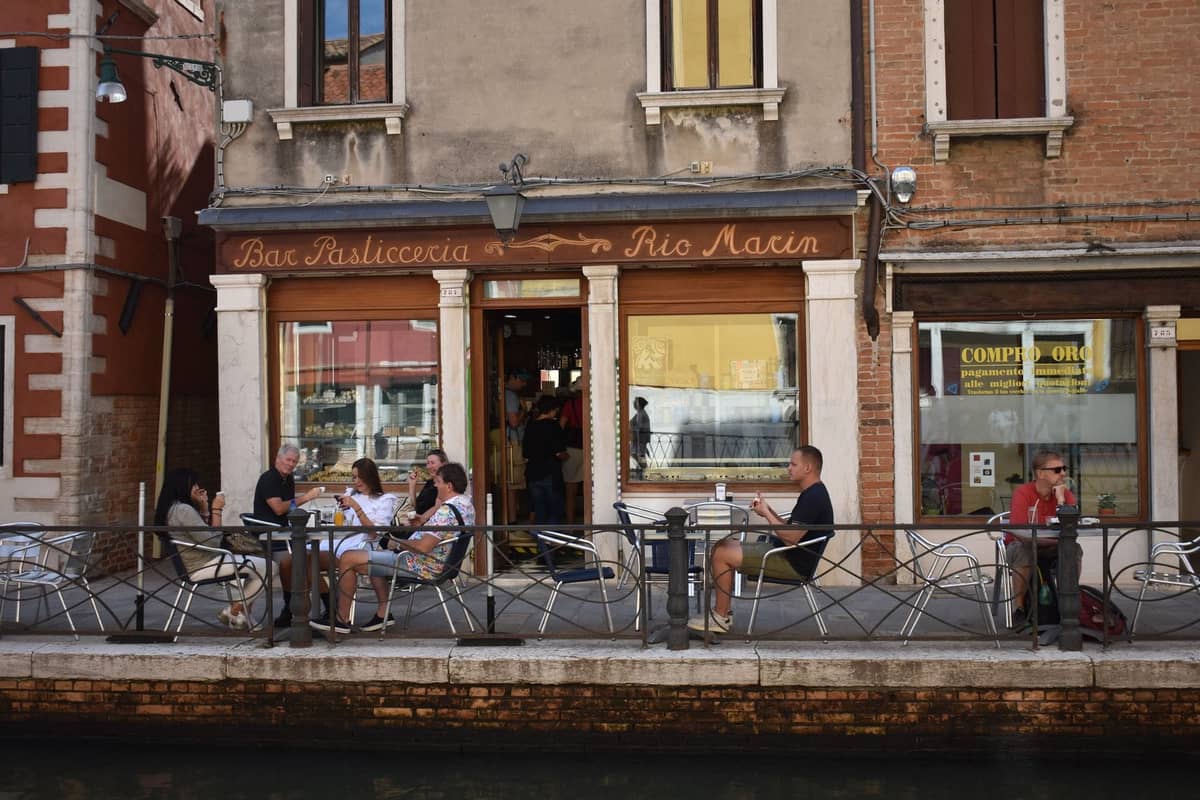
A bacaro is a traditional Venetian wine bar serving cicchetti, small pieces of bread or polenta topped with fish, meat, or cheese. The concept is somewhere between Spanish tapas and a standing lunch. The best concentration of bacari is in San Polo near the Rialto, and in Cannaregio, particularly along the Fondamenta della Misericordia.
The etiquette is straightforward. You stand at the bar, point at what you want, order a small glass of local wine called an ombra, and pay at the end. Cicchetti run €1.50–4.00 each, and an ombra costs €1.00–2.50. A satisfying lunch of five or six cicchetti and two glasses of wine should cost €12–18 per person. Sitting down, when tables are available, usually increases the price.
Peak cicchetti hours are mid-morning from 11:00 to 12:30, late afternoon from 16:00 to 18:00, and aperitivo time from 18:00 to 20:00. The late afternoon slot is particularly lively, as local workers stop in before heading home. If you arrive at 13:30, the best pieces are often already gone. Many bacari close in the afternoon and are not open for dinner.
✨ Pro tip
The Venetian spritz predates the Aperol version. The local choice is Select, a bitter liqueur produced in Venice, mixed with Prosecco and a splash of soda. Ordering a spritz al Select marks you as someone who has done their homework. Prosecco comes from the nearby Veneto hills and is far cheaper and fresher here than almost anywhere else in the world.
Venetian Drinks: Wine, Spritz, and Coffee

The Veneto produces more DOC wine than any other Italian region. On a Venetian table, the local options include Soave (dry white from Verona's hills, ideal with fish), Valpolicella (light red, including the richer Amarone and Ripasso styles), and Prosecco from the Conegliano-Valdobbiadene hills. Pinot Grigio also originates from the northeast of Italy. None of these are novelties in Venice — they are the everyday house wines.
Coffee customs in Venice follow standard Italian rules with one important nuance: cappuccino is a morning drink, consumed before 11:00 and never after a meal. Order an espresso after lunch or dinner. A caffè corretto, espresso with a small measure of grappa or sambuca, is a traditional Venetian morning option, especially in winter. Asking for a large 'latte' will produce a glass of warm milk.
- Prosecco: the default sparkling wine; dry styles (Brut or Extra Brut) are better with food than the sweeter Dry or Extra Dry
- Soave Classico: the benchmark white for seafood; avoid generic Soave and look for Classico on the label
- Valpolicella: a light, cherry-forward red that works with liver dishes and lighter meat preparations
- Spritz al Select: the original Venetian aperitivo, more bitter and complex than the Aperol version
- Ombra: a small glass of local wine, usually under €2, the standard unit of bacaro drinking
Venetian Desserts and Sweet Traditions
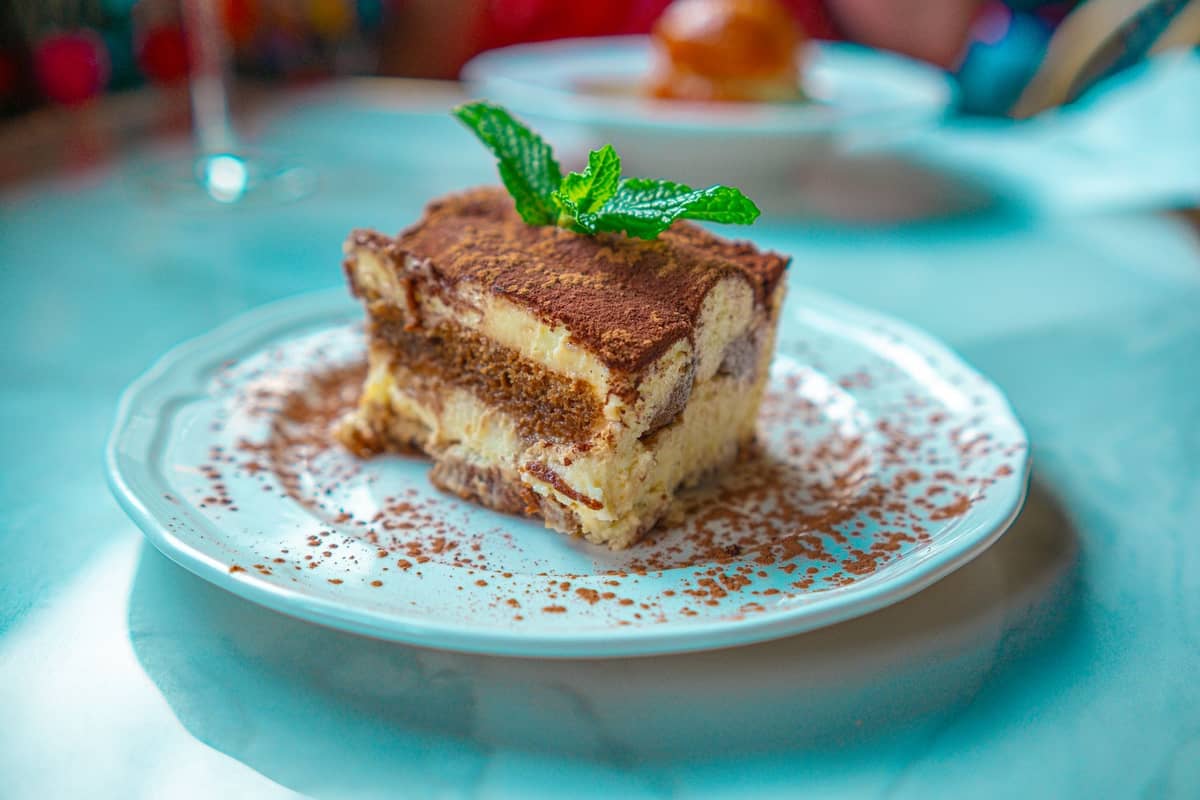
Tiramisù is a Veneto creation, not a Roman or Florentine one. The original version uses savoiardi biscuits soaked in espresso, layered with a mascarpone and egg yolk cream, and dusted with bitter cocoa. It should not be set hard like a cake — a proper tiramisù has a soft, almost loose texture. You will find versions all over Venice, ranging from excellent to deeply mediocre.
Beyond tiramisù, Venetian pastry tradition is specific to the season. During Carnival, which falls in February, bakeries produce fritole (small fried doughnuts filled with raisins, pine nuts, and grappa) and galani or crostoli (thin, fried pastry ribbons dusted with icing sugar). Outside of Carnival season, the standard local biscuits are zaleti, made from cornmeal and raisins, and baicoli, dry, thin biscuits traditionally served with a dessert wine or dipped in zabaione.
Eating Practically: Prices, Timing, and What to Avoid
Venice has a genuine tourist-trap problem in its food scene, concentrated around Piazza San Marco and the most photographed bridges. The rule is consistent: the more visible the restaurant from a major landmark, the lower the quality-to-price ratio. This is not universal, but it is reliable enough to use as a starting filter.
A practical daily food budget for one person: €4–6 for a standing breakfast (espresso and a cornetto at a bar, not the hotel), €12–18 for a cicchetti lunch with two glasses of wine, and €40–70 for a proper sit-down dinner with wine at a reliable trattoria. Budget options exist — see our Venice on a budget guide for specific strategies.
Most sit-down restaurants charge a coperto, a cover charge of €2–4 per person, which covers bread and the table setting. This is standard practice across Italy and is not a service charge or a tip. It appears on the printed menu by law. If you see a menu with no coperto listed, check whether it has been folded into higher dish prices. Tipping is not mandatory in Italy — a small amount for good service is appreciated but not expected.
Seasonal timing matters for specific ingredients. Moeche (soft-shell crabs) appear only in spring and autumn. Branzino and sea bream from the lagoon are best in cooler months. Spring produces the famous Sant'Erasmo artichokes, known locally as castraure, which are smaller and more tender than standard globe artichokes and show up on menus and at the Rialto Market from late April. The island of Sant'Erasmo, Venice's agricultural island, supplies much of the city's fresh produce.
💡 Local tip
For a full sit-down meal in Venice's historic center, book ahead at any restaurant you care about. This applies even on weeknights in low season. Small trattorias and bacari with tables have limited covers, and showing up without a reservation at 20:00 in summer is a reliable way to end up at a tourist-facing restaurant by default.
The sestiere of Dorsoduro is worth noting specifically for food. The area around Campo Santa Margherita has a concentration of student-oriented bars and bacari that are cheaper than the Rialto area without sacrificing quality. The Zattere waterfront also has reliable options with fewer crowds than the Grand Canal side.
FAQ
What is the most traditional thing to eat in Venice?
Baccalà mantecato — whipped salt cod on grilled polenta — is the most consistently cited traditional Venetian dish. Sarde in saor (sweet-sour sardines) and bigoli in salsa (thick pasta with anchovy and onion) are close seconds. All three are best found at a bacaro rather than a formal restaurant.
Is food expensive in Venice?
It depends entirely on where and how you eat. Cicchetti at a bacaro (€1.50–4.00 each) make for an affordable and genuinely authentic meal. Sit-down restaurants in tourist areas near Piazza San Marco or the Rialto can be expensive and mediocre. A realistic daily food budget ranges from around €15–20 if you eat mainly cicchetti, to €60–90 if you include a full dinner with wine.
Where should I eat cicchetti in Venice?
The highest concentration of good bacari is in San Polo near the Rialto Market and along the Erbaria (the produce market side). Cannaregio along the Fondamenta della Misericordia has a second cluster popular with locals. Avoid bacari immediately adjacent to the Rialto Bridge itself — foot traffic inflates prices without improving quality.
Is pasta common in Venice?
Pasta exists in Venice but it is not the default first course the way it is in central and southern Italy. Risotto and bigoli (a local thick pasta) are the native traditions. If a restaurant leads with a long pasta menu of spaghetti, penne, and gnocchi, it is likely catering to tourist expectations rather than local cooking.
When is the best time of year to eat well in Venice?
Spring (April to May) and early autumn (September to October) offer the best combination of seasonal ingredients and manageable crowds. Spring brings fresh artichokes from Sant'Erasmo and the first moeche soft-shell crabs. Autumn brings the second moeche season, fresh lagoon fish, and game on some menus. February Carnival is the season for traditional sweet fried pastries.