Rialto Market (Mercato di Rialto): Venice's Living Food Market
The Mercato di Rialto has supplied Venice with fish, vegetables, and the rhythms of daily life for nearly a thousand years. Spread along the Grand Canal in the San Polo sestiere, it opens early, closes by midday, and rewards visitors who show up before the tour groups arrive.
Quick Facts
- Location
- Campo della Pescaria, San Polo, Venice — just northwest of the Rialto Bridge on the Grand Canal
- Getting There
- Vaporetto stop: Rialto Mercato (Lines 1 and 2) — steps from the market. Also ~10 min walk from Piazza San Marco via the Rialto Bridge
- Time Needed
- 30–60 minutes to browse; longer if you stop at a nearby bacaro for cicchetti
- Cost
- Free to enter. Pay only for what you buy
- Best for
- Food lovers, early risers, photographers, locals-watching, and anyone curious about how Venice actually eats
- Official website
- www.visit.venice.it/food-and-drink/rialto-market-venice
What the Rialto Market Is — and Why It Still Matters
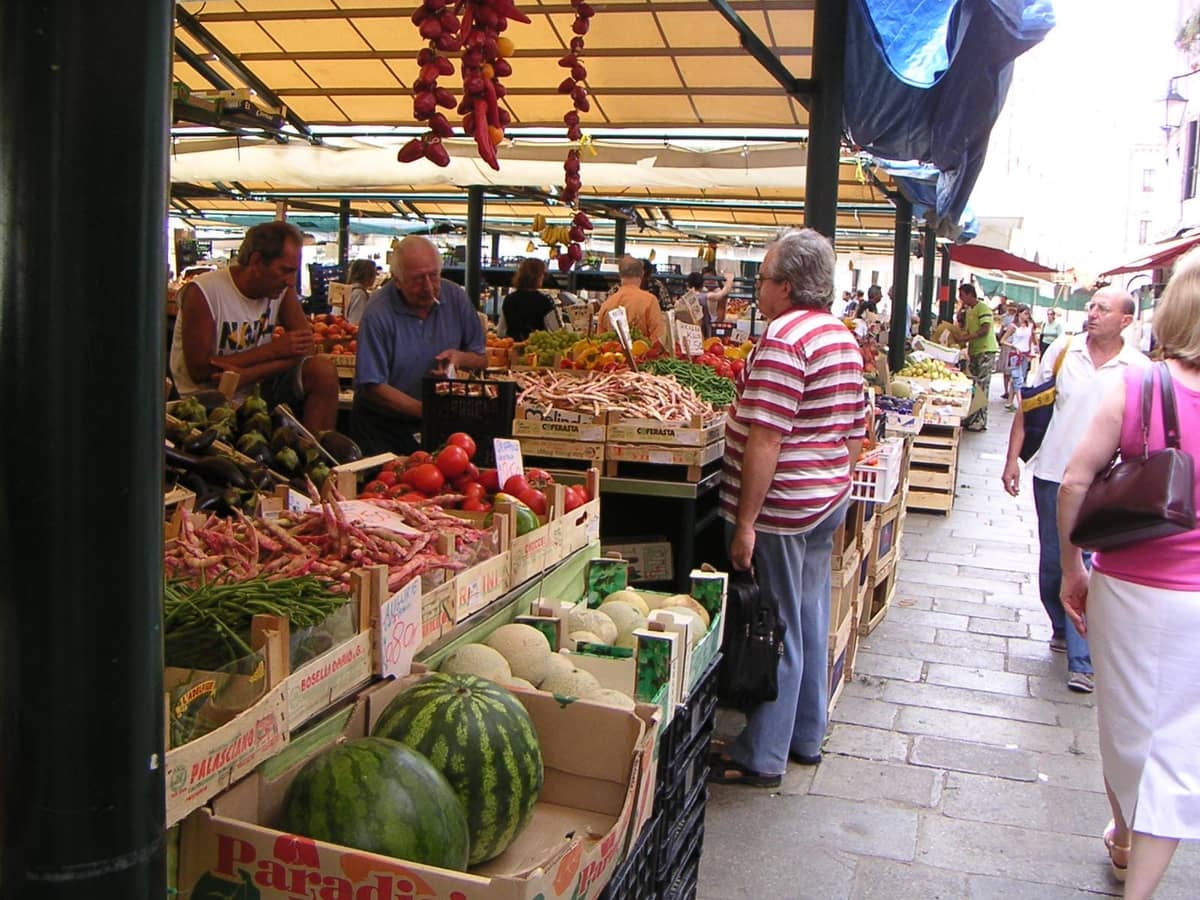
The Mercato di Rialto is not a tourist attraction that happens to sell food. It is a working food market that happens to attract tourists. That distinction matters the moment you walk in at 8am and find fishmongers hosing down slabs of silver-scaled orata, elderly Venetians squeezing peaches, and restaurateurs filling crates before the first vaporetto of the day docks at the Rialto Bridge steps away.
The market divides into two main sections: the Pescheria (fish market) and the Erbaria (fruit and vegetable market). Both occupy the Grand Canal waterfront in San Polo, separated by a short walk through covered loggias and open campi. Together they form what has been Venice's commercial and culinary engine since at least the late 11th century — making this one of the oldest continuously operating market sites in Europe.
The San Polo sestiere surrounding the market is one of Venice's most densely layered neighborhoods: medieval churches, Gothic palaces, and narrow calli that open without warning onto wide canal-front campi. The market sits at the neighborhood's geographic and social core.
⚠️ What to skip
The Pescheria (fish market) is open Tuesday to Saturday, roughly 7:30–13:00. The Erbaria (produce) runs Tuesday to Saturday, approximately 7:30–13:00. Both are closed Sunday, and the fish market is also closed Monday. Arrive by 10am at the latest for the best selection and atmosphere — by 11:30, stalls begin breaking down.
The Pescheria: Fish, Gothic Columns, and Canal Air
The fish market building is the visual anchor of the entire complex. Built in 1907 in neo-Gothic style, its open loggia of pointed arches faces directly onto the Grand Canal — a deliberate echo of Venice's medieval commercial architecture. The structure was designed to replace earlier covered market buildings on the same site, and it wears its age well: the columns are perpetually damp, the stone floor is worn smooth in paths that trace a century of market traffic.
What's on the slabs depends entirely on what came in from the lagoon and Adriatic that morning. Expect whole fish displayed with their heads intact — sea bass (branzino), gilt-head bream (orata), sole (sogliola) — alongside shellfish including razor clams (cannolicchi), mantis shrimp (canocchie), spider crabs (granceola), and mounds of small lagoon clams (vongole veraci). The smell is brisk and saline, not unpleasant: this is fresh catch, not a fish counter that has been sitting since morning.
Photography is tolerated but sellers are working, not posing. Keep your camera low-profile, don't block the stalls, and ask before pointing a lens at individual vendors. Early morning light through the canal-facing arches creates genuinely excellent conditions for photography between about 8:00 and 9:30 before the overhead light flattens everything.
Tickets & tours
Hand-picked options from our booking partner. Prices are indicative; availability and final rates are confirmed when you complete your booking.
Venice Legends, Anecdotes and Ghost Stories Tour
From 35 €Instant confirmationFree cancellationRialto Market Tour, Cooking Class, and Lunch in Venice
From 149 €Instant confirmationFree cancellationVenice highlights historical walking tour
From 27 €Instant confirmationFree cancellationDoge's Palace skip-the-line tour
From 67 €Instant confirmationFree cancellation
The Erbaria: Produce, Color, and the Scent of Stone
The Erbaria spreads across Campo della Pescaria and the adjacent covered walkway to the northwest. The produce here shifts with the season in ways that supermarkets have trained most visitors to forget exist. In late spring: white asparagus from the Veneto mainland, wild garlic, artichokes from Sant'Erasmo island in the northern lagoon. In summer: tomatoes in a dozen varieties, figs, and zucchini flowers still slightly open. Autumn brings radicchio, mushrooms, and the squat orange pumpkins used in Venetian risotto.
The Sant'Erasmo connection is worth noting. This low-lying agricultural island northeast of the city supplies much of Venice's specialty produce and remains almost entirely off the tourist circuit. If you see a sign reading 'Sant'Erasmo' on an artichoke stall, those castraure (the first, tender artichoke buds of the season) are genuinely local and worth buying if you have access to a kitchen. For context on the island itself, see the guide to Sant'Erasmo island.
How the Market Changes Through the Morning
At 7:30, the market belongs to professionals. Chefs from restaurants across the city arrive on foot or by boat, moving quickly through the stalls with clipboards or phones, pointing at quantities, negotiating with vendors they have known for years. The conversation is in Venetian dialect, not Italian, and it moves fast. This is the hour to see the market at full function.
Between 9:00 and 10:30, the mix shifts. Locals shopping for the day's meals, a growing number of visitors, and occasional school groups fill the space. The atmosphere remains purposeful but more relaxed. This window is the practical sweet spot for most travelers: enough activity to feel authentic, enough space to actually look at what's on the stalls.
After 11:00, tourist density rises sharply as the crowds spilling off the Rialto Bridge funnel through. Vendors begin consolidating stock. The fish market in particular starts closing down from around 11:30. If you arrive at noon expecting a full market, you will find an interesting architectural shell with a fraction of the produce and a lot of discarded ice.
💡 Local tip
The single best time to visit is a weekday between 8:00 and 9:30. On Saturday mornings the market is active but noticeably more crowded with both tourists and locals doing weekend shopping. Tuesday through Thursday offer the quietest experience.
History: Why the Market Has Always Been Here
The Rialto — the central area of Venice on relatively high ground in the archipelago that became the city, hence the name from Rivo Alto (high bank) — was the first area settled when refugees from the mainland began building on the lagoon islands in late antiquity. By the 11th century it had become the commercial capital of the emerging Venetian state: a place where merchants from across the Mediterranean traded spices, silks, grain, and slaves. The fish and produce market that grew along the canal bank was the domestic counterpart to this international trade.
That long commercial history is still physically present. The Grand Canal waterfront here was engineered for loading and unloading goods directly from boats — the same function it performed when Venice was the dominant trading power of the Mediterranean. The 1907 Pescheria building replaced older structures on the same site but maintained the loggia form that had characterized Venetian market architecture for centuries.
Before or After the Market: Eating and Exploring Nearby
The streets immediately around the Rialto Market contain some of Venice's best bacari: small bars serving cicchetti (small savory bites) alongside glasses of local wine called ombra. These are working-class institutions, not tourist bars, and they open early specifically to serve the market crowd. A plate of baccalà mantecato (whipped salt cod on bread), a crostino with nervetti (calf tendon salad), and a glass of Soave at 10am is considered entirely normal. For a full guide to this eating culture, see how to eat cicchetti in Venice.
A short walk south of the market brings you to the Basilica dei Frari, Venice's largest Gothic church and home to Titian's Assumption of the Virgin — one of the most important Renaissance paintings in Italy. It opens at 9:00 on most days and is far less crowded in the morning when the market crowd hasn't dispersed that way yet.
Just across the Grand Canal (or a few minutes' walk via the Rialto Bridge) is the Scuola Grande di San Rocco, whose interior Tintoretto cycle is among the most concentrated achievements of Venetian Renaissance painting. Combining a morning market visit with one of these two sites makes for a genuinely full and coherent half-day in the San Polo area.
Practical Notes for Your Visit
Getting there is straightforward. The Rialto Mercato vaporetto stop (Lines 1 and 2) deposits you directly at the market entrance on the Grand Canal side. If you're walking from Piazza San Marco, cross the Rialto Bridge and turn left immediately — the market is around the corner, about 10 minutes total. From Venice Santa Lucia train station, the walk takes around 20 minutes, or you can take the vaporetto down the Grand Canal, which adds context to the journey.
The market is entirely outdoors or in open loggias. On rainy mornings it continues operating, but the fish market floor becomes slippery. Wear shoes with grip. In summer the campo gets hot by 10:30; in winter it can be raw and damp by the canal. Layers are practical in every season except high summer.
There are no dedicated accessibility facilities. The main campi are paved and relatively flat, but reaching them requires navigating Venice's standard network of bridges and calli. Wheelchairs and strollers can reach the market, though the route depends on where you're starting from; checking a current pedestrian accessibility map for Venice before you go is worthwhile.
ℹ️ Good to know
The market closes entirely on Sundays, and the fish market also closes on Mondays. On Italian public holidays, hours may vary or stalls may not open at all. If visiting around a national holiday, check locally before making the market the centerpiece of your morning.
Who Might Want to Skip This
Travelers who sleep late should skip the market entirely rather than visit at 11:30 and wonder what the fuss is about. If you're not interested in food culture or local daily life, the Rialto Market is a crowded canal-front walkway with stalls — pleasant but not a must-see in the way a major museum or church might be. It also requires an early start, which conflicts with some itineraries.
Insider Tips
- The vaporetto stop is called Rialto Mercato — not 'Rialto', which is a different stop on the opposite bank of the Grand Canal, closer to the bridge. Take Line 1 or 2 to Rialto Mercato on the San Polo side.
- Vendors on the outer edge of the Erbaria near the canal tend to price slightly higher than those one row back. The produce is identical; the view is better from the canal-front stalls, but the savings are real if you're buying anything in quantity.
- Look for the seasonal Sant'Erasmo produce — the local lagoon island that supplies specialty vegetables. Castraure artichokes in spring are a Venetian delicacy available for a short window that most visitors never encounter.
- If you want to buy fish to cook, check whether your accommodation has kitchen access first. Several apartment rentals in Venice have small kitchens; the market sells whole fish cleaned to order, which changes what's possible for a self-catered meal.
- The bacari on Calle dei Botteri and Calle Beccarie, both within a two-minute walk of the fish market, open early and serve the market crowd. These are among the most genuine places to eat in Venice at any price point — the clientele is overwhelmingly local on weekday mornings.
Who Is Rialto Market (Mercato di Rialto) For?
- Food-focused travelers who want to understand what Venetians actually eat, not what gets served to tourists
- Early risers and photographers who want Grand Canal light and an active market scene before 10am
- Visitors building a San Polo morning itinerary combining the market with the Frari or Scuola Grande di San Rocco
- Travelers on a budget — browsing the market costs nothing, and a cicchetti breakfast nearby costs very little
- Anyone interested in Venetian history at street level rather than through museum glass
Nearby Attractions
Other things to see while in San Polo:
- Basilica di Santa Maria Gloriosa dei Frari
The Basilica di Santa Maria Gloriosa dei Frari is one of Venice's largest and most significant churches, home to Titian's luminous Assumption of the Virgin, Canova's pyramid tomb, and centuries of Venetian history carved in stone and marble. It rewards slow, attentive visitors far more than a quick walkthrough.
- Rialto Bridge (Ponte di Rialto)
The Ponte di Rialto is Venice's oldest and most photographed bridge, spanning the Grand Canal between San Polo and San Marco. Free to cross at any hour, it rewards early risers with calm and night owls with golden reflections. Here's everything you need to know before you go.
- Scuola Grande di San Rocco
The Scuola Grande di San Rocco houses over 60 paintings by Tintoretto, displayed in the very rooms they were commissioned for. This 16th-century confraternity hall in San Polo is one of the most concentrated displays of Renaissance painting in Italy, and it remains far less visited than its reputation deserves.