Sant'Erasmo Island: Venice's Quiet Garden in the Lagoon
Sant'Erasmo is one of the largest islands in the Venetian lagoon (second-largest after Venice proper), a place of working farmland, coastal tracks, and genuine quiet that feels worlds apart from the crowded historic centre. Reachable by vaporetto in under an hour, it rewards visitors who want to see how the lagoon actually lives.
Quick Facts
- Location
- Northern Venetian Lagoon, between Murano, Burano, and Punta Sabbioni
- Getting There
- ACTV vaporetto line 13 from Fondamente Nove (about 30–45 min, depending on stop); also from Murano Faro (approx. 20 min)
- Time Needed
- 3–6 hours, or a full day if cycling or exploring the coast
- Cost
- No admission fee; ferry ticket approximately €9.50–€10 per person (verify current ACTV fares before travel)
- Best for
- Cyclists, slow-travel enthusiasts, photographers, and anyone needing a break from the crowds
- Official website
- www.veneto.eu/EN/SantErasmo
What Sant'Erasmo Actually Is
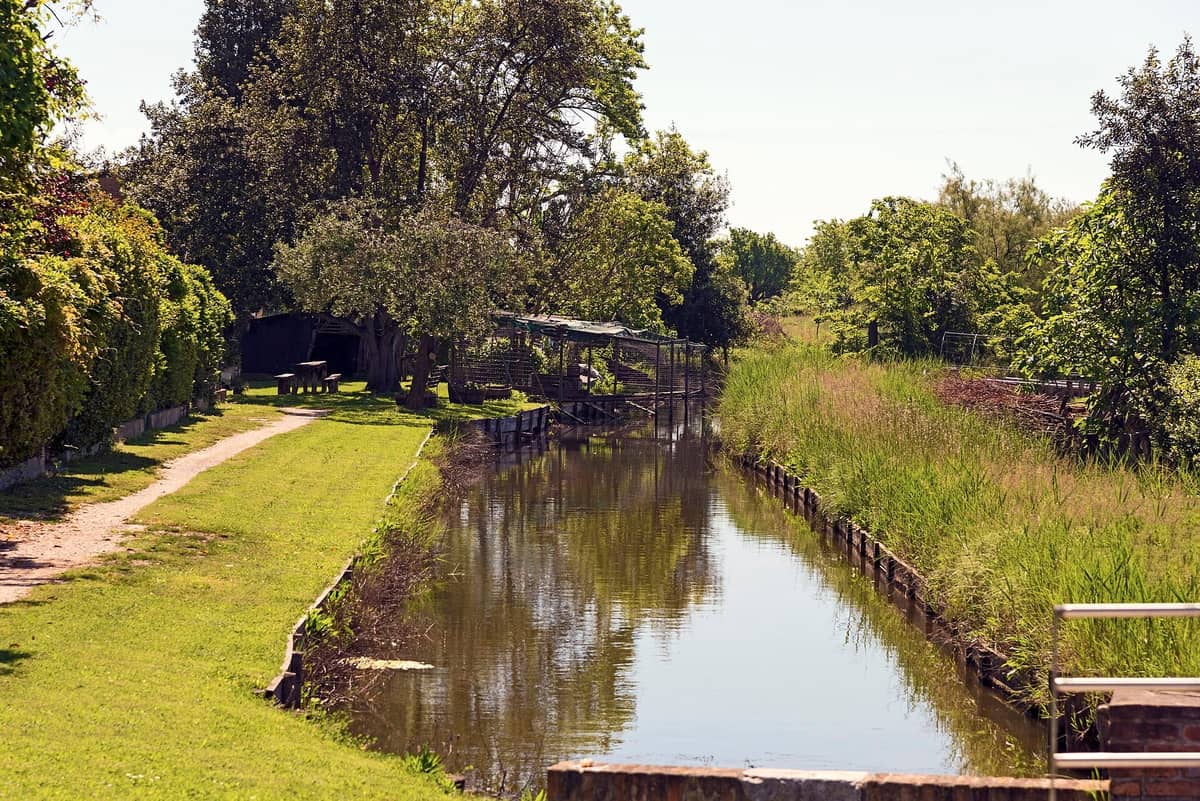
Sant'Erasmo Island (Isola di Sant'Erasmo) is the second-largest island by surface area in the Venetian lagoon after the city of Venice, stretching roughly 4 kilometres in length and up to 1 kilometre wide. Most visitors to Venice never come here, which is precisely the point. While the historic centre processes millions of tourists through its narrow calli, Sant'Erasmo operates on a different rhythm entirely: tractors moving between fields, fishing boats moored at small docks, and a handful of trattorie that serve the people who actually live and work here.
The island has supplied Venice with fruit and vegetables since the Middle Ages, earning it the nickname 'orto di Venezia', the vegetable garden of Venice. That agricultural identity has never really been replaced. You still see the artichokes that made the island famous (the violetto di Sant'Erasmo variety is a local specialty sought after by Venetian restaurants), alongside wine grapes, asparagus, and other seasonal produce. Walking or cycling through in spring, when the artichoke plants are full and the lagoon light sits low over the fields, gives you a sense of the landscape that shaped Venice's food culture for centuries.
💡 Local tip
Sant'Erasmo has no rental bikes available at the ferry stop. If you want to cycle the island, bring a folding bike on the vaporetto (a small fee applies) or arrange a rental in Venice before you leave.
Getting There: Vaporetto Line 13
The most practical way to reach Sant'Erasmo from Venice without a private boat is ACTV vaporetto line 13, which departs from Fondamente Nove on the northern edge of Venice's historic centre. The crossing takes approximately 45 minutes to the Capannone stop at the island's western end. There are also intermediate stops further along the island (Chiesa and Punta Vela), which serve different parts of the shoreline. Coming from Murano, you can board line 13 at Murano Faro, cutting the journey down to about 20 minutes.
Ferries run roughly hourly. The schedule thins out in the evening, so check the ACTV timetable before you go and identify your last viable return boat before you set off on foot. Missing the final ferry is not a minor inconvenience on an island with very limited accommodation options.
A single vaporetto ticket costs approximately €9.50 and is valid for 75 minutes, though fares are updated periodically, so check current prices at guide to getting around Venice before travelling.
Tickets & tours
Hand-picked options from our booking partner. Prices are indicative; availability and final rates are confirmed when you complete your booking.
Doge's Palace skip-the-line tour
From 67 €Instant confirmationFree cancellationVenice Legends, Anecdotes and Ghost Stories Tour
From 35 €Instant confirmationFree cancellationGhosts and legends tour of Venice
From 29 €Instant confirmationFree cancellationSkip-the-line guided tour of Doge's Palace and Saint Mark's Basilica
From 106 €Instant confirmationFree cancellation
How the Island Feels at Different Times of Day
Arriving on the first ferry of the morning, before 9am, Sant'Erasmo is almost completely still. The Capannone dock area smells of damp rope and tidal mud. A few locals might be cycling toward the fields. The light over the lagoon at this hour is flat and silver, and the silence is the kind Venice's historic centre never actually offers. There are no church bells competing, no groups being led through a briefing, just the sound of water against the piling and the occasional call of a wading bird.
By late morning, especially on weekends between April and October, small groups of day visitors arrive: mostly Venetians and Italian tourists rather than international crowds. A local bar near the dock fills up around 11am with cyclists taking coffee. The atmosphere remains genuinely relaxed. If you are hoping for near-solitude, the island's eastern coast and the area around Punta Vela tend to hold fewer visitors even on busier days.
Midday in summer brings heat with nowhere to hide on the open agricultural land. Shade is scarce away from the tree lines along the paths. The island looks beautiful in this light but walking long distances between noon and 3pm in July or August is tiring. Afternoon, as the heat softens, is when the island starts to feel its best: the water takes on colour, the farms are quiet, and the track along the southern lagoon edge provides long, unbroken views back toward the skyline of Venice.
Torre Massimiliana: The Island's One Historic Monument
Sant'Erasmo does not have a dense inventory of art or architecture. But it has one genuinely compelling structure: the Torre Massimiliana, a circular fortified tower built by the Austrians in the early nineteenth century. It sits near the Capannone landing stage and forms part of the ring of lagoon defences constructed when Austria controlled Venice after the Napoleonic period. The tower was later restored and for periods has been used as an exhibition space for contemporary art, typically during summer months.
The tower is not always open to visitors, and the hours when it is accessible depend on the season and any temporary programming in place. Before building your visit around it, check the current status through the Veneto regional tourism portal. Even when closed, the exterior is worth a look: the masonry is in reasonable condition and the position at the lagoon's edge gives context for the military logic behind its construction. At high tide, the water comes very close to the base of the tower, which makes for strong photographs in afternoon light.
Cycling, Walking, and the Coastline
Sant'Erasmo's landscape is fundamentally flat, which makes it well-suited to cycling. The road network is simple: a central track runs the length of the island, with smaller paths branching toward the lagoon shores on either side. Most surfaces are tarmac or compacted gravel, though some coastal tracks become soft after rain. The southern shore offers the most visually rewarding route, with unobstructed lagoon views and the distant profile of Venice visible on clear days. The northern shore is quieter still and less visited.
Walkers can cover a reasonable circuit on foot in around three hours at a relaxed pace. If you have more time, combining Sant'Erasmo with a visit to Burano or Torcello Island is possible as both are served by line 9 and 12 connections from the lagoon's northern ferry network. This makes for a genuine full-day itinerary exploring the quieter islands of the northern lagoon.
⚠️ What to skip
The island's paths are largely unpaved and uneven in places. Visitors with mobility limitations should be aware that accessibility is restricted away from the main road near the Capannone stop. Check current ACTV vessel configurations for wheelchair access to the ferry itself.
Food, Drink, and What to Expect
There are very few places to eat on Sant'Erasmo. A small number of bars and trattorie operate near the main landing stage, and at least one farm on the island has at some points offered seasonal food service, but options are limited and subject to the time of year. Do not arrive hungry expecting multiple choices. The sensible approach is to bring food for a long walk or cycling day, and treat any meal you find as a bonus rather than a plan.
If you are travelling on to Burano, which has a stronger offering of seafood restaurants, you could combine both islands in a day and eat properly in Burano. For general guidance on eating well in the lagoon and the historic centre, the guide to Venetian food covers the key dishes and neighbourhoods worth knowing.
Who Should Not Come Here
Sant'Erasmo is not a good choice if you are expecting polished tourist infrastructure. There are no museum-quality spaces to visit beyond the occasional tower exhibition, no shopping, no well-developed restaurant strip, and no conventional guidebook highlights. Visitors with only a day or two in Venice will almost certainly find their time better spent in the historic centre, which alone holds more architecture, art, and cultural history than most cities. The island works best as an addition, not an alternative.
Similarly, if the weather is overcast or wet, the island's appeal drops significantly. The open farmland offers no shelter and the flat lagoon landscape does not reward damp, grey conditions the way the Grand Canal or the interior of a major church might. Check the forecast before committing a ferry journey each way.
Photography and the Lagoon Light
The lagoon light on Sant'Erasmo is the attraction that is hardest to articulate in advance but obvious once you are standing at the water's edge. On a clear morning, the low sun angling across the surface makes the water almost white, with the silhouette of Venice visible in the middle distance. In autumn particularly, when the light softens and the air is clearer than in summer, the views back toward the city are exceptional for photography. Bring something with a reasonable telephoto capacity if you want to capture the Venetian skyline from the island's southern shore.
For wider context on lagoon viewpoints, including those accessible within the historic centre, the guide to the best views in Venice covers options from bell towers to waterfront terraces.
Insider Tips
- The violetto di Sant'Erasmo artichoke is one of the most prized ingredients in Venetian cooking. If you visit in late April or May, you may be able to buy them directly from roadside farm stands on the island, at prices well below what you would pay in the city's markets.
- The Torre Massimiliana occasionally hosts contemporary art exhibitions during summer, but the schedule is irregular. Check the Veneto regional tourism portal or the local comune website for current programming before treating it as a guaranteed stop.
- Line 13 has several stops on the island: Capannone, Chiesa, and Punta Vela. Disembarking at Capannone and walking or cycling to Punta Vela before catching the return ferry there gives you a natural one-way route without backtracking.
- Bring more water than you think you need. On a warm day with limited shade across open fields, the island's lack of shops and bars away from the dock becomes a practical problem surprisingly quickly.
- The island is almost entirely free of the day-tripper crowds that now affect Burano and Murano. If you are travelling during peak season and want a genuinely quiet afternoon in the lagoon, Sant'Erasmo delivers that more reliably than either of its better-known neighbours.
Who Is Sant'Erasmo Island For?
- Cyclists looking for a flat, low-traffic route through a working agricultural landscape
- Photographers wanting the lagoon light and distant Venice skyline without crowds in the frame
- Slow-travel visitors who prefer inhabited, working places over curated tourist experiences
- Walkers building a full-day northern lagoon itinerary that combines Sant'Erasmo with Burano or Torcello
- Visitors returning to Venice who have already covered the main sites and want something genuinely different
Nearby Attractions
Combine your visit with:
- Burano Island
Eight to nine kilometers north of Venice, Burano Island is a compact, flat island of roughly 21 hectares where fishermen's houses are painted in saturated reds, yellows, and blues. It has a legitimate history in lace-making stretching back to the 16th century, and the 40-minute vaporetto ride across the lagoon is part of the experience.
- Chiesa del Redentore
Built in 1577 as a vow to God after a devastating plague, the Chiesa del Santissimo Redentore is Andrea Palladio's finest church in Venice. Standing on the island of Giudecca across the canal from Dorsoduro, it rewards visitors with serene interiors, important Renaissance paintings, and one of the most dramatic facades in Italian architecture.
- Chioggia
Chioggia is an ancient fishing town at the southern entrance of the Venetian Lagoon, built on a cluster of small islands linked by bridges and crossed by canals. Unlike Venice, it functions as a living, working community, and that distinction shapes everything about a visit.
- Giudecca Island
Giudecca Island sits just minutes from the heart of Venice yet feels like a different city entirely. Flat, walkable, and free to explore, it rewards visitors with Palladian architecture, waterfront promenades, and a glimpse of how Venetians actually live.