Giudecca Island: Venice's Residential Escape Across the Canal
Giudecca Island sits just minutes from the heart of Venice yet feels like a different city entirely. Flat, walkable, and free to explore, it rewards visitors with Palladian architecture, waterfront promenades, and a glimpse of how Venetians actually live.
Quick Facts
- Location
- South of Venice's historic center, separated by the Canale della Giudecca, opposite Dorsoduro
- Getting There
- Vaporetto lines 2, 4.1, and 4.2 from central Venice; approx. 3–5 minutes from San Marco
- Time Needed
- 2–4 hours for a leisurely walk; up to a full day if combining churches and waterfront dining
- Cost
- Free to enter; ACTV vaporetto ticket required (single ticket approx. €9.50, 1-day pass €25 — verify current prices with ACTV)
- Best for
- Travelers wanting quieter streets, Palladian churches, and authentic Venetian atmosphere
- Official website
- www.veneziaunica.it/en/content/island-giudecca
What Giudecca Actually Is
Giudecca Island is not a tourist attraction in the conventional sense. There are no ticket booths, no queues, and no audio guides waiting at the dock. It is a working residential neighborhood, the largest island sitting immediately south of Venice's historic center, separated from the Dorsoduro sestiere by the wide Canale della Giudecca. The island stretches roughly 2 km east to west and about 300 m north to south, and is technically a cluster of eight smaller islands joined together over centuries.
Its old Venetian names tell you something about its character. Known historically as Spina Longa or Spinalonga, meaning 'long spine,' it takes its fishbone shape from the way its smaller islets align along a central axis. The current name, Giudecca, is debated by historians: some trace it to a medieval Venetian word for land given to debtors (Zudegà), others to a historic Jewish community, though the Jewish Ghetto that survived into the modern era was established in Cannaregio, not here.
💡 Local tip
Vaporetto lines 2, 4.1, and 4.2 all stop at Giudecca. From the San Zaccaria stop near Piazza San Marco, crossing the canal takes around 3–5 minutes. Buy your ACTV ticket before boarding, not on board.
The Palladio Churches: Architecture Worth the Crossing
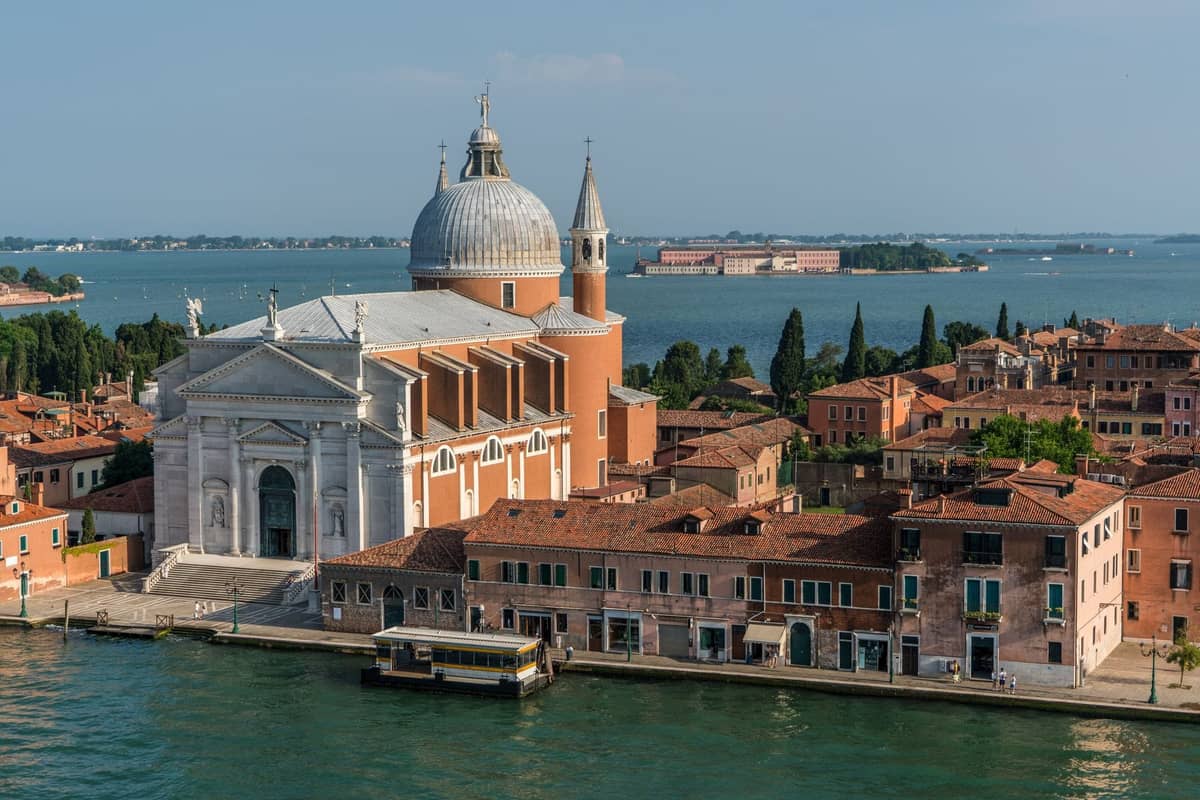
Giudecca's most significant draw for architecture-minded visitors is its pair of Renaissance churches designed by Andrea Palladio, the 16th-century architect whose influence on Western building extended from northern Italy to England and colonial America. The Chiesa del Redentore, completed in 1592, is the more celebrated of the two. It was commissioned by the Venetian Senate as an act of gratitude after the plague epidemic of 1575–1577 killed roughly a third of the city's population. Every third Sunday of July, the Feast of the Redentore sees a temporary pontoon bridge constructed across the canal so Venetians can make the traditional procession to the church on foot.
The church's facade is a study in classical restraint: a broad triangular pediment over the nave, flanked by two smaller pediments over the aisles, all in pale Istrian stone that turns a warm cream in late afternoon light. Inside, the proportions are calming rather than overwhelming. If you are visiting multiple churches across the city, a guide to Venice's best churches can help you prioritize. The Redentore is consistently among the most architecturally significant.
The church of Le Zitelle, also Palladian in inspiration though completed after his death around 1587, sits at the eastern end of the island. It is used less as a conventional church today and more as a conference and event venue, so interior access is less predictable. Worth seeing from the outside regardless.
Tickets & tours
Hand-picked options from our booking partner. Prices are indicative; availability and final rates are confirmed when you complete your booking.
Doge's Palace skip-the-line tour
From 67 €Instant confirmationFree cancellationVenice Legends, Anecdotes and Ghost Stories Tour
From 35 €Instant confirmationFree cancellationGhosts and legends tour of Venice
From 29 €Instant confirmationFree cancellationSkip-the-line guided tour of Doge's Palace and Saint Mark's Basilica
From 106 €Instant confirmationFree cancellation
Walking the Island: What the Fondamenta Feels Like
The northern waterfront, the Fondamenta della Giudecca, runs almost the full length of the island and faces directly toward the Dorsoduro shore. Walking it from east to west gives you a continuously shifting panorama: the domes of Santa Maria della Salute to your right, the Zattere promenade across the water, and the steady movement of vaporetti, water taxis, and the occasional cargo barge on the canal. The surface underfoot is flat stone, and unlike the bridges and campielli of central Venice, there are no surprise steps or sudden level changes for most of this route.
In the early morning, before 9am, the fondamenta belongs almost entirely to locals: shop owners rolling up shutters, residents walking dogs, delivery boats unloading. The light at this hour, angled low across the water from the east, is particularly good for photography. By 11am, day visitors begin to appear, though never in the concentrated numbers you find around the Rialto Bridge or Piazza San Marco. By early afternoon, the island returns to a quieter rhythm. The southern side of Giudecca, facing the open lagoon, is less developed and more industrial in character, with former factory buildings, some now converted to cultural use, lining the shore.
The interior of the island has narrow calli and small campi that most visitors never reach. These streets feel genuinely residential: laundry lines between windows, cats on doorsteps, small alimentari selling bread and cheese. The contrast with the main tourist corridors of Venice is significant enough to be disorienting in a pleasant way.
Views Back Toward Venice: One of the City's Best
From the northern fondamenta, the view across the Canale della Giudecca toward the Dorsoduro skyline is one of the most consistently rewarding in the city. You see the Basilica di Santa Maria della Salute from an angle most visitors never consider, with its dome and volutes framed against the sky. The Zattere promenade stretches opposite, and on clear days you can see across to the island of San Giorgio Maggiore to the east. Photographers looking for less predictable compositions of Venice's skyline should plan a visit around golden hour, either in the morning facing east or in the late afternoon facing west, when the light across the water is warm and directional.
For a wider lagoon panorama, the southern side of the island opens toward the industrial port zone and the mainland. This view is less photogenic but offers a useful reminder that Venice is an active city in an active lagoon, not just a museum piece.
Historical Context: From Aristocratic Gardens to Industrial Decline
During the Renaissance, Giudecca was something of a pleasure island for the Venetian nobility. Its relatively large plots of land, rare by the standards of the cramped historic center, made it suitable for the walled gardens and private retreats that wealthy families favored. The poet Pietro Aretino lived here in the 16th century. Michelangelo, in a period of political exile from Florence, is said to have spent time on Giudecca, drawn by the relative quiet and the space.
By the 19th century, the character had shifted dramatically. Industrialization brought factories and workshops to the island, and Giudecca became a working-class neighborhood, home to laborers employed in manufacturing, fishing, and the shipping industries. The Junghans clock factory and the Fortuny textile works were among the significant industrial operations. When those industries declined in the 20th century, they left behind large empty buildings that have since been converted to mixed uses: hotels, arts spaces, and social housing.
Today the island holds an unusual social mix. Luxury hotels, including one of Venice's most recognizable, occupy parts of the waterfront. But much of Giudecca remains genuinely working-class in character, with subsidized housing and long-established families who have no particular interest in tourism.
Practical Details: Getting There, Getting Around, and Getting the Most From a Visit
Giudecca is accessible only by water. Vaporetto lines 2, 4.1, and 4.2 serve the island, with multiple stops along the northern fondamenta: Palanca in the center, Redentore near the church, and Zitelle at the eastern end. The crossing from San Zaccaria on the San Marco side takes around 3 to 5 minutes. Tickets are standard ACTV fares; a single 75-minute ticket costs approximately €9.50 and a 1-day pass approximately €25, though prices should be confirmed with ACTV before travel as they are subject to change.
ℹ️ Good to know
The island is largely flat, making it one of the more accessible parts of Venice for travelers with limited mobility. Most of the northern waterfront walk involves level pavement. Check ACTV's current accessibility information for boarding ramps and step heights at individual vaporetto stops.
There are no luggage storage facilities on the island. If you are arriving with bags, arrange storage in the main city before crossing. The island has a small number of cafes, a few restaurants, and a handful of shops, but it is not set up for heavy visitor traffic. Bring water, particularly in summer, when temperatures can exceed 30°C and shade on the open fondamenta is limited.
Giudecca makes a logical pairing with a visit to the Dorsoduro district, which sits directly across the canal. The Peggy Guggenheim Collection and the Gallerie dell'Accademia are both within walking distance once you cross back to the main island. Consider spending a morning on Giudecca and an afternoon in Dorsoduro to make the most of a single day. Those building a broader itinerary can find useful frameworks in a 2-day Venice itinerary.
Worth It?
Giudecca is not for everyone, and it is worth being clear about that. There are no major collection museums, no concentrated series of famous monuments, and no shopping streets. If your Venice priority list is Doge's Palace, St. Mark's Basilica, and the Rialto, you will not find equivalent landmarks here. The island rewards a certain kind of traveler: one who is willing to walk without a fixed destination, who finds genuine neighborhood life more interesting than curated experiences, and who has already spent time in central Venice.
In summer, the heat on the open waterfront can be punishing between noon and 4pm. Autumn is a better season for a long walk here, when temperatures drop and the light on the canal is softer. Winter visits are entirely viable given the flat terrain, though some restaurants and cafes may close or keep reduced hours.
⚠️ What to skip
Venice's acqua alta flooding events can occasionally affect Giudecca as with other low-lying parts of the city. In autumn and winter especially, check the official Venice acqua alta forecast before visiting if you plan a long walk along the fondamenta.
Insider Tips
- The Palanca vaporetto stop in the middle of the island is the least visited of Giudecca's stops and the best starting point for exploring the quieter, more residential interior calli. Most day visitors arrive at the Zitelle stop and stick to the eastern end.
- For the best photography of the Redentore church facade, position yourself on the Zattere side of the canal in the early morning, looking south across the water, rather than standing directly in front of the church itself.
- The Feast of the Redentore, held on the third Sunday of July each year, includes a pontoon bridge across the canal and significant fireworks that night. It is one of Venice's most local festivals and worth planning around if your travel dates align.
- Several of the former industrial buildings on the island's southern side have been converted to artist studios and social cooperatives. A handful hold occasional open days or exhibitions — checking local Venice event listings before your visit is worth the effort.
- If you want a coffee without tourist pricing, walk inland from the fondamenta and find one of the small bars serving the local residential population. The quality is similar; the price and atmosphere are noticeably different.
Who Is Giudecca Island For?
- Repeat visitors to Venice looking beyond the main sestieri
- Architecture enthusiasts interested in Palladian Renaissance design in context
- Travelers who prefer walking through lived-in neighborhoods over monument-hopping
- Photographers seeking less familiar angles on Venice's skyline and canal life
- Couples wanting a quieter, less crowded alternative to the main island promenades
Nearby Attractions
Combine your visit with:
- Burano Island
Eight to nine kilometers north of Venice, Burano Island is a compact, flat island of roughly 21 hectares where fishermen's houses are painted in saturated reds, yellows, and blues. It has a legitimate history in lace-making stretching back to the 16th century, and the 40-minute vaporetto ride across the lagoon is part of the experience.
- Chiesa del Redentore
Built in 1577 as a vow to God after a devastating plague, the Chiesa del Santissimo Redentore is Andrea Palladio's finest church in Venice. Standing on the island of Giudecca across the canal from Dorsoduro, it rewards visitors with serene interiors, important Renaissance paintings, and one of the most dramatic facades in Italian architecture.
- Chioggia
Chioggia is an ancient fishing town at the southern entrance of the Venetian Lagoon, built on a cluster of small islands linked by bridges and crossed by canals. Unlike Venice, it functions as a living, working community, and that distinction shapes everything about a visit.
- Lace Museum Burano (Museo del Merletto)
The Museo del Merletto on Burano island preserves one of Venice's most painstaking craft traditions: needle lace so fine it was once compared to frozen breath. Housed in the former Burano Lace School, this small but authoritative museum rewards patient visitors with extraordinary historical pieces and, sometimes, live demonstrations by the last practitioners of the craft.