Basilica di Santa Maria della Salute: The Church Venice Built to Survive
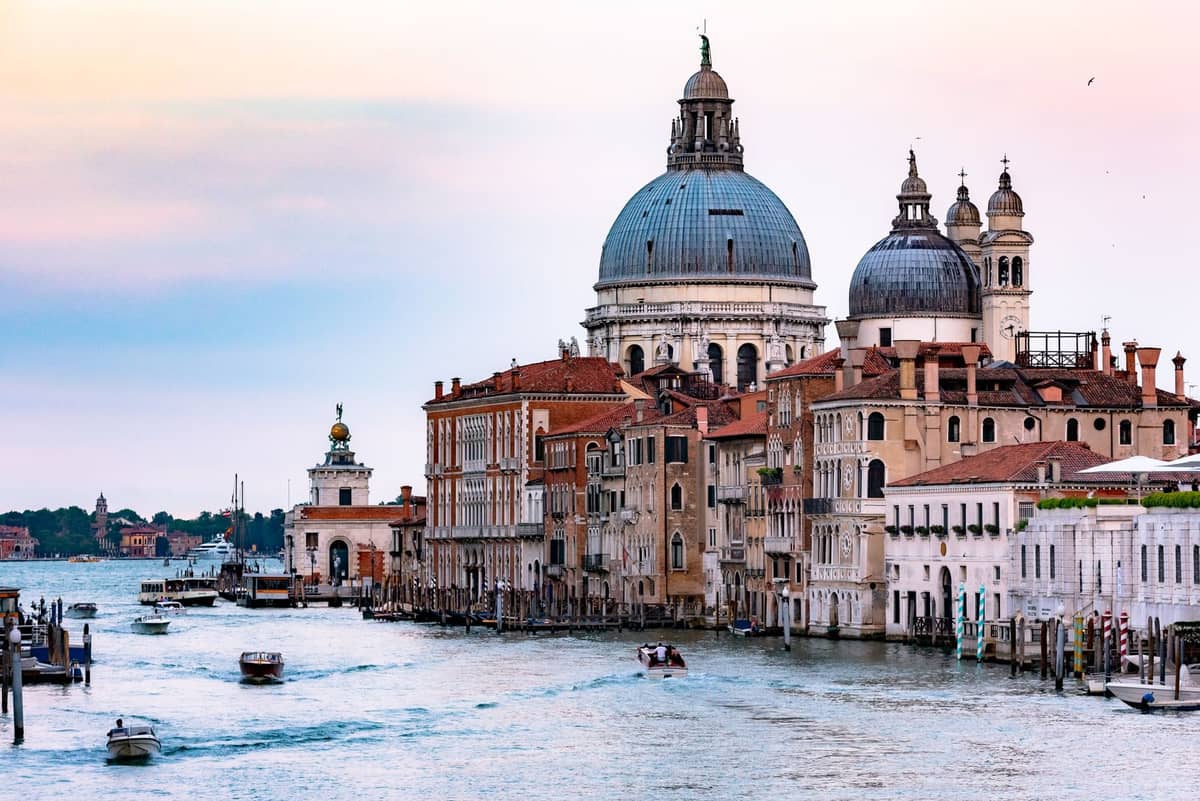
Standing at the mouth of the Grand Canal where it meets St Mark's Basin, the Basilica di Santa Maria della Salute is one of the most recognizable silhouettes in Venice. Built as a vow to the Virgin Mary after the plague of 1630–1631, this baroque octagonal church took 56 years to complete and remains an active place of worship, a repository of significant art, and one of the finest viewpoints in the city.
Quick Facts
- Location
- Campo della Salute, Dorsoduro 1, 30123 Venice — at the tip of Dorsoduro where the Grand Canal meets St Mark's Basin
- Getting There
- Vaporetto stop: Salute (Line 1) — a 2-minute walk from the landing pontoon to the basilica steps
- Time Needed
- 30–45 minutes for the church; add 20 minutes for the sacristy art collection
- Cost
- Basilica: free. Sacristy (art collection): €4 full, €2 reduced. Children under 10 and disabled visitors: free
- Best for
- Architecture lovers, art history enthusiasts, photography, and anyone tracing Venice's relationship with catastrophe and survival
- Official website
- www.basilicasalutevenezia.it
What This Church Actually Is
The Basilica di Santa Maria della Salute is not just a photogenic backdrop for canal views. It is a Roman Catholic minor basilica built as a direct act of civic desperation: in October 1630, the Venetian Senate vowed to construct a great church dedicated to the Virgin Mary if the city survived the outbreak of plague ravaging it. By the time the epidemic subsided in 1631, more than 46,000 Venetians had died, roughly a third of the city's population. The church was their answer to survival.
Architect Baldassare Longhena won the commission in 1631 at just 32 years old, and the design he submitted was audacious: a vast octagonal drum topped with a prominent dome, flanked by a smaller apse dome, the whole composition resting on an estimated 1.1 million wooden piles driven into the lagoon bed. Construction continued for 56 years. Longhena died in 1682, five years before the consecration in 1687. That sense of a life's work, of something built at enormous cost and across generations, is embedded in the stone.
ℹ️ Good to know
Opening hours (verify before visiting as they may occasionally vary for liturgical events): Mon–Sun 09:30–12:00 and 15:00–17:30. Sacristy: Mon–Sat 10:00–12:00 and 15:00–17:00; Sun 15:00–17:00.
Arriving at the Salute: First Impressions
The most memorable approach is by vaporetto on Line 1, disembarking at the Salute stop on the Dorsoduro waterfront. As the boat rounds the bend from the Accademia, the dome rises ahead of you with a scale that surprises even repeat visitors. The white Istrian stone catches light differently throughout the day: cool and almost silver in morning fog, warm amber in late afternoon, and dramatically silhouetted at dusk when the lamp posts along the Zattere begin to glow.
From the landing, a short walk along the fondamenta brings you to the base of the broad ceremonial staircase. This is where the accessible reality asserts itself: the entrance is preceded by a wide flight of stone steps with no lift alternative. Visitors with pushchairs, wheelchairs, or significant mobility limitations should be aware of this before arriving. The steps themselves are wide enough to feel theatrical rather than merely functional, and many visitors pause here simply to look back across the water toward the Punta della Dogana and San Giorgio Maggiore.
The surrounding campo is small but rarely packed in the way that Piazza San Marco can be. Early morning, before 10:00, you may share it with almost nobody except delivery workers and local dog walkers. By midday in summer it fills with groups, but the flow moves in and out quickly because the church itself encourages movement rather than lingering.
Tickets & tours
Hand-picked options from our booking partner. Prices are indicative; availability and final rates are confirmed when you complete your booking.
Skip-the-line guided tour of Doge's Palace and Saint Mark's Basilica
From 106 €Instant confirmationFree cancellationExclusive Saint Mark's Basilica After Dark and Doge's Palace Tour
From 149 €Instant confirmationFree cancellationMorning walking tour of Venice with St. Mark's Basilica and gondola ride
From 105 €Instant confirmationFree cancellationVenice small-group walking tour with St. Mark's Basilica and Gondola Ride
From 79 €Instant confirmationFree cancellation
Inside the Basilica: Architecture and Atmosphere
The interior hits differently than most Venetian churches. The octagonal plan means you enter into a central space that radiates outward in all directions, with six side chapels opening off the perimeter and the high altar straight ahead. This is intentional: Longhena described the design as constructed in the form of a crown as a tribute to the Virgin. The geometry creates a surprisingly intimate feeling despite the enormous scale, and the pale stone keeps the space luminous even on overcast days.
The high altar centerpiece is the Byzantine icon of the Madonna della Salute, venerated since at least the 13th century and brought to Venice from Crete. The sculpted group surrounding it depicts Venice kneeling in supplication before the Virgin, with the plague fleeing as a hunched old woman. The iconography is explicit and emotionally direct in a way that much church art is not: this is a monument to specific grief and specific relief, not generic devotion.
The dome above the central space is coffered and lit by windows that shift in quality depending on weather and time of day. Morning visits, especially on clear days, produce shafts of light crossing the nave floor at angles that shift perceptibly as you watch. Photographers working with natural light should plan for mid-morning between 10:00 and 11:30 when the sun angle through the lantern is most dramatic.
💡 Local tip
Photography tip: Tripods are generally not permitted inside. The central floor mosaic and the view directly upward into the dome are the two compositions most worth composing carefully. A wide-angle lens (or phone in ultra-wide mode) handles the interior scale better than a standard focal length.
The Sacristy: Where the Art Is
Most visitors miss the sacristy, which is a significant oversight. The €4 entry fee (€2 reduced) covers a small but serious collection, including three ceiling paintings by Titian from the 1540s depicting Cain and Abel, the Sacrifice of Abraham, and David and Goliath. These are not minor works: they are large, energetic canvases that show Titian working at full power, with the diagonal dynamism and atmospheric color that define his mature style. Seeing them in the context of the building they were made for, rather than in a modern gallery, is one of the better low-cost art experiences in Venice.
The sacristy also holds Tintoretto's The Wedding at Cana (1561), a sprawling work several meters wide that fills an entire wall. Given that Tintoretto's major works are distributed across the city, from the Scuola Grande di San Rocco to the Doge's Palace, the Salute sacristy is a necessary stop for anyone following his work through Venice.
The Festival of the Salute: Why the Church Still Matters
On November 21st each year, Venice marks the Festa della Salute with a procession across a temporary pontoon bridge erected across the Grand Canal specifically for the occasion, connecting the San Marco side to the basilica steps. Venetians, not tourists, dominate this event. Candles are lit inside the church, the scent of wax and incense is dense, and the queues to enter move slowly through most of the day. Attending on this date gives the building an entirely different character, one closer to its original purpose, and the city around it looks and sounds different too: quieter in some ways, louder in others, more itself.
If you are in Venice in late November, the Festa della Salute is worth building your itinerary around. Arrive before 09:00 to experience the early procession before the crowds, or after 17:00 when the light is low and the candle glow inside is at its strongest.
Practical Walkthrough: Getting There and What to Bring
The Salute vaporetto stop is on Dorsoduro's northern waterfront. Line 1 (the slow Grand Canal route) serves it. From the Rialto area, Line 1 typically takes around 15–20 minutes. From Piazzale Roma, allow 20–25 minutes on Line 1. Validate your transport card or ticket before boarding, as inspectors are common on this stretch.
Dress modestly: covered shoulders and knees are required to enter, as in all Venetian churches. Disposable paper wraps are sometimes available at the door for those caught underprepared, but these are not guaranteed. Bring a scarf or layer if visiting in summer.
The Salute pairs naturally with the nearby Peggy Guggenheim Collection (a 5-minute walk along the fondamenta) and the Punta della Dogana contemporary art space directly adjacent. Combining these three in a single afternoon is entirely feasible and covers a remarkable range, from Byzantine icon to 17th-century baroque to 20th-century modernism, within a few hundred meters.
⚠️ What to skip
During acqua alta (high water) events, the fondamenta surrounding the basilica can flood. Elevated walkways (passerelle) are typically deployed by the city, but low areas near the waterfront flood first. Check the Comune di Venezia's acqua alta forecast app before visiting in autumn or winter.
Worth It?
The exterior is genuinely extraordinary and free to experience at any hour by simply standing on the Dorsoduro waterfront or arriving by water. The interior is beautiful but not overwhelming for visitors who have already spent time in San Marco or the Frari: the nave is relatively spare, and the interest is concentrated at the high altar and in the sacristy. If you are on a tight schedule and forced to choose, the sacristy admission is where the deeper payoff lies.
Visitors who find church interiors unremarkable and are primarily drawn to Venice for its canals and neighborhoods may feel the Salute is best appreciated from the water. The view from the Accademia Bridge looking south, with the dome filling the end of the Grand Canal, is one of the city's defining compositions and costs nothing to experience.
Those who do go inside and skip the sacristy to save €4 are making a mistake. The Titian ceiling paintings alone are worth several times that, and the crowd in the sacristy is almost always thin even when the main church is busy.
Insider Tips
- The best exterior view of the Salute is not from the campo directly in front of it, but from the deck of a Line 1 vaporetto as it rounds the bend from the Accademia. Consider riding from the Accademia stop to Salute rather than walking, purely for this approach.
- The sacristy is accessed through a door on the right side of the nave, easy to miss if you are not looking for it. A small sign marks the entrance, but it blends into the stone. Ask a church attendant if you cannot locate it.
- Early November is excellent timing: the city begins preparing for the Festa della Salute on November 21st, and the basilica is in active liturgical use in the lead-up period. The atmosphere is markedly different from summer tourist-season visits.
- The fondamenta immediately behind and to the east of the basilica, toward Punta della Dogana, offers a quieter and less photographed view of the church's apse and secondary dome. Most visitors see only the front facade.
- If the sacristy is closed when you arrive (it has narrower hours than the church), note that it opens again in the afternoon. The nearby Zattere promenade makes for a pleasant wait and serves some of the better gelato in this part of the city.
Who Is Basilica di Santa Maria della Salute For?
- Architecture enthusiasts interested in Venetian Baroque and Longhena's geometric logic
- Art history travelers tracing Titian and Tintoretto across Venice's churches
- Photographers working the Grand Canal waterfront at different times of day
- Visitors attending the Festa della Salute on November 21st for an authentic Venetian civic ritual
- Anyone seeking a serious cultural experience that costs little to nothing and avoids the worst crowds
Nearby Attractions
Other things to see while in Dorsoduro:
- Accademia Bridge (Ponte dell'Accademia)
The Ponte dell'Accademia is a wooden pedestrian bridge spanning the Grand Canal between San Marco and Dorsoduro. Free to cross at any hour, it delivers what many consider the most photographed canal view in Venice, with a sweeping upstream panorama toward the Rialto. It also sits at the heart of one of the city's most rewarding walking neighborhoods.
- Ca' Rezzonico — Museum of 18th Century Venice
Ca' Rezzonico is a palazzo on the Grand Canal that houses the Museum of 18th-Century Venice. Three floors of frescoed ballrooms, lacquered furniture, Tiepolo paintings, and period pharmacy recreations make it one of the most immersive museum experiences in the city.
- Campo Santa Margherita
Campo Santa Margherita is the largest square in Dorsoduro and one of the few places in Venice where locals genuinely outnumber tourists. A flat, open campo ringed with cafes, a daily market, and a student-fueled nightlife scene, it offers a rare window into how Venetians actually use their city.
- Gallerie dell'Accademia
The Gallerie dell'Accademia is the world's most important repository of Venetian painting, spanning five centuries of art from the Gothic period through the 18th century. Set in a converted monastery complex in Dorsoduro, this is the one art museum in Venice that genuinely rewards dedicated time rather than a quick walk-through.